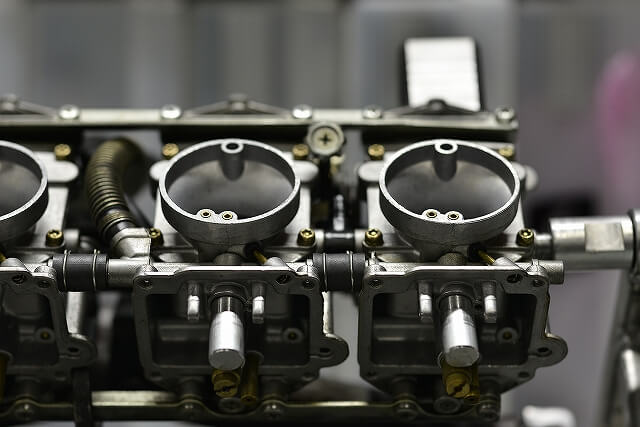
#3 is leaking (overflowing), so let’s check it out.
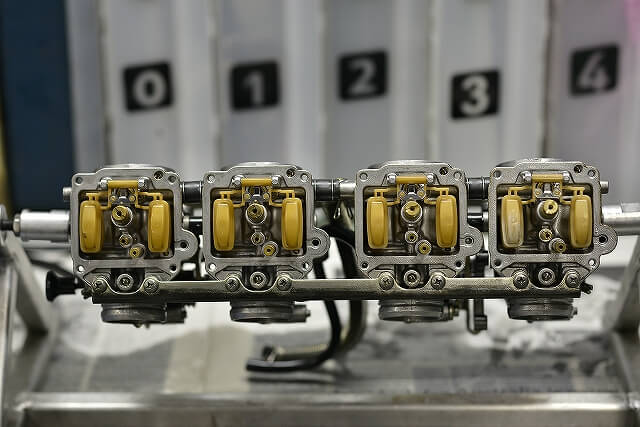
The bike is in good condition, so you can feel confident. Since there’s no point in taking it apart unnecessarily, we’ll work with just the float chamber.
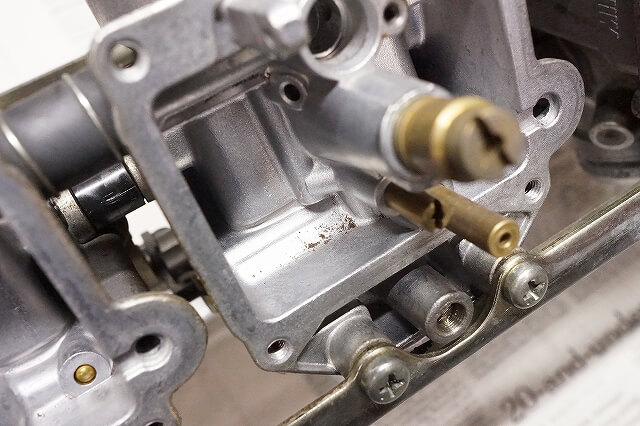
There’s some fine rust scattered here and there. Tanks without rust are actually pretty rare, you know.
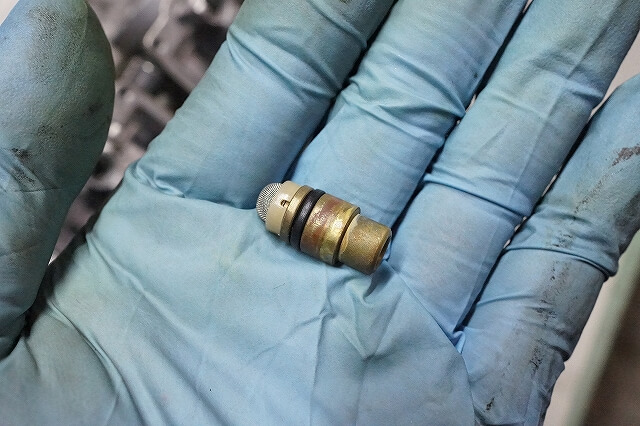
The cause of overflow is almost always clogged debris, a valve seat (float valve seat), or an O-ring.
We want gasoline to enter only through the center passage, but when the O-ring weakens, fuel enters the float chamber from the side. This gradual rise in fuel level is a common pattern.
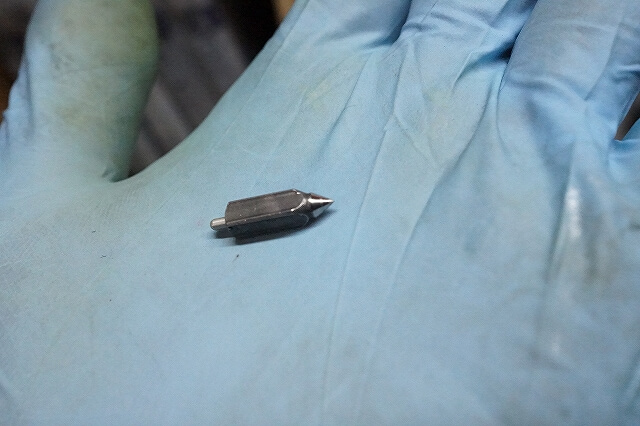
An old-fashioned metal float valve. If the step wear isn’t too severe, it can be corrected with light polishing. In my experience, replacing the float valve on a four-cylinder is rare.
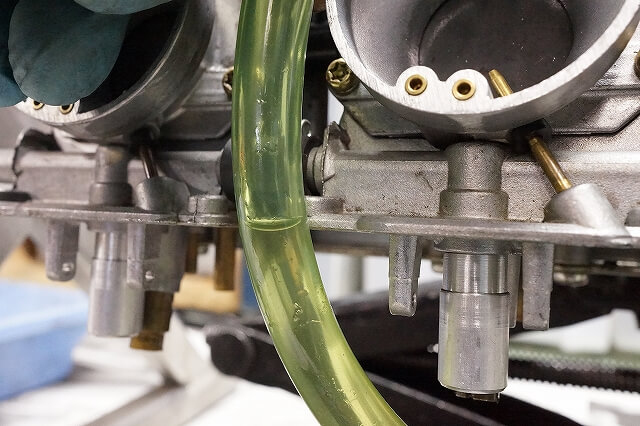
By checking the float level and actual fuel level, you can confirm the gasoline situation inside the float chamber. If you check the actual fuel level, you’ll have peace of mind about that gradual rise we mentioned earlier.
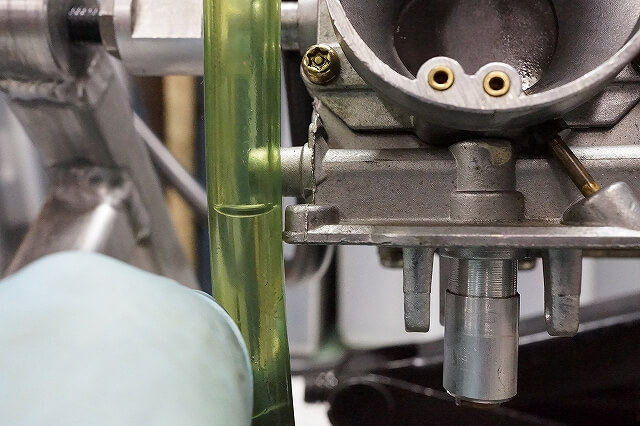
I’m often asked if checking the actual fuel level is really necessary. By checking the actual fuel level, if something goes wrong after assembly—like poor running or overflow—you can rule out “float valve and fuel level” as the cause, which speeds up troubleshooting and saves hassle. Fuel level changes by a few millimeters just by tilting the carb five degrees. In the end, it’s always “sloshing around.” But I think it’s better to have all four matched up.
The leak has stopped and the exhaust note is stable and satisfying.