Work’s been piling up with all the coming and going from our main business of handling inspections.
Let’s make steady progress.
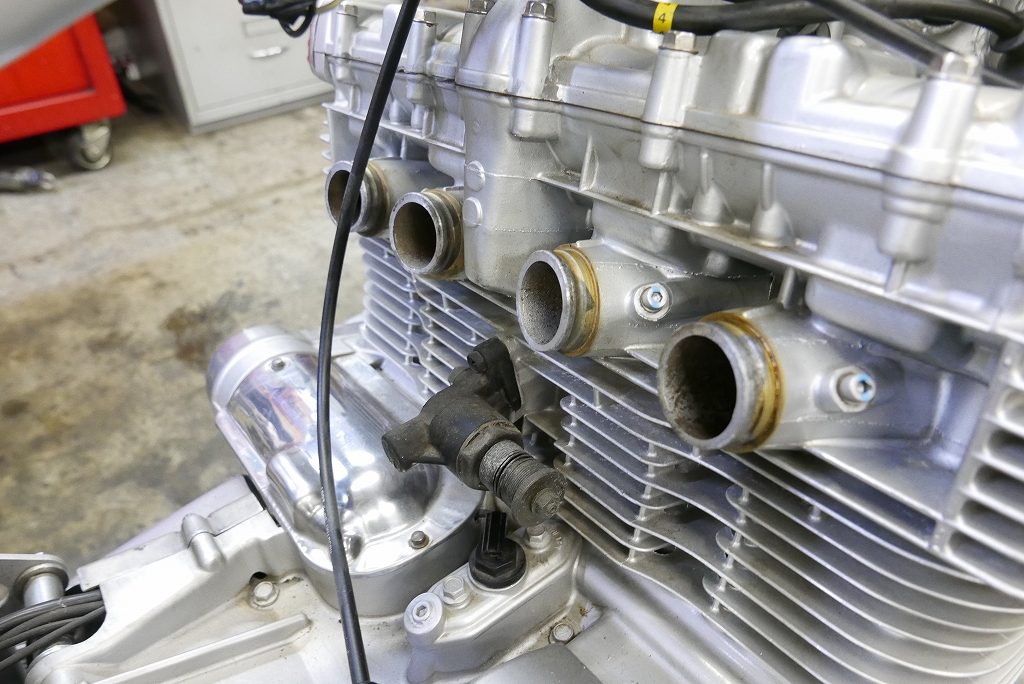
The bike runs fine overall, but that crisp “pop” and “vroom” with the four-cylinder feel is a bit weak. When I checked, it was sucking in a little secondary air, so I’m replacing the intake manifold.
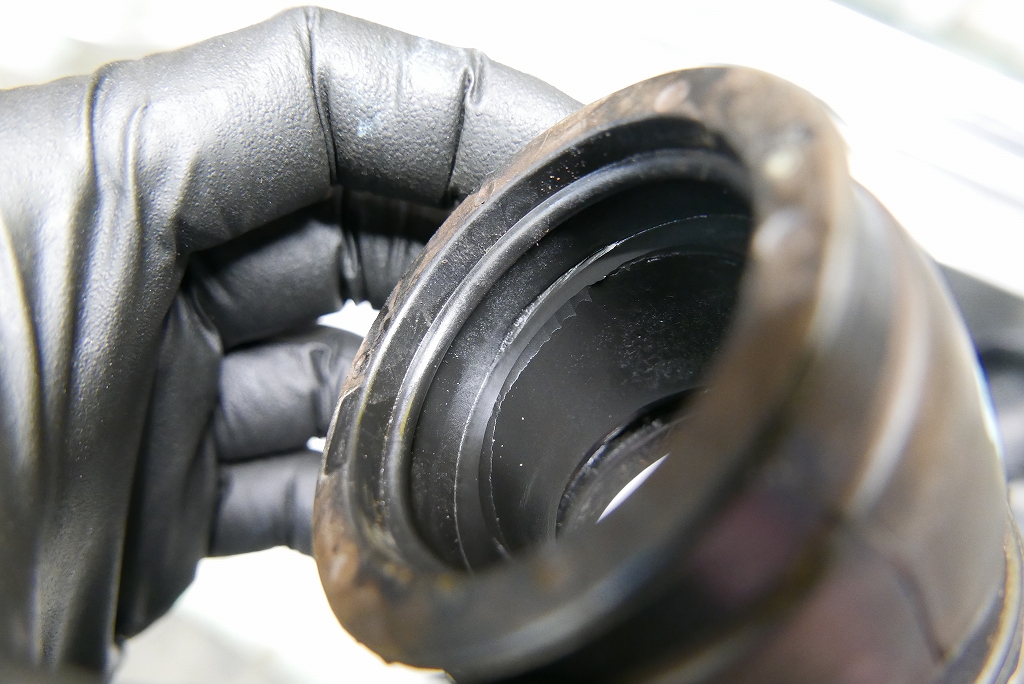
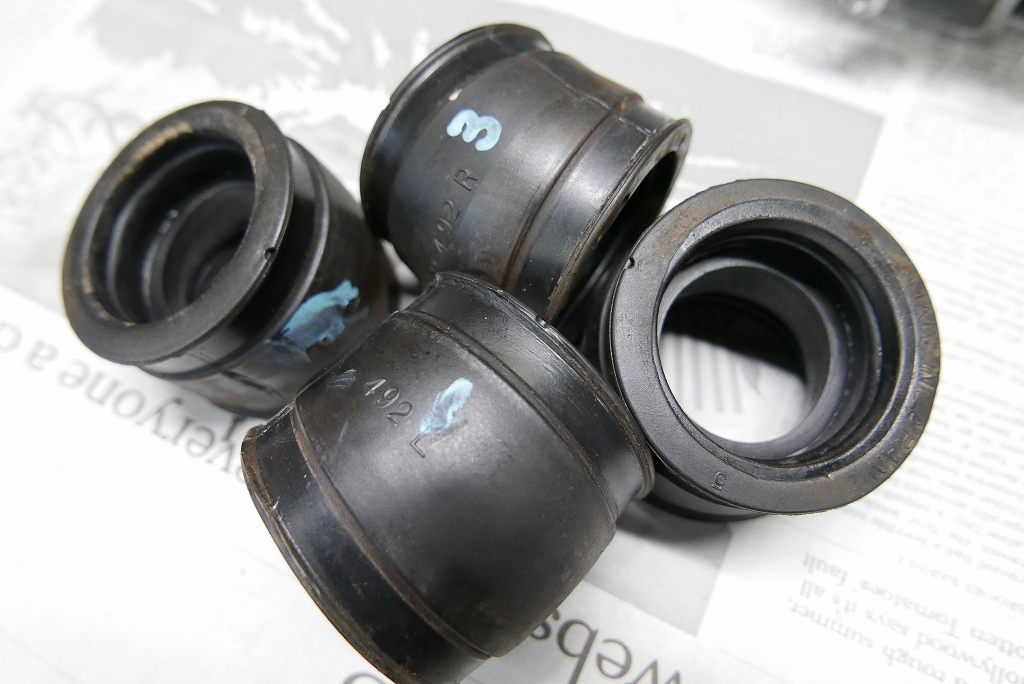
The used one is softer, but when you push it into the carburetor and head side, it’s loose.
It’s got a pretty unique shape, you know…
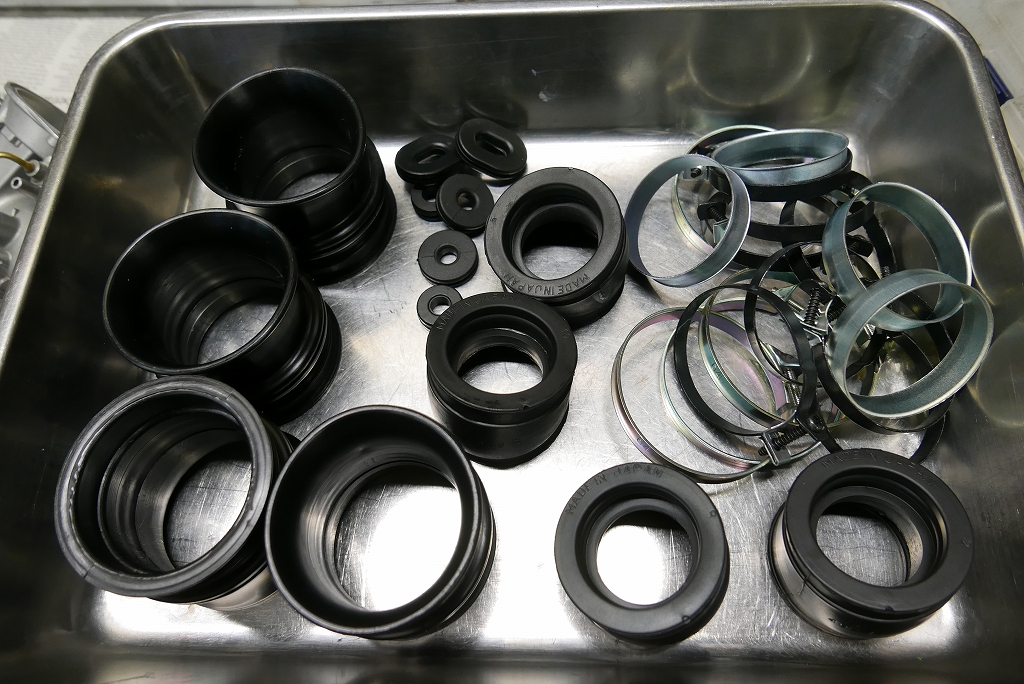
I’m replacing the intake manifold, air cleaner joint, band, and the grommet that holds the side cover. (Making sure not to break any tabs by keeping the load off.)
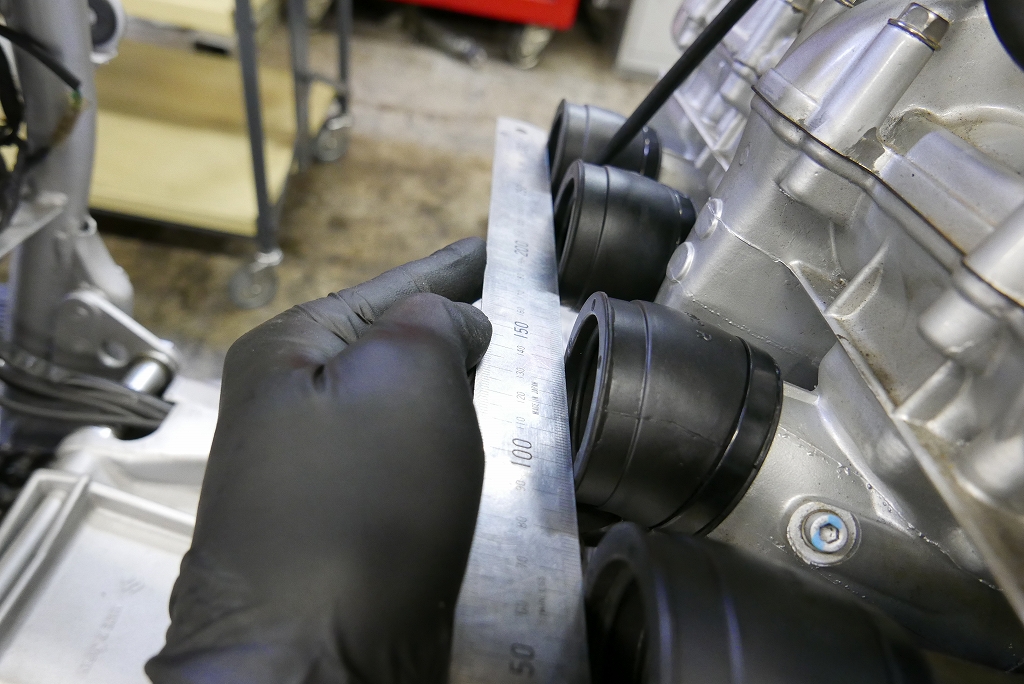
Since the angle is adjustable, I’m keeping it as straight as possible. Then I replace the air cleaner joint and start it up. “Vroom!” Perfect and reassuring.
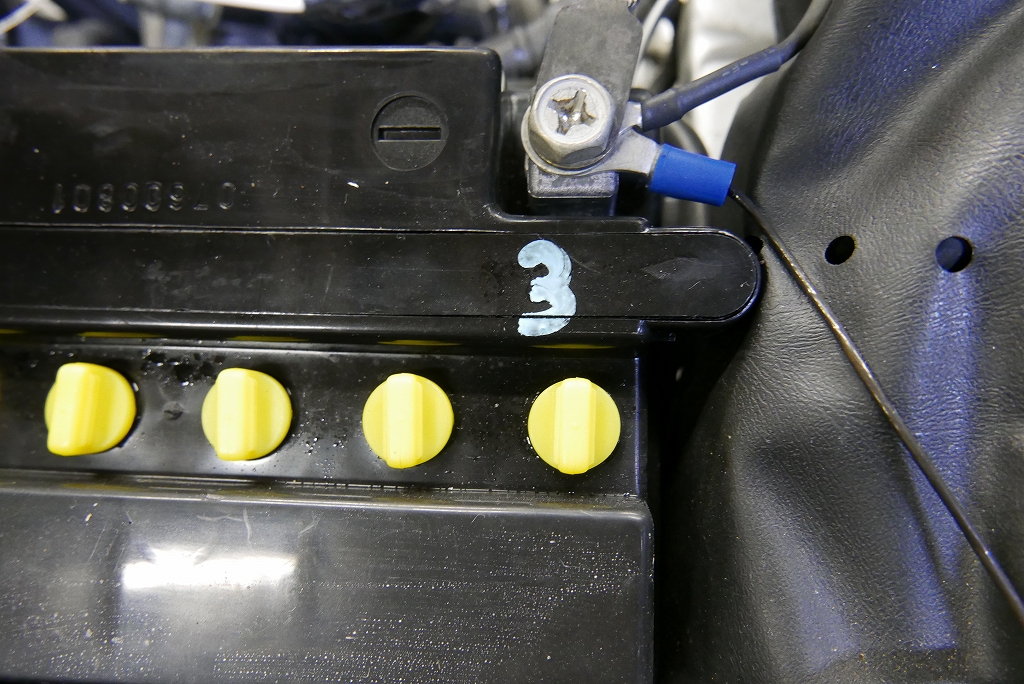
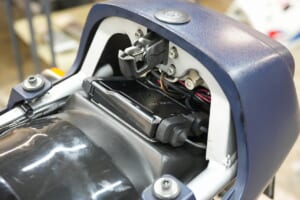
I see people tapping power and ground from the battery side.
There’s no problem with it, but here’s a suggestion: if you label the wire count, other people working on it will feel confident too! Things like limiter cuts can be forgotten and then the bike won’t rev, so it’s better to prevent mistakes as much as possible, I think.
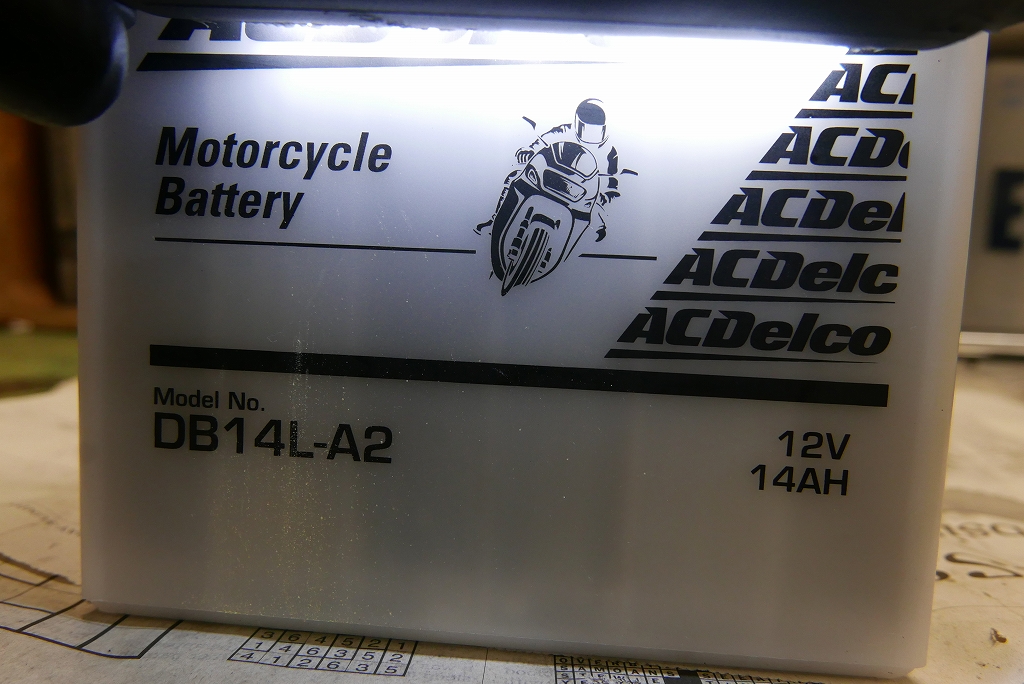
It’s hard to see, but the fluid level is pretty low.
Wet-cell batteries (flooded type) bubble and spit out through the breather when charging, so the fluid level drops easily. The fluid that spits out is dilute sulfuric acid, and the surrounding gas causes corrosion, so it’s better to switch to a sealed battery if possible.
Standard MF batteries have some issues, so WESTCO batteries are reliable. The lifespan and performance are quality you can trust.
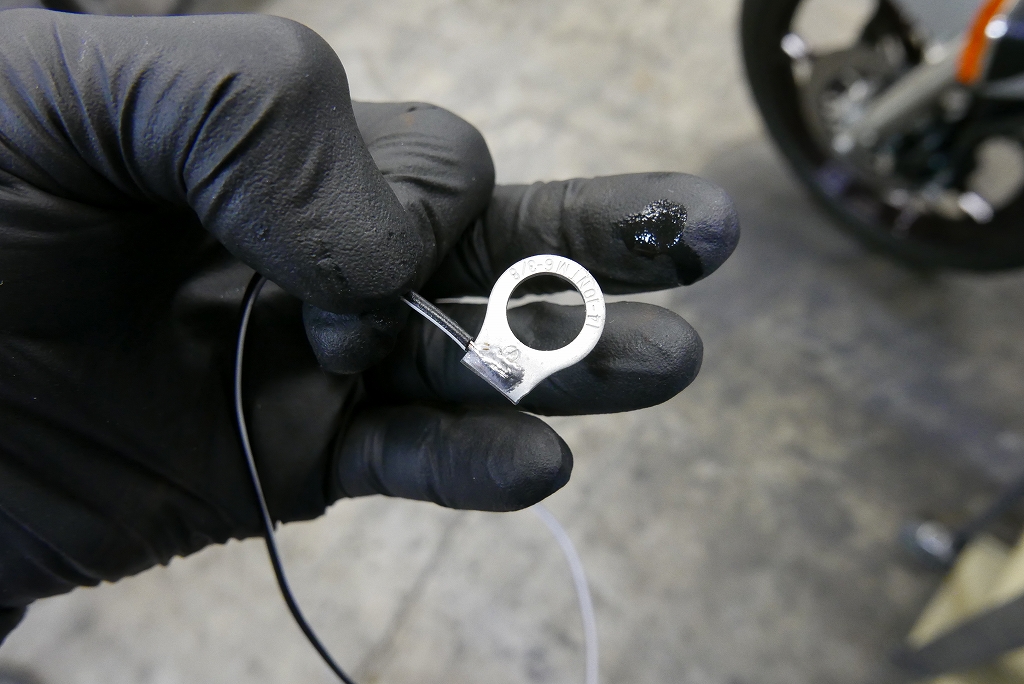
About the rear left turn signal ground issue. I can’t disassemble the inside no matter what. When I ground the boss that fixes the turn signal, it lights up. I don’t have an M10 ring terminal, so I made something a bit tricky as a substitute.
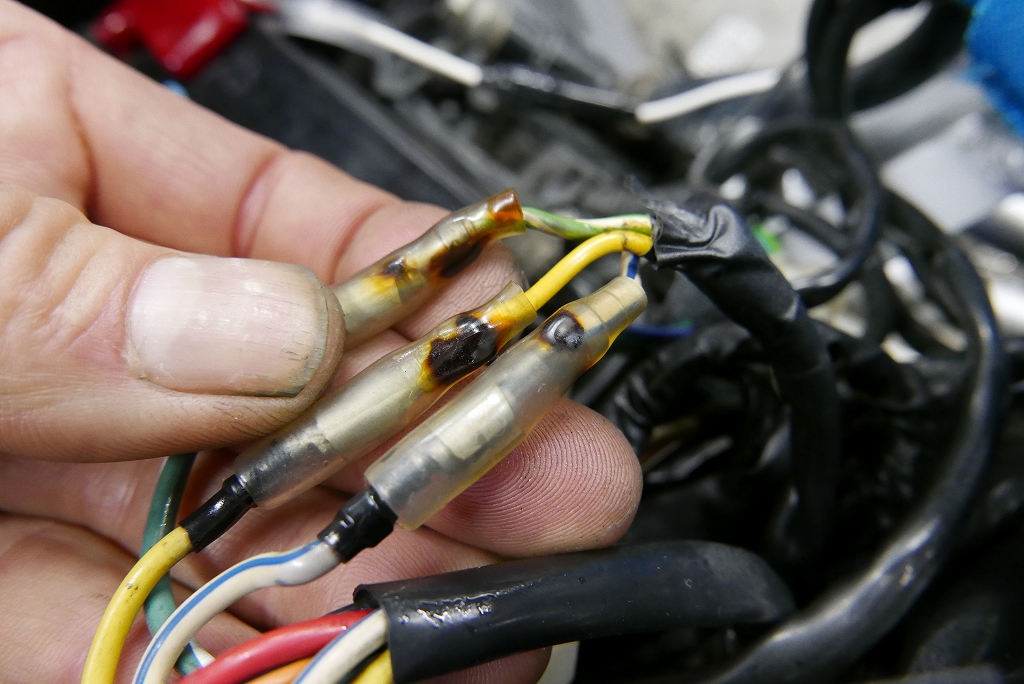
While I’m at it, I’ll do a quick check of the charging system. Terminals under load in the charging system tend to get hot—that’s always been the case. Sure enough, everything checks out.
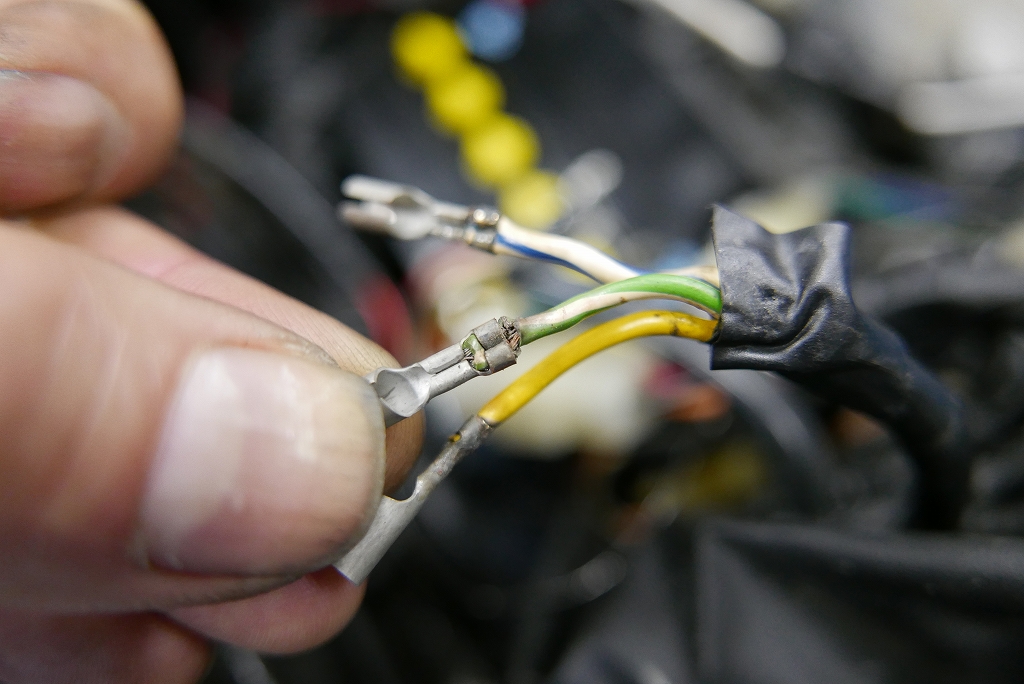
Whether these connectors are round or flat doesn’t make much difference, I think.
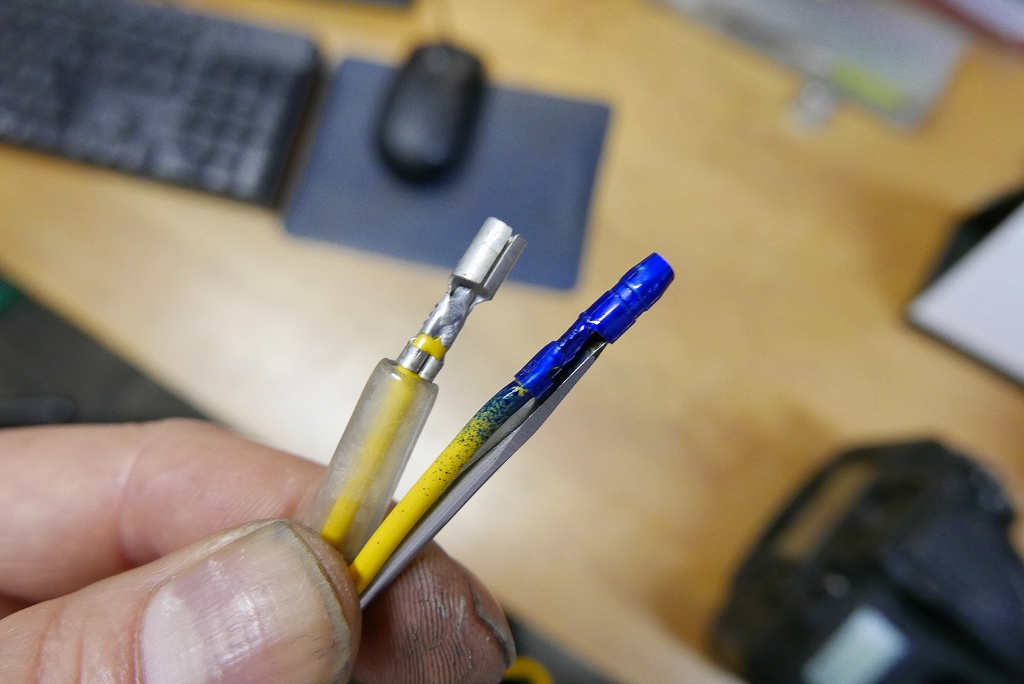 By the way, if you paint the connector with blue dye and plug and unplug it, you’ll see.
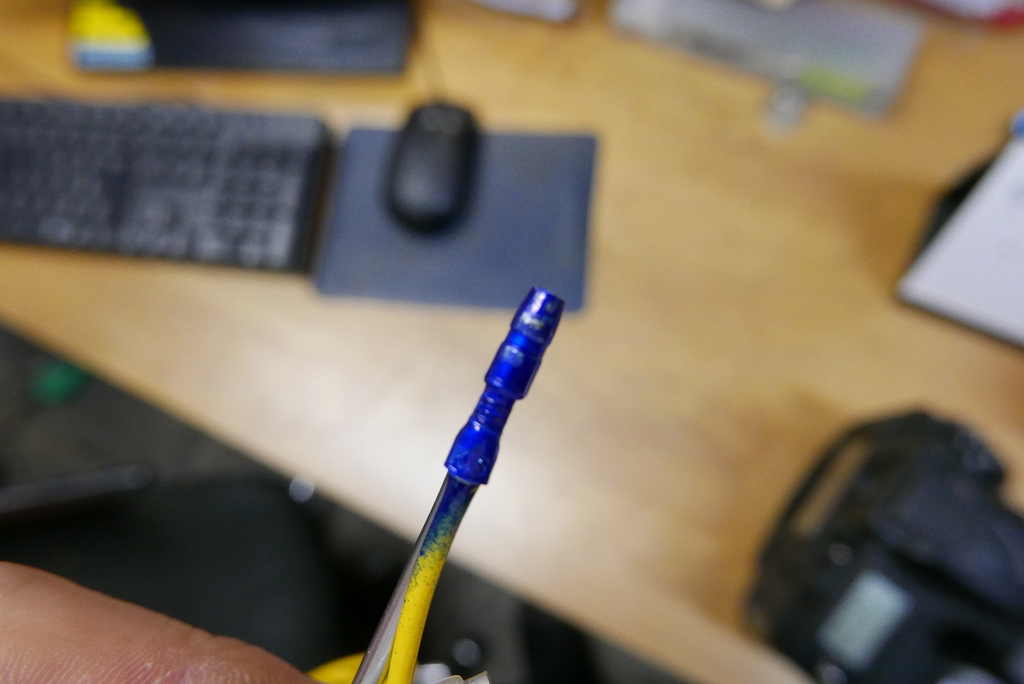
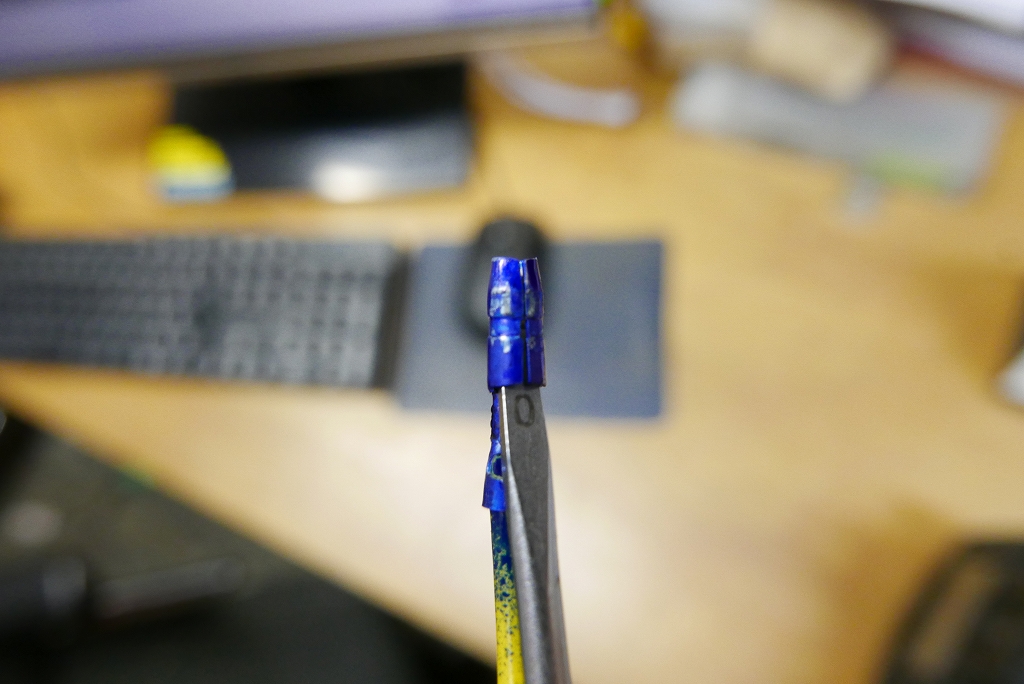
Surprisingly, contact happens at only a few point-like surfaces.
Next, where the connector is crimped, it’s gripping a bundle of wires. The outer wires are probably in tight contact with the adjacent wires. If they’re exposed, oxidation sets in and current flow suffers.
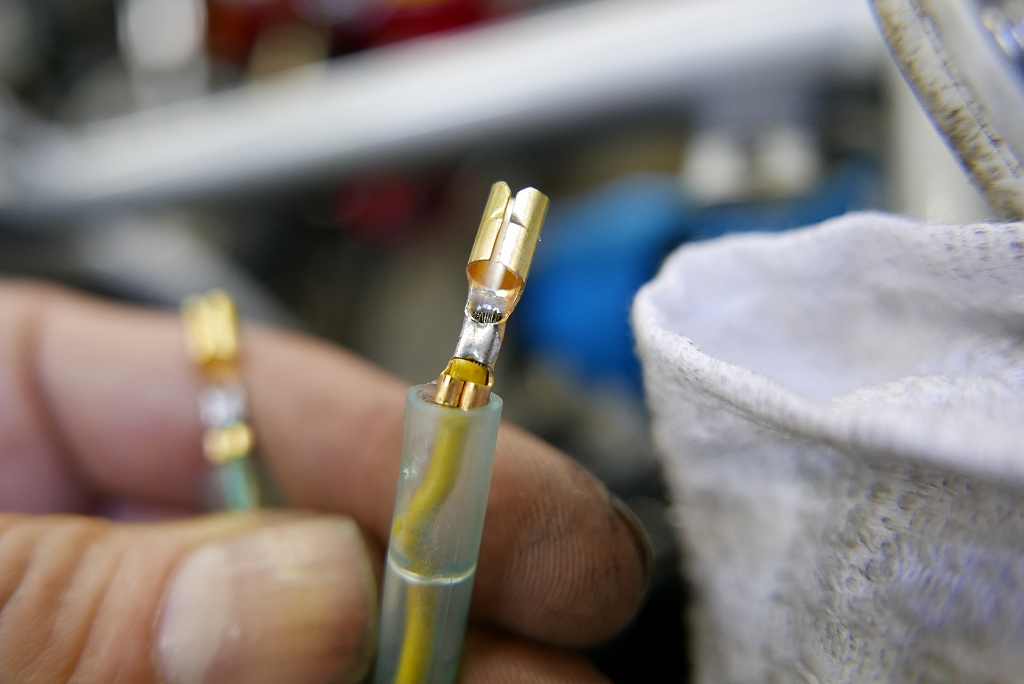
By flowing solder all the way to the wire, it becomes more integrated and might not hold heat as much, I think.
People sometimes ask me if they crack or break often, don’t they?
I solder all the crimped spots and clean with flux cleaner. Depending on how the harness is fixed, if it’s packed tight or the electrical system isn’t floating, cracks and breaks might happen. That’s what I think.
* This is my own method, so please take it as a reference only.
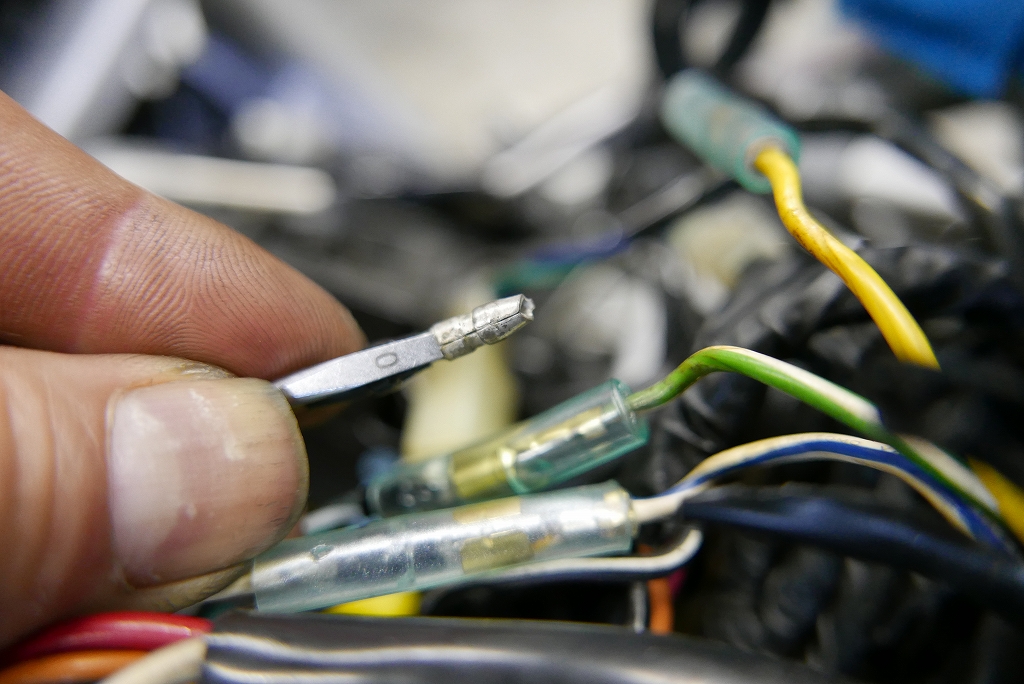
A tip when inserting connectors: use a small flathead screwdriver to make sure they go in securely.
It makes a real difference in reliability.
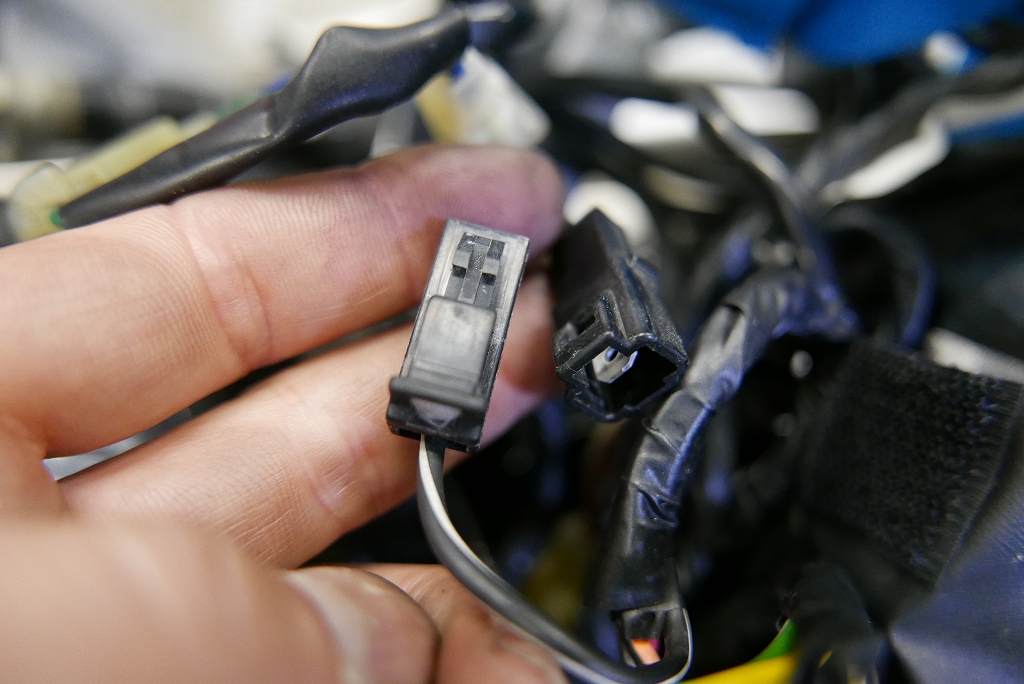
Also check the ground while you’re at it. This connector handles all the grounds.
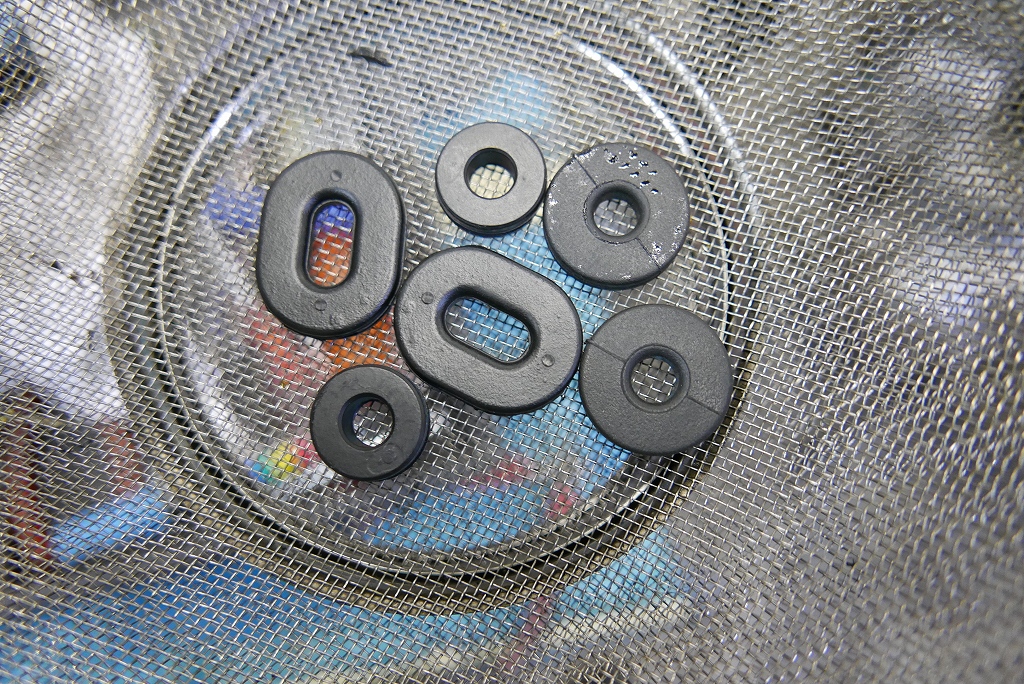
New grommets are soft and covers attach and detach smoothly! The chance of breaking goes way down.
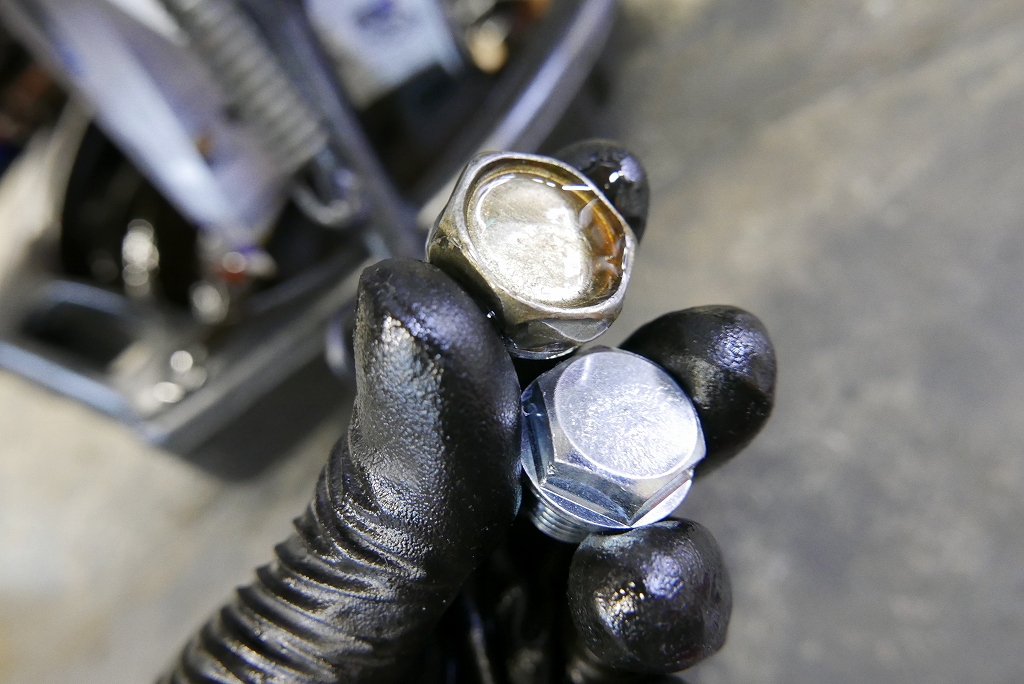
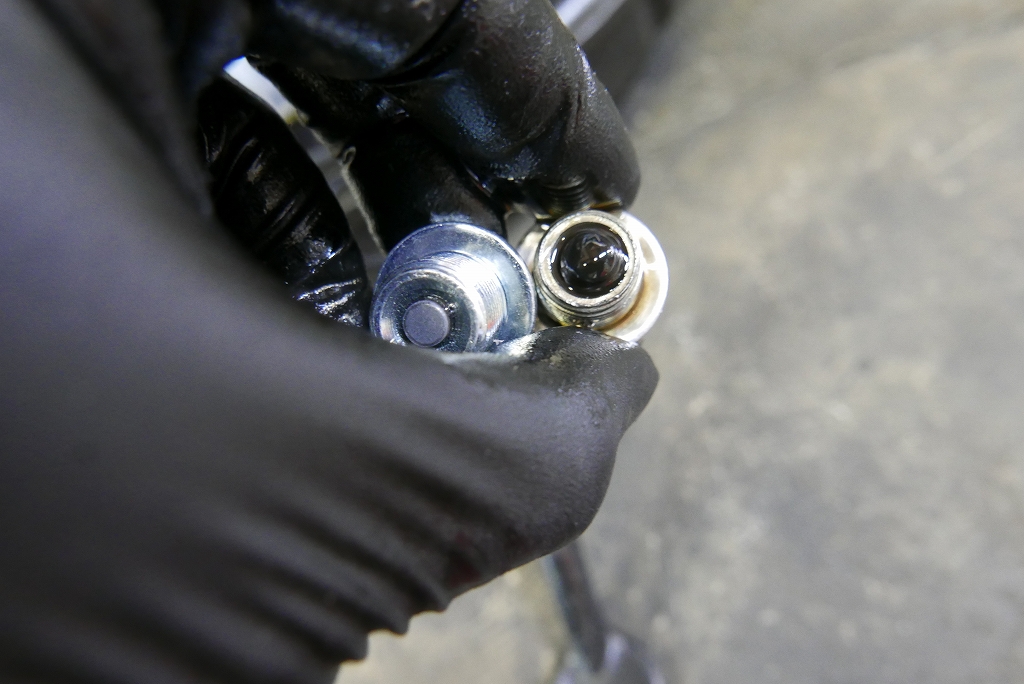
I’m replacing the old 21mm drain bolt with the current type. The wrench size becomes 17mm, so anyone can do an easy oil change anywhere.
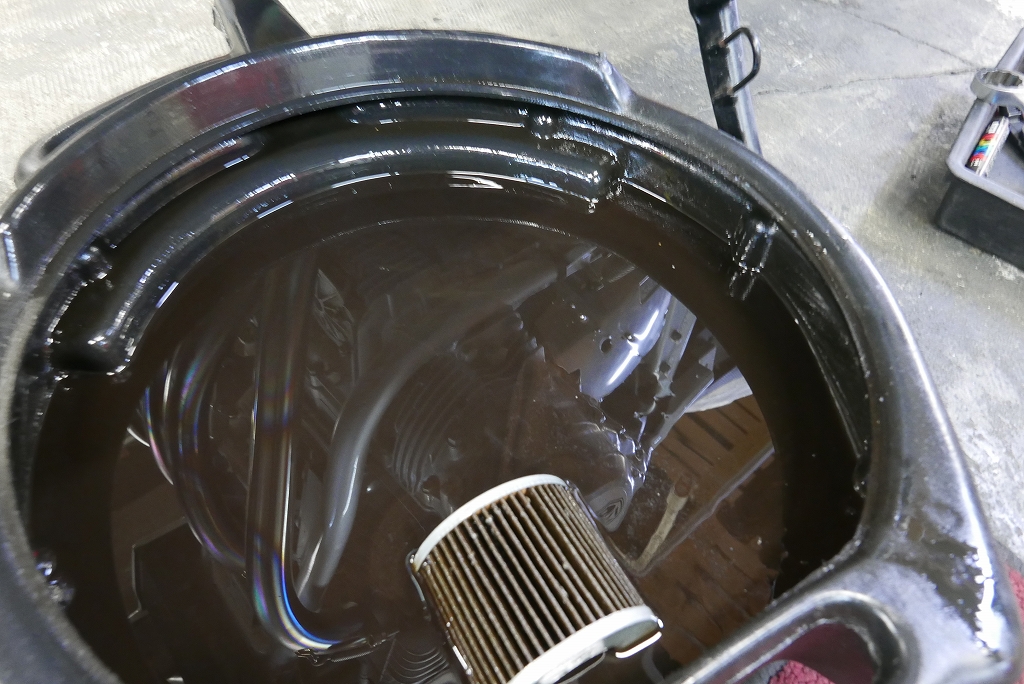
Engine oil: ELF MOTO4RACE 10W-60
Perfect for water-cooled and air/oil-cooled engines. Oil viscosity is marked as ○○W-□□.
Learning about viscosity index and such from the manufacturer’s site will help you choose better.