With an old machine like this, you never know what might have happened in the past, so let’s check carefully and proceed.
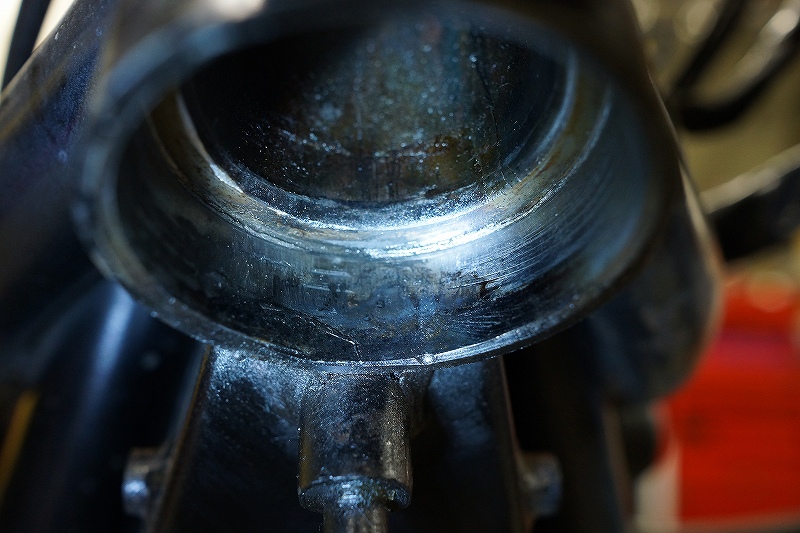
The lower side is a bit rough. I imagined some negative scenarios—like it being loose and fixed with a backing washer—but it turned out fine.
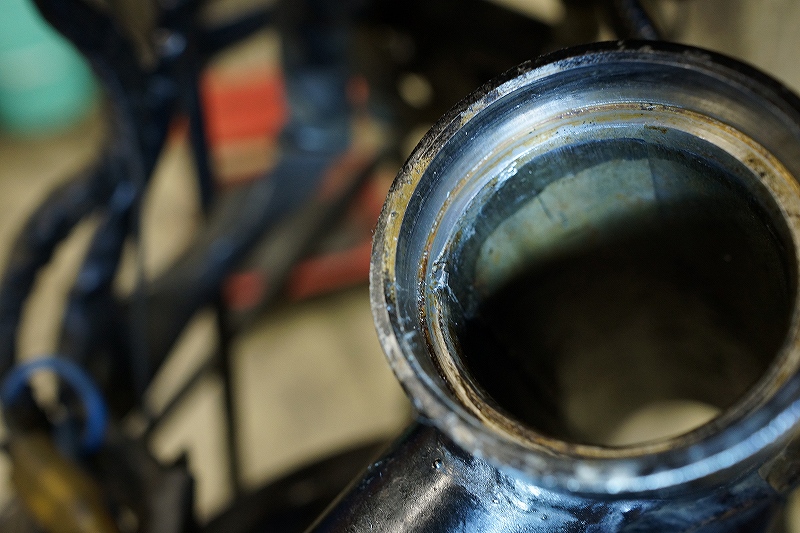
There are burrs flying around, so I’ll clean those up.
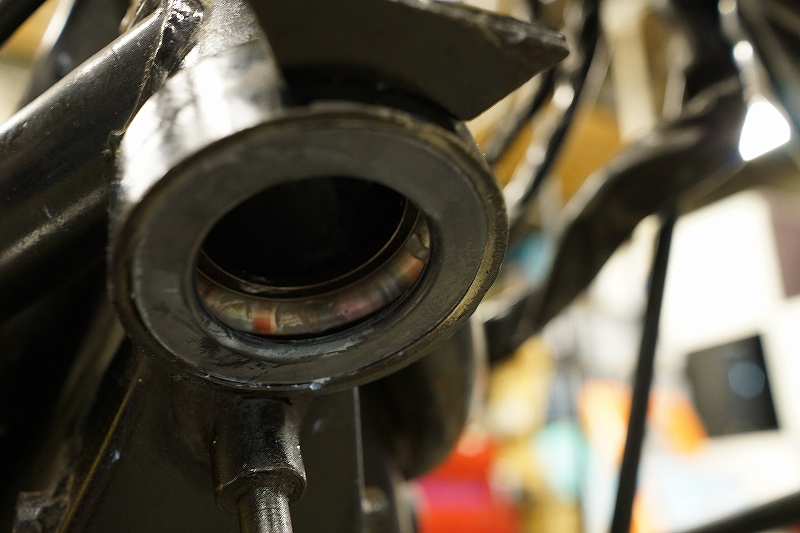
It’s always necessary to understand how the standard seal is installed.
If you don’t check how well the seal is working, you’ll often have doubts when adjusting the steering.
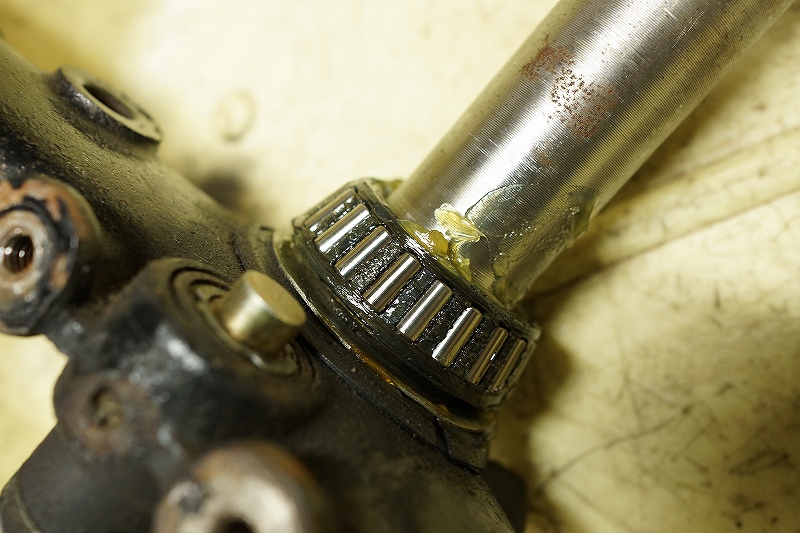
The tapered roller has no standard seal relief groove, so the standard seal appears to be ineffective. This installation state is questionable, but setting that aside—
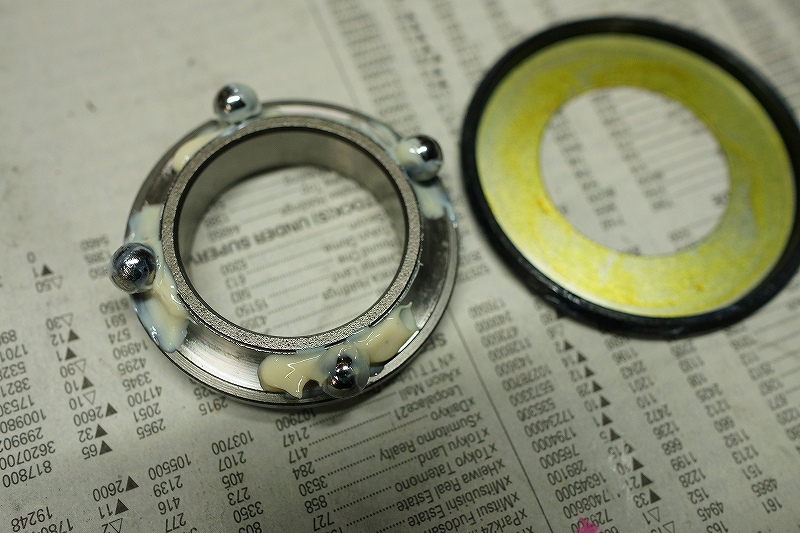
The lower side has a shaft outer diameter of 30 mm, the same as Suzuki, so I thought modern seals might work, but the outer diameter is too large.
Honda probably has something available.
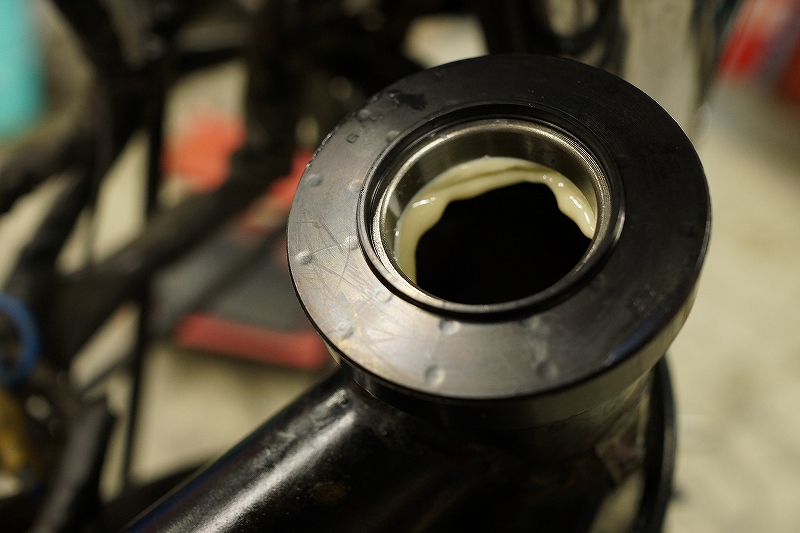
I thought modern seals might work on the upper side too, and I found one with good sealing performance, but as you can see in the image, it requires a stepped adjustment nut.
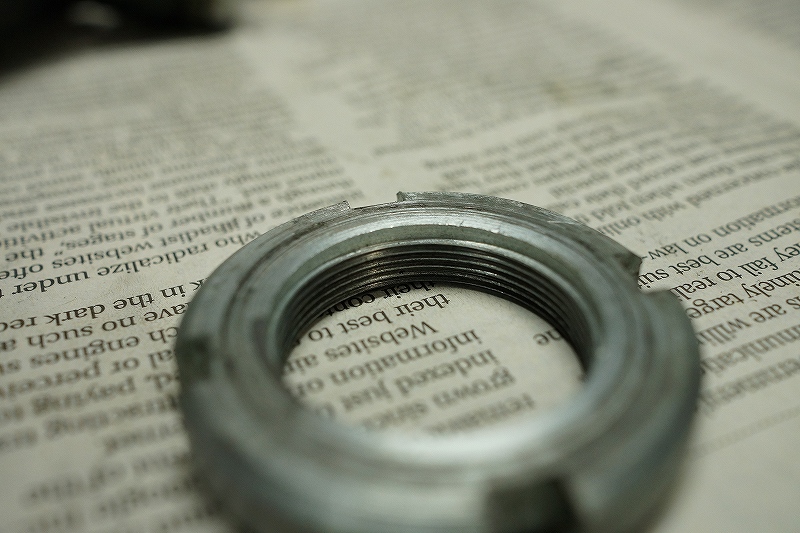
This adjustment nut also has top and bottom sides with relief cuts, so if you stick your neck in carelessly, you’ll be in for a long night. We’ll go with standard.
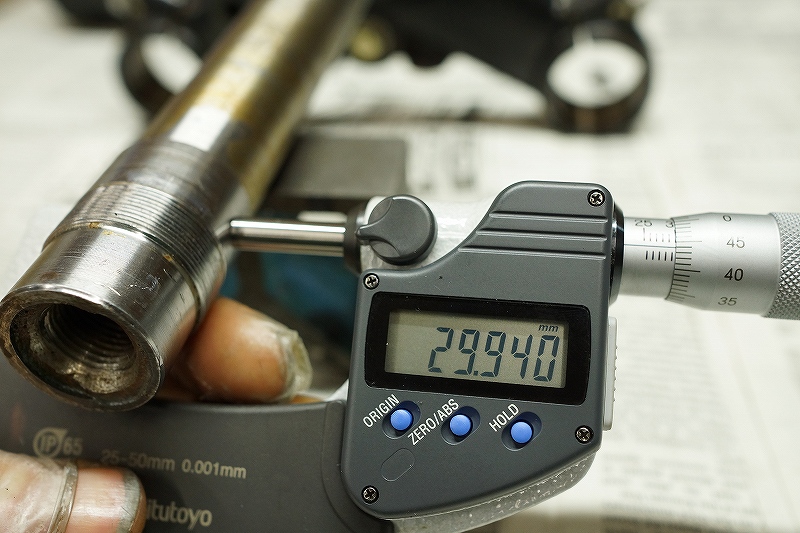
Measuring won’t improve performance, but I think it’s important to know these things.
A steering that moves smoothly and effortlessly feels really good.