Once in a while I’ll write something longer.
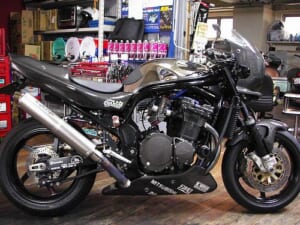
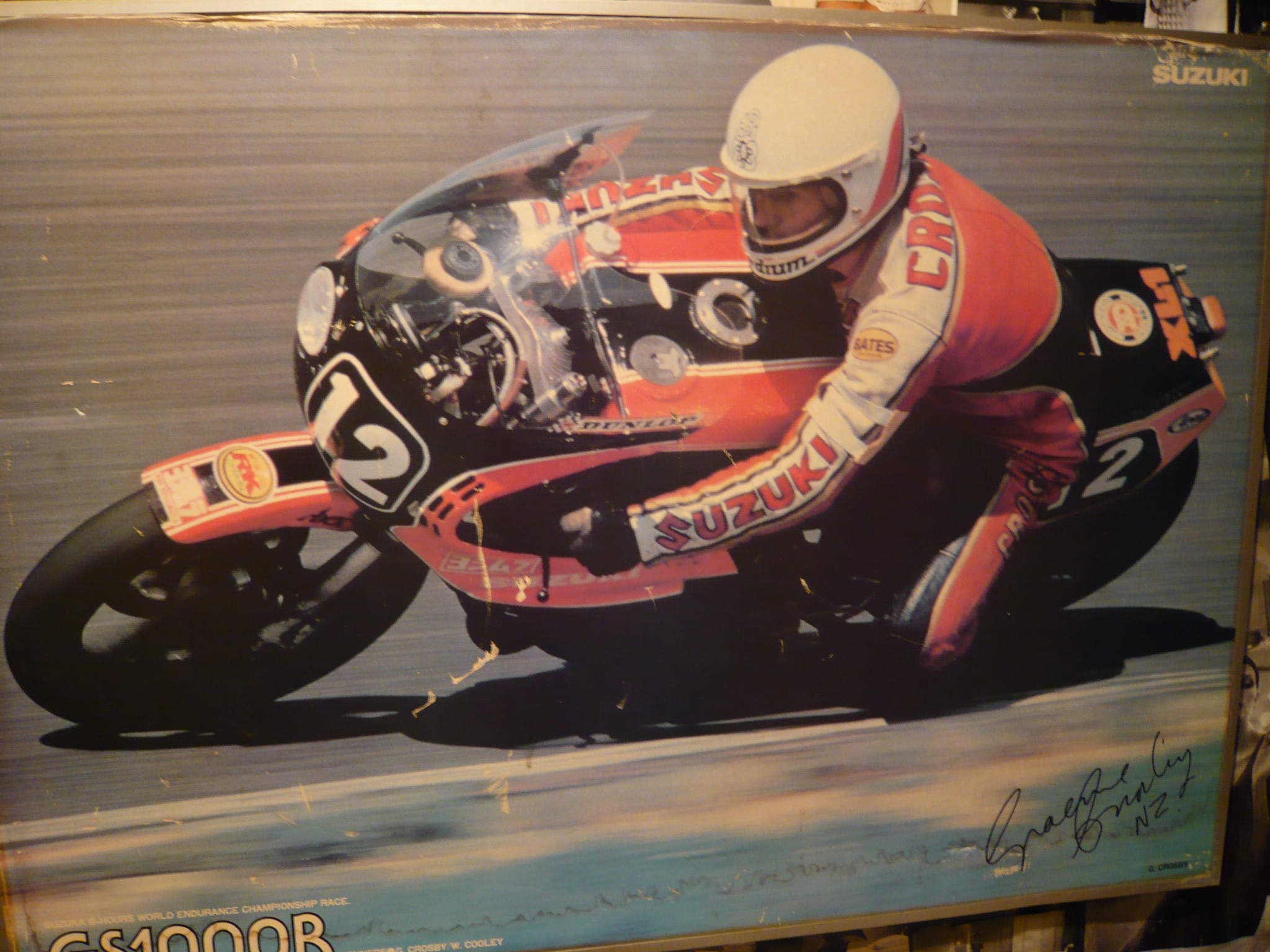
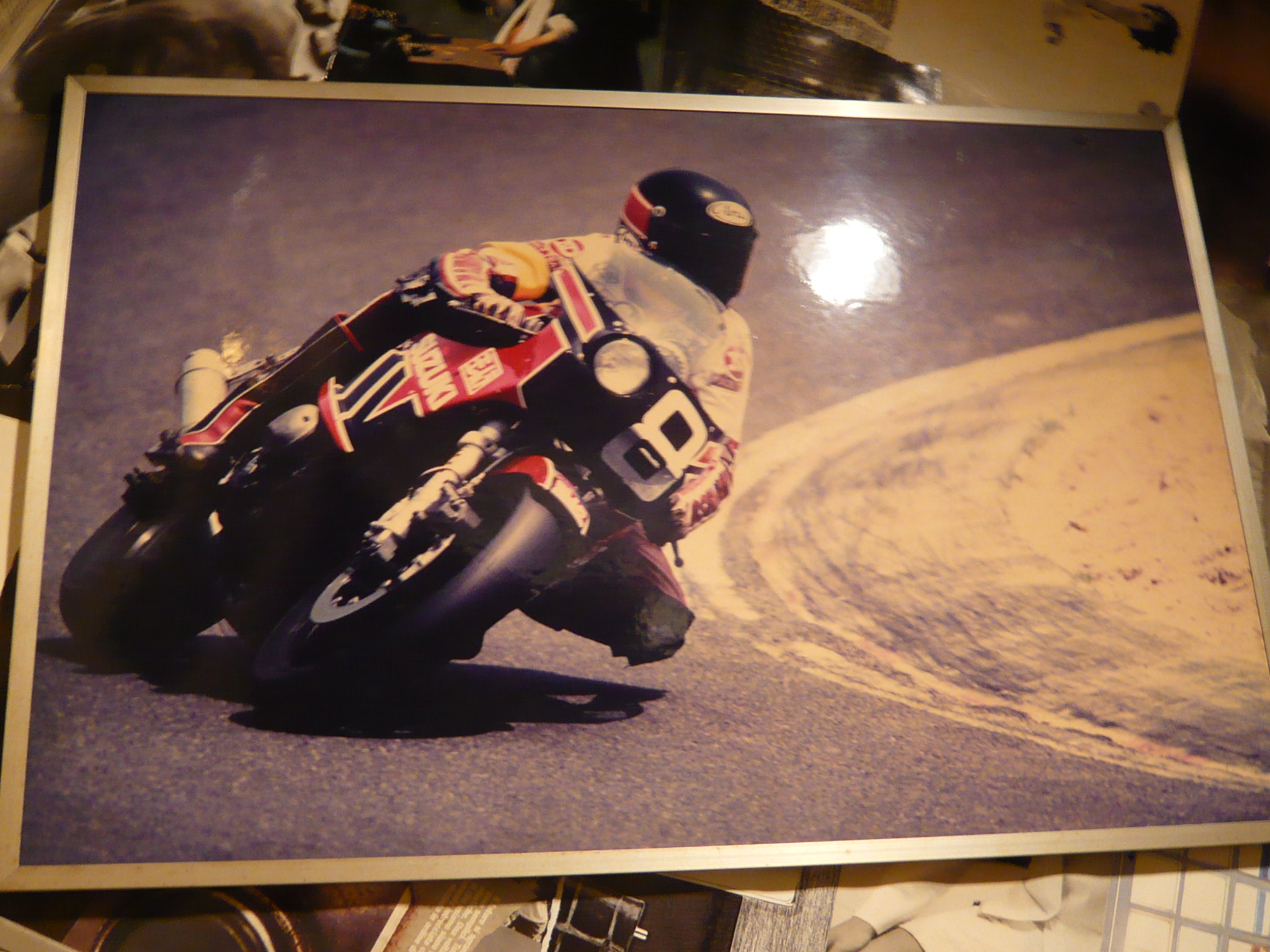
A long time ago (2001), I had the chance to service a GSX-R1000 (the 1980 8-hour endurance race winner).
I’m sure Asakawa has probably done repairs on it about three times by now…
During the first period I wasn’t working here yet, so I only have photos.
And during the second period I got to observe it closely—today’s story is about that.
Around the time the repair came in, I owned a GSX-S1000 myself, so that GSX-R1000 was
a bike completely out of reach for me.
Then one day Asakawa said, “A GSX-R1000 is coming in for repairs…”
No way! That’s amazing! I was genuinely thrilled! And then it arrived from Suzuki on a big truck ☆
“GSX-R1000”!!
It arrived in pretty rough shape—you could really see the damage from poor storage ♪
So what were we going to do?
The engine had been done before, so we were doing valve adjustment and camchain adjustment, plus the whole frame.
The GSX-R1000 has an idler gear added to it, so without special tools you can’t get the valves out
That’s part of what makes it special.
When you’re dealing with a factory machine, the 1980s were all about “magnesium, titanium, and machining”! It’s spared no expense,
and the craftsmanship is incredible. The top and bottom of the steering stem show obvious rough machining marks from a general-purpose machine, and thanks to that it’s wonderfully light.
They even machined it to preserve the handlebar stopper on the stem—it’s a fearsome piece.
The stem bearings use tapered rollers, and the adjustment nut is pressed into the upper bearing for improved serviceability.
The front fork is a machined 40mm diameter with anti-dive.
It looks similar to the RGB500 (Suzuki’s production racer), but the free length, damping, and spring rates have been changed.
The craftsmanship here is amazing, and not just the machining—the plating itself must be something special.
I still remember how good the color and sliding properties looked.
Even the front caliper nipples are titanium! The calipers are Tokico 2-piston, and the pads are wired on so they come off easily.
The rear suspension has ball bearings top and bottom already installed, and the body is aluminum machined!
The swingarm and chain drive are magnesium! The pulley studs are titanium! The bearings are standard needle roller bearings.
The sprocket and rear disk stay on the arm side for durability—it’s well thought out.
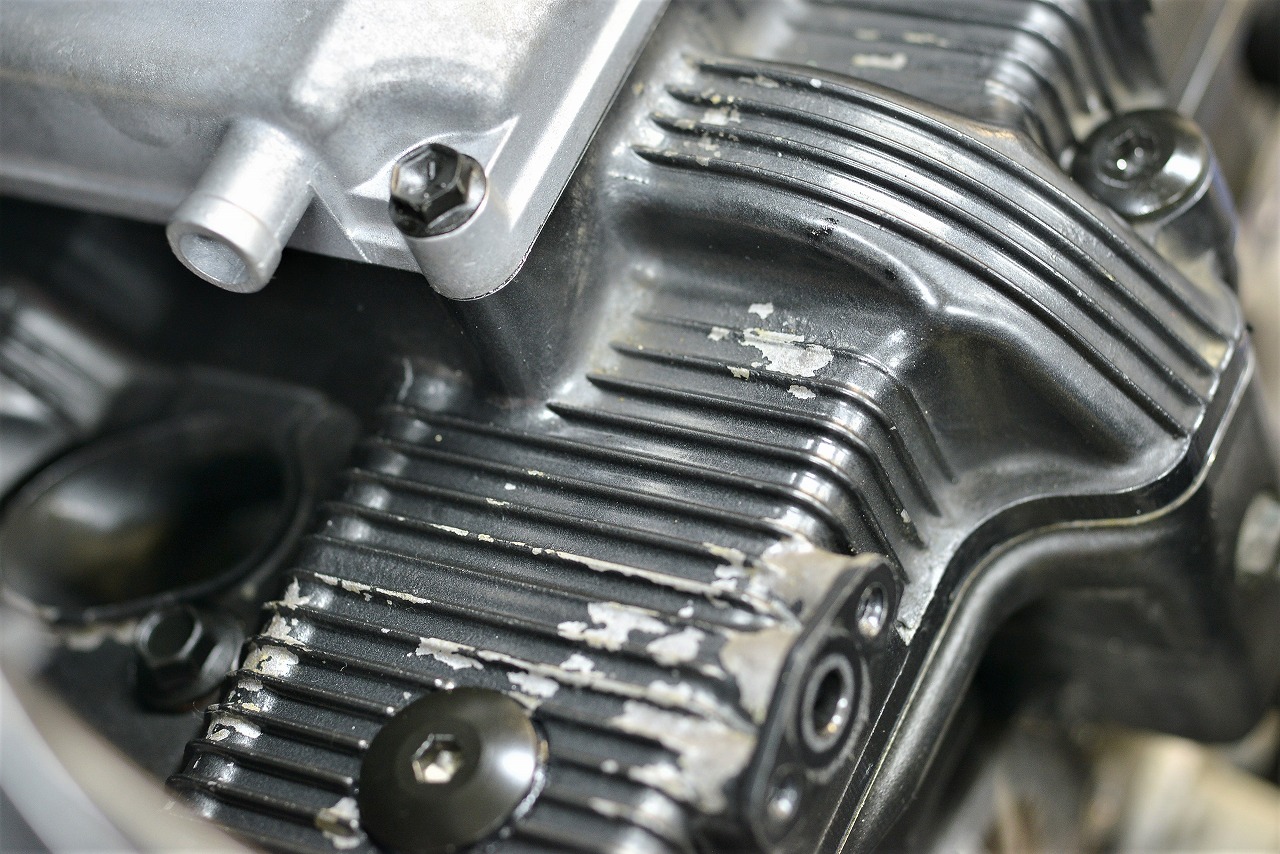
The engine uses Suzuki’s characteristic Phillips-head screws, and the engine covers (except the head) are used.
The oil pan is magnesium! And it’s even drilled. Incredible!
For endurance racing it’s equipped with a dynamo that generates power from the sprocket ☆ This body is magnesium too! I thought, “They really know how to build things.”
The inside of the engine is spotless—truly amazing! The cams and camchain are spotless, and there wasn’t even any sludge inside.
The carburetor is a Keihin CR31 for some reason (not a CR special, mind you). It’s an impossible carb with no idle adjustment, terrible serviceability,
and if you don’t get the centering just right when assembling it, the throttle gets heavy—we had quite a time with it.
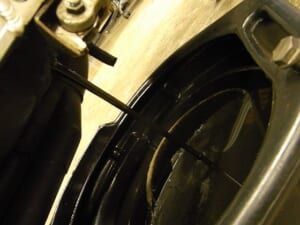
The muffler is also endurance-spec with ball bearings on the top and bottom of the stay for a vibration-resistant structure.
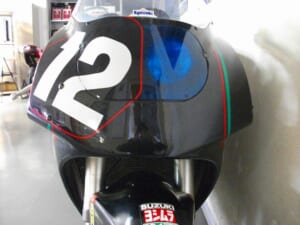
The upper cowl uses quick fasteners? You can remove it with a cotter pin in just a few seconds—amazing!
The reinforcement technology is outstanding! It’s obvious when you think about it, but you want reinforcement without added weight.
They use large-diameter thin-wall tubing and welded plates, with stiffening ribs and reinforcing ribs to keep the material as thin as possible.
Titanium mufflers came out in ’81 and ’82, but this iron muffler from that era is really light!
I’d love for you to hold it once—it’s that light!
Everything about it has purpose, with every unnecessary bit of material removed—you could call it the ultimate creation.
Man, this was one incredible bike!