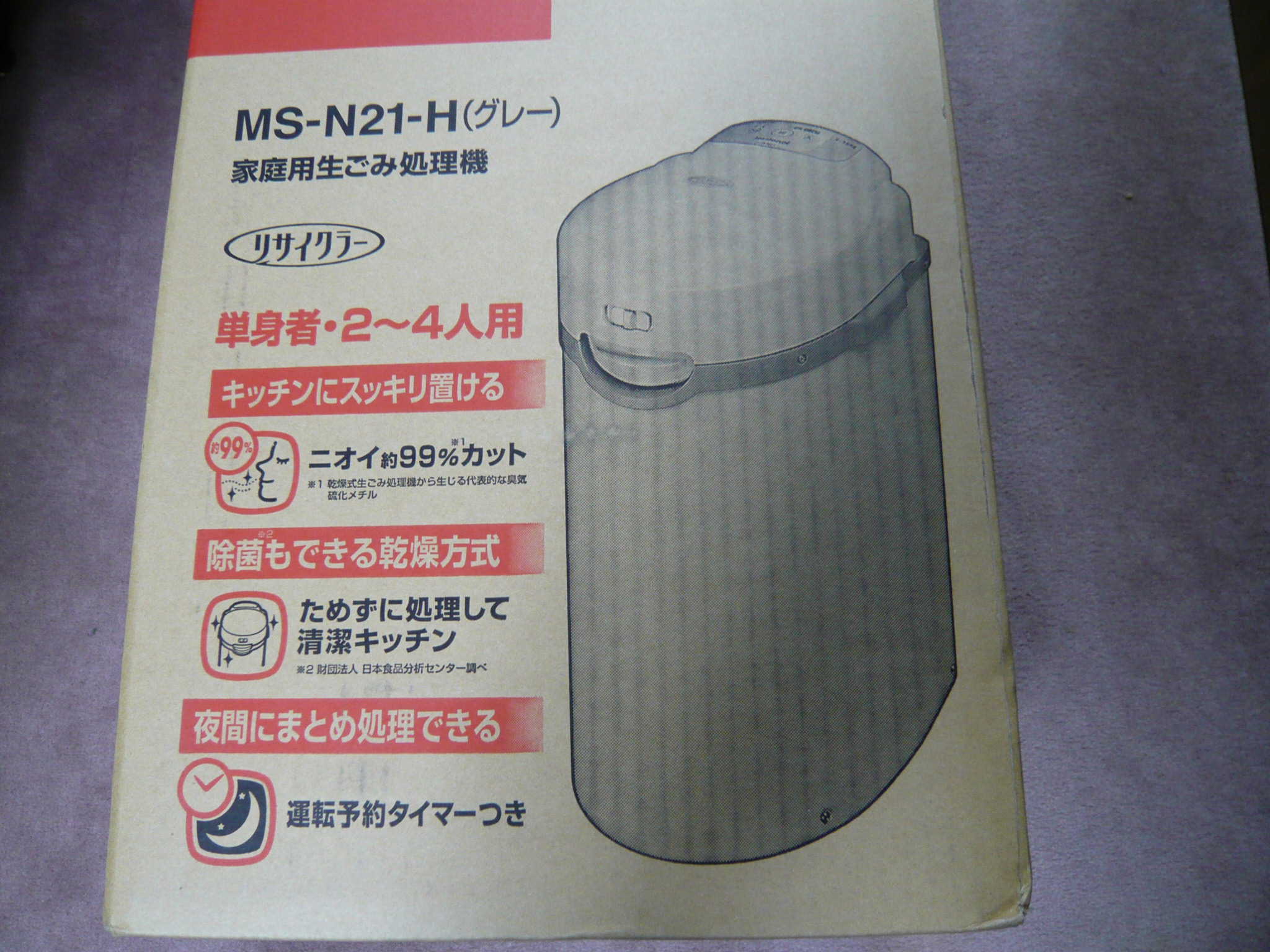
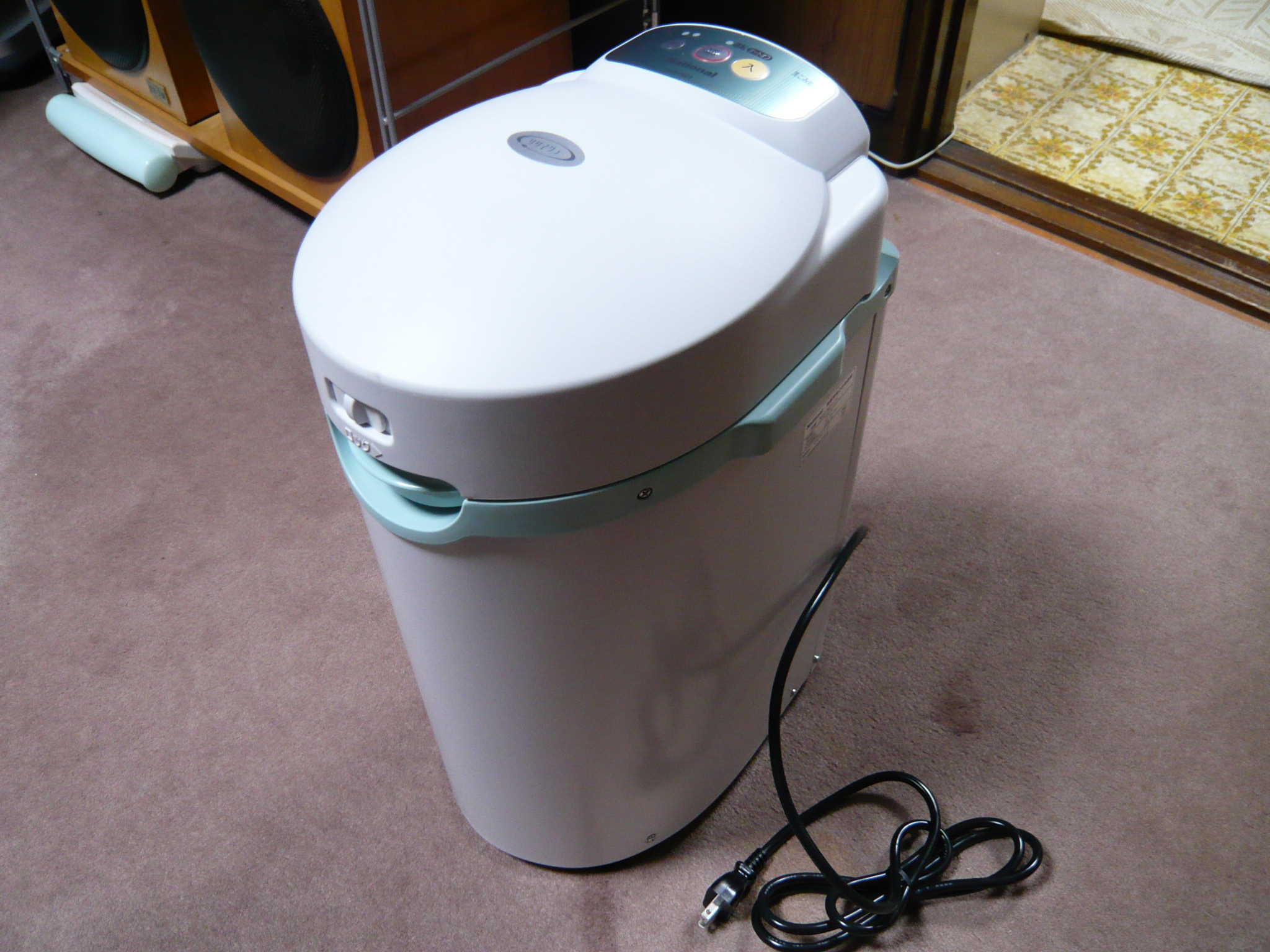
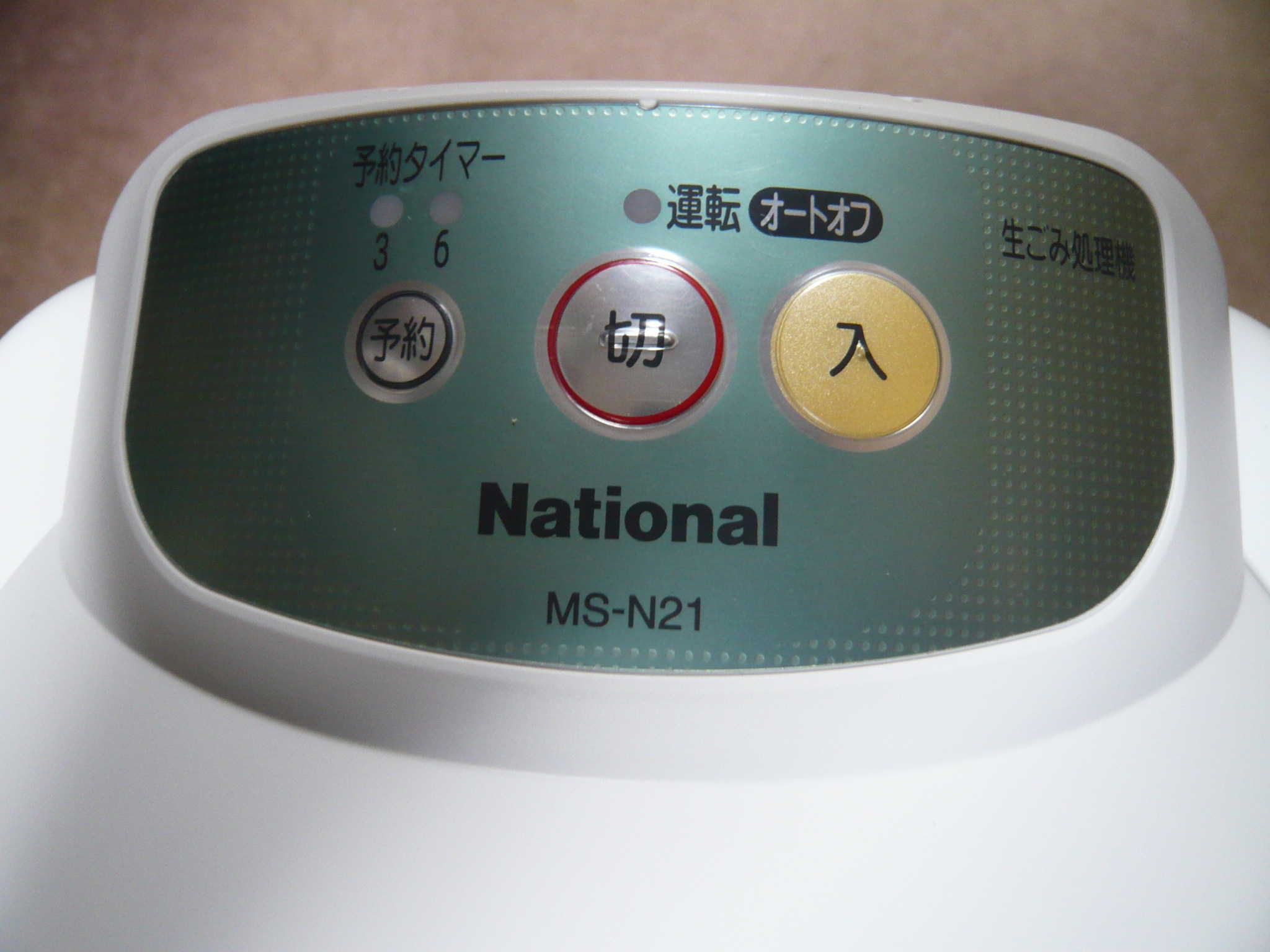
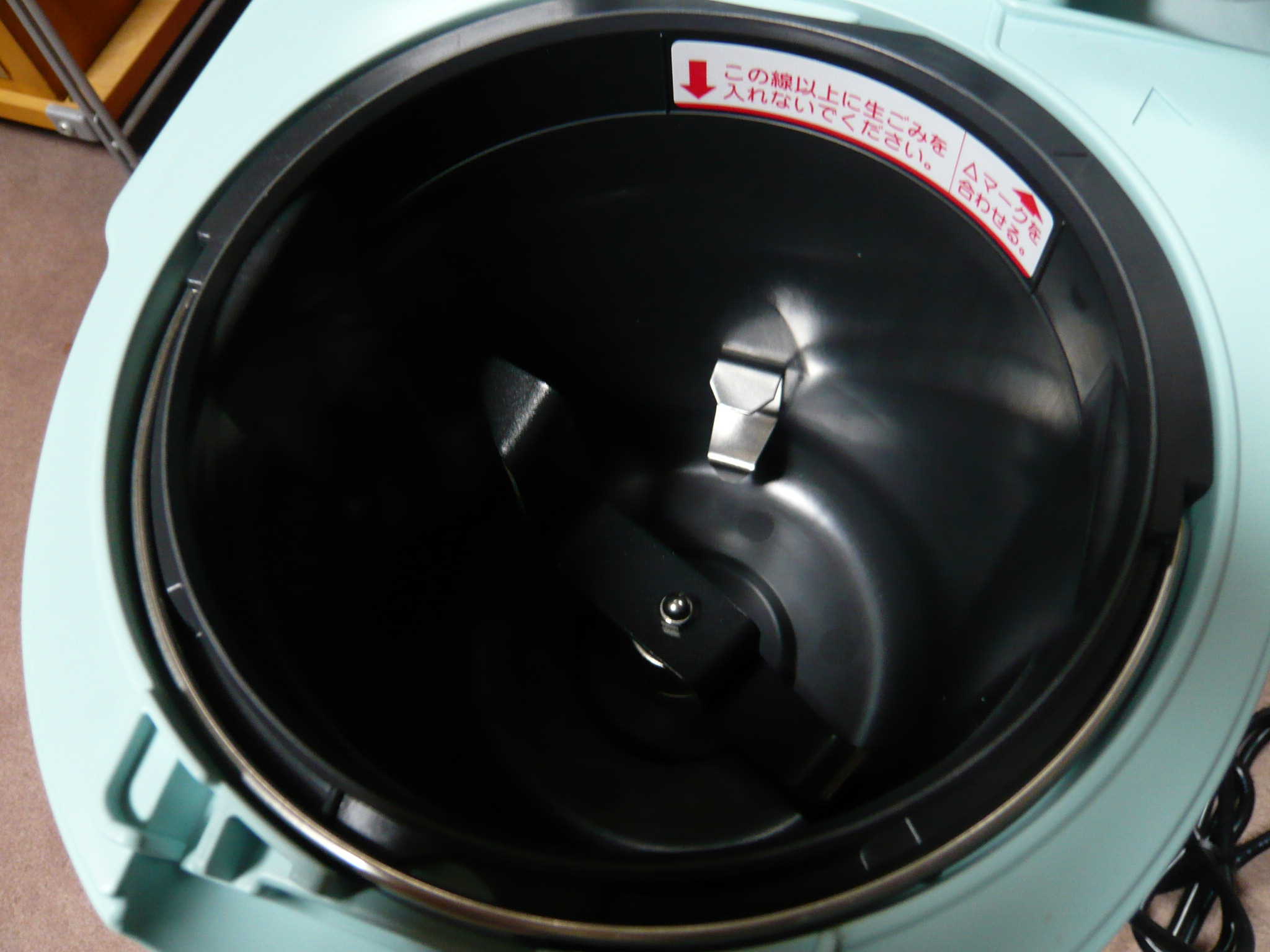
Here are the details about the food waste processor I bought last month.
At first, I thought, what’s the point? Who would ever use something like that?
During this season, doesn’t food waste really become a problem? Fish bones, leftover meat scraps, food residue from washing dishes, and so on.
If you leave it sitting around, it smells and fruit flies start appearing.
When you think, “Well, I guess I’ll go throw out the trash,” there they are in the garbage bag—buzzing around!
So I quickly spray it with insecticide and shake the garbage bag to wipe them all out.
But that’s not very sanitary, is it?
I discovered this thing called a “food waste processor” on the website of my beloved National, Matsushita Konosuke’s company!
I was impressed, so I looked up the price and researched which manufacturer was best.
I investigated how easy it was to use and other factors, and ended up buying one!
Some wards offer subsidies for these, but unfortunately Meguro Ward doesn’t.
So I tried it out right away.
Usage period: About one month
Items processed: Vegetable scraps (lettuce, cabbage, potato, tomato, bell pepper, eggplant, bitter melon trimmings)
Gizzard silver skin (which I don’t eat), eggshells (technically not recommended), tea leaves, leftover rice, and so on.
Odor: It transforms into a pleasant, toasted smell like potato chips. It doesn’t smell bad at all.
Volume reduction: The advertised claim is one-seventh, but I think it’s more like one-tenth. Impressive!
Processing time: One hour 45 minutes (about two hours). Running it before bed seems optimal.
Processing noise: There’s a fan noise that goes “whirrrr,” so you’d probably want to keep it in a room one door away.
Disposal: You can bury the processed material directly in soil or throw it out with regular combustible trash. ★ Cleaning the container afterward is also easy! ★
I think it’s a pretty convenient item. The main benefit is that your trash volume decreases.