Let’s disassemble the front fork.
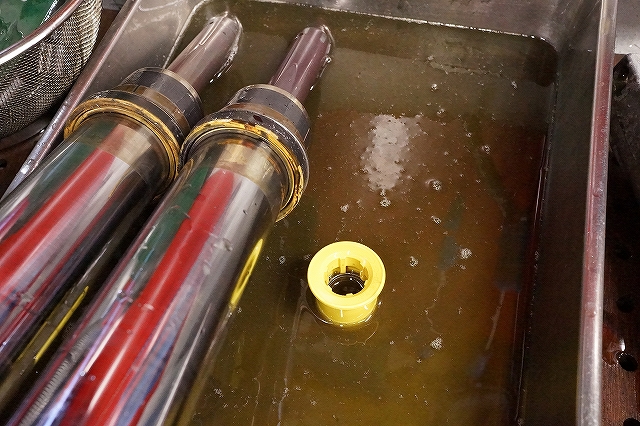
The oil condition is about average in terms of contamination. Modern forks really do move well, but they also stay cleaner. You can see that the internal clearances are maintained exceptionally well.
I’ve always used the method of just loosening the fork cap and pulling out the bottom case first. Well, it’s a method that fails less in many ways.
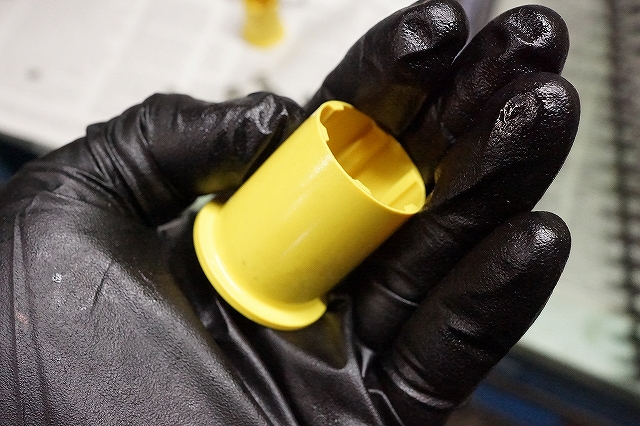
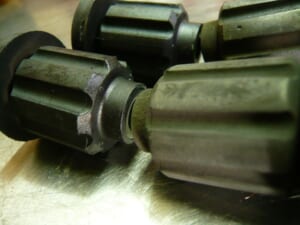
The oil lock piece has vibrant color. It doesn’t seem to expand much, which looks good.
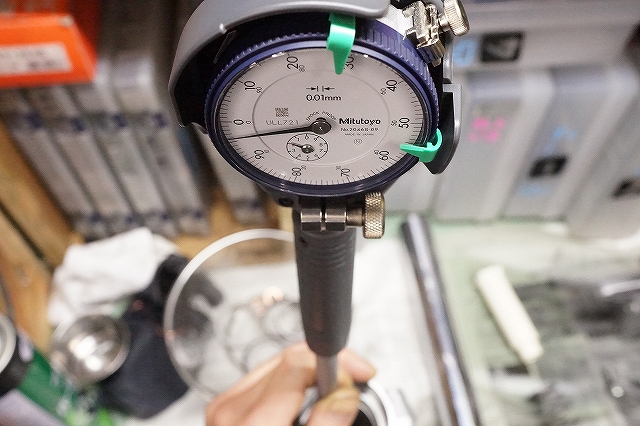
Check the internal dimensions of the bottom case too. Well, even when measured, there aren’t many units that have worn down that much.
Rather than checking for wear, it seems like we’re looking for dents from external impacts.
If you confirm and know the dimensions, when a problem occurs later, you’ll have fewer items to check. If you can only learn about it during disassembly, you’ll regret not knowing it then.
Measuring doesn’t change performance at all, but it increases your confidence going forward. I believe that ultimately leads to safety.
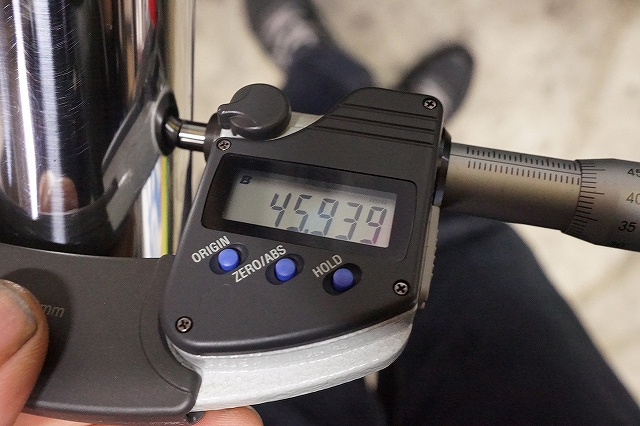
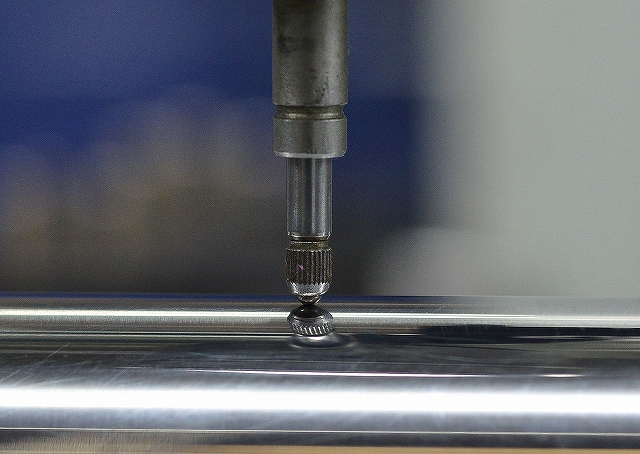
We also check the inner tube outer diameter and metal dimensions. Even if the plating peels off, the dimensions change surprisingly little. Sometimes new parts we order are thinner than the original condition.
Oil seal leaks are mainly caused by seal degradation, foreign matter contamination, poor lubrication, or plating deterioration. I’m always wondering how far we can push these parts.
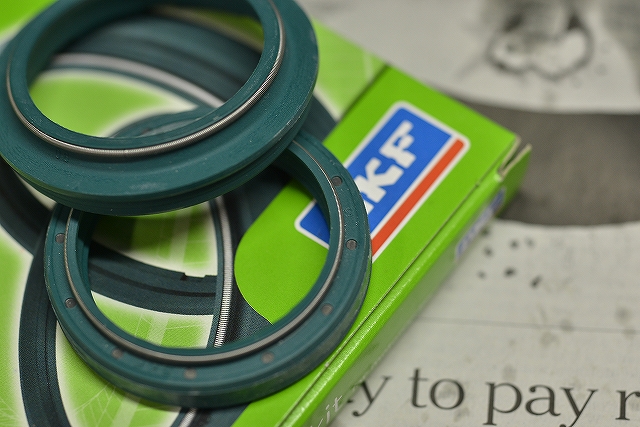
I always tell people, “If it leaks after this, give up on the inner tube.”
“Low friction = oil seal wears slowly = inner tube doesn’t wear = money doesn’t disappear.” It’s a mysterious material, this seal.
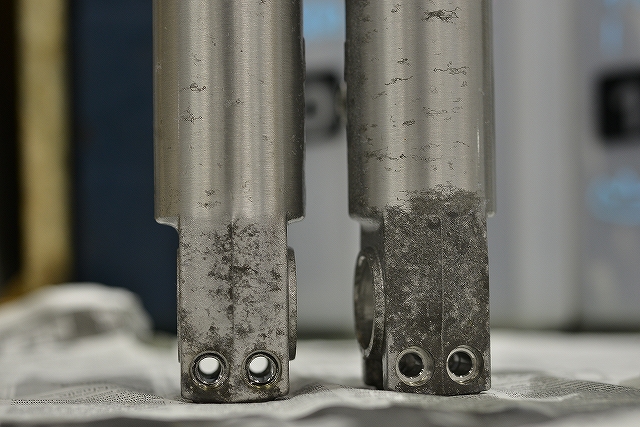
This is what it looked like originally.
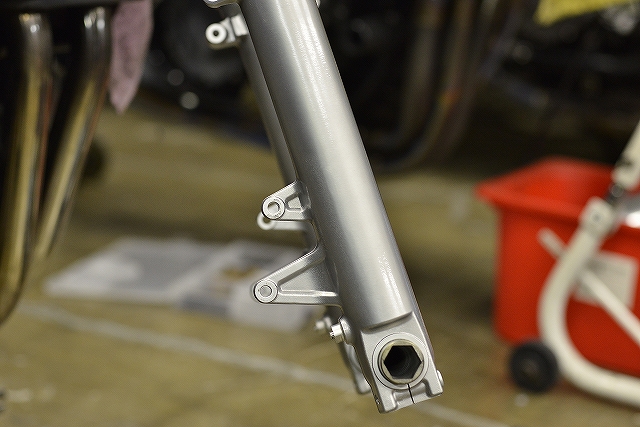
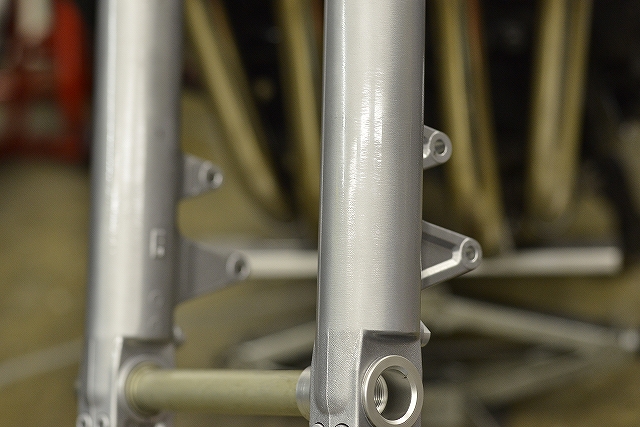
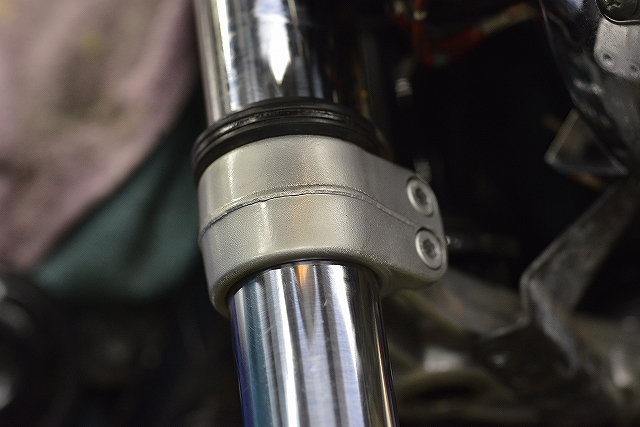
It looks brand new no matter how you look at it. It feels great, and not just for the owner.
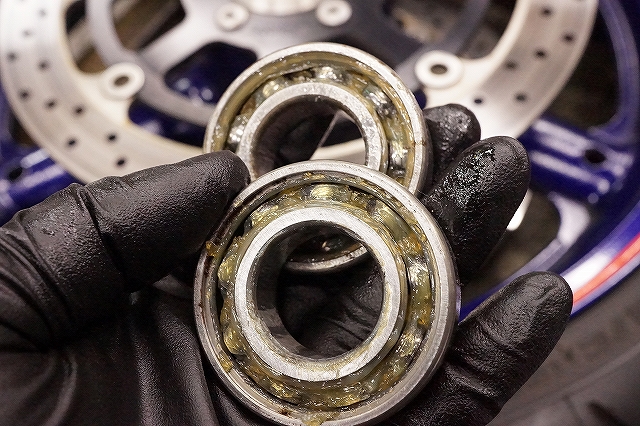
Time passes, and now we replace the wheel bearings. These were in excellent condition too.
I often get asked how often they should be replaced.
There’s the philosophy of “use them because they work, push them to the limit.” But I also suggest, “If you’re going to ride 100,000 kilometers and replace them every 30,000 kilometers, you’d only replace them three times. Wouldn’t it be better to feel good each time?”
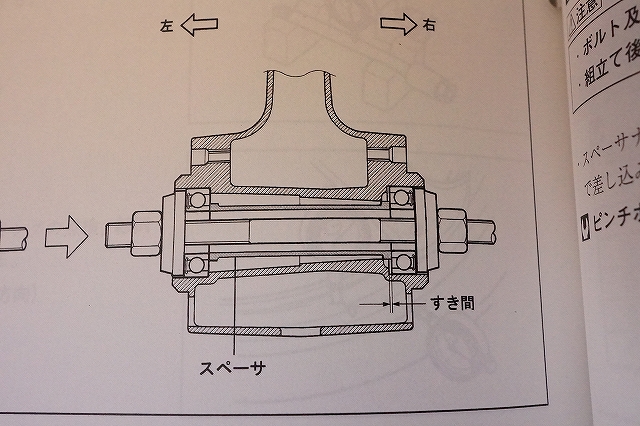
Motorcycle wheels are arranged as shown in this diagram. You can see that the bearing on one side never bottoms out.
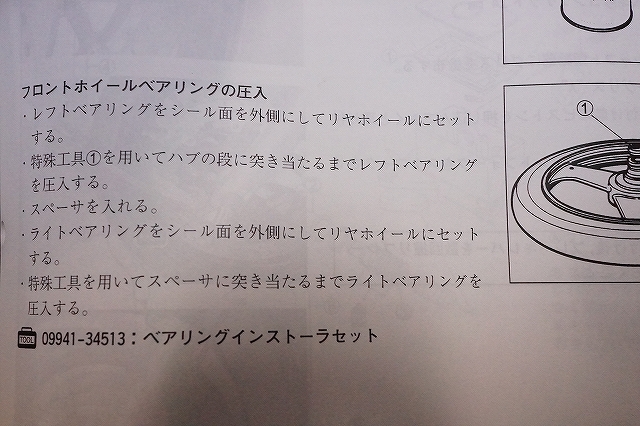
The manual is still wrong as usual. Rear × → Front. It’s not just about removing and replacing; if you properly position the bearing and distance collar and assemble them correctly, you’ll achieve the bike’s true performance. (By the way, it won’t improve dramatically. It should just become properly normal.)
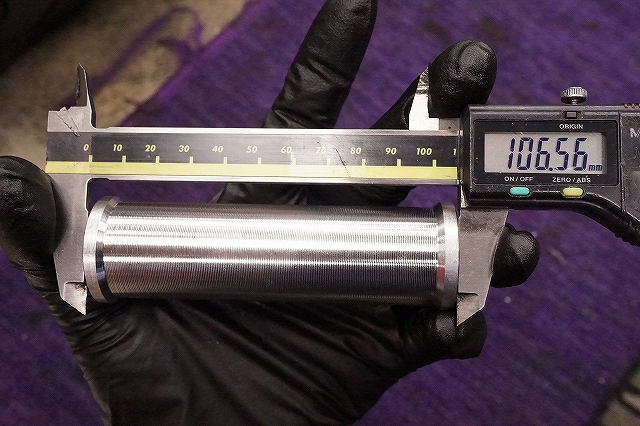
They don’t wear down that easily, but let’s measure here anyway.
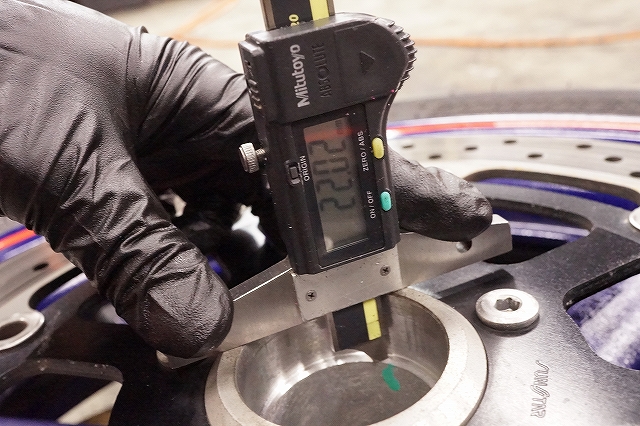
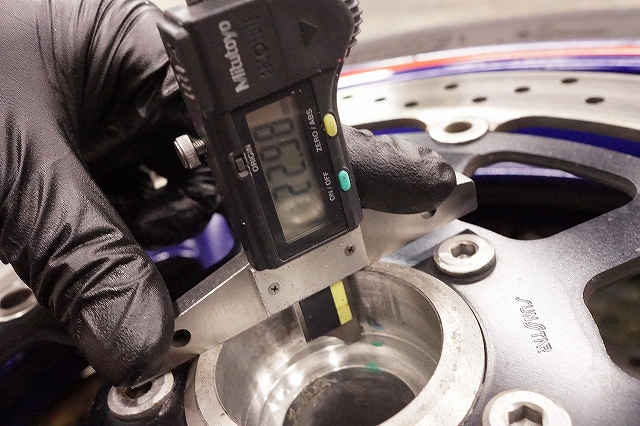
Sorry for the vague measurement. Please don’t point out whether we should measure from that surface. If we were being precise, we’d remove the disc and measure from that surface. Well, assuming it’s the same, there’s about 1 millimeter of adjustment range. This is the wheel bearing adjustment zone.
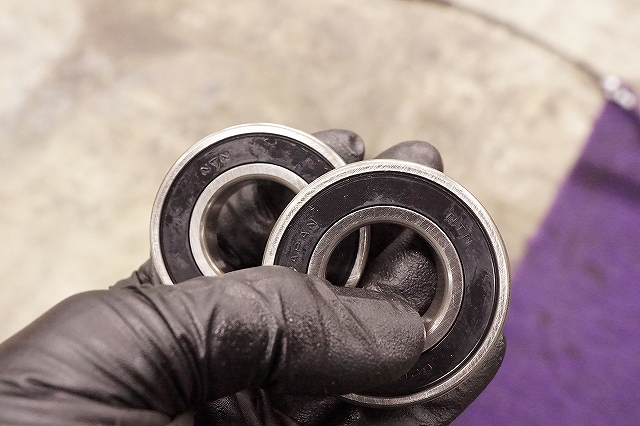
Bearings always have non-contact double-sided seals. The reason is that grease doesn’t escape easily = the good condition lasts longer.
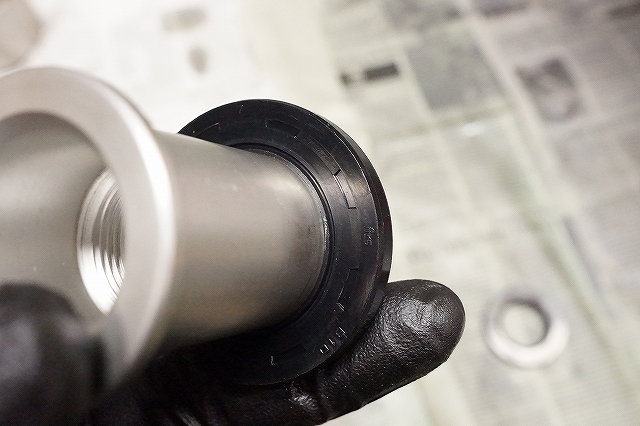
In this state, let’s check how well the seal works. This seal doesn’t need to work incredibly well. Engine oil isn’t going to come out from the back. As long as water and foreign matter don’t get in at minimum, it’s OK. Off-road bikes are different. Usually the collar wears down before the seal gets any contact marks. That’s how strong the seal is. We pre-condition it with a whetstone for initial break-in.
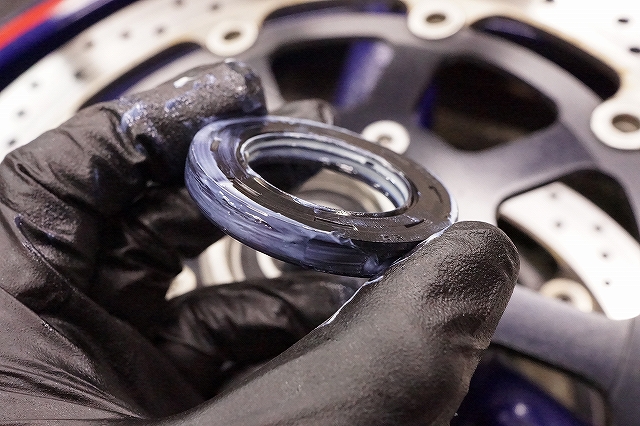
Metal and rubber bond easily, so we apply oil to prepare for future bearing adjustments.
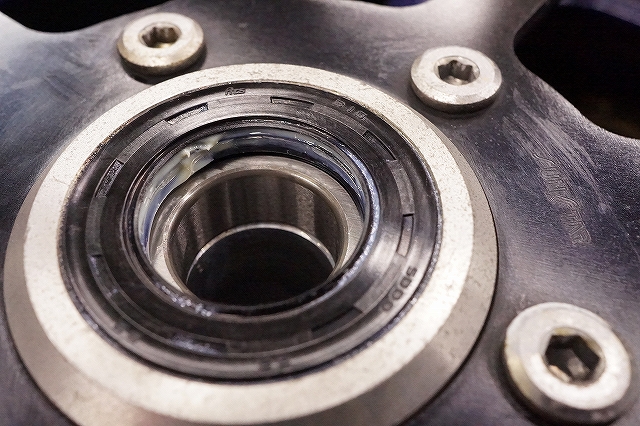
Adding oil inside the lip is even more effective.
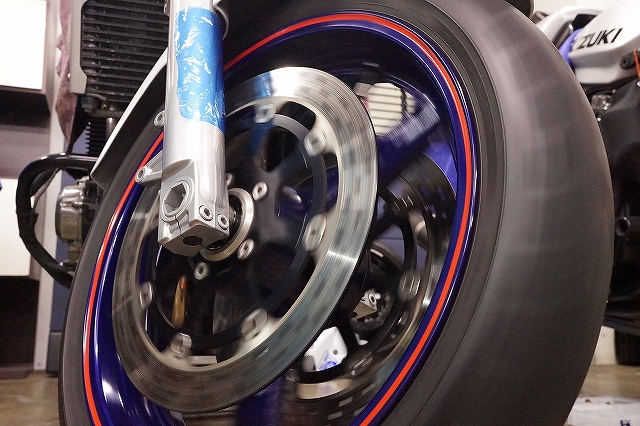
Now it should operate closer to normal condition.
We’re not performing any work that produces surprisingly dramatic performance gains. Everyone tends to mistake it for a huge improvement when starting from a bad state, but really it’s just that “there was a lot of room to improve from bad to normal.”
By accumulating 0.1%, then accumulating more, you get 1%, 5% in results. There’s no such thing as occult performance. We’re just hand-assembling what the manufacturer sold, taking time to do it carefully and methodically. That’s what I think it is.