Year after year, we’ll be unable to take on work like this.
Even stock parts are risky—it’s a mystery box where you don’t know what’s inside.
It’s nothing but scary.
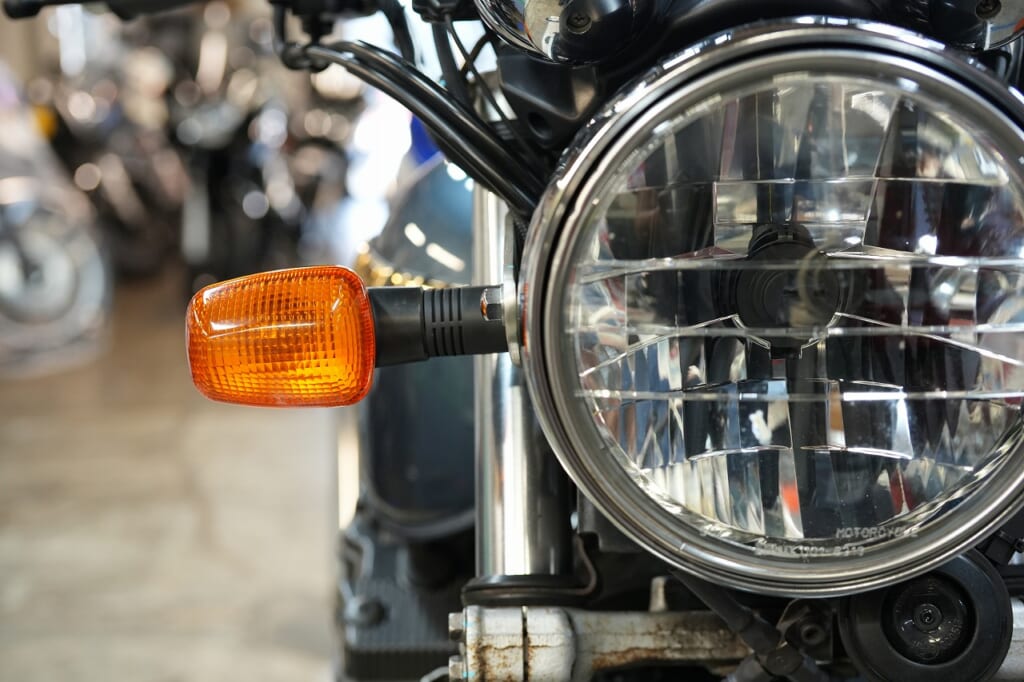
Even stock-sourced parts are risky.
If the owner remembers doing the swap themselves, there’s no problem.
Trouble comes when…
• Parts are discontinued
• After ownership transfer
Like “What is this turn signal?”
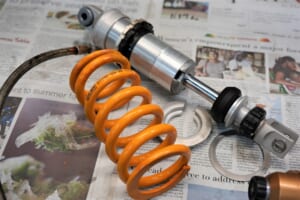
or stock-sourced front and rear suspension work—that’s pretty scary, right?
Once you take it apart, that’s it… how far do you go? It’s a tough call.
No wonder people complain about it.
DIY work is pretty scary…
Especially with electrical DIY work—I’ve only seen a handful of people do it right.
DIY really shows your true character.
“As long as it works, who cares? It’s hidden anyway…”
Just removing fairings and parts can be such a puzzle it’s exhausting.
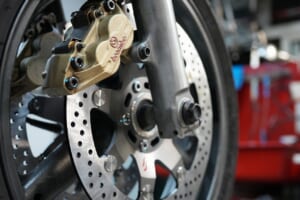
Brake work is scary too, right?
Twisted fittings, super-long brake hoses—just looking at them makes me not want to test ride it.
Lever position fixed at a single point with no adjustment, left and right masters—these create issues during work on whether to fix them or not.
Without inspection compliance, there’s no future.
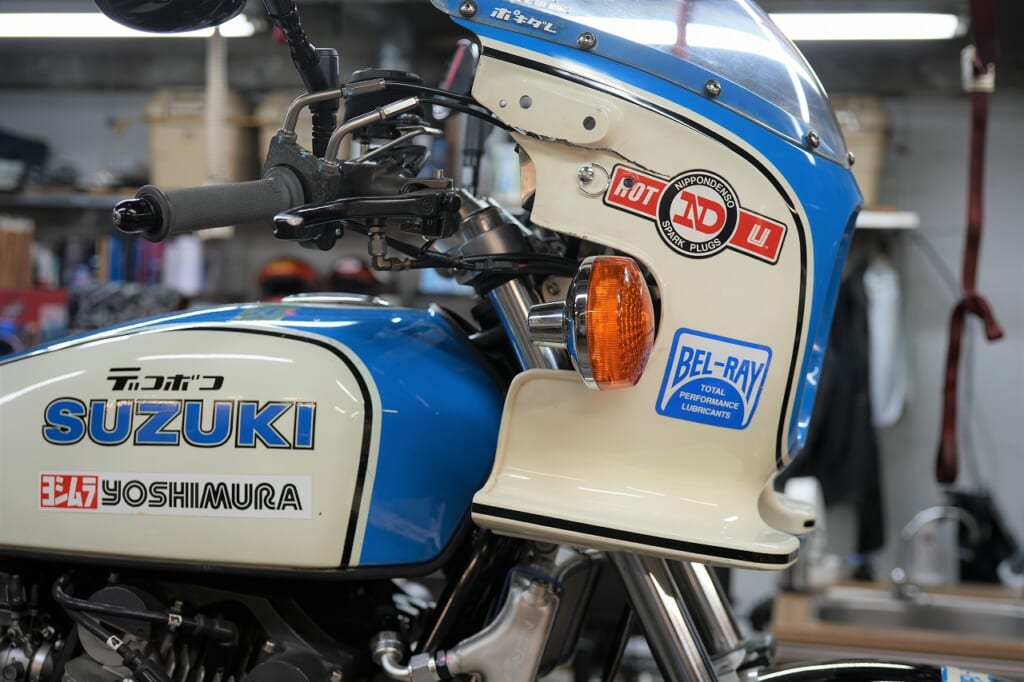
We at Decoboco are strict about inspections too.
Bikes with too many problem areas will be turned away going forward, and unless they can be serviced anywhere, the future will be tough.
Careless part choices become an express ticket to hell.
Heavily customized bikes should be handled by a shop.
Mystery shims scattered everywhere…
“Is this spacer dimension really okay? There’s no standard anymore anyway…”
Loose bolts that somehow held together…
All we can do is report it and send it back as-is.
Reporting these situations is also a hassle.
If you think your bike is custom, sit down with the shop that did the work and maintain that relationship going forward.
Keep track of modifications.
It’s reassuring to note which parts you used for each change.
Parts that don’t break are fine…
Especially stock-sourced parts—if you don’t keep the part numbers, you can’t restore them and they might become discontinued.
Even if they’re discontinued domestically, you can sometimes source them overseas, so part numbers are super important.