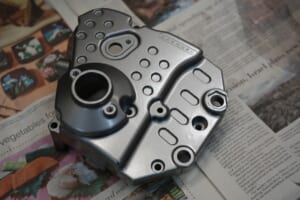
Basically, I don’t remove the exhaust pipe.
I don’t touch it unless absolutely necessary—especially not stainless steel that’s been on there for decades.
But here’s the thing: why bolts in the first place?
The benefits are… engine removal and installation? Exhaust removal and installation? Flange flexibility?
I looked into it a bit seriously.
OEM parts—it’s Honda after all! ( *´艸`)
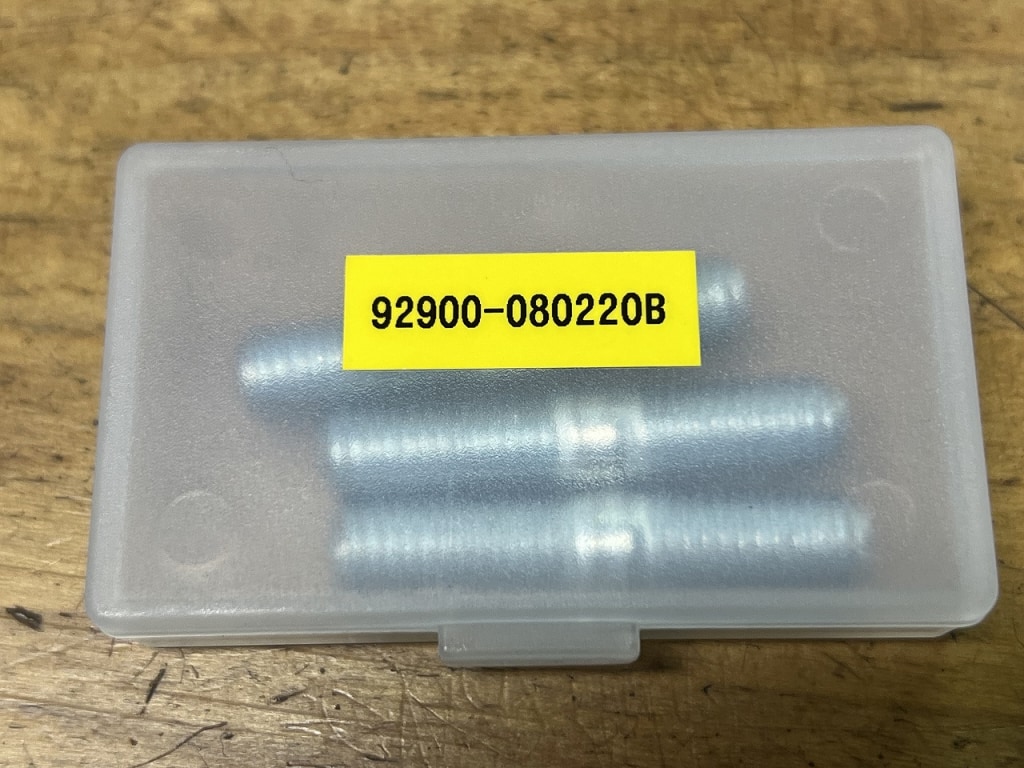
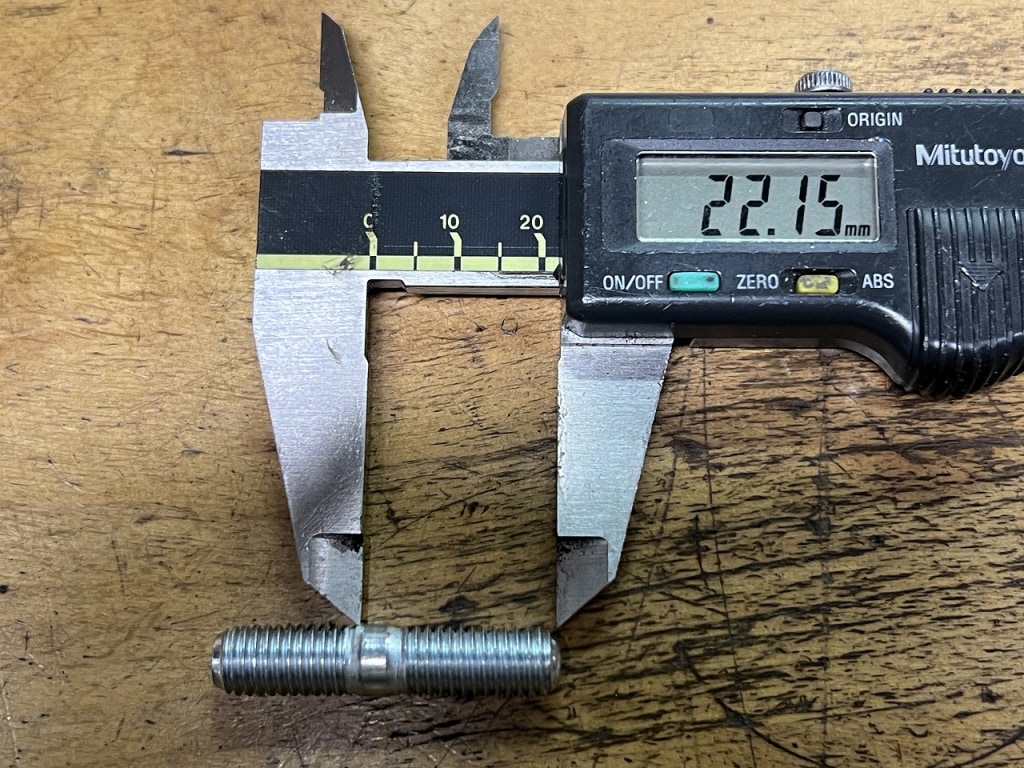
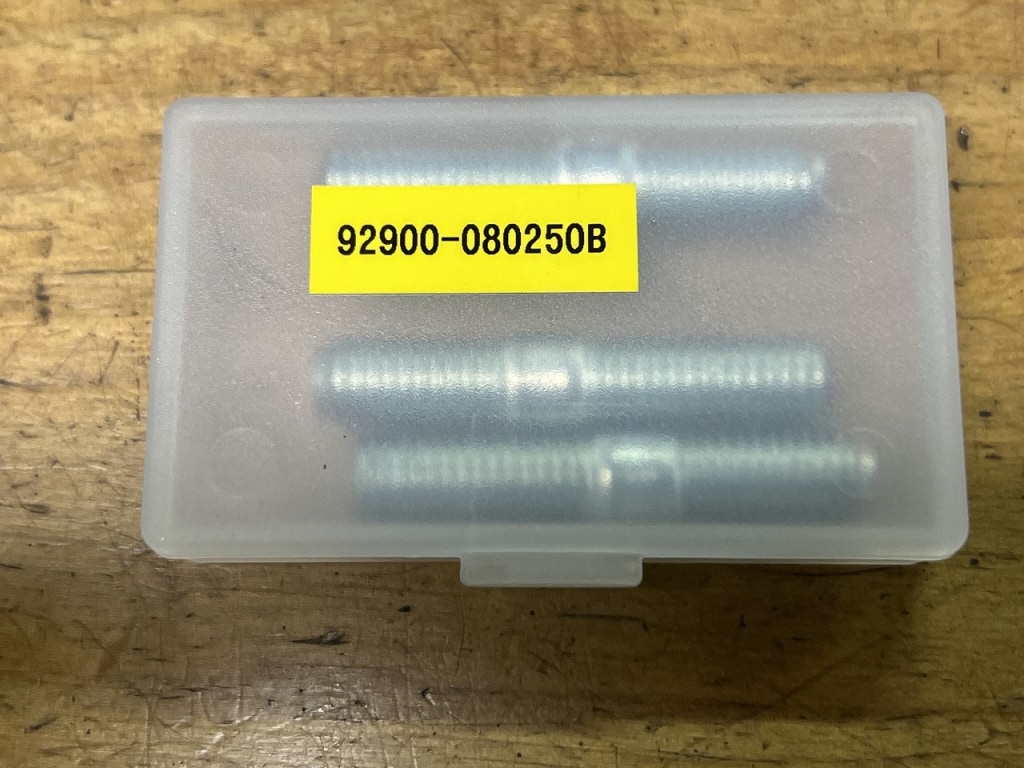
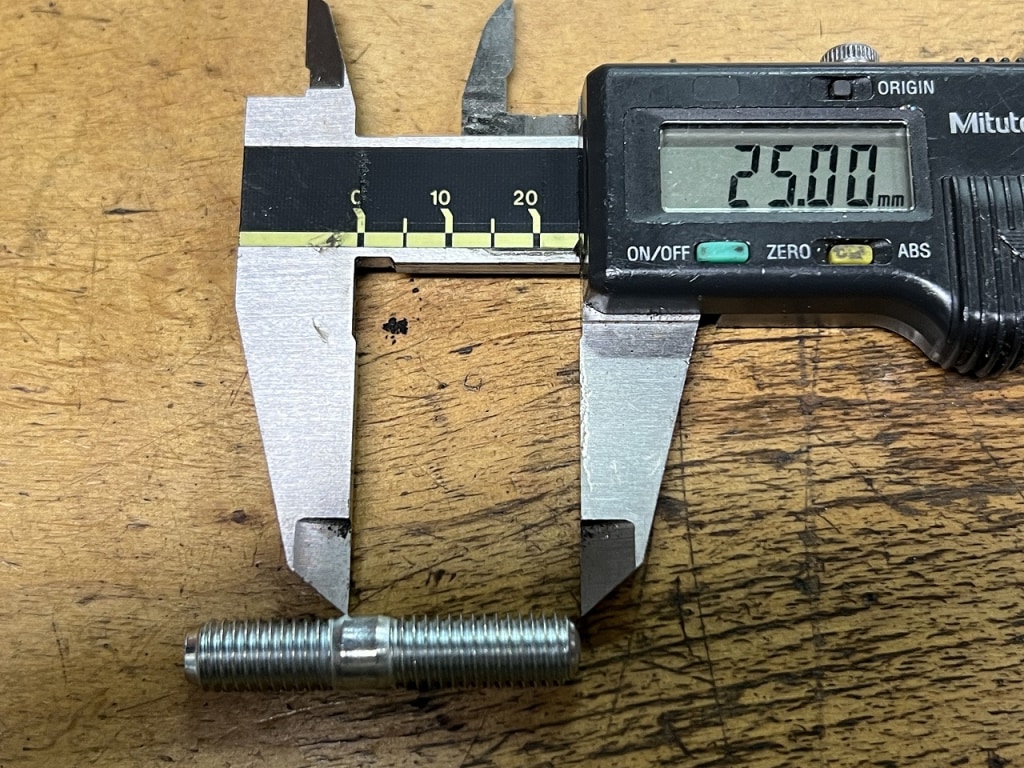
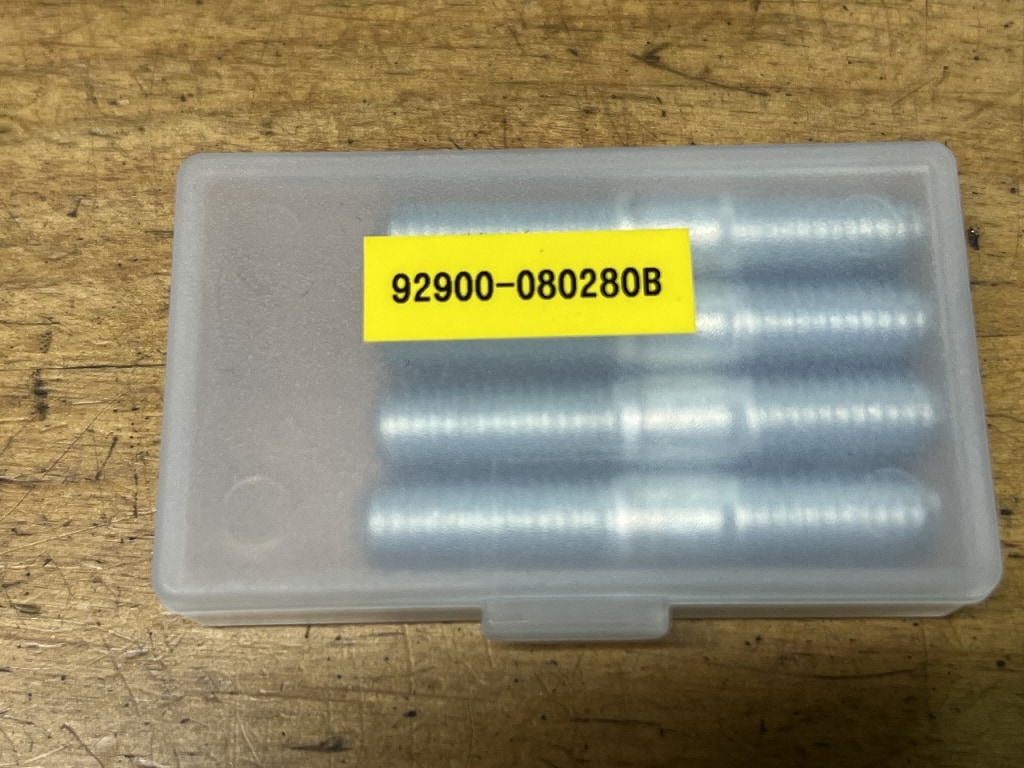
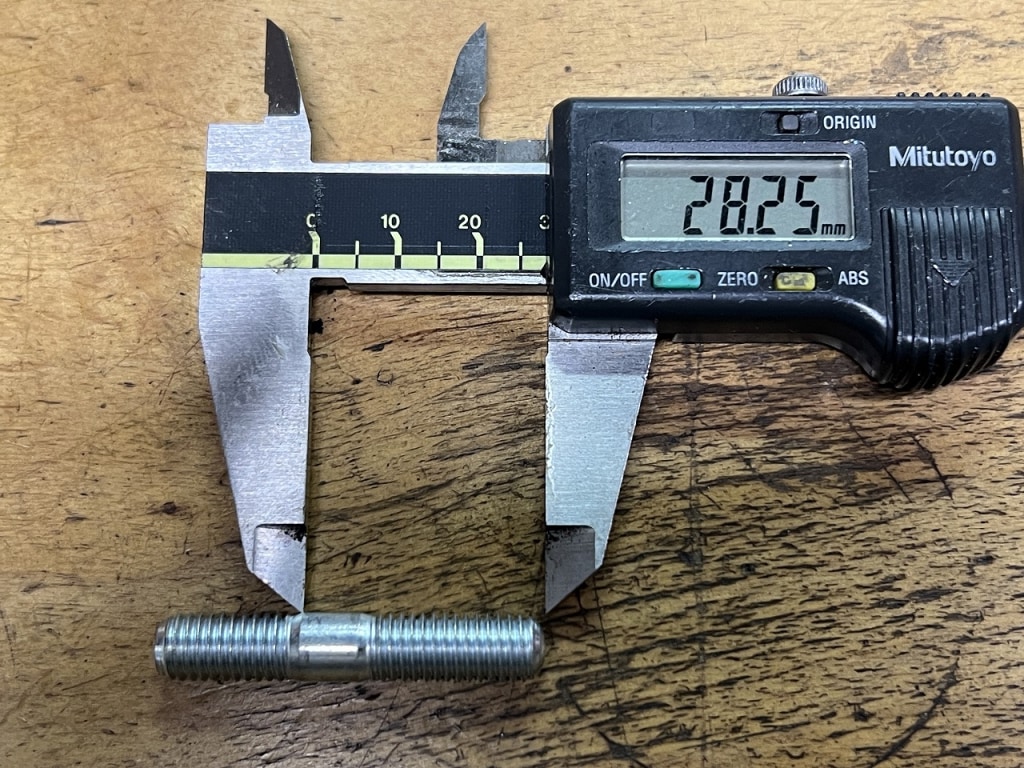
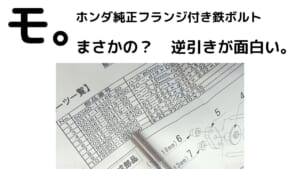
The stud image shows “left is insertion.”
Basically, the part number 92900-080■■0B—the ■■ is how far it sticks out.
Hmm, pretty clear.
Each one costs just tens of yen. Nice, Honda.
Why four of them is… a mystery (*´ω`*)
Just in case, “show the threads some love.”
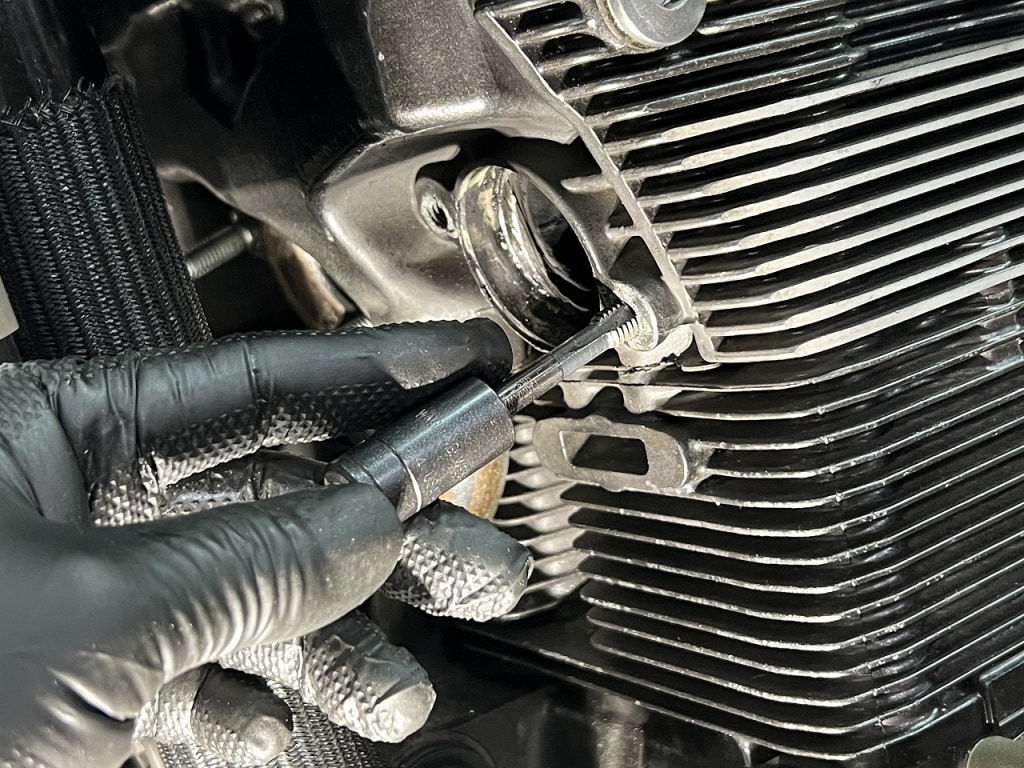
One problem came up…
On the undertube side it’s tight—the tap won’t fit, so I bought a long tap ( ;∀;)
I’ll clean up after and assemble.
Tight fit—the stud bolt insertion tool won’t go in (homemade).
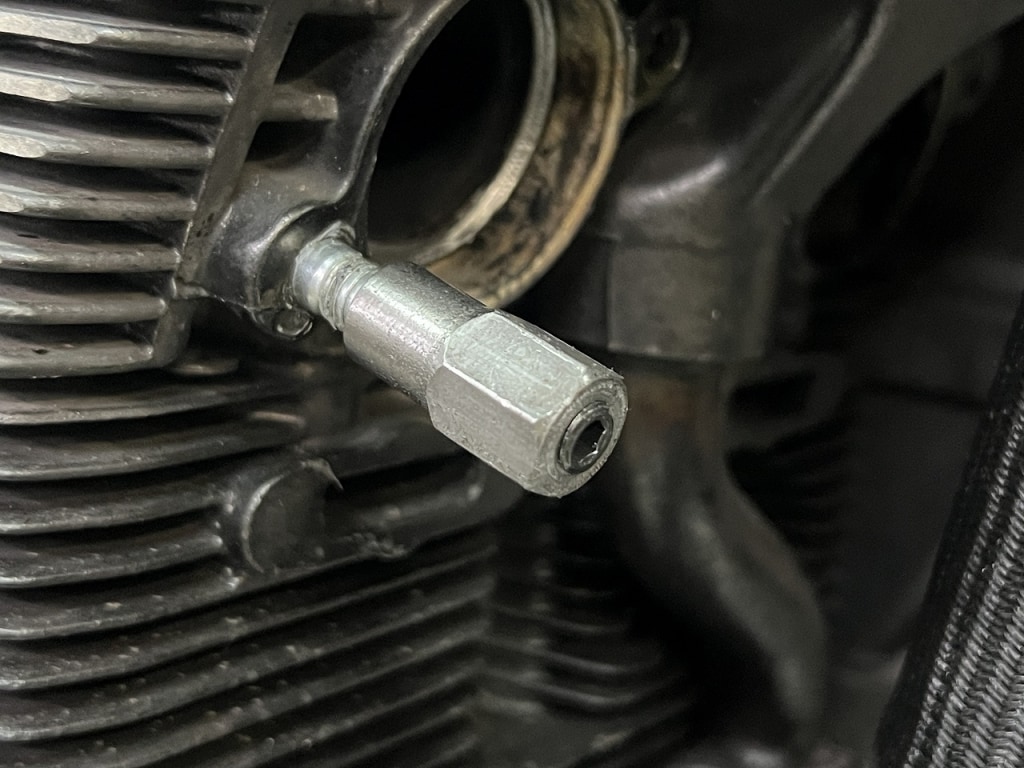
You can make one yourself with a high nut, set screw, and steel ball.
The steel ball has no stopper, so be careful it doesn’t fall out.
↓Normally you use this to insert it (‘Д’)
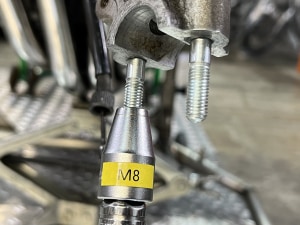


 ポチップ
Check the flange thickness! Pick the bolt protrusion length you want.
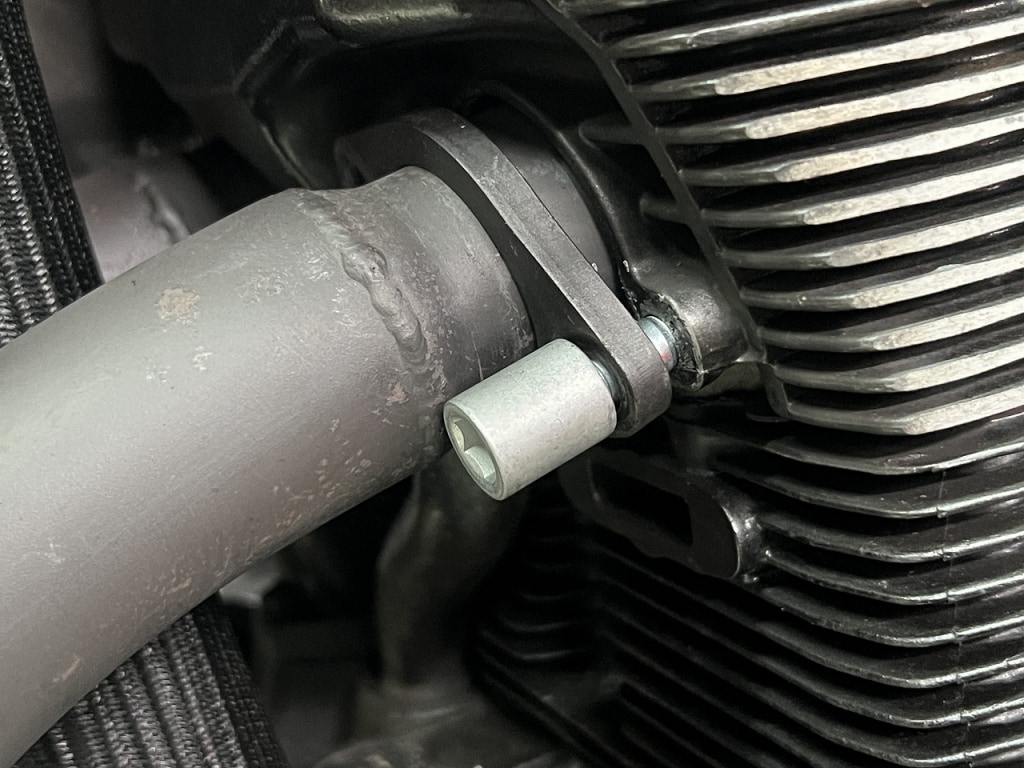
You can also use Kawasaki OEM to handle it.
This hides things a bit even if the bolt length isn’t perfect, so it works.
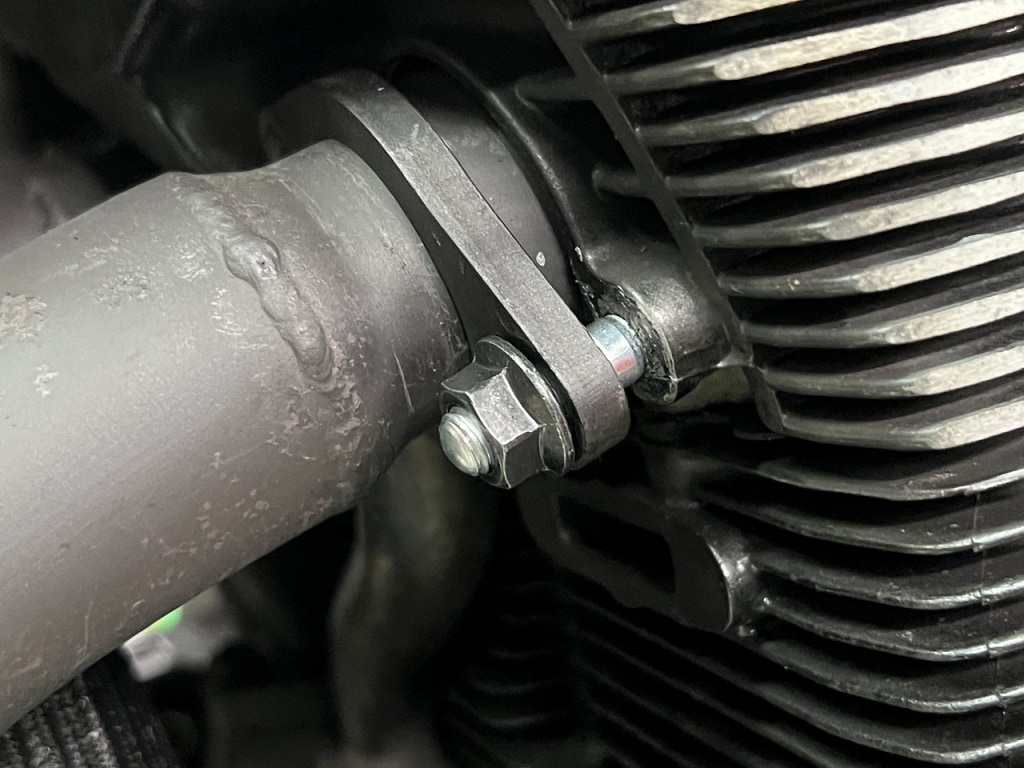
Flanged or flanged lock nuts work too.
With the original bolt, if you don’t apply torque properly, “it loosens right away.”
But if the flange is thin, it warps and deforms. Getting that balance right is extremely difficult.
Being able to use a lock nut is a huge advantage and makes things much easier.
If the flange doesn’t warp and there’s no exhaust leak, that’s perfect, right?
I did it this time because I had the chance to remove it, but it’s a hassle, so don’t ask me to do it. *Do it yourself.
Well, I’m planning to do all my Suzuki bikes this way (*´ω`*)
The article was not found.
 ポチップ
 ポチップ
 ポチップ