Among cordless power tools, the heat gun might be the one I use most often.
If you’re using a 100V type, it’s definitely a tool worth trying out at least once.
Especially if you do electrical work frequently, adopting it early on will dramatically improve convenience and efficiency.
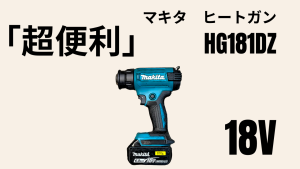

 ポチップ
ポチップ
(For those who want to sell their bike smartly, try KachiCheck) (*´Д`)
Operation is simple! There are only two modes: “1 or 2”
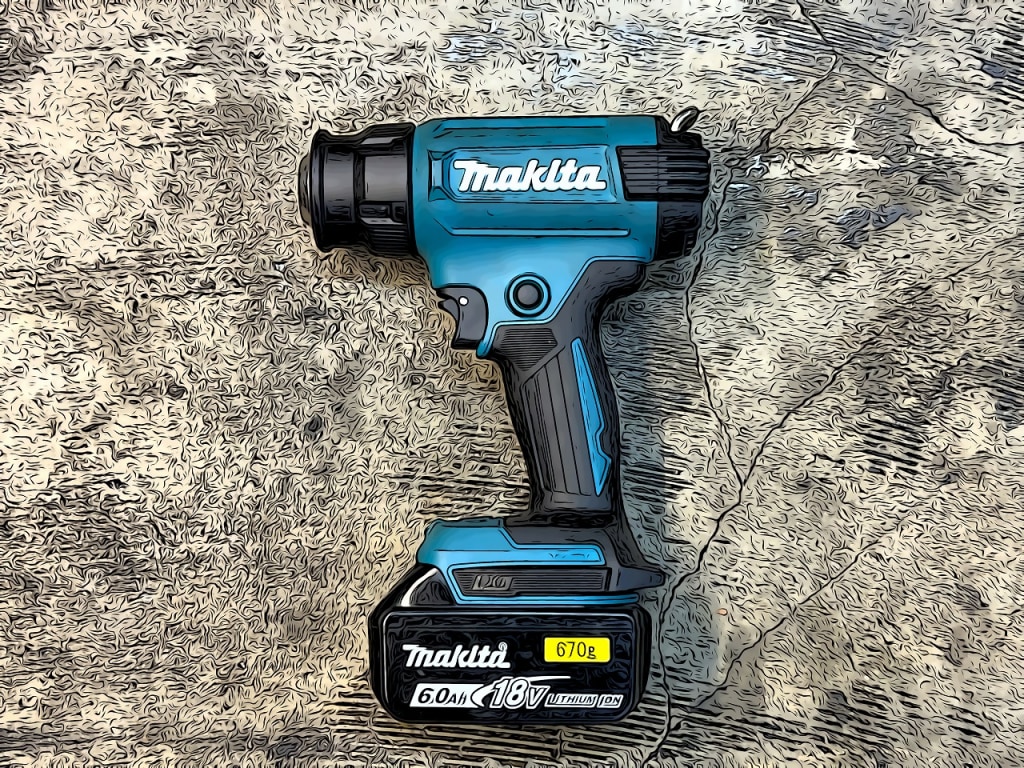
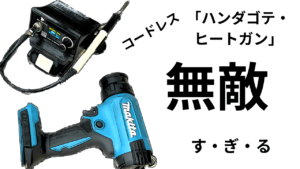
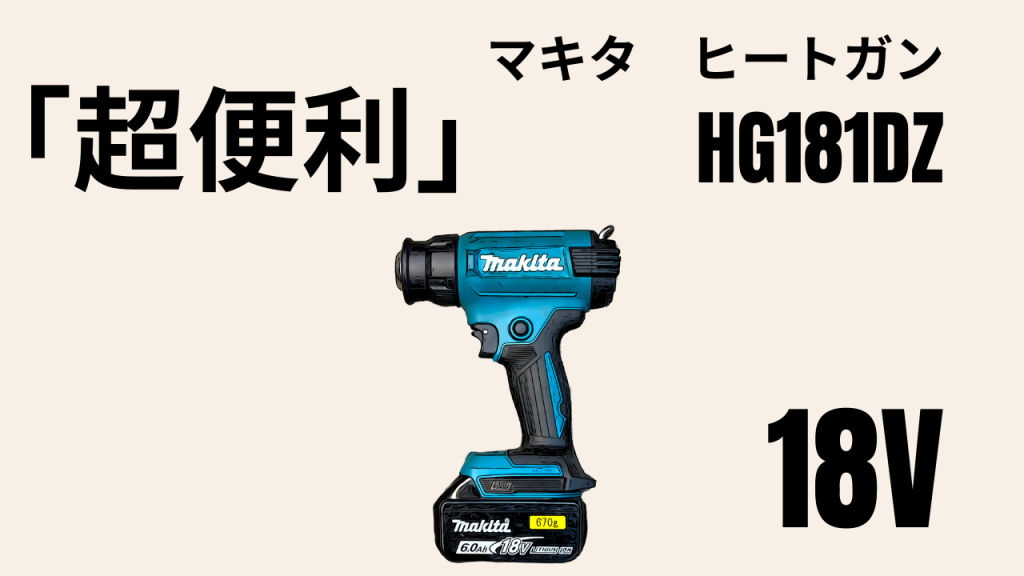
“Makita Heat Gun HG181DZ”
The modes are just high and low (1 or 2) *I always use 2.
After that, you just squeeze the trigger to use it or lock it in place.
Compared to 100V heat guns, the power is slightly lower, but it has more than enough capability for what you need.
Most importantly, the benefits of being cordless are fantastic,
and you can use it anywhere with amazing performance.
For example, when you want to peel something off inside a car, it used to be a bit of a hassle.
With cordless, you can just grab the unit and get to work – it’s like a dream tool.
Plus, the fact that it stands on its own is incredibly convenient.
Your work area looks clean and you have more workspace.
Honestly, there are only benefits, so if you’re using 100V, I really recommend giving this a try.
The weight and size are just right (*´ω`*)
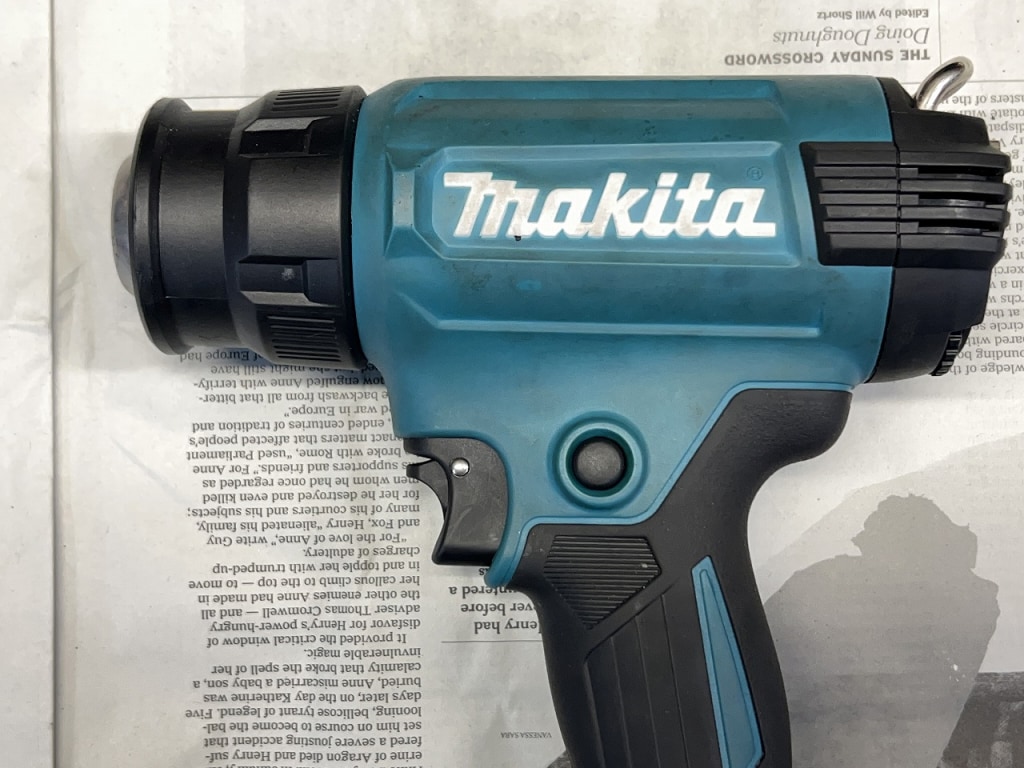
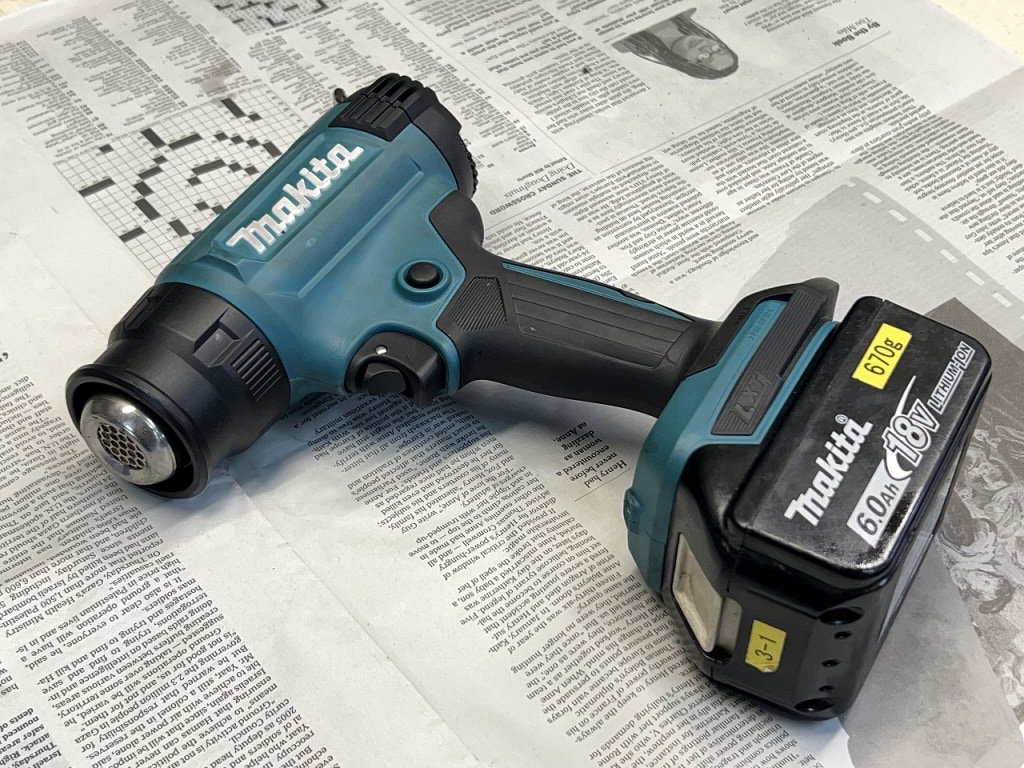
It might actually be smaller than a 100V heat gun.
Plus it stands on its own, which helps with organization and tidiness. Being able to keep things neat is always nice.
Especially with 100V models, the cord always gets in the way.
Taking it out, putting it away, and even while using it – the cord is constantly annoying and inconvenient.
Just going cordless solves all of that at once.
Batteries have improved dramatically in recent years, so I really recommend going cordless with your power tools.
Heat shrink tubing and inspection sticker removal are my main uses
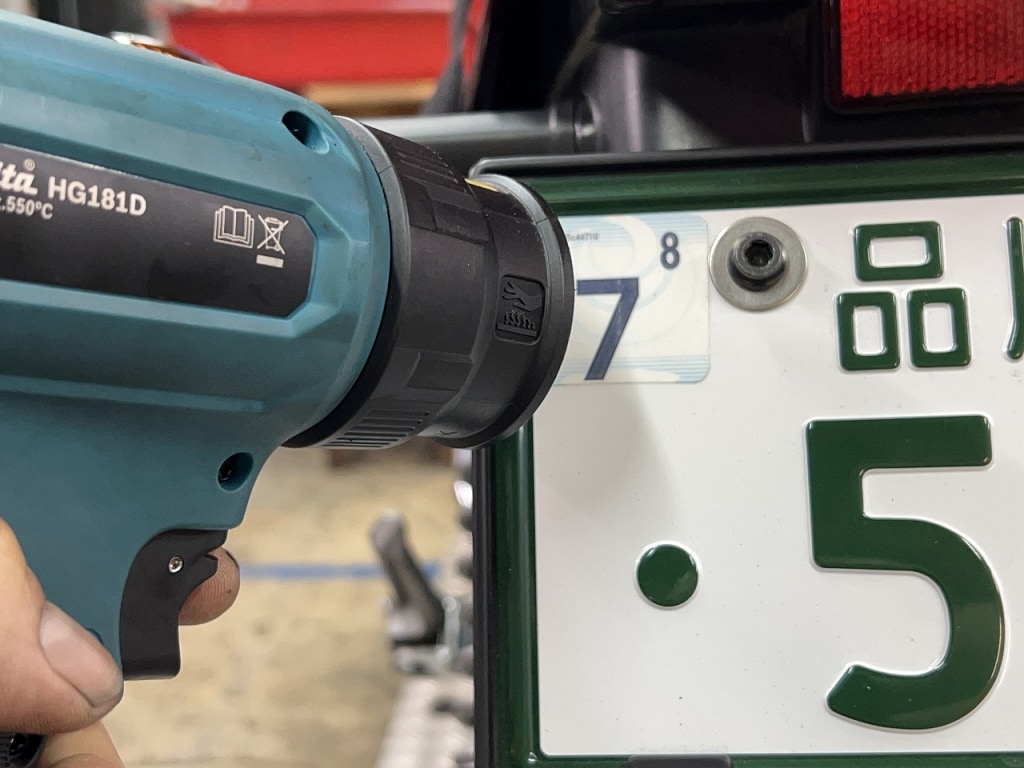
This seemingly simple tool is used constantly.
You want to pull it out quickly, use it, and put it away fast – that’s what a heat gun is for.
With a 100V model, you have to go through the hassle of pulling out the cord reel, which adds extra steps.
With cordless, you just connect the battery and start using it right away.
Honestly, back in the 100V days, I’d often skip using the heat gun because it was too much trouble to set up.
Then adhesive would remain, requiring parts cleaner to remove it, wasting time.
If I’d just heated it from the start, it would have peeled off cleanly.
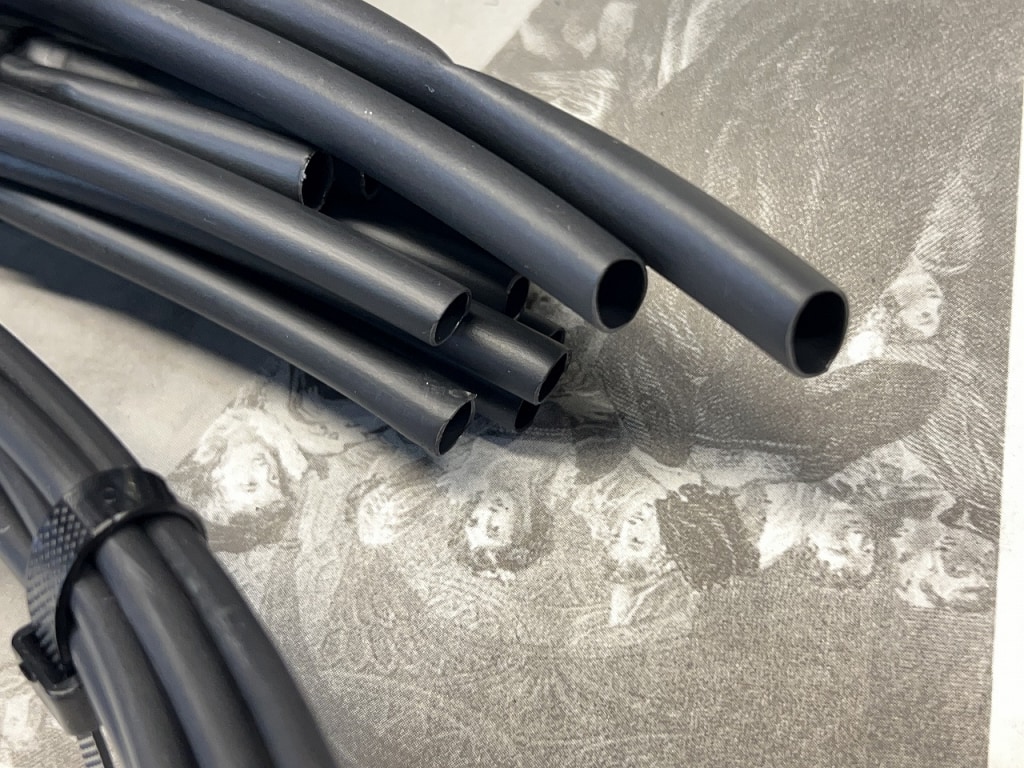
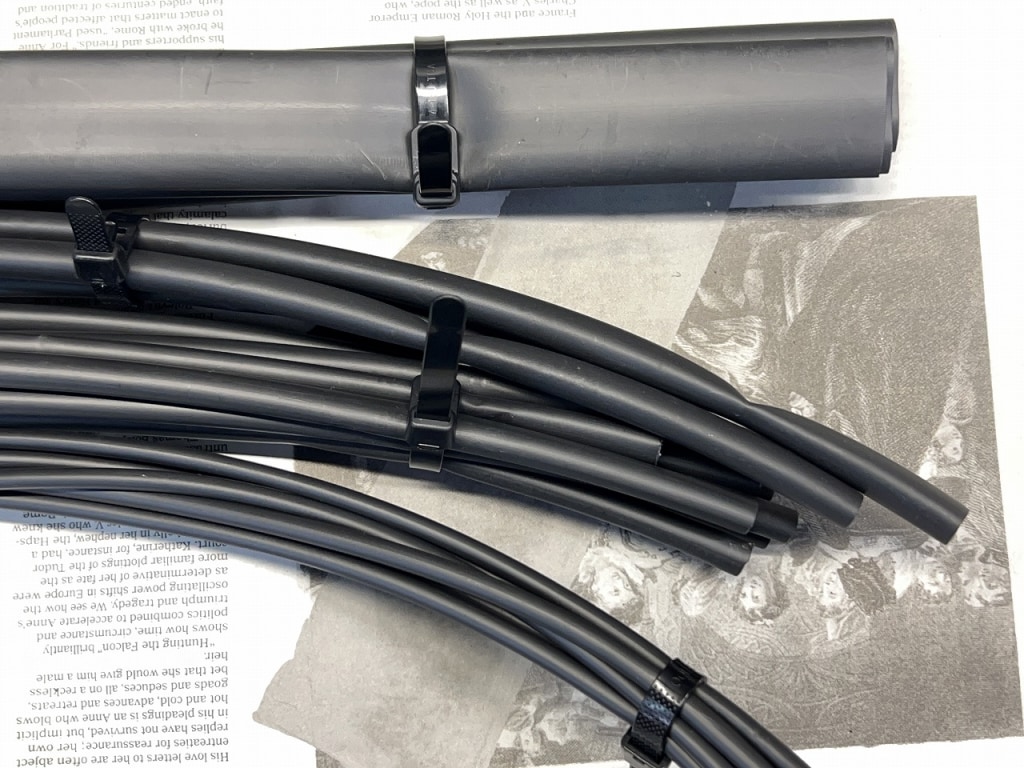
Even 1/3 and 1/4 heat shrink tubing can be shrunk easily.
Honestly, it has plenty of performance, so I haven’t had any problems so far.
Since it stands on its own, you can set the heat gun upright, turn it on, and grab the wiring with your hands to shrink it.
It’s incredibly convenient.
It’s also perfect for removing oil seals that are pressed into the crankcase
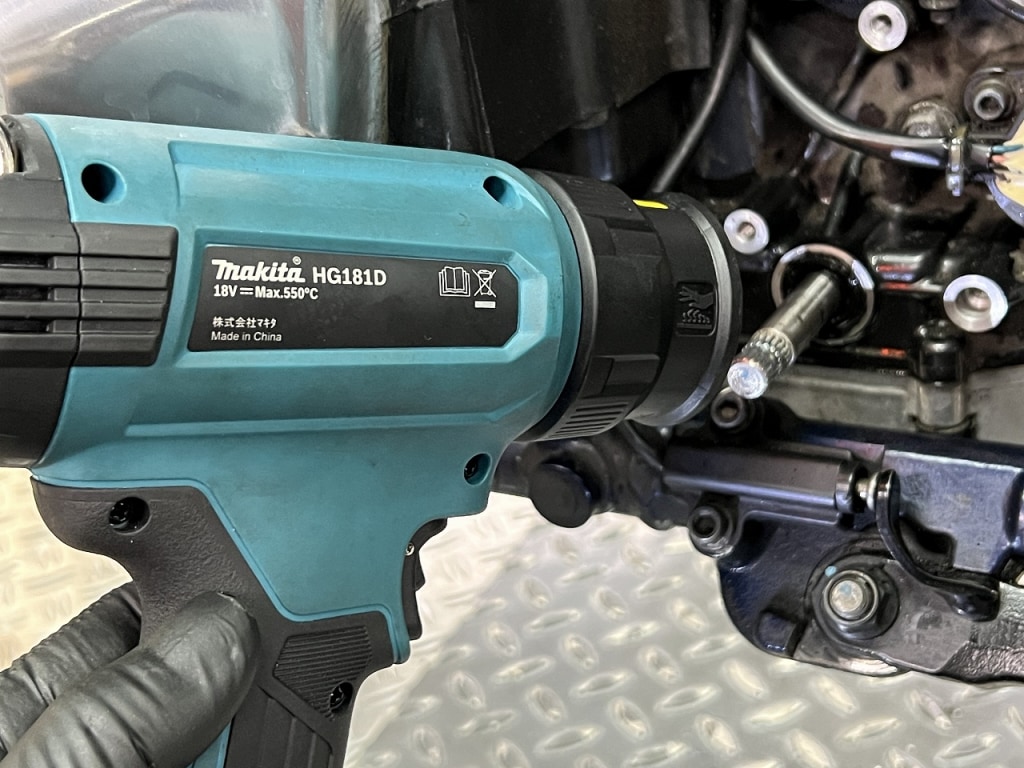
You can use it freely without worrying about a 100V cord.
Plus, since it stands on its own, once you position it to heat the area,
you can heat and remove at the same time.
In other words, the risk of making mistakes during removal work is very low.
When something small won’t come off smoothly, time just slips away.
How efficiently, smoothly, and reliably you can work often depends on your tools.
100V or cordless? Cordless is definitely more convenient
By the way, I’ve converted almost all my 100V power tools to cordless.
The only 100V tool I haven’t switched is a Nakanishi micro grinder.
Most 100V power tools can be replaced with Makita cordless models.
Unless you’re using the same power tool all day long,
100V might be better in some cases.
But that’s such a specialized use case that I think cordless works fine for most people.
Just like with phones, removing the cord makes things incredibly convenient.
This year, why not consider gradually converting your power tools to cordless?
ポチップ
 ポチップ
ポチップ
The article was not found.