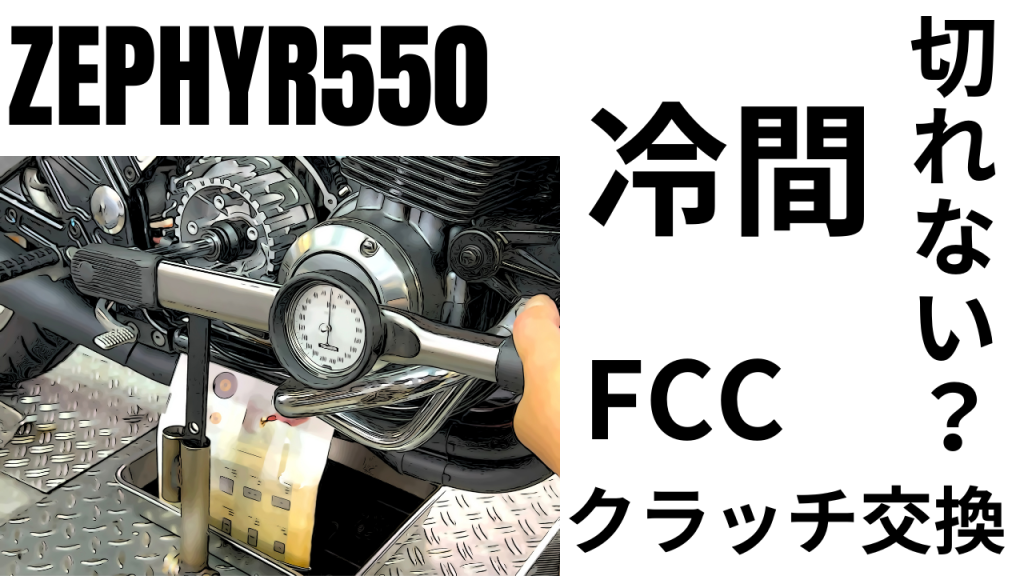
You don’t see it much these days, but
it’s a symptom that oddly happens occasionally on older Kawasaki bikes.
The clutch gets stuck, and even though you’re pulling the clutch lever, putting it into low gear causes a stall.
It’s a bit embarrassing—quite embarrassing actually.
It’s a hassle, but you end up putting it in low and rocking it back and forth, right?
This stall problem is annoying, but I also noticed the clutch engagement was somewhat sluggish.
Especially when using the clutch for upshifts, the engagement is noticeably poor.
So I’ve been faking it by upshifting without using the clutch,
but I finally got around to tackling it recently.
So let me check things thoroughly.

 ポチップ
ポチップ
 ポチップ
ポチップ
Thought it would be the same, so I bought the FCC to check
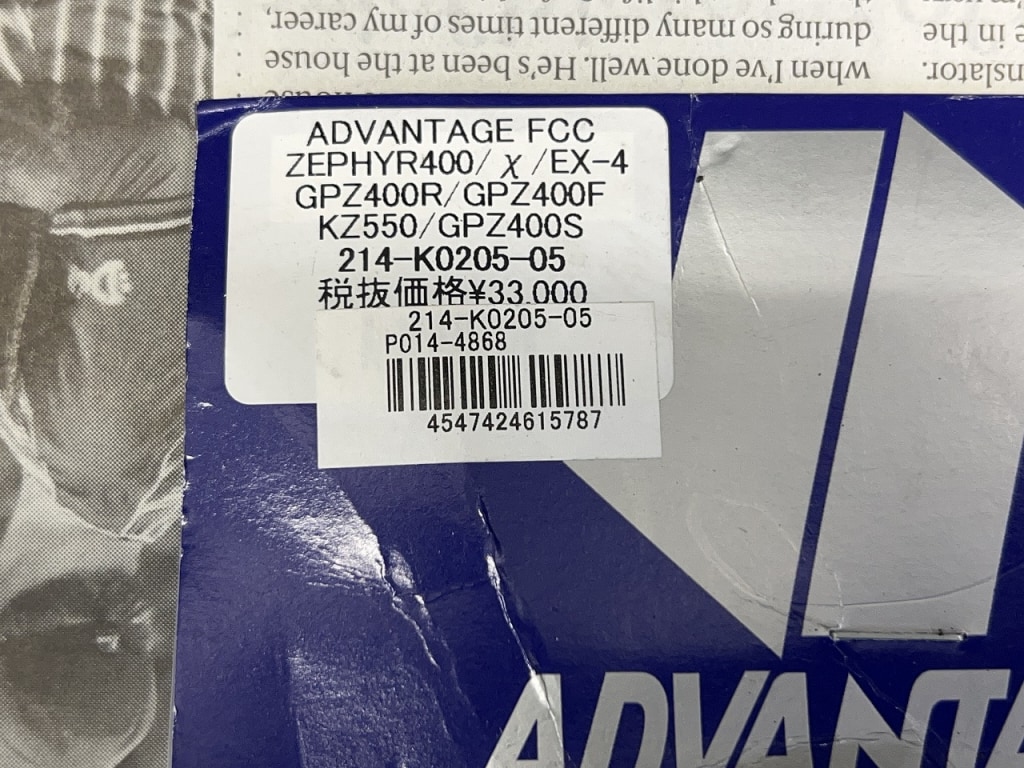
I figured it’d be the same and bought it before really checking, so this is the clutch I purchased.
After looking into it a bit,
I discovered that the 400 and 550 have slightly different OEM part numbers, and I had a bad feeling about it.
So I carefully unboxed it and inspected it while arranging to dispose of it properly.
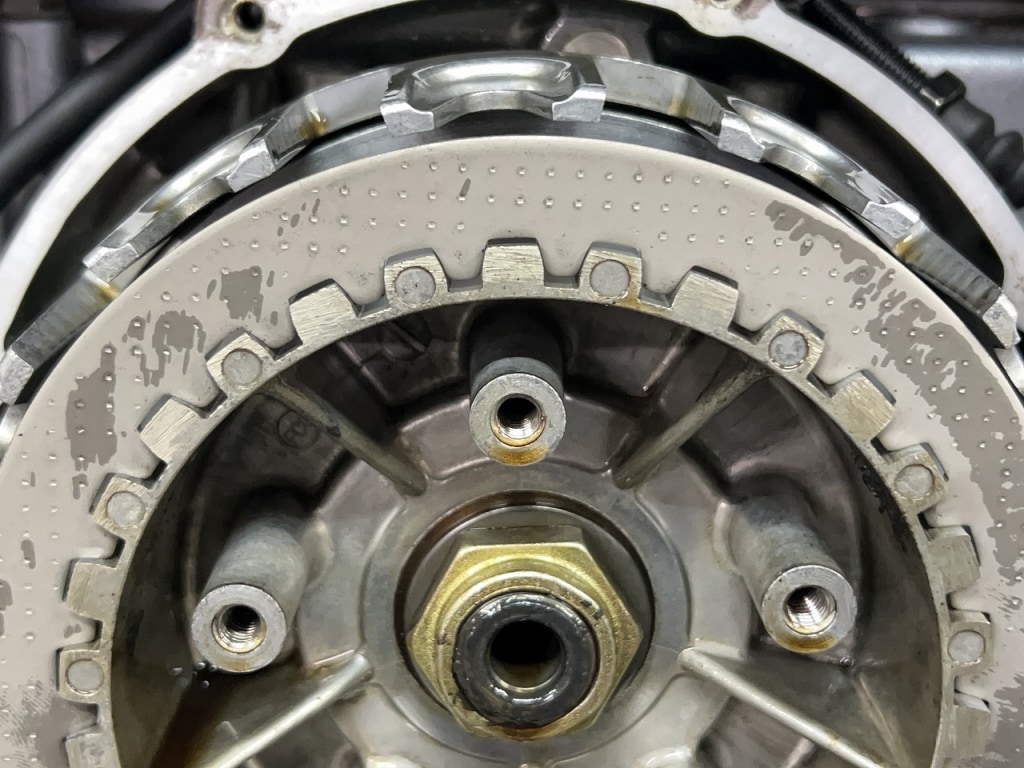
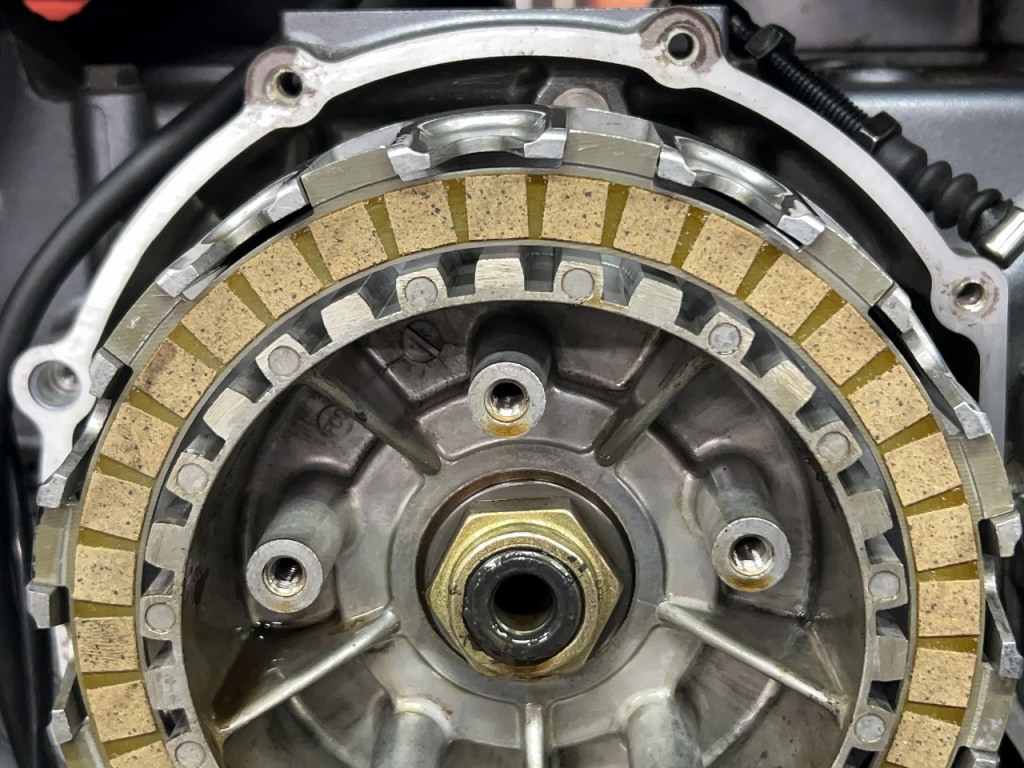
It’s not that complicated.
What matters is just the shape, thickness, and number of plates.
Both the steel discs and friction plates had the same shape, so I was relieved.
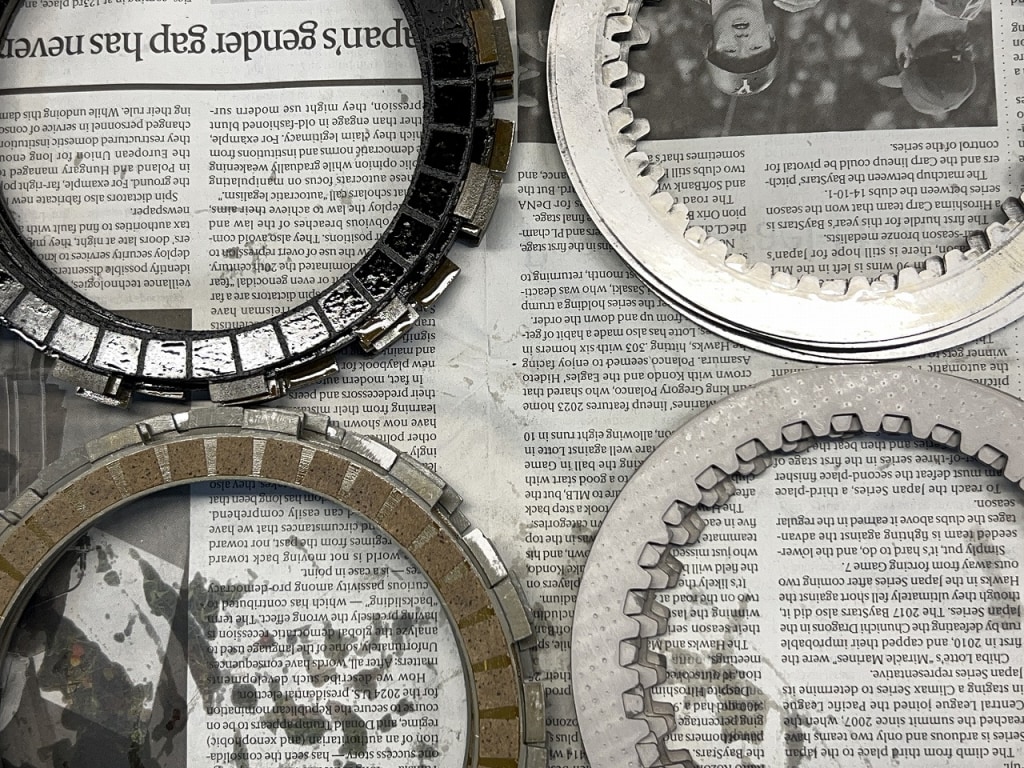
STD ZEPHYR550 FE 2.55*1 &2.00*5/FIR 3.00*7 =33.55mm
FCC FE 2.30*2&2.00*4/FIR 3.00*7=33.60mm
So the dimensions were almost identical.
Since the Zephyr 550 is used, you can think of this as a rough reference value.
That said, clutch plates don’t wear down much.
Rather, they tend to harden and crumble, which seems to happen more often.
Plates without textured surfaces are more prone to sticking?
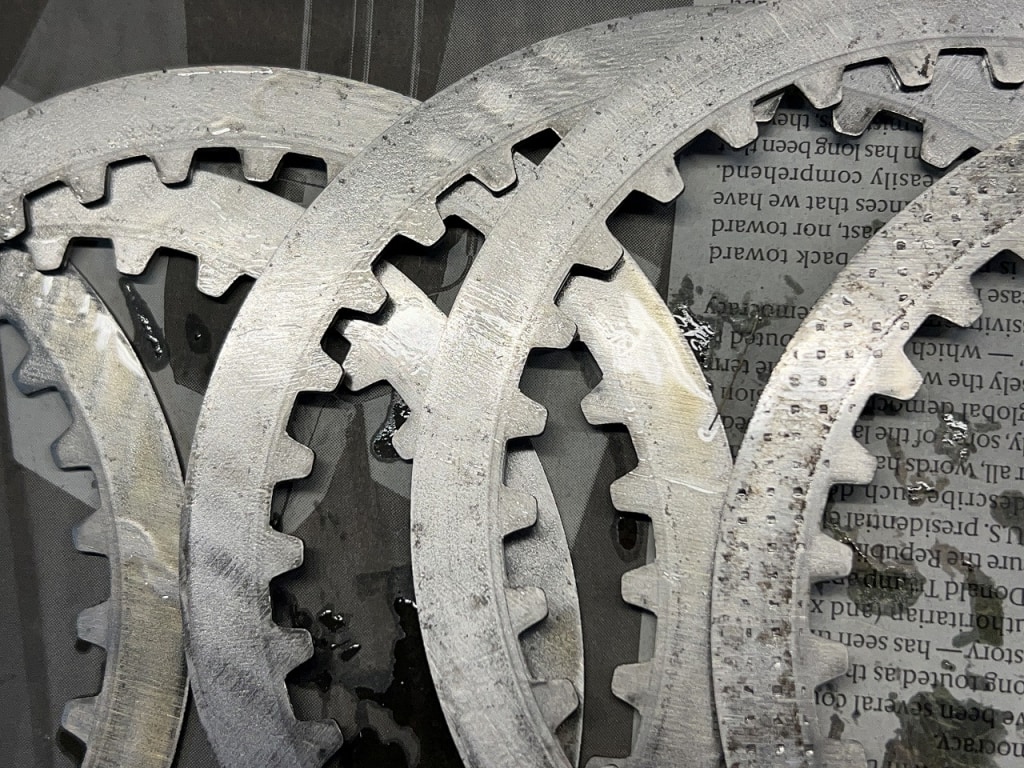
It’s been a while since I’ve seen a steel plate without this textured surface.
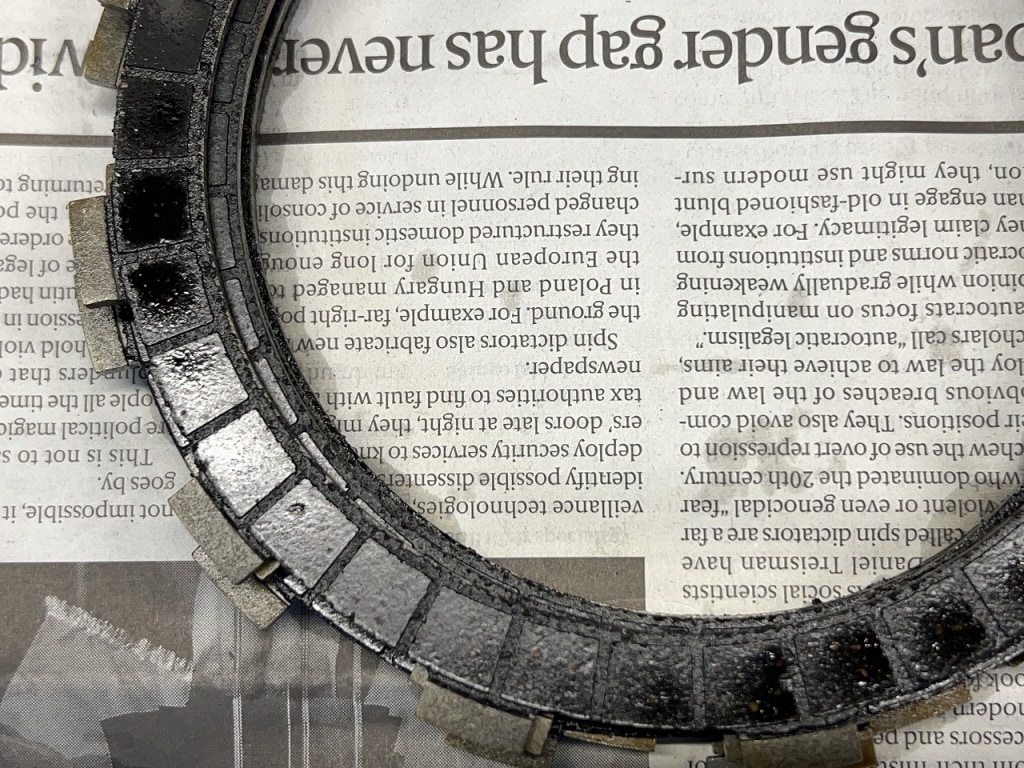
Sometimes friction plates deteriorate and stick,
and older steel plates without textured surfaces like this also seem prone to sticking.
Either way, if some time has passed, it’s best to refresh it first
and then work out various countermeasures from there.
It’s about getting the basics right first.
Clutch plates are harsh! Once replaced, they’re pretty much good for a long time
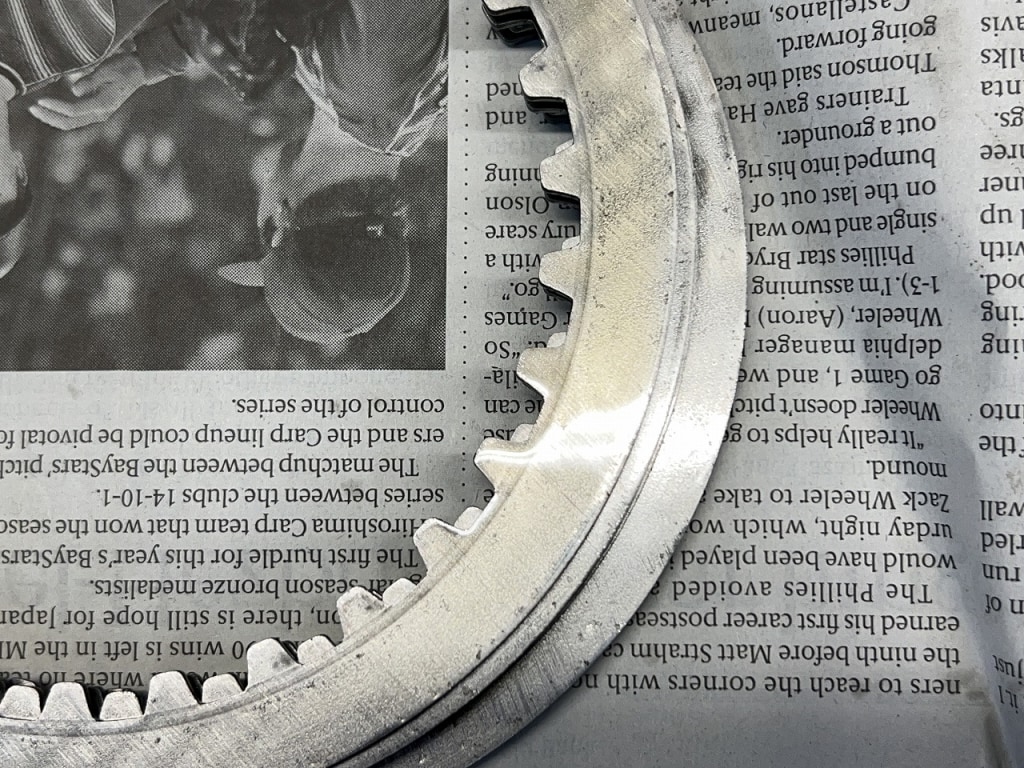
It’s similar to the relationship between brake discs and brake pads.
Constantly immersed in engine oil that reaches nearly 100 degrees, it’s a pretty harsh environment.
Larger bikes that don’t use much slip clutch surprisingly don’t wear out the friction plates much.
Rather, they’re constantly wet with hot engine oil, and they may have even been soaked in gasoline-smelling oil from carburetor overflow.
Over time, the abrasive material on the friction plates hardens and crumbles, so
if 10 or 15 years have passed and you haven’t checked it, it might be worth looking at.
Incidentally, if the clutch plates are compatible, you shouldn’t worry constantly,
but if they have a special shape like an oil-cooled GSX-R1100, it’s really tough when they’re discontinued.
If you think “I’ve never even looked at it,” it’s better to replace it when the timing is right.
You’ll be the one who suffers.
The construction is very simple, which surprised me a bit.
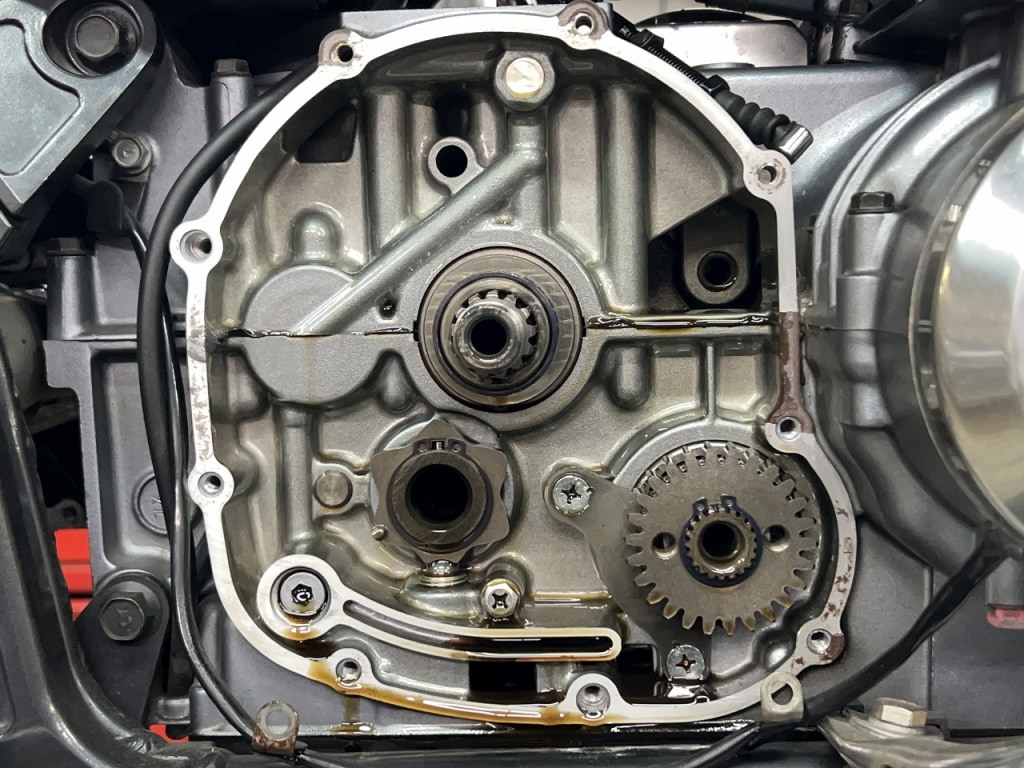
This engine has a very easy-to-service design.
Most large bikes have
counter shafts and other parts deep in the crankcase.
The clutch cover has volume and covers that area, so that’s the configuration.
In other words, removing the clutch housing is straightforward with no tricks.
You don’t need to check gear meshing on the back side or anything—it’s a simple and good structure.
This is getting long, so continuing to part ②
ポチップ
ポチップ

 ポチップ
ポチップ
 ポチップ
ポチップ