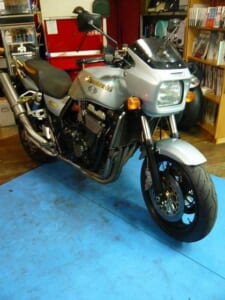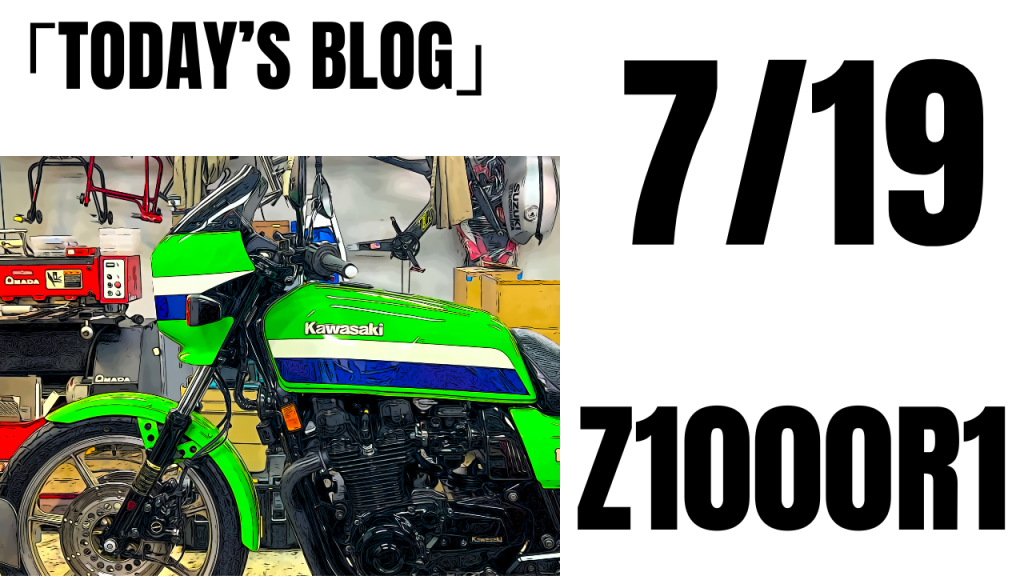
Well then, it’s been about two months since we took it in, so let’s get started.
I haven’t been slacking off.
It’s always the case that imagination and schedules don’t align, so I’m constantly thinking about business version upgrades day by day.
When I thought about taking it for inspection, the gasoline was leaking everywhere.
The engine oil level hadn’t increased, so I haven’t drained the oil yet.
So let’s remove the carb and check it.
The work itself isn’t difficult, but sourcing discontinued parts requires some ingenuity.
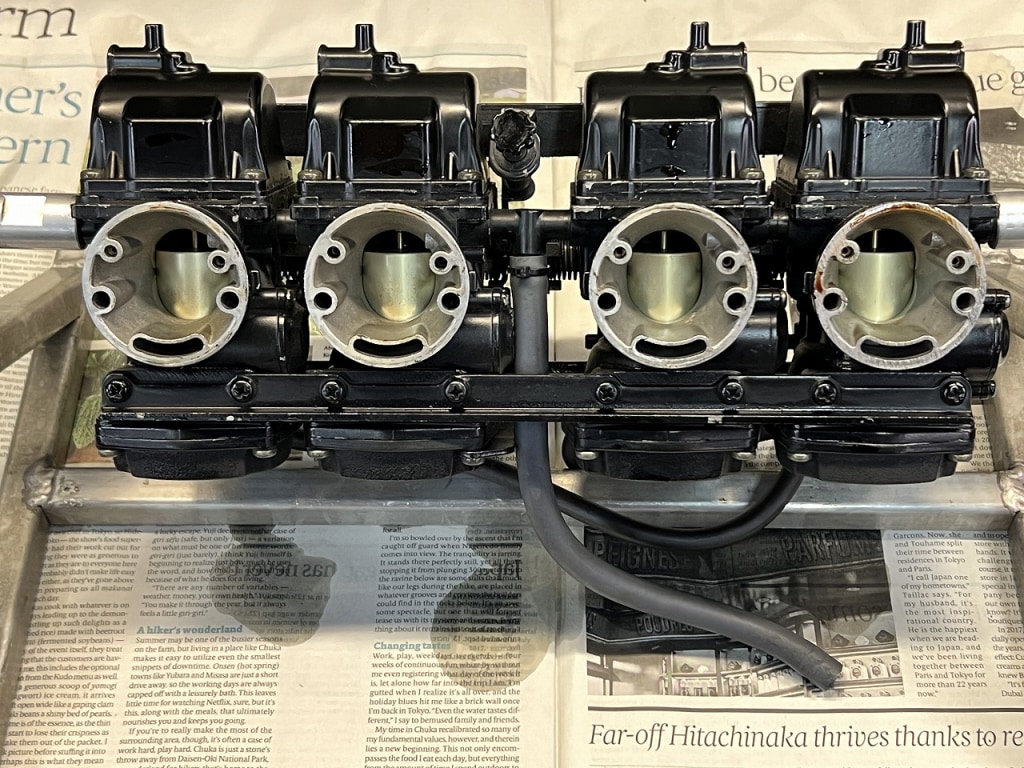
Having experienced plenty of painful lessons in life, I won’t carelessly disassemble things into pieces.
I need to proceed while observing the situation and investigating whether parts are available or not.
I’ve noticed that modern gasoline deteriorates easily lately.
With temperature fluctuations and harsh conditions like direct sunlight and humidity, it can go bad in as little as three months.
What I’ve been telling everyone recently is that while it’s necessary to run the bike occasionally, the best approach is to replace the gasoline by using it up and refilling.
That might be a bit difficult on local roads in Tokyo though.
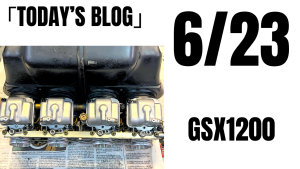
All four carbs from number 1 to 4 had that characteristic smell of rotten gasoline.
Don’t go banging on old carbs. Once they break, that’s it.
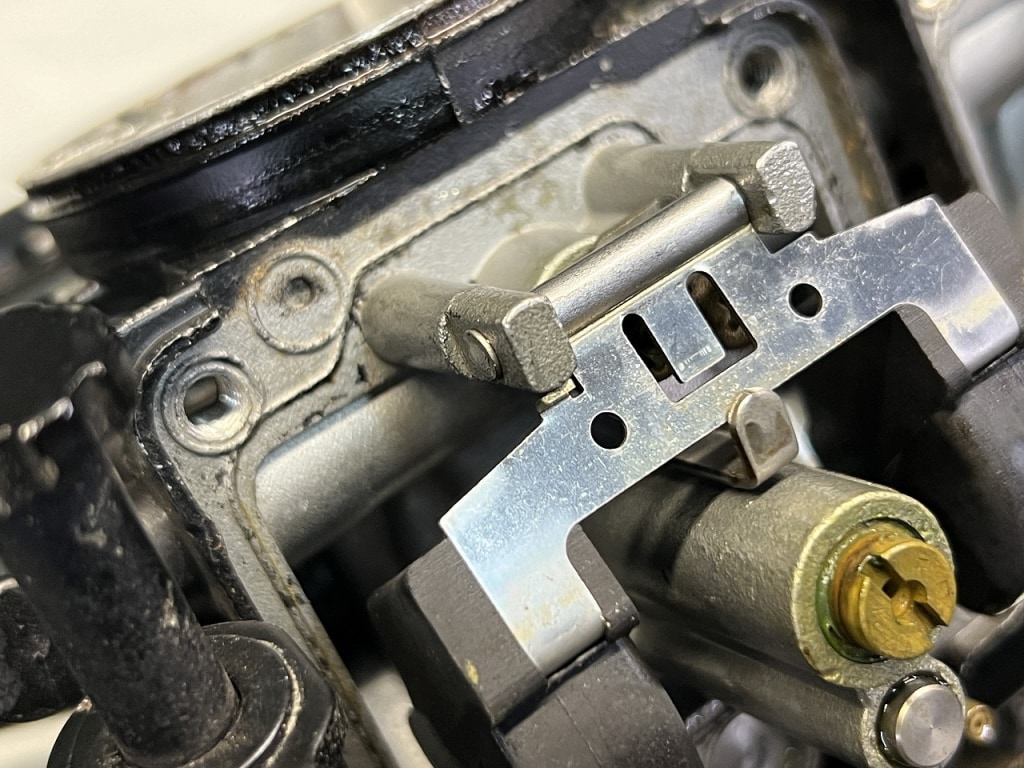
The float arm pins from this era are light press-fit.
I’ve seen vehicles where the support arm was damaged and repaired because someone tapped the pin from the other side.
The carb body itself has also been through many years, so it won’t stay in perfect condition forever.
With the mindset of “absolutely no way,” you should proceed gently with the work.
It’s important to avoid taking on unnecessary work risks.
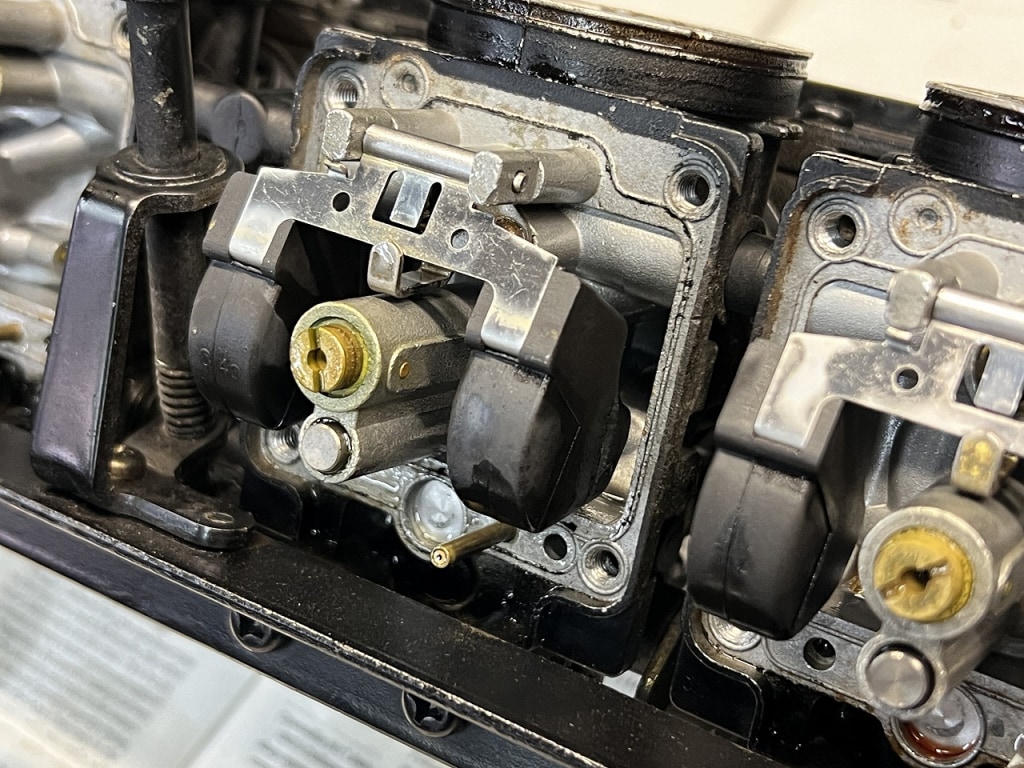
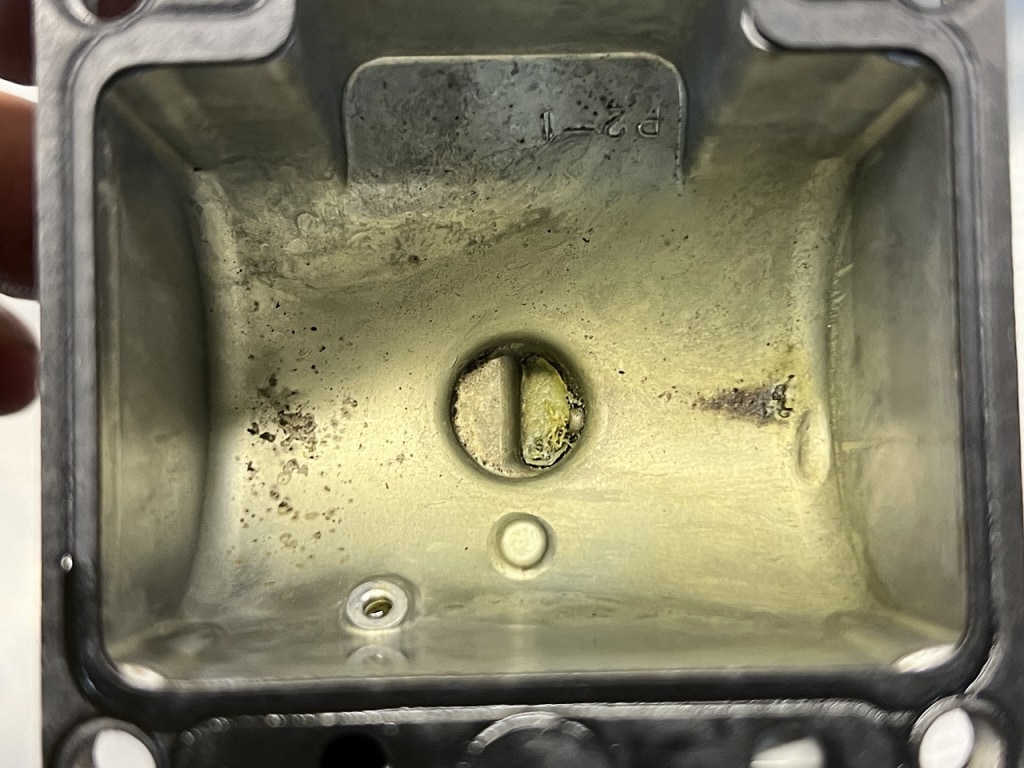
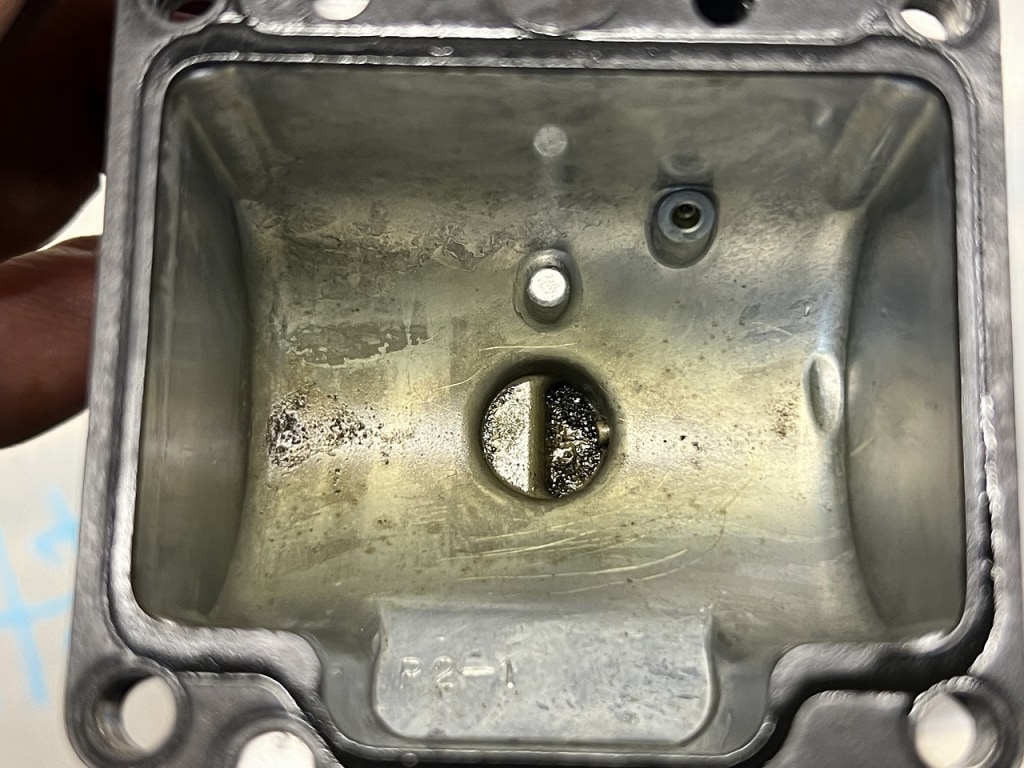
You can see from the image the abnormal float position.
It’s stuck at the lowest position and won’t move.
For a moment I didn’t understand what was happening, but it’s complete seizing—I didn’t know it could get like this.
We’ll replace the jets and float valve.
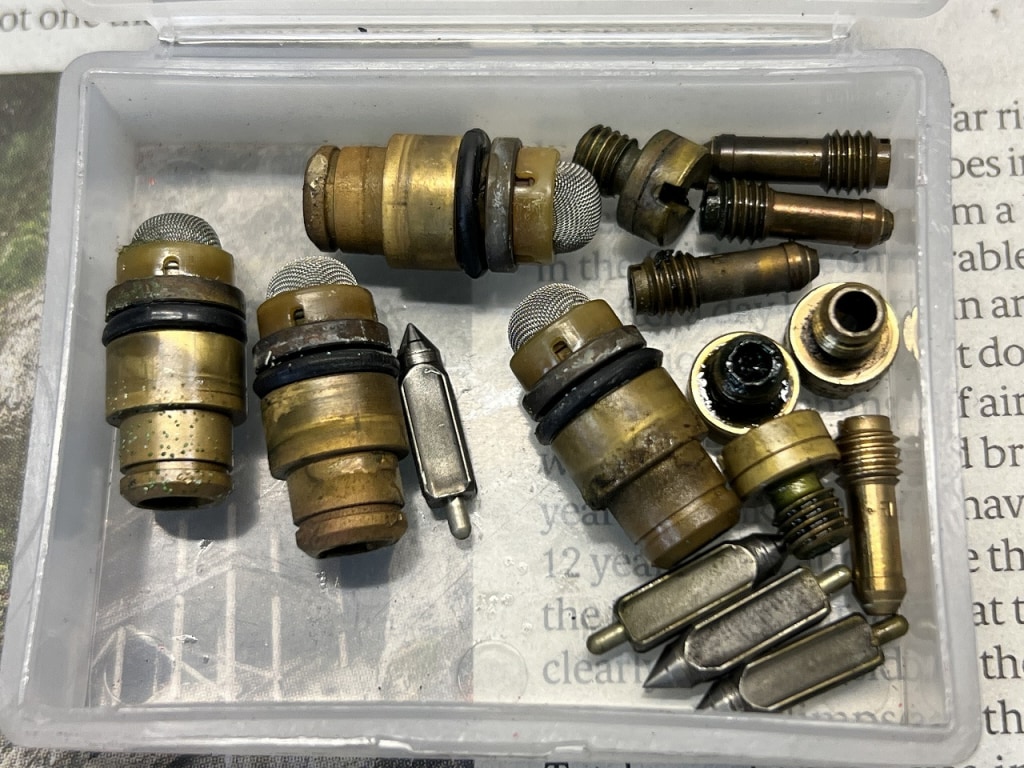
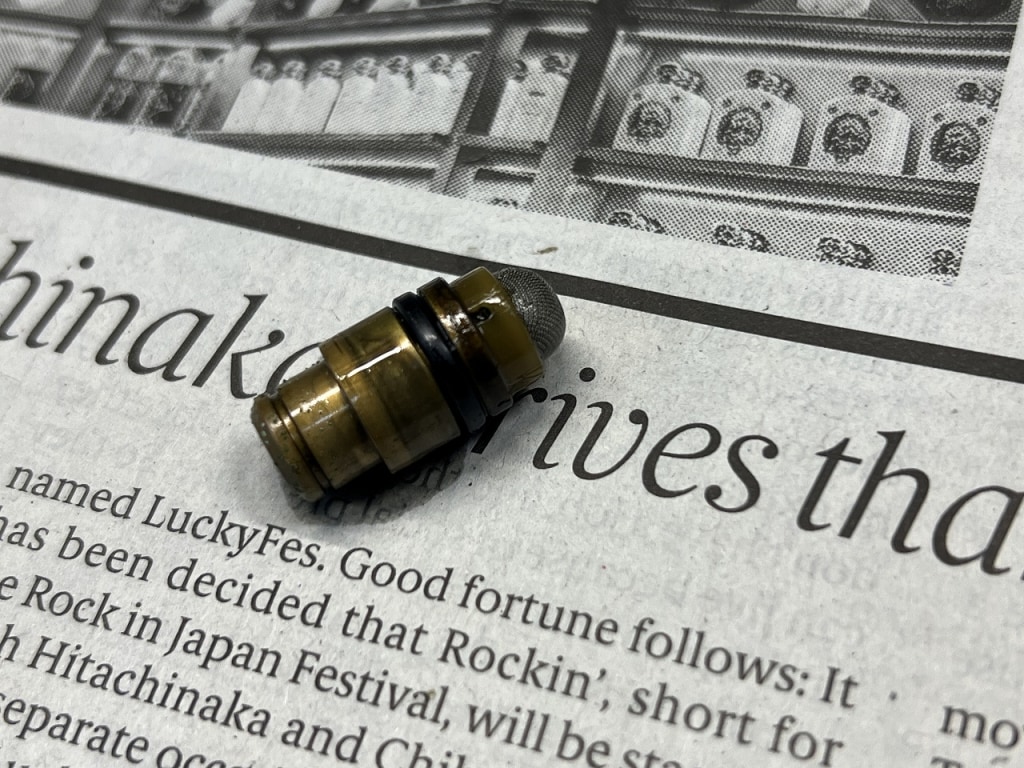
The jet holes are completely blocked and the brass is all mushy.
Since parts are still being supplied, I’d like to replace everything.
When I checked on part availability, I was impressed by how long Kawasaki supplies original parts and at reasonable prices.
Unlike some other manufacturers where parts are discontinued or prices are five times higher, that doesn’t seem to be the case here.
I think this is part of the reason why user enthusiasm for these bikes doesn’t wane.
After all, it’s just gasoline. Warm it up with a Makita heat gun.
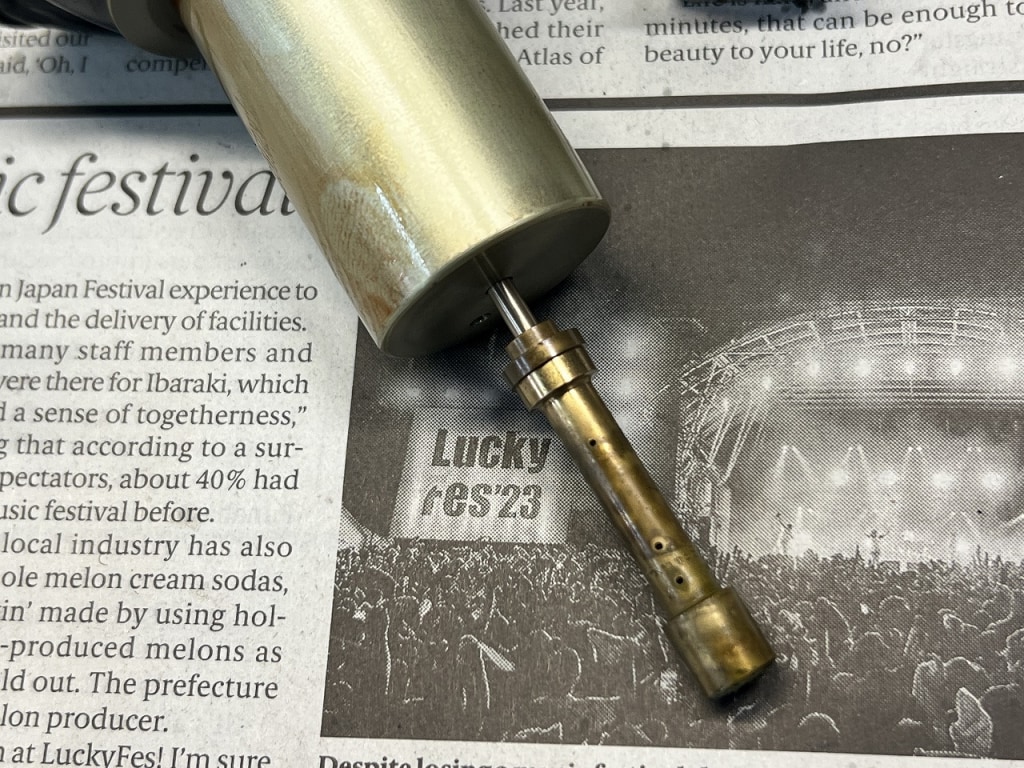
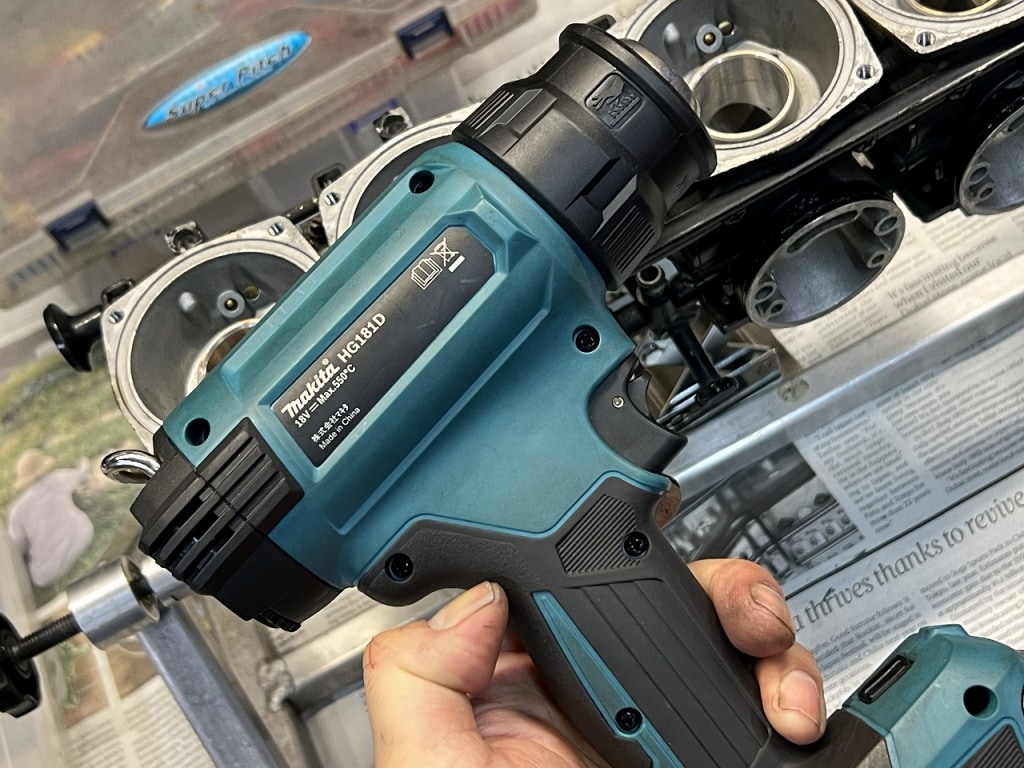
As you can see in the image, the needle jet and needle have become fused together due to gasoline corrosion.
Without using carb cleaner, you can easily remove them by gently warming with a heat gun.
Since it’s basically just gasoline, warming it up can dissolve blockages in the passages and remove seizing.
*Warning: never use direct flame.


 ポチップ
ポチップ
I thought about how far to disassemble it.
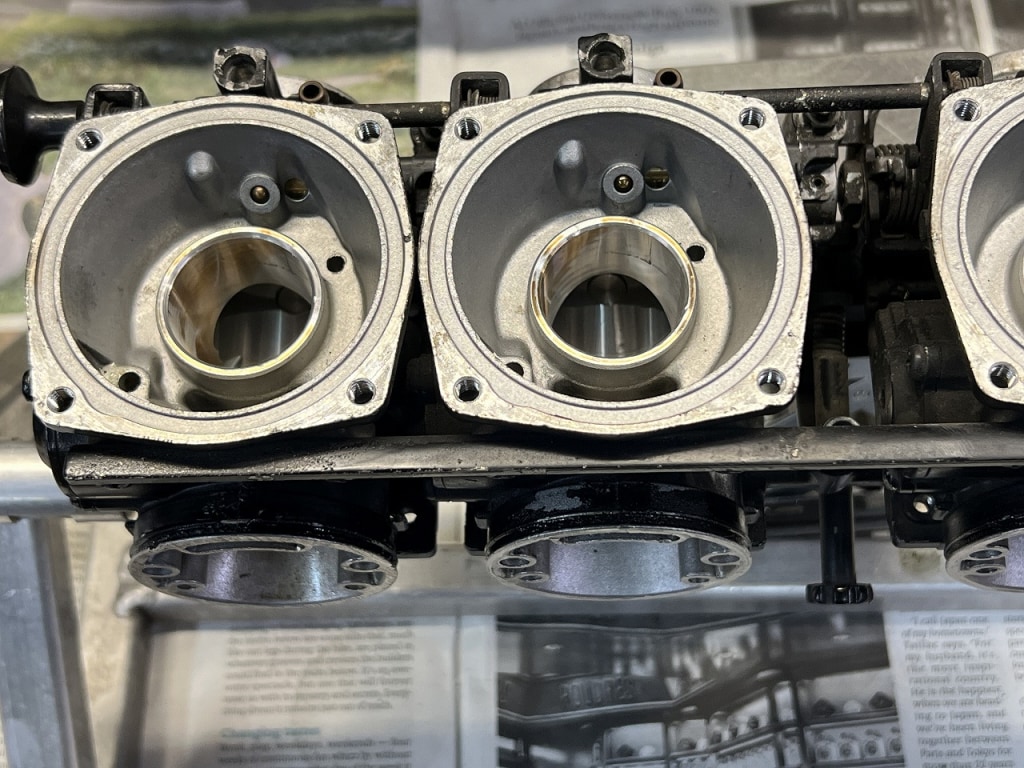
The fuel passage joint is discontinued. Since the joint and seal are integrated, there’s no flexibility.
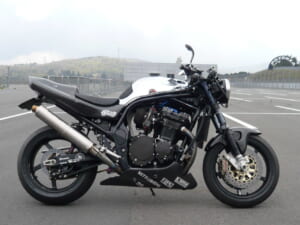
I think it might work since the Katana probably uses the same carb, but the Katana’s T-joint is also discontinued, so I decided to hold off this time.
If I disassemble carelessly and it starts leaking or weeping, that would be a problem. I want to observe the situation and consider it further.
Discontinued original parts are a source of suffering for classic bike riders.
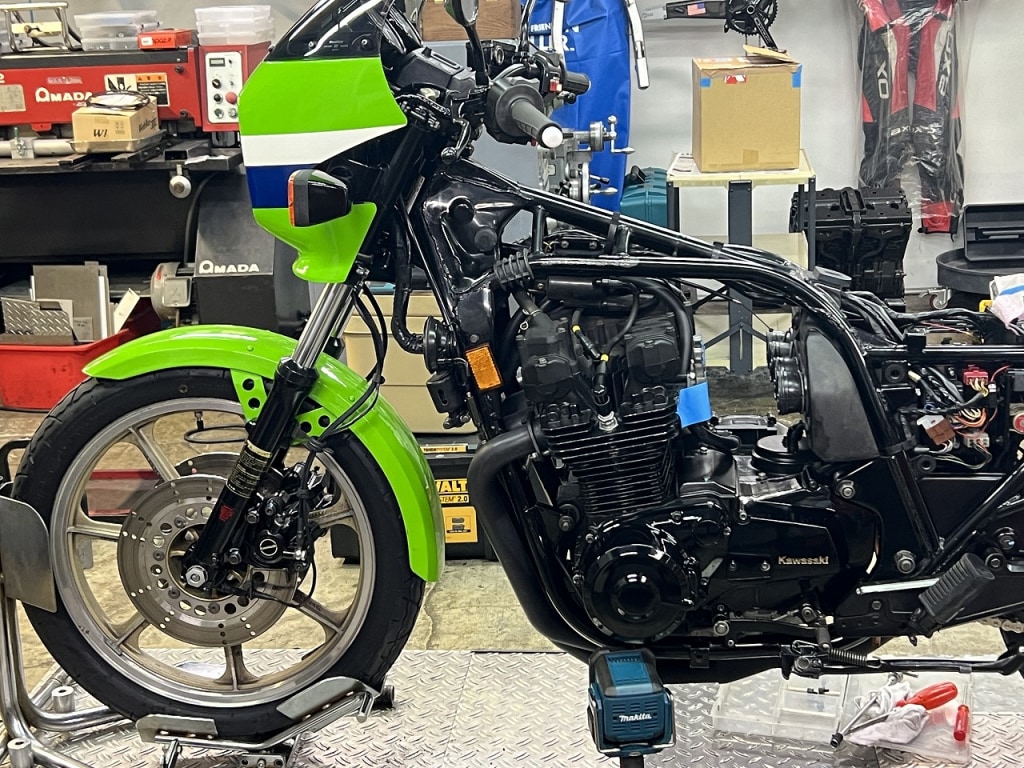
Those days when you could just open the parts list, look up the part number, and swap in the new part are long gone.
Now there are many troublesome issues: searching for reproductions or compatible parts, sourcing from overseas, or having things custom-made.
If you want to keep riding long-term, it’s important to keep the bike in running condition and stock up on parts that look risky.
I’ve ordered the replaceable carb parts from the original supplier, so please wait a bit longer.
ポチップ
 ポチップ
ポチップ
 ポチップ
ポチップ