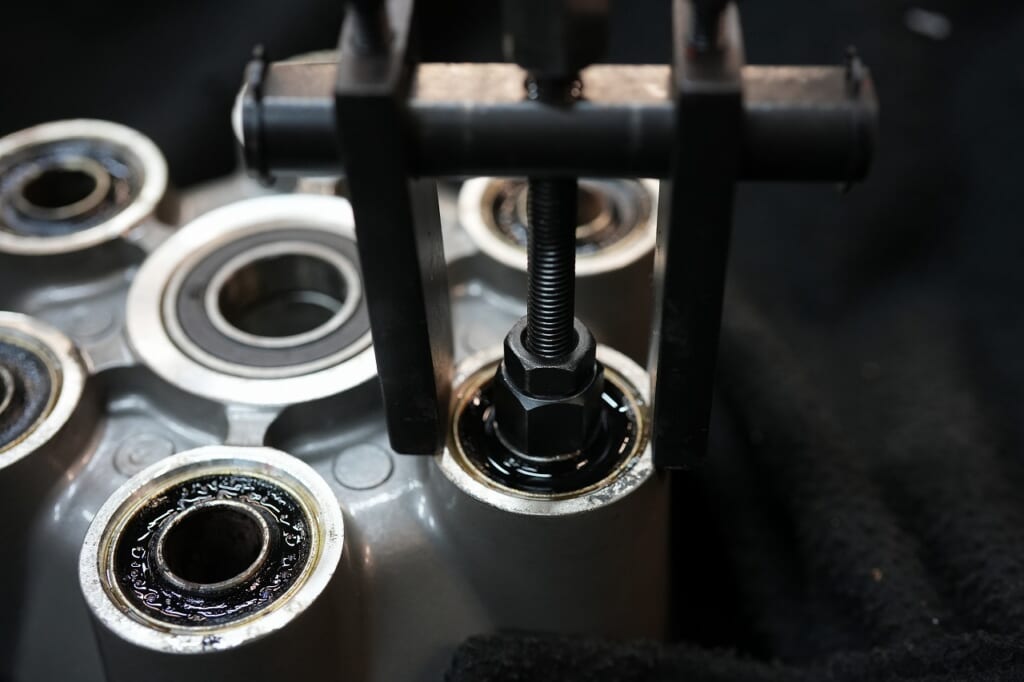
Yay, a bearing puller! ♪ ↑ You see images like this all the time.
If the contact surface is solid, I can let it slide, but when you set up the puller frame in a tight spot, the contact pressure increases and the part can deform.
Care is built on small, steady steps. (*’ω’*)
Sorry for the overlap with the blog.
I set up a bearing puller frame maybe once every few years?
I wonder when you’d ever use it on a Japanese bike… Anyway, it’s a slow job to pull and I hate it.
Well, everyone has their own work style, so…
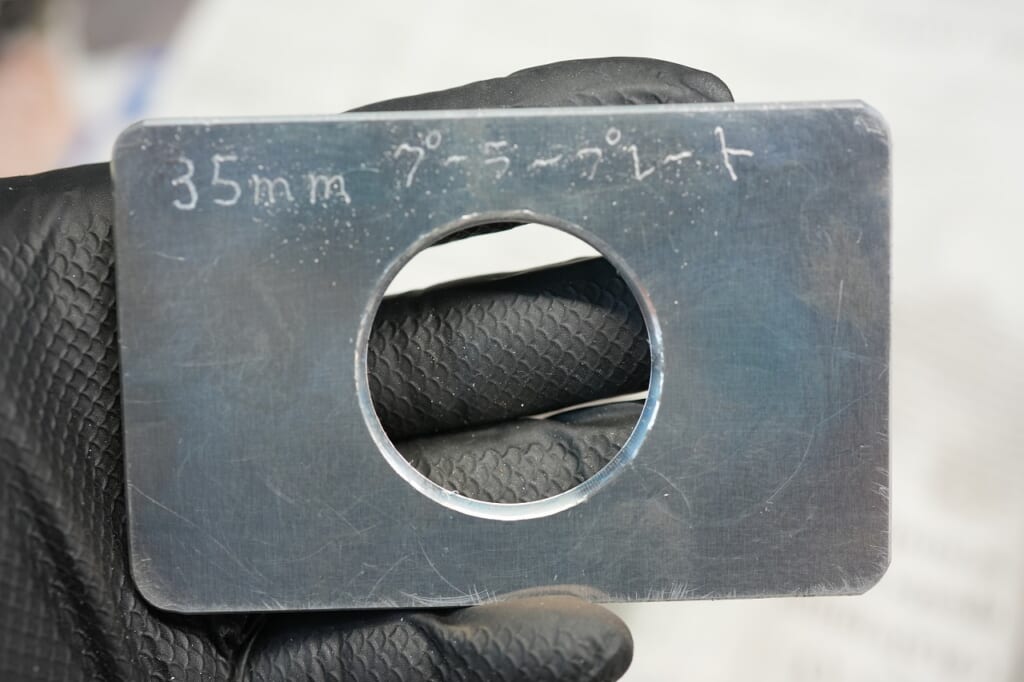
Not applying the puller frame directly causes less damage to the part and lets you set up the frame more reliably and efficiently.
It only takes tens of minutes to make one, and once you do, it’s pretty much a lifetime tool.
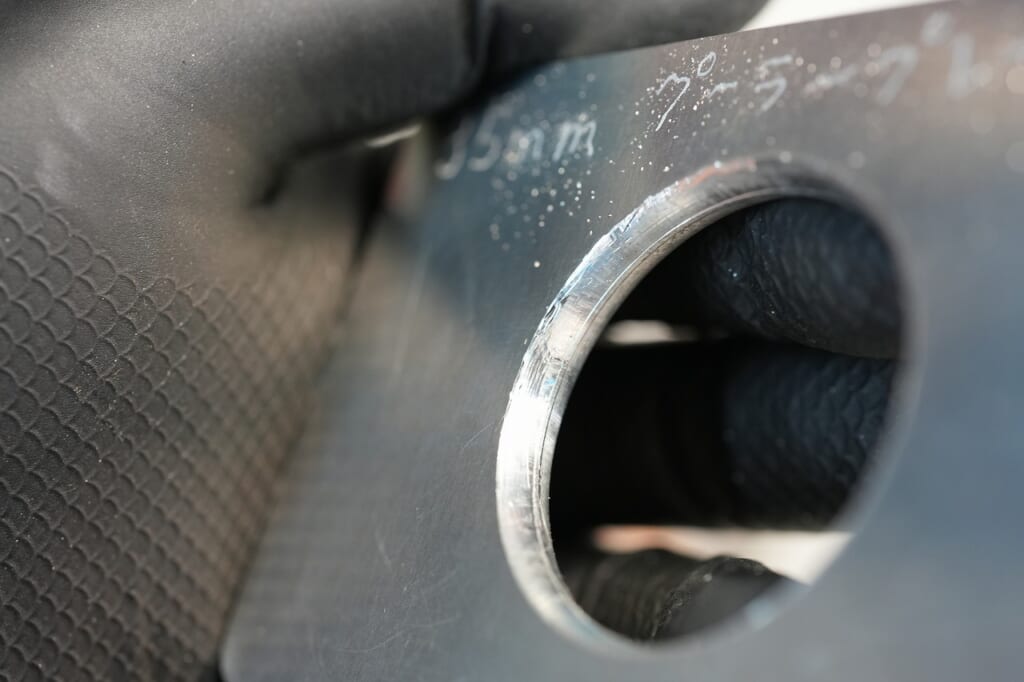
Tools like this should be made properly every time.
If you make something carelessly from scrap wood, you’ll just throw it away. Even if you store it, it won’t look nice, so you can’t love it.
Instead, taking a little extra time to make it properly pays off down the road.
Maybe by pausing for a moment first, all sorts of possibilities open up.
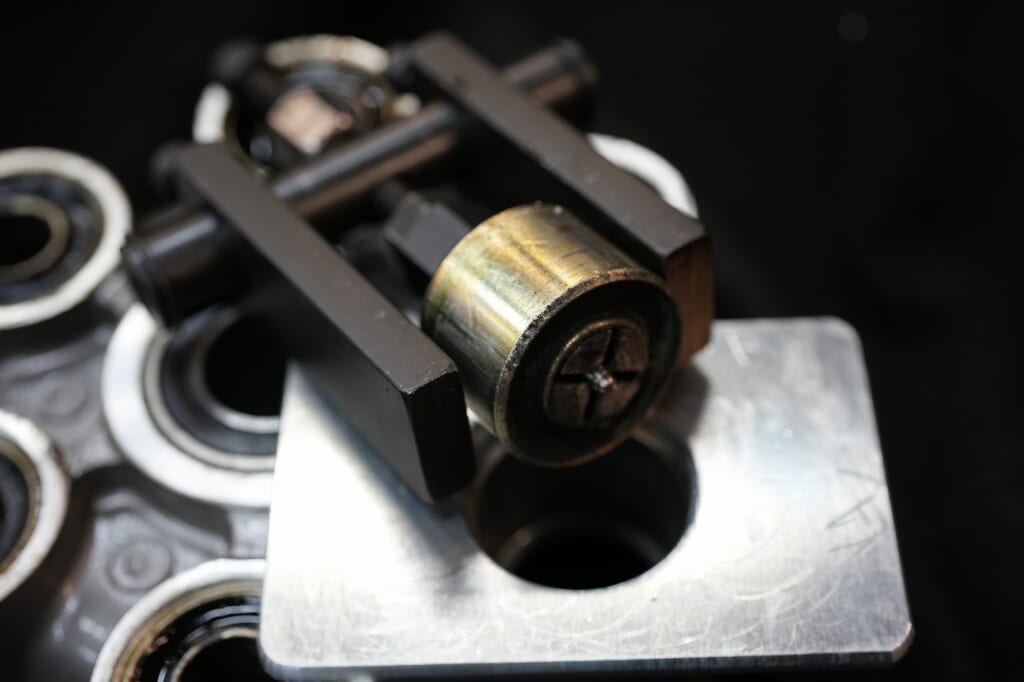
When you can confidently apply the puller without worry, you focus on the work and mistakes drop to nearly zero.
In my view, work that minimizes tricks and technique is most efficient and least error-prone.
Tricks and technique should only come out in a pinch—if you’re using them all day long, doesn’t that wear you out?
Often, thinking something is a hassle just creates more hassle.
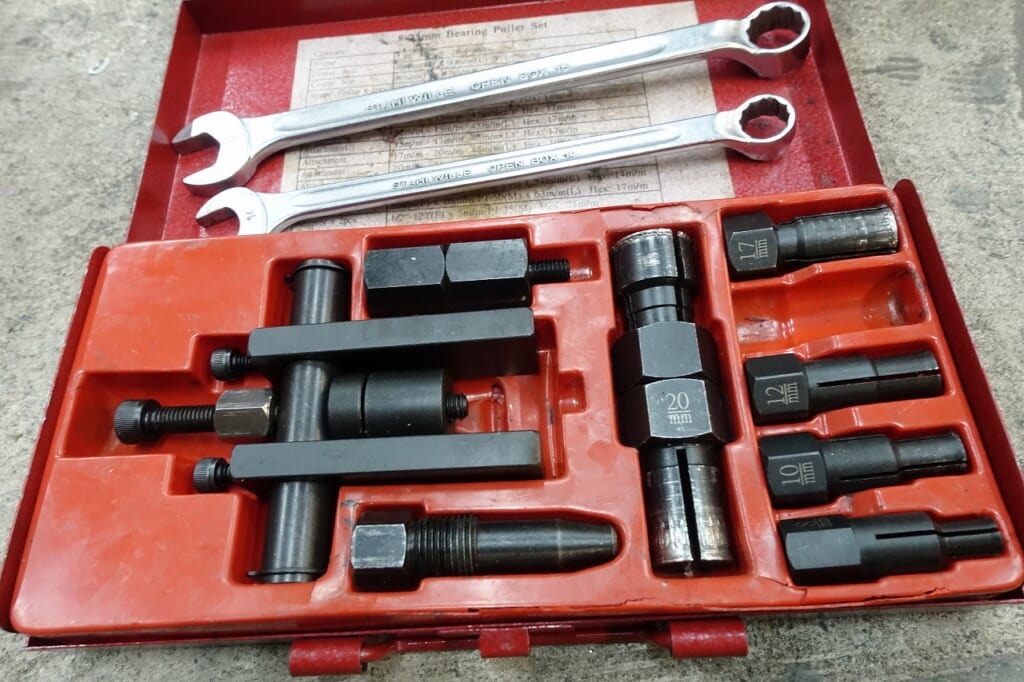
toolsisland Pilot Bearing Puller Set F1 Internal Jaw Compatible 8–25 mm
Embarrassingly, this one tool handles almost all my wheel bearings and swingarm work.
Ball bearings and needle rollers come out easily. Give it a shot! (*’ω’*)