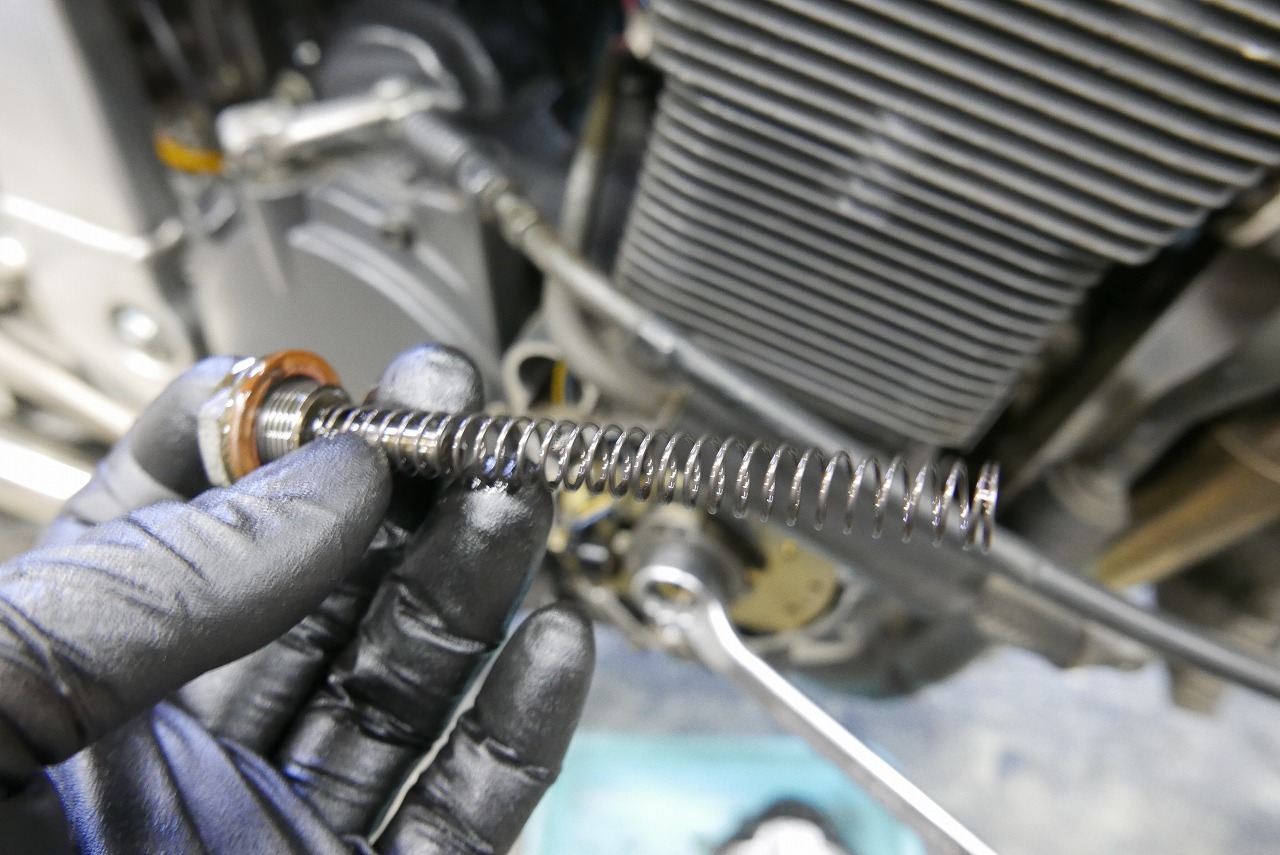
We’ll start with oil-cooled maintenance. When you crank it forward and backward, there’s quite a bit of play. The oil-cooled cam chain tensioner is basically automatic. The pushing force (tensioning force) comes from spring strength.
Once the engine fires up, the chain tension gets really tight, so it won’t loosen up easily. In that case, we just push it back one notch from the rear to adjust it.
Of course, you have to go all the way around and check how slack the cam chain is, or you’ll mess it up.
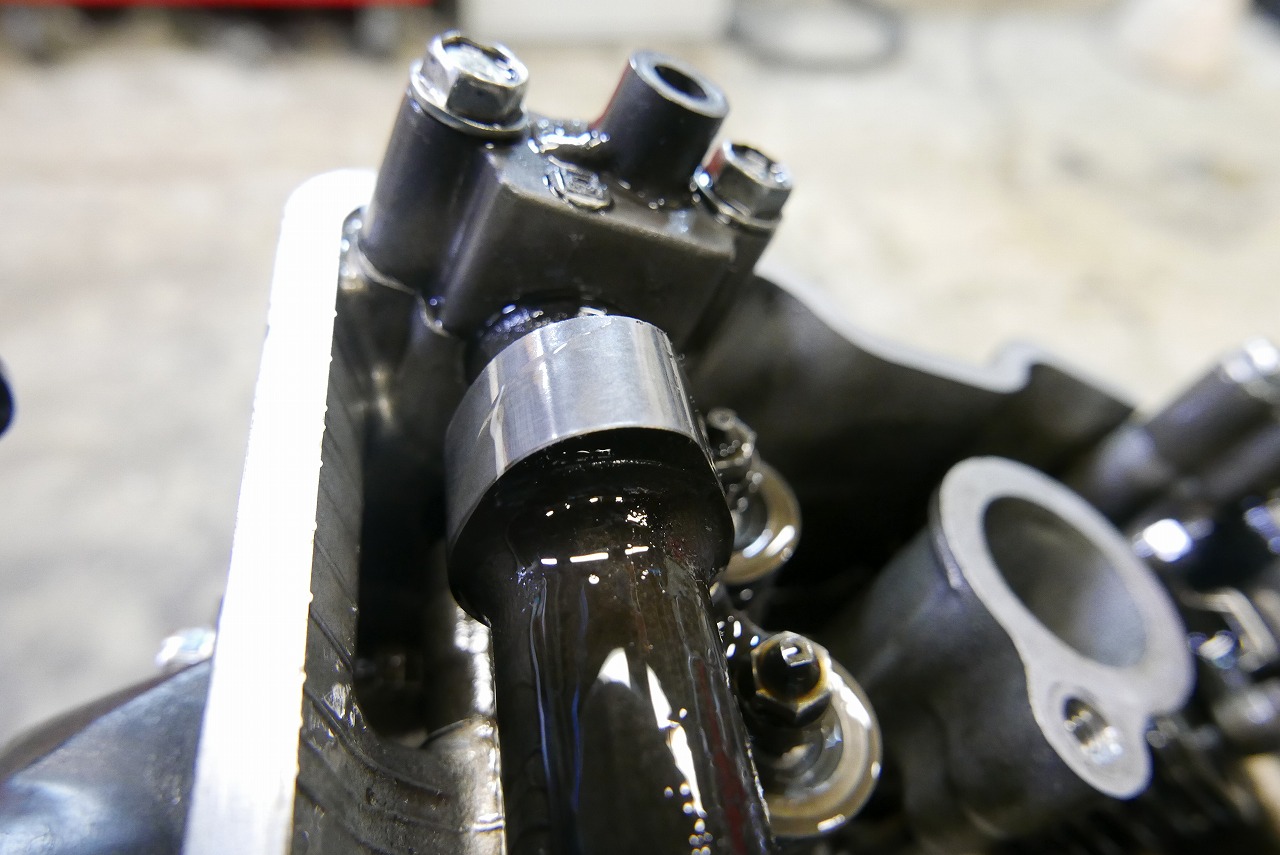
#1 IN
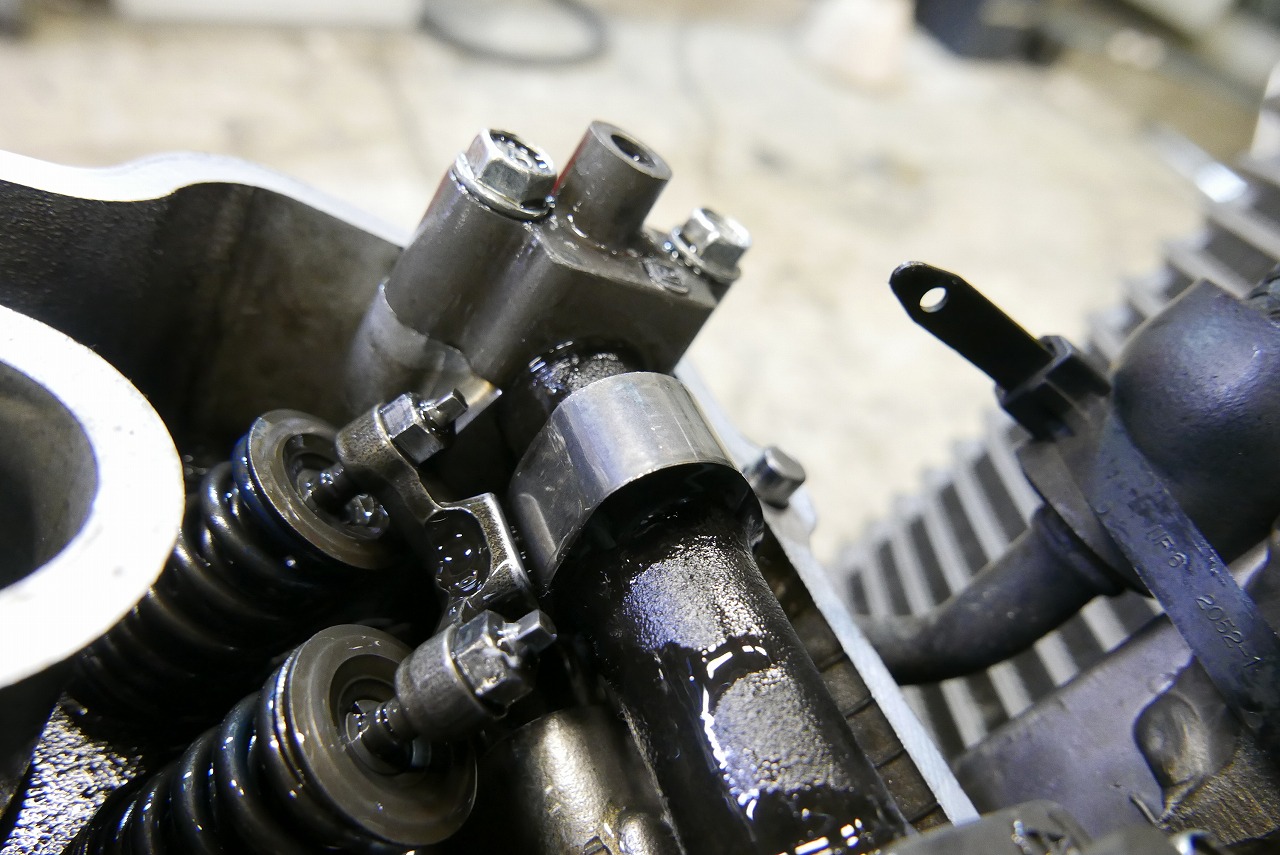
#1 EX
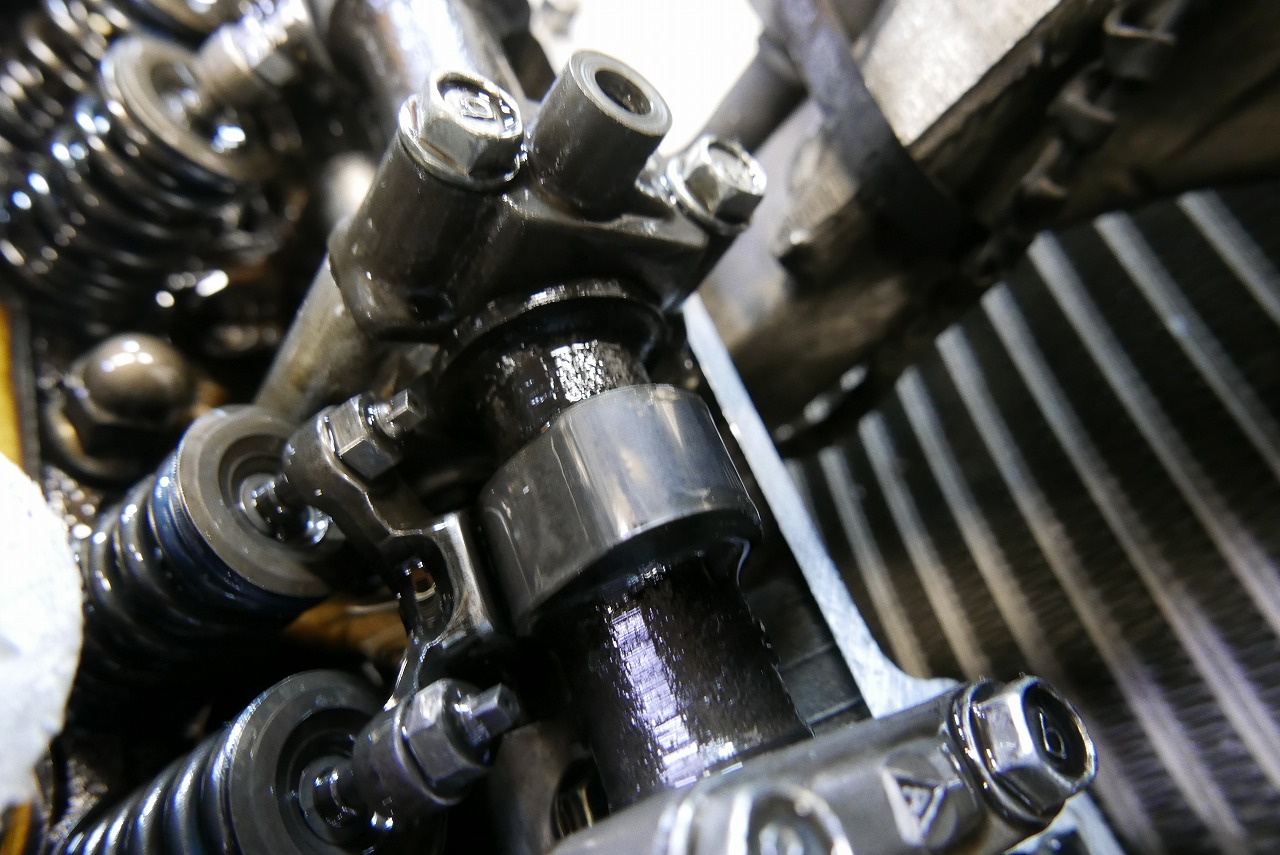
#2 EX
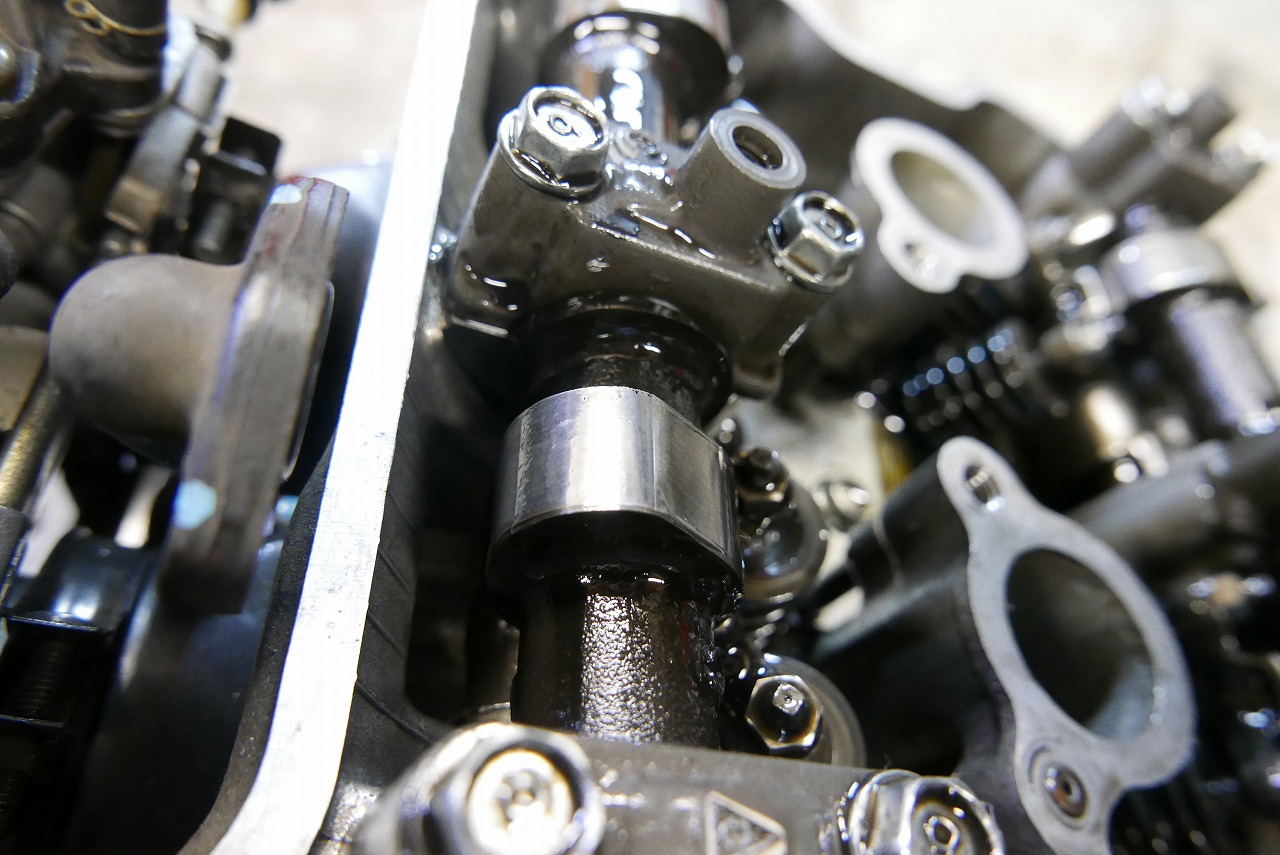
#2 IN
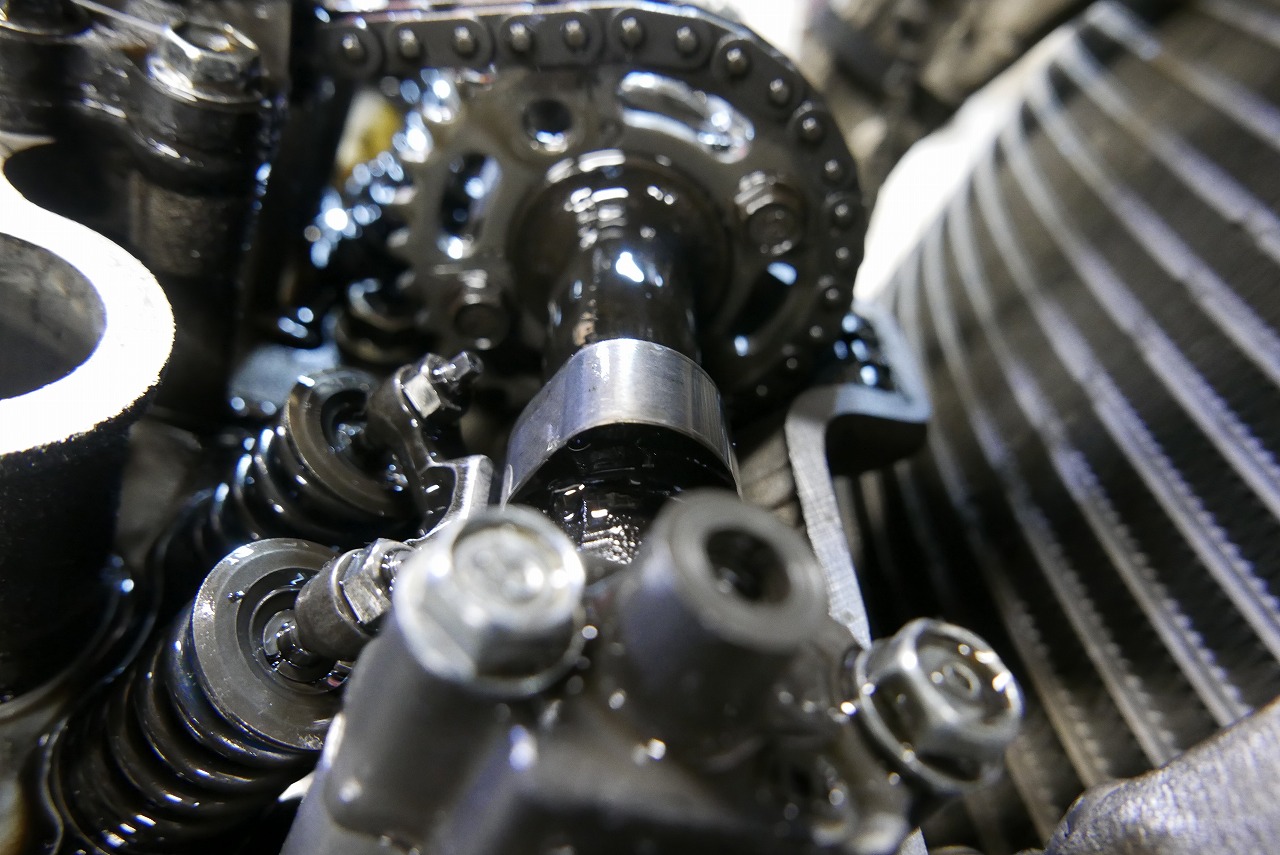
#3 EX
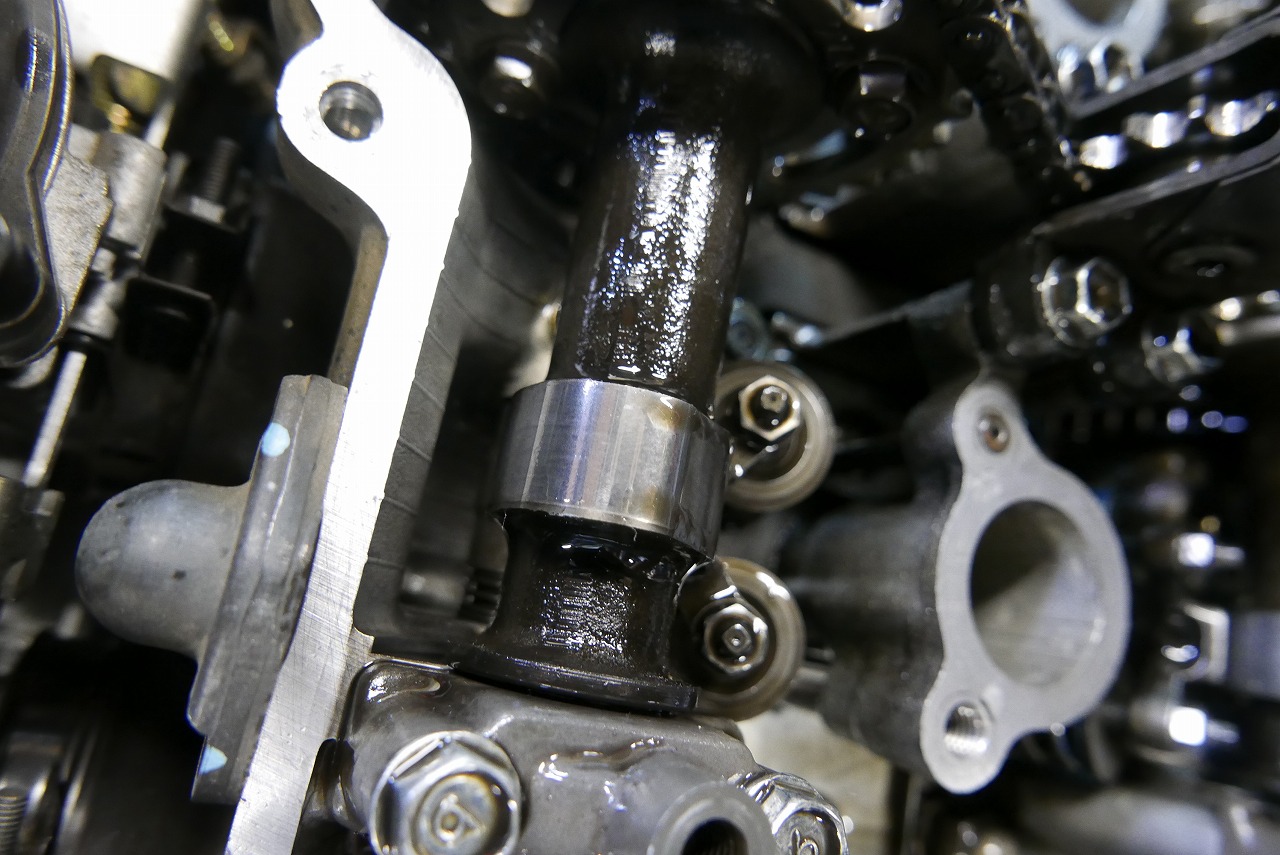
#3 IN
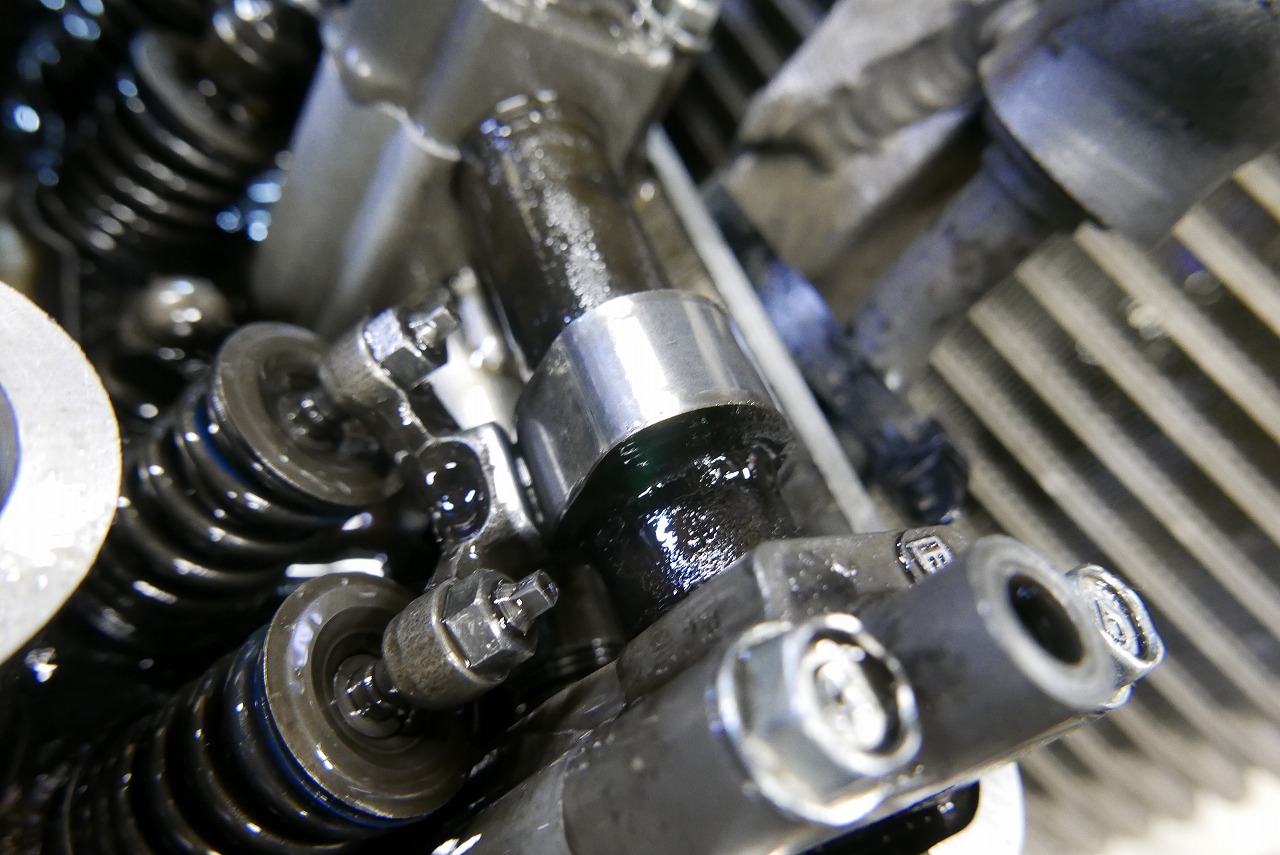
#4 EX
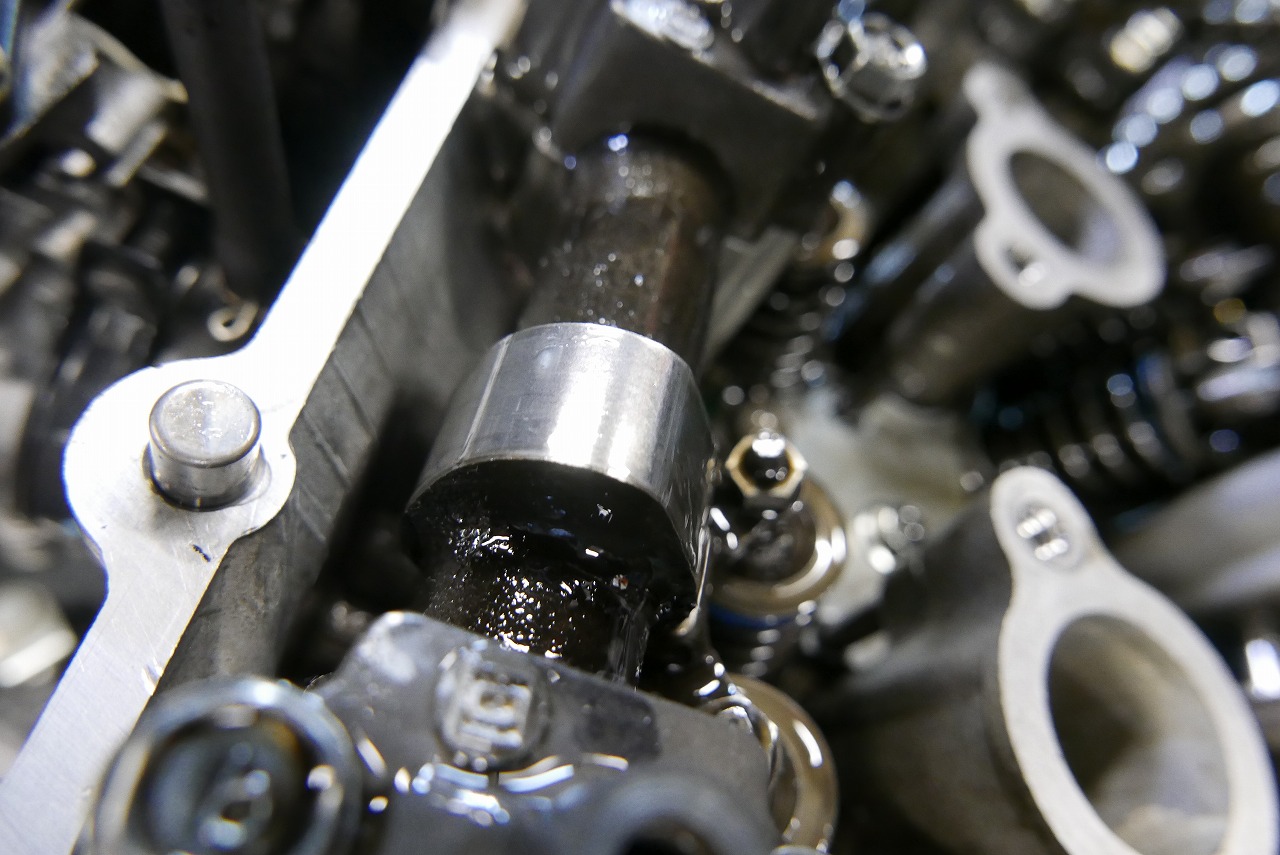
#4 IN
The mileage is still low, so there was no scuffing.
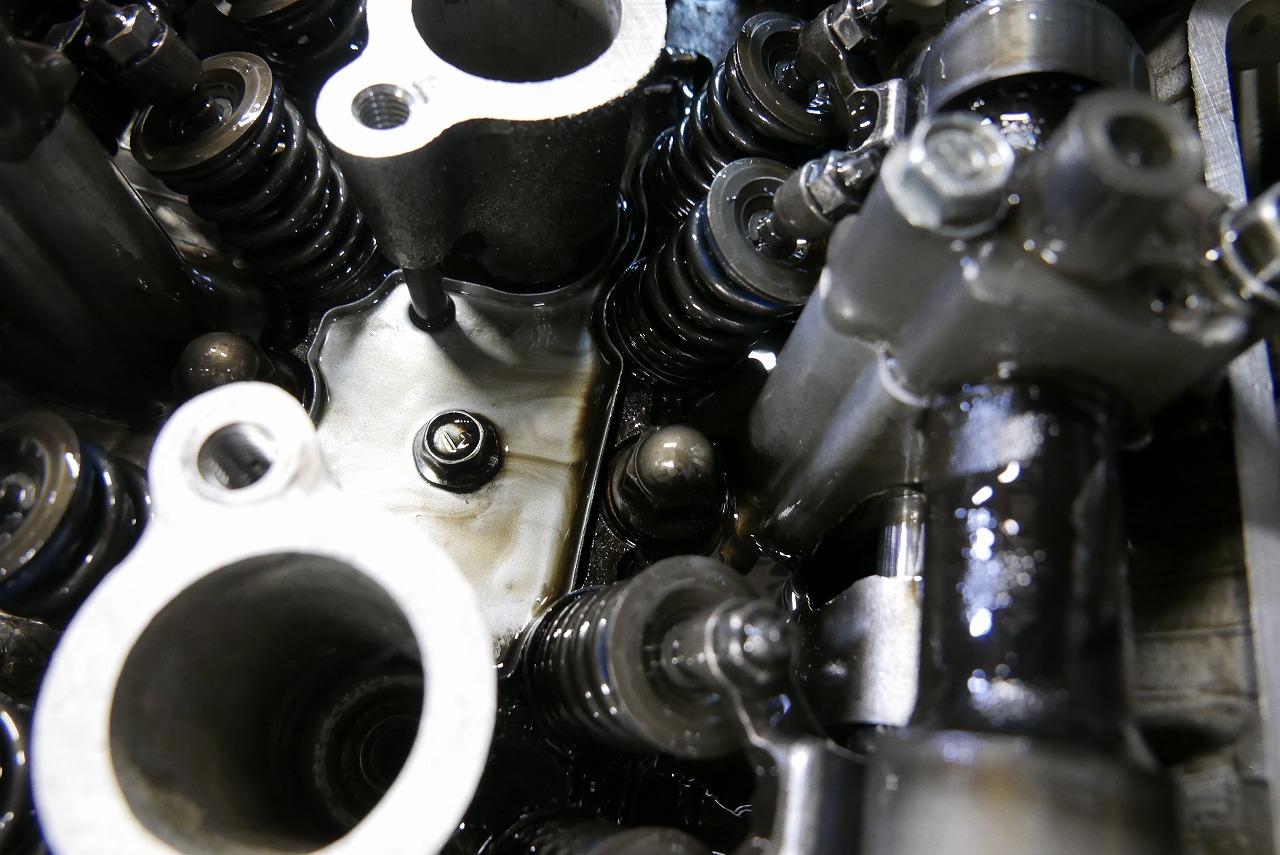
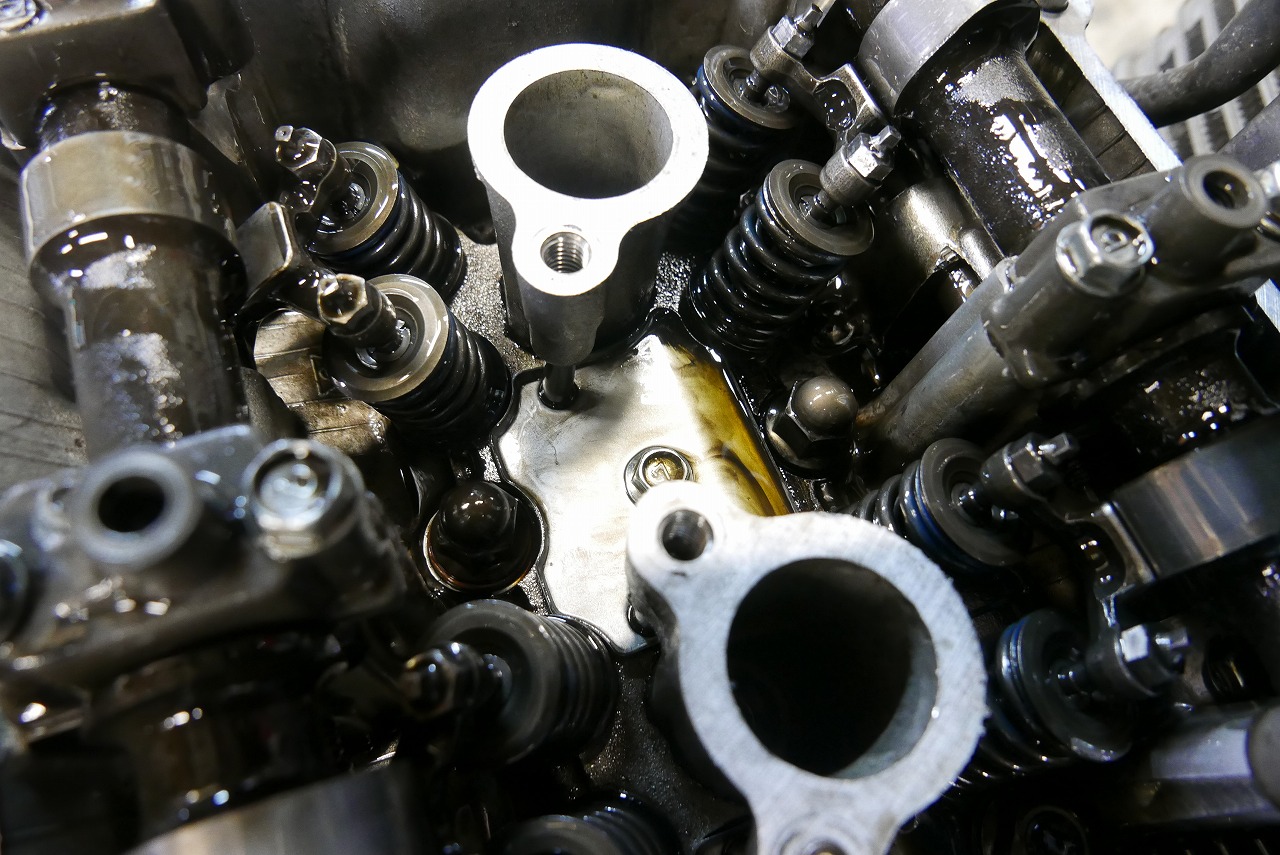
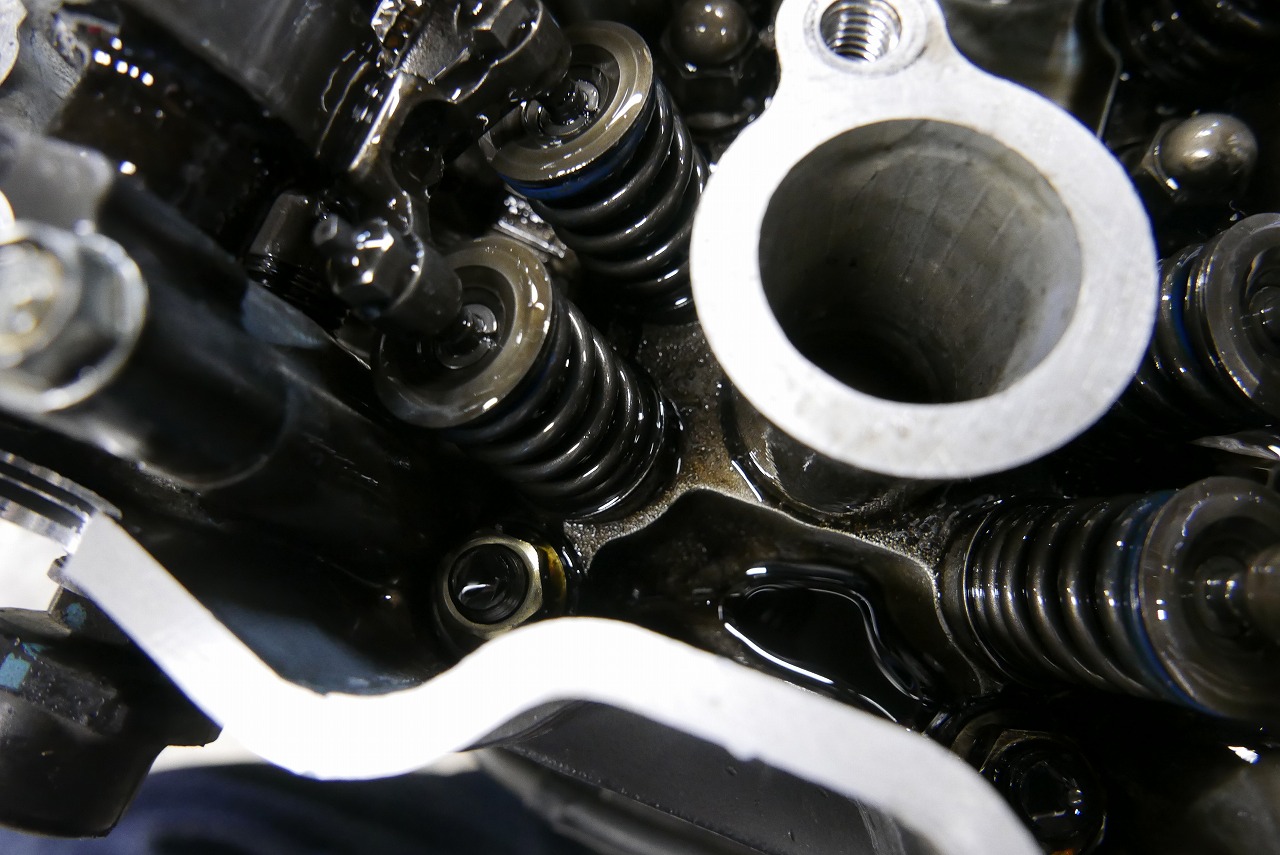
The oil is somewhat dirty. I thought, wow, it’s this dirty despite such a short distance, but then I figured that the dirt from before it sat for over ten years might still be lingering.
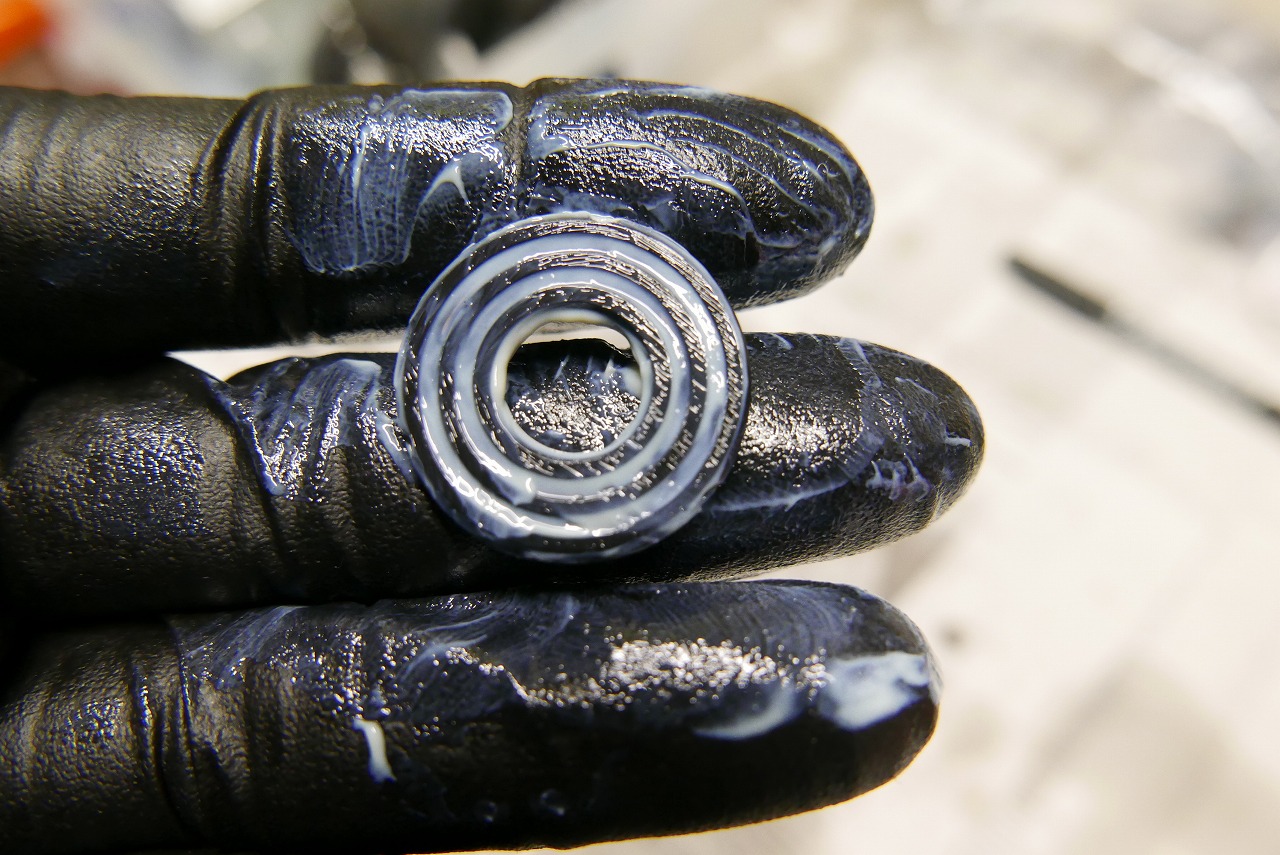
A subtle effect? Maybe a legend. The seal that holds the head cover can get hard and cause oil to seep out. To keep it moisturized, we always apply NC100 grease to this seal before assembly. It seems to have a surprisingly good effect—the seal seems to last longer.
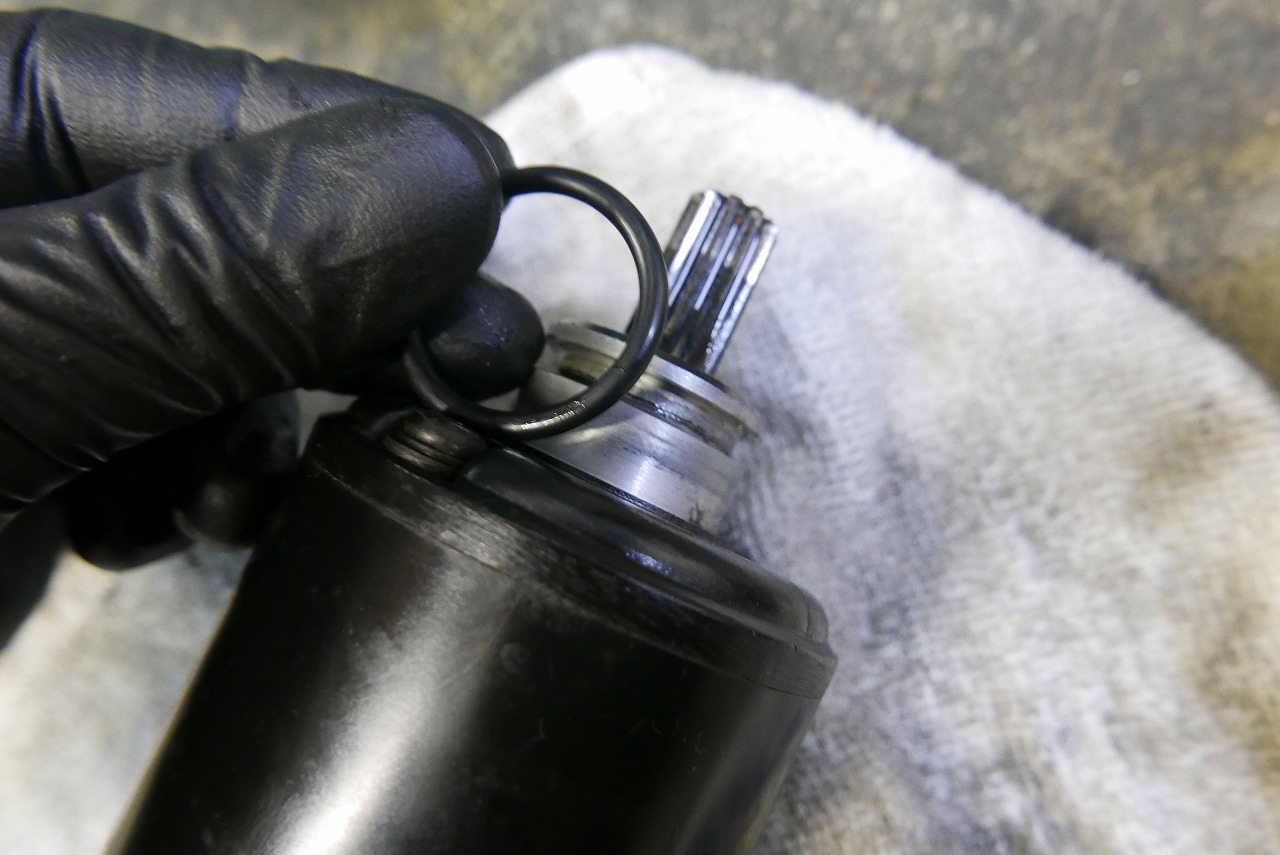
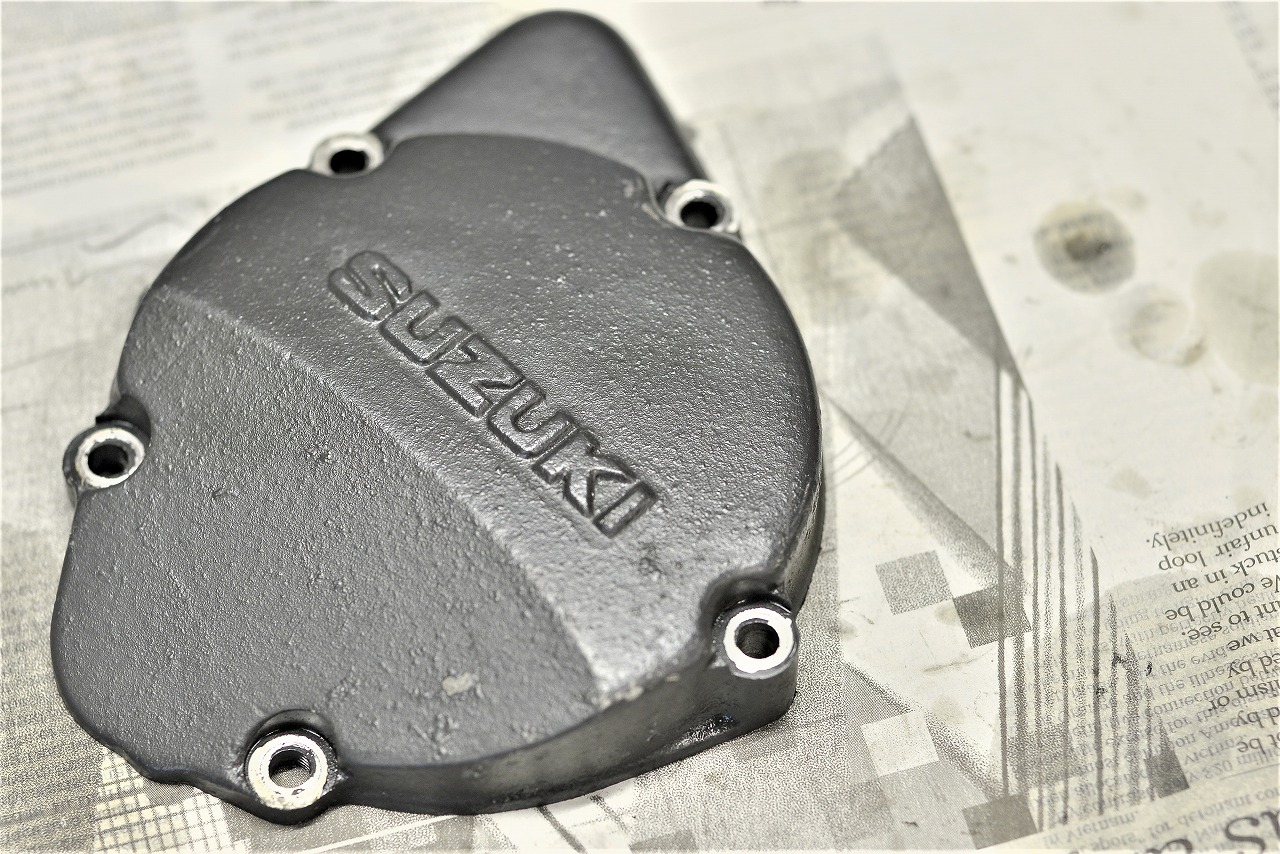
We’ll replace the starter motor O-ring. The oil-cooled has two types of starter motors. The difference in the left engine cover equals the difference in starter motor.
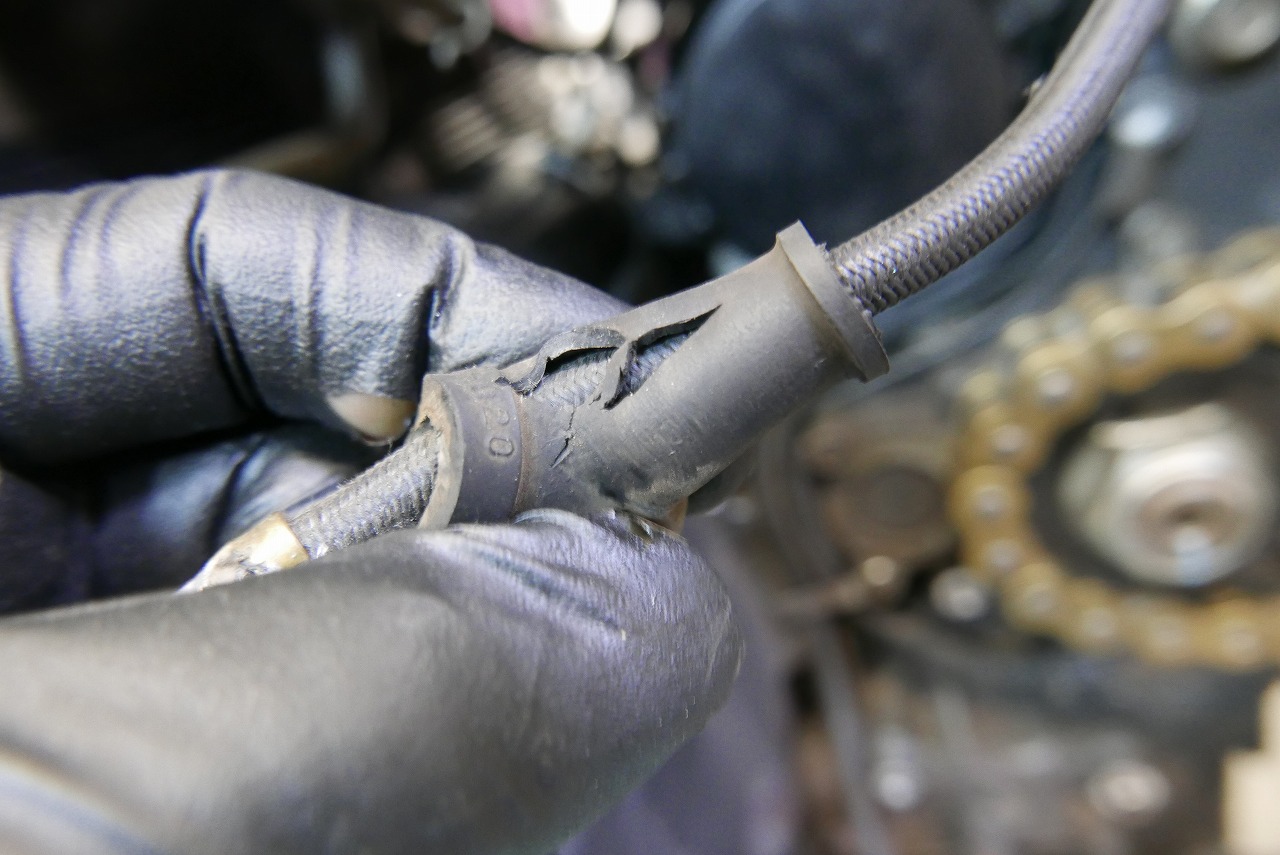
We’ll replace the terminal cover too.
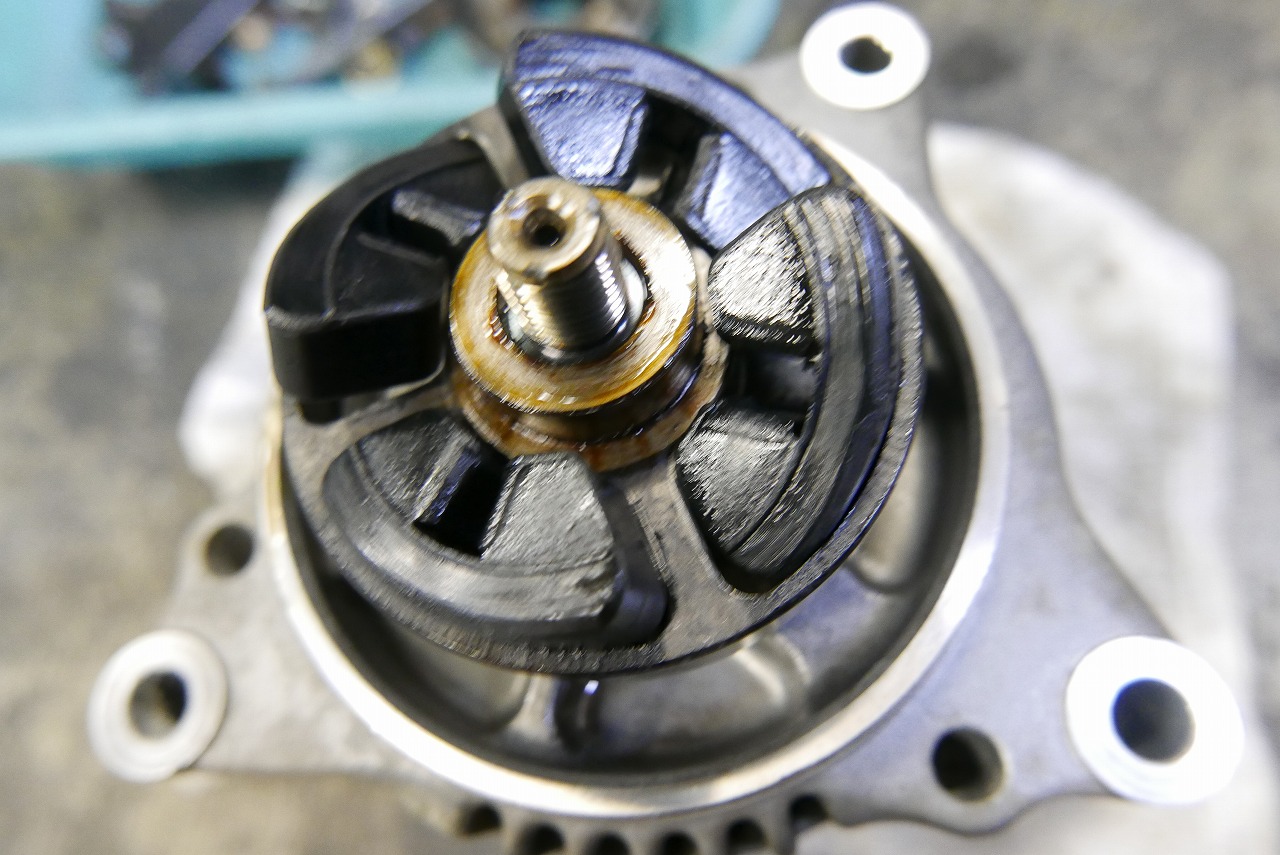
The generator damper looked pretty good.
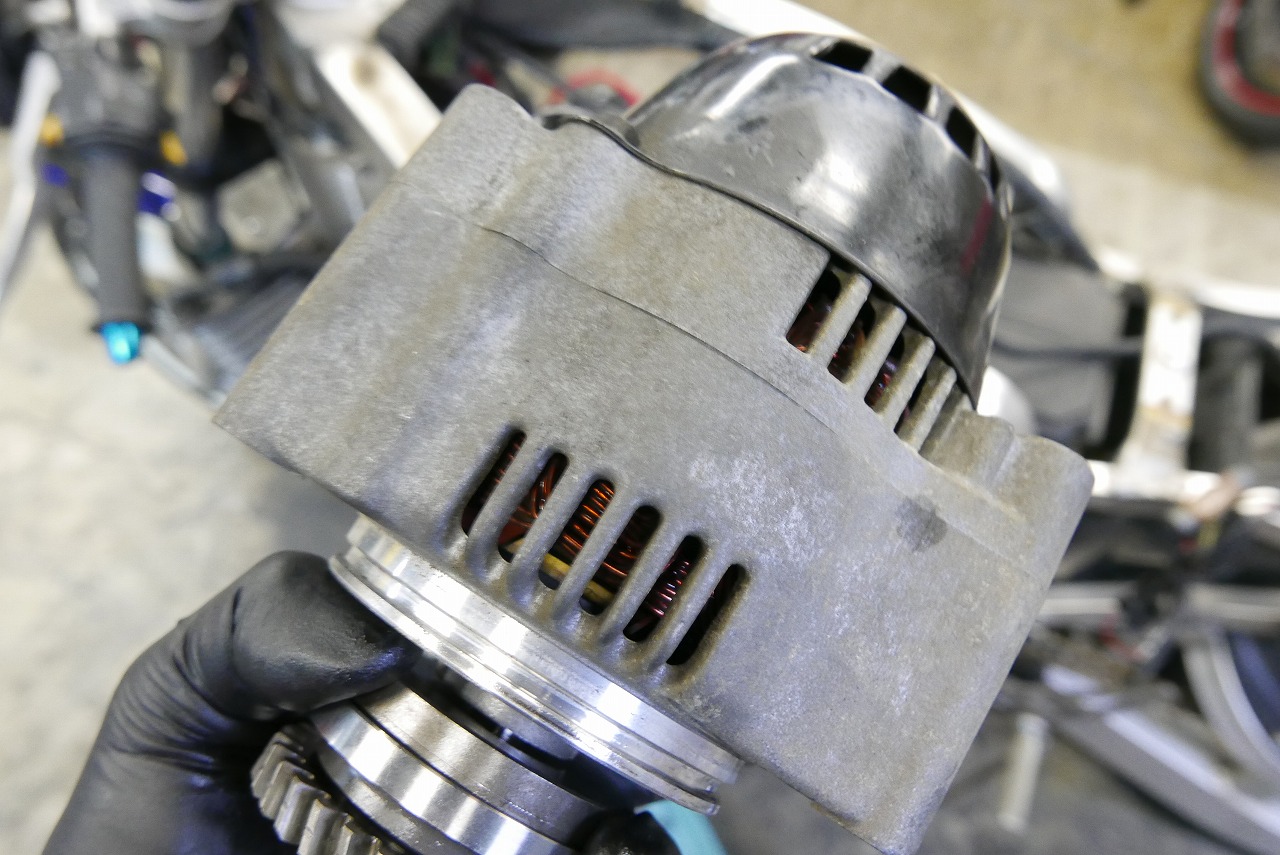
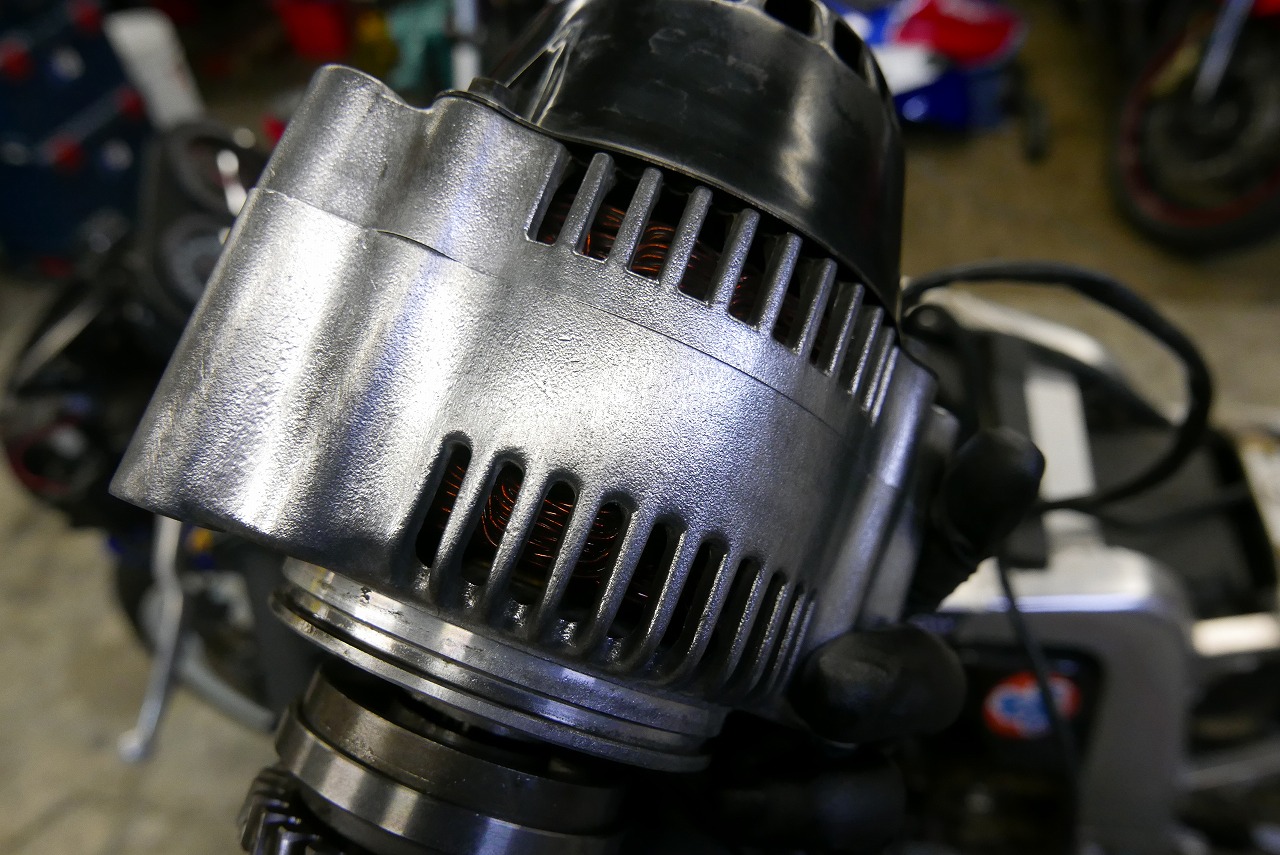
We’ll clean it up as much as we can polish. A stainless steel brush and a quick pass does the trick.
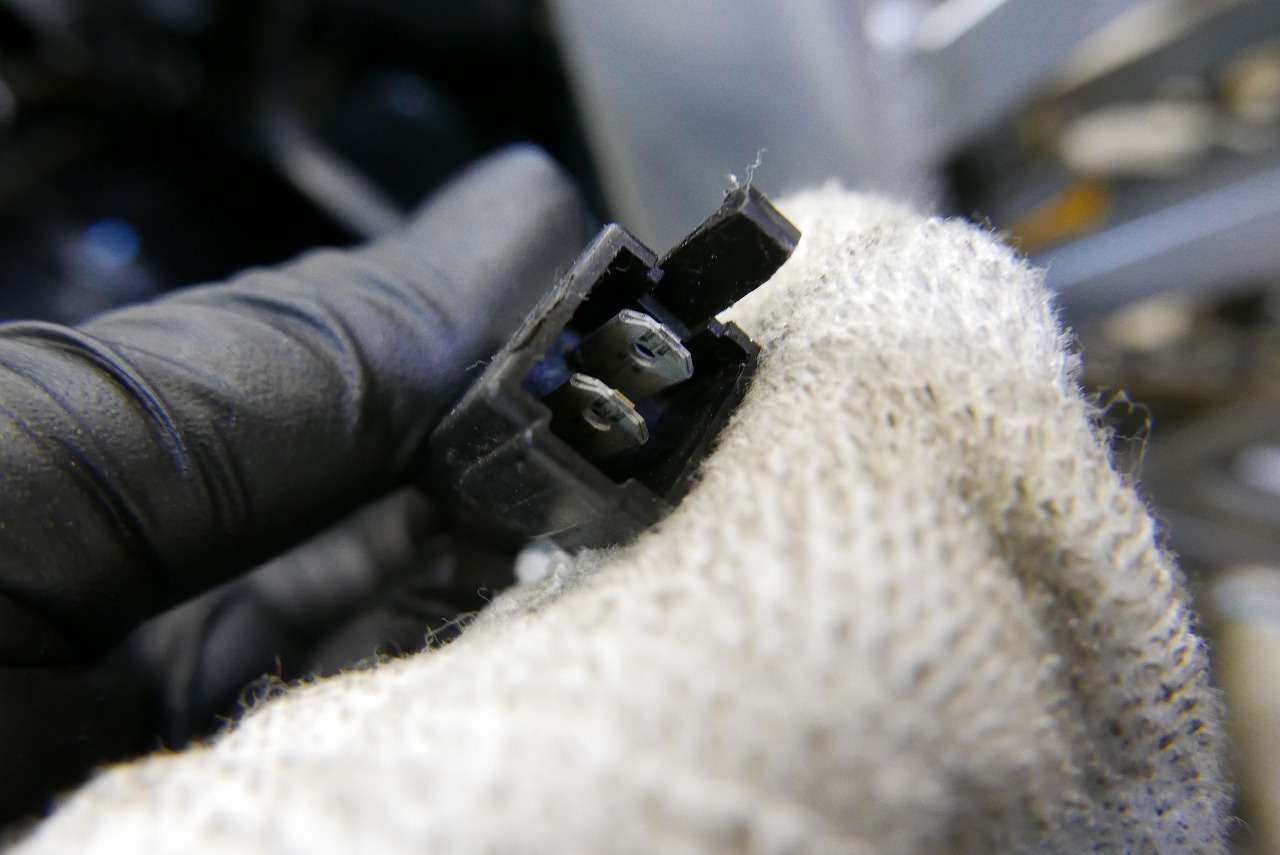
The generator connector showed no melting and no issues. It’s a spot you should definitely check once if you buy used.

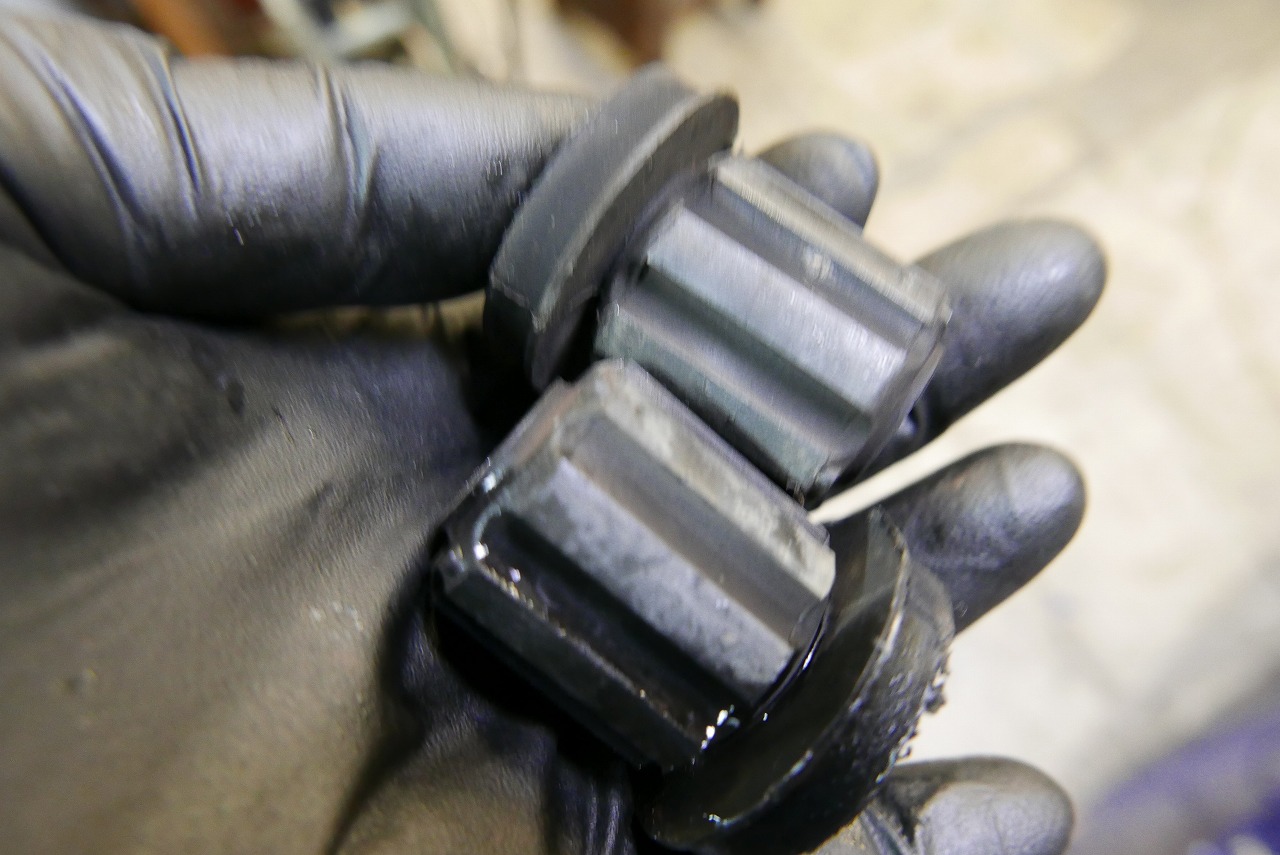
The engine damper looked pretty good too. Since it’s original equipment, just getting new rubber parts should have high expected benefits.
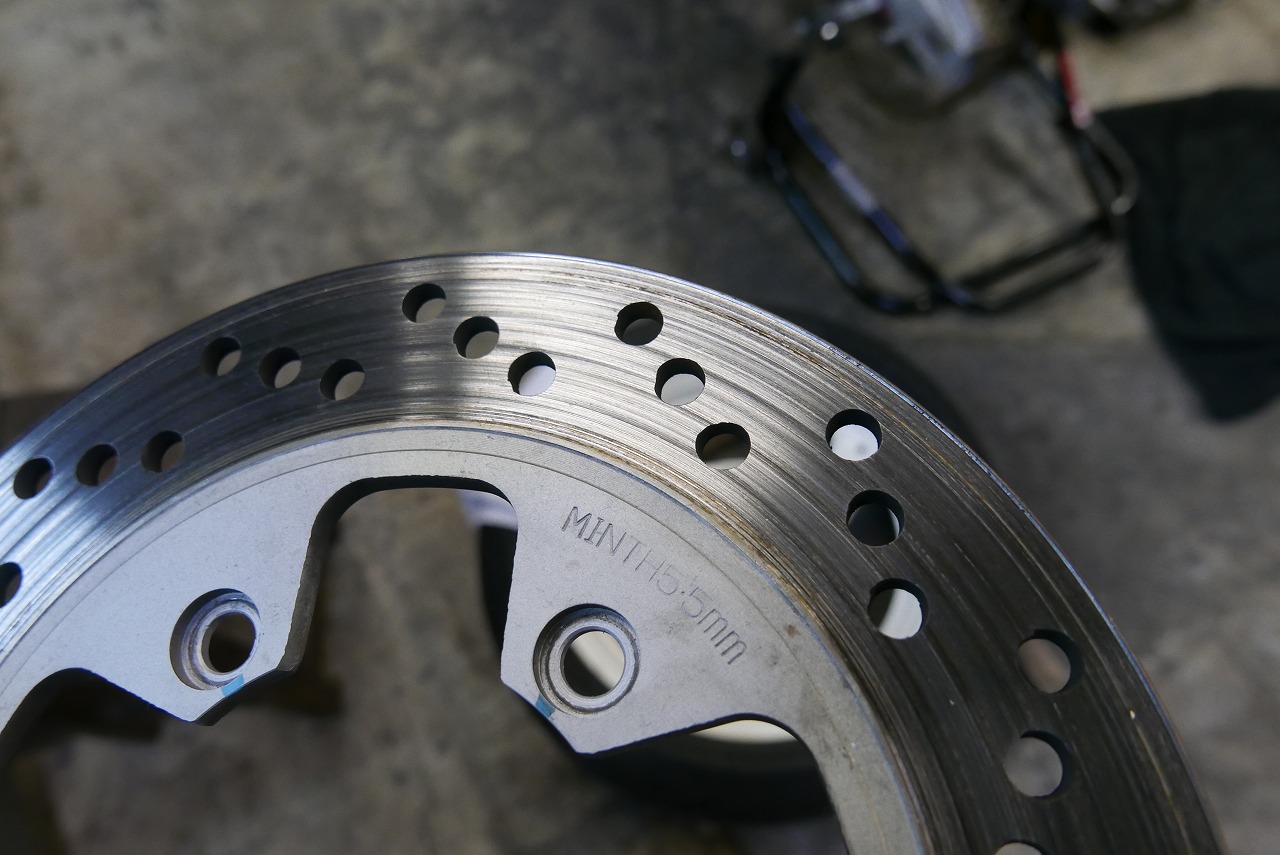
The rear disc is standard 6mm. There’s no need to keep it the same, so we’ll change it to 5mm. To be precise, the center will shift, so you need to check.
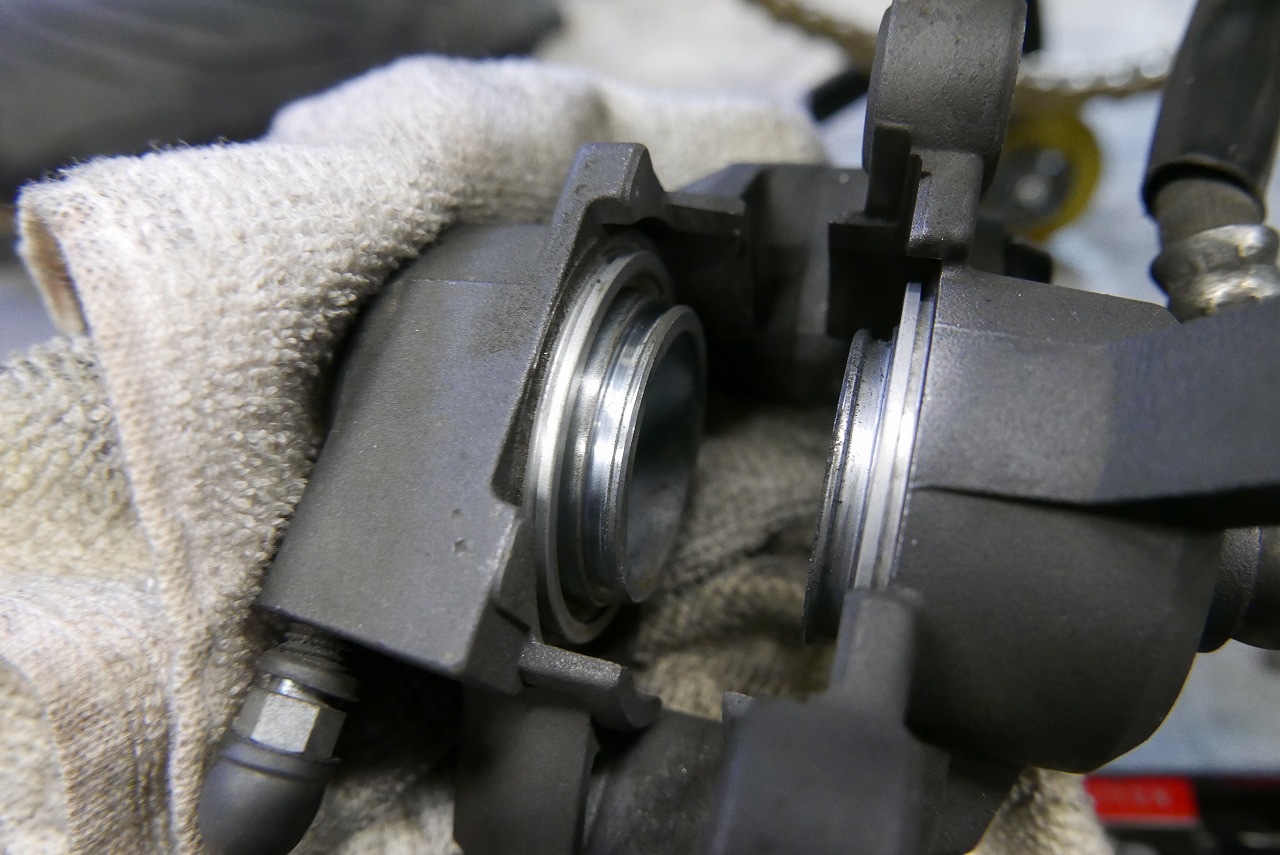
The caliper and master were overhauled last time, so they’re working great.
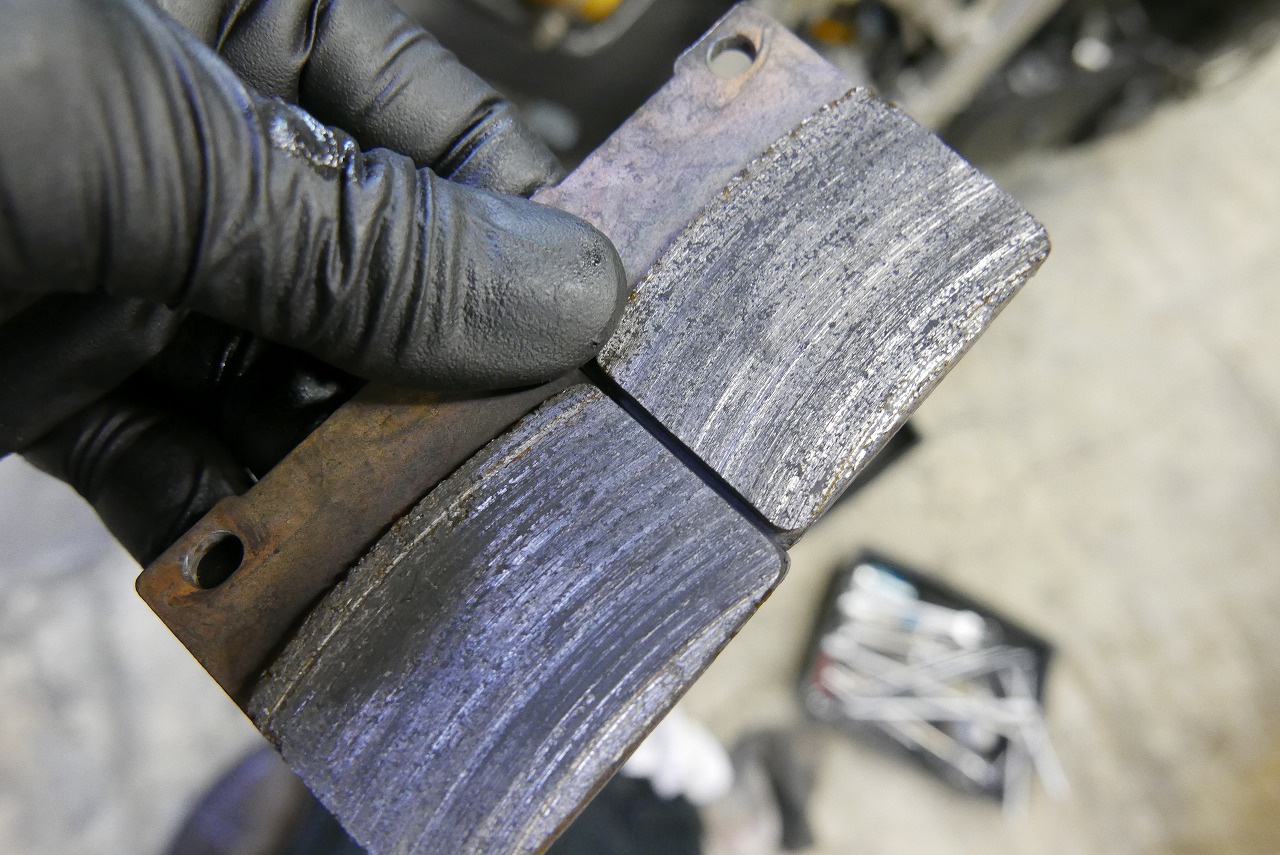
The rear pads were worn down to nothing from being clamped too hard! Perfect timing.
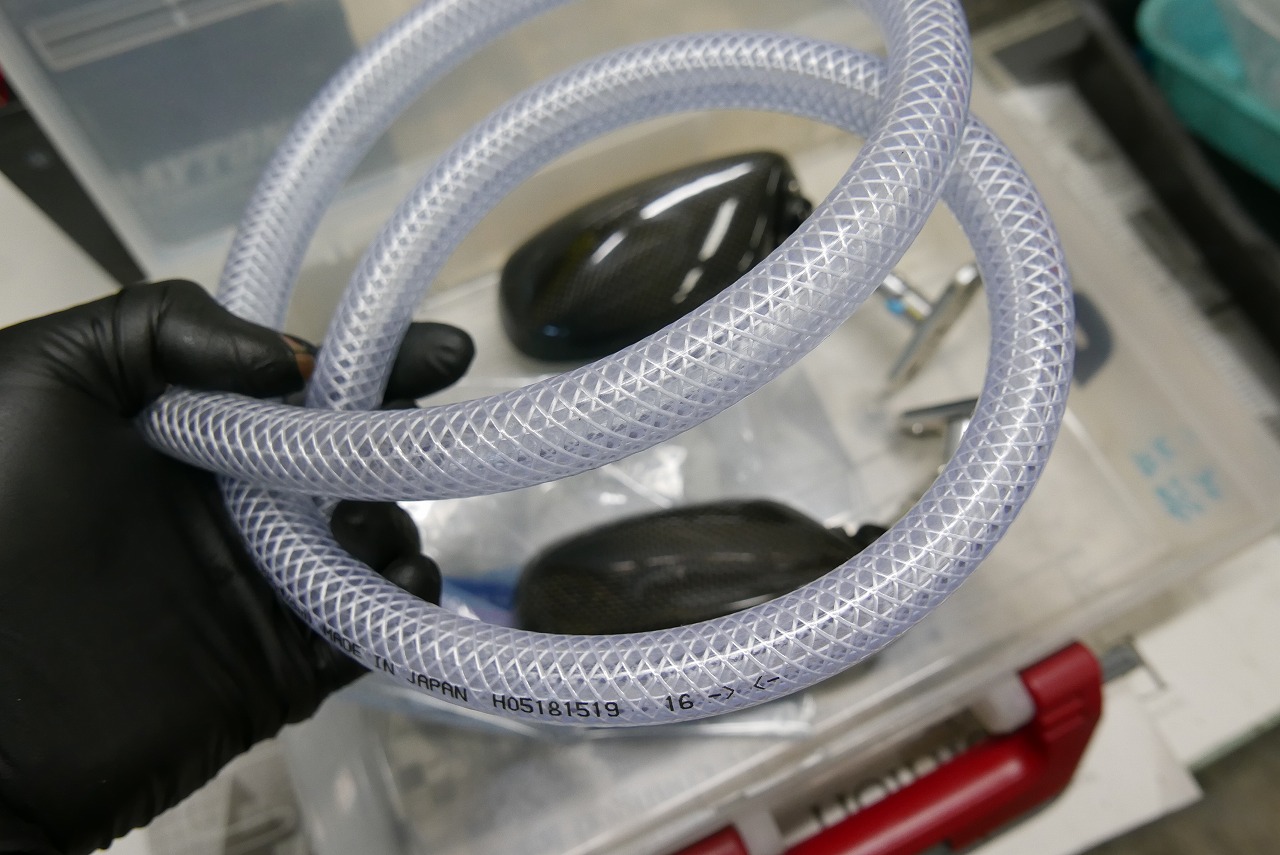
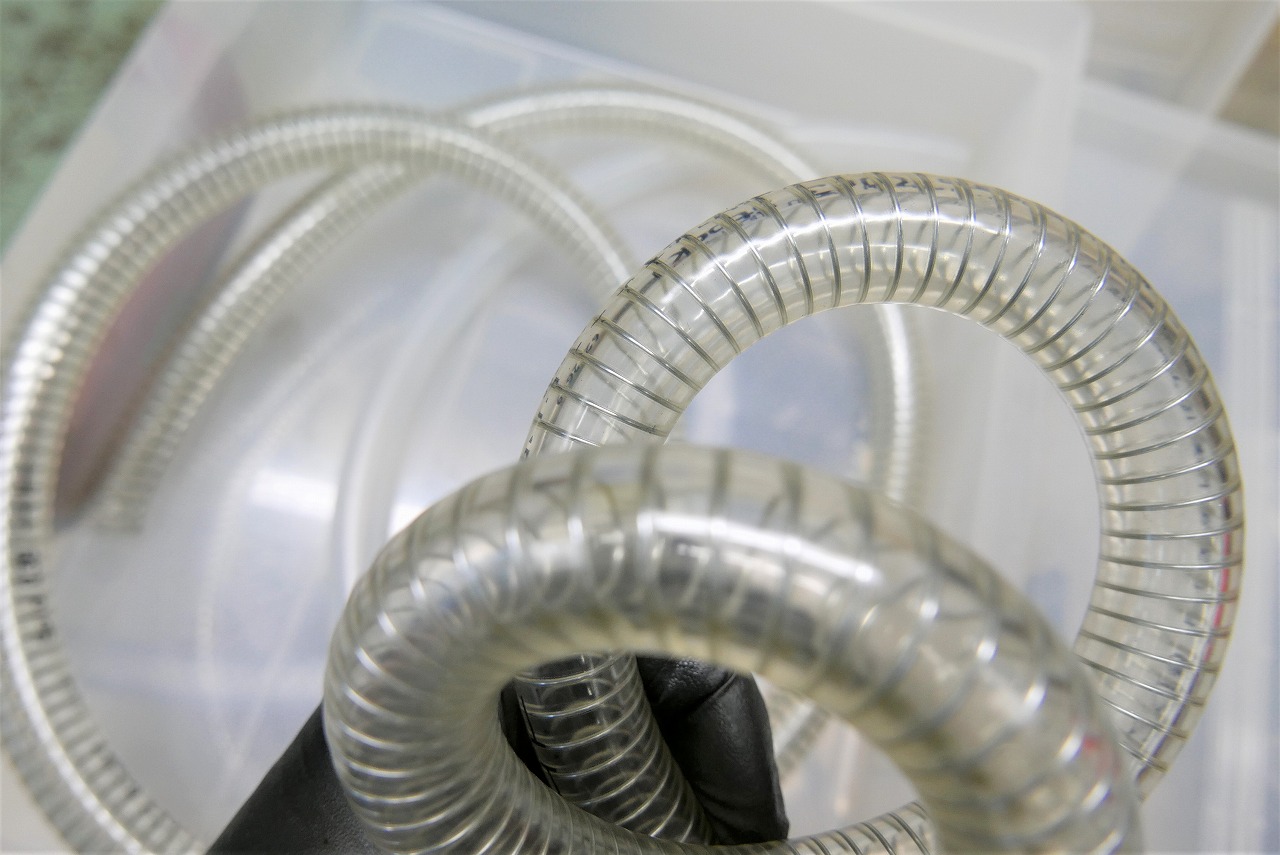
They wanted us to install a catch tank. With a tight layout, using spring-loaded hose that handles positive and negative pressure is effective. No matter how much you bend it, it basically won’t collapse, so it eliminates unnecessary worries and I think that’s good.
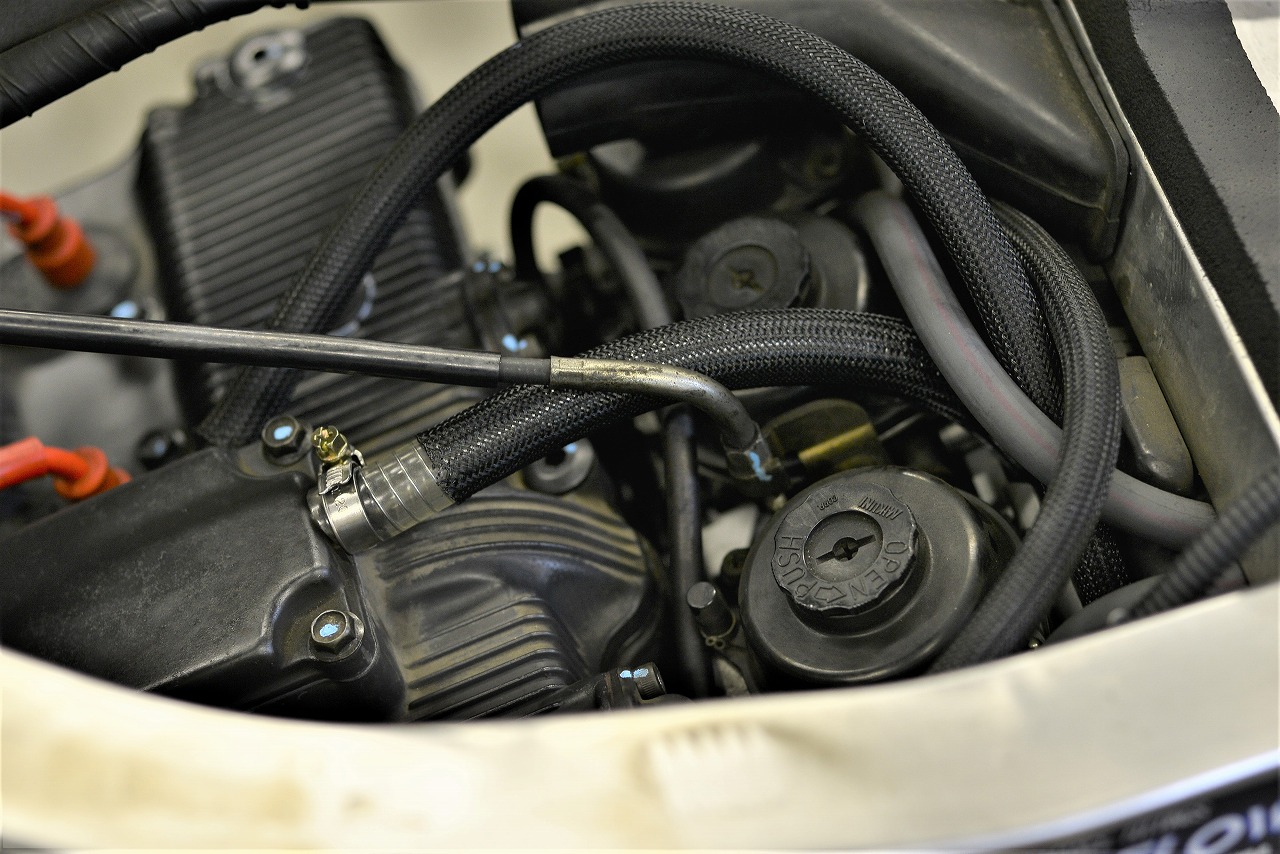
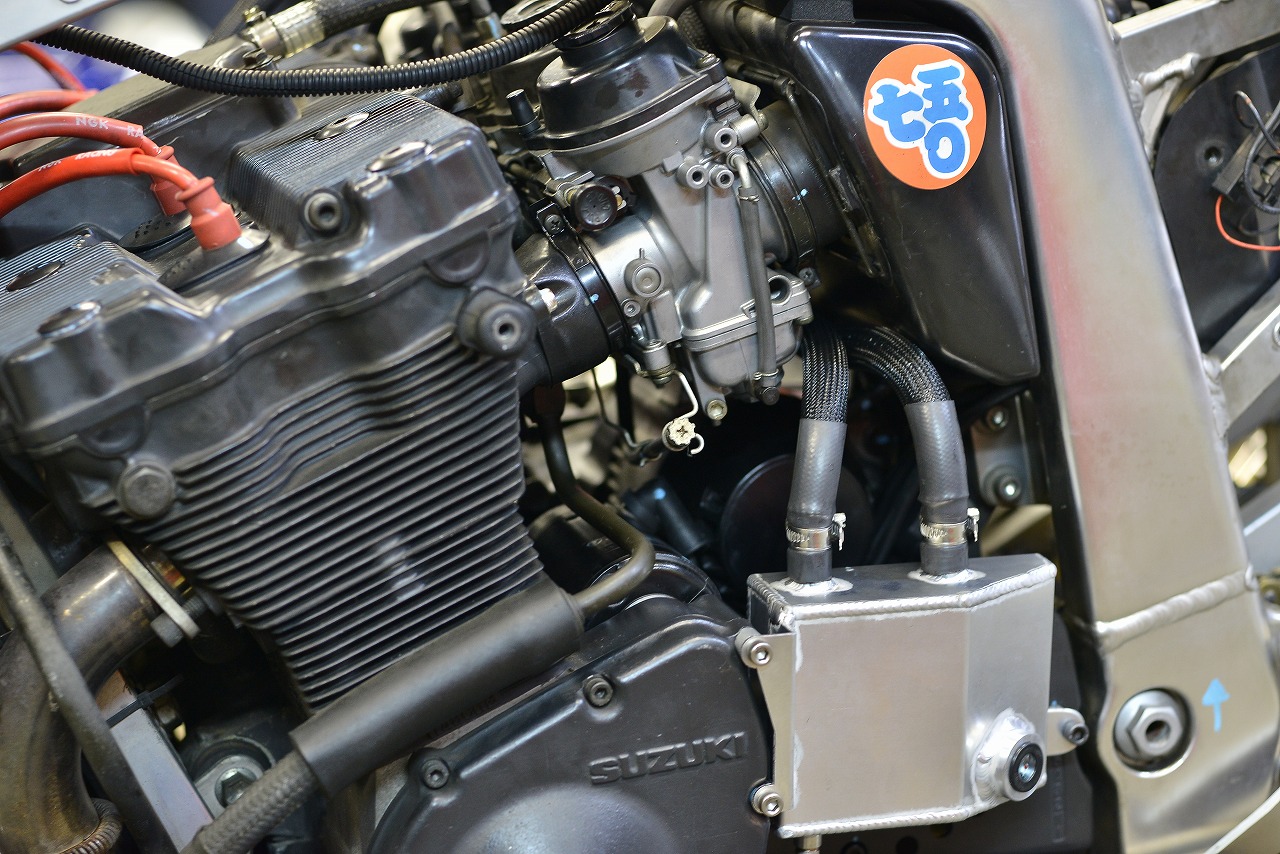
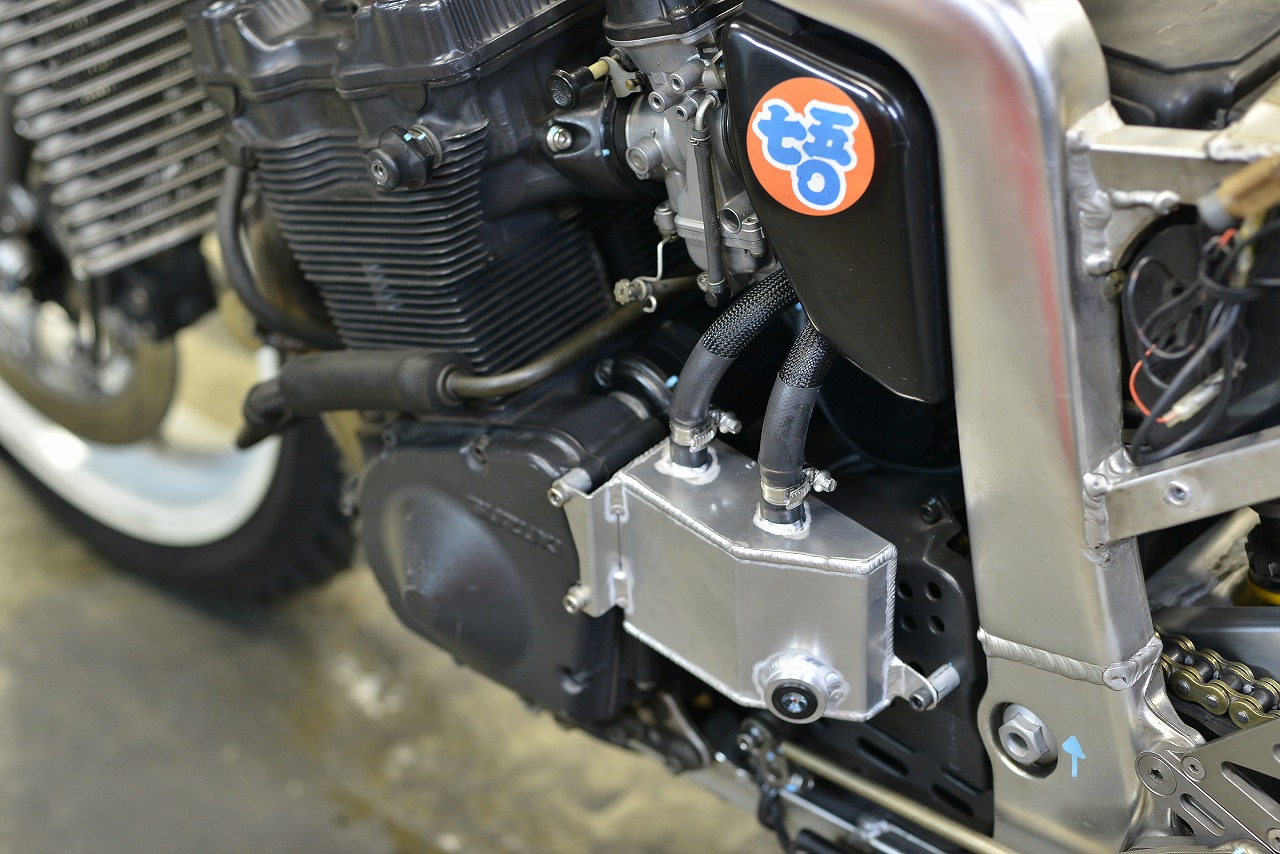
I’ll skip some details. When you install this kind of catch tank on an oil-cooled bike, the hose often runs conspicuously along the side, which isn’t great for serviceability or looks. So we installed it as discreetly as possible.
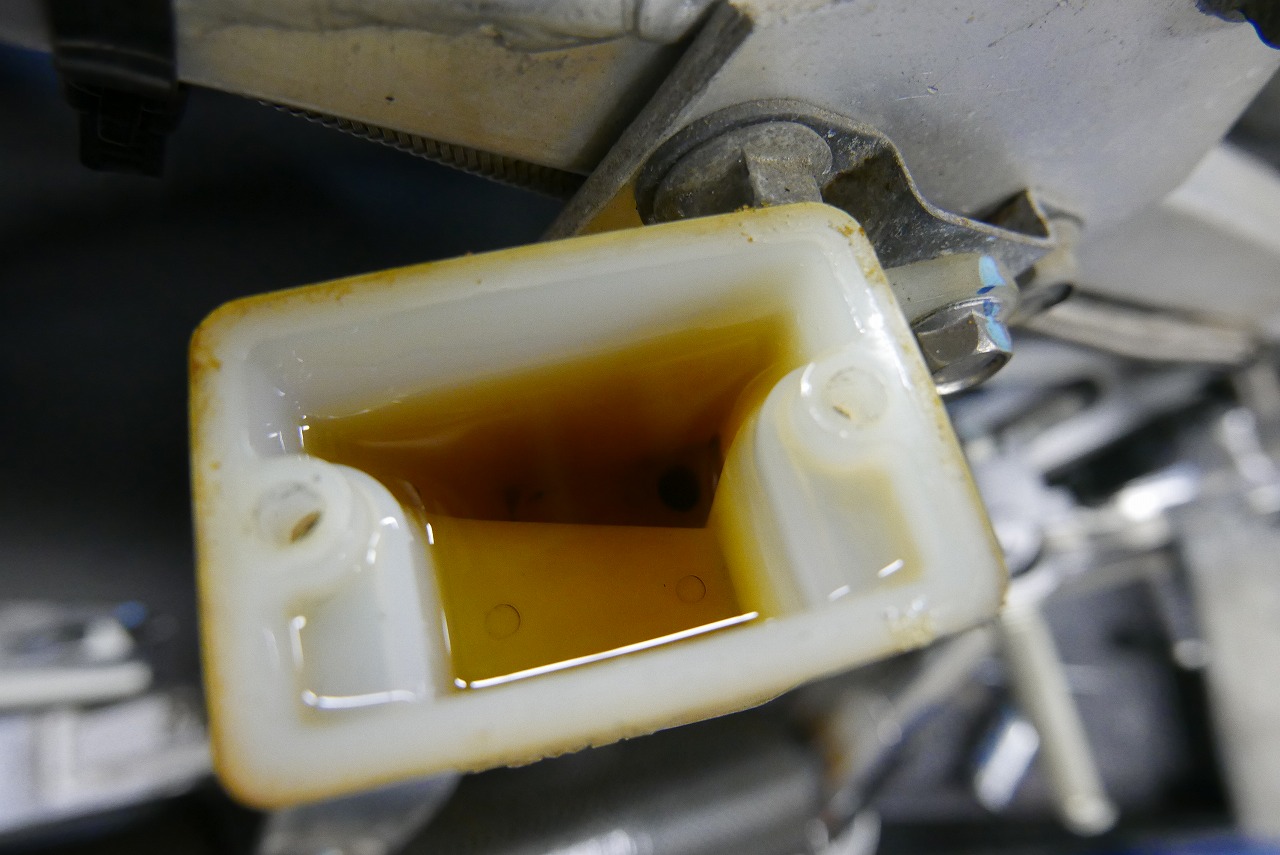
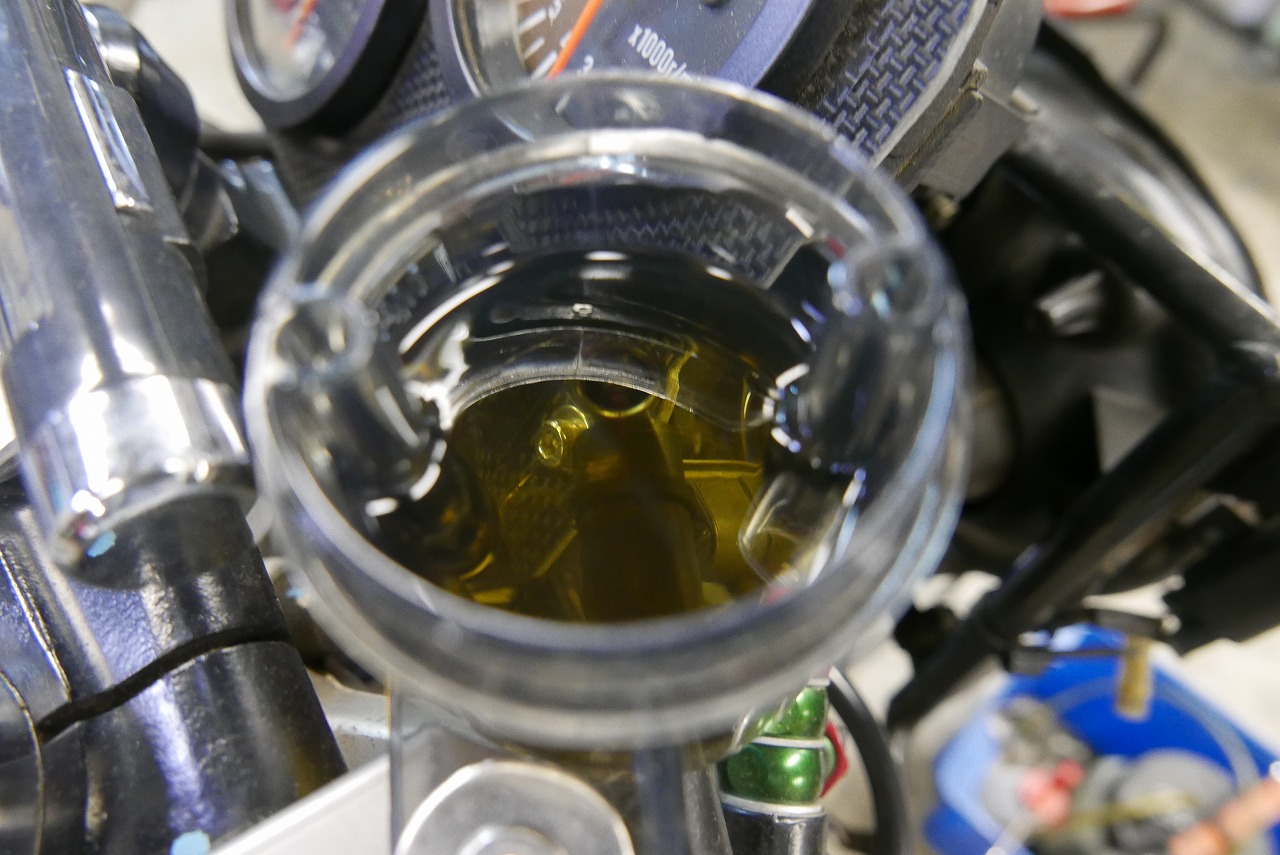
We’ve replaced the brake fluid. It’s Golden Cruiser DOT 4.
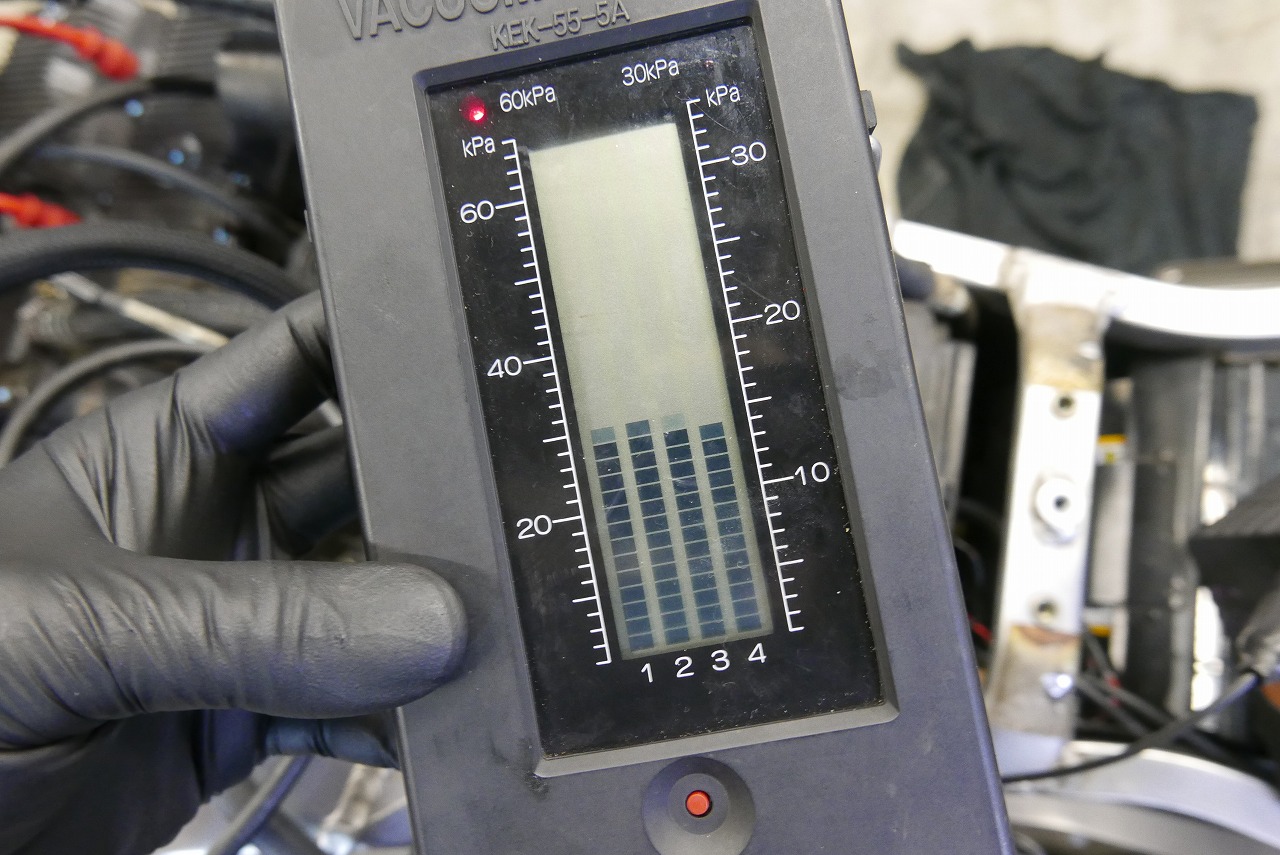
We’ve balanced the brakes and we’re done!