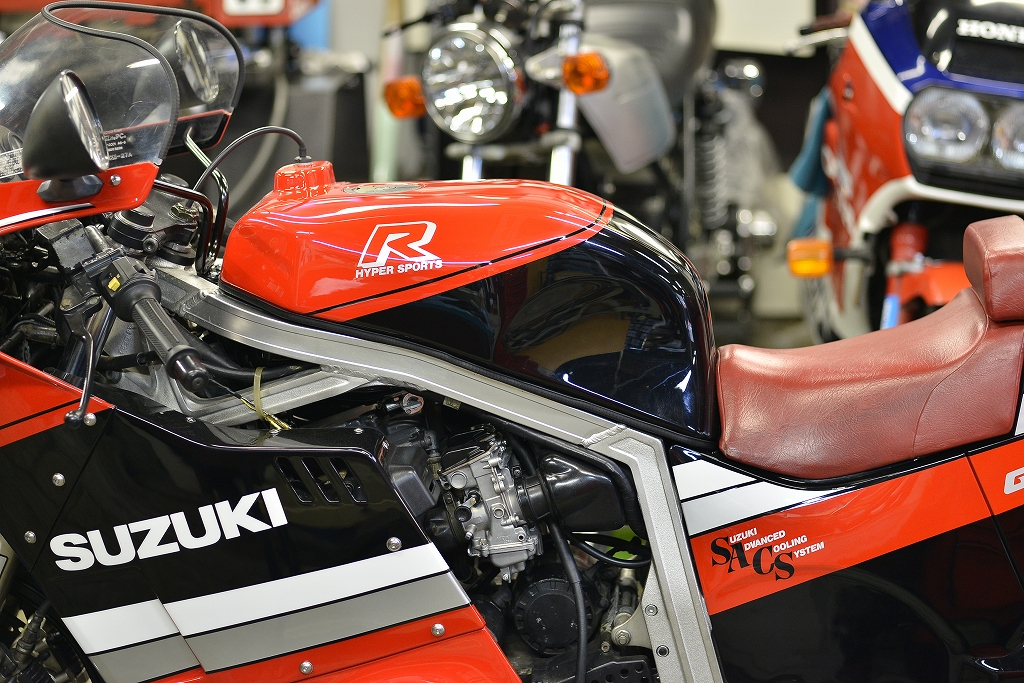
Continuing from before.
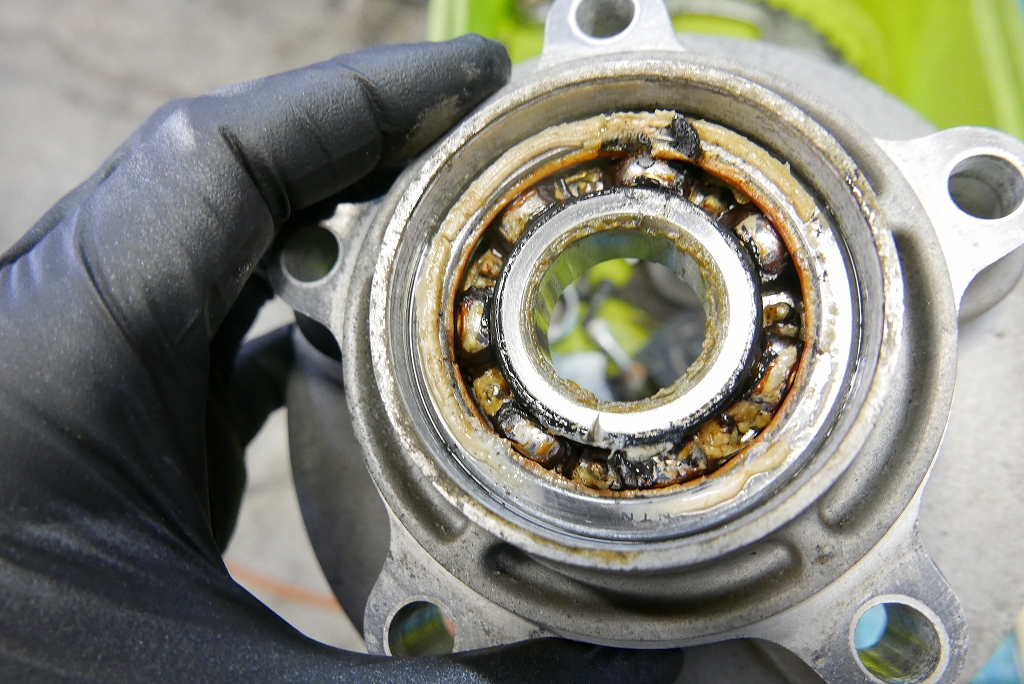
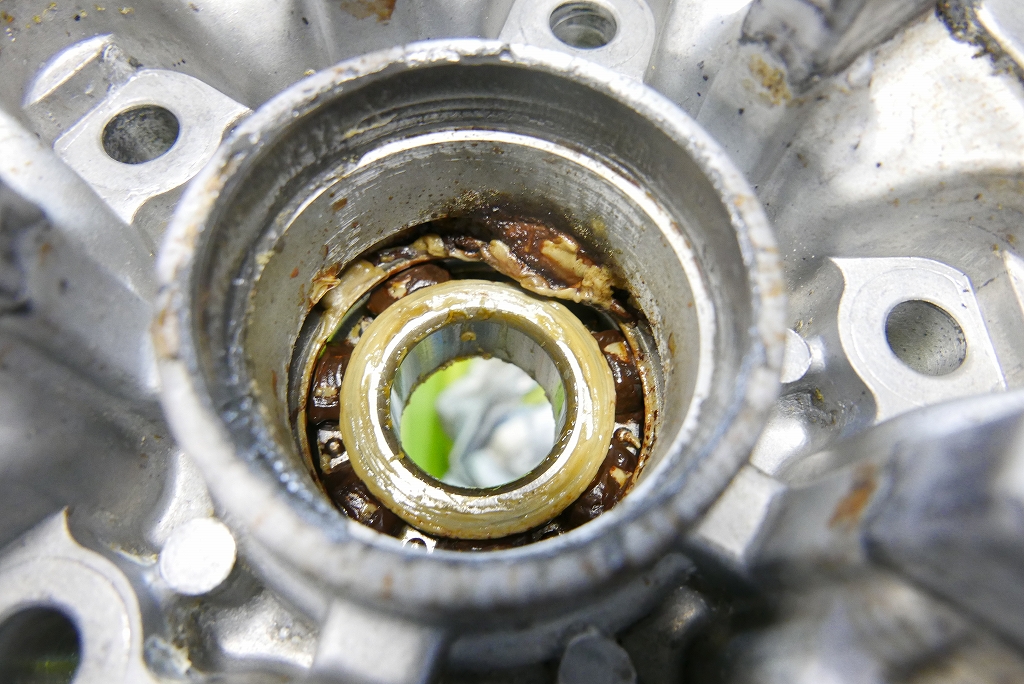
First up is hub bearing replacement. The advantage of an open design is that lubrication is easy to apply. The downside is that grease tends to fly off.
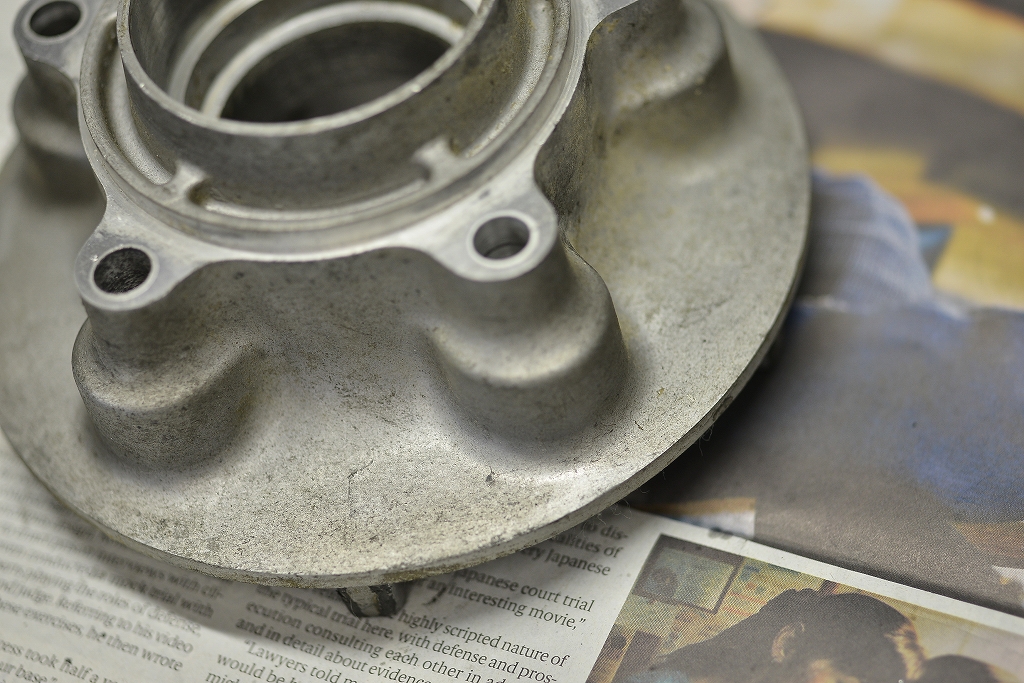
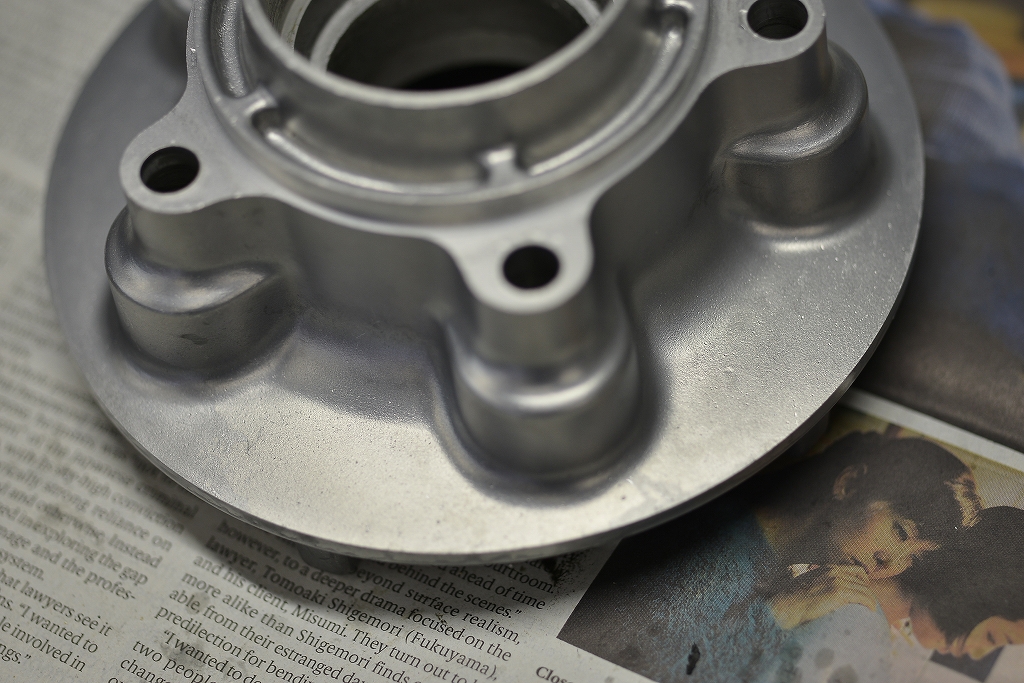
As a memento of taking it off, I’ll polish it. I feel like the condition really improves.
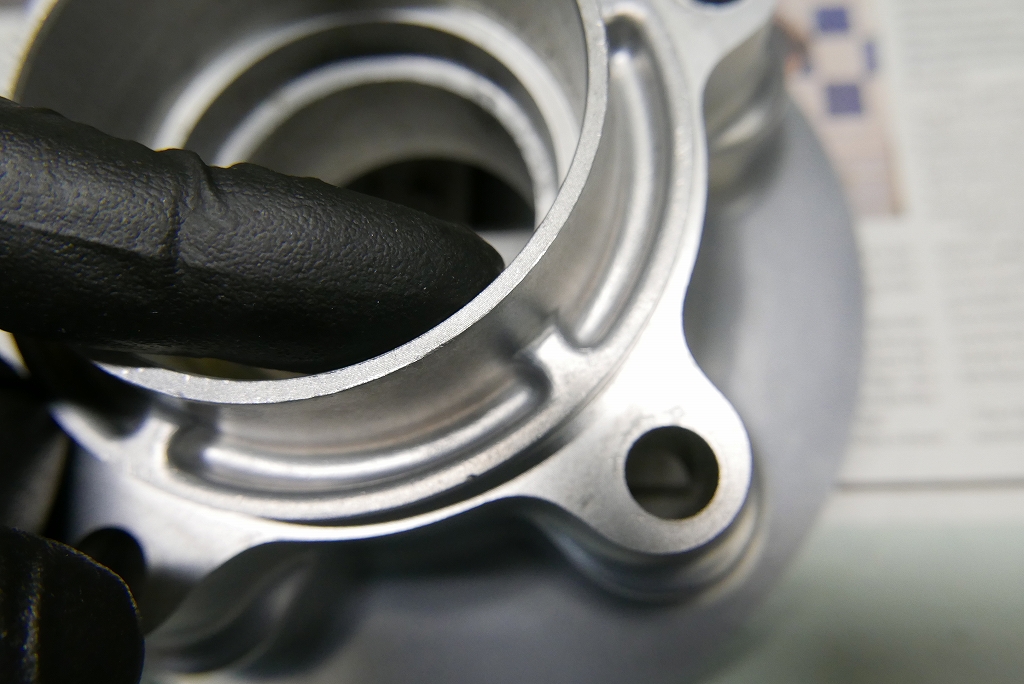
This model year hub is way too thin. When removing and installing bearings in spots like this, you really need to be careful. If it gets loose, it’s a real pain.
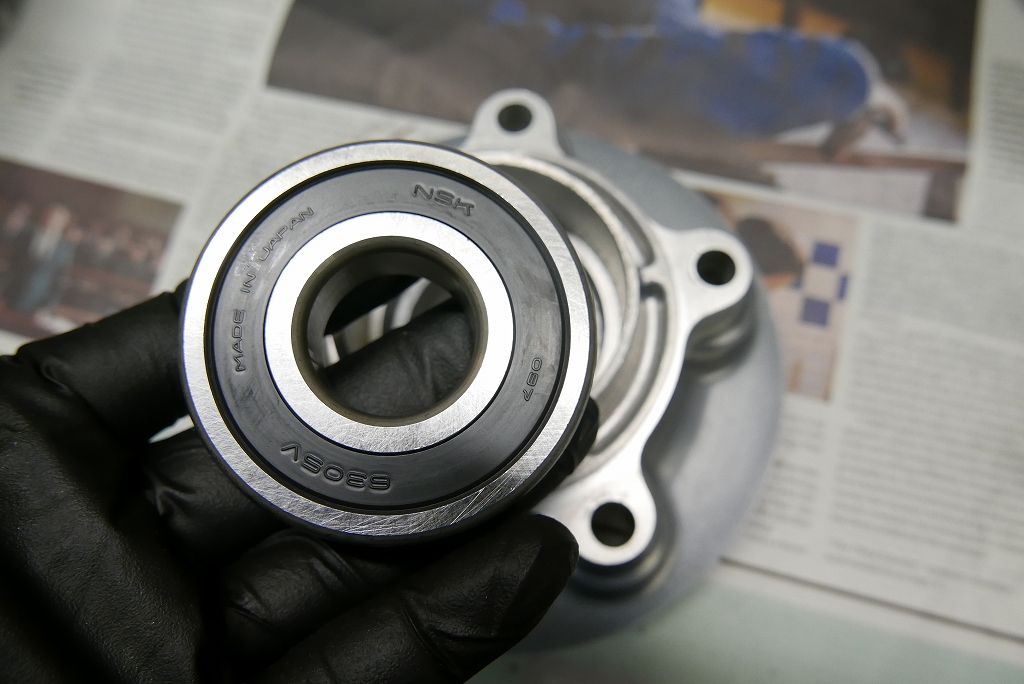
I think either contact or non-contact seals work fine. Both have their merits.
Warm it up well and install it. We’ll get to the wheel bearings another day!
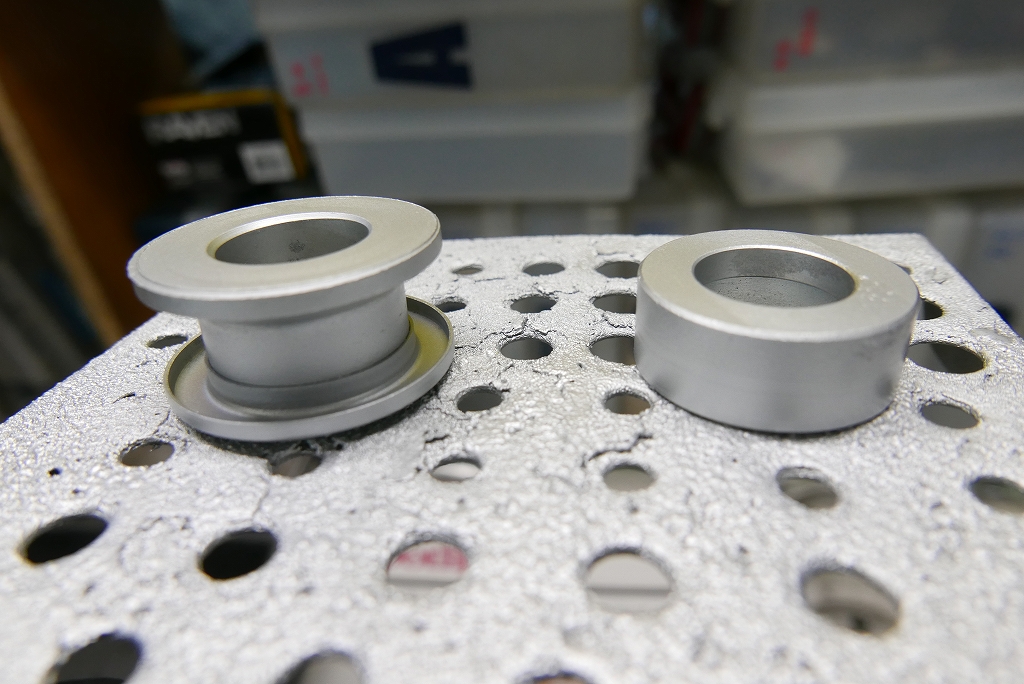

It’s that thing about putting your soul into the places no one sees.
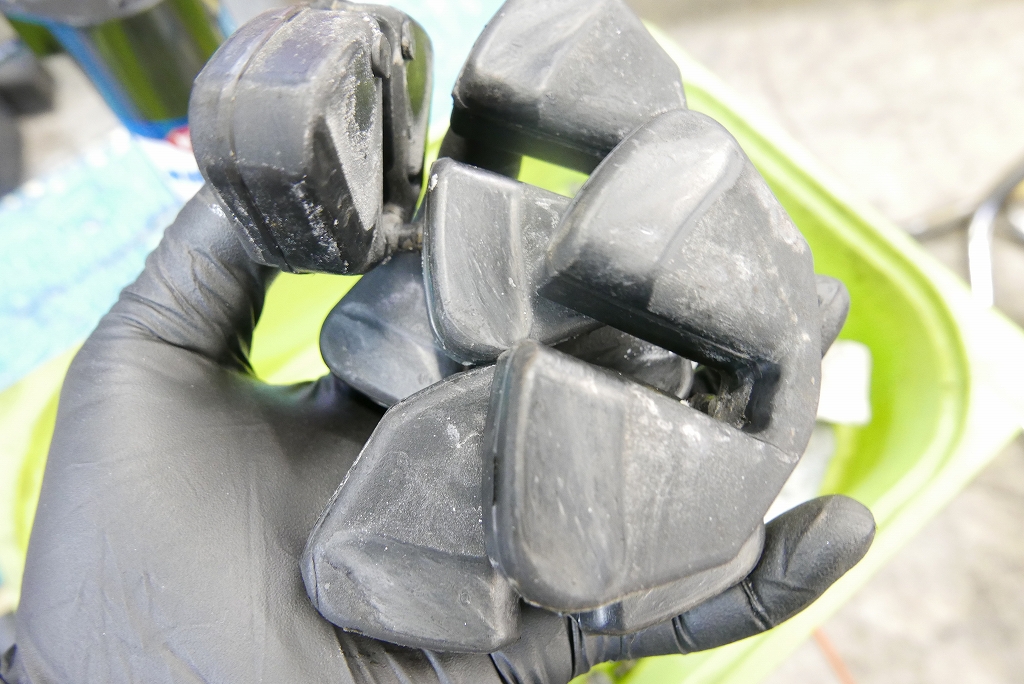
Let’s replace the hub damper too.
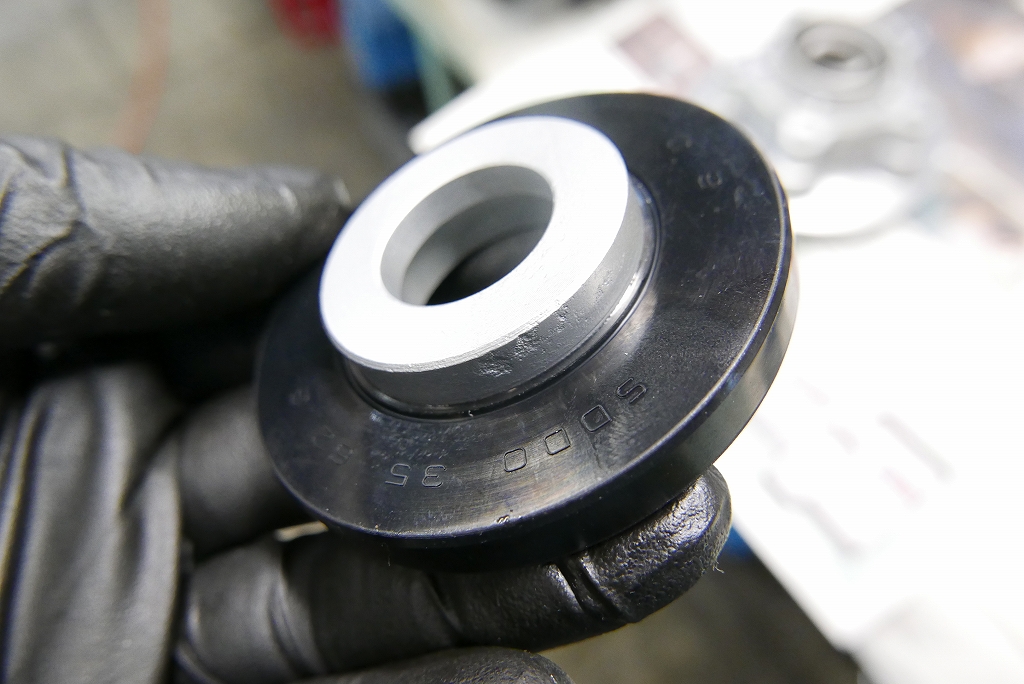
Suzuki’s hub oil seal is pretty aggressive. When you install it, it’s so tight you can’t turn it by hand. We run it in until it spins smoothly before assembly.
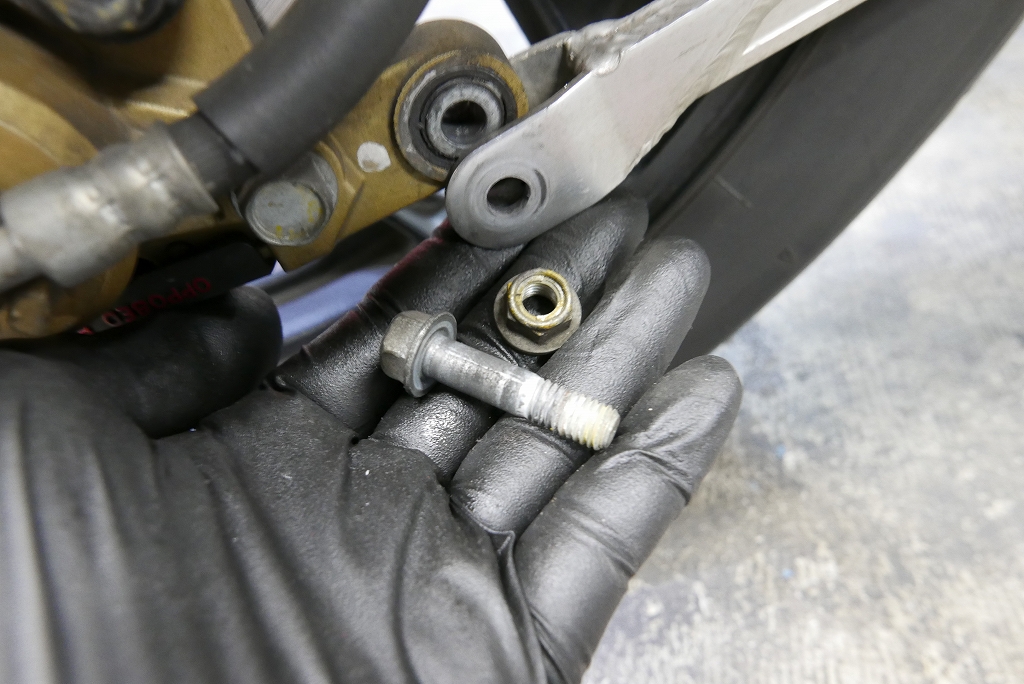
A lucky story?
The part in the photo slid right out by hand. Surprisingly it didn’t fall—I was oddly impressed.
Some people would say “what the heck, that’s dangerous!” And honestly, I agree.
But if you think about it another way…
• It didn’t actually fall = no trouble occurred
• Neither the customer nor the technician noticed
So it made it to the next technician. Not okay, but it was safe.
So it was lucky, in a way. But what’s my point?
If it’s intentional, that’s a problem. But mistakes and oversights are endless in this world. By hearing about these kinds of things and stories, you think “let’s replace lock nuts every two or three times” or “let’s mark it after tightening” or “let’s add a cotter pin as backup insurance”—building up your toolkit of countermeasures becomes nourishment for your skills. That’s the beauty of it.