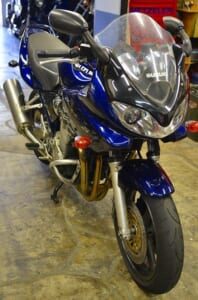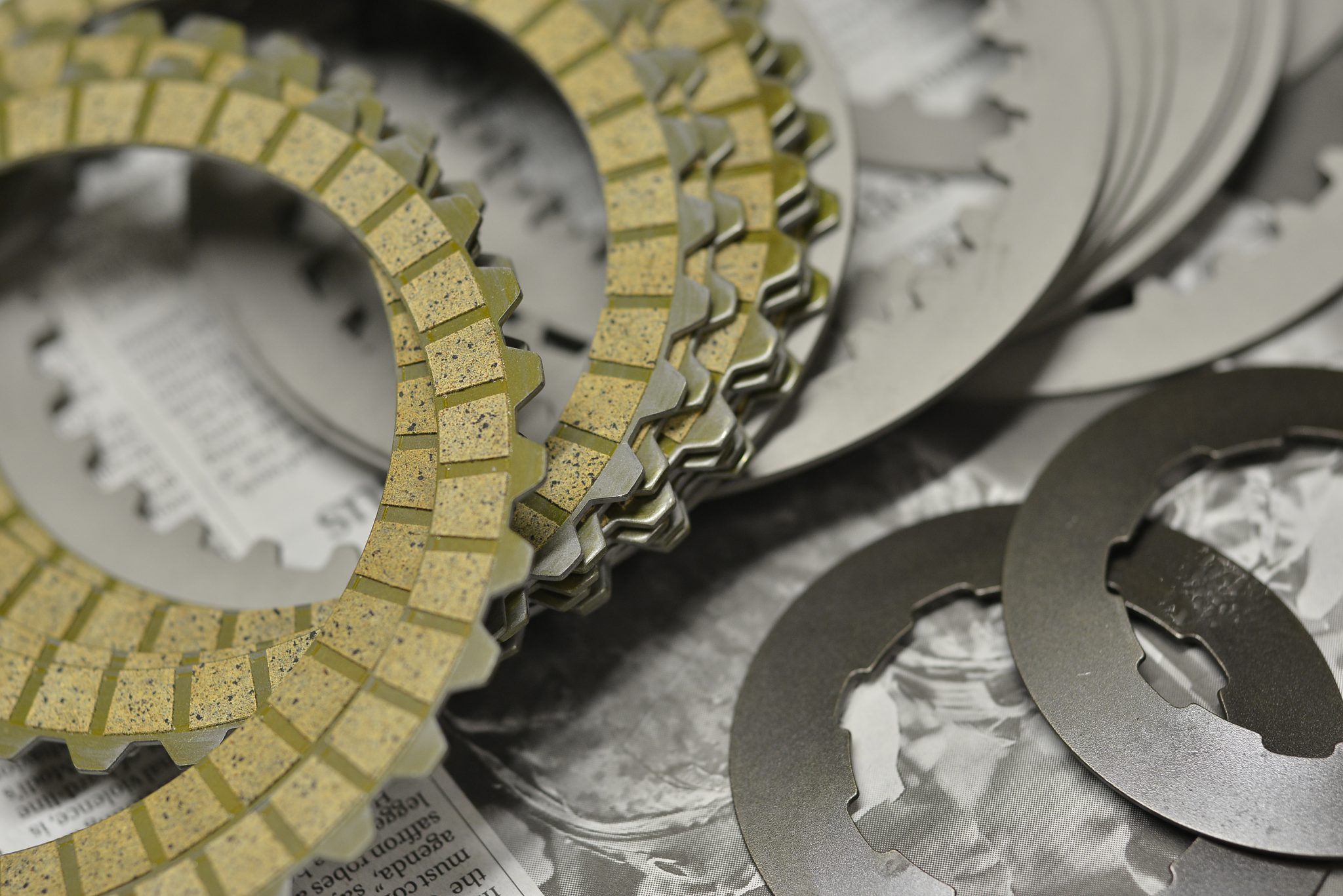
During a test ride, I noticed the shift was sluggish and not engaging cleanly. Let’s check all the components.
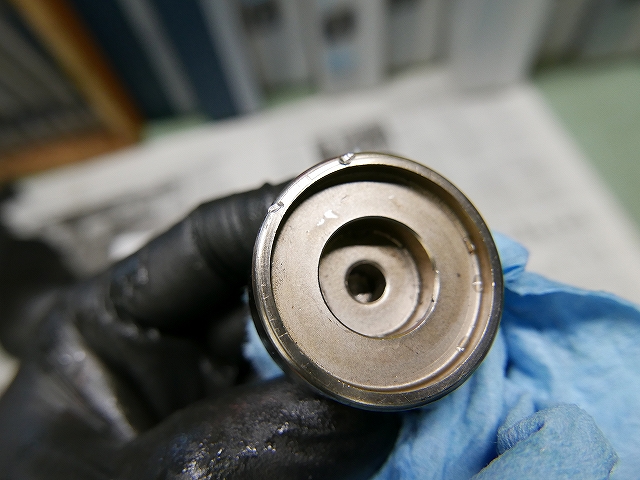
My first suspicion was the clutch release piston marks. Due to the offset sprocket setup, the piston cover wasn’t installed, so the piston likely made contact when the clutch was disengaged.
The clutch engagement felt responsive, so I initially figured the chain was making contact and preventing full disengagement. I ground down the contact point.
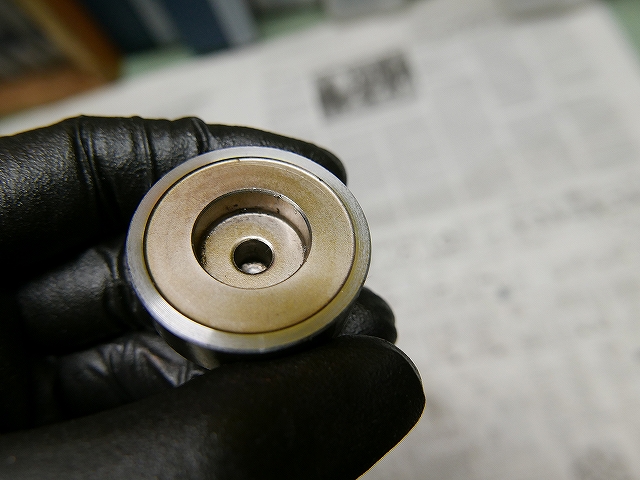
It’s a bit of a hack, but I worked with what was on hand. For now, it’s better to keep costs down and move forward with the repair.
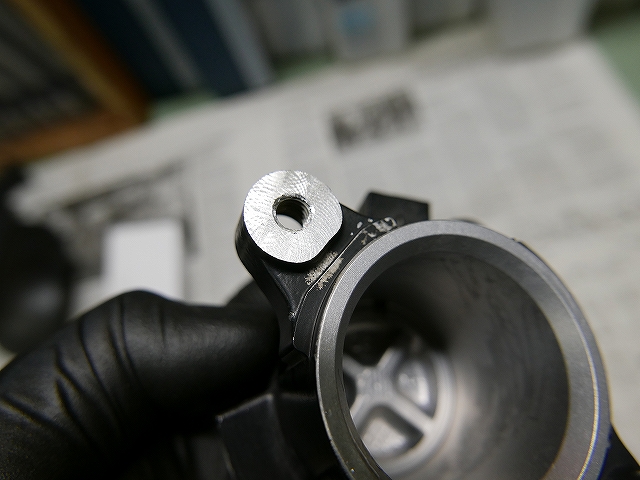
This area also had chain contact, so I ground it down and sank it about 2 mm.
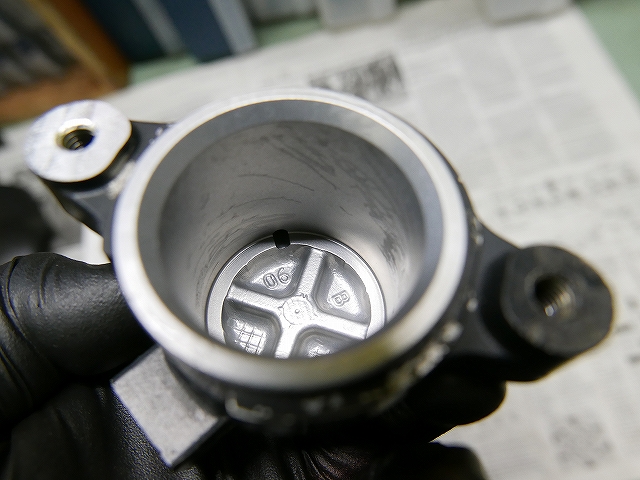
The inside was polished, so it came out nice and clean.
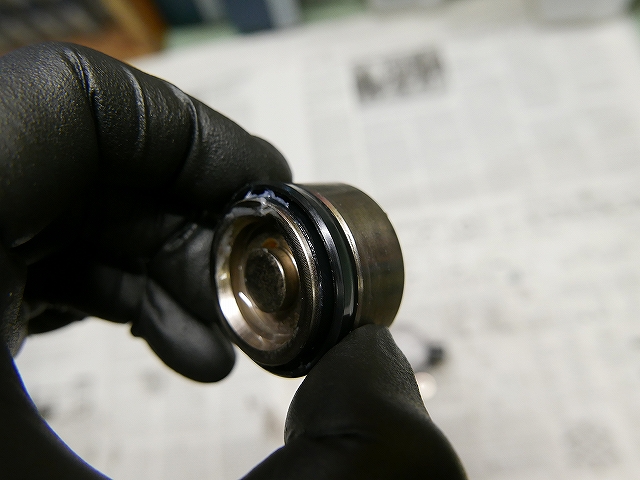
The cup looks new, so I reused it.
Since there was no improvement at all, I thought, “What’s going on?” and decided to focus on the clutch for further investigation.
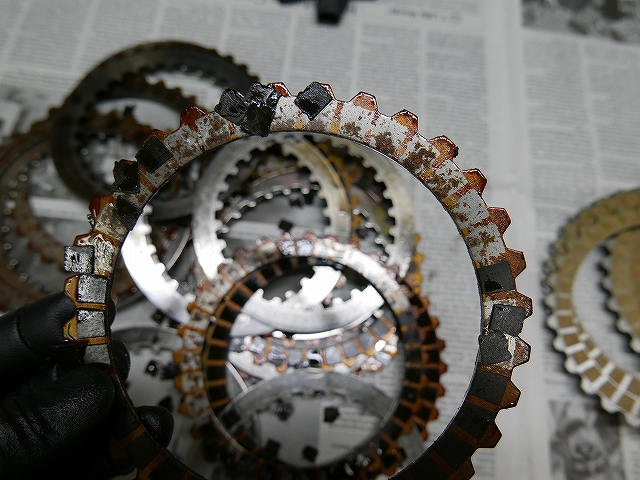
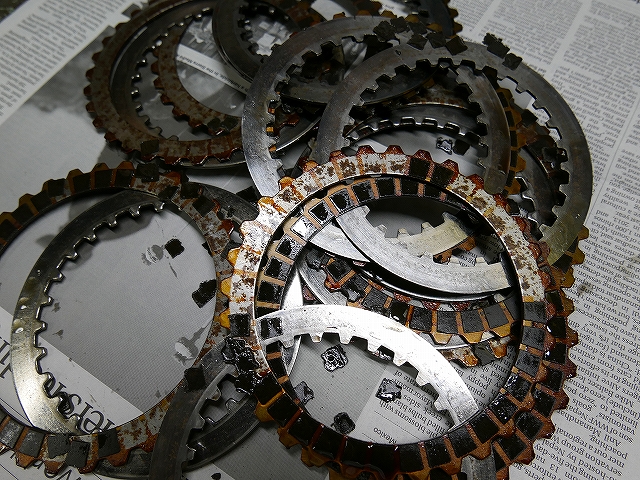
The friction plate material is flaking off like crazy. It’s pretty bad. Has it never been replaced since the model year?
Steel on steel—it might actually be a pretty aggressive friction setup.
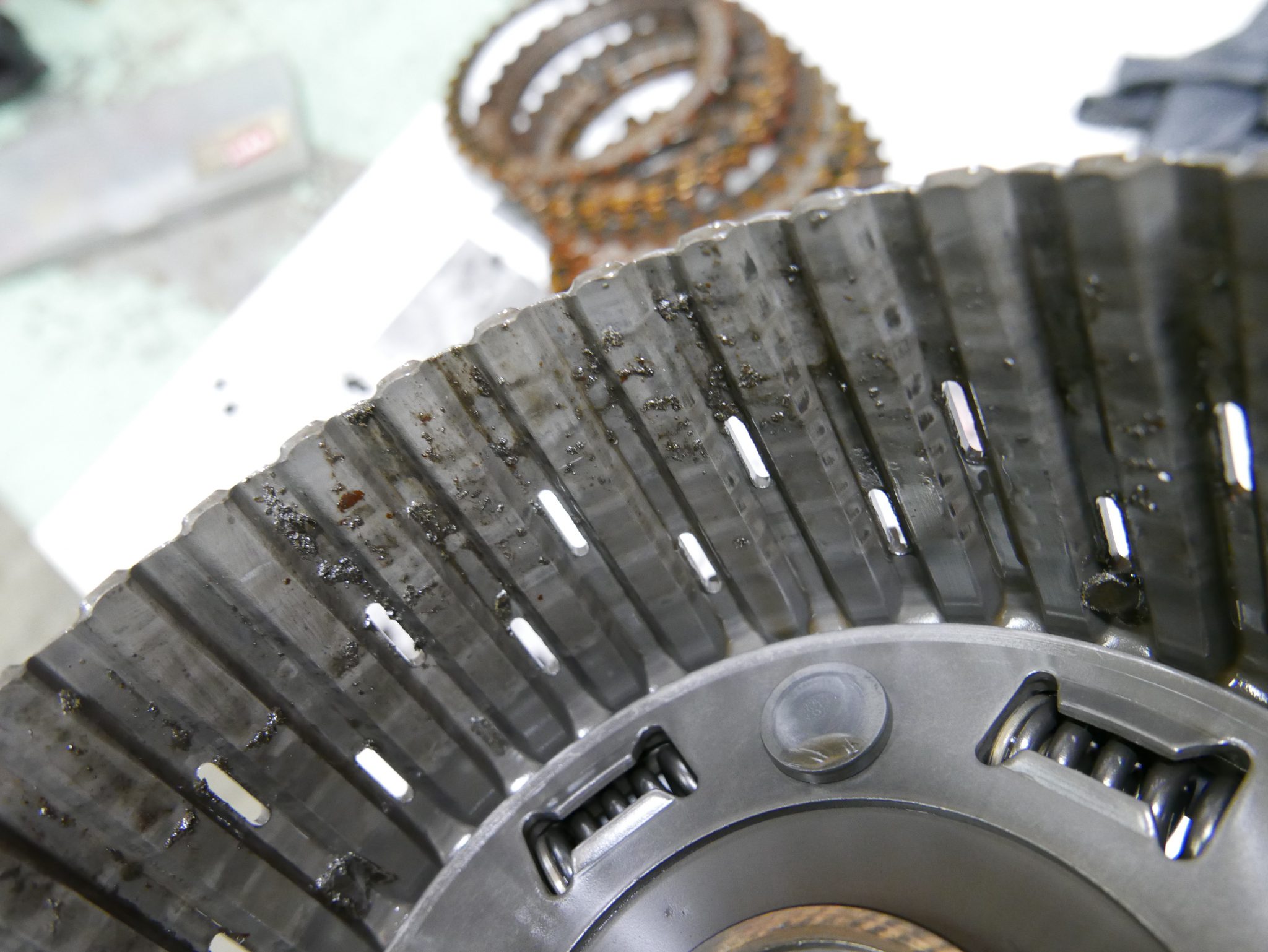
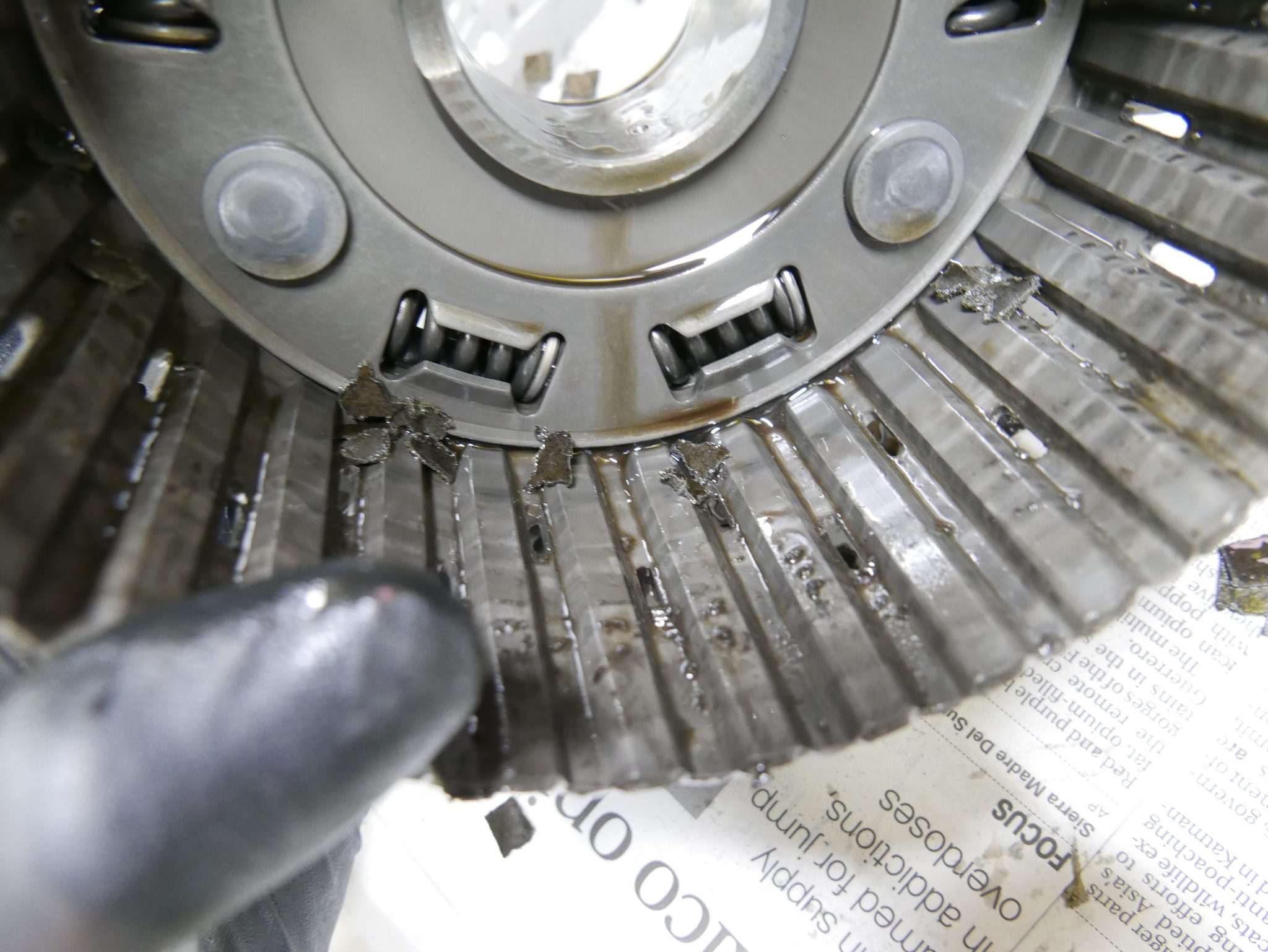
Naturally, it’s all caked with debris.
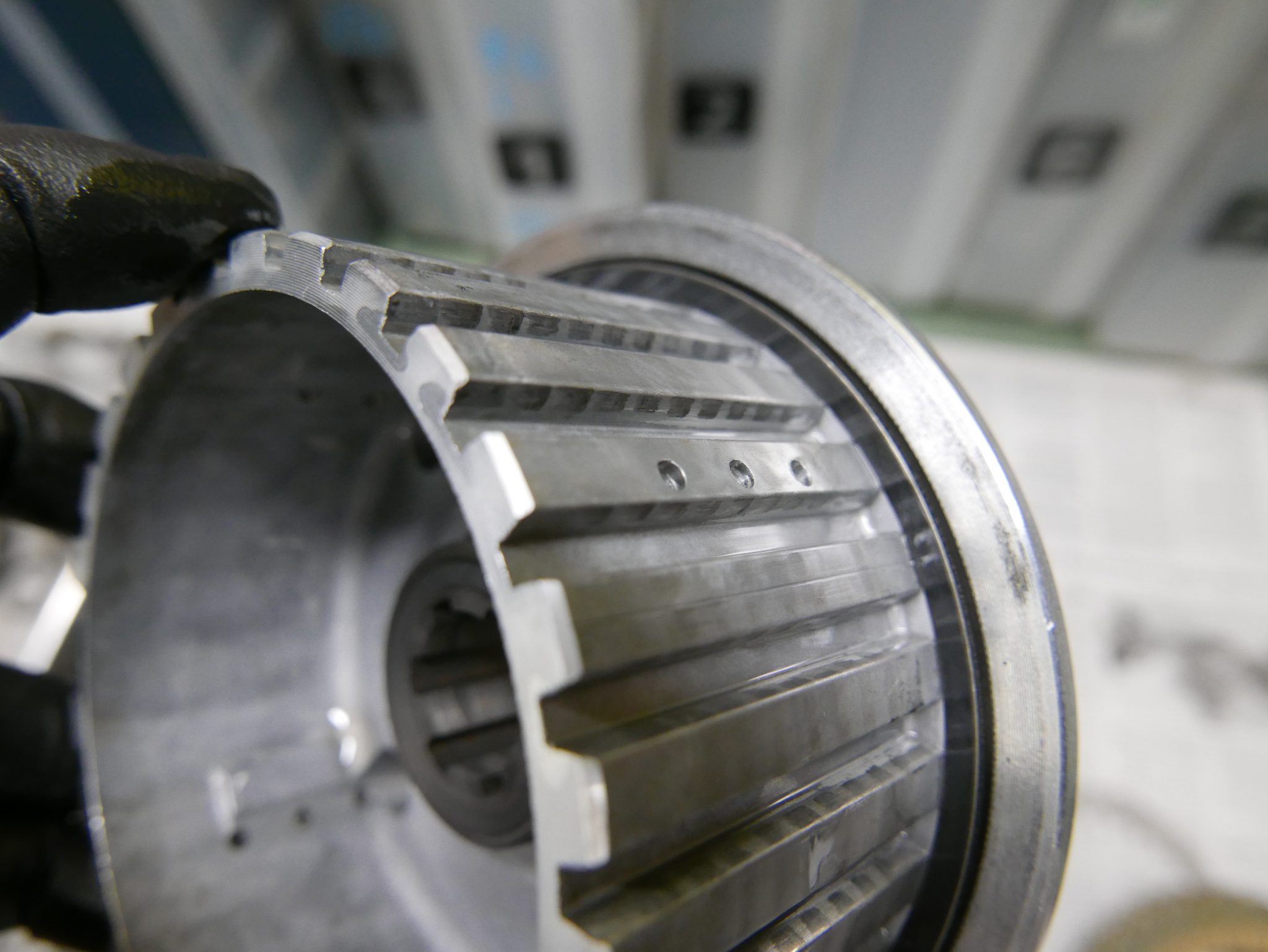
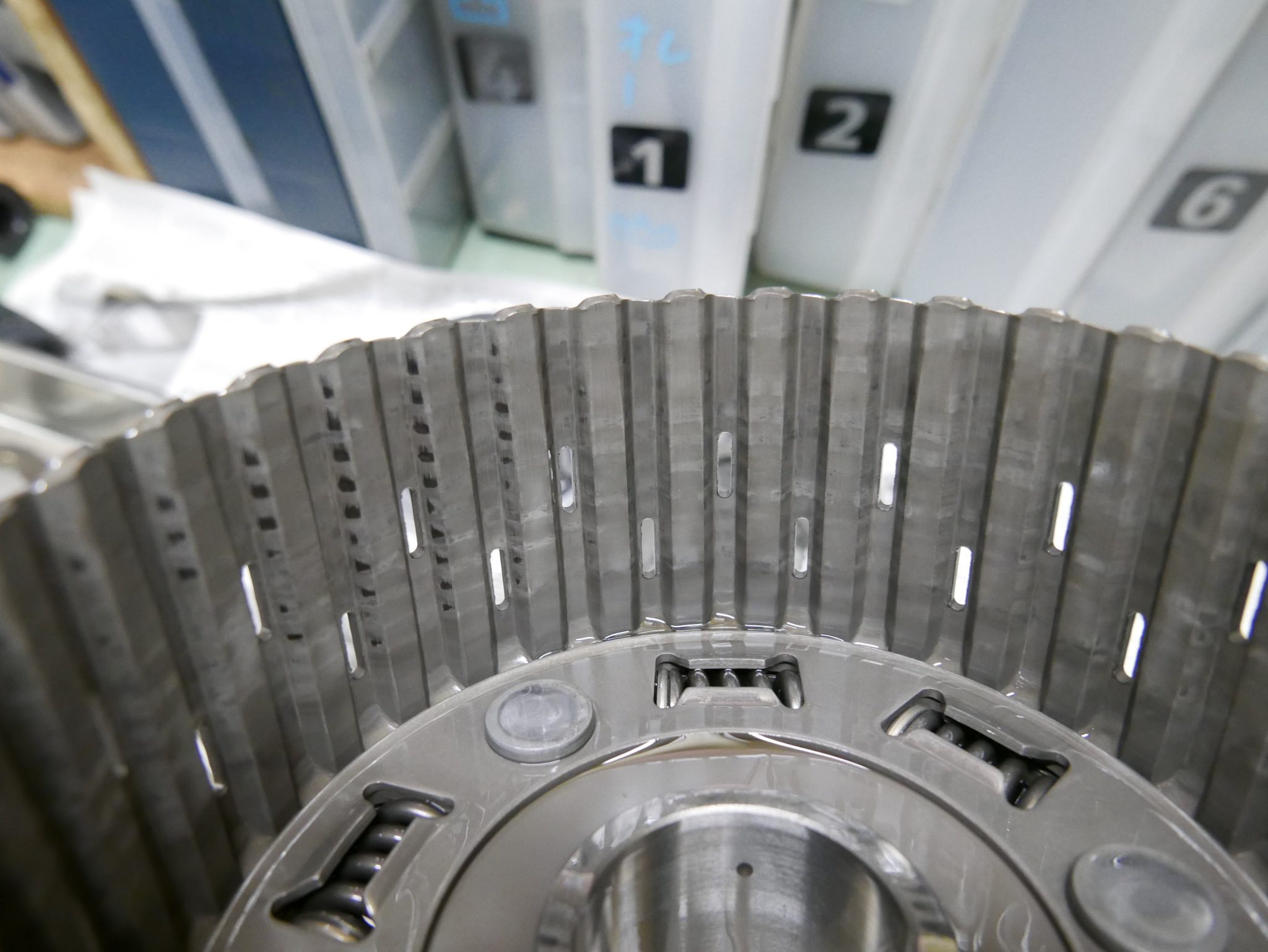
The basket itself is in good condition, so I was relieved.
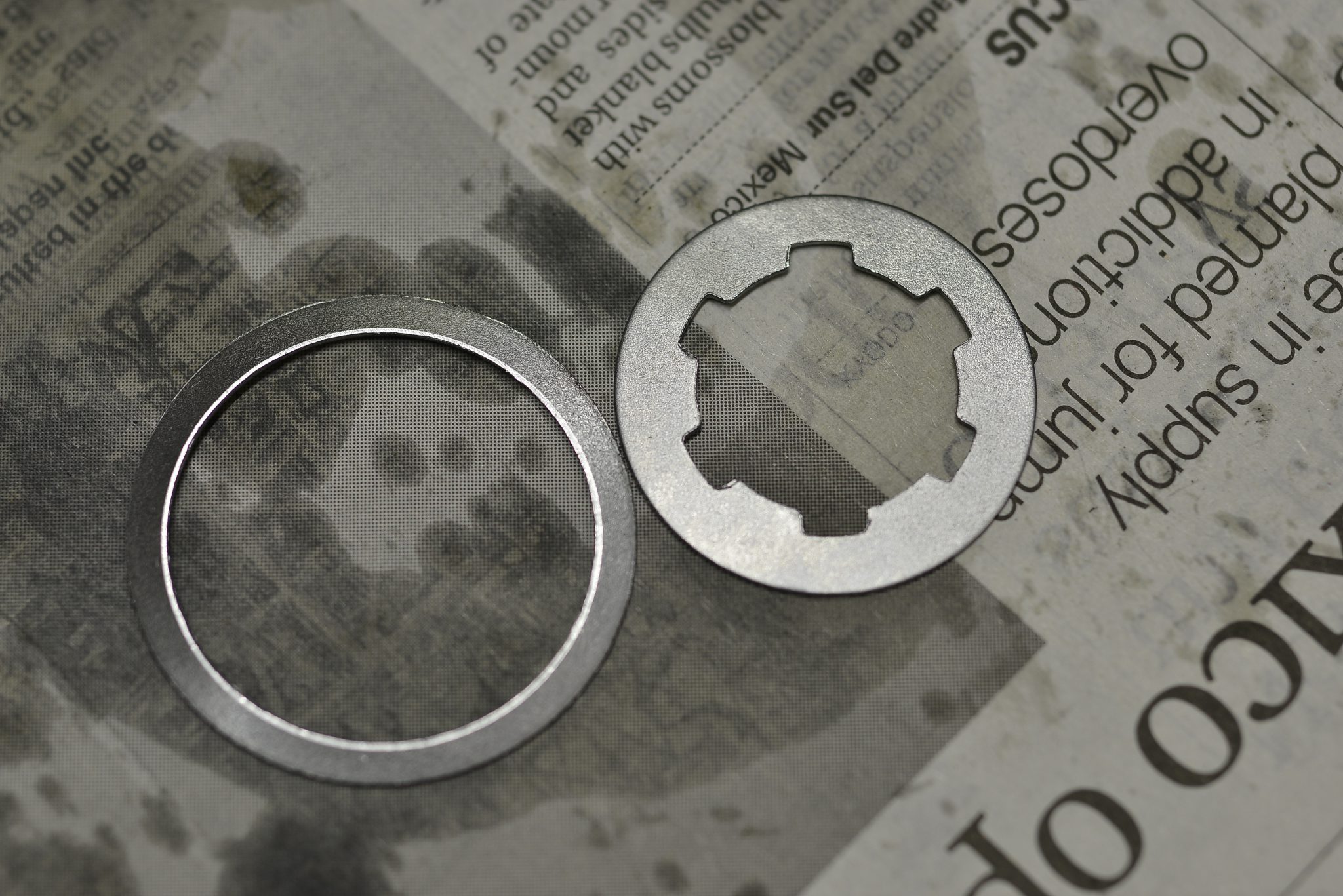
A lock nut also serves the purpose of a lock washer.
GSX-R models from this era don’t use lock nuts, so I was a bit concerned. The 1200-series lock nut doesn’t grip well on the GSX-R standard washer, so the engagement becomes shallow. I sourced this thinner washer instead. The outer diameter doesn’t match for installation, so I’ll punch it out and adjust the outer diameter to fit.
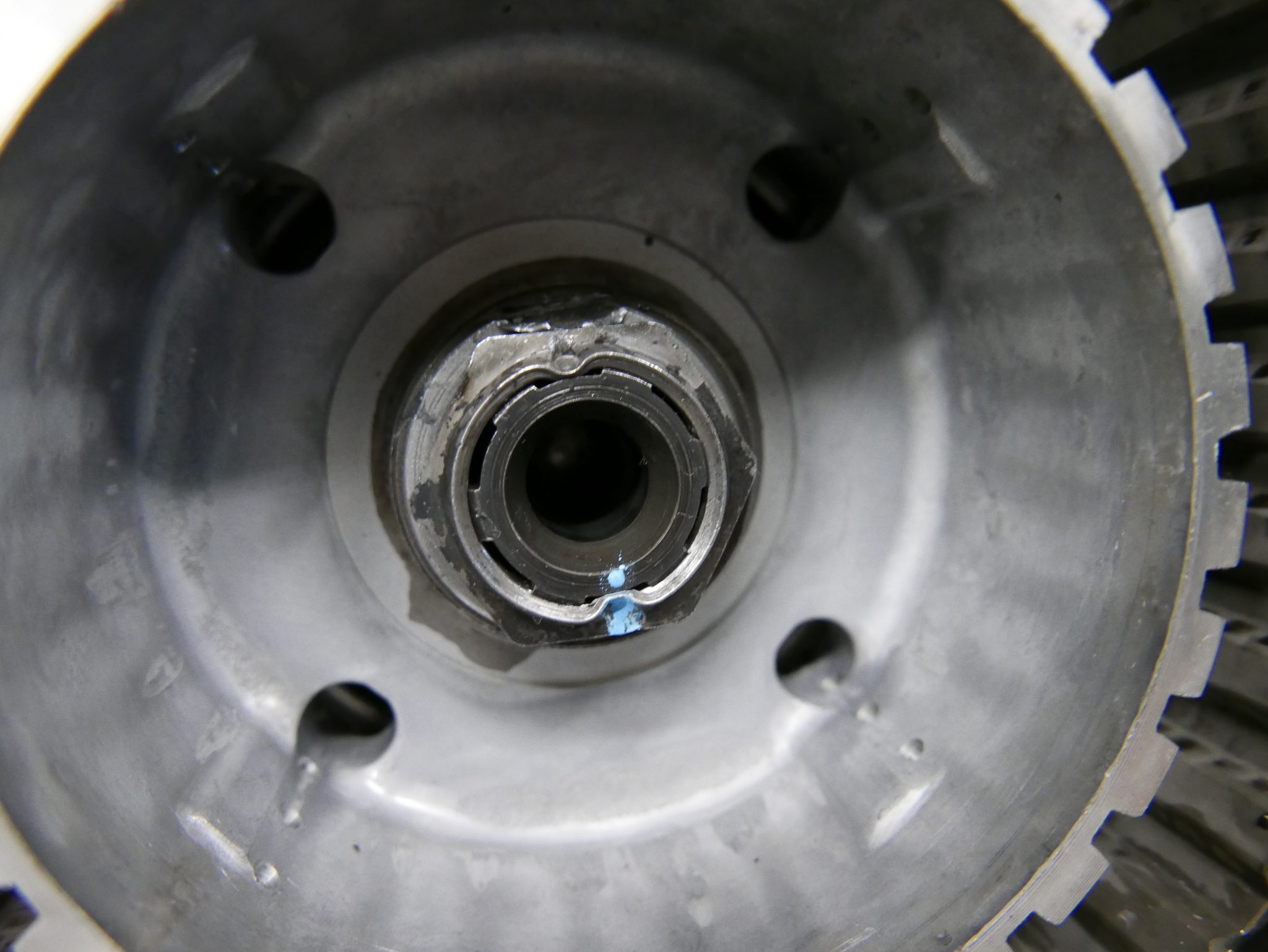
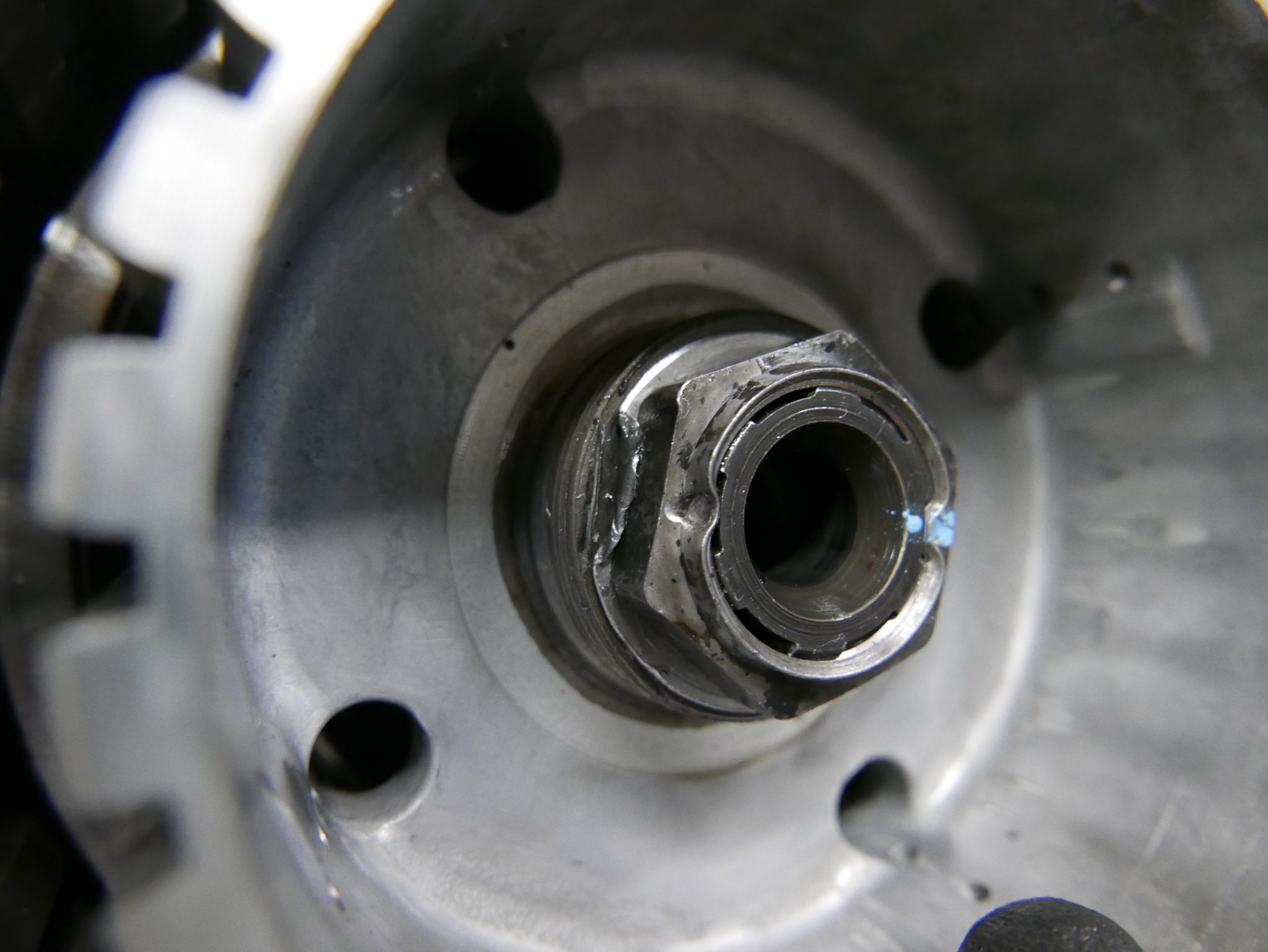
There’s so little material that bending it is a real pain. Well, next time I’ll just install it without bending.
The clutch now engages cleanly and the shift is smooth, but now it’s slowly overflowing… This is frustrating.