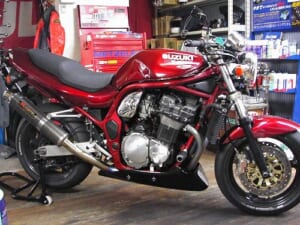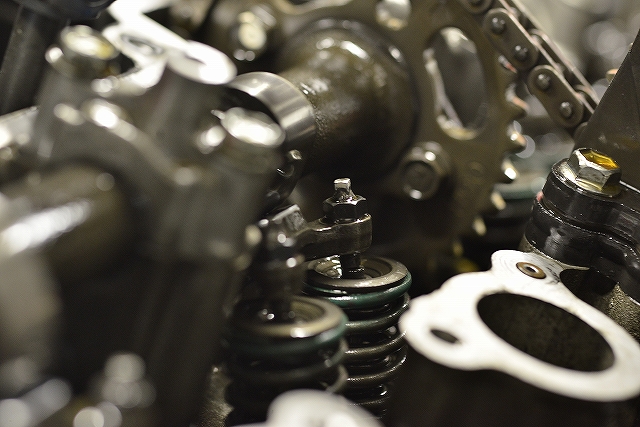
Heavy oil leakage means this is perfect timing. Let’s perform a valve clearance adjustment.
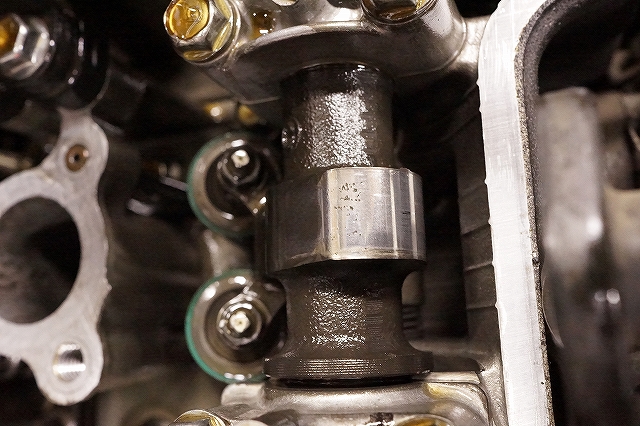
There was slight scuffing in a few spots. Nothing to worry too much about. With rocker arm design, the cam area sits higher than with direct-acting systems. Since it’s not pushing through an oil sump, it does seem to struggle a bit.
People who ride infrequently or do short trips with lots of traffic stops might see more scuffing.
On the other hand, there are riders who go out every week on 300–500 km tours, have 50,000–80,000 kilometers on the clock, and show no scuffing at all—perfectly clean.
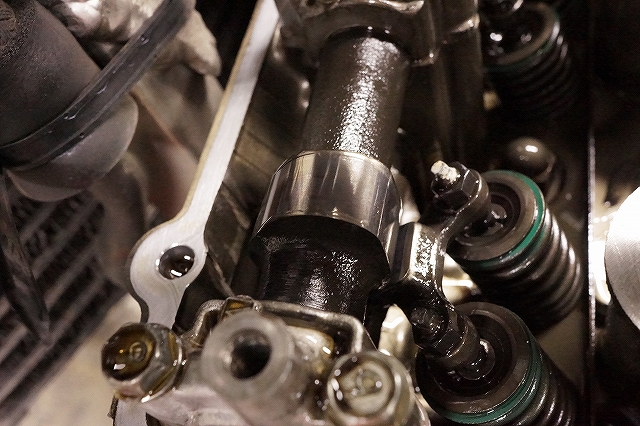
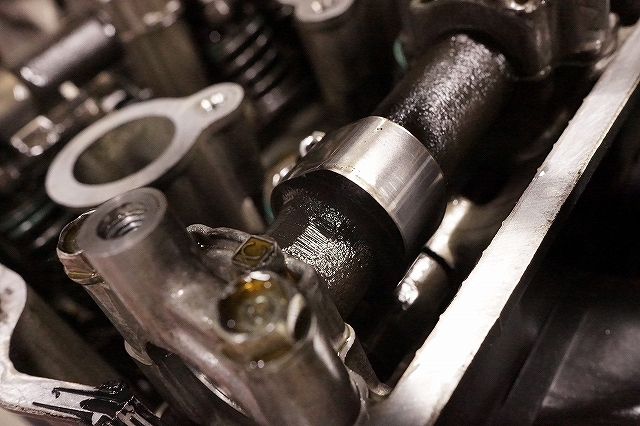
I’ll measure the clearance before adjustment and then set it properly.
Tight clearance causes very poor running. I’ve never seen one ridiculously loose, but unless the numbers are wildly off, the performance shouldn’t change that much.
By setting the clearance correctly now, next time you’ll have a reference point to judge whether it’s gotten tighter or looser and why.
It’s better to check the cam chain slack too. Like any industrial product, a chain doesn’t stretch uniformly around its entire length—some spots are loose, others relatively tight. The tensioner is automatic, so it only does what’s necessary and sometimes gets stuck and won’t move. You can feel the slack by cranking in forward and reverse. Some slack is needed, but excessive play can throw timing off and hurt ignition pickup.
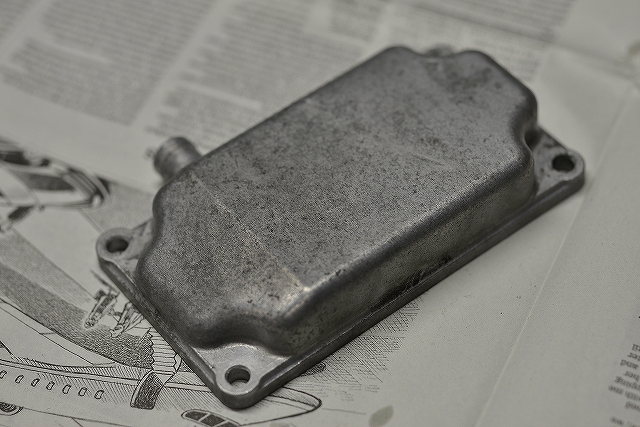
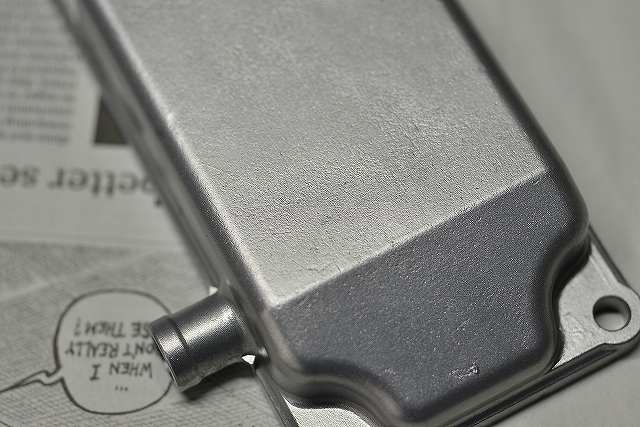
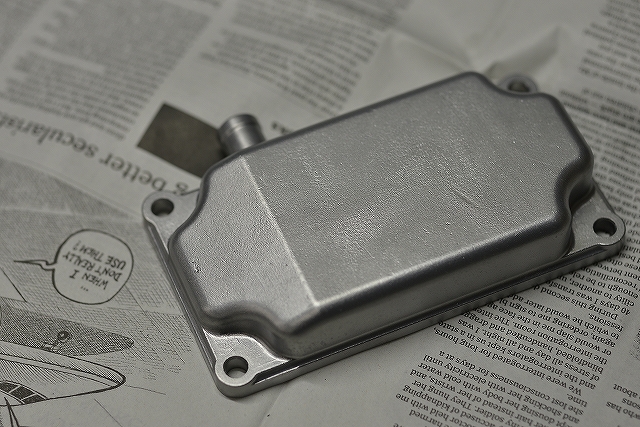
I’ve polished it. If we can stop the leak, improve performance, and enhance the appearance, that makes me happy too.
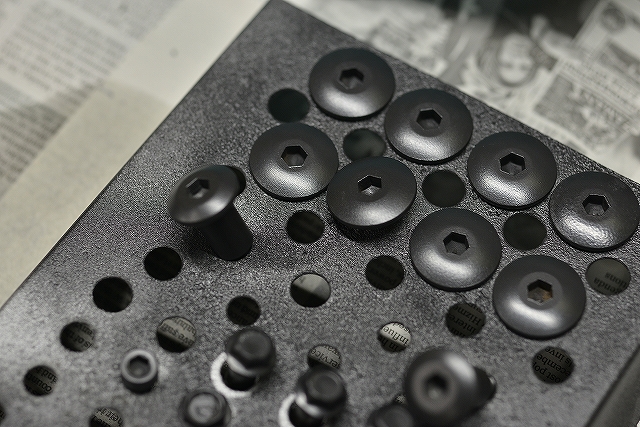
You could replace it, but just a little polish and paint makes a huge difference in how it feels.
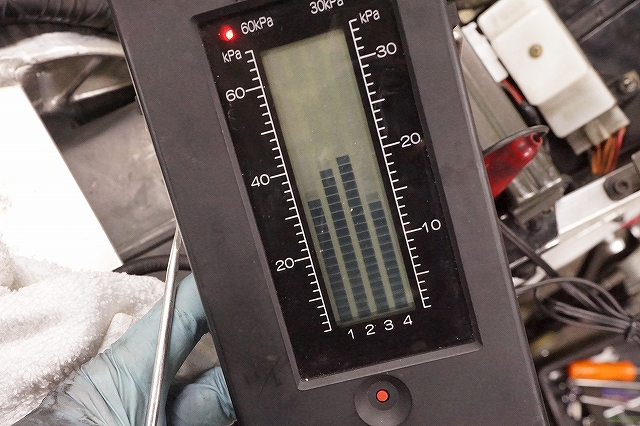
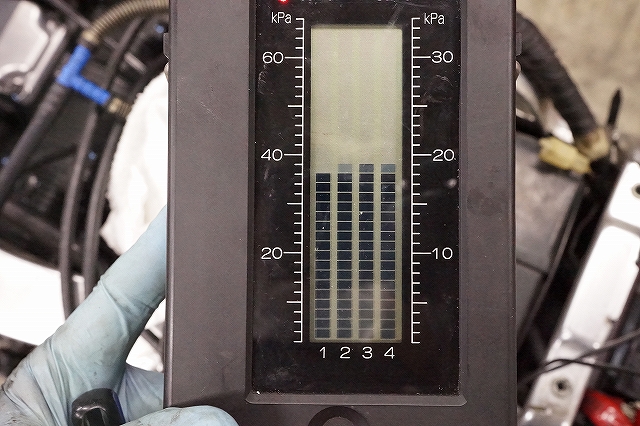
When the carburetors are synchronized properly, idle feels smooth. The engine doesn’t clatter, so it’s much quieter—perfect.
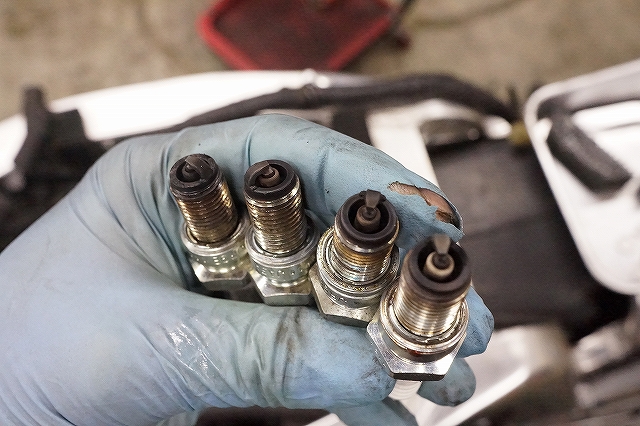
The plugs look relatively fresh but a bit sooty. The BST design has some inherent quirks anyway. Since the owner already replaced the engine damper themselves, I didn’t touch that this time.
All done.