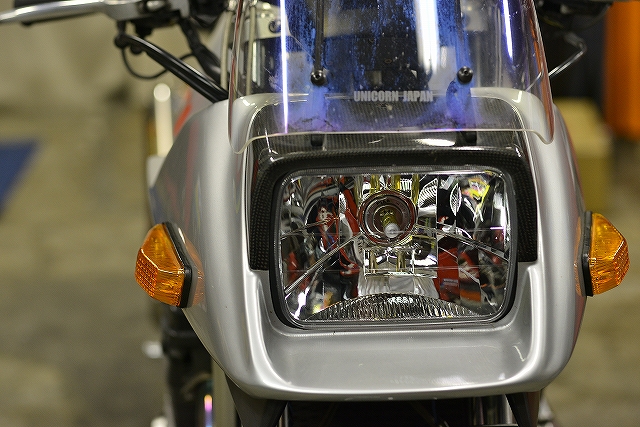
Let’s install a Raybrick Multi-Reflector and PIAA yellow bulb.
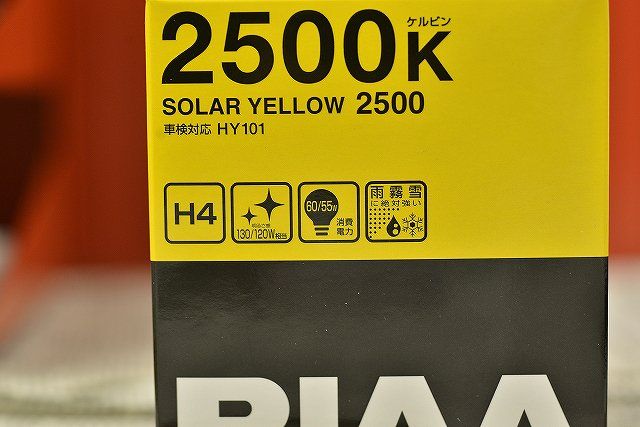
Basically, lenses and bulbs from manufacturer brands are absolutely reliable. We sourced some inexpensive ones and ran them through a light tester, but the results matched the price. Depending on what level of quality you’re after, but if it’s a vehicle you care for as a hobby, go with the mindset of “Italian underwear”—meaning, spare no expense on the details.
Yellow bulbs—how nostalgic. Be aware that vehicles from 2006 onward won’t pass inspection with them.
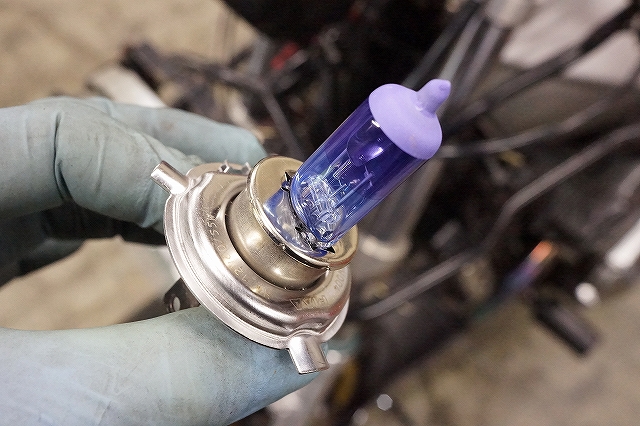
What was installed was a coated bulb that shouldn’t produce much light. But it’s PIAA-made…
When measured, it puts out 41,000 candelas—nothing to scoff at.
Standard lens + direct battery + PIAA blue = 41,000
Raybrick lens + direct battery + PIAA blue = 42,000
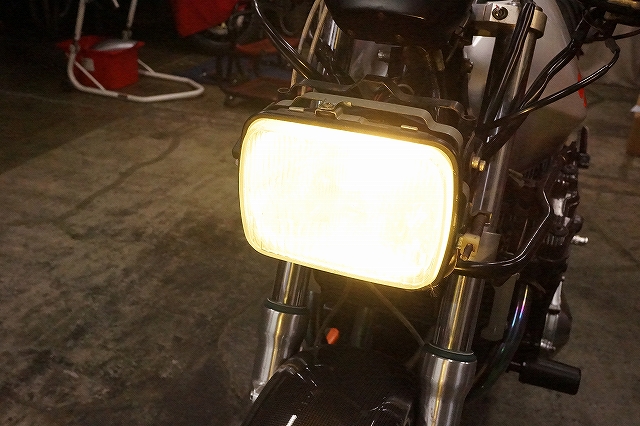
With a bit of hope thrown in, here’s the yellow bulb. How does it look?
Standard lens + direct battery + PIAA yellow = 29,000
Raybrick lens + direct battery + PIAA yellow = 38,000
The standard lens caused a dramatic drop in light output—I was a bit disappointed—but the lens brought it right back up.
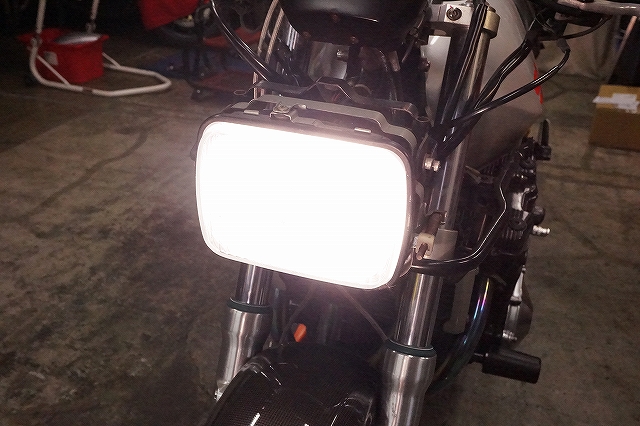
Lens-included bulb (clear)
Standard lens + direct battery + included clear = 42,000
Raybrick lens + direct battery + included clear = 42,000
Looking at the results, clear bulbs definitely deliver the highest numbers, and the bang for your buck is outstanding.
These are tester readings for light output, which is different from how bright it feels to the eye.
According to the tester, lowering color temperature to around 4000–5000K tends to increase measured light output.
To the eye, raising color temperature toward white feels brighter. And in today’s well-lit streets, being able to see where you’re illuminating seems to feel brighter.
By the way, just swapping the bulb can shift the light beam quite a bit. In terms of inspection, the beam alone can move enough to fail the test, so be careful.
The words people use to describe things are extremely difficult—it seems we need to establish a common reference point to communicate meaning.
A rather pointless experiment.
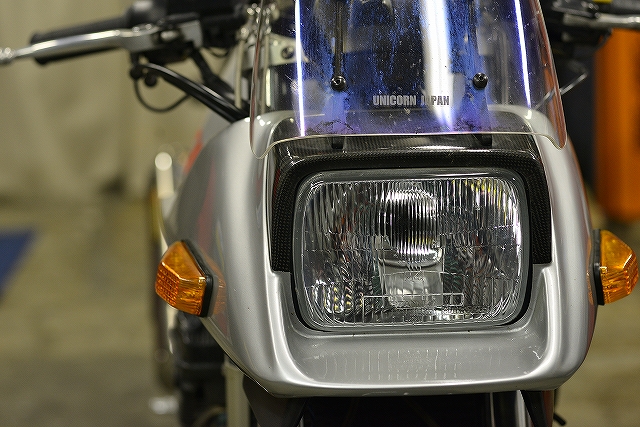
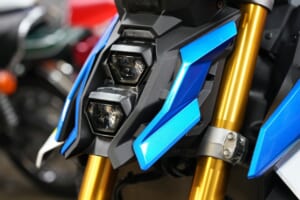
The multi-reflector lens gives a more modern look, but since it’s a cutoff lens, I don’t think it’s quite as classic as an older style.
The benefits of a multi-reflector are:
• Restores a cloudy lens to clear and focuses light efficiently, boosting output
• Made entirely of plastic, so it’s lightweight and won’t shatter from road debris (though that rarely happens)
• The look changes dramatically, giving a refreshed appearance
The price is reasonable too, so if you think your lights look dingy, I’d say go for it. It’s more reliable than putting in an LED bulb.
LED bulbs have little difference between high and low beam, and there are focusing issues, so I think they’re premature. LED headlights really need a complete lens assembly to work well. They came out on the CB and such…