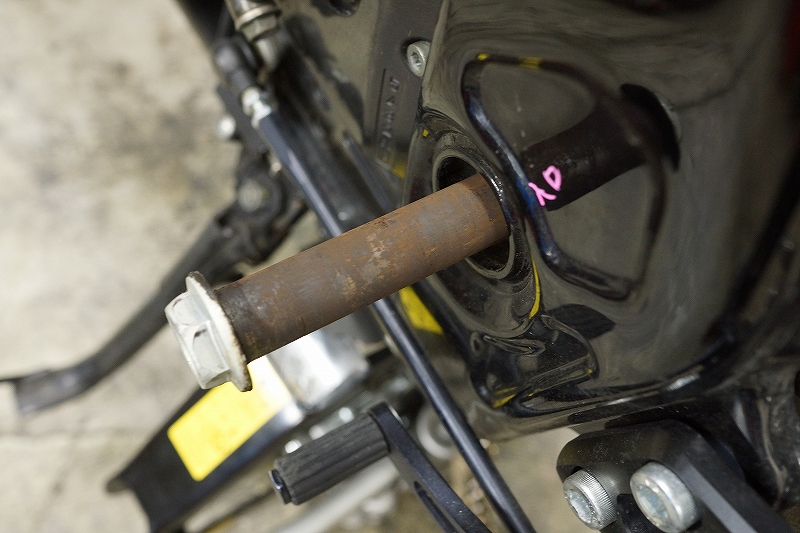
This one came out sharp again—quite the troublemaker.
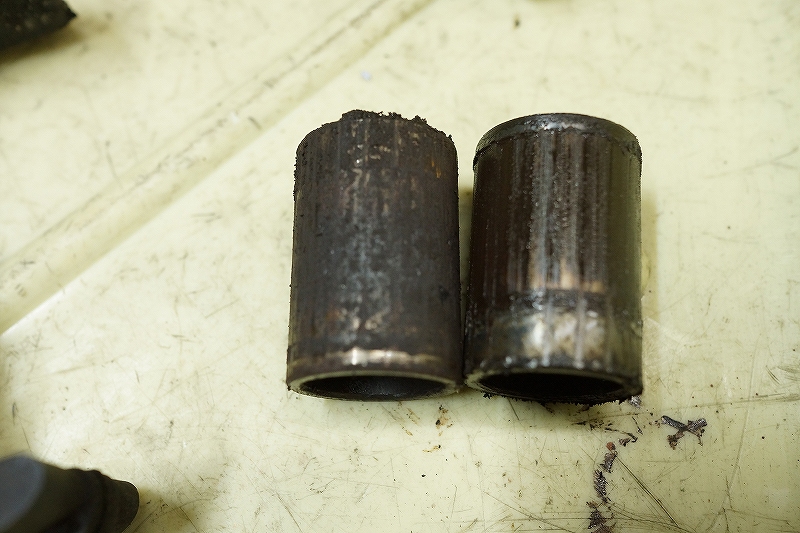
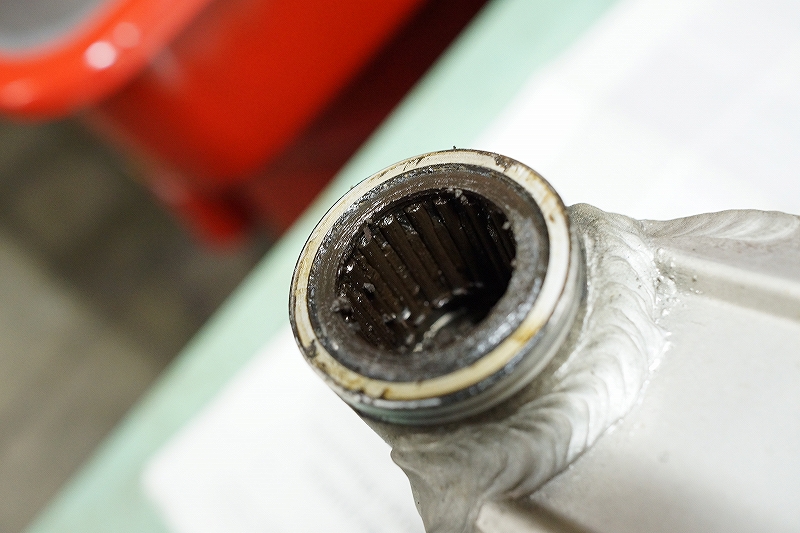
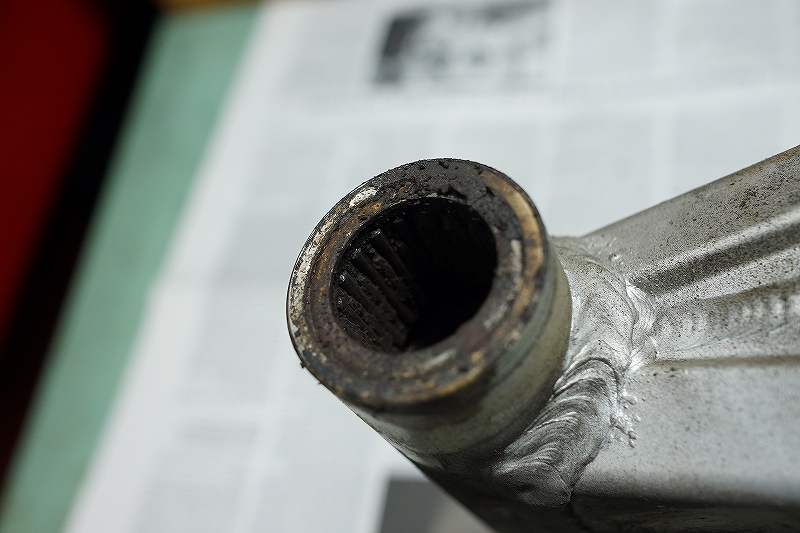

If oil is applied properly, you won’t see corrosion like this. There are still plenty of GSXR1100 and similar units out there that have never been opened and are holding up fine, so I think rust prevention is necessary.
Even with sealing, moisture will cause corrosion to progress, so it’s definitely a spot that needs to be opened occasionally.

A sliding hammer is one of those pullers I’d rather not use if I can help it.
Having a puller like this versus not having one really changes how the work looks and feels, reduces effort, and makes it cleaner.
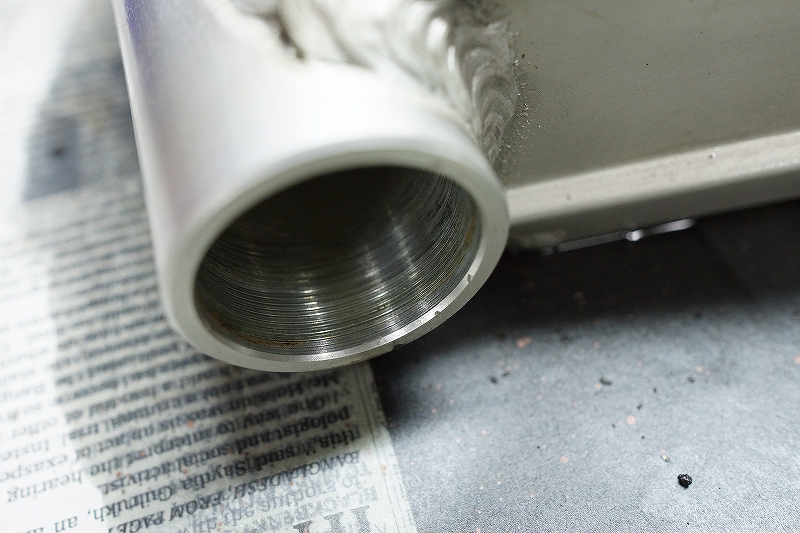
It seems a bit rough, but the removal and press-fit went smoothly, so that’s good.
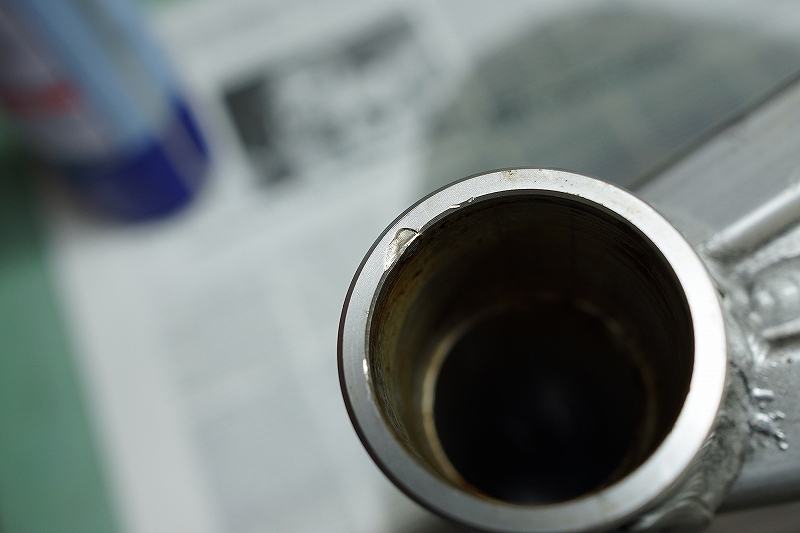
Of course it wasn’t me, but I’ll report it anyway. These kinds of impact marks exist because humans are assembling things.
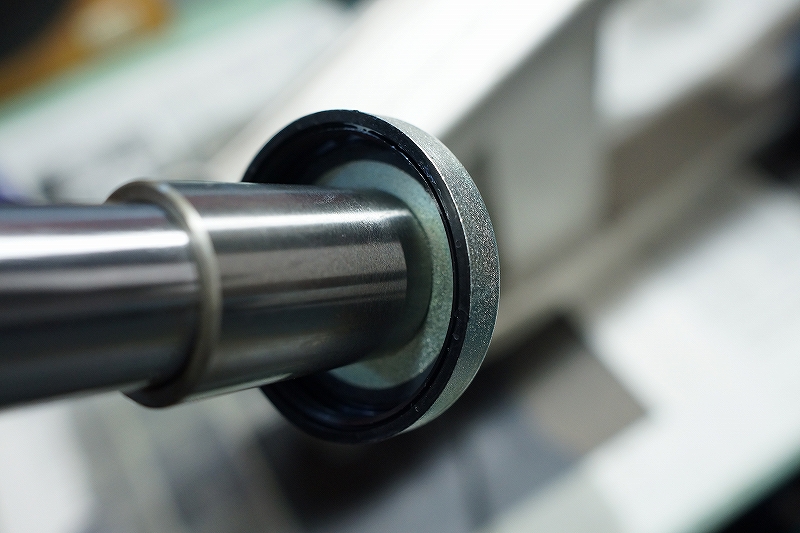
The structure is like this. The outer edge is sealed, but the center of the shaft portion is not sealed.
Some sealing is necessary, but I think it’s also important for moisture to escape.
A common problem with applying lots of grease is water getting mixed in. Once it does, the moisture won’t escape and it causes severe corrosion. Applying more grease does help with rust prevention, but it’s also true that it’s harder for moisture to escape.
Sometimes I think spraying water heavily isn’t a good idea.
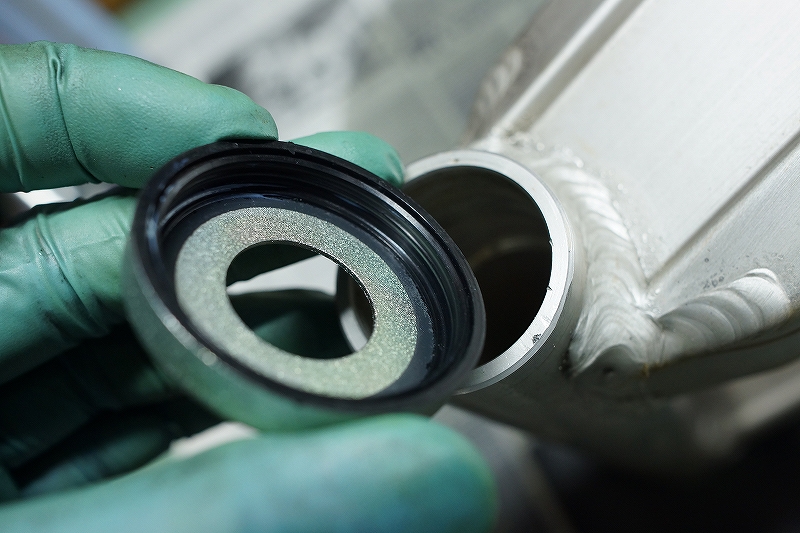
I lightly wipe this area too. I don’t think it needs to be this tight. Loose isn’t recommended for various reasons.
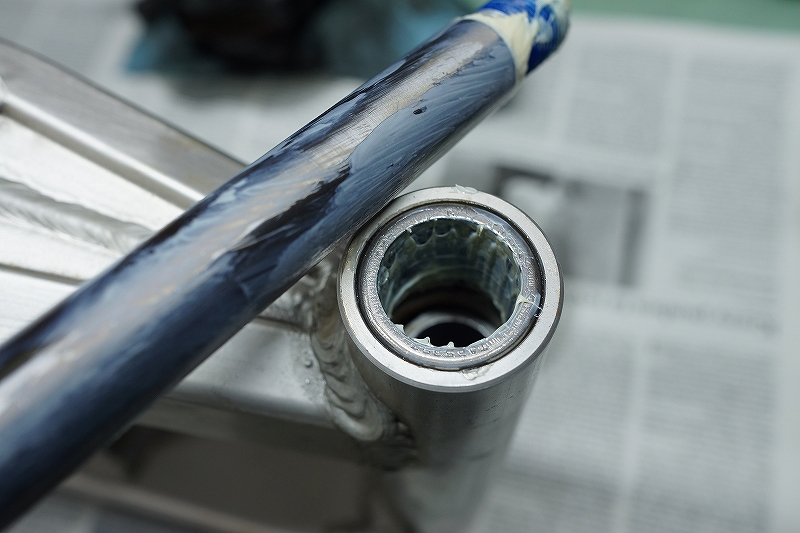
I’ll finish it with NC100.
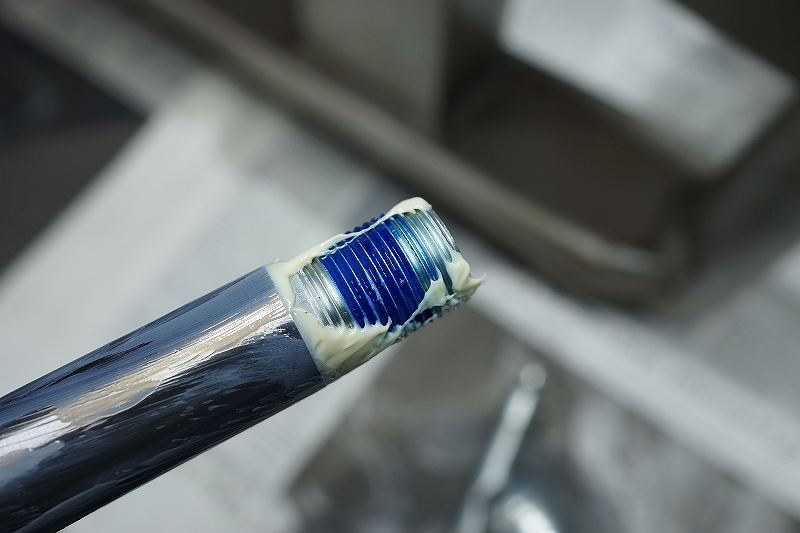
I accidentally touched the shaft with my finger and got grease on it, but I remove all the thread locker.
The tightness becomes questionable and it can become a problem if it won’t come loose. If it’s a lock nut, there’s no issue.
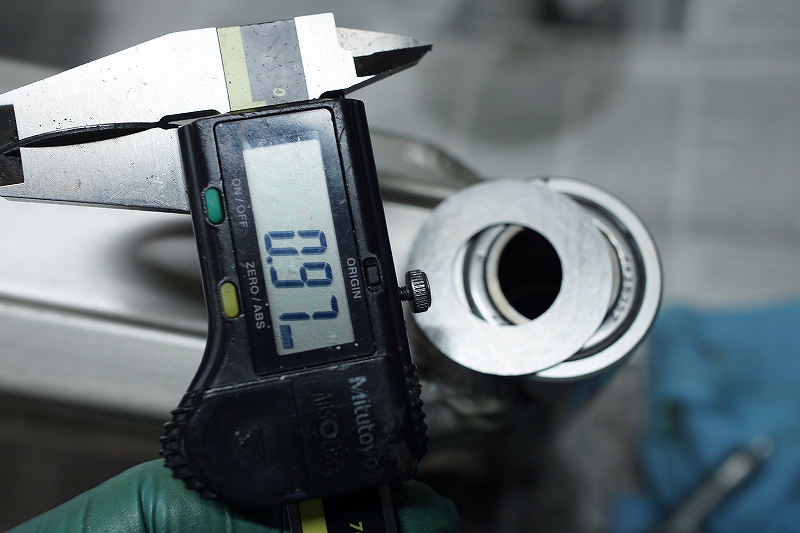
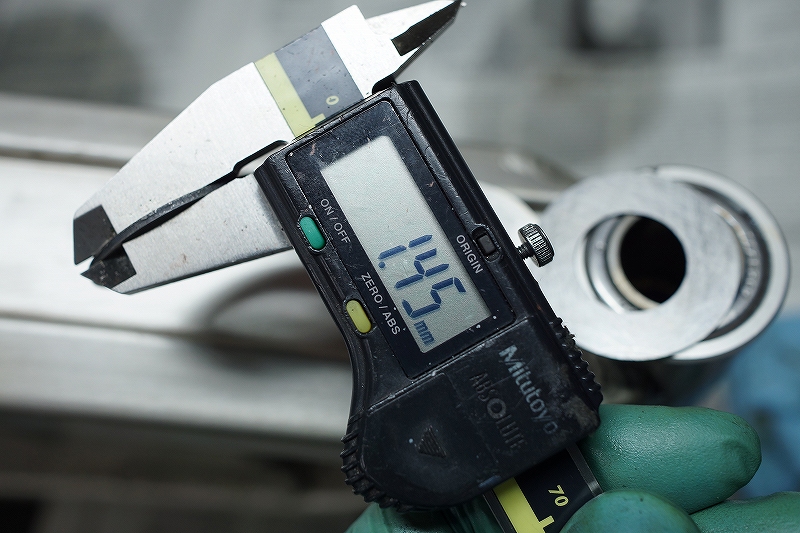
Adjustment is done with shim thickness. If it slides in with a “pop,” it’s loose, and even with the specified torque, the swingarm pivot will rattle. Especially the Inazuma 1200 and GS1200SS tend to be loose.
If it’s loose, it’ll stress the frame, so it’s good to make sure it fits snugly.
Newer ones have threads cut into the pivot for adjustment, which is nice. As for shims, whether you install them equally on both sides or use one side as the reference probably varies by manufacturer and the assembler’s philosophy.
There are various misalignments and play, so rather than assembling with precision, I think it’s better to match the current state.