In the end, I think it all comes down to bolts.
I know, right? Motorcycles use a ton of bolts and fasteners.
When you swap them out with good taste, it looks really cool.
But it’s not just about slapping titanium on everything, and it’s not like you should make all the fasteners the same tapered cap style.
I don’t think that’s the way to go.
There are so many considerations—the parts that catch the eye, the areas you want to tighten up visually, the spots where you want to improve serviceability.
It’s really the small details that matter. For example, just having an aluminum plate and bolt head that are flush with each other looks great.
The strength doesn’t change much. But when you have five or thirty of these little touches scattered around, the more you look at it, the cooler it gets.
I think it looks better and better.
I’ve always loved racers (though I’m not that into racing itself). That’s what I call functional beauty.
Manufacturers build for unknown conditions and unknown users.
But racers have specific use conditions. Every bit of waste is eliminated, leaving only what’s necessary.
It’s always been impressive, but back in the 1980s there was this crazy wave of titanium and magnesium—stuff that’s commonplace now!
Fuel petcock, throttle holder, fork bottom case, caliper—amazing stuff.
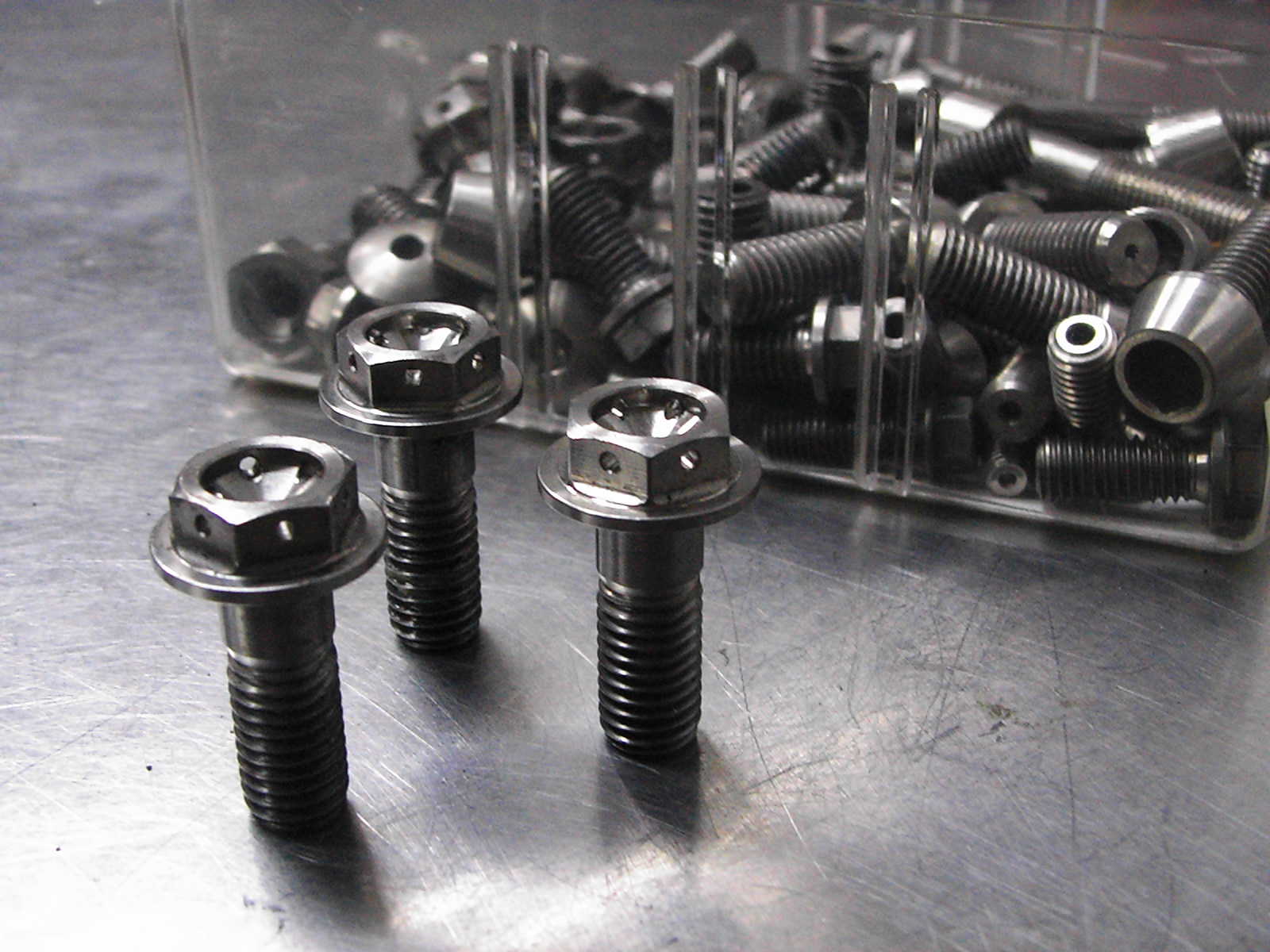
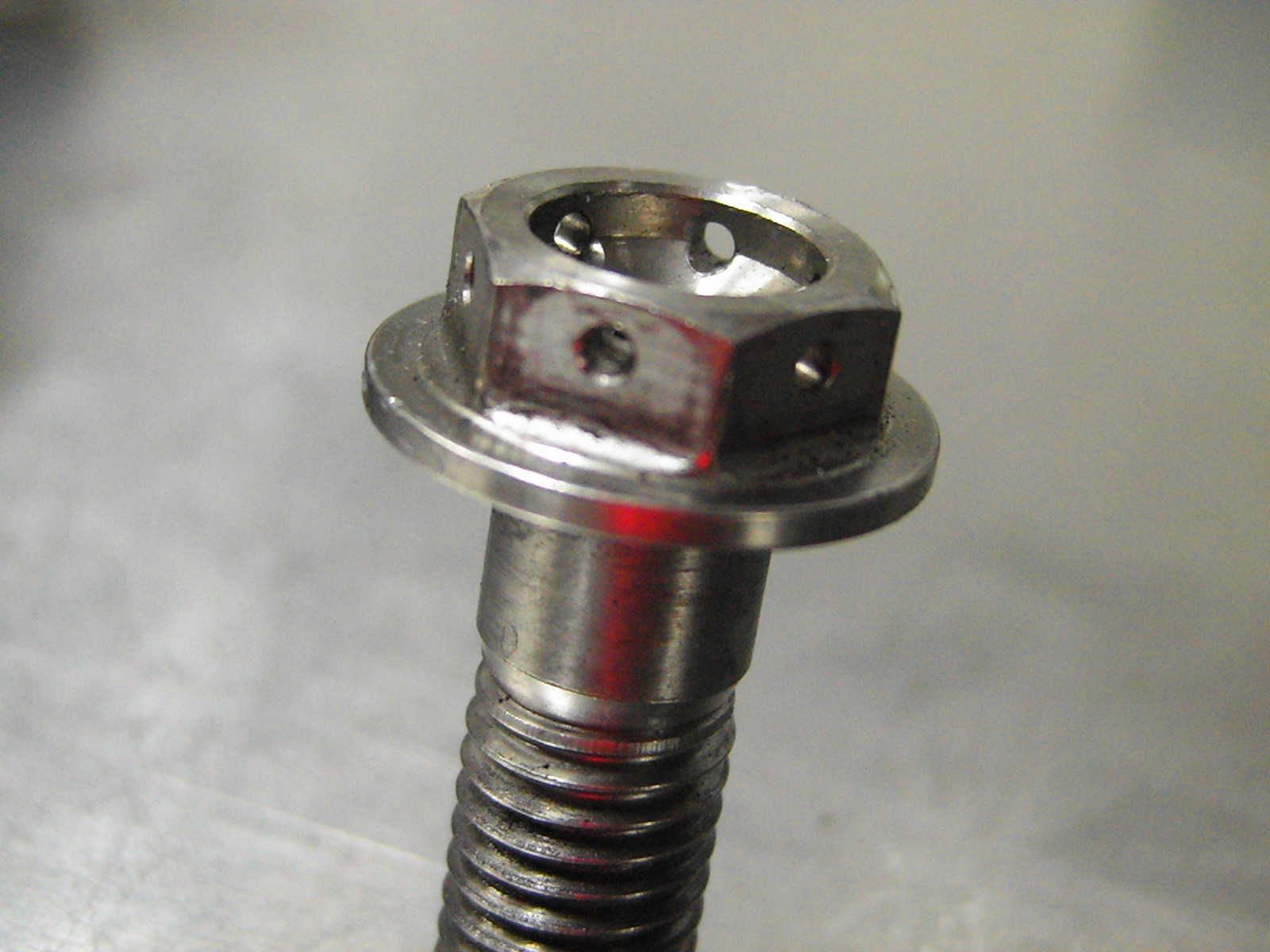
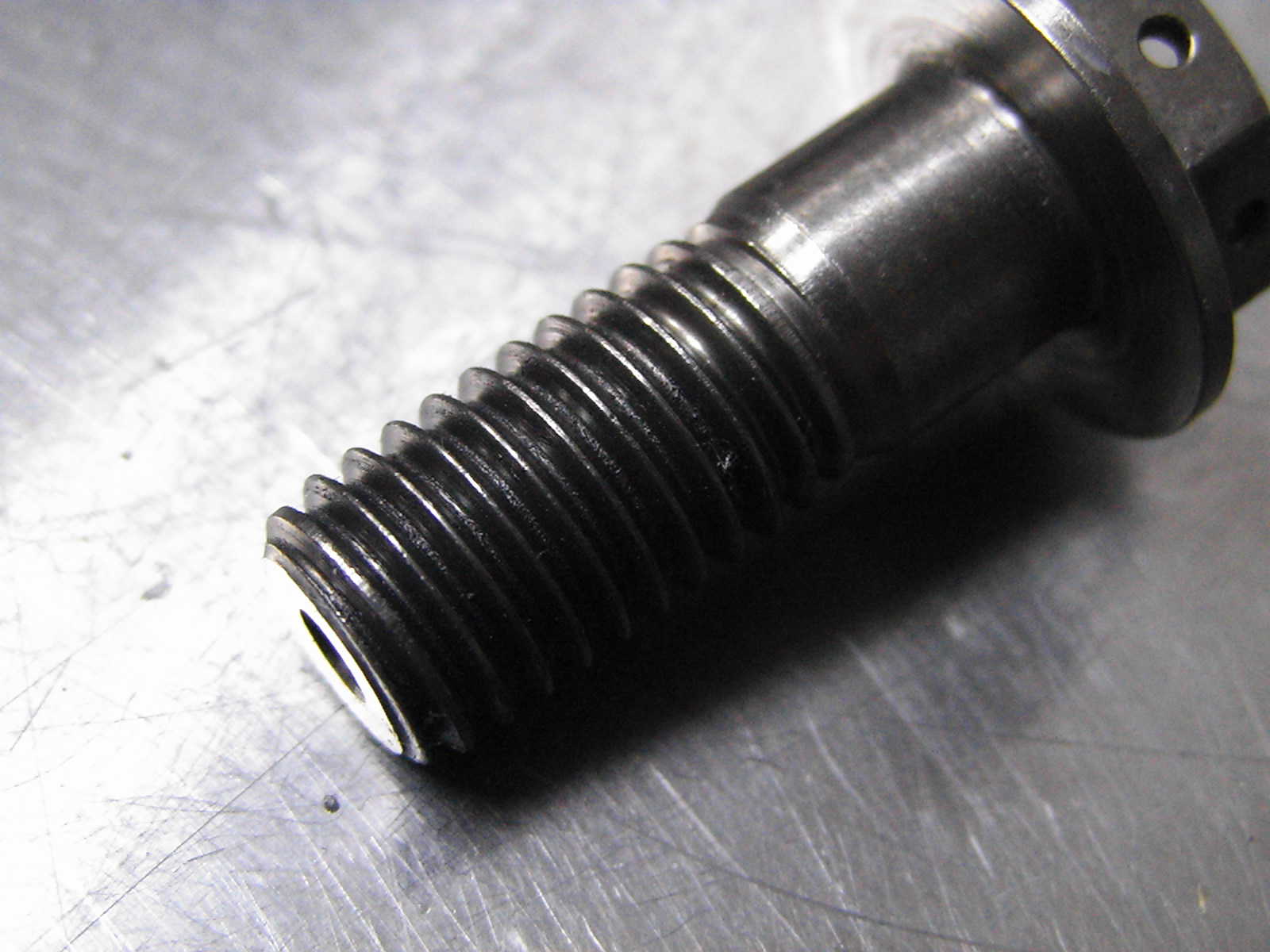
The bolt in the photo is apparently from some factory racer. Of course it’s hollow with a wire-locking hole on each face.
And it’s properly chamfered too—nice!
Chamfer those wire-locking holes too. Ever get that feeling when you’re tightening a bolt where you think, “Oh man, this is about to strip”?
Try pinching the threaded part with your fingers and feeling it. If it feels recessed, the bolt is worn down.
Remember, bolts are consumables too!