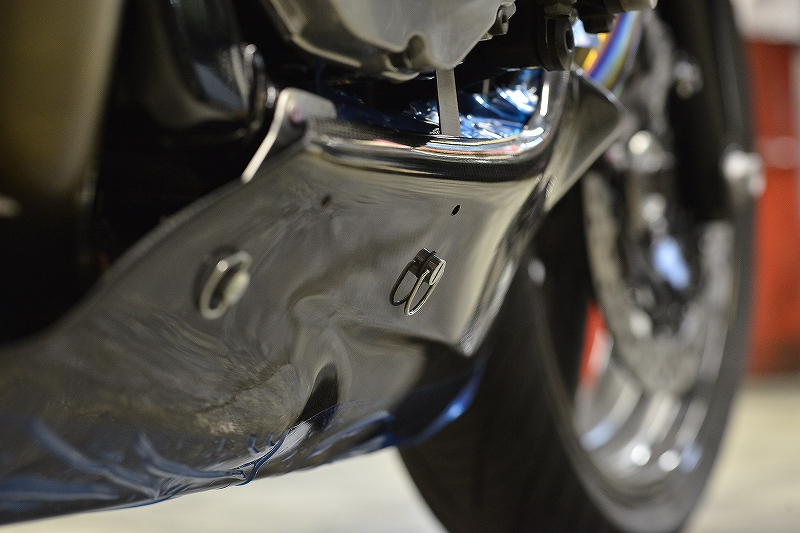
We’re installing a Magical Racing carbon fiber undercowl.
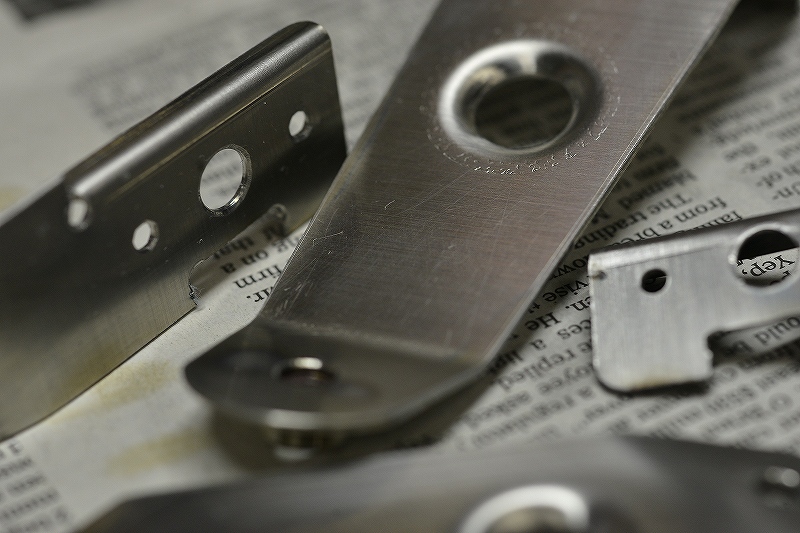
The benefit of having undercowls and similar parts that detach smoothly is extremely high, and it’s really nice to be able to remove them yourself.
CFRP has a certain amount of flexibility, but it’s also important that vibration can escape to some degree.
In general, soft materials seem to suffer fewer cracks and damage than hard ones. Of course, if you go with raw aluminum just because it’s soft, it’ll shatter instantly.
Rather than making all the brackets at once, we fabricate one and then repeat drilling holes in the cowl four times, doing a test fit each time—so it takes a lot of time and effort.
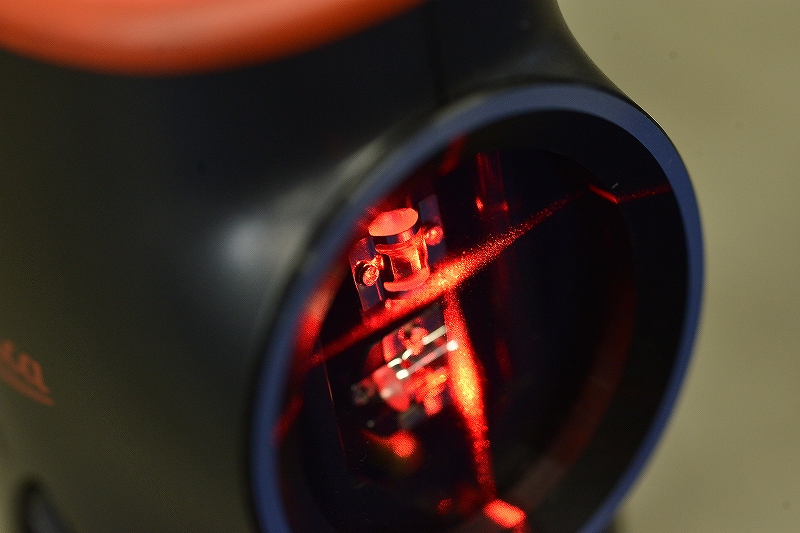
Being able to cut down on time and effort helps us avoid various risks, and I think that’s thanks to our tools and equipment.
Leica Lino L2 We use something with simple features and design since we only need to know the position.
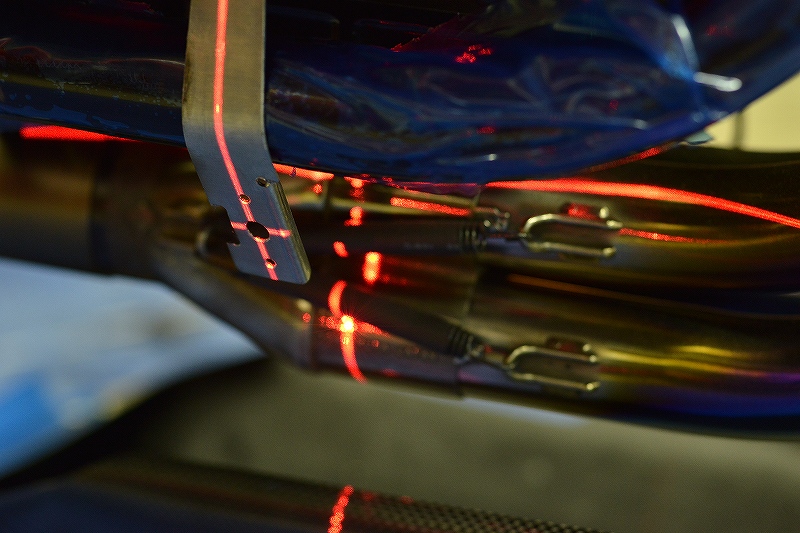
We use the laser to mark the position while keeping in mind that the cowl brackets have some flexibility in angle.
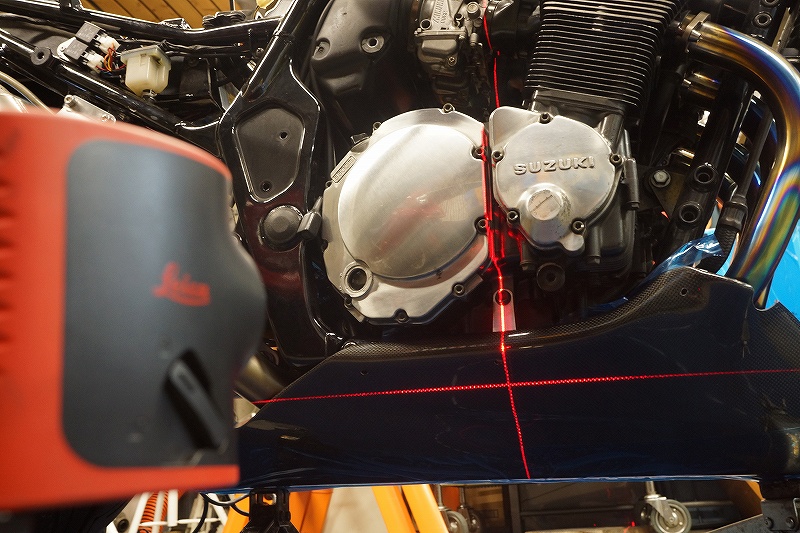
We hold the cowl in place, mark with a marker, then drill—and repeat this four times. It’s tedious and time-consuming.
Since it’s basically a subtractive process, drilling and cutting the contact areas requires extreme care, and the dust is a real hassle.
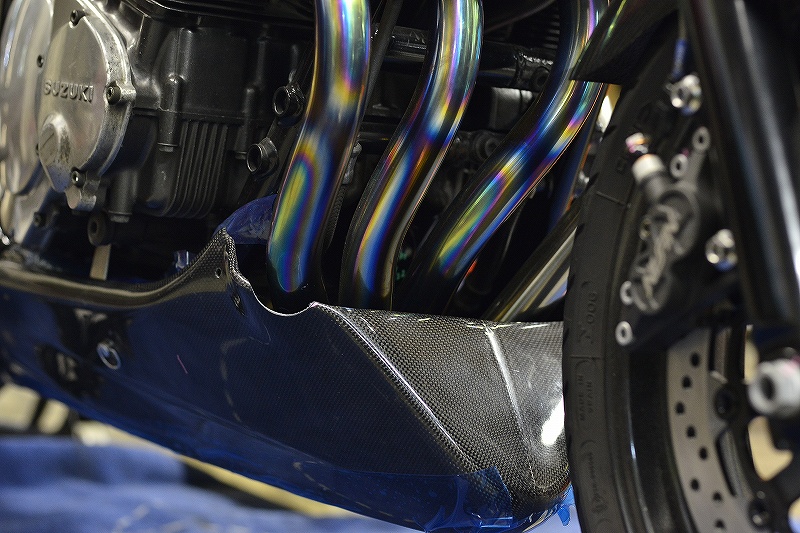
We got it mounted for now, but there’s still more work ahead—adding foam on the inside and finishing the contact areas.
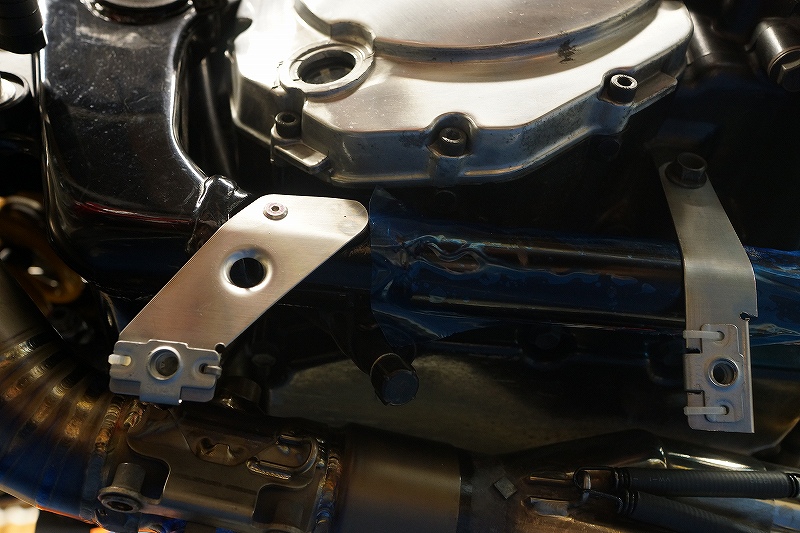
There are some with threaded inserts, some with welded bosses and stoppers, and some with ribs formed in V5 that are a bit stiff.
We’re out of rivets, so we’re using cable ties as a temporary fix.
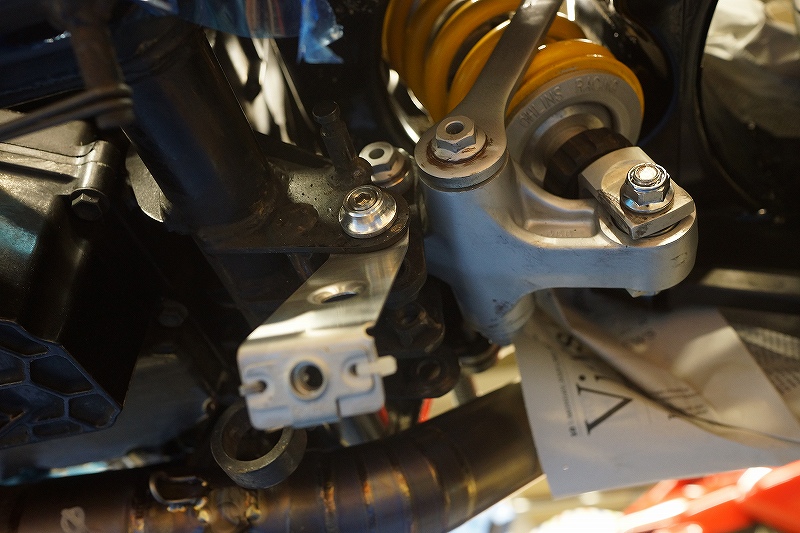
We weld a boss on the back of the plate, and the nut-free Fujitsubo collar has a stepped outer diameter of 10.5 mm.
Once we deburr and polish the final details and the materials arrive, we’ll move on to permanent installation.
That’s all!