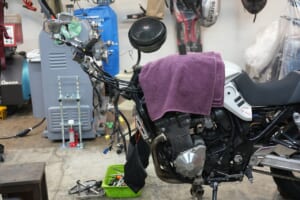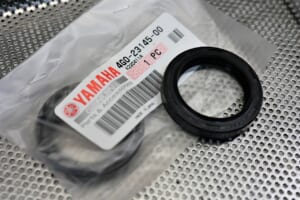
Let’s disassemble the fork.
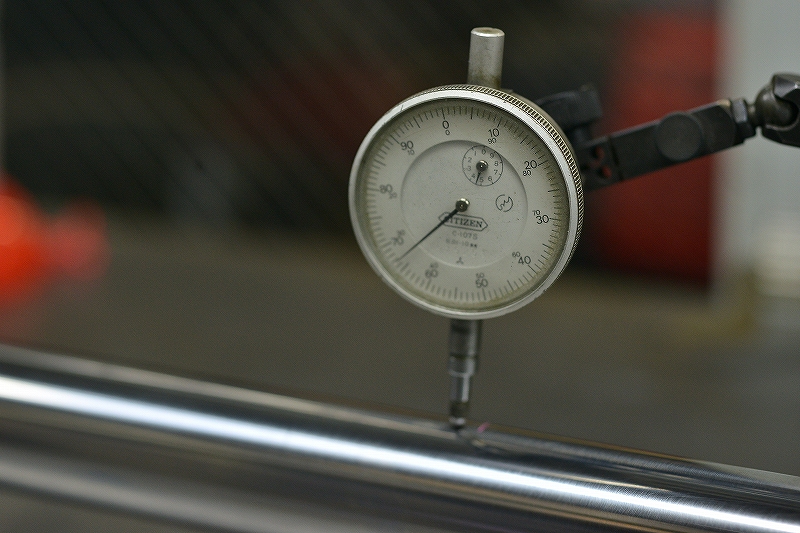
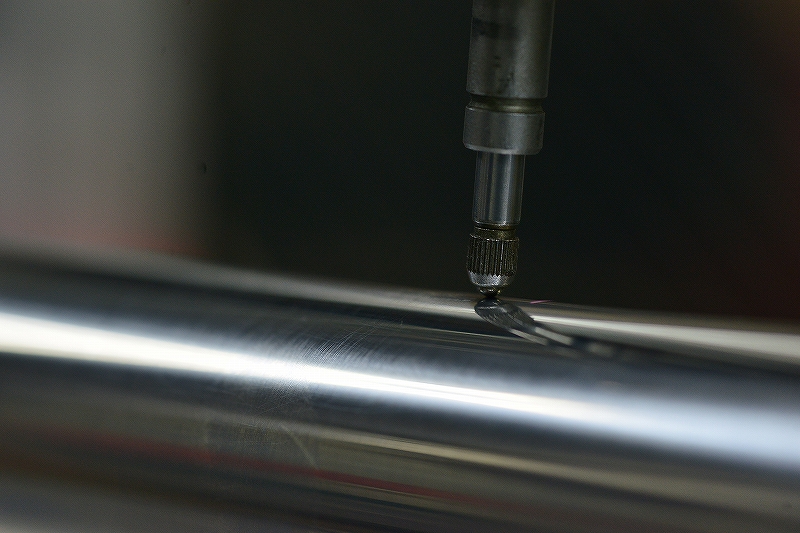
You need to know about runout. We measure it with a dial gauge like this, but if the work table isn’t sturdy enough, the weight of your arm resting on it will cause the table to flex and shift by about 10/100 mm easily.
Since it’s not a solid workbench, we have to check slowly and gently. One side appeared to have tipped over, and there was about 2/100 mm of runout, so I corrected it for you.
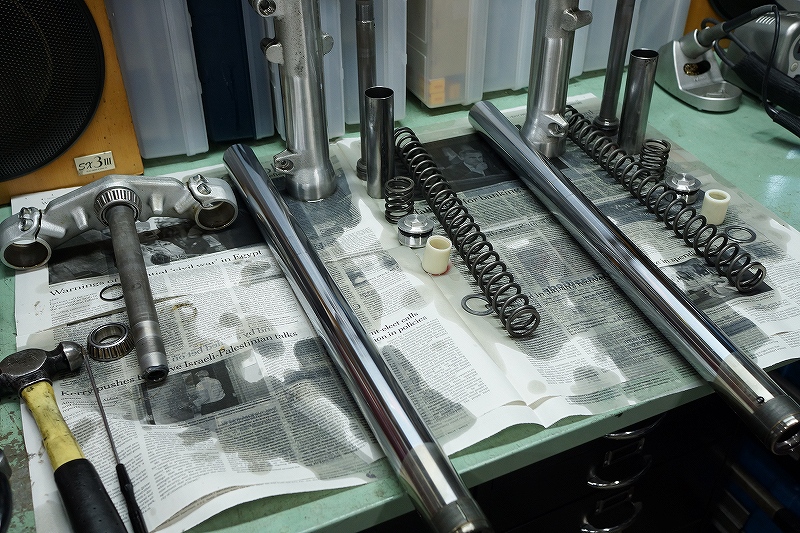
The assembly is simple, so it’s very easy. The removed parts go into the actual-size parts box, and we measure springs, spacers and such, collecting data. It’s amazing how much information builds up over time.
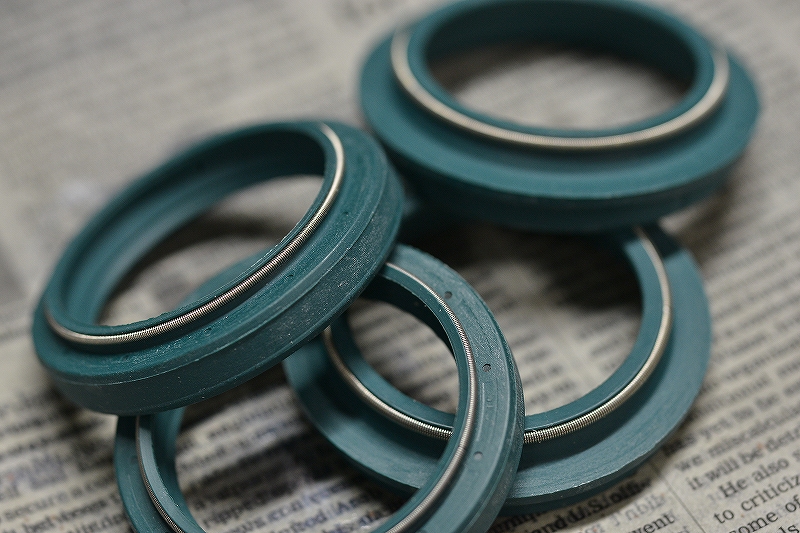
I’m thrilled that the green has come back to life.
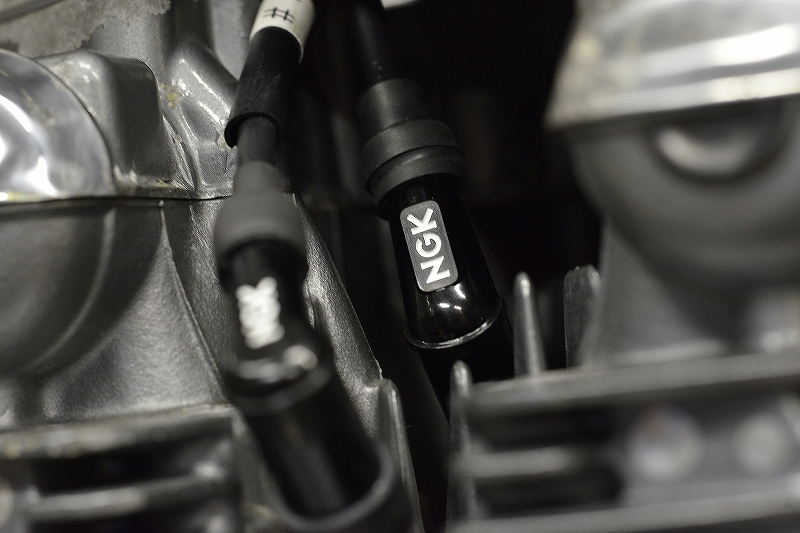
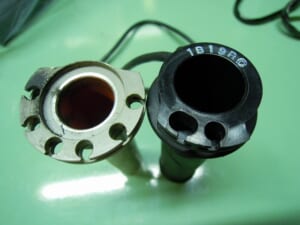
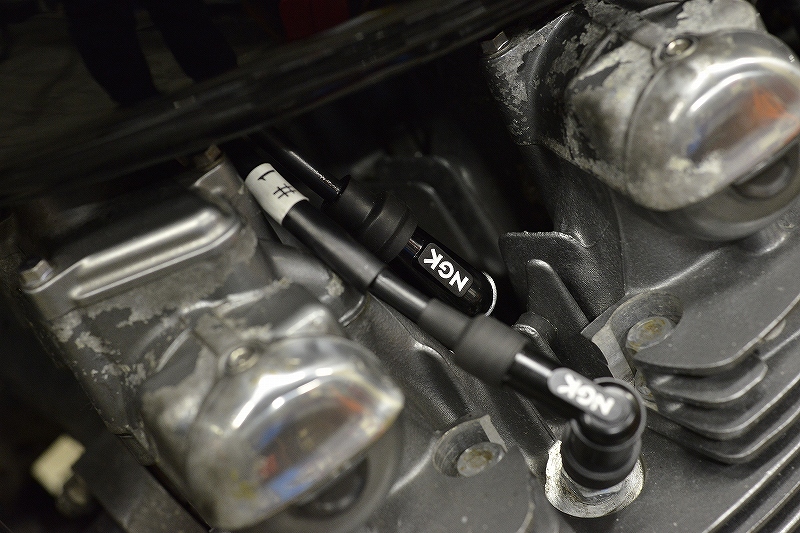
The cap was worn out too, so I switched to NGK. I chose the terminal-less type, and while they’re normally all 90 degrees, I made the two in the back 120 degrees. The spark plug wires hitting the engine didn’t seem quite right to me.
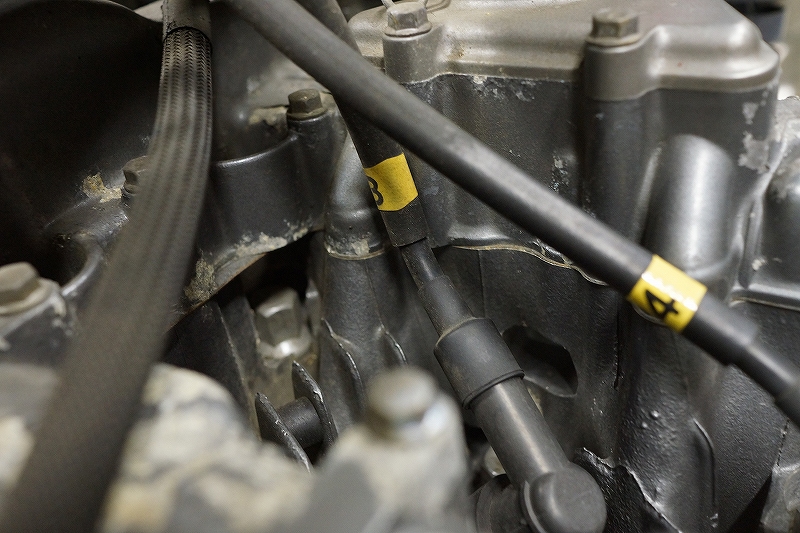
This is how it should normally be.
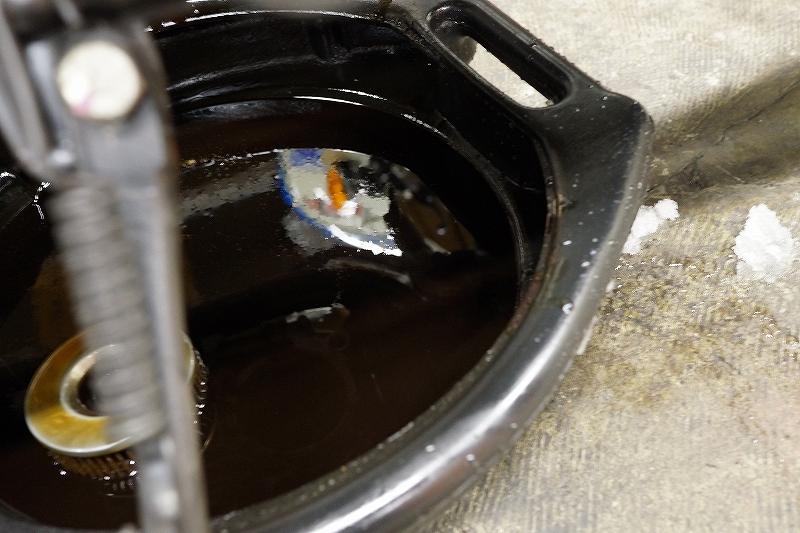
We did an oil change.
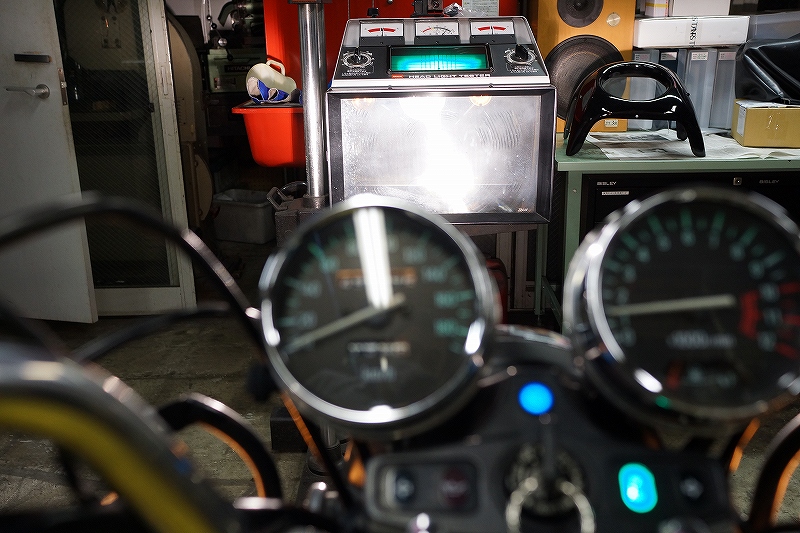
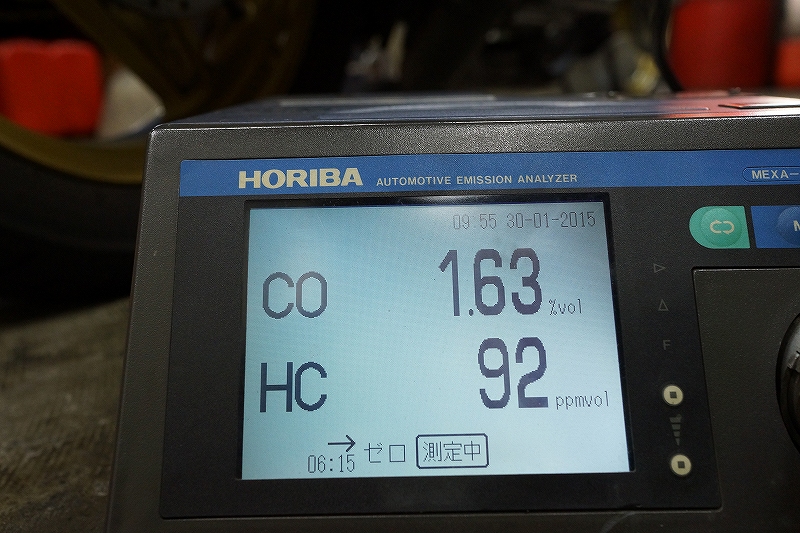
Everything is ready for inspection, so we’re planning to bring it in tomorrow, Monday.