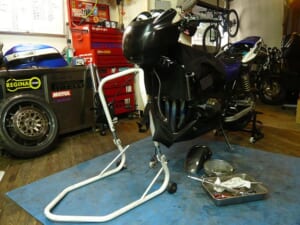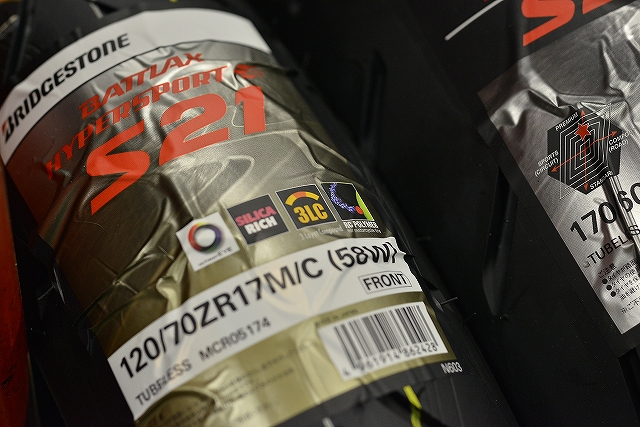
Newly released Bridgestone S21 Let’s change the tires.
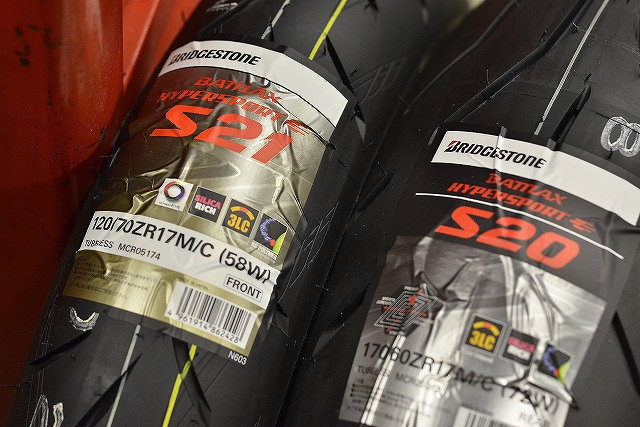
The rear is 170/60-17, so it ends up being S20.
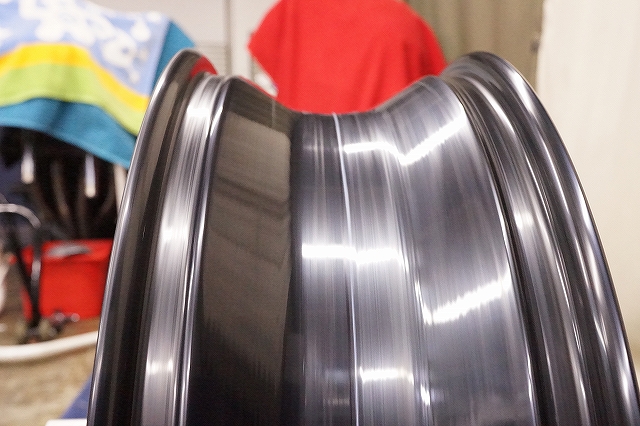
It’s reassuring to check that the wheel has no runout on its own.
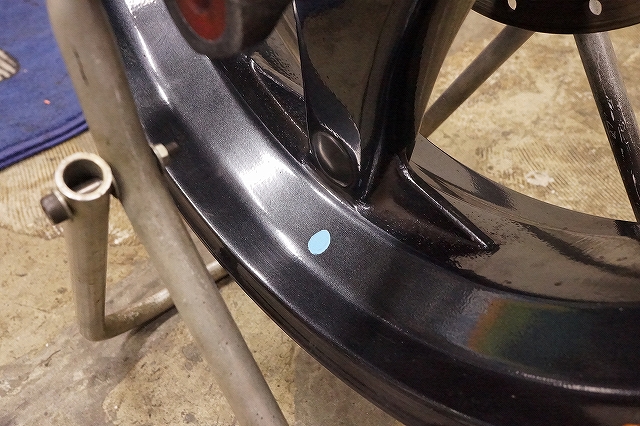
The air valve position isn’t necessarily at the heavy spot. Since we can’t measure the tire’s light spot, we trust the markings.
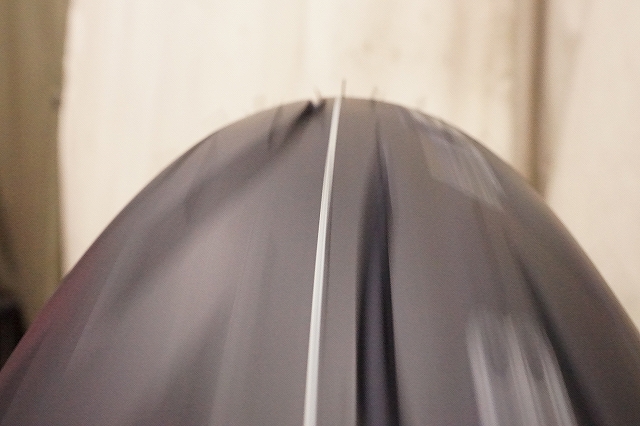
Of course, after assembly, check that there’s no rattling.
We don’t bead-seat the tire too aggressively. Doesn’t it seem obviously bad for the wheel? Especially old cast magnesium wheels—they scare me.
If it just cracks, that’s one thing, but fingers would definitely fly off, so I do it gently.
To bead-seat properly, we raise the pressure to the maximum air pressure listed on the tire.
If you do it this way, most tires bead-seat well and seem to have little runout.
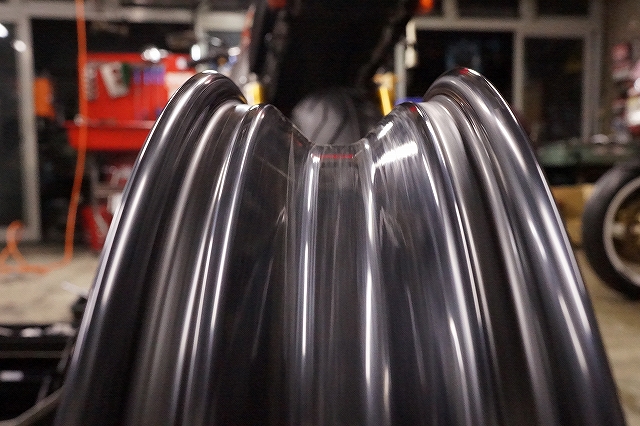
The front wheel is bent just slightly in one spot. It’s at an acceptable level, but I’m letting you know anyway.
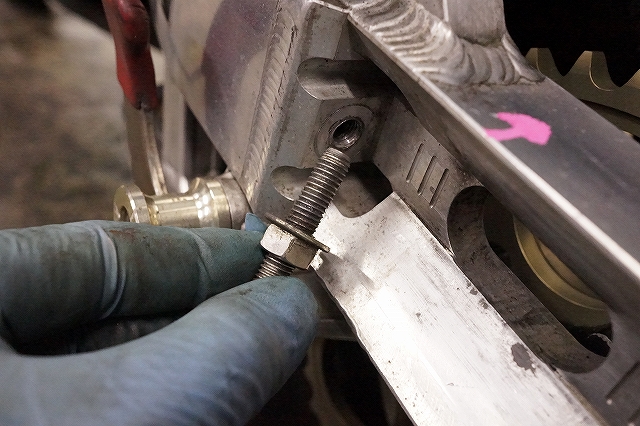
The chain adjuster bolts need lubrication too. Stiff ones are a real pain when adjusting.
For the axle shaft insertion direction, if the swingarm is aftermarket, we keep it as is; if it’s stock, we follow the maker’s spec. There shouldn’t be any issues, but it’s about matching things up properly.
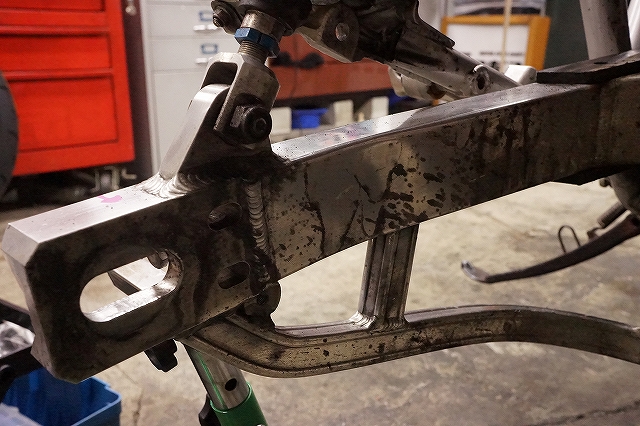
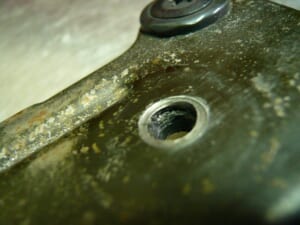
Battery fluid splatter that won’t come off—it’s really gross. Since there’s no anodizing or paint here, I polish it a bit.
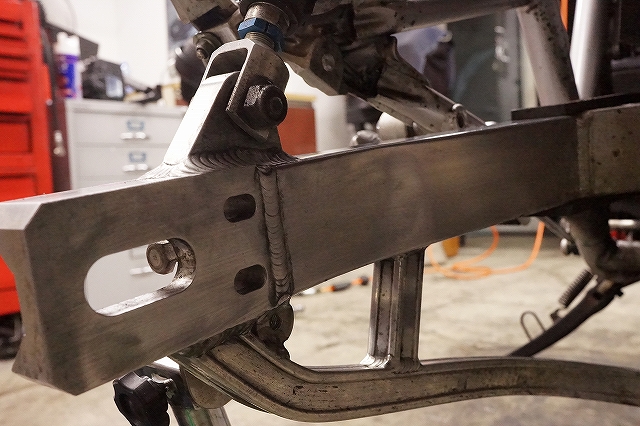
We have lots of handy tools, so it cleaned up in about two minutes—in a flash.
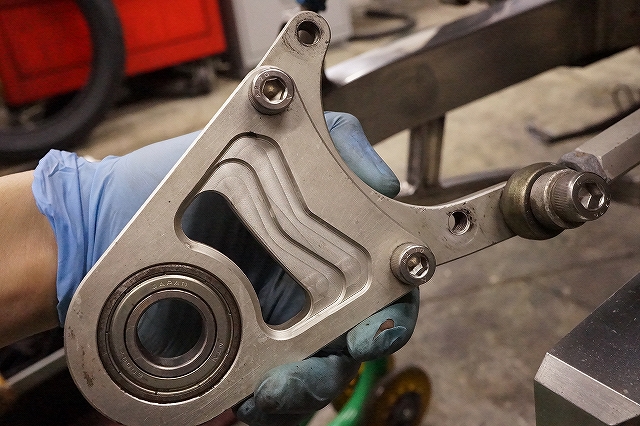
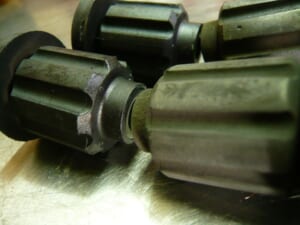
Support to support? That’s an unusual design. I often wonder what the point is of putting a bearing in the shaft insertion hole. I’m guessing it’s shared with a floating design, but what do you think?
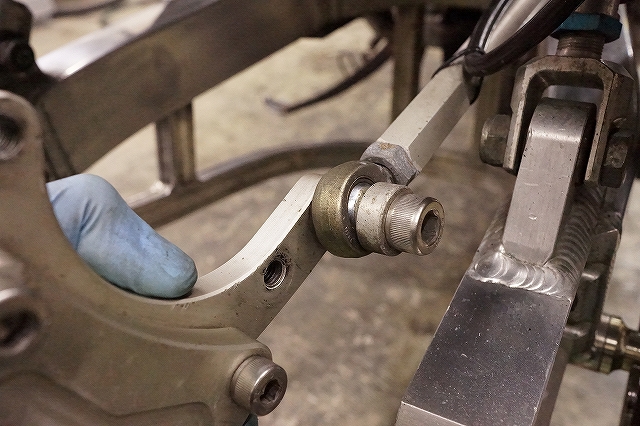
When you convert the rear brake torque rod to a spherical bearing, it seems like there’s more uneven disc wear and noise. Most stock rear brake rods seem to be positioned so the disc is centered. If you’re going to change it, a rigid mount seems better—that’s what I think lately.