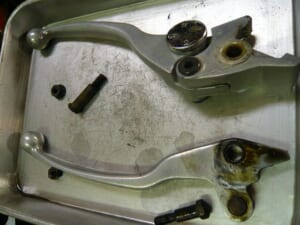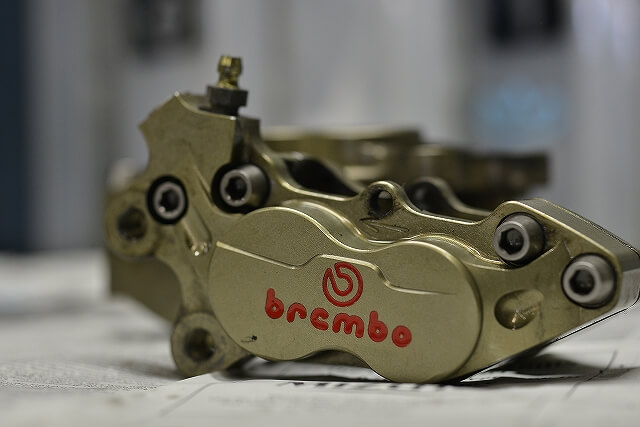
This caliper has been in use for a while, so let’s replace the caliper seals.
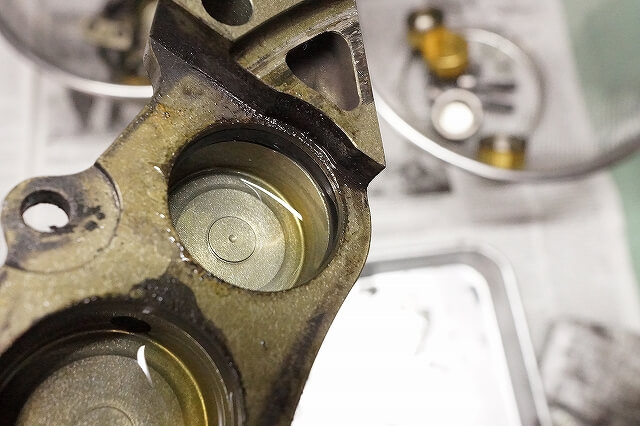
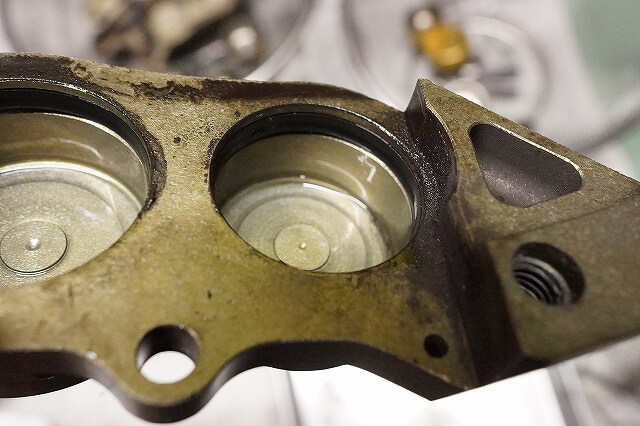
Everything has anodizing applied, so there’s no corrosion and it’s reassuring. When disassembling, the titanium bolts made a squeaking sound that was a bit scary.
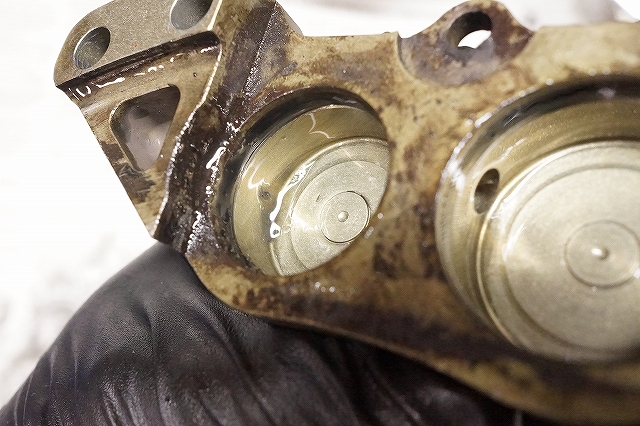
Even if you clean the caliper, the seals won’t return to their original condition. I think it’s a waste of time to keep washing and working out a caliper that loses feel and return quickly even after cleaning. While there’s some temporary improvement, the condition will deteriorate again.
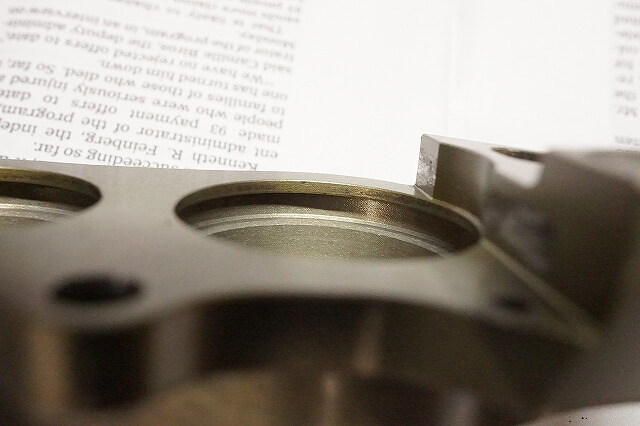
Since we don’t want to damage the anodizing, we’ll clean it carefully by hand.
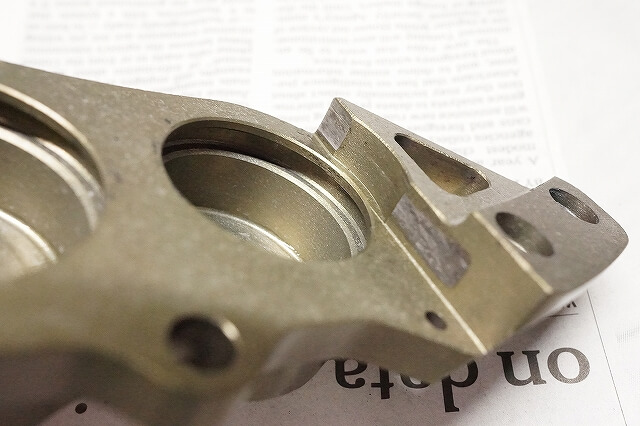
The pads will always contact the sides, so the caliper won’t last forever either.
It’s a good idea to apply just a thin layer of heat-resistant grease to the sides.
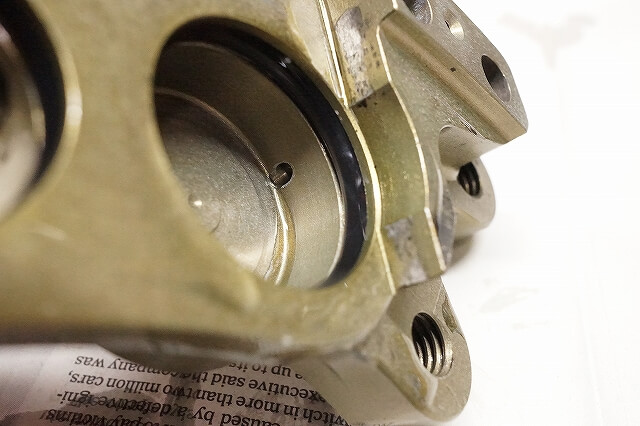
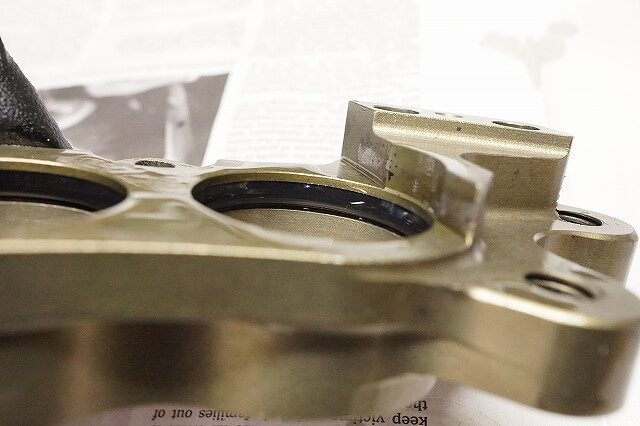
Next, we apply CCI MR20 thoroughly and assemble the seals.
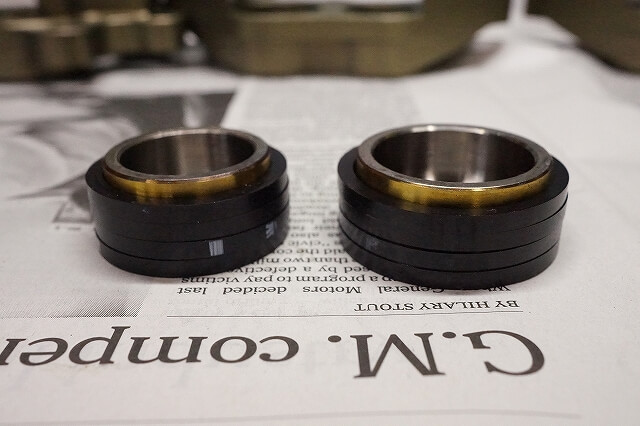
Like everything else, inspection is absolutely essential. Excuses like “I thought it was okay because it was new” won’t hold up.
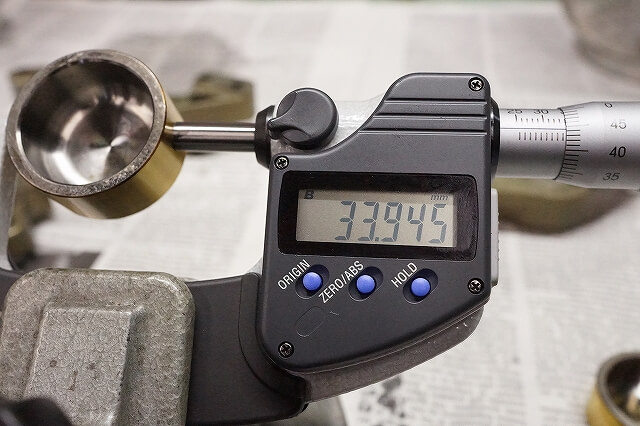
Just to be safe, we’ll take measurements. Measuring doesn’t improve performance, but I hope to analyze various aspects by looking at the numbers.
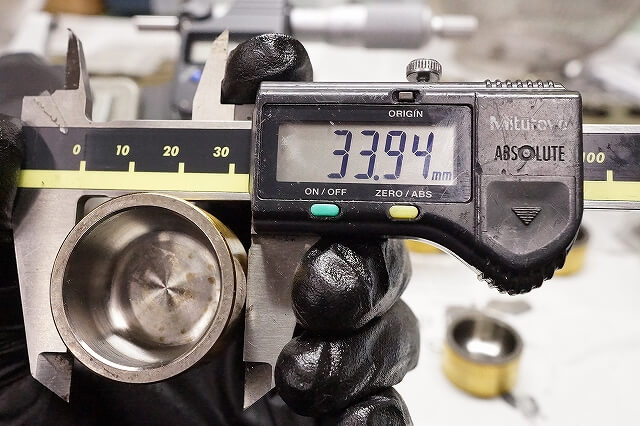
Calipers are surprisingly excellent. I can never shake the anxiety about digital measuring instruments, but they’re just too convenient. I always wonder if the measured values are really okay.
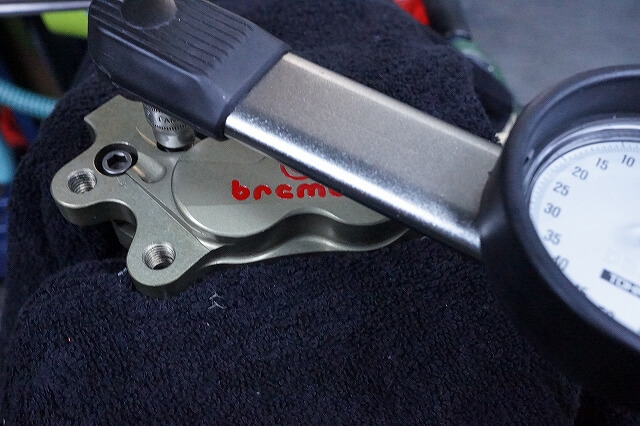
Finally, we tighten everything with a torque wrench and we’re done.
I wonder if torque wrenches have torque wrench testers, and those testers have testers, and so on and so forth.
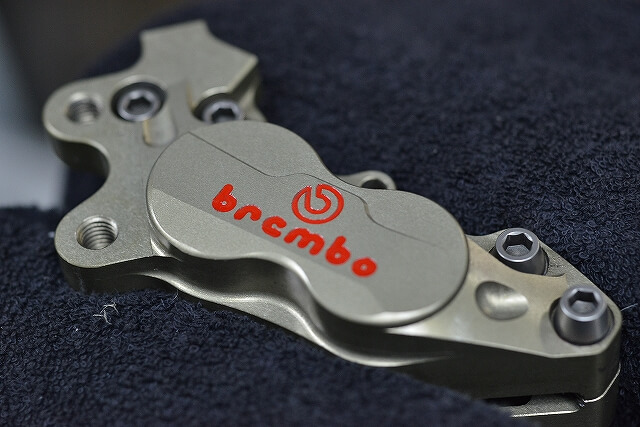
All finished. It looks quite a bit cleaner now.