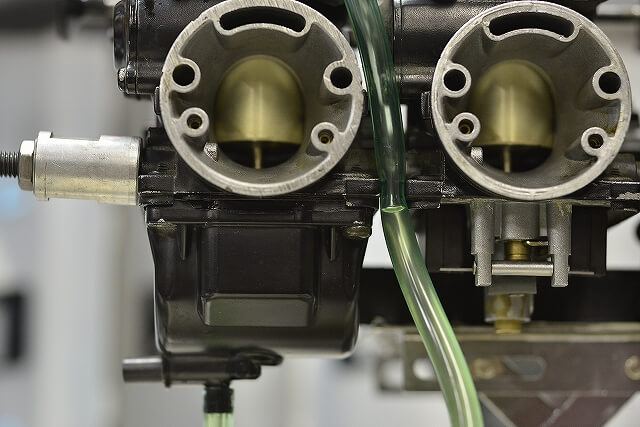
Let’s clean the carburetor.
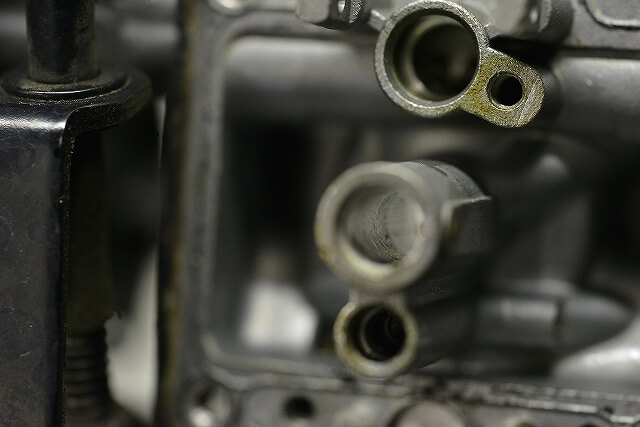
Surprisingly, dirt has accumulated on the inner walls as well.
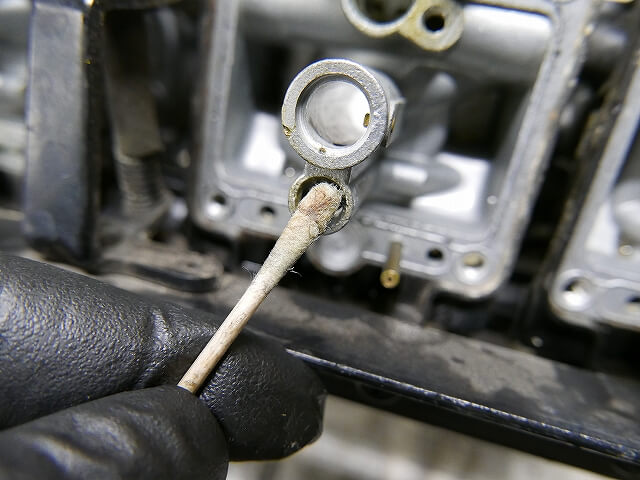
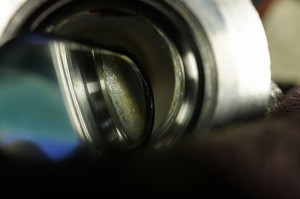
A clogged carburetor has dirt firmly stuck to its inner walls. It’s reassuring to clean the passages with industrial cotton swabs or similar tools. You need to be careful not to leave any lint behind.
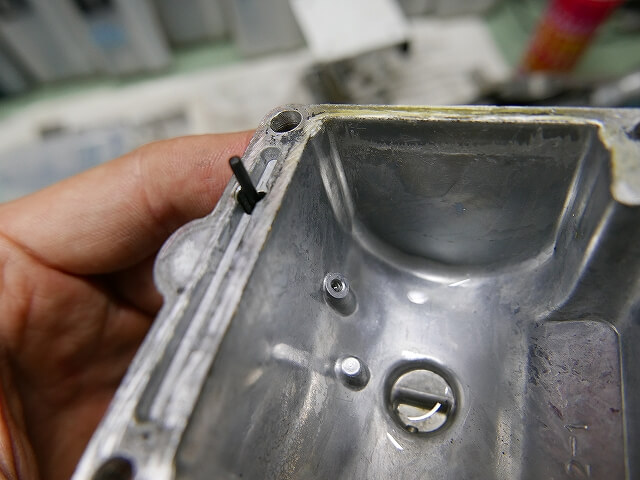
Small holes clog easily. Sure enough, the starter valve passage hole was blocked. A quick pass with a carburetor reamer fixed it. I replaced all the PJs while I was at it.
Air passages and air vents are items you definitely want to check.
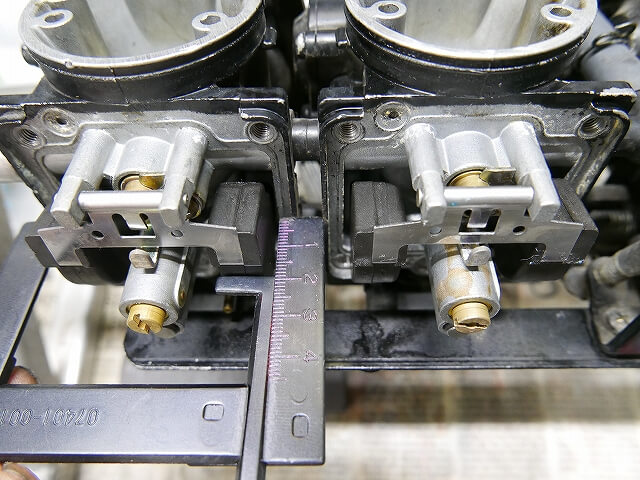
Check the float level for each cylinder and keep a record.
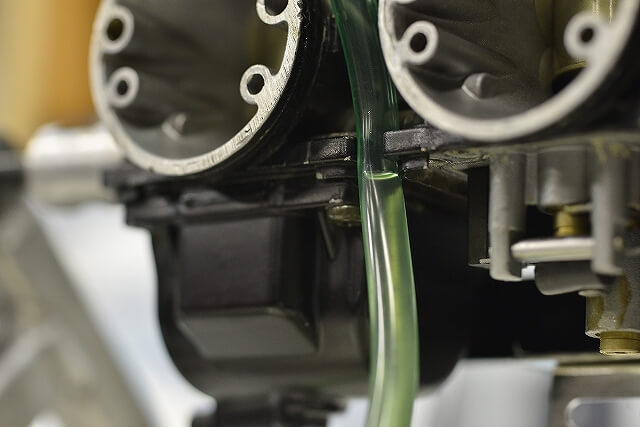
Then confirm the height with the actual fuel level. This helps you avoid subtle issues like gradual fuel rise. By checking beforehand, you can more easily determine whether a carburetor problem is actually due to external factors like rust or debris clogging and causing overflow, or air vent hose issues.
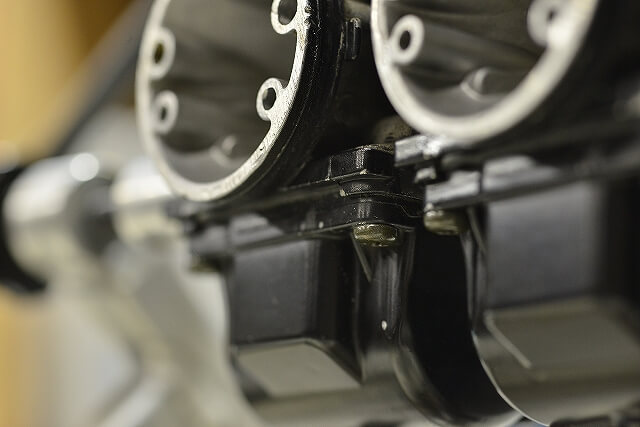
The era of paper gaskets I dislike. Run gasoline through it, let it sit for a bit, and if there are no seeps or leaks, you’re done.
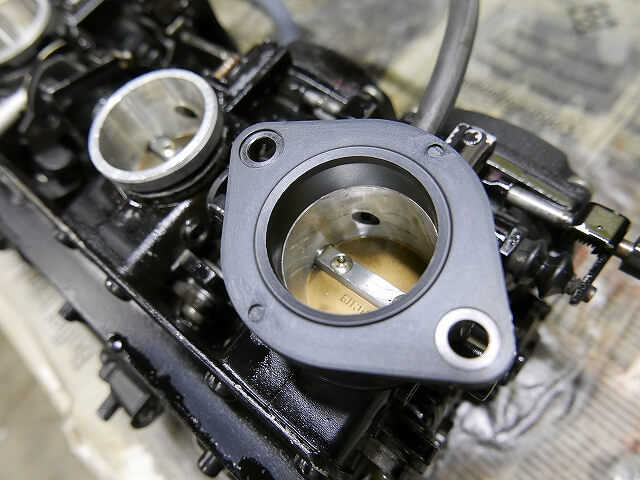
Let’s replace the intake manifold too. Rubber parts are components that become a real hassle once they stop being available. While they’re still obtainable, replace them generously.
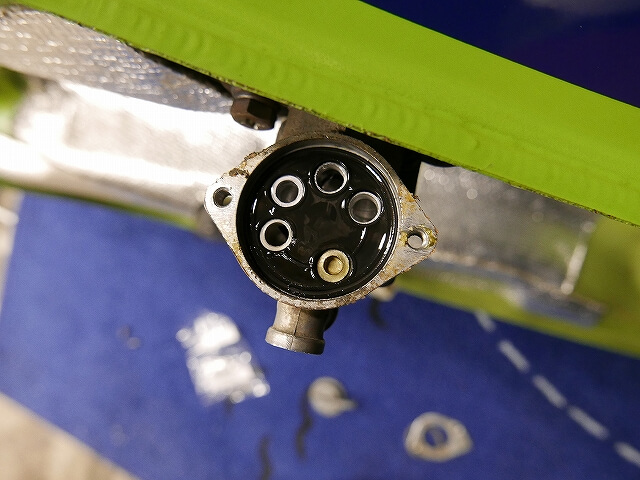
The petcock is seeping, so I’ll replace the gasket. I was impressed that the manufacturer offers individual parts—what a great company! In recent years, almost everything is assembly replacement. I understand that reasoning well. But if that’s the approach, increasing compatibility across parts could lower costs even more. Of course, that’s just the easy opinion of a consumer.
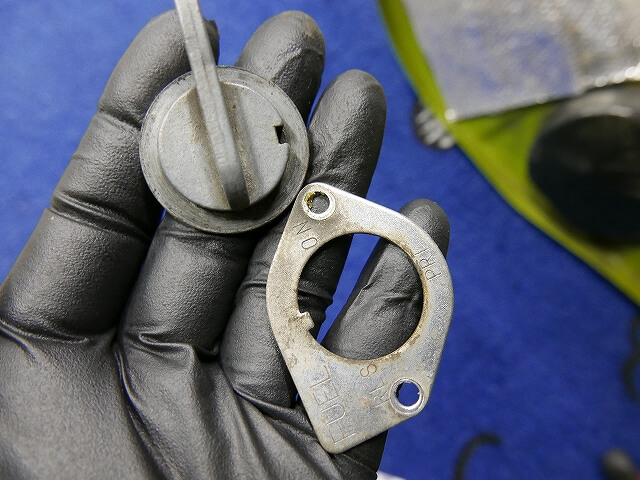
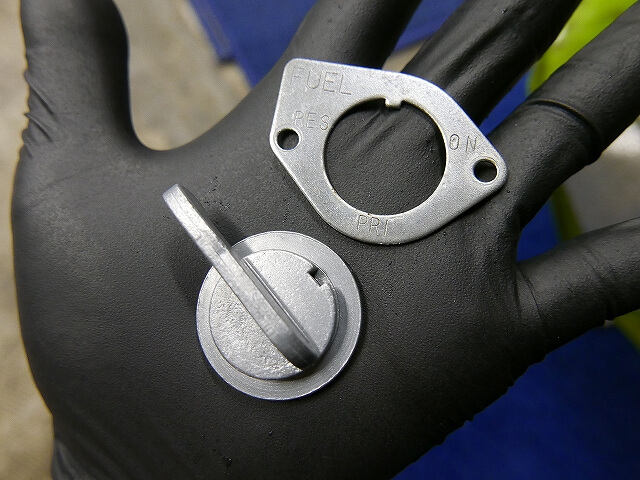
It was dirty, so I gave it a light polish. I too sometimes get the temptation to just “throw it together” when I see corroded parts. But when I ask myself “what would I do if this were my own bike?” the answer is “clean it up,” and I end up scrubbing away. The result is clean, long-lasting, and reliable parts—that’s the feeling I get.