Let’s adjust the valve clearance.
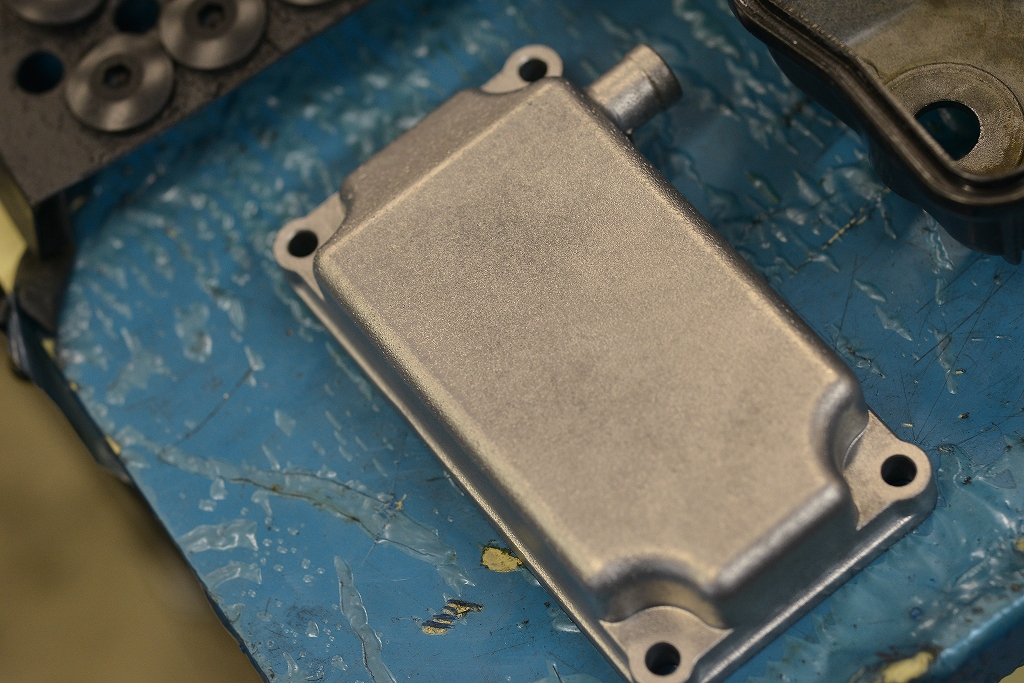
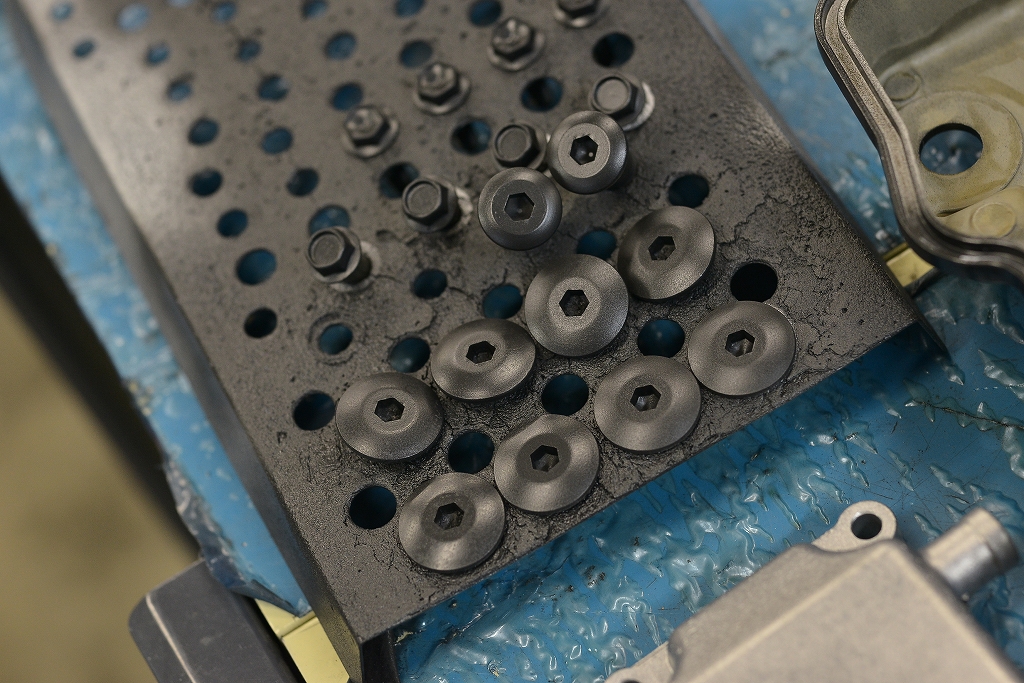
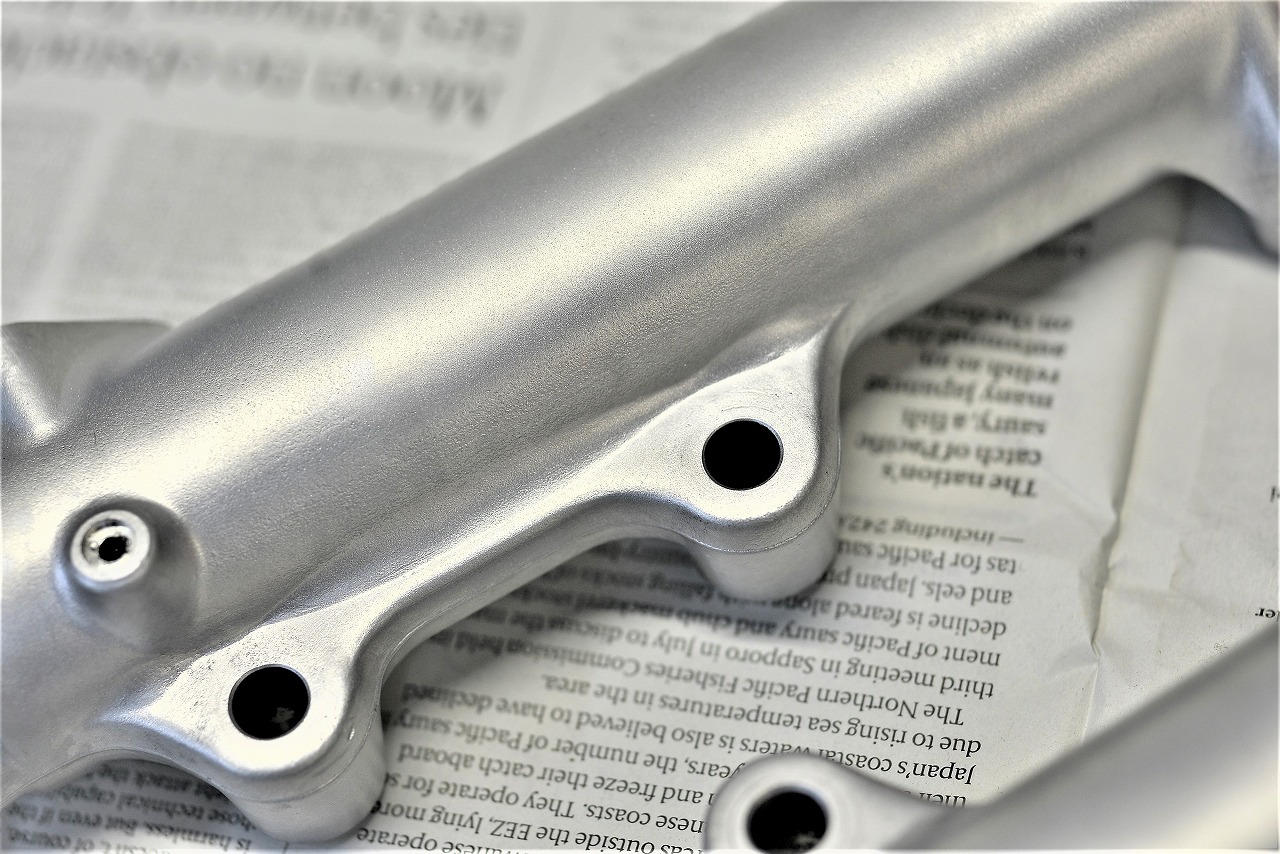
Getting things ready ahead of time makes the work go faster. We polish the breather cover and polish all the bolts before painting them.
This new black spray is really strong. It’s even better than black oxide coating.
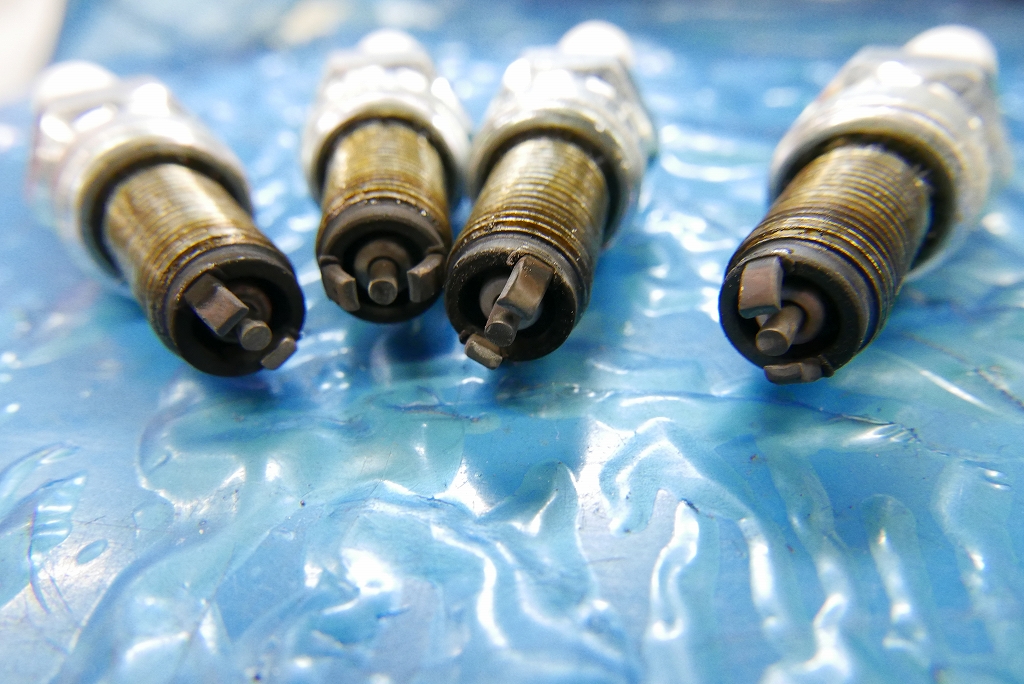
The spark plug color looks good too.
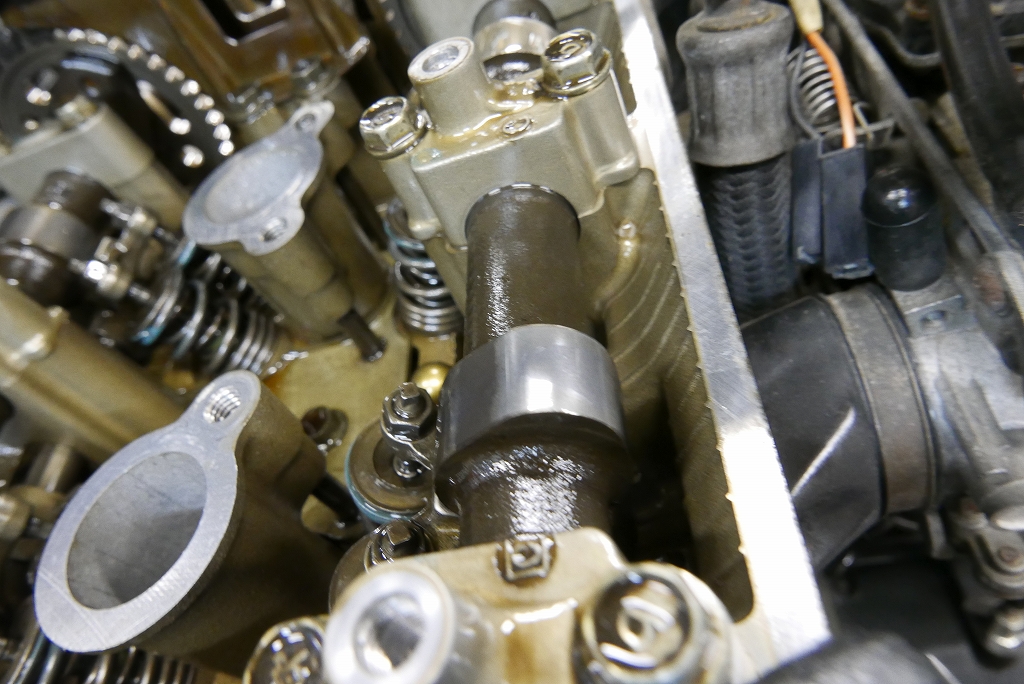
#1 IN
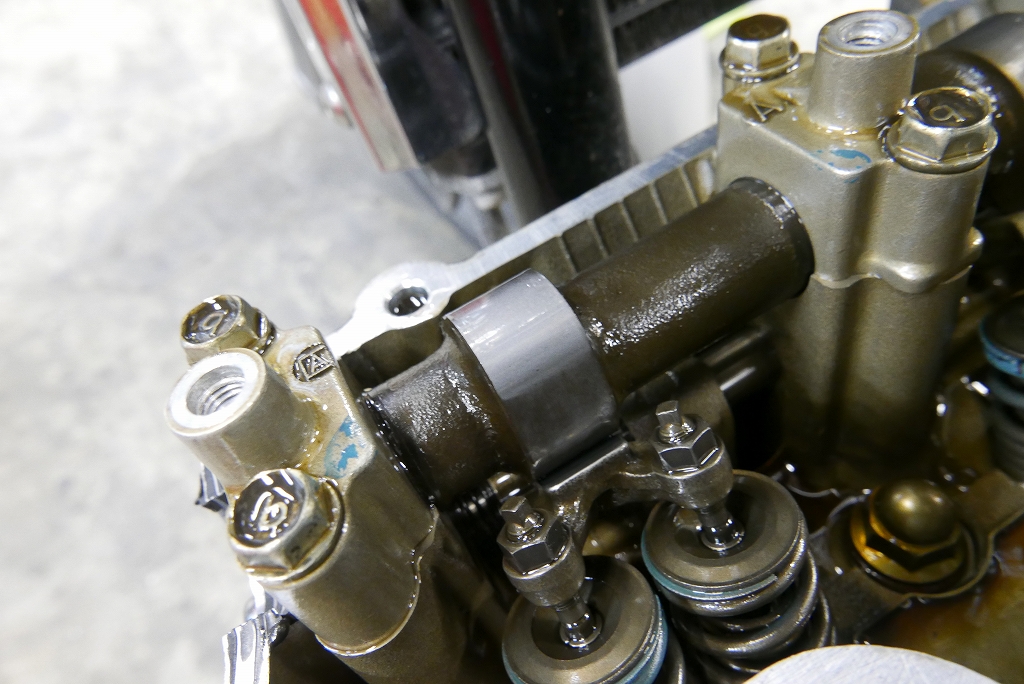 #2 EX
#2 EX
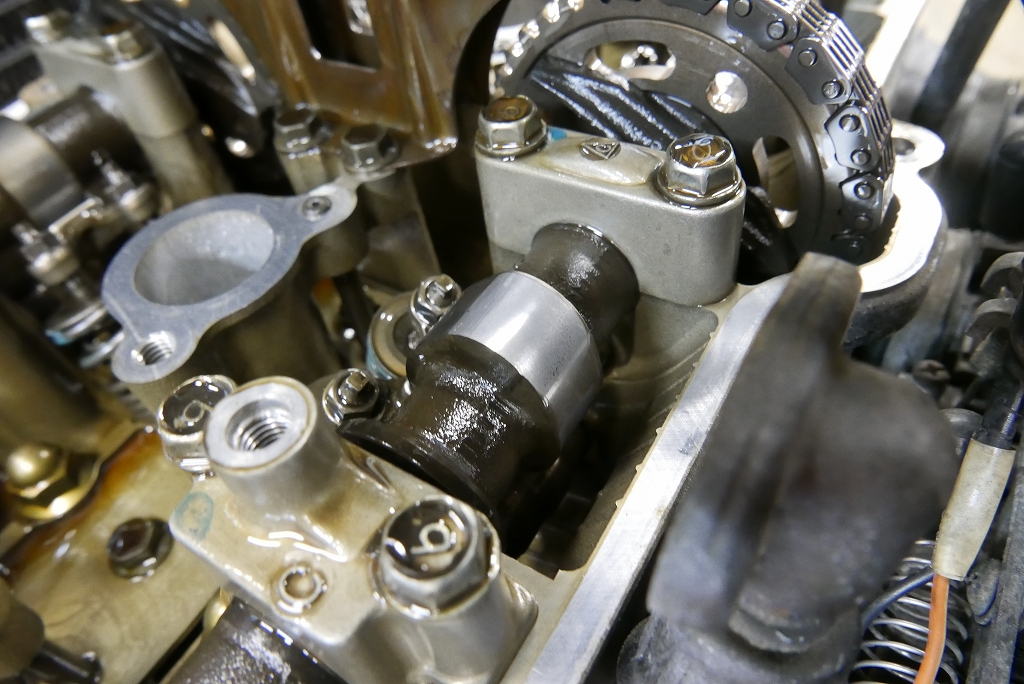
#2 IN
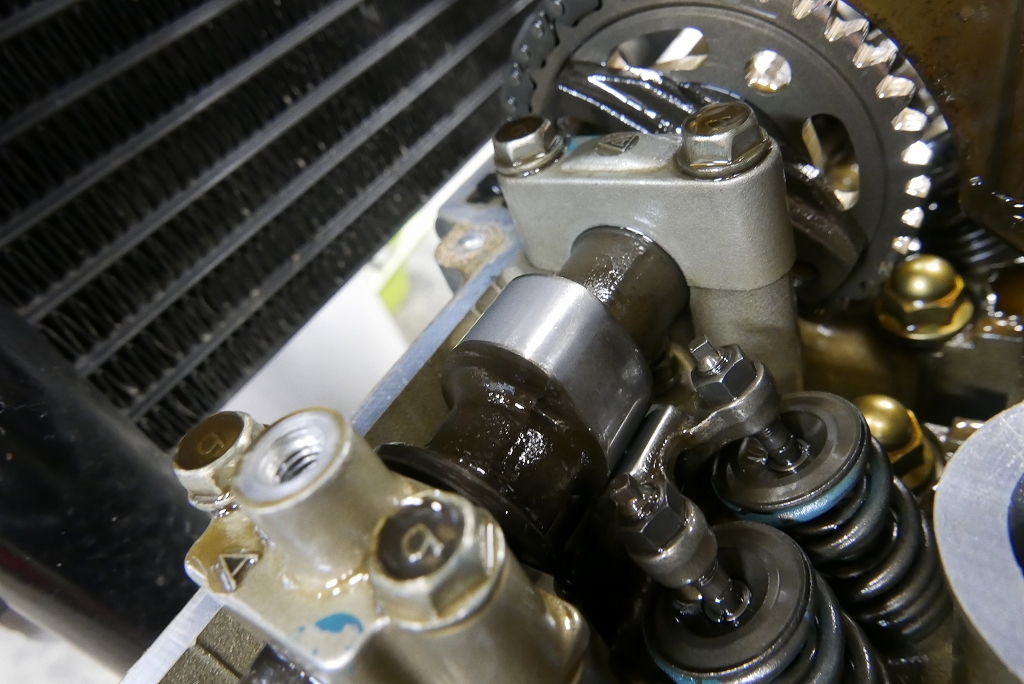
#2 EX
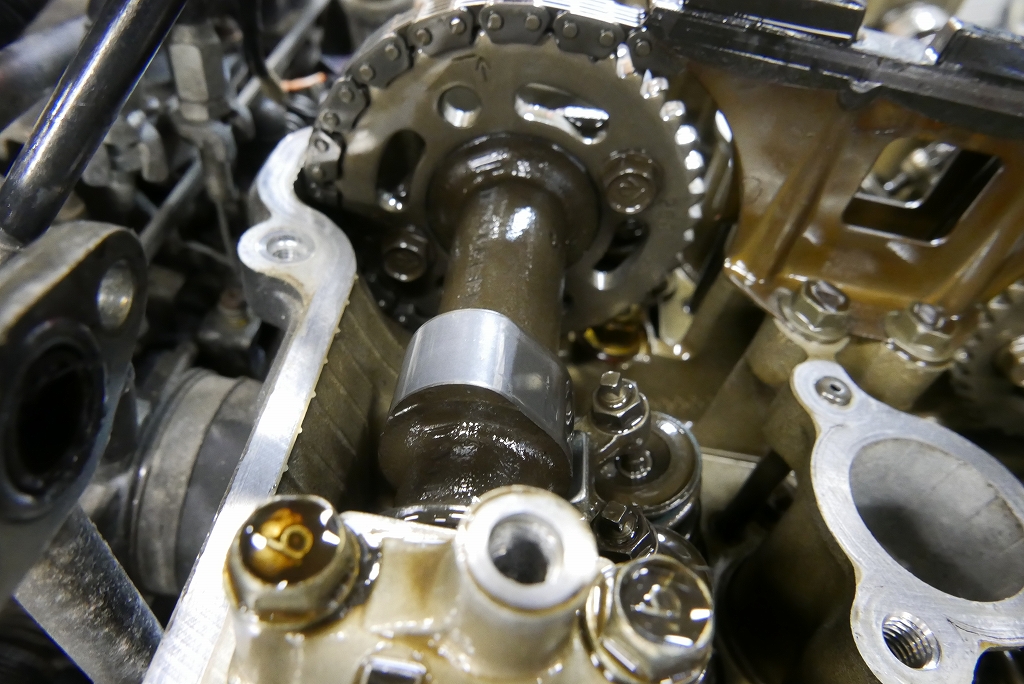
#3 IN
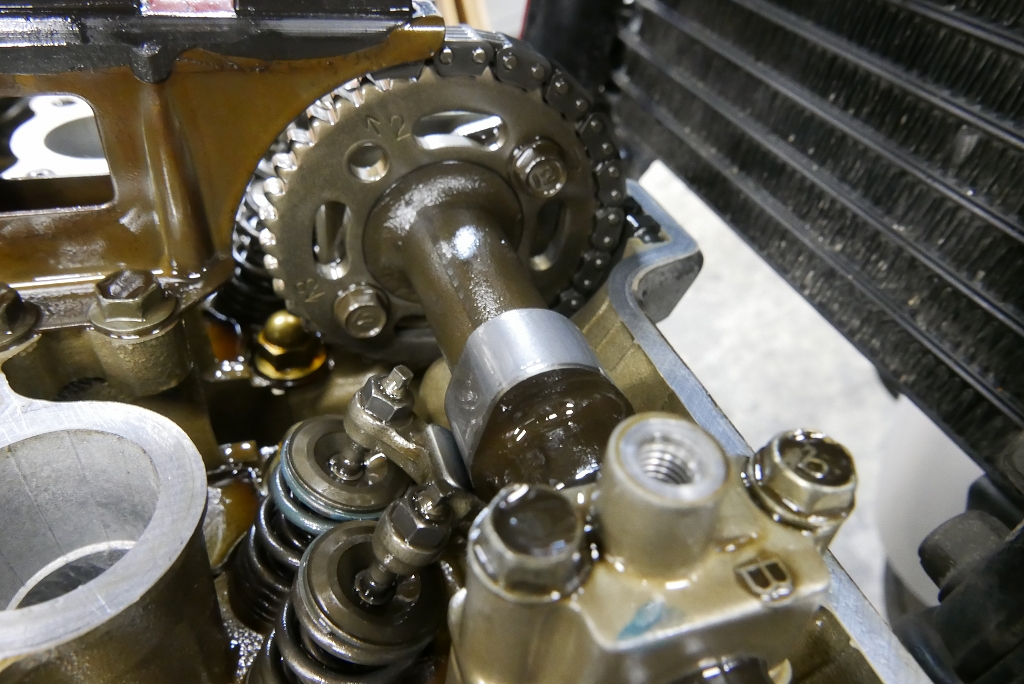
#3 EX
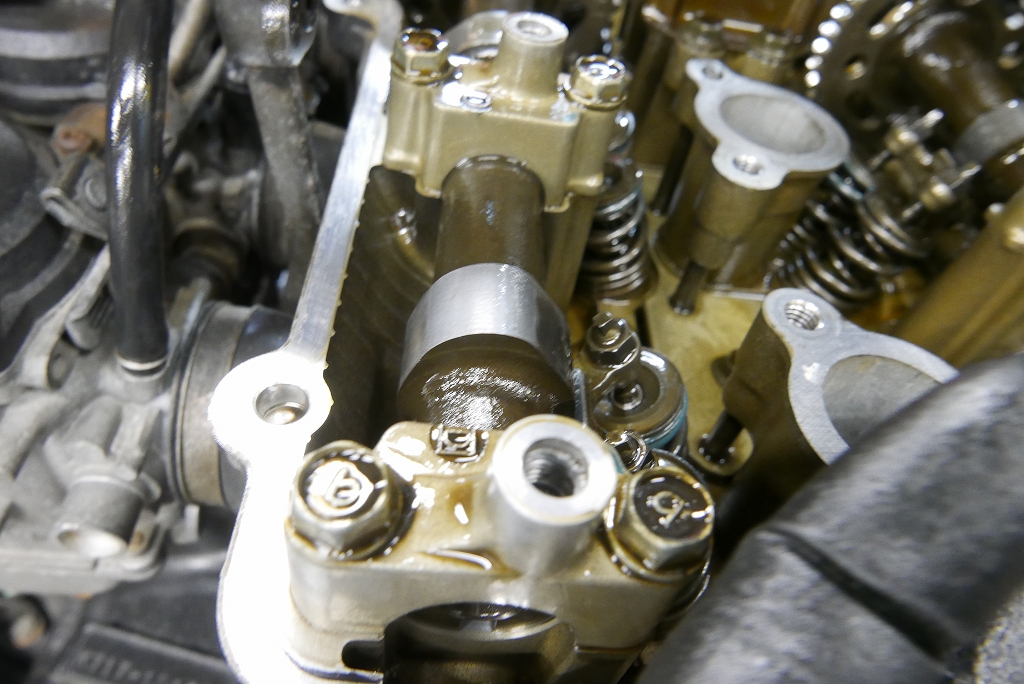
#4 IN
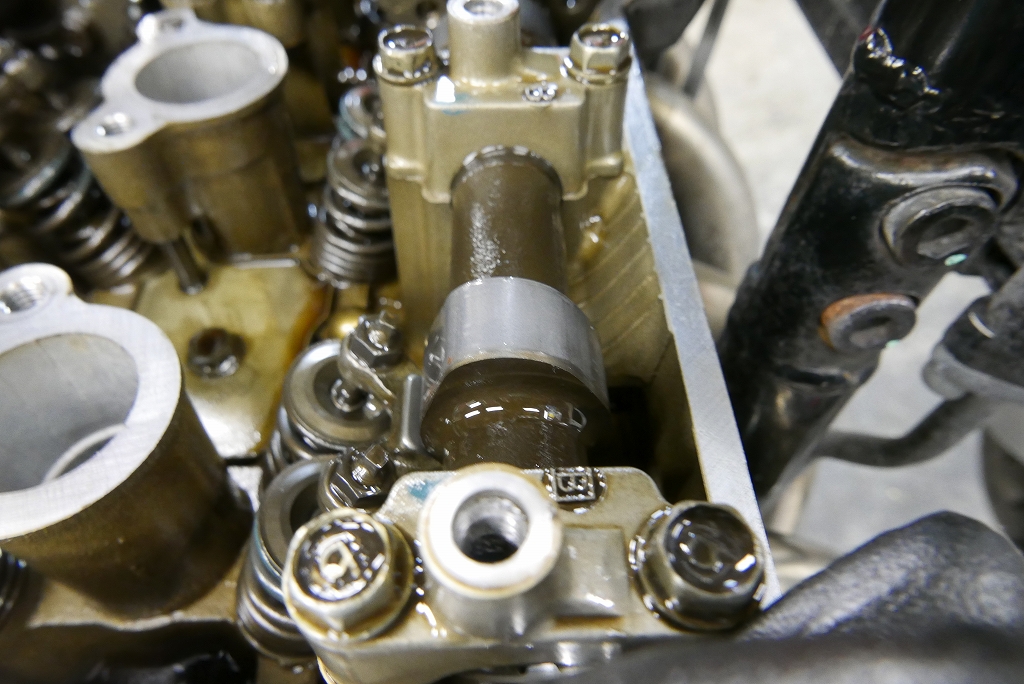
#4 EX
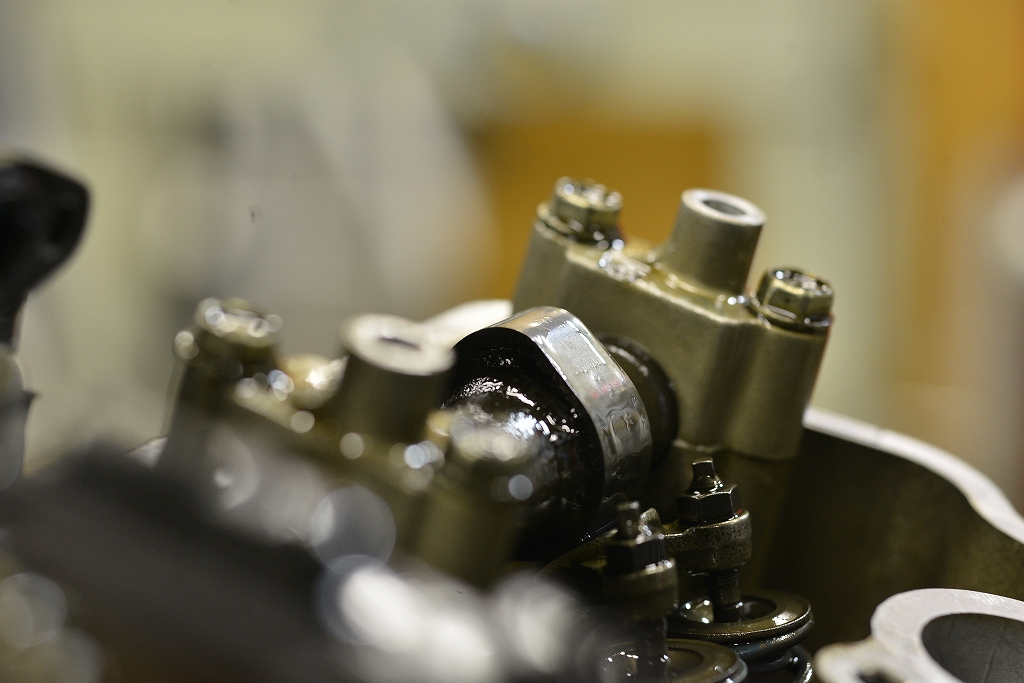
Everything is in great condition with no scuffing, so we can feel confident.
I get the impression that a lot of people are really scared of scuffing.
It might be because people think of scuffing as being the same as seizing.
To be honest, I think it’s pretty rare for cam scuffing to cause weird noises and break things. It’s more like the cam and rocker gradually wear down and become a “low cam.”
As for the metal particles that wear away, well, that’s not heading in a good direction.
I’ve seen Decoboco’s number-one scuffed bike before. The noise was unbelievable—at idle it was like “clatter clatter clatter” times ten. That was a real problem.
When we opened the head cover, the cam was definitely scuffed. But I think the real reason for the loud noise was actually the rocker arm wear. The slipper wears in certain spots, so even after adjusting the valve clearance, there’s still some play. That’s what I think is happening.
When the valve noise is annoying, replacing the rocker arm might actually be super effective.
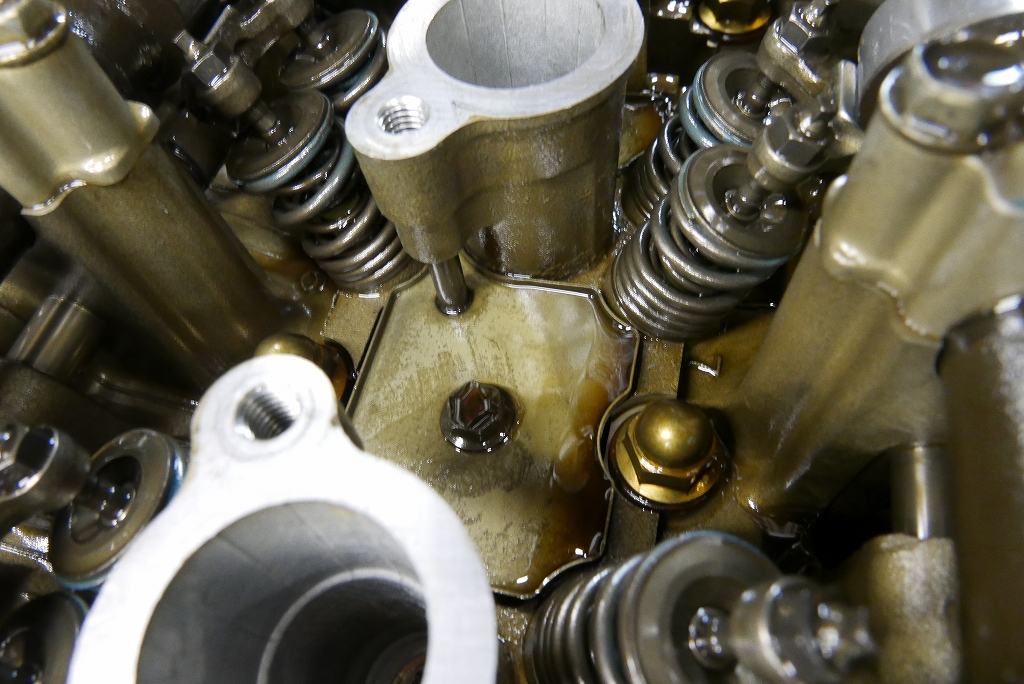
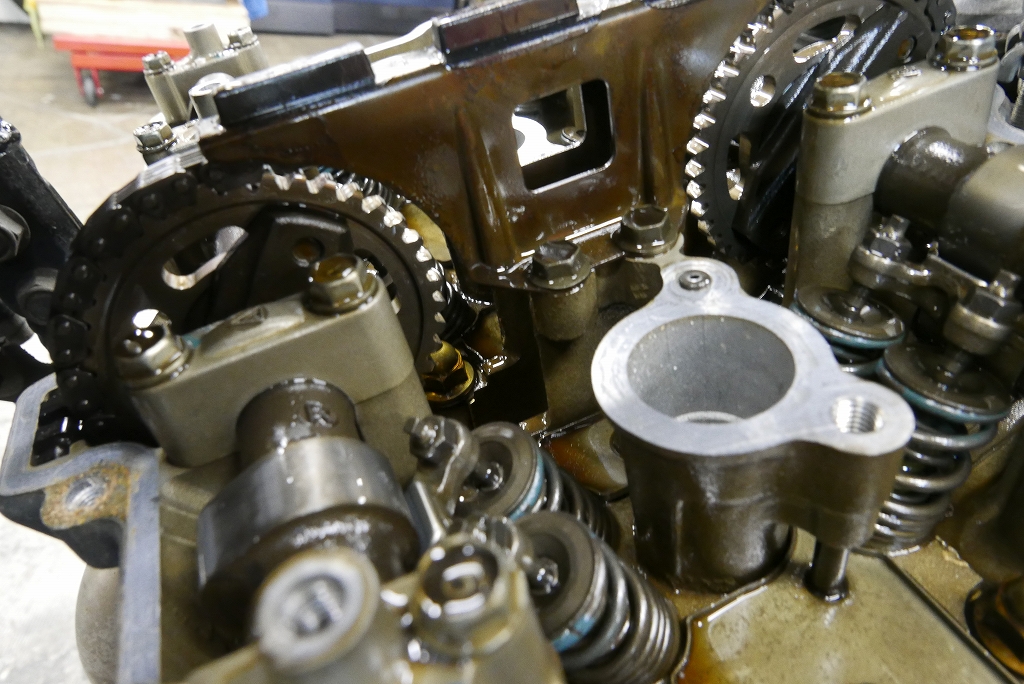
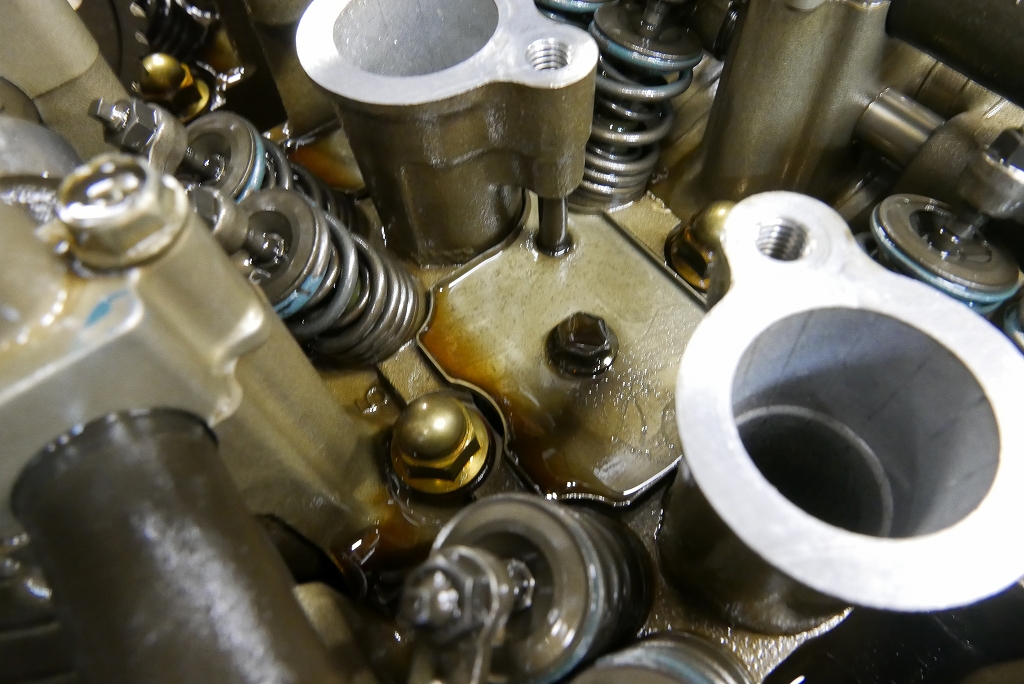
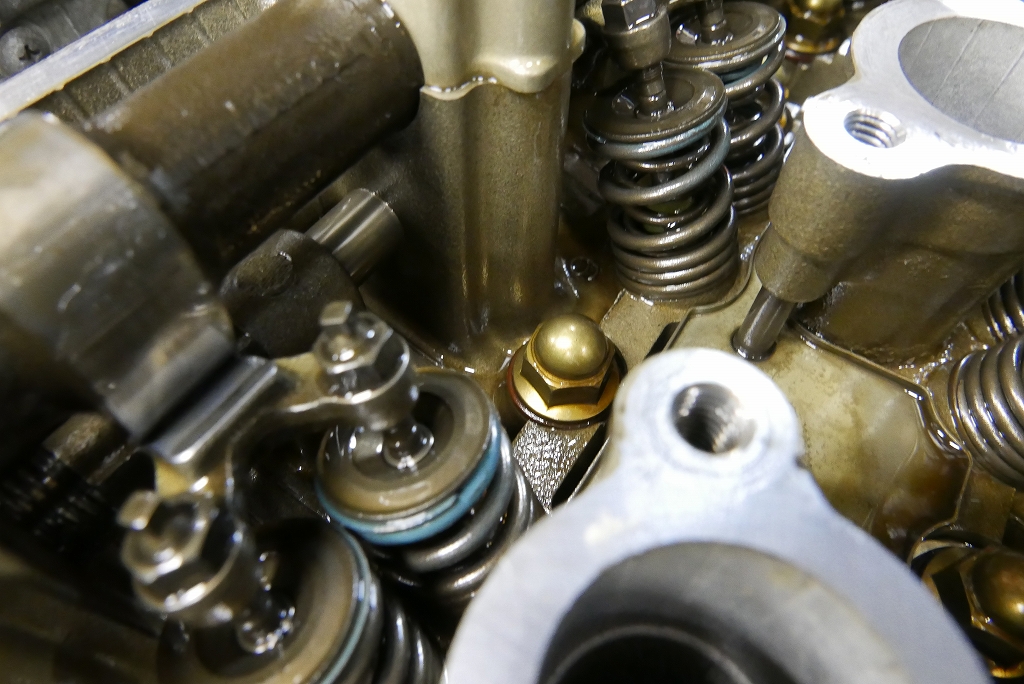
The previous owner’s oil maintenance wasn’t very good.
When sludge builds up like this, just an oil change won’t clean it thoroughly.
Everything gets dirty easily, but cleaning it is hard.
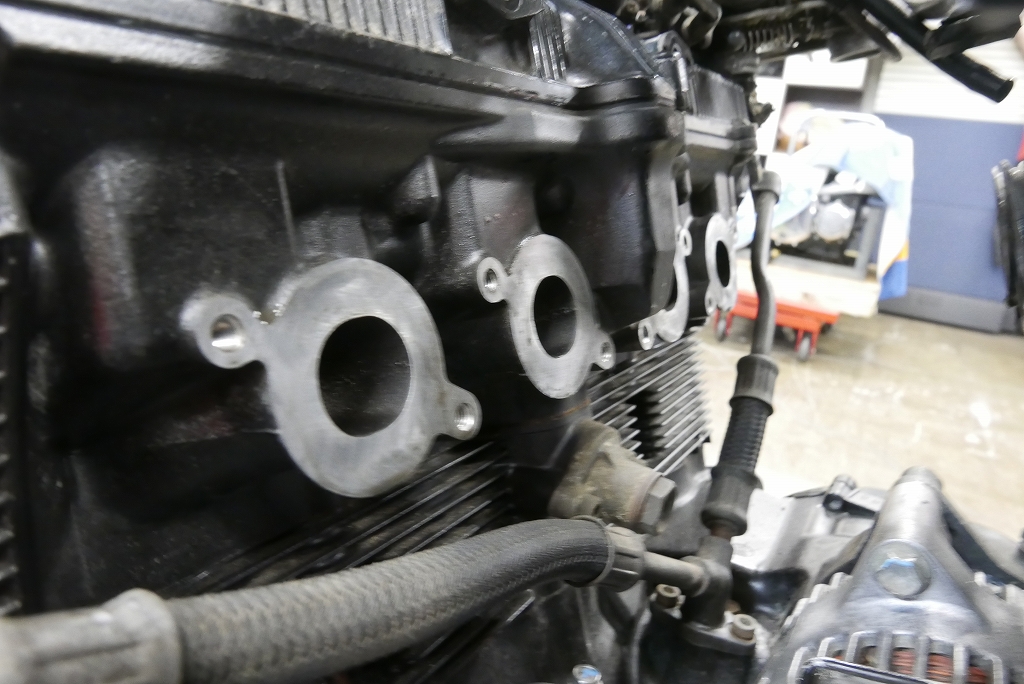
We’re removing the carburetor and replacing the intake manifold.
I have a feeling this Y-shaped oil line will stop being supplied eventually.
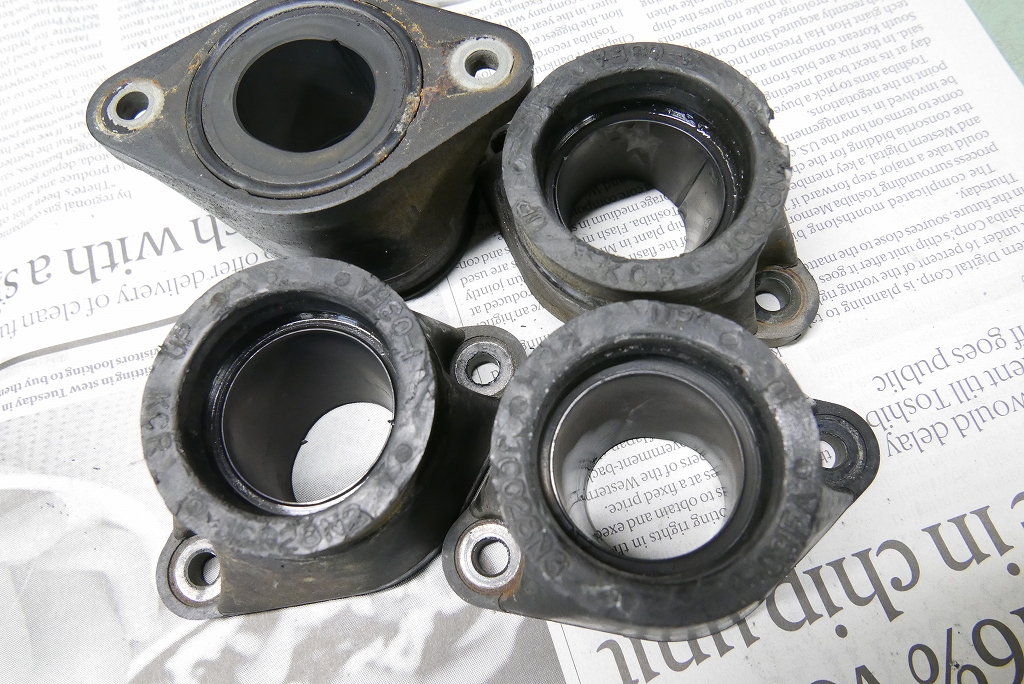
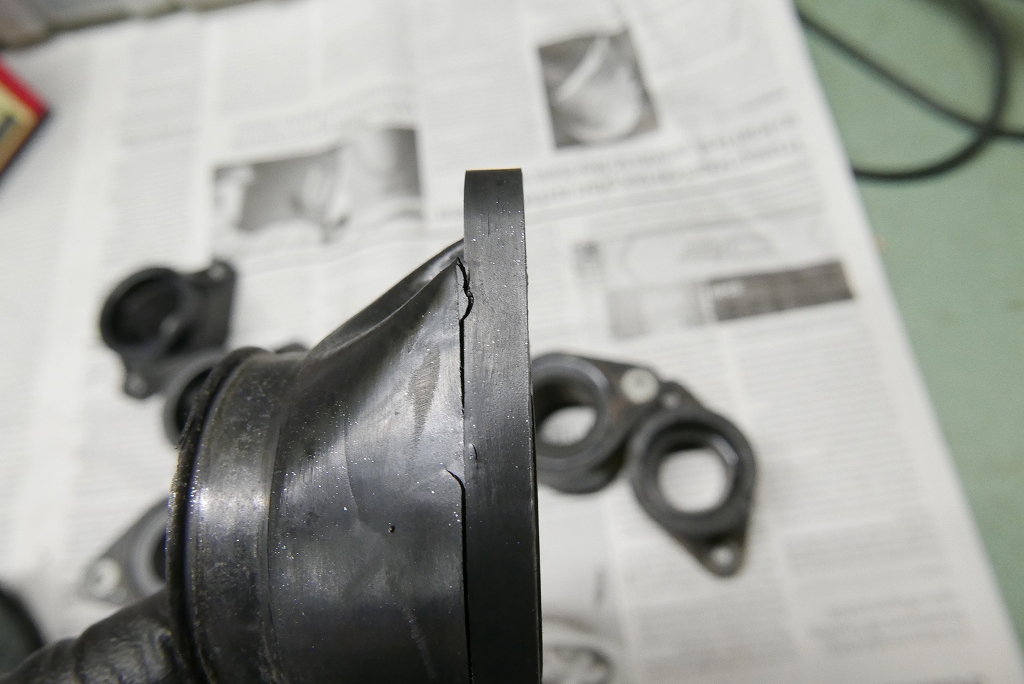
The intake manifold is a part we really need to have on hand. Oil-cooled intake manifolds are slightly offset, so they’re hard to adapt. If you’re running the original carburetor, I think you’ll be fine for about ten years if you keep it stored properly. It’s better to stock up on harnesses and intake manifolds while they’re still available.
(Oil-cooled models have so many variations that we don’t stock them either.)
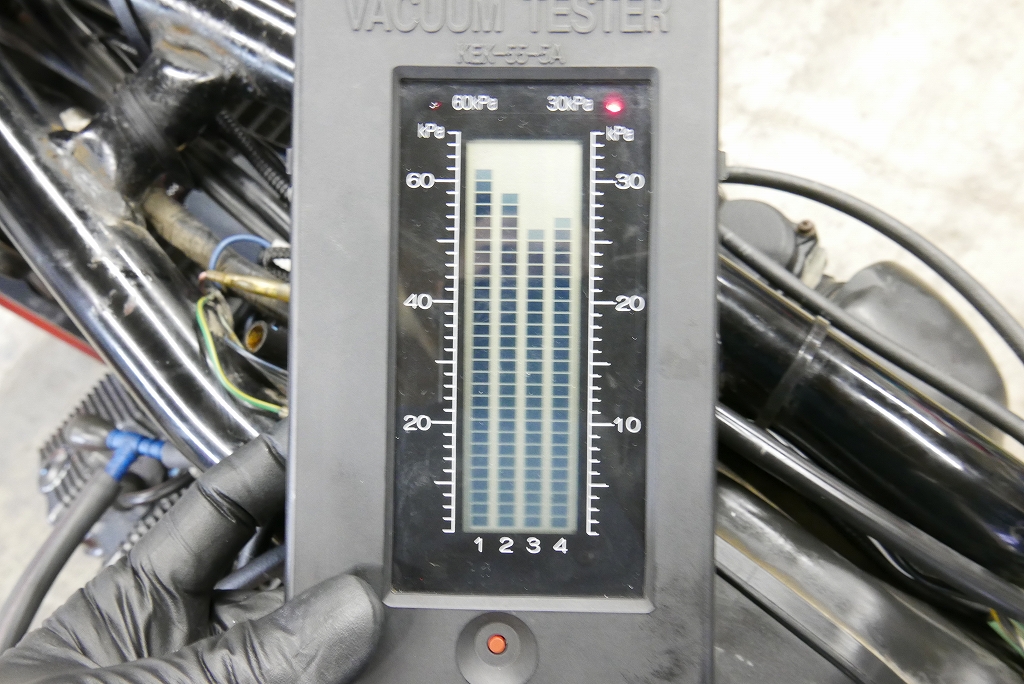
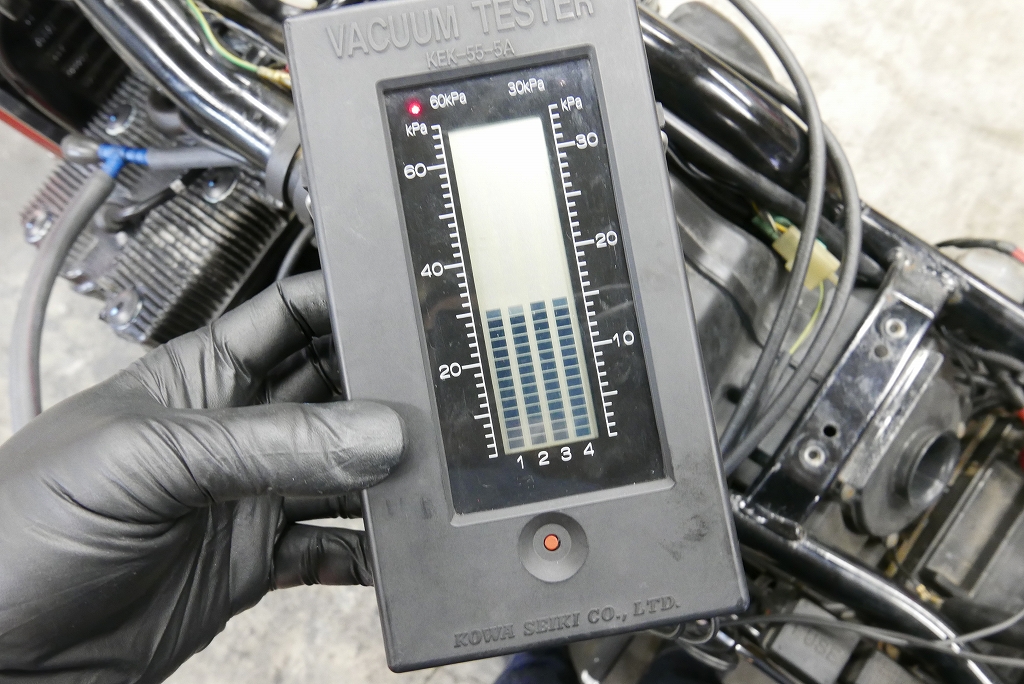
We sync the carburetors and we’re done.
All that’s left is a test ride.