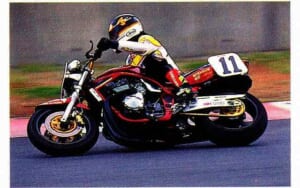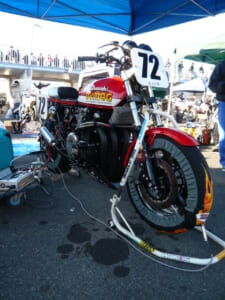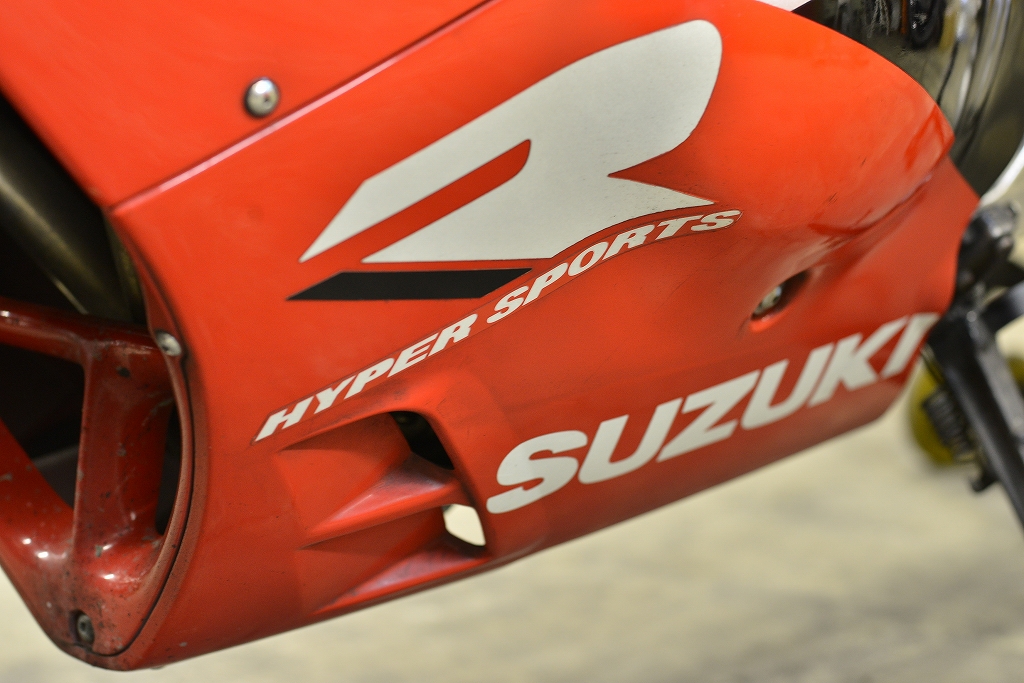
We’ve been getting a lot of GSX-R1100 K, L, M, and N models in. The intake order has gotten mixed up, so we’re working through them in the order they’ll be finished to avoid running out of space.
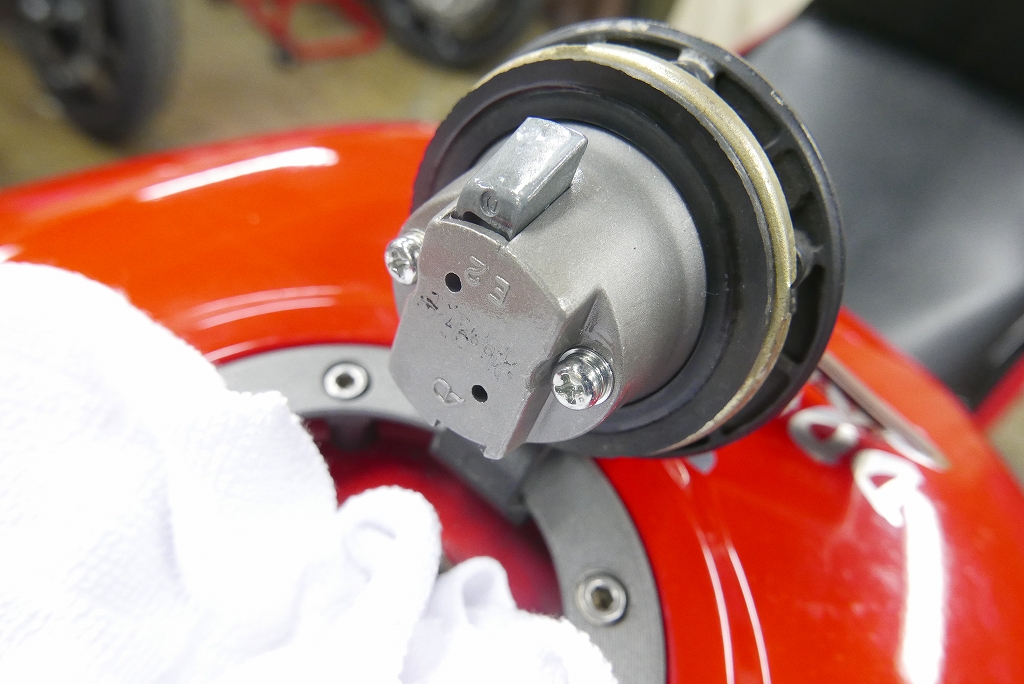
The tank key is super stiff—that’s a problem. It really is heavy. The turning feel is incredibly rubbery. We did a quick check within the range we could access.
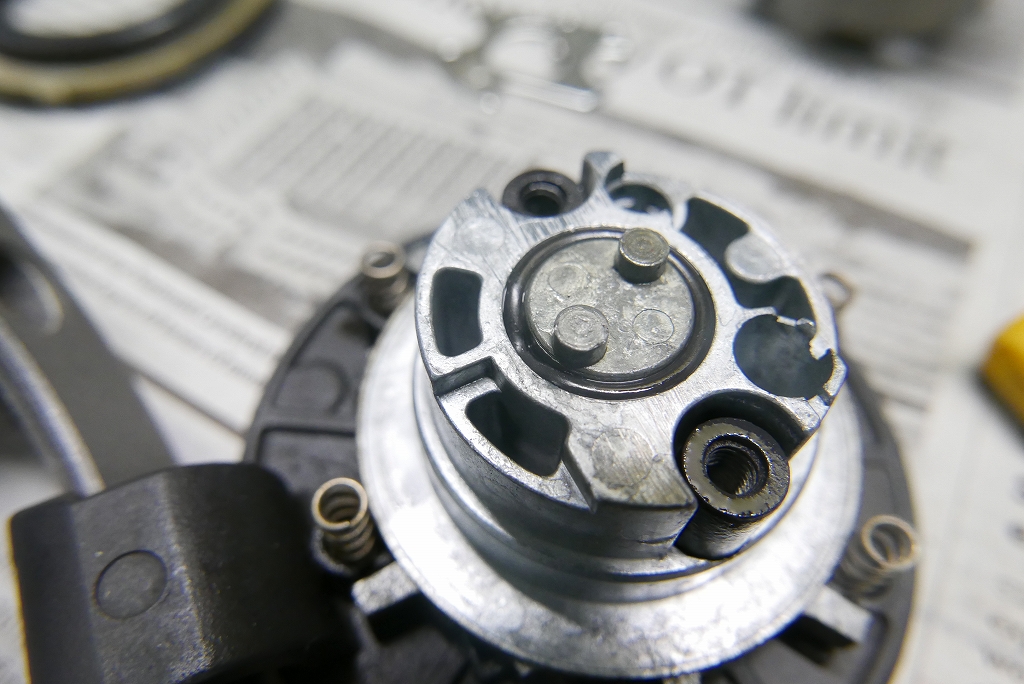
The O-ring had gone all floppy. That’s probably the culprit.
But I wonder why it got that way?
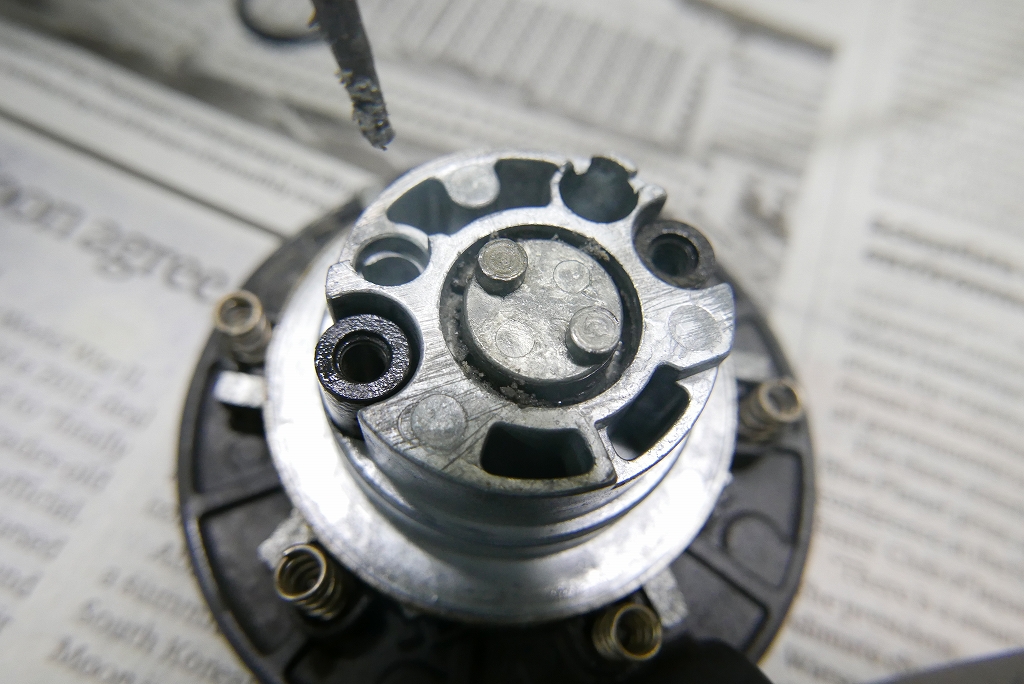
When we removed the O-ring, it was packed with debris and gunk. You might want to check this spot once in a while. The movement improved dramatically. It’s a small thing, but it makes a real difference.
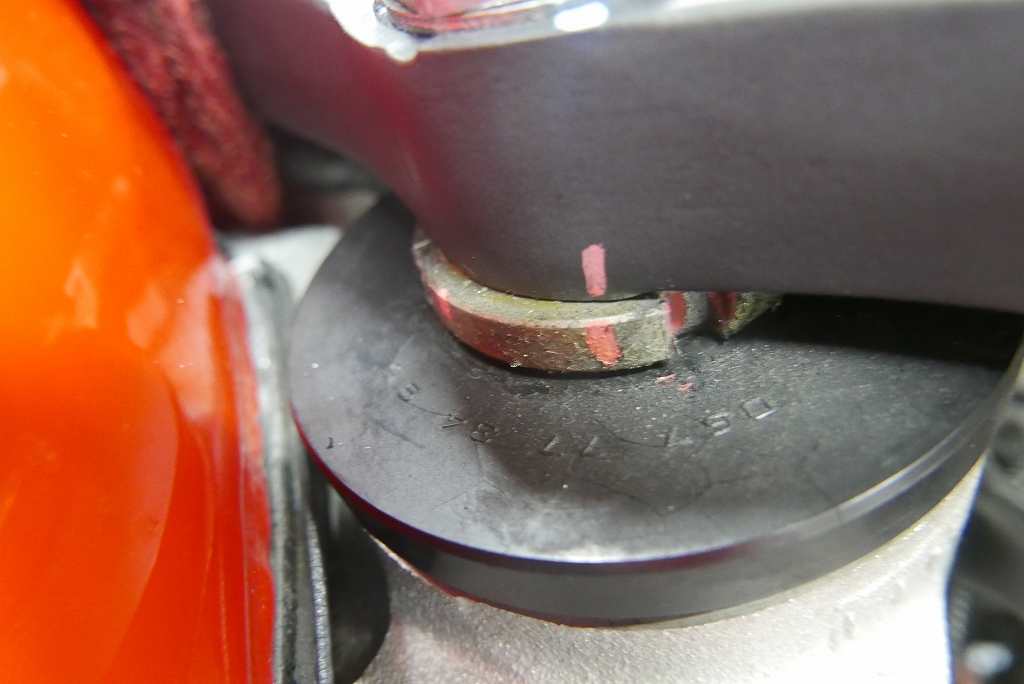
There’s a clunking noise around the steering. You can’t hear it during normal riding, but when you brake while going over a bump, you get a “clunk!”
It’s surprisingly hard to diagnose. A customer who’s really picky about steering taught us a method that lets you spot it right away.
We lifted the front and checked. It moves very smoothly but loosely—a light, thin kind of smoothness.
Play can develop from wear on the upper and lower seals and bearings.
You might want to check Kawasakis with really tight upper and lower settings too.
The three red lines: left is initial, middle is final adjustment position, right is overdone and stiff.
It’s a matter of preference, but there was a time when we chased light, responsive handling. For city riding it’s very smooth and nice, but when you push it hard, the stability feels a bit thin. We adjust this balance to taste.
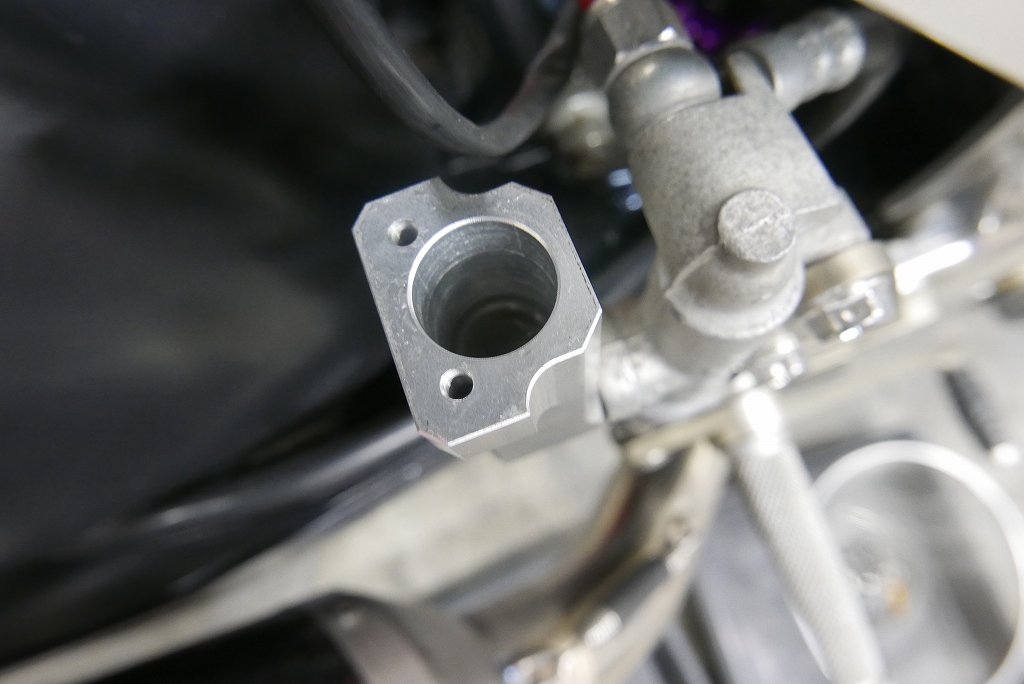
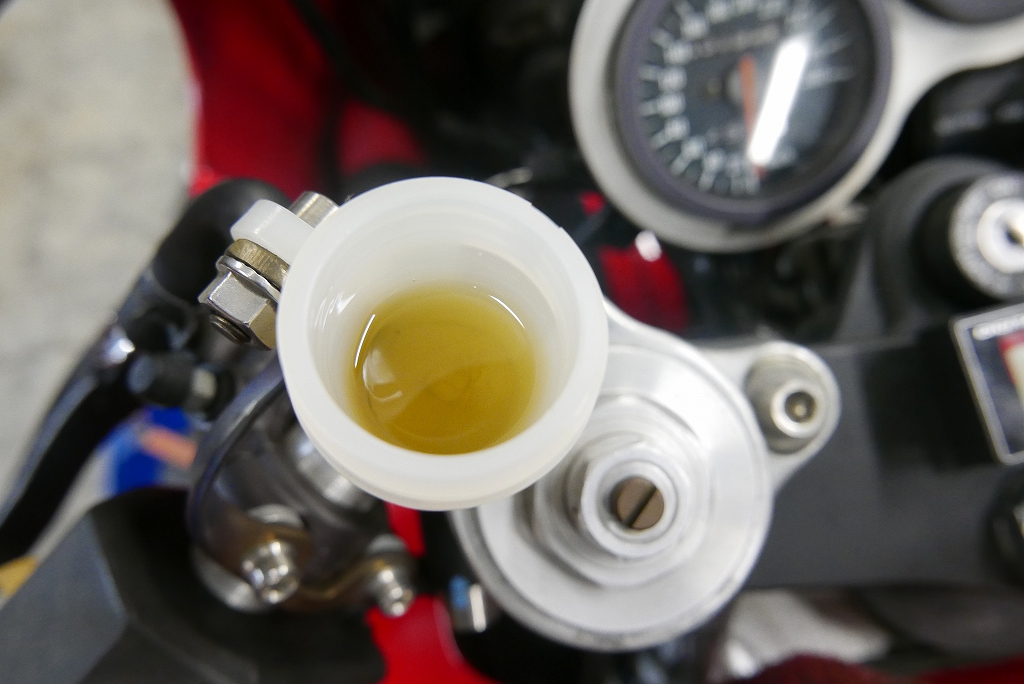
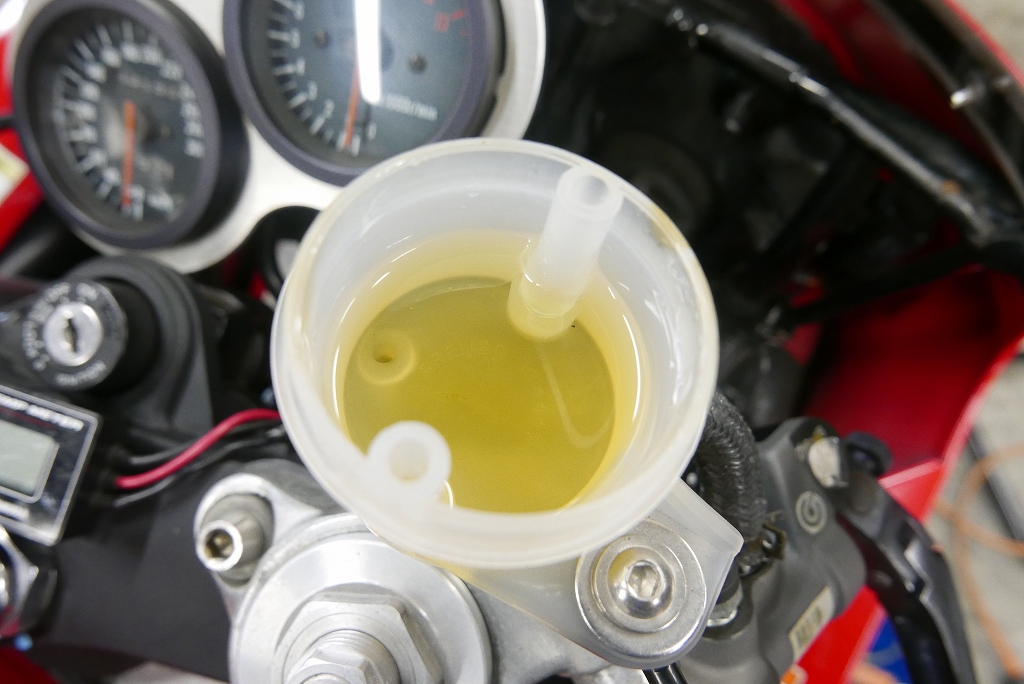
The fluid is CCI Golden Cruiser DOT4.
If you want to push hard on the track, swap in a high-response, heat-resistant racing fluid and go for it.
For street riding with solid, stable performance and durability, CCI Golden Cruiser DOT4 is excellent. Maybe it’s because it’s CCI, but it somehow feels a bit smoother.
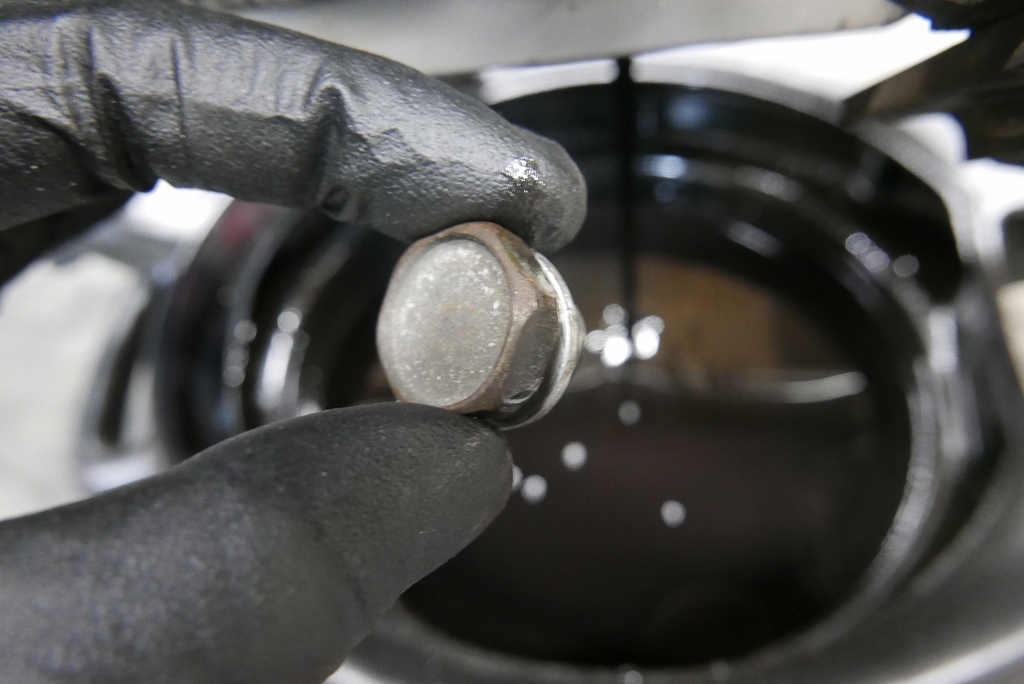
It’s worth replacing the drain bolt once in a while.
If you swap the 21 mm wrench size for Suzuki’s current 17 mm, it’ll improve work efficiency.
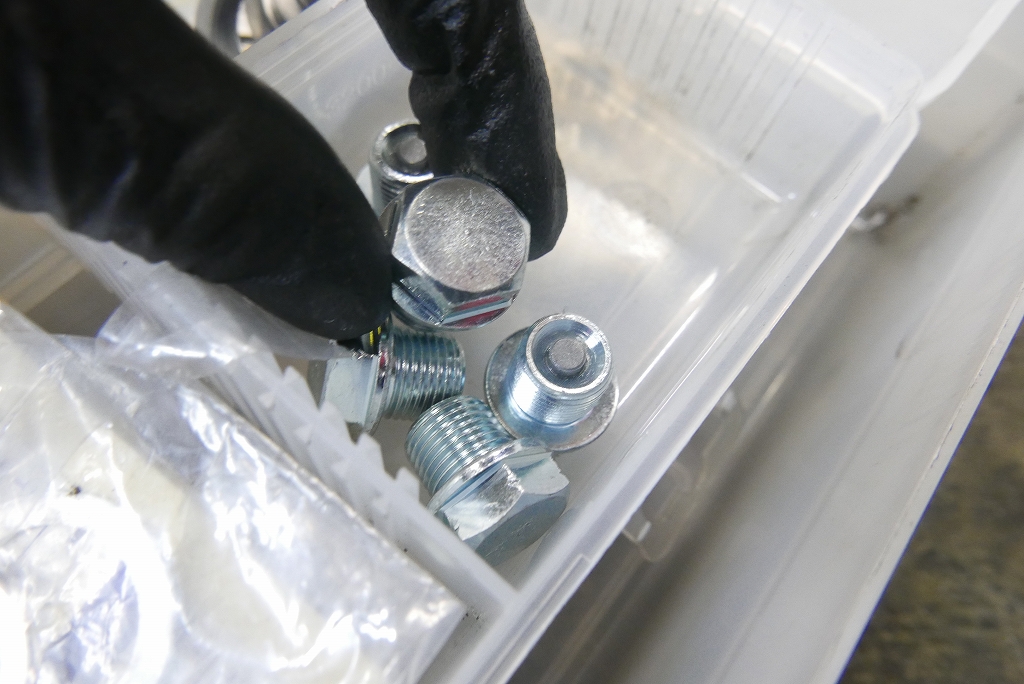
We keep them in stock and replace them without asking every time.
It’s a preference, but we don’t use aluminum drains. If you’re on a set replacement schedule, that’s one thing, but aluminum degradation and cracking can be pretty scary.
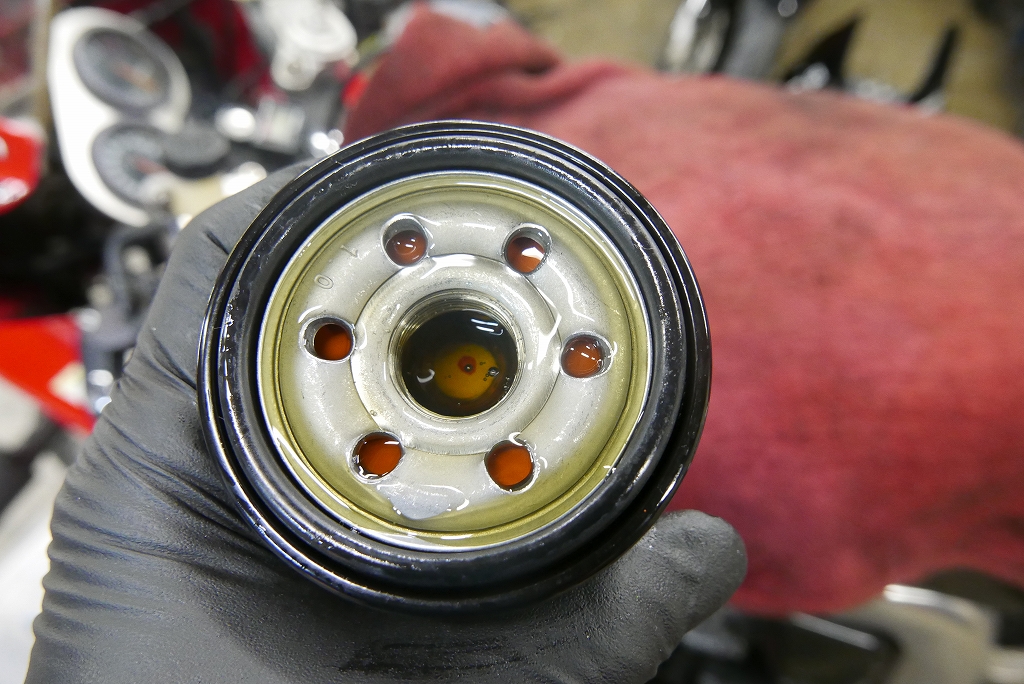
If you pre-fill the oil filter with oil, it feels gentler on the engine.
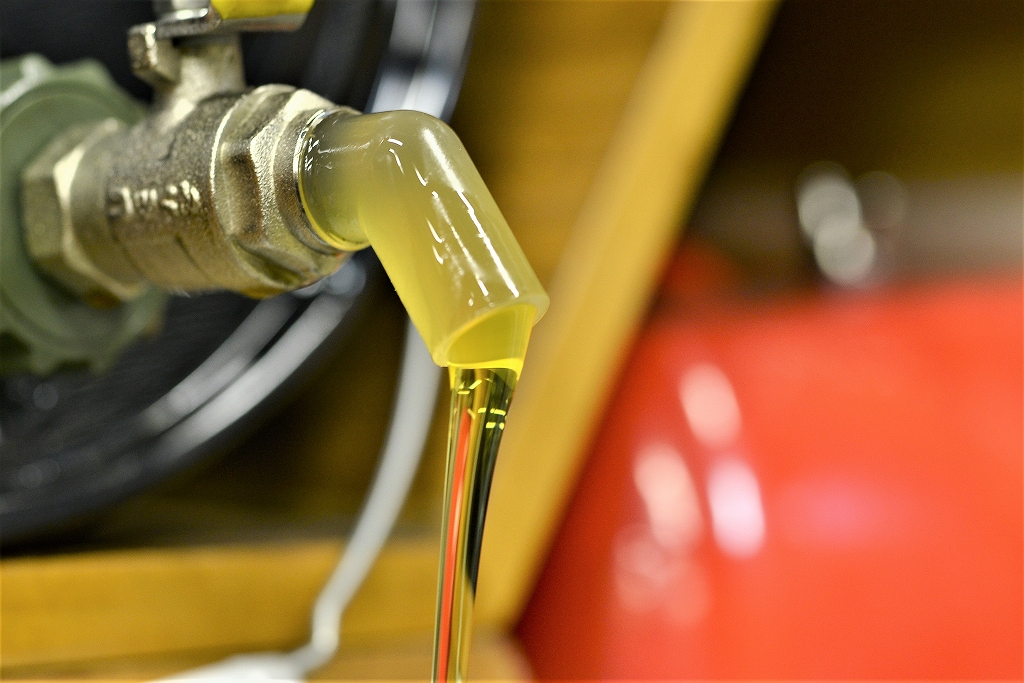
We’ve been keeping “ELF MOTO4RACE 10W-60” as a hidden menu item.
Since the shop has a Newtech image, we haven’t been pushing it too hard. We started by having high-mileage riders try it, then older bikes, and we’ve been quietly testing it for about two years, but we’ve gotten good feedback, so please ask about it when you need an oil change.
For oil-cooled bikes facing a harsh summer ahead, I think it’s excellent.
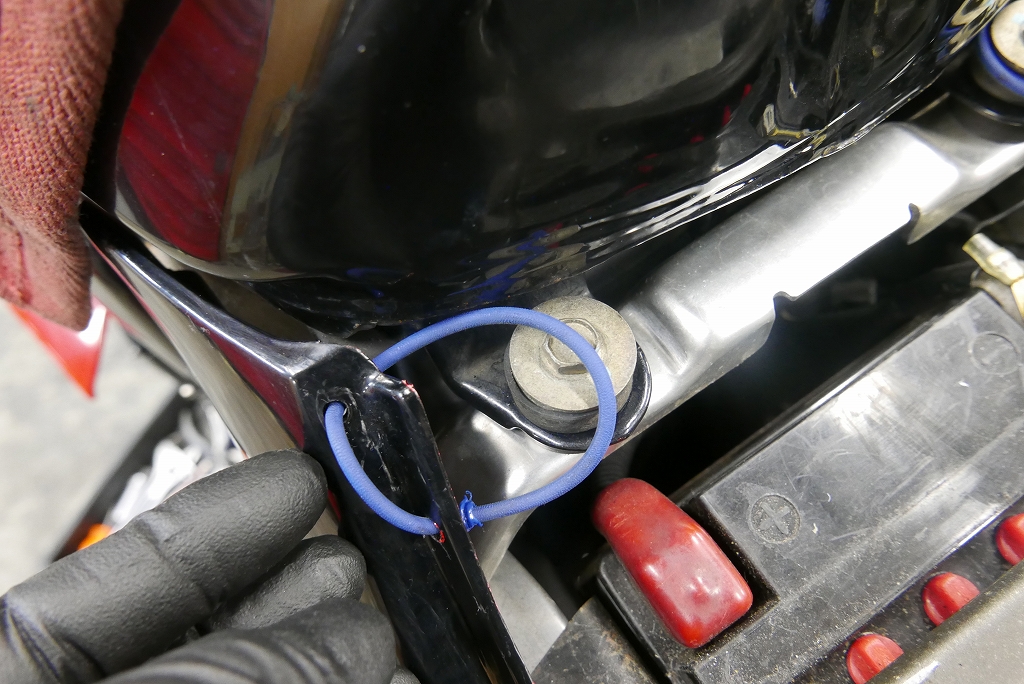
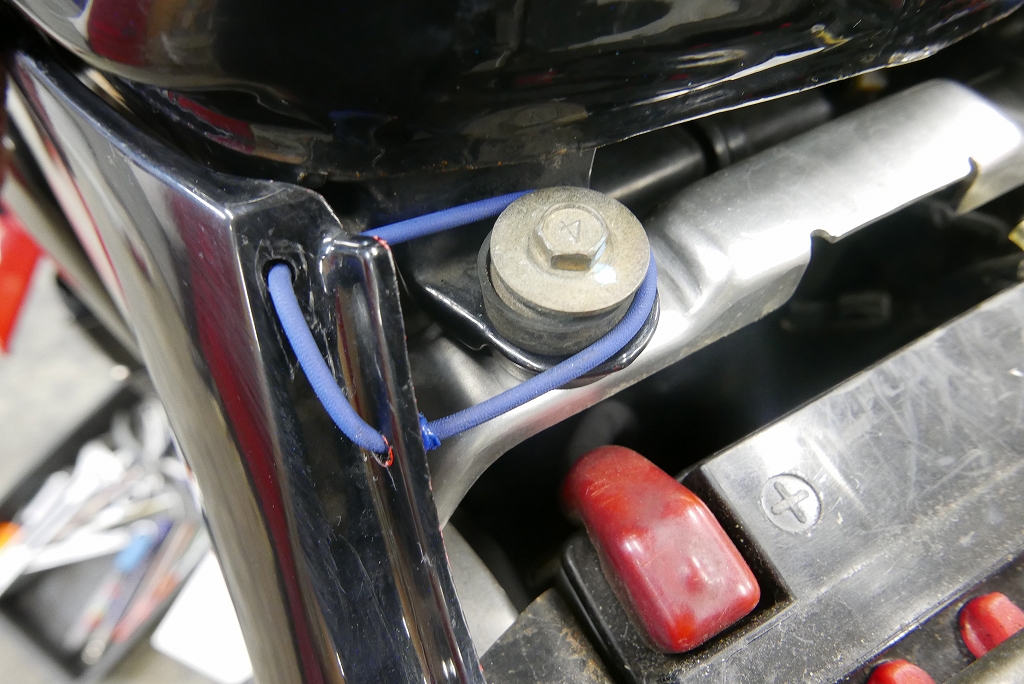
The tail cowl tab broke off and is flapping around.
There are few screw bosses we can access, and the cowl shape is too three-dimensional.
It’s not impossible to fix, but “more time equals higher labor cost.” We have to think about both appearance and workability. We went with a sponge and rubber tension solution on the cowl side to keep it from flapping—and it’s easy to remove too. In a way, it’s racing-style.
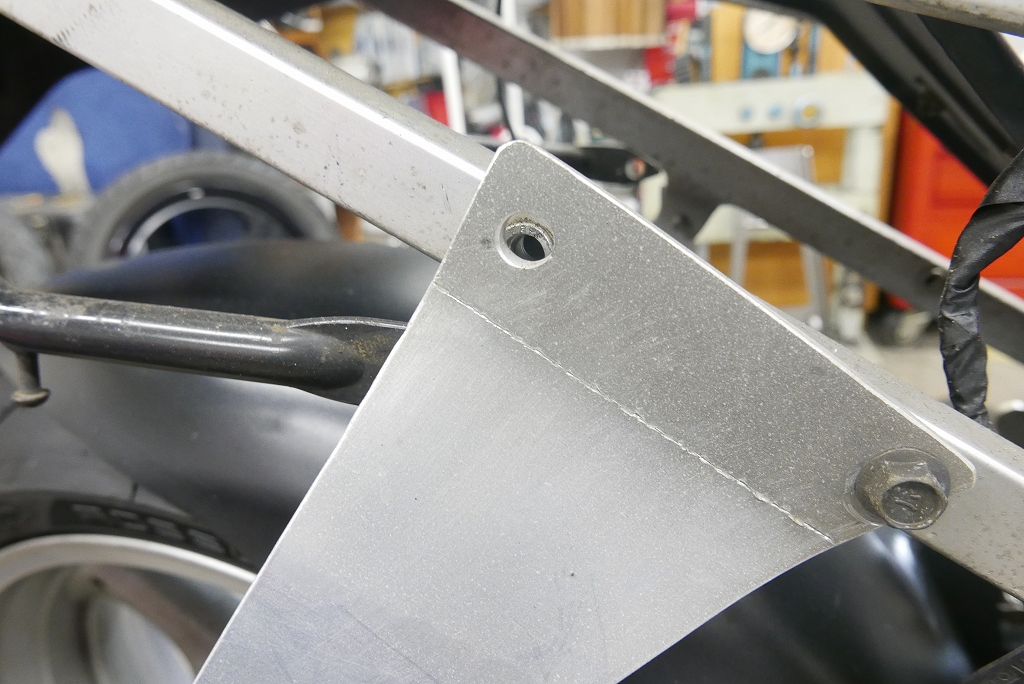
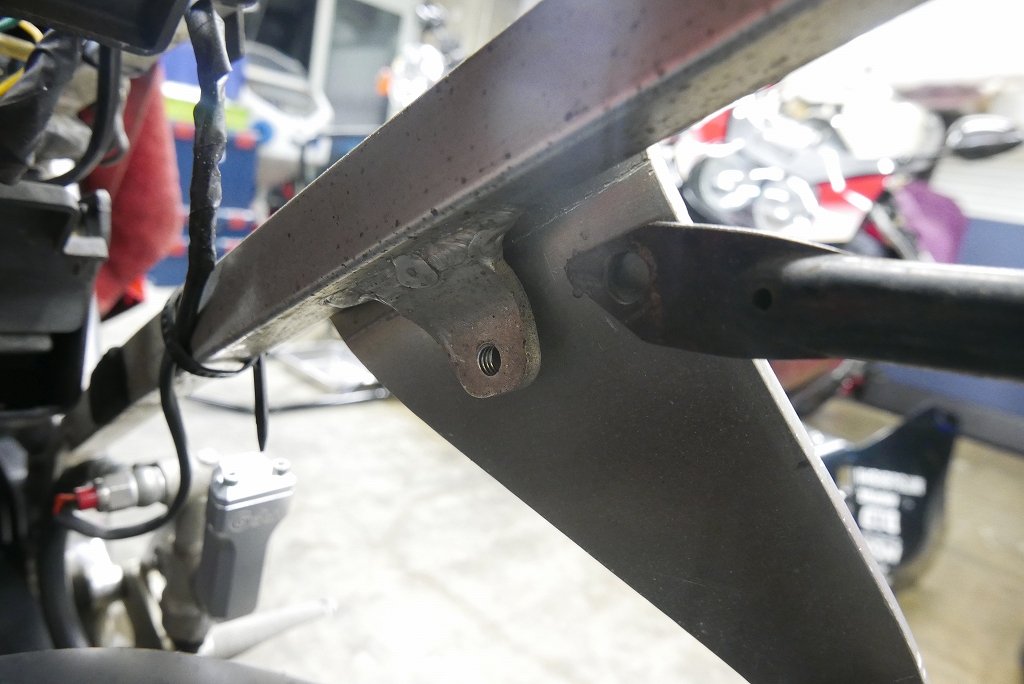
There were missing screws or interference issues when we tried to secure things.
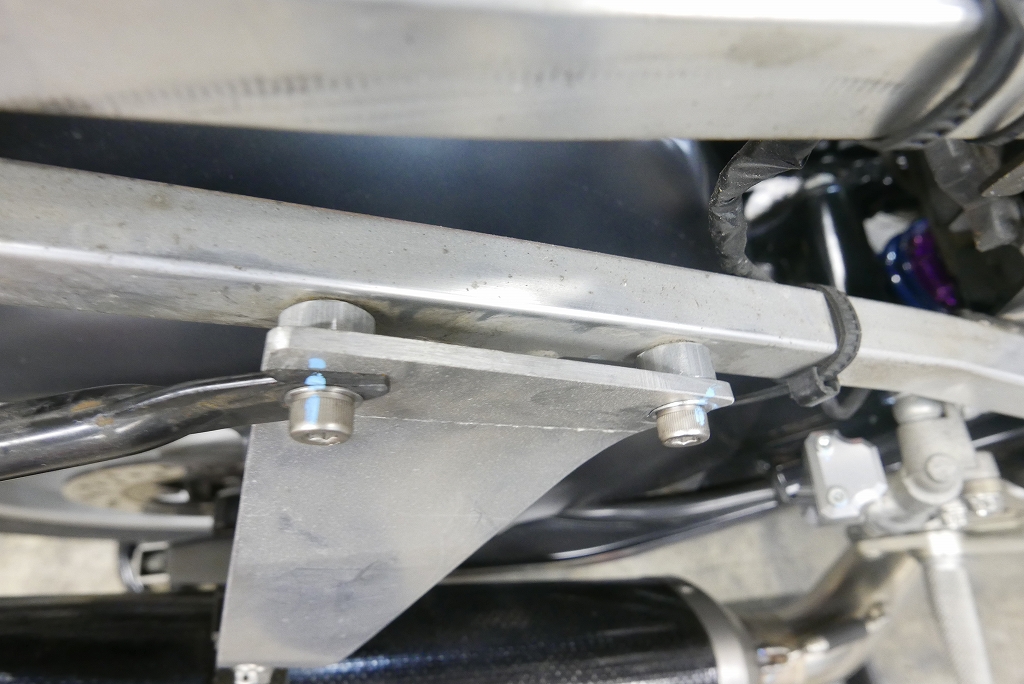
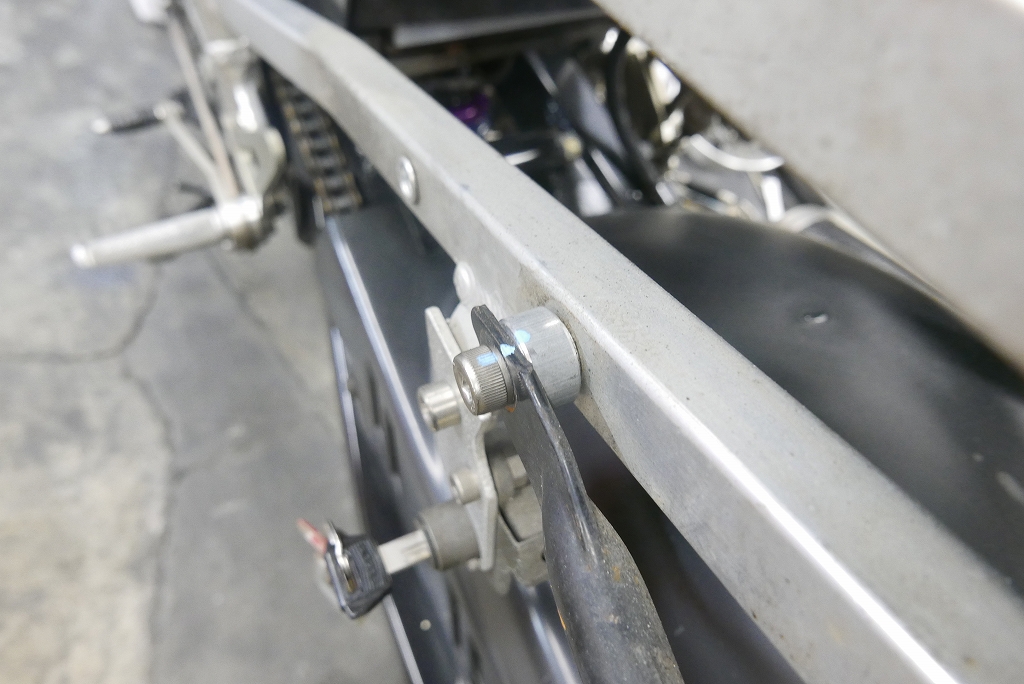
We made three spacers and installed them. If I’d made the bracket myself, I’d just tack-weld the boss.
We’ll get the inspection done tomorrow and that’ll wrap it up.