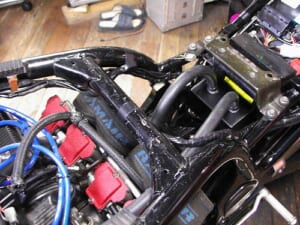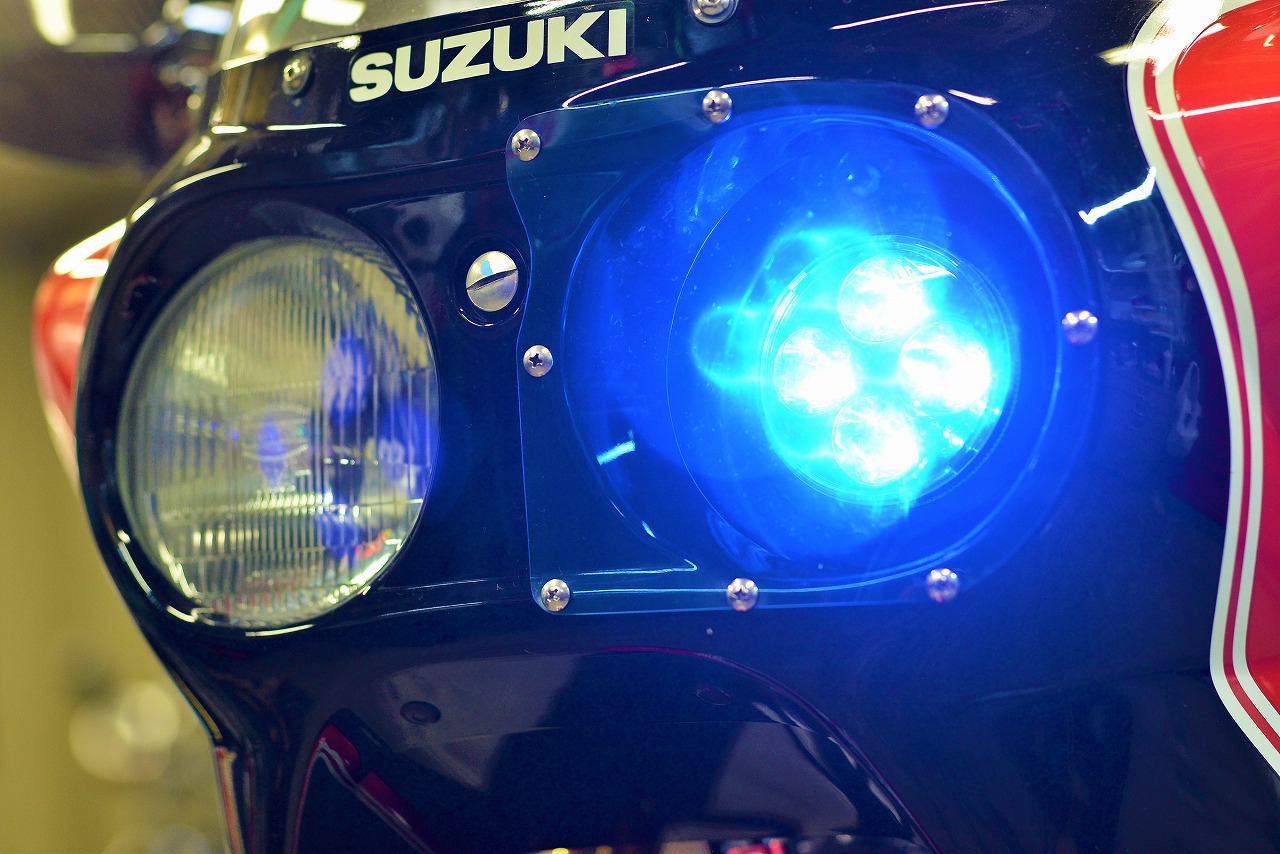
Once the bodywork comes off, the wiring is in quite a state—it’s functioning, but there are a lot of question marks.
Let’s clean it up with the future in mind.
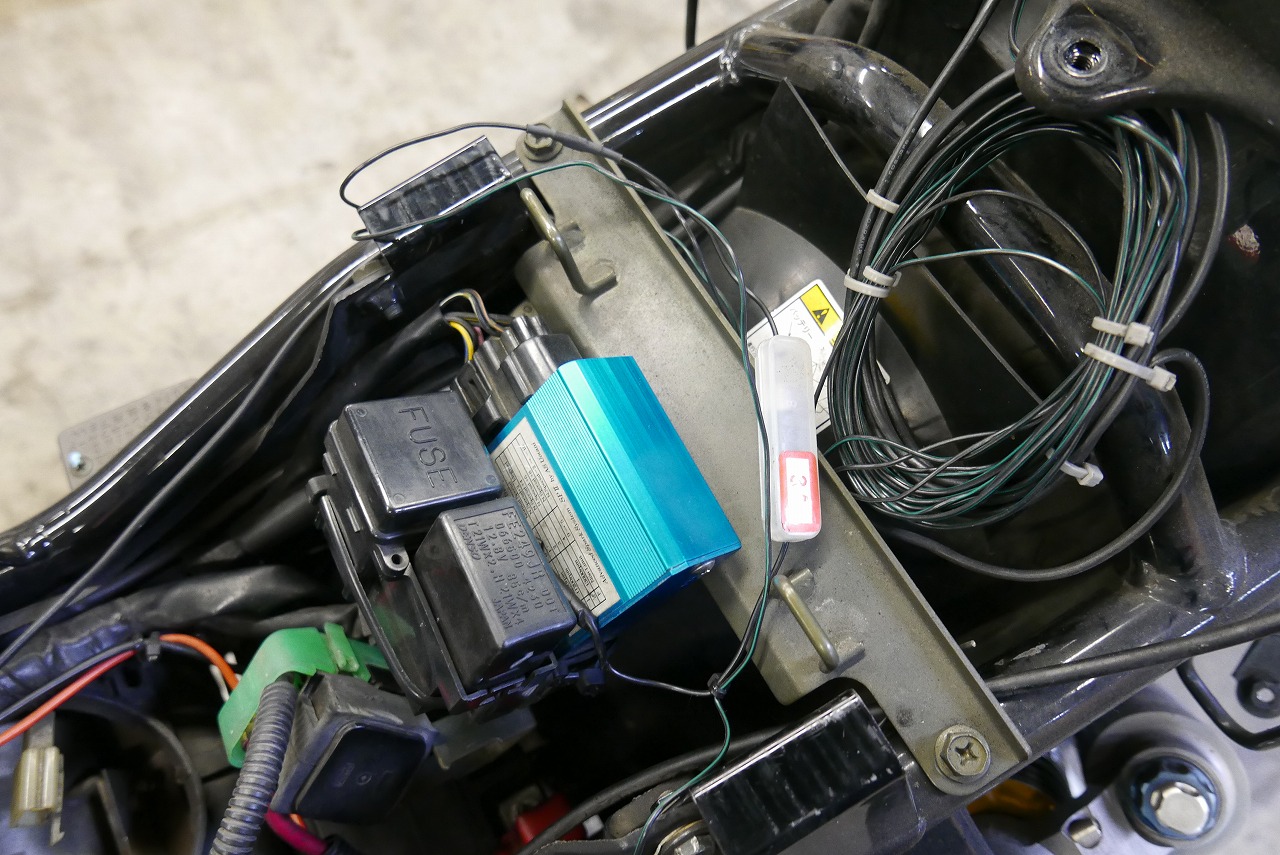
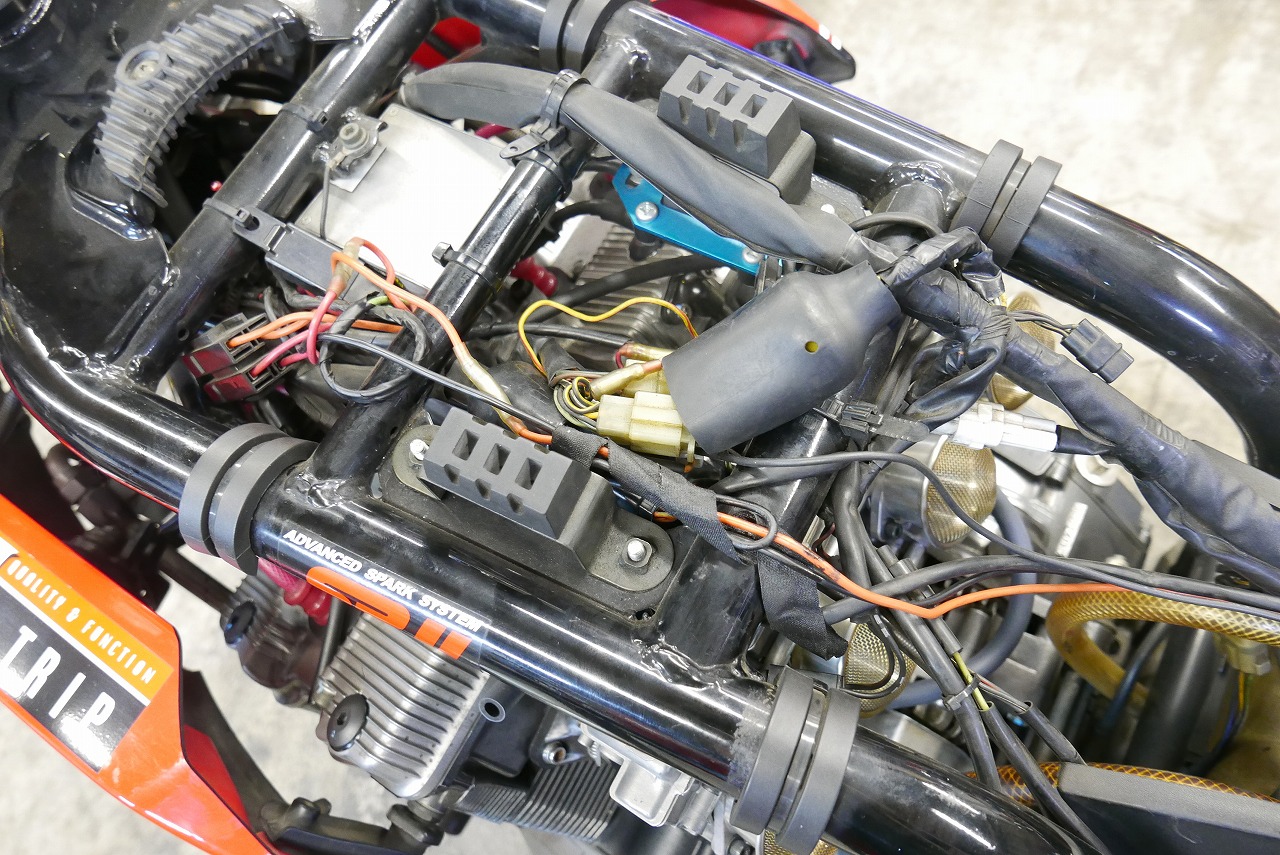
There are spare wires and questionable wires scattered about. Shared grounds are all over the place too.
I think shared grounds are basically off-limits in the maintenance workflow.
For reference, here are some points worth noting.
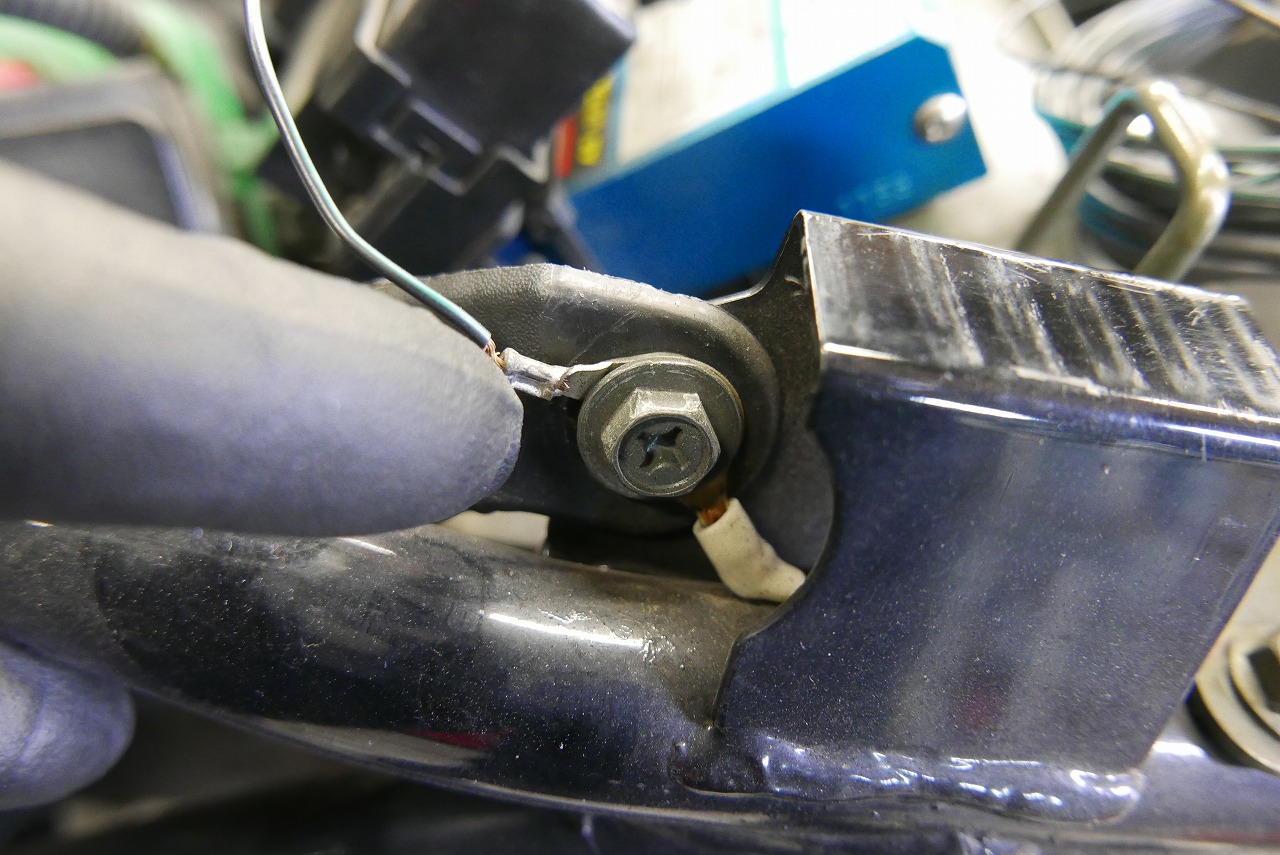
Avoid shared grounds as much as possible. When you install aftermarket electrical components, you typically need both “12V power and ground.”
It looks cleaner when both wires can be routed in parallel like a connector.
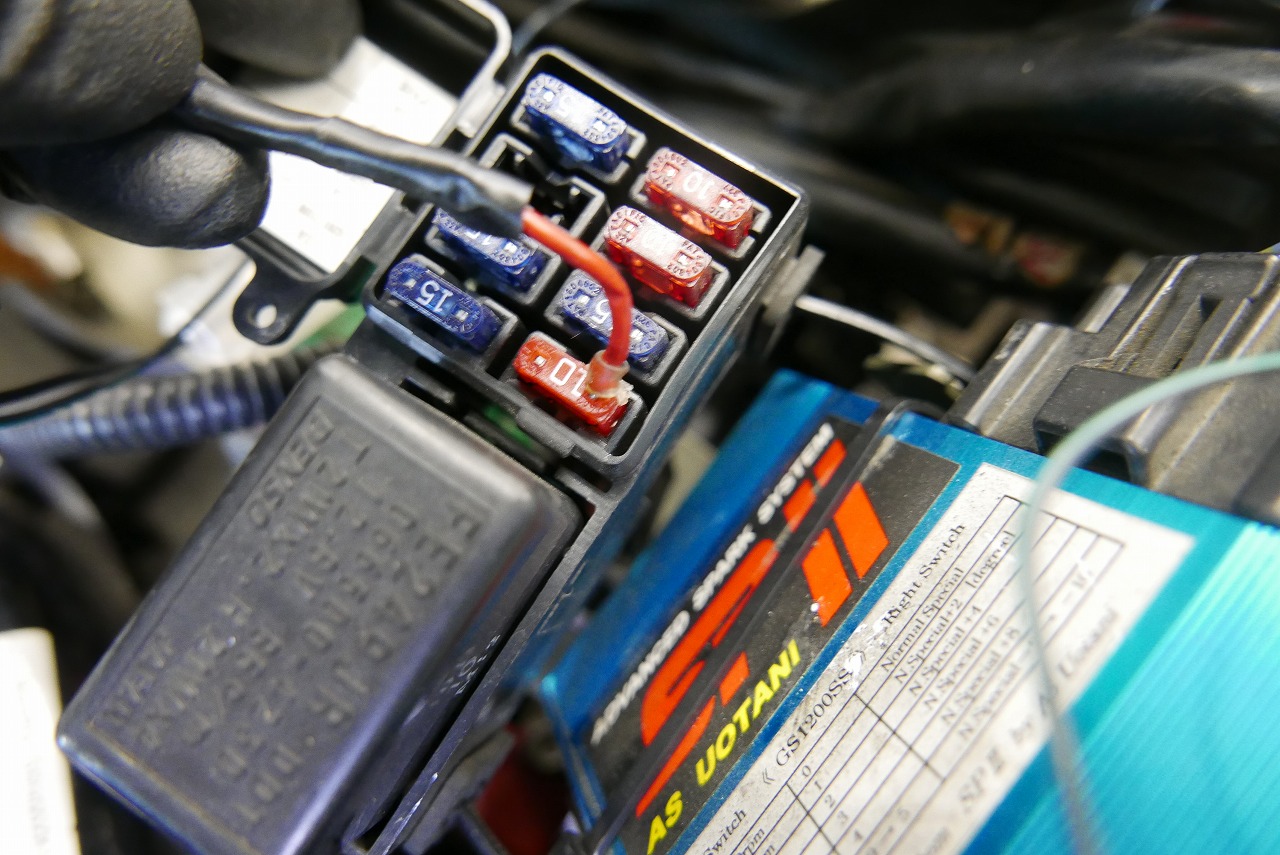
A handy-looking item: fused power taps.
They come with a fuse included—pretty nice, right?
But when I ask customers using them “What amperage and wattage is your aftermarket electrical component?” they go “Hmm…”
The fuse box cover won’t close without cutting it, and that makes the “parallel power and ground routing” I mentioned earlier harder to achieve.
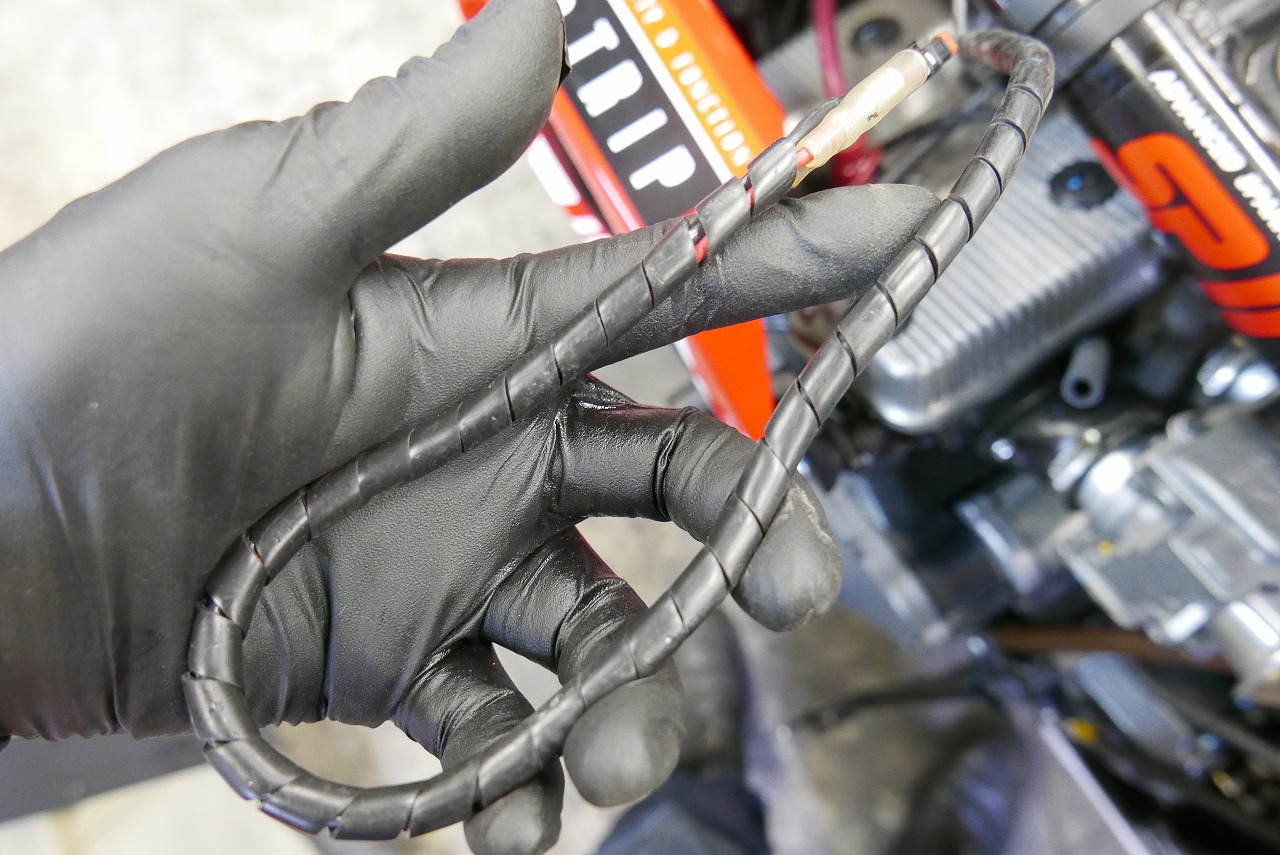
Buy a digital tachometer and it comes with spiral wrap as standard. It looks questionable and takes effort to wrap.
Using mesh sleeving should give a cleaner, faster result.
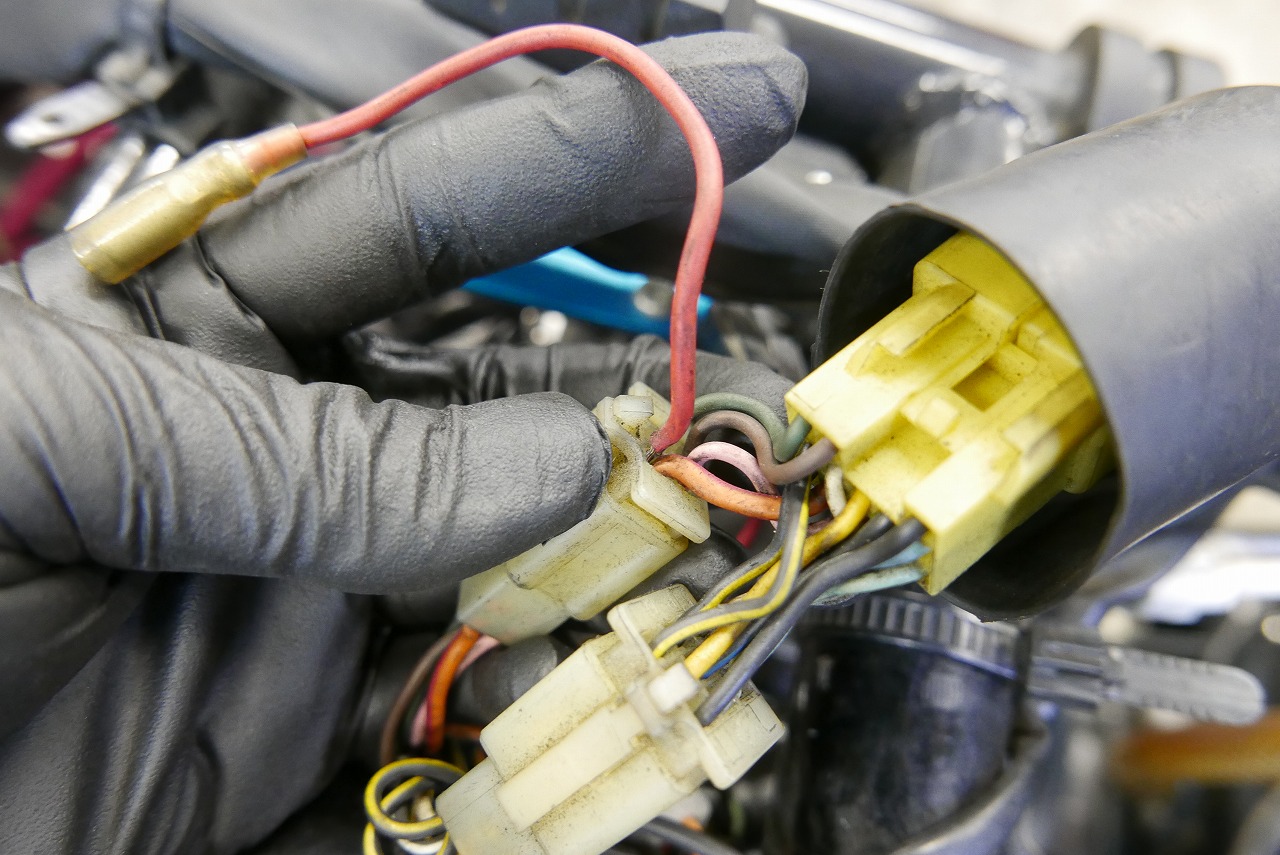
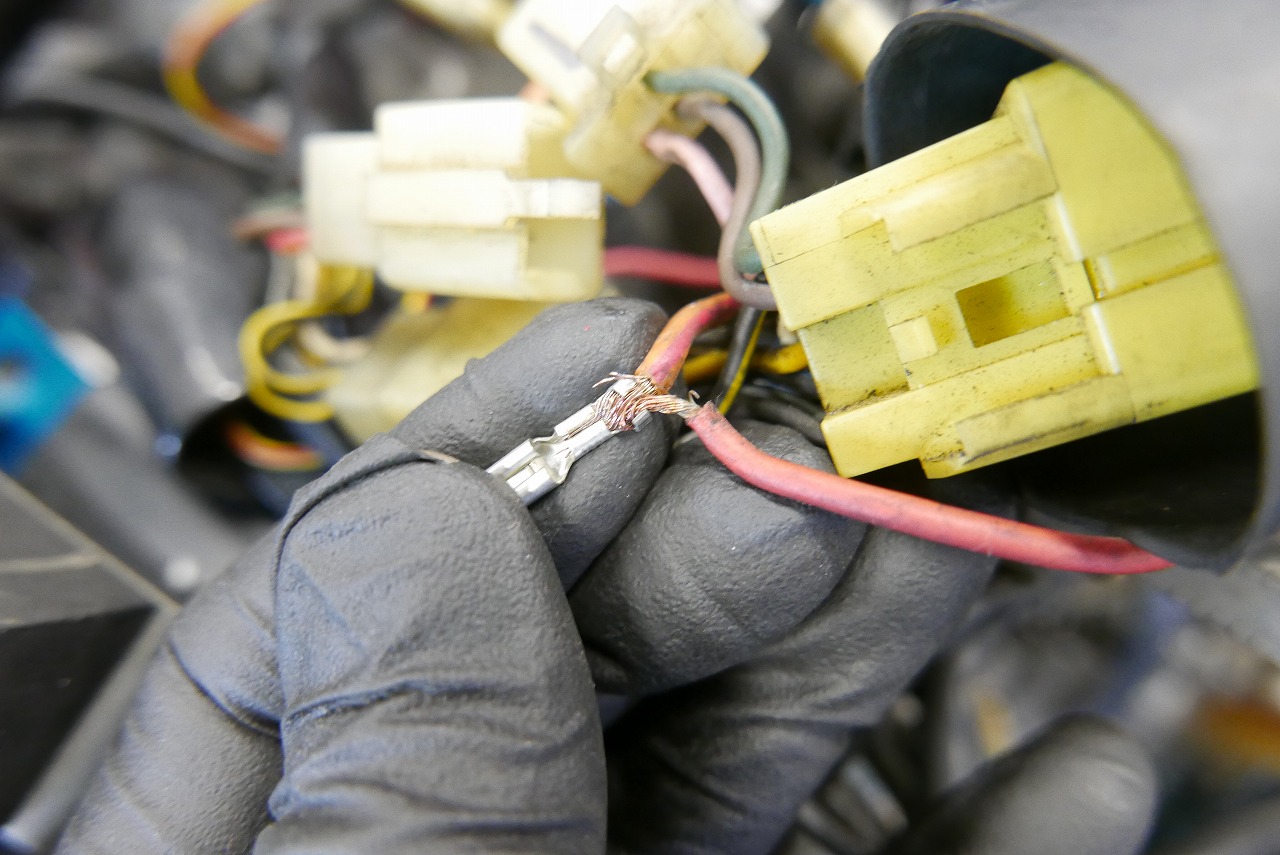
The handlebar switch is being reused—”power tachometer wiring.”
When inserting two wires, vary the stripped length so they fit into the connector without forcing it. There’s debate on this, but soldering for strain relief is better in my view.
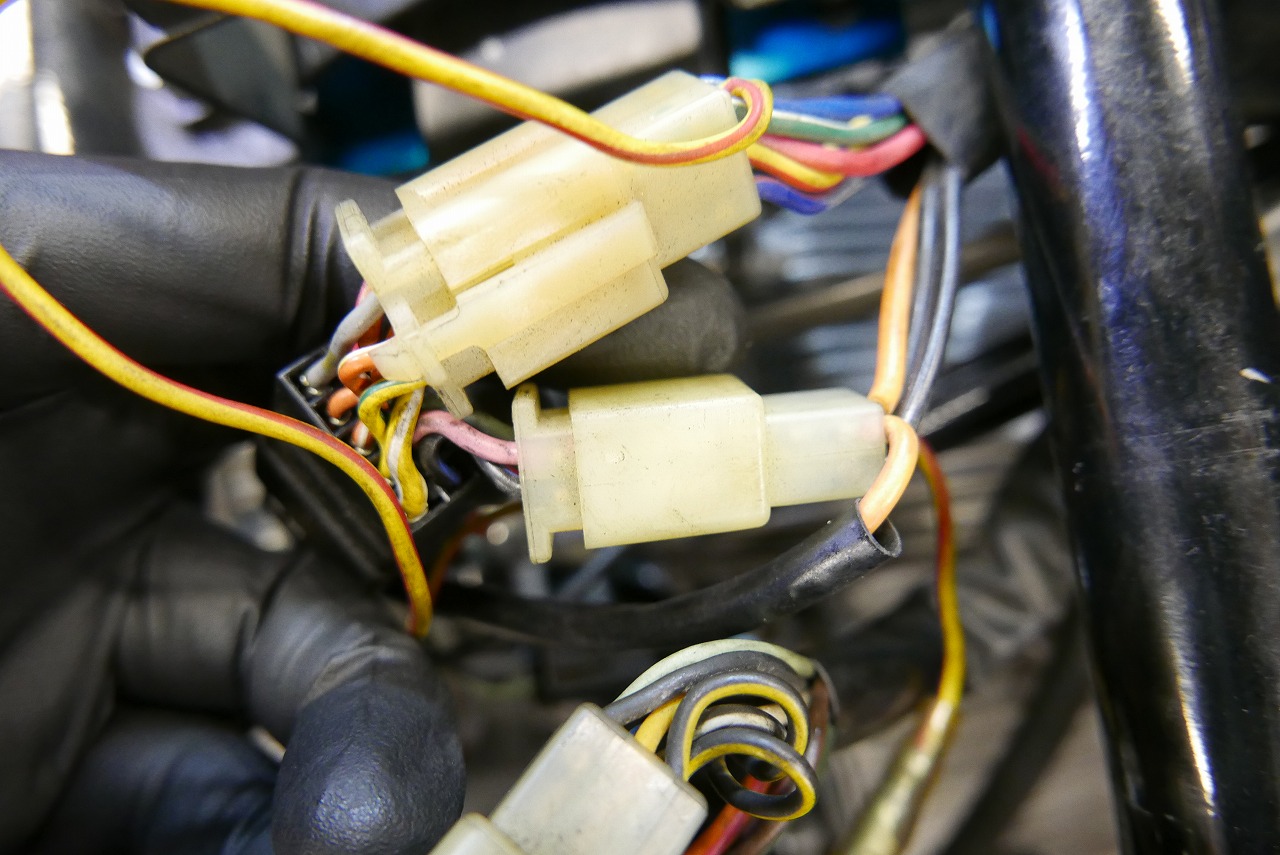
Connector-to-connector splicing. We deferred this one this time, but since it gets messy, it’s better to splice using the original connector shape whenever possible.
Wiring work starts with checking. If you don’t have the materials, defer it and don’t force it. Pushing ahead with whatever you have on hand is why the finish ends up disappointing later.
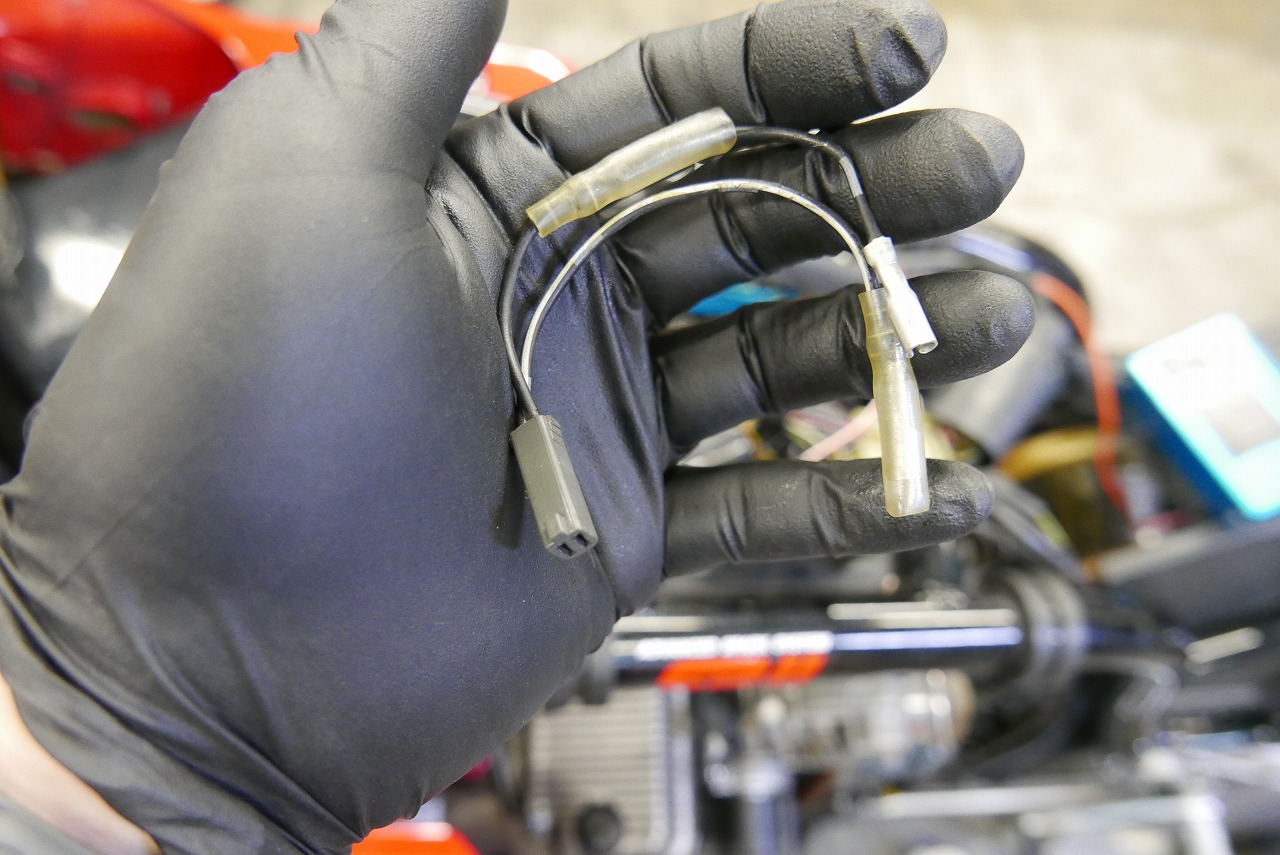
A common sight: no 0.4 terminals or connectors, so we went with spade terminals.
But this actually works out well—the key is “not modifying the main harness side.” That’s actually really important.
I’ve heard concerns from people replacing the main harness: “I’m worried about weird modifications on the main harness.”
You can do the work, but it’s important to be able to reverse it and return to the original state.
Now this work gets tedious from here on out…