We finished up the test ride today and completed the work.
The left caliper bolt was loose—it just hit me!
Whenever something feels even slightly off, you grab a wrench and tighten it.
Safety and peace of mind come first.
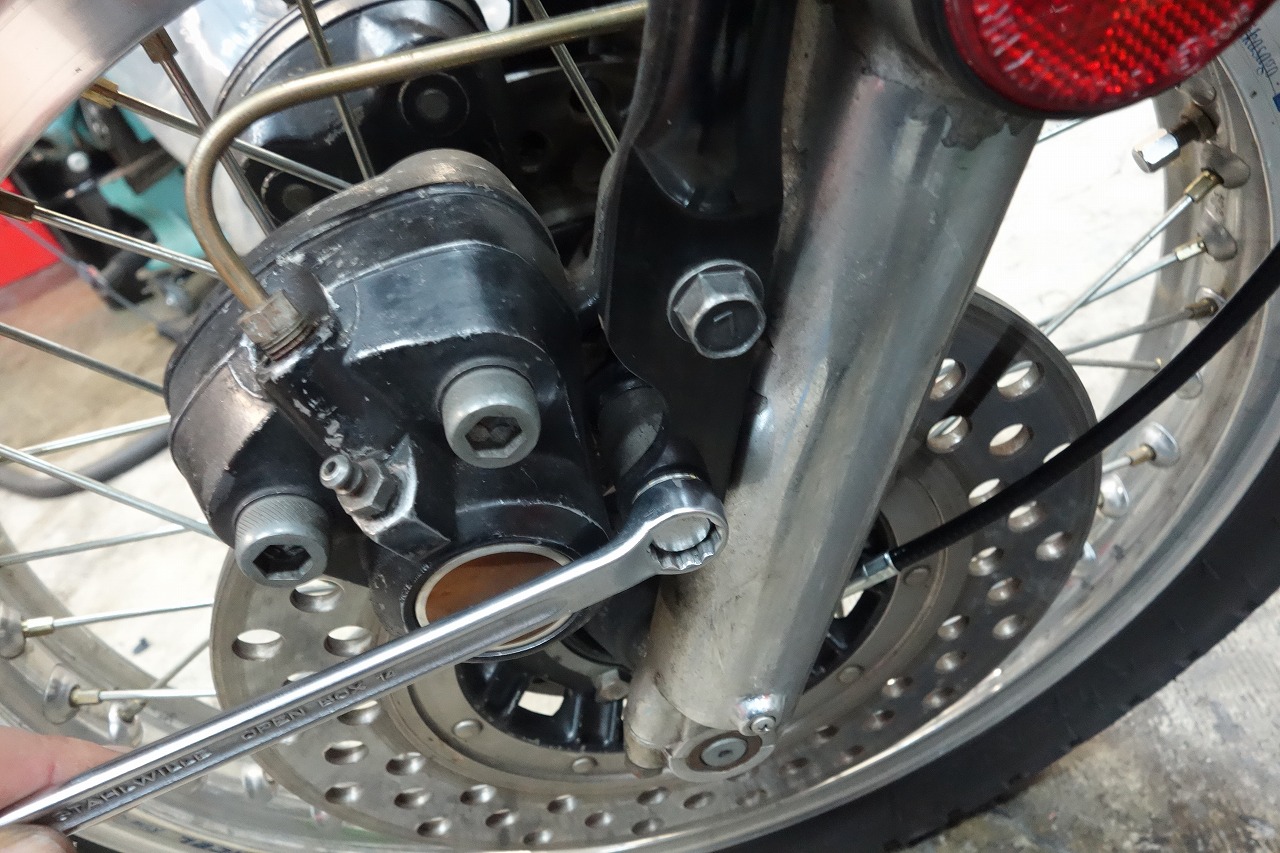
For anything that could come loose and cause trouble, we do a quick check just to be safe.
Handlebar, brake, and footpegs—it’s like a pre-ride inspection, and it really boosts your confidence.
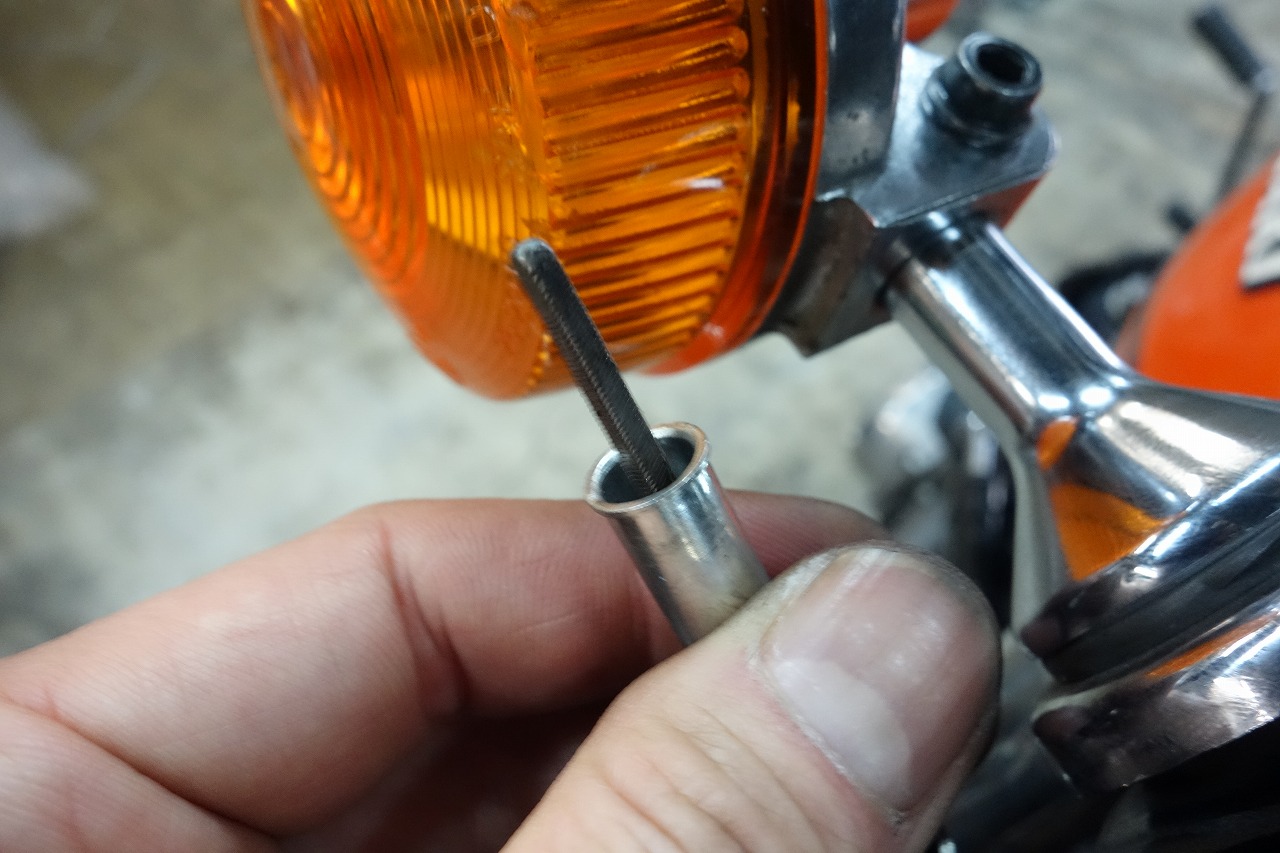
The tachometer was acting up, so we did a quick check. It’s the meter.
That’s what you get with an older bike.
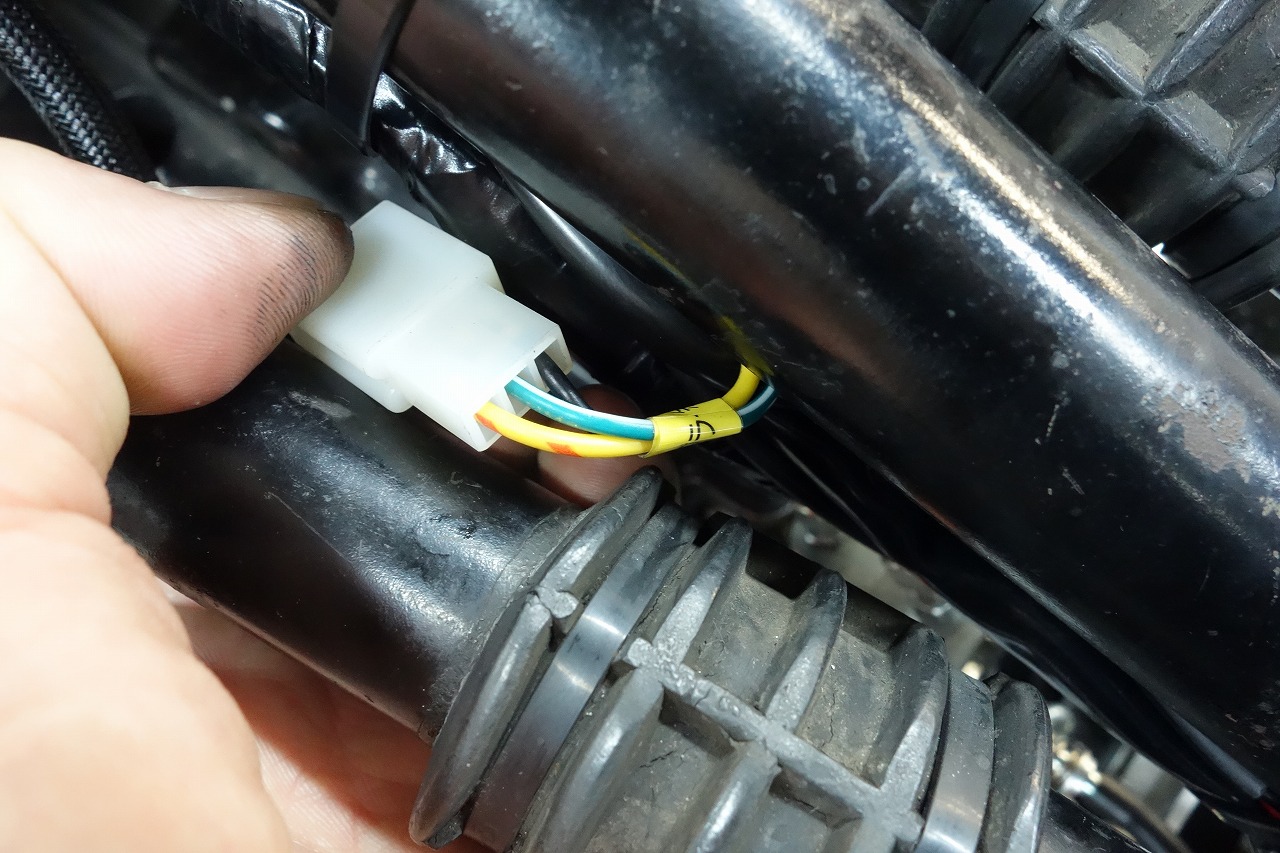
It would be a huge help if the aftermarket harness came with an instruction manual.
If you could see diagrams showing the connector and terminal shapes and colors, and what they plug into, it would make decoding everything so much faster.
Being able to look at it visually and make decisions rather than reading text would cut down on mistakes.
*I made notes for myself for the next time I do this job.
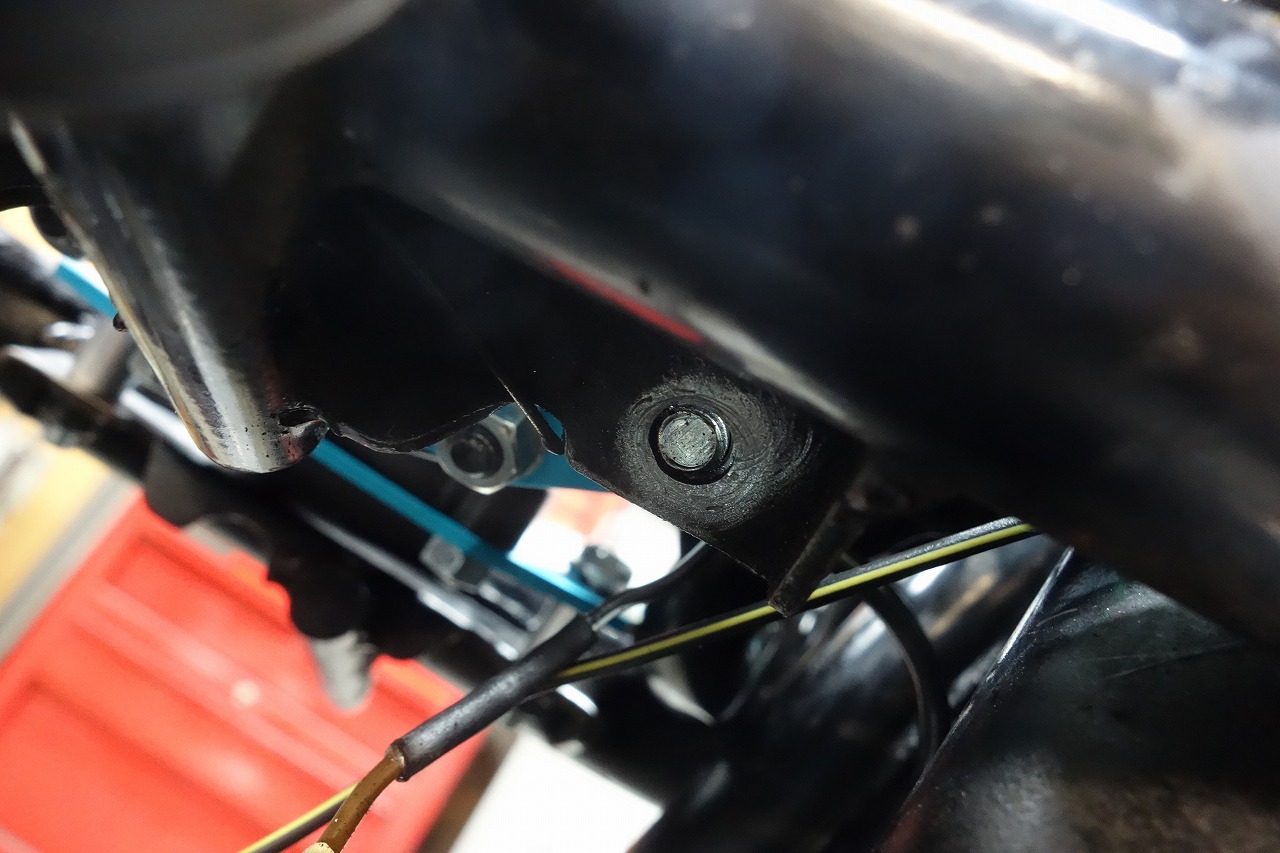
For shared ground points, stripping the paint really boosts your confidence.
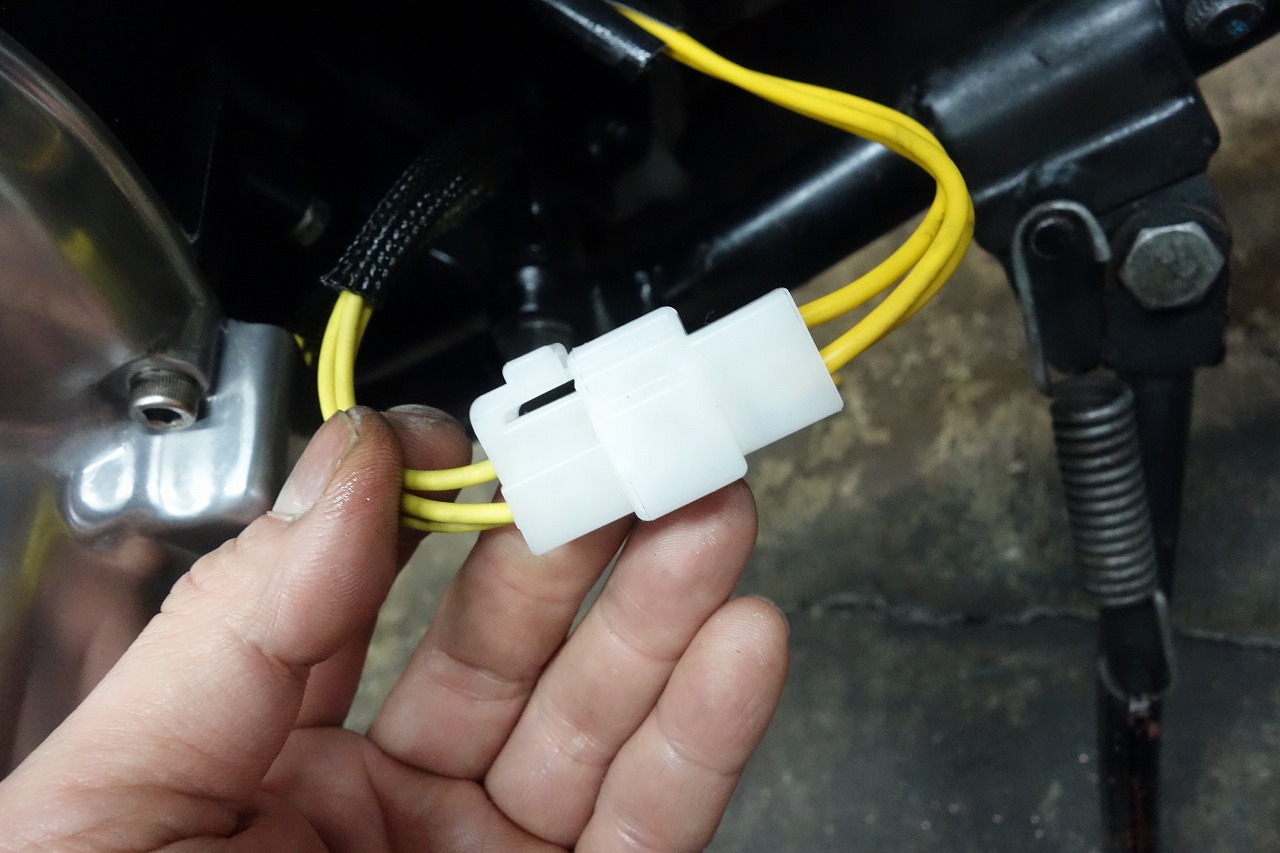
The generator-to-regulator connection uses a locking 250 connector instead of a Gibbs connector.
The contact surface is nice and wide, so even if it gets hot and starts to melt, the terminals are less likely to stick to each other—which means more peace of mind.
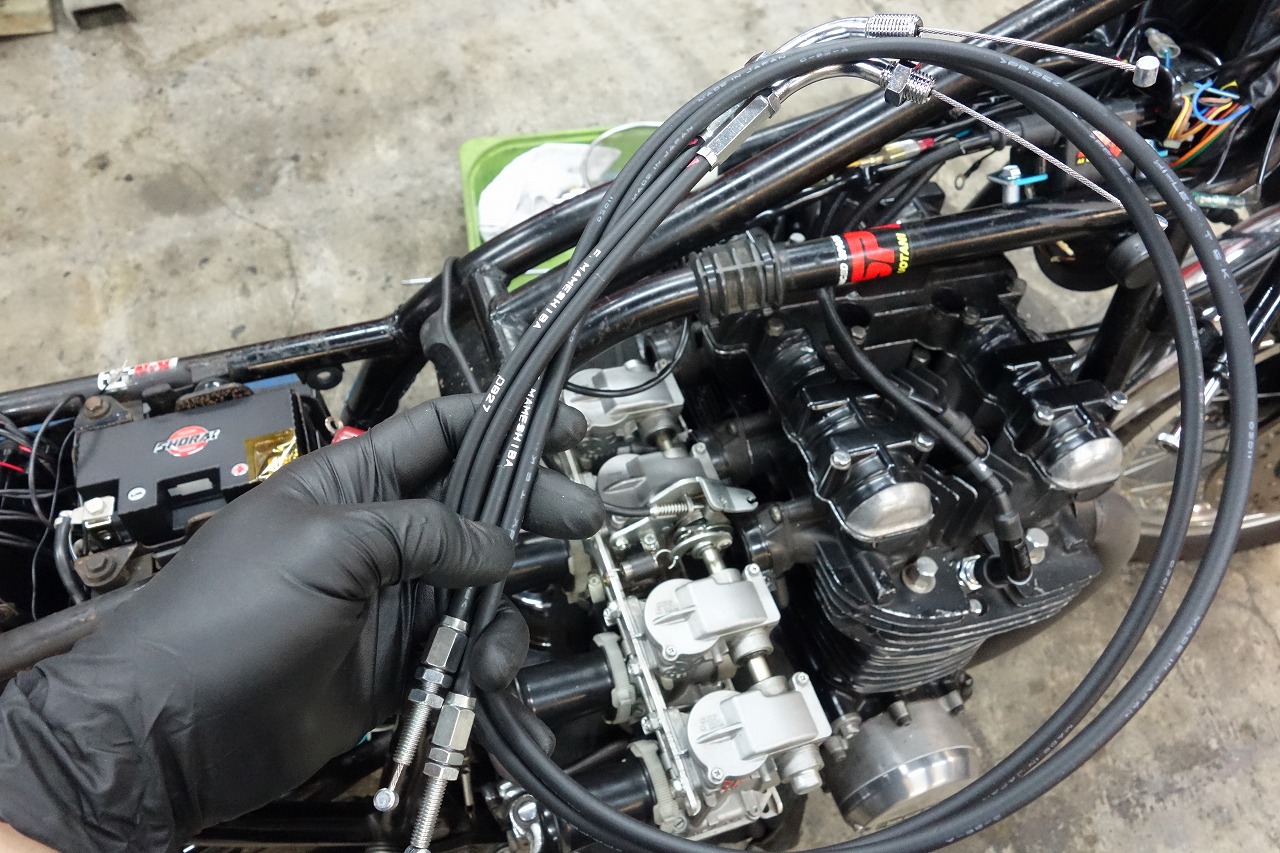
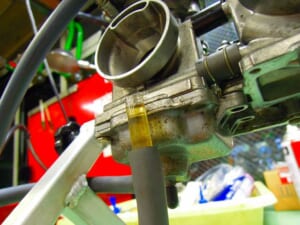
The owner picked up a throttle cable for us, so we installed it.
This cable is really light—seriously.
There’s barely any friction from the inner cable rubbing.
A cable is deeper than you’d think—pretty amazing stuff.
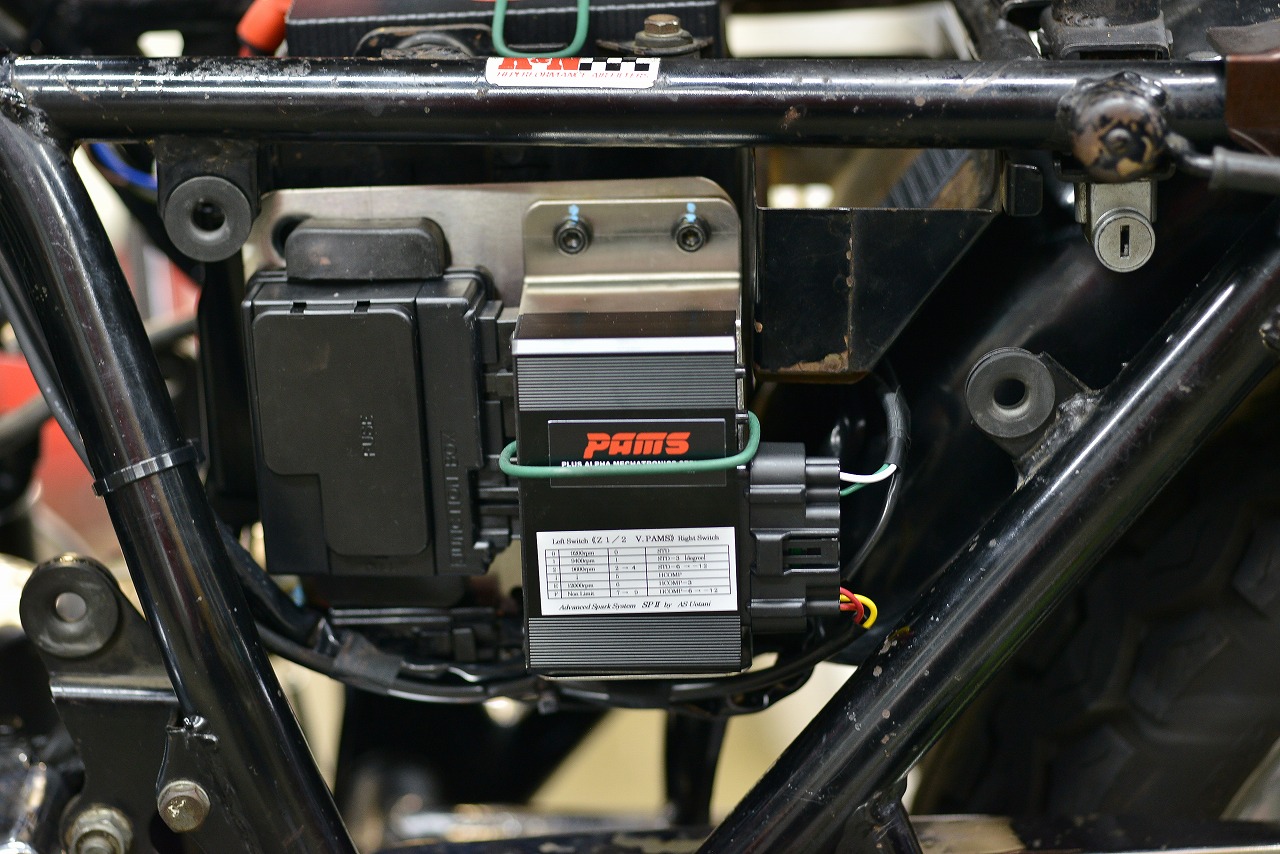
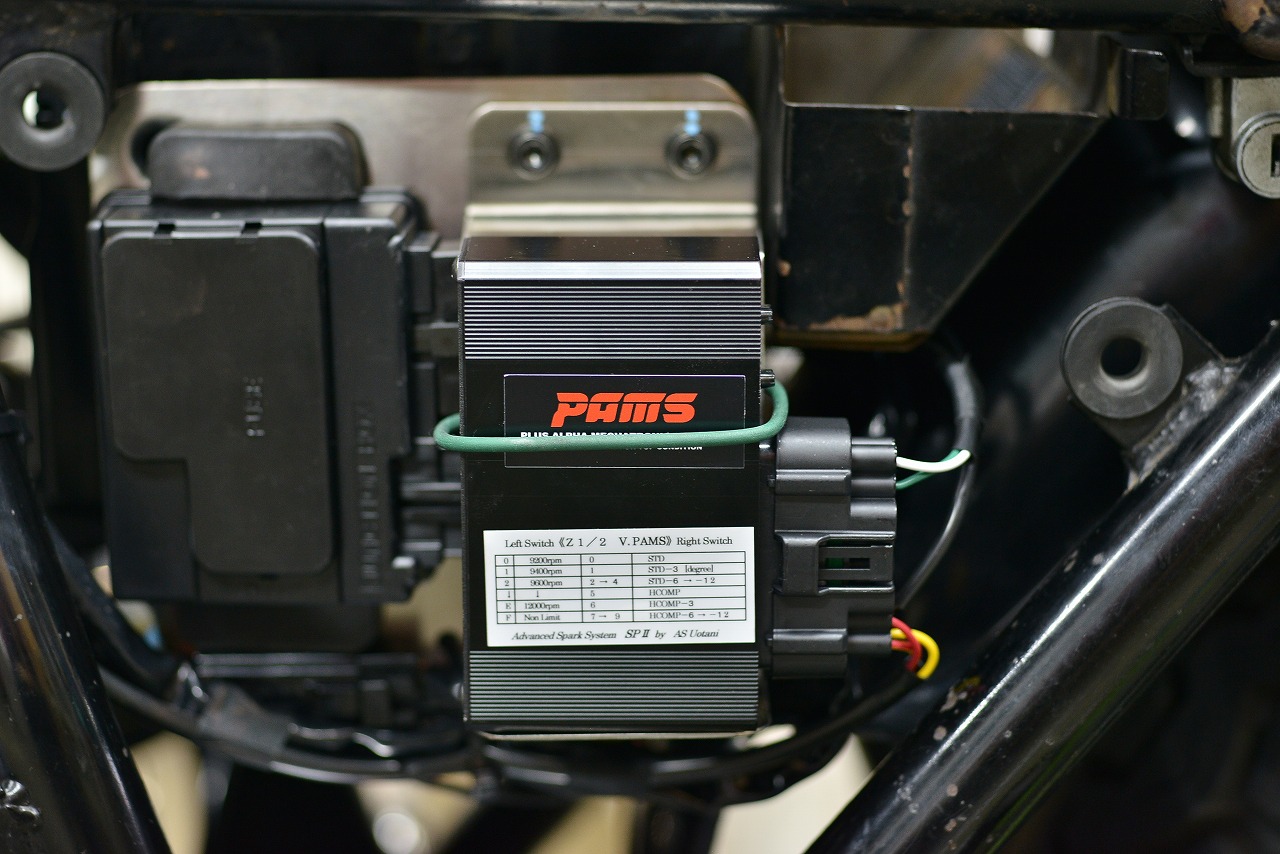
The left side layout looks like this.
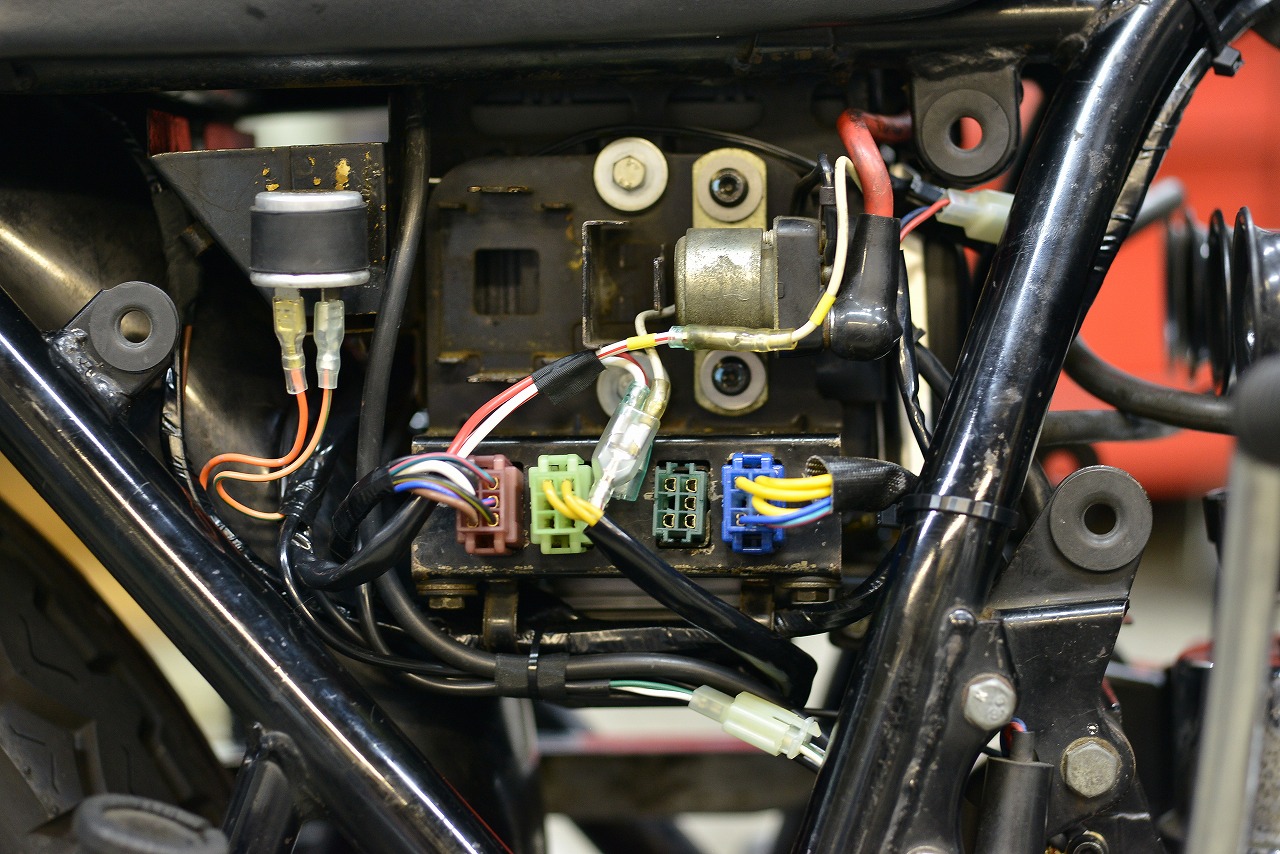
The right side looks like this. If we wanted to, we could probably trim down the wiring a bit more.
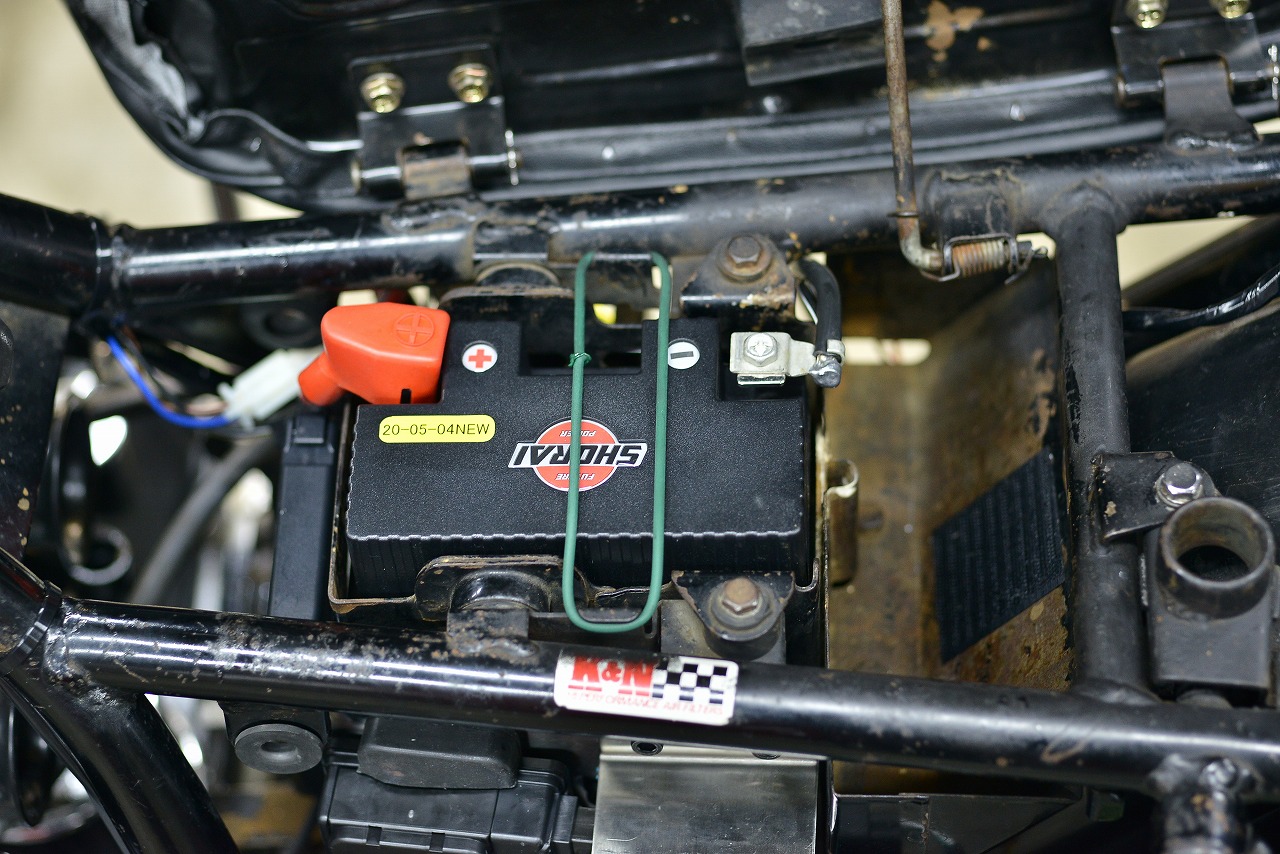
We used a Honda-style angle for the terminal cover. The ETC is mounted upright next to the battery.
It’s held in place with a locking clip on the battery case like a money clip, so it’s easy to remove. *The bracket and ETC are bonded together with dual lock.
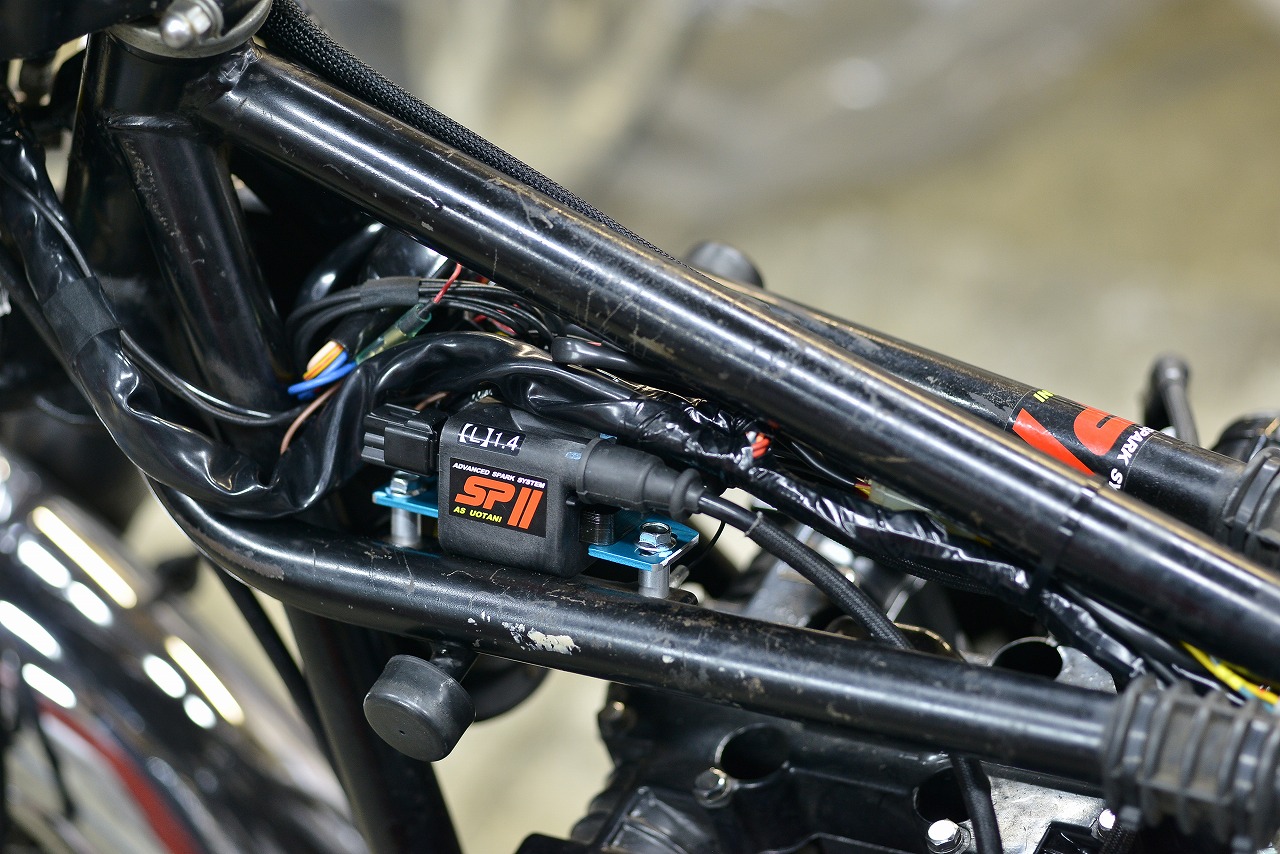
The harness runs along the underside of the frame backbone.
We avoided the sides because they could rub or get pinched, and it doesn’t look as clean that way.
No matter who removes it or when, it should be fine.
Wiring work is tedious, and even when it’s done, you can’t see it.
But it’s a really important lifeline, so getting it right gives you peace of mind.
That wraps up this job.