December feels oddly lacking in year-end atmosphere, doesn’t it?
This year, the sense of seasons—or rather, the sense of months—seems off.
I find myself thinking “oh, it’s almost the new fiscal year”
or “oh, Golden Week’s coming up”
or “oh, rainy season”
or “oh, summer break and Obon”
or “oh, Silver Week”
While this job doesn’t exactly give me proper time off, I feel the flow of the year through my customers’ energy levels.
Is evolution something that happens with “purpose” or as a “result”? That’s a tough one. Anyway, I’m getting off track.
The parts have arrived, so let’s get moving.
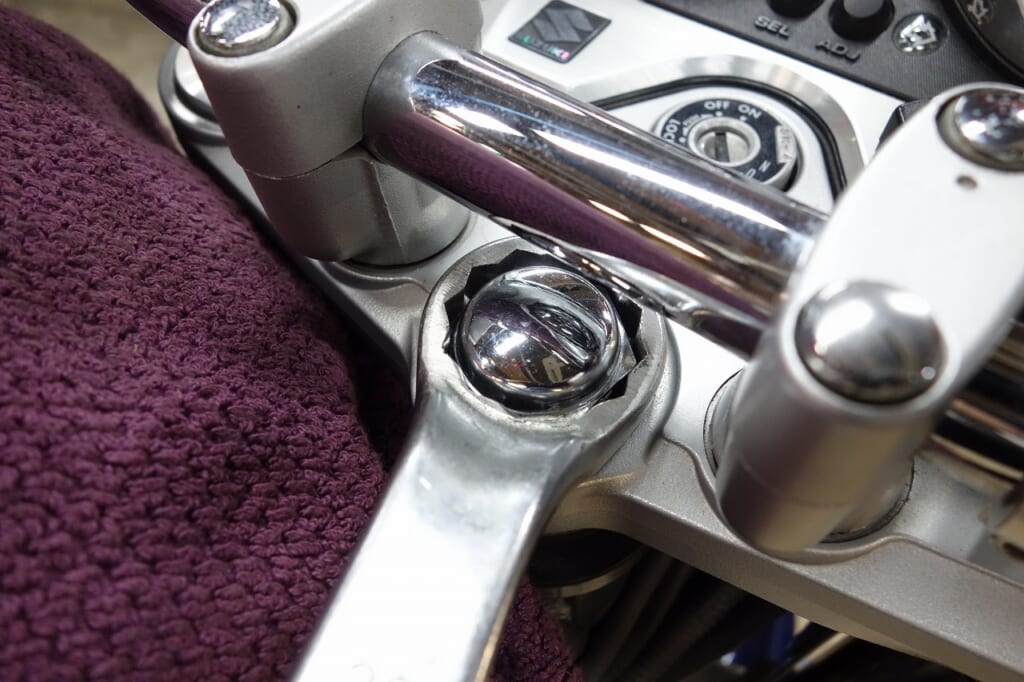
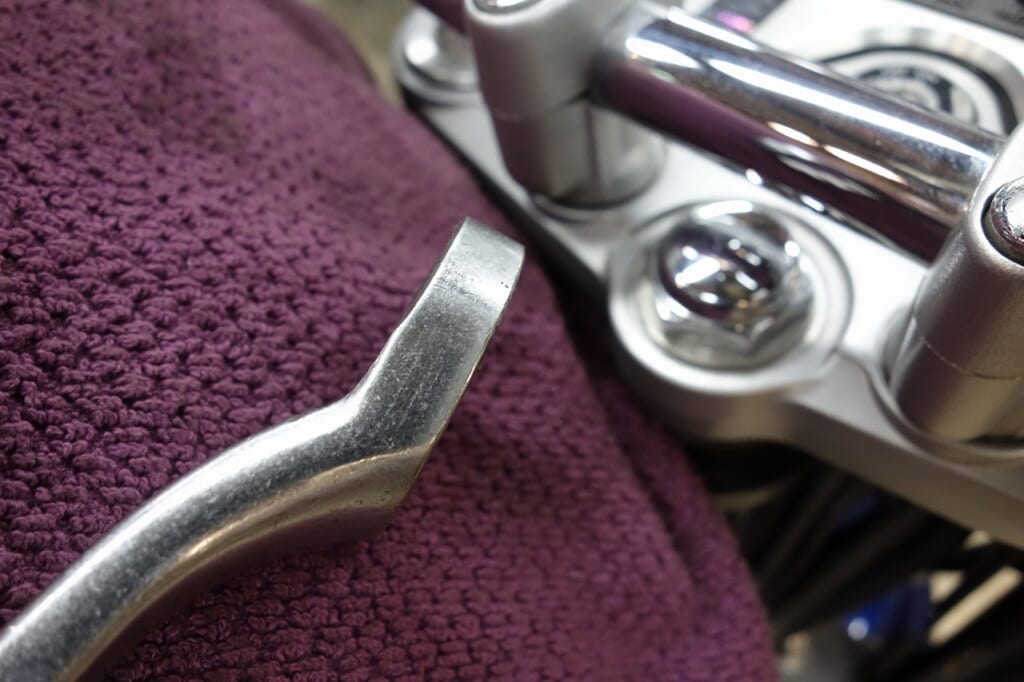
A little tip that might come in handy. Oh, you already knew?
Some bikes won’t let you loosen the stem nut without removing the handlebars.
Let’s grind it down with a sander and polish it smooth to make it thinner.
Your work efficiency goes way up.
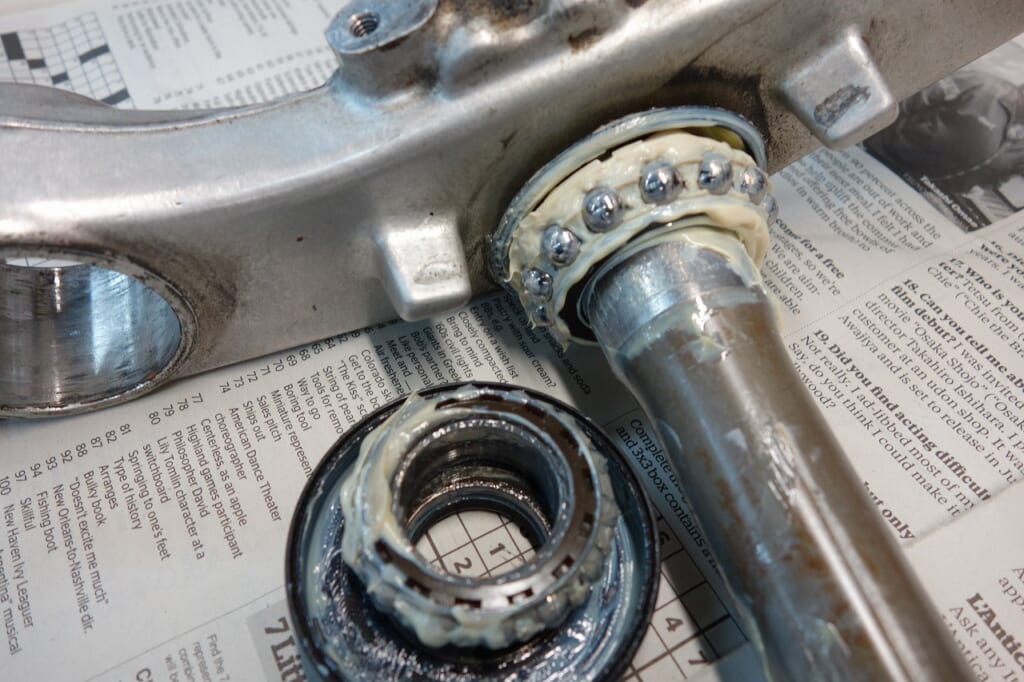
As expected, Neutech NC100 persists so well—I’m grateful for that.
It feels softer to the touch than the spec suggests, and it holds up to heat really well without dripping, so I have absolute confidence in it for bearing work.
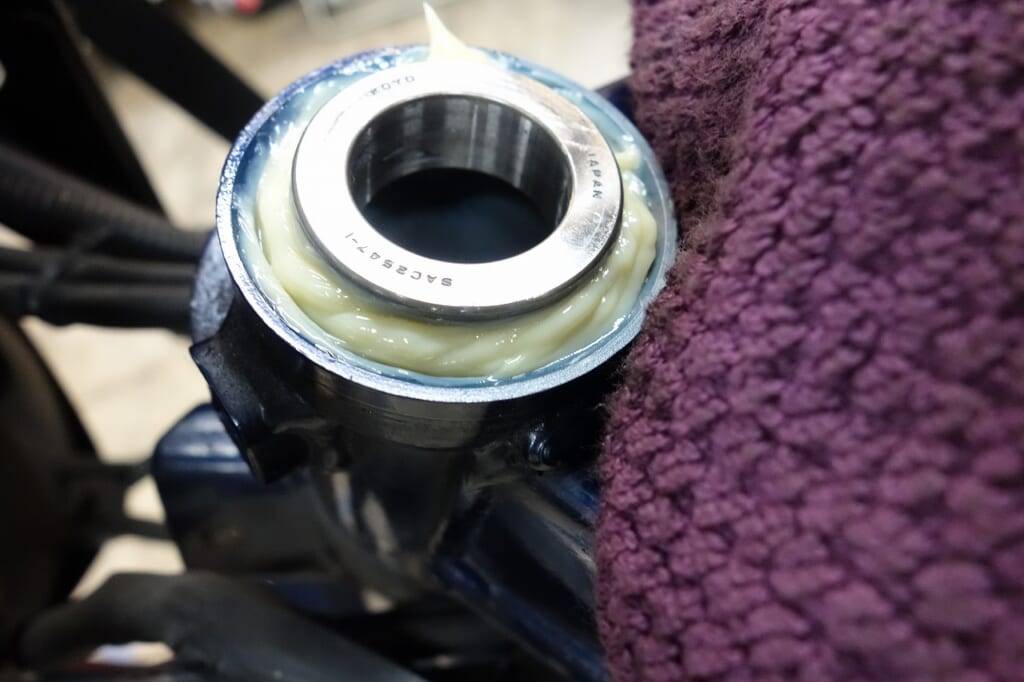
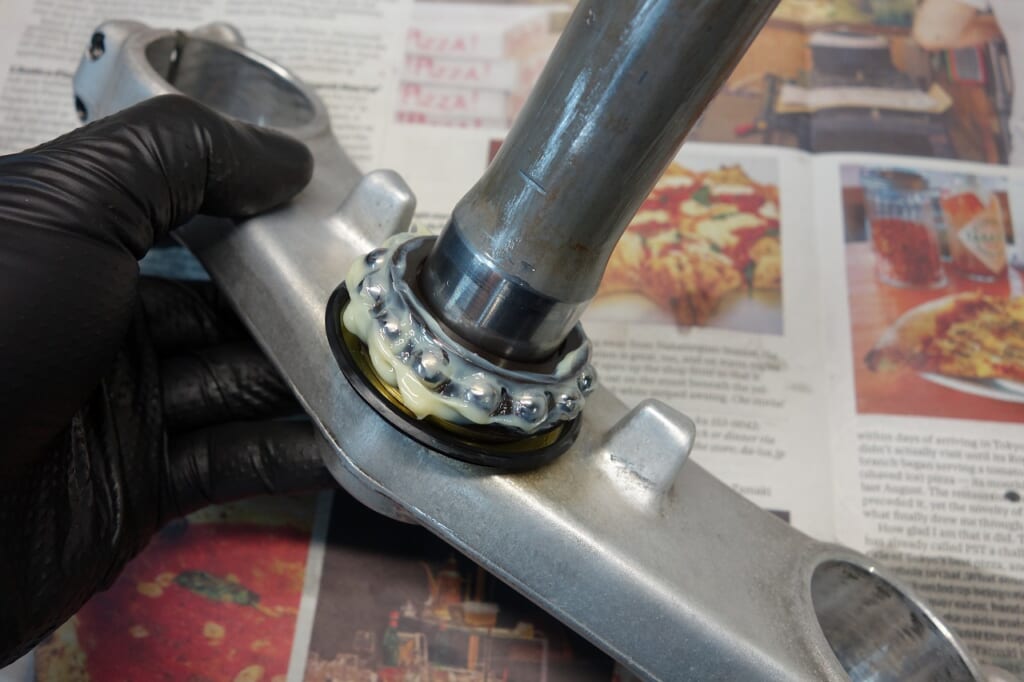
Let’s pack in fresh grease and assemble it. There wasn’t even a hint of impact damage.
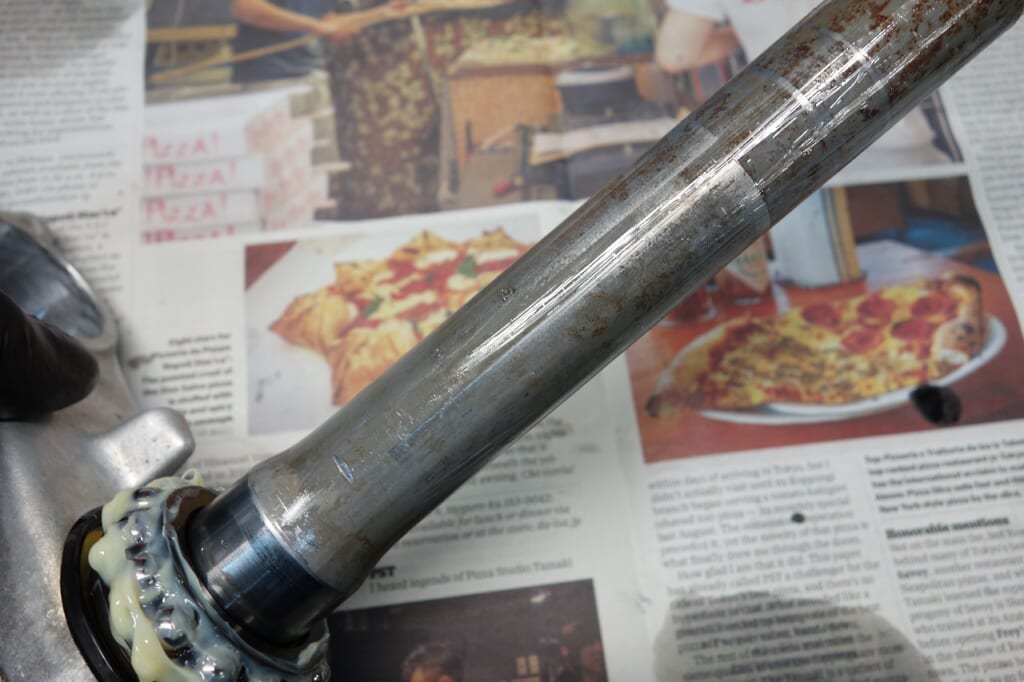
Spreading a thin layer of grease on the shaft area gives you rust protection too.
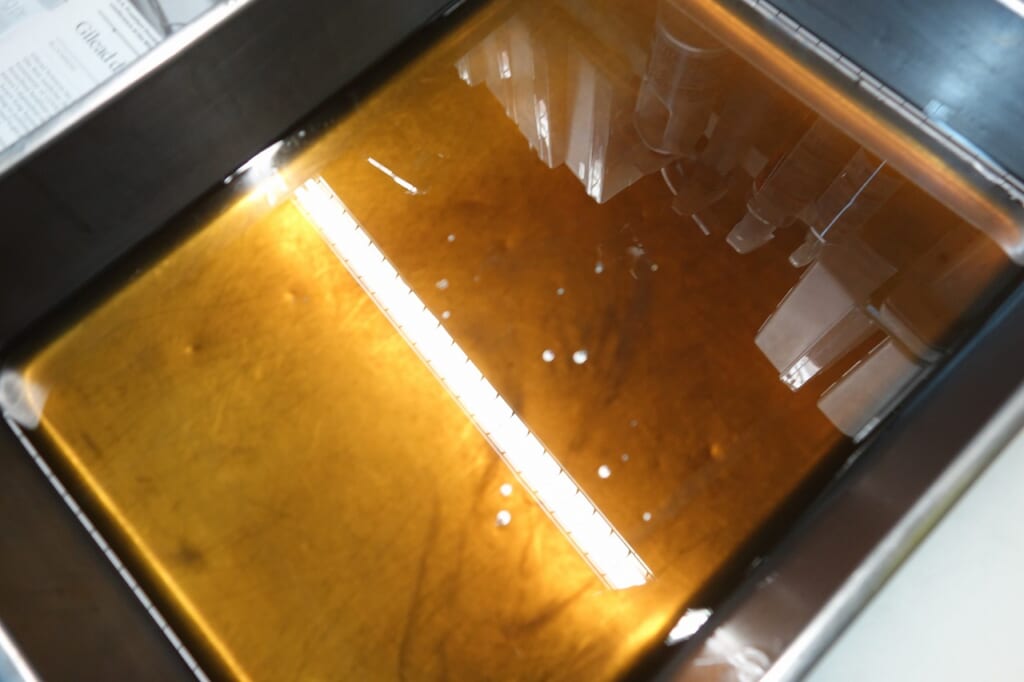
This is what the fork oil looked like.
Recently? (Well, 14 years ago, but…) it’s nice and peaceful—doesn’t get dirty or deplete easily.
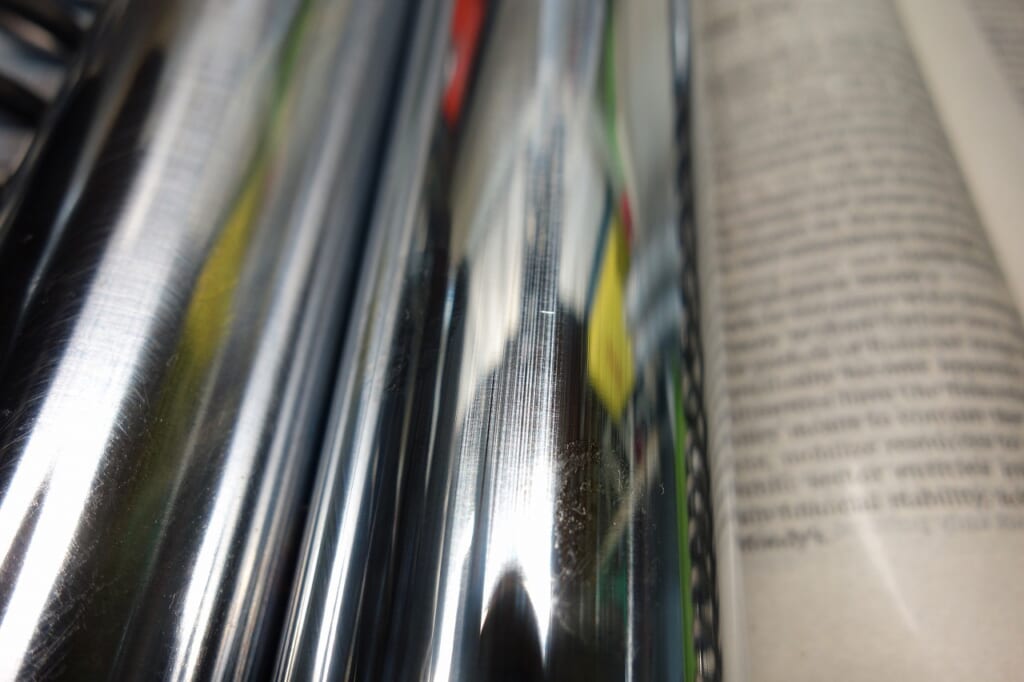
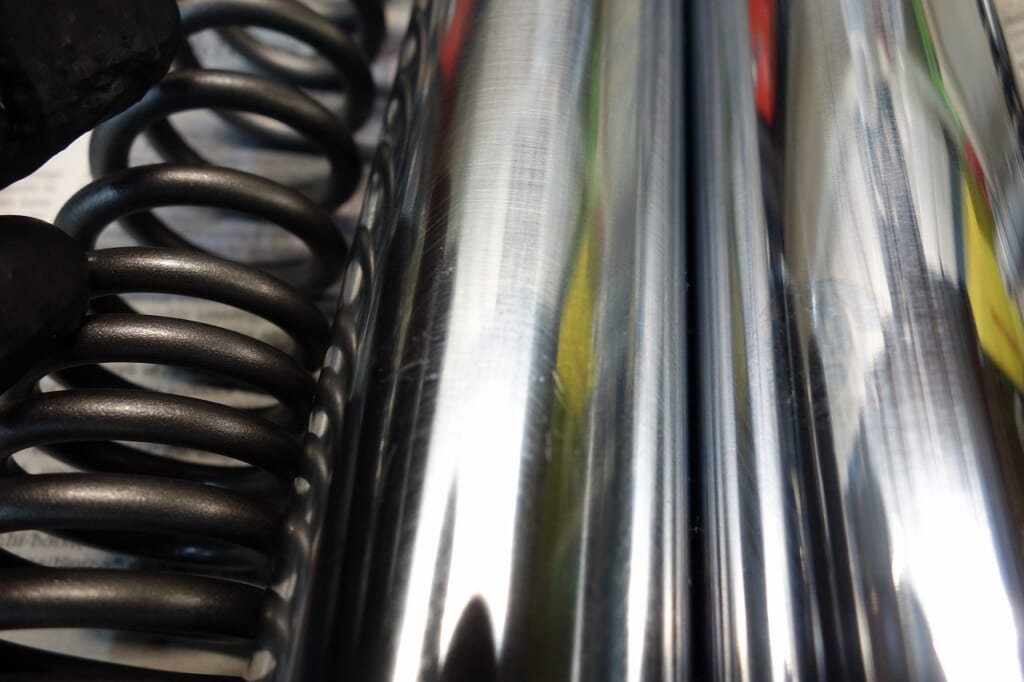
The inner tube gets shiny and polished on the front from the dust and oil seal constantly sliding.
Even that plating gets worn down by the motion.
If you polish it with Scotch-Brite without scratching it, it seems to reduce the seal’s wear a bit. (Finish it to match the non-stroking areas.)
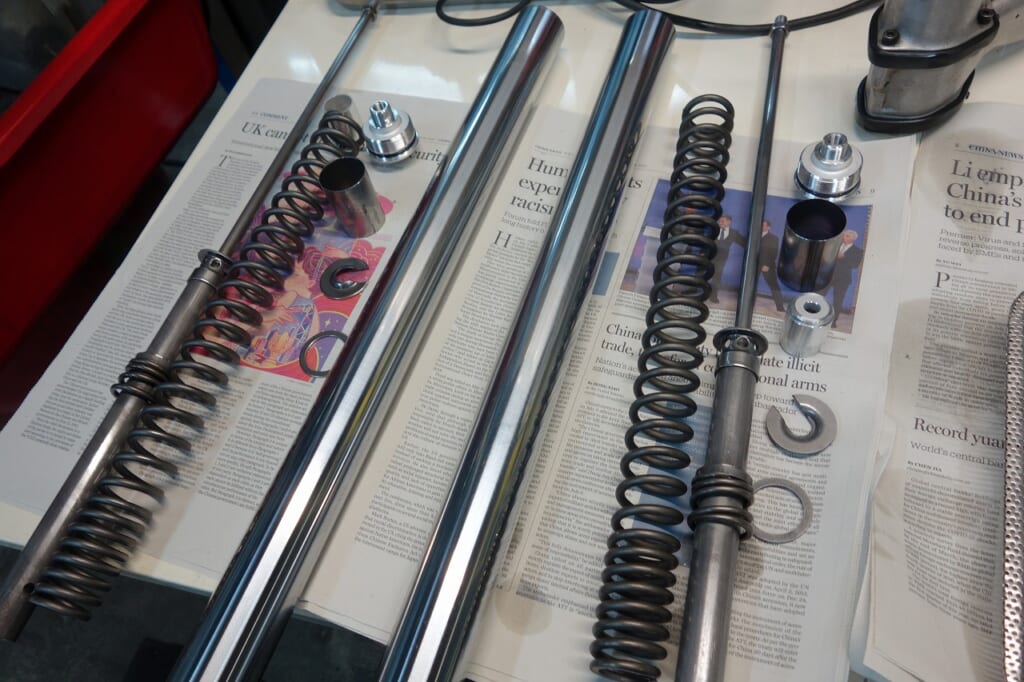
I jumped the gun and started work before the parts arrived…
While waiting, I started building a handy stand concept! (More on that later.)
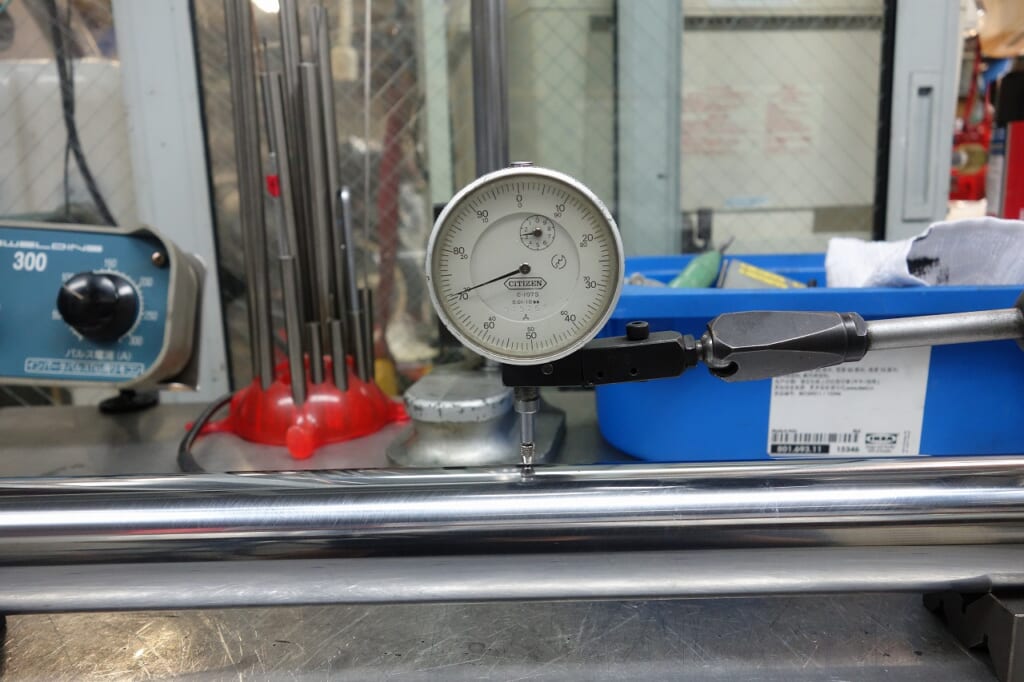
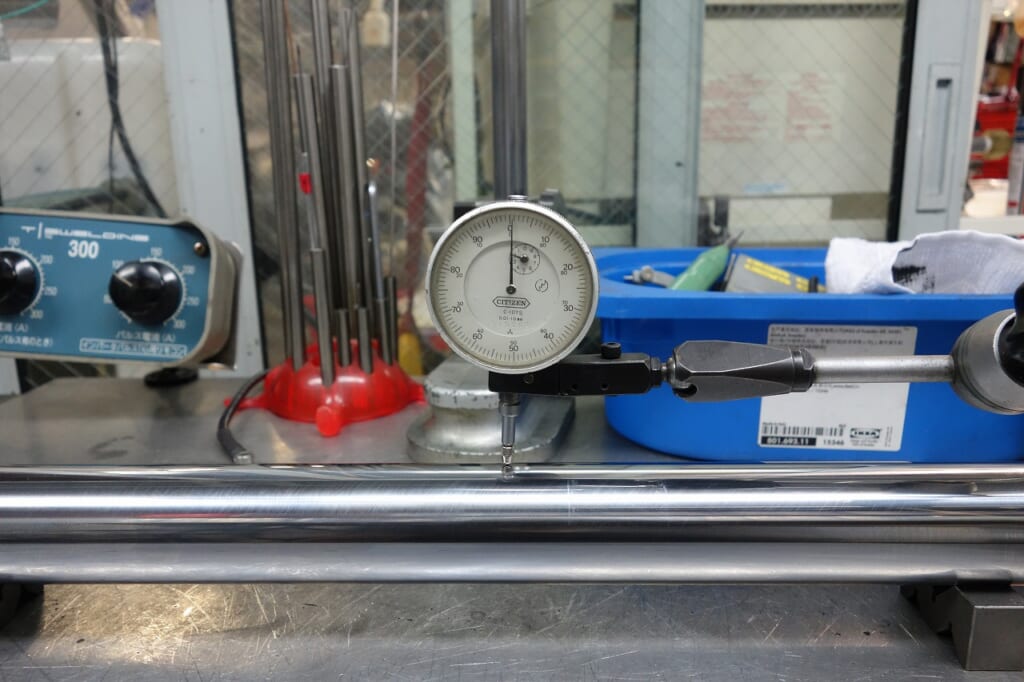
Both are perfect at zero. Measuring doesn’t improve performance, but the time saved by skipping it is minimal.
Removing uncertainty while you work gives both you and the customer more peace of mind.
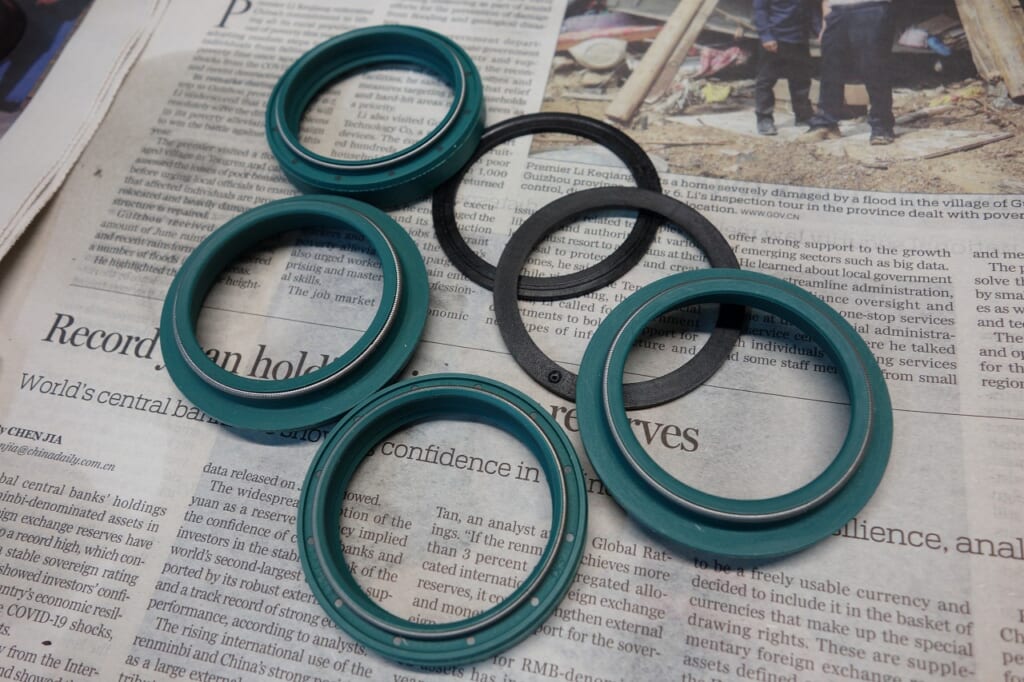
Everyone’s favorite SKF oil seal.
For me, it’s a high-confidence oil seal. Though its initial smoothness doesn’t last forever… but I still think even 1% smoother is better.
It should be gentler on the inner tube too.
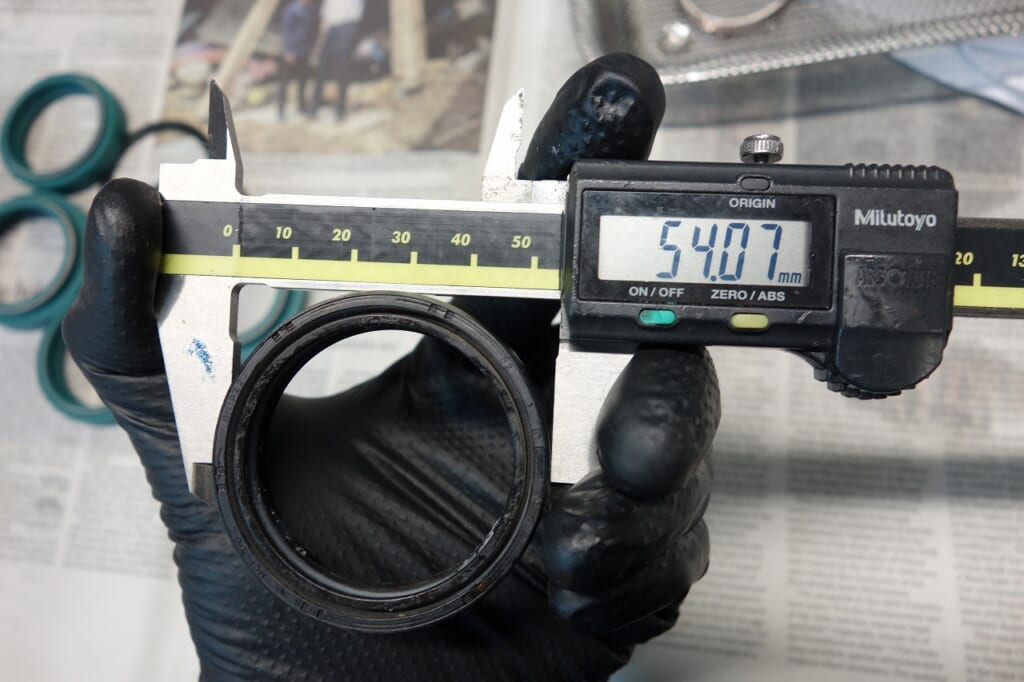
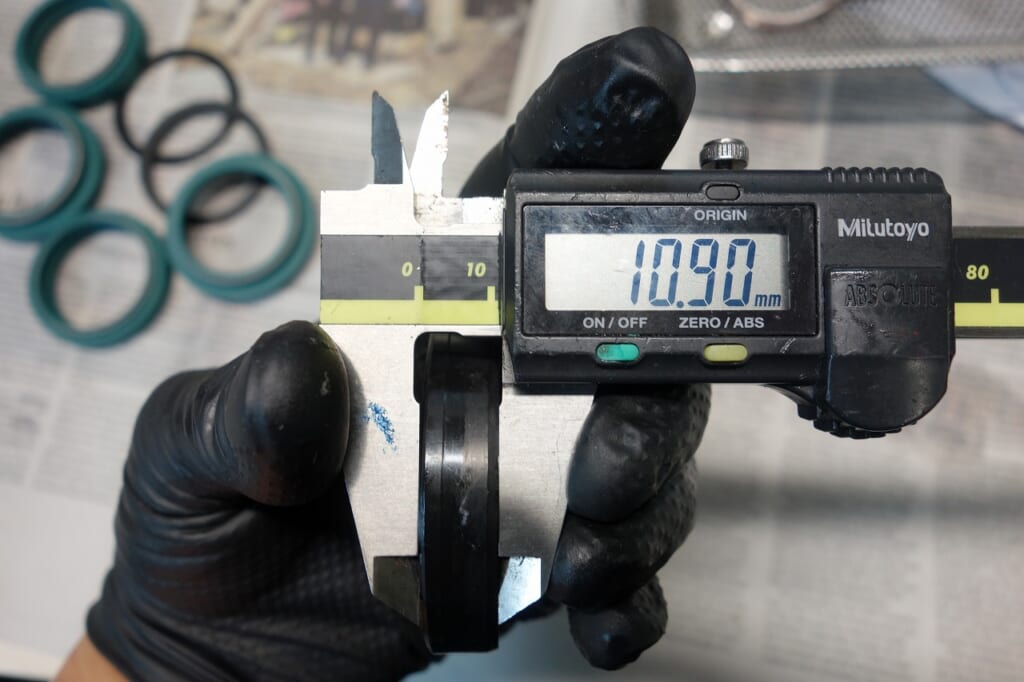
If you want to use SKF but there’s no application… well, most things in the world are standard parts. For Japanese bikes, it’s either Showa or Kayaba.
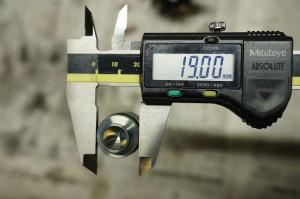
Since you know the inner tube’s outer diameter, you can figure it out from the outer diameter and width.
Conversely, you can learn what diameter your fork is and whether it’s Kayaba or Showa.
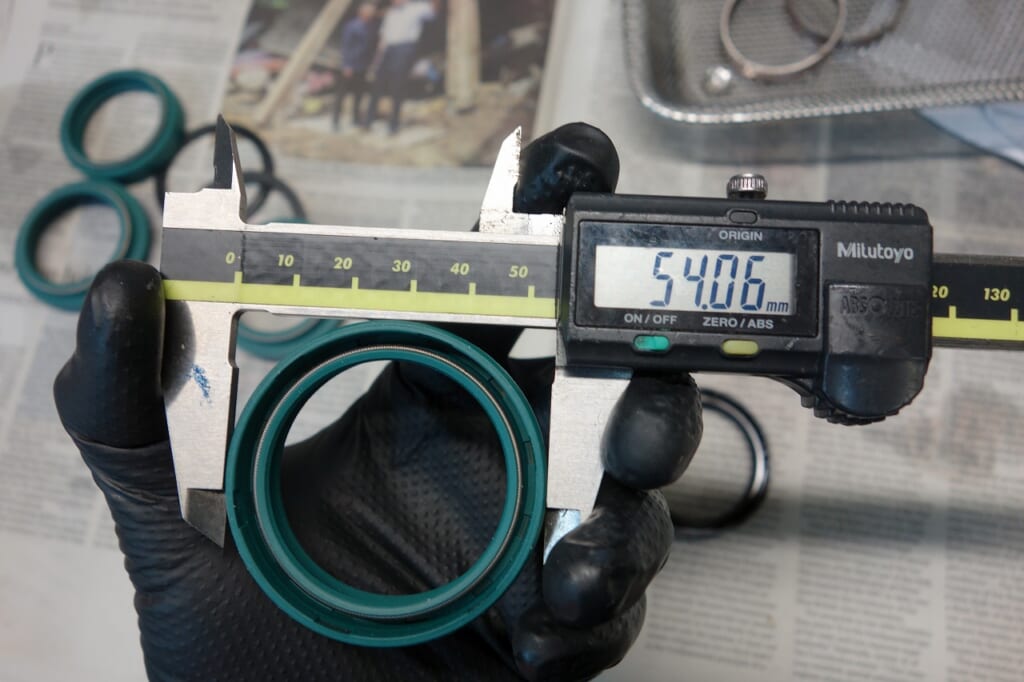
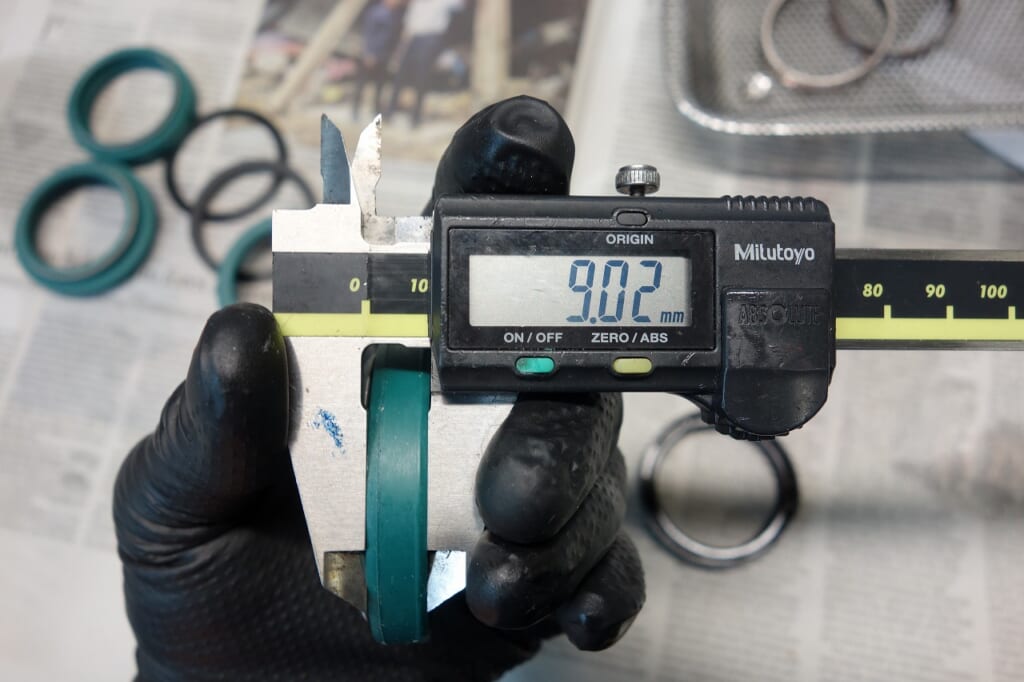
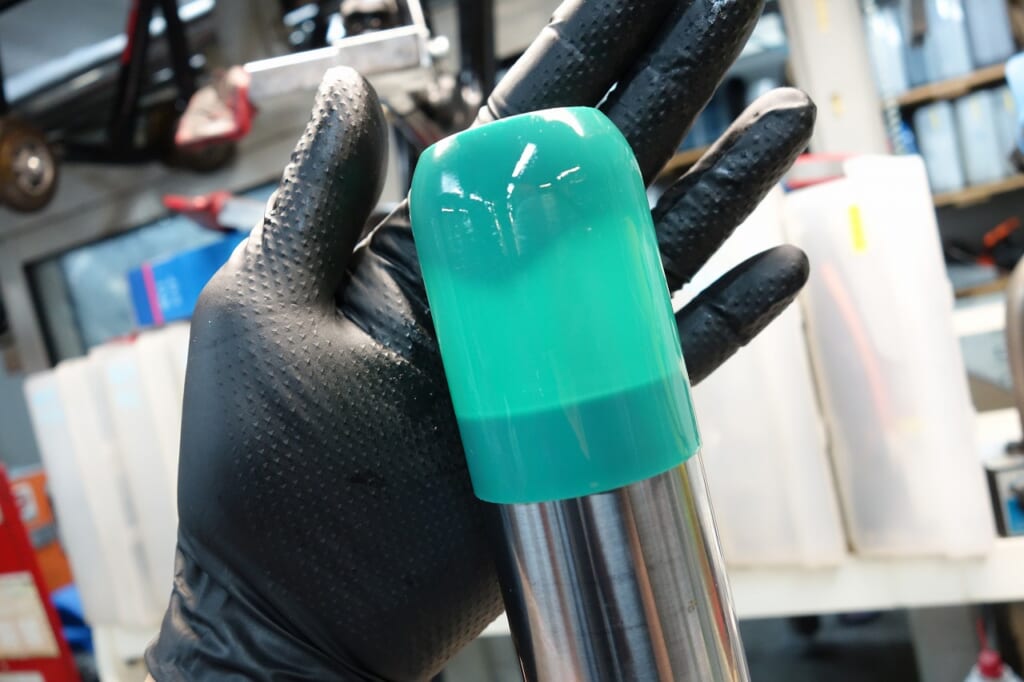
As shown in the image, if the width is short, you use the included plastic shim to adjust.
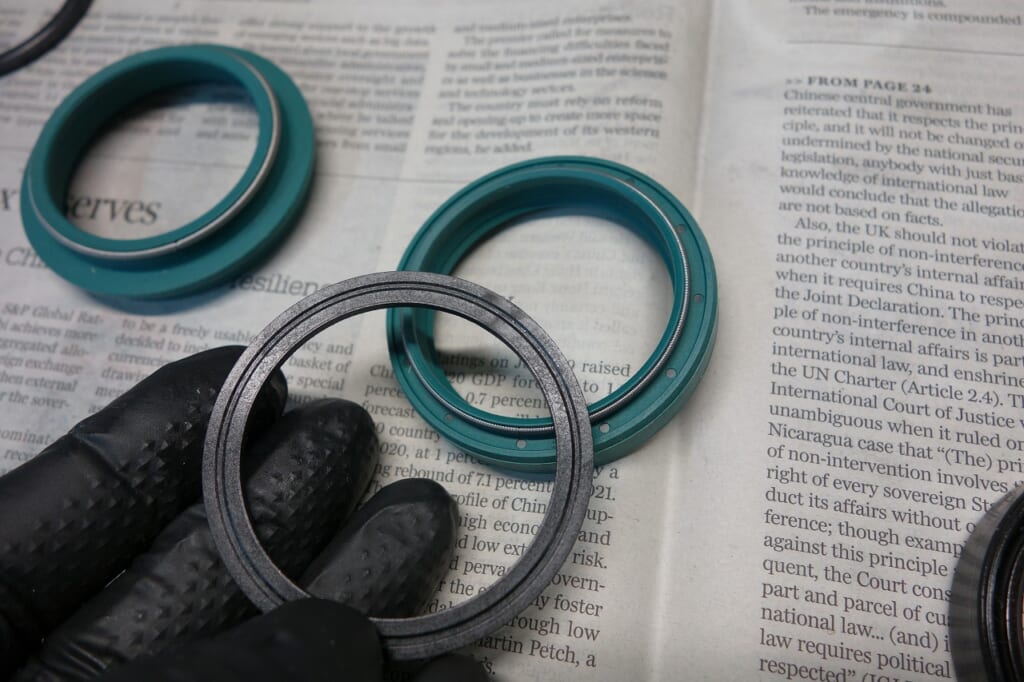
This one.
Practically lasts forever—my favorite Motion Pro Fork Seal Bullet.
Having the common fork diameters on hand speeds up your work.
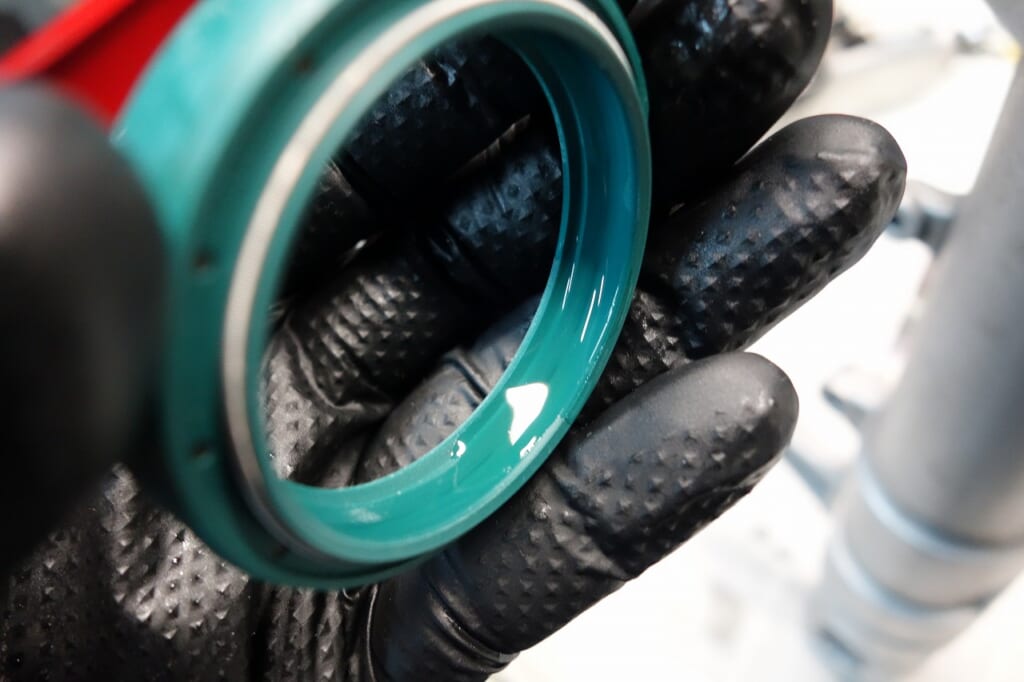
When I assemble, I put fork oil inside the lip. Grease hardens and gets gummy over time, so… yeah.
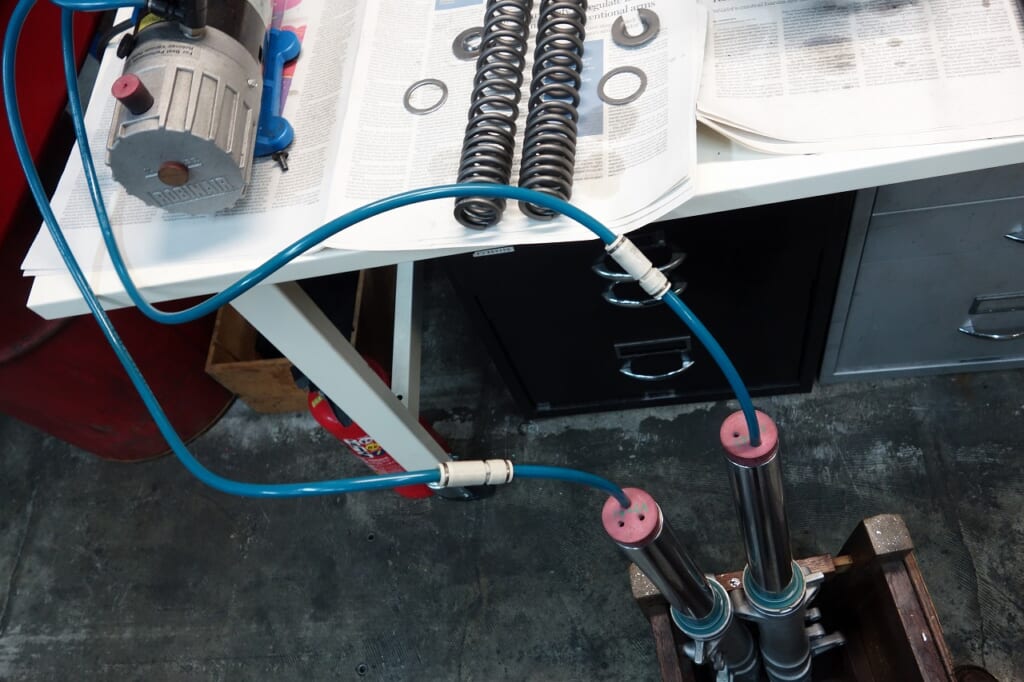
Stroking the cylinder and inner tube, then using a vacuum pump to remove fine air bubbles gives you more certainty.
It got old and the vacuum pump’s oil level window cracked. (´;ω;`)
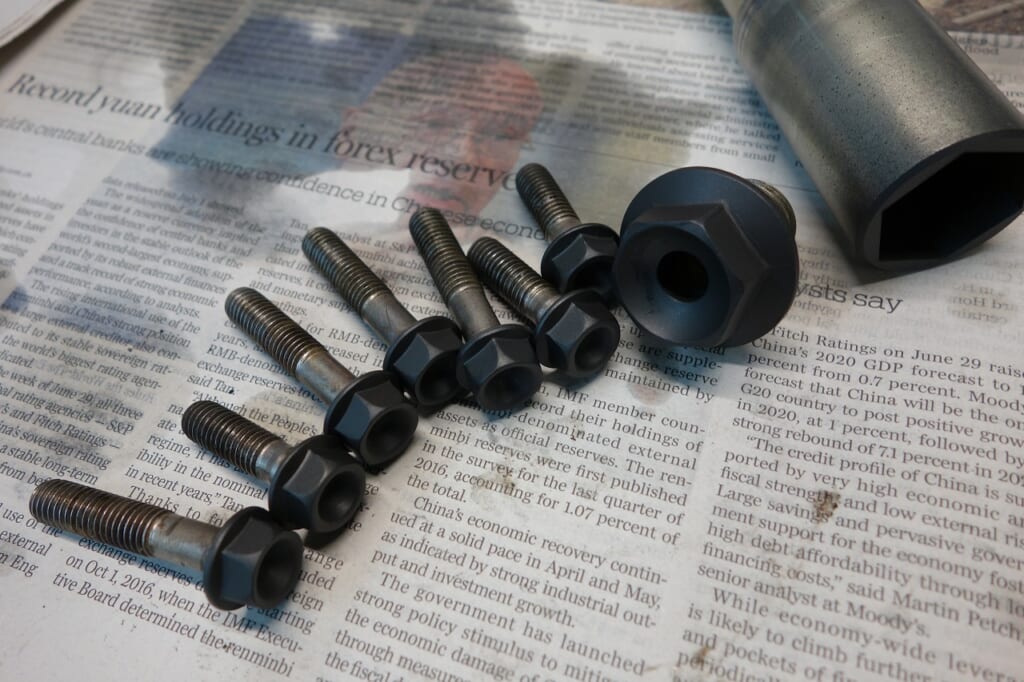
I coated the bolt heads with Gun Coat.
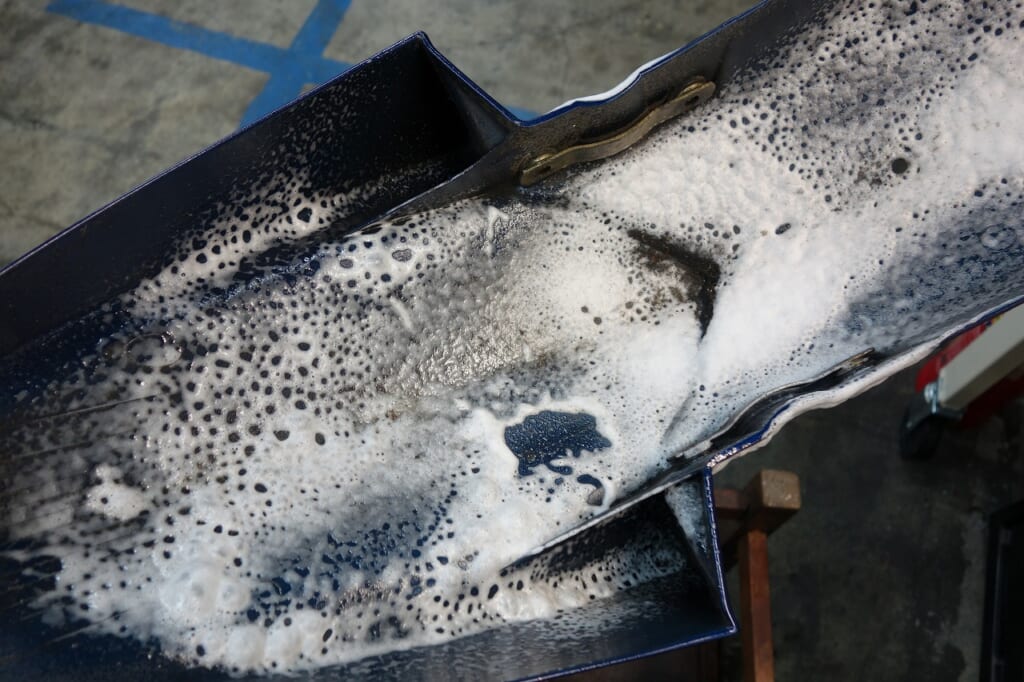
The mud on the back of the fender? Leaving it alone. Not touching it at year-end either? Please take this chance to clean it!
Now for a test ride and we’re done!