I’ve been thinking for decades now about how amazing the compatibility is on oil-cooled engine bikes…
Maybe I’ve been spoiled by that sweet compatibility and leaning on it too much.
Plus, Suzuki has always been so reasonable with pricing. The time has come! That’s the feeling.
Next, I want to talk about what becomes a problem when parts get discontinued—the stock and areas that need replacing.
*Keeping it brief (‘;’)
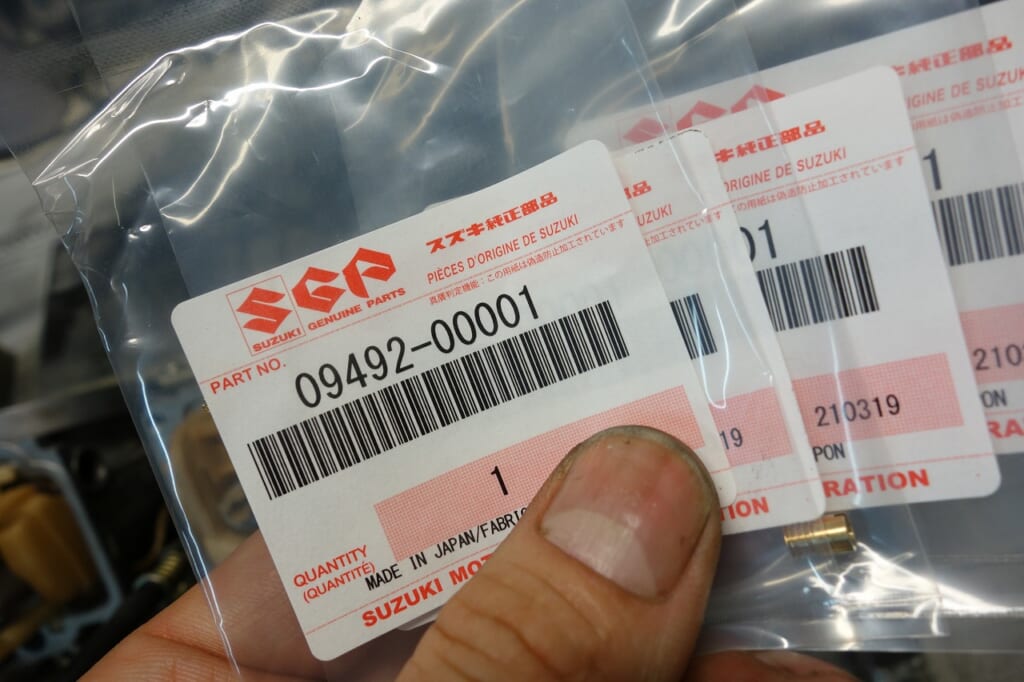
First, I suspect the next wave of discontinuations will hit fuel petcocks.
Fuel petcocks seem to have high compatibility, but they’re actually subtly model-specific. Sure, if someone doesn’t mind swapping in an aftermarket petcock, that’s fine, but with brands like Pingel you need to enlarge the holes—that means extra cost.
With an original part, you just take it off and swap it on. That’s what’s so great about original parts.
If you replace it now, it’ll easily last another 10 years or more. The petcock I’m using now has been going for 20 to 30 years, so replacing it—or rather, buying a replacement—would be the better move.
Even if there’s no problem, I think you should go ahead and replace it, then keep the old petcock as a spare in storage.
There’s also a chance that used prices will spike after it’s discontinued, so it feels easier to justify the replacement.
The parts that really cause trouble when discontinued are rubber components. Oil seals and O-rings are basically standard sizes (though there are some quirky exceptions), so I don’t think there’s much worry about them disappearing.
What’s really troublesome is things like “head cover gaskets”—repro manufacturers won’t make them because of tooling costs and the limited sales volume afterward.
Should I ask you all to start a head cover gasket savings fund?
But then people say, “Surely parts will still be available, right?” and skimp on spending a few thousand or tens of thousands of yen, then finish off the oil leak spots with liquid gasket and don’t complain afterward—got it? φ(..)Memo memo
Lately, I’ve noticed that Japanese motorcycle makers are also making bolder strategic shifts.
It’s a shame that despite being able to design and build such high-performance bikes, they can’t preserve them as cultural heritage.
Maybe it’s only when we—myself included—face this kind of wave of original part discontinuations that we really feel it.