Every morning at 8 o’clock, I jot down something that suddenly occurred to me. Feel free to stop by if you like (*´ω`*)
The other day.
I was searching online for the dimensions of a float valve, clicking away…
When I did, personal blogs about “carburetor overflow” came up in droves, and I found myself reading them before I knew it.
The posts generally described carburetors leaking fuel (overflowing).
Even after ordering and installing a new float valve, the leaking didn’t stop, and lowering the float level either made no difference or made things worse.
Many articles asked: what’s the cause?
It’s no wonder the mystery deepens when you can’t see inside the carburetor.
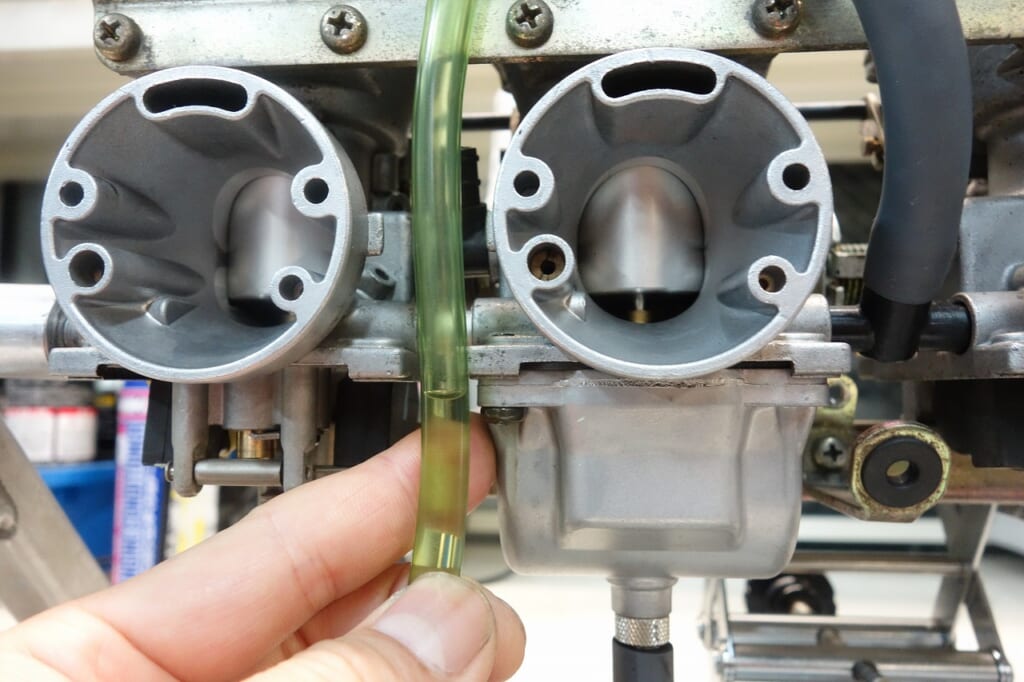
The quickest way to solve it is to somehow secure the carburetor as a standalone unit and watch the flow and movement of gasoline at the actual fuel level with your own eyes.
Fundamentally, it’s not that delicate a mechanism.
Float sinks—gasoline flows IN.
Float rises—gasoline STOPS. That’s all there is to it. It’s designed to handle even full-bank leans and wheelies.
What you should consider:
• Debris in the tank (including rust)
• The float valve seat crushed during removal and installation, causing poor operation
• Poor float operation (confirm it floats in liquid).
There are more cases, but assuming the float valve has already been replaced with a new one…
Modern rubber-type float valves rarely step-wear. The body wears out faster than the rubber tip.
If you let the gasoline go bad and the tip hardens, the seal weakens and the fuel level can gradually rise.
First, watch the gasoline movement with your eyes, eliminate causes one by one, and it should get fixed. There’s no magic in machinery (*´ω`*)