Breakdowns tend to come out of nowhere most of the time…
However, if you take preventive measures beforehand, while it’s difficult to eliminate troubles entirely, I think it’s possible to reduce them.
“Wait, you can’t eliminate them?”
It’s difficult because we’re using parts that are still functional, and electrical failures in particular are harder to prevent than mechanical ones. After all, they fail suddenly like a light bulb burning out…
It’s like saying, “We’ve used it for 20,000 kilometers, so maybe we should replace the igniter with a new one?”
Nothing in life is 100% perfect, you know…
First of all, it goes without saying that comprehensive motorcycle insurance is essential. There are benefits to it.
Our shop declines all work for customers who don’t have comprehensive insurance.
So what’s good about having comprehensive insurance?
When there’s an accident involving another party, insurance is obviously necessary. Handling all the procedures and communications during regular business hours as a working adult is extremely difficult.
Towing service is included.
This is arguably the biggest benefit. When trouble strikes, you just call your insurance company and their affiliated towing service will arrive quickly.
Accident vehicles typically have damage to the front end, so it’s difficult for us to load them onto our vehicle.
It’s best to leave it to the professionals—a specialized towing company will pick it up faster and do a much better job.
Don’t skimp on the battery.
Some people stretch it as far as they can, thinking “it still works, it still works…”
But that’s definitely all harm and no benefit.
Like underwear, it’s probably better to change it sooner… the elastic gets all loose and saggy.
When the battery is weak, starting performance naturally suffers.
And once you’ve parked somewhere, you’ll feel inconvenience and anxiety about starting up again.
Batteries often fail during startup, when the load is highest, rather than while riding.
Of course, if that happens away from home, it becomes a real problem.
Finally, basic maintenance.
As a foundation, if you check the undercarriage (brakes and frame) and the control systems, I think you can meet the minimum requirements.
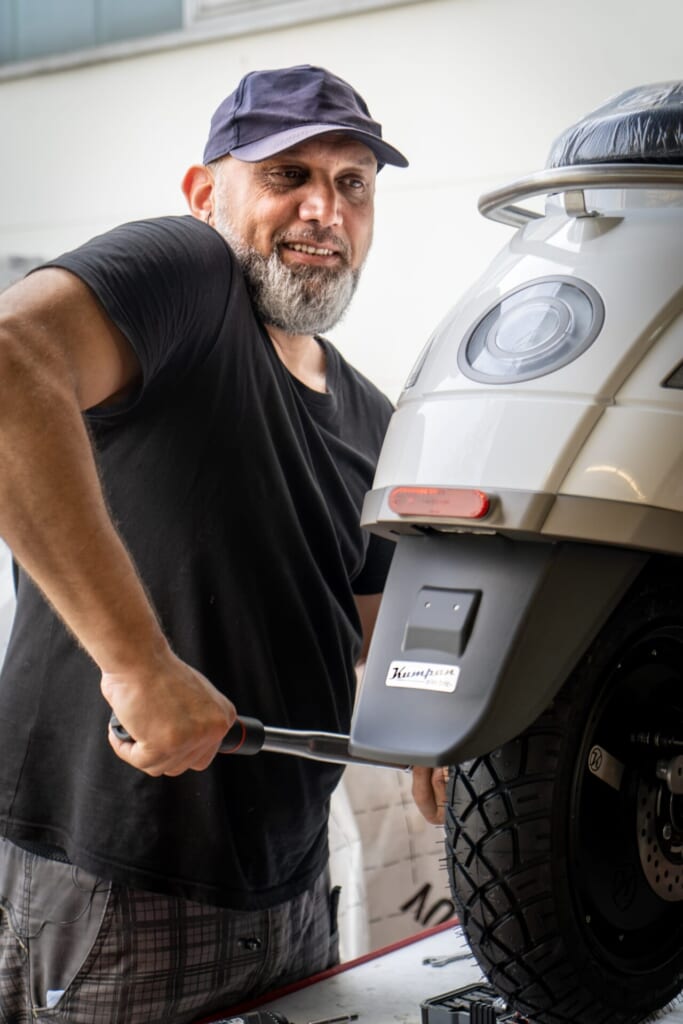
You can just put a wrench on the control systems and brake area and check them off, or you can visually inspect the tightness markings.
Essential items include brake fluid, engine oil, coolant, brake pad wear, drive chain, and tire pressure—you’ll want to keep an eye on those.
It would be great to enjoy a smooth motorcycle life with as few troubles as possible (*´▽`*)