It’s a dream tool that can cut sheet metal cleanly and instantly.
Without it, you’re hacking away with a contour machine and grinding with a belt sander.
A tolerance of 0.5 mm to 1 mm might be… necessary?
When you’re making something, cutting the material is a step in the process.
Cooking is the same way.
Now, if you have all the time in the world to spend just on cutting, your options are plenty.
The first tools humans ever used were probably “a sander plus a cutting stone or hacksaw.”
If it’s round, you can still manage, but with sheet metal, it’s not that simple.
You want to cut as quickly and cleanly as possible.
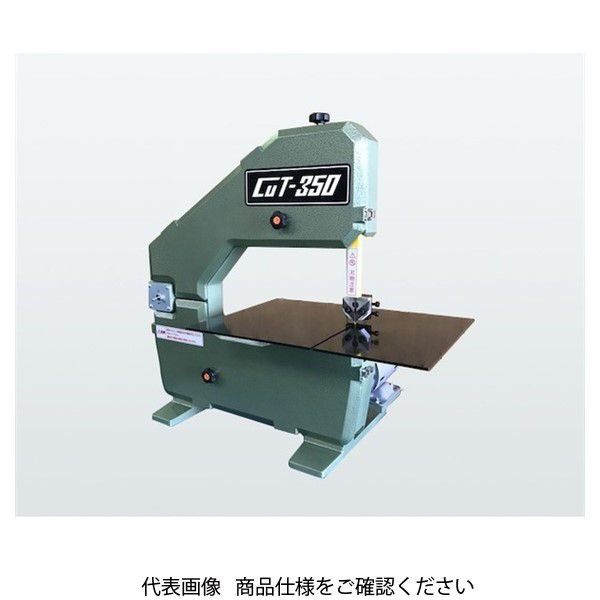
The next step is usually when you get your hands on a contour machine, a marvel of modern technology.
When I first saw one, I was more amazed than when I first saw a monkey wrench!
If you have enough power capacity, go for 200V. The cutting power jumps dramatically.
With a contour machine and a belt sander, your cutting power suddenly shoots up.
However, a contour machine seems somewhat unsuited for thin sheet metal.
The cut surface always comes out rough, and the vibration noise during cutting is annoying.
If you’re only cutting aluminum, it’s fine, but once you start working with stainless steel and titanium, the belt sander work becomes tedious.
Belt sander belts wear quickly, and when they do, burn marks become noticeable.
It makes sense why aluminum is so popular.
I wished I could cut stainless steel and titanium more easily. Wanting to keep space and cost down, I started buying and trying easier methods.
I bought an overly aggressive nibbler, tried a set shear, but I realized there was a lot of waste involved in cutting at this level.
It’s hard to explain, but with a nibbler, one side tends to bend slightly. Before using a set shear, you have to pre-cut it into smaller pieces.
If you can’t cut a certain distance (width), material yield becomes terrible, storage conditions suffer, and the cutting process can end up being as slow as a contour machine.
Here I made one last attempt: the “foot-operated shear.”
Relatively affordable with decent width.
But it’s more for non-ferrous metals and thin materials, and I don’t know anyone around me who uses one, so I can’t get reviews—buying it without knowing if it works is terrifying.
I asked a tool shop about the capabilities of a “foot-operated shear,”
and they casually said “it all comes down to leg strength,” which made me even more nervous.
After months of searching online for a small shear,
I found the AMADA 632 Shear a few years ago.
It has a 600 mm width and 3.2 mm cutting capacity. The size is about that of a small upright piano, so placement was just something to think through a bit.
My impression after buying and using it is
“It’s absolutely amazing!” “I wish I’d bought it sooner!”
It’s that convenient.
Now I can hardly imagine life without a shear.
I got a bit passionate in my writing, but the number of existing AMADA 632 Shears is extremely small. When you think about it, that’s the time to invest in equipment. ← Rarely, one is available now! ♬
I think every day about how great machines are.