You can’t check the clutch from the outside.
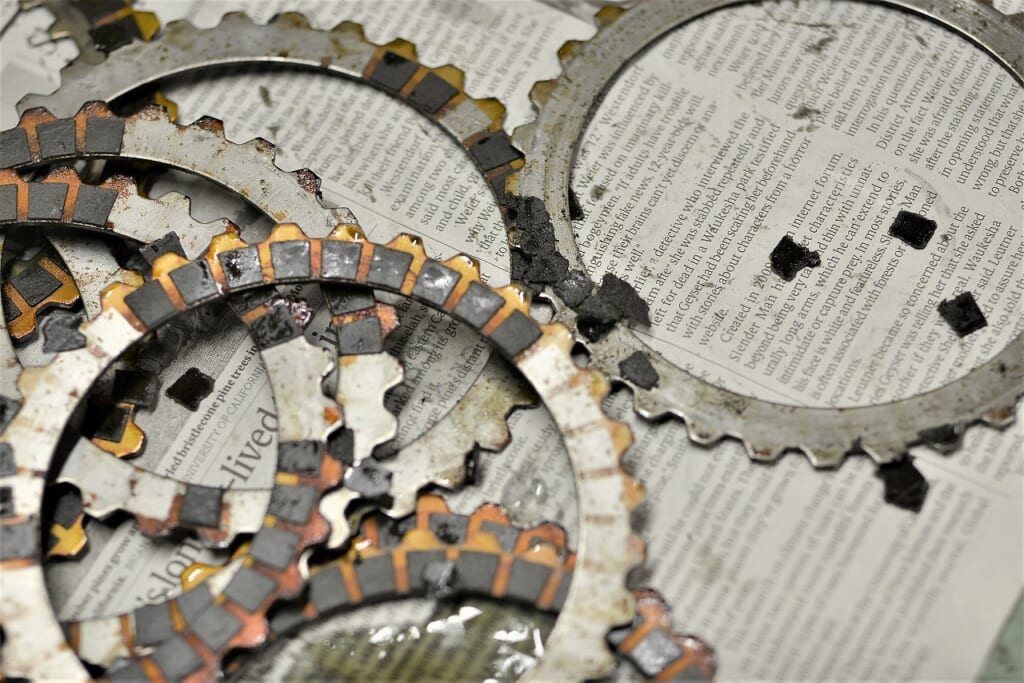
If it looks like the image when you take it apart, it needs to be replaced right away, but that situation is rare.
If it’s a 20-year-old bike, don’t overthink it—just go ahead and replace it, and you’ll probably be good for as long as you own it.
How long will parts supply continue?
When it comes to clutches, there’s FCC.
But honestly, it’s unclear whether your model will stay in their lineup forever.
Plus, I’d predict prices will only go up, never down.
Should we start saving 500 yen a day starting tomorrow?
Clutch problems are hard to spot in city riding.
Clutch slip usually happens when you snap the throttle open or rev it hard.
The clutch is a bit like the relationship between a brake disk and pads.
If the brake disk warps from heat or the pad material hardens, you won’t get peak performance, and they’ll drag each other down and get worse.
Once it starts slipping, it won’t stop—things will only get worse.
FCC clutch over OEM
This is my prediction, but I think manufacturer OEM parts will generally keep supplying at the original spec as long as there are no major compatibility issues or export restrictions.
There are pros and cons to that, but when it comes to clutches, if aftermarket FCC is supplying them using modern materials and processes, there’s no reason not to choose them.
Back in the 20th century, cheap “high-performance” clutches came bundled with hyper-stiff clutch springs—just bolt them together.
Sure, no slip, but the clutch lever got heavy and it messed with your riding.
Now we’re in a good era where you get stable clutch performance without those worries.
A 20-year-old bike is a good candidate to knock this maintenance item off your list.