Not letting it rot—that’s the most important thing. (*’ω’*)
If it does rot, can’t we just do an OH and be done with it?
It will run again, but whether it returns to its original specs or better is questionable.
Just replace the jets.
In severe cases, it’s better to replace the jets altogether. (OEM recommended.)
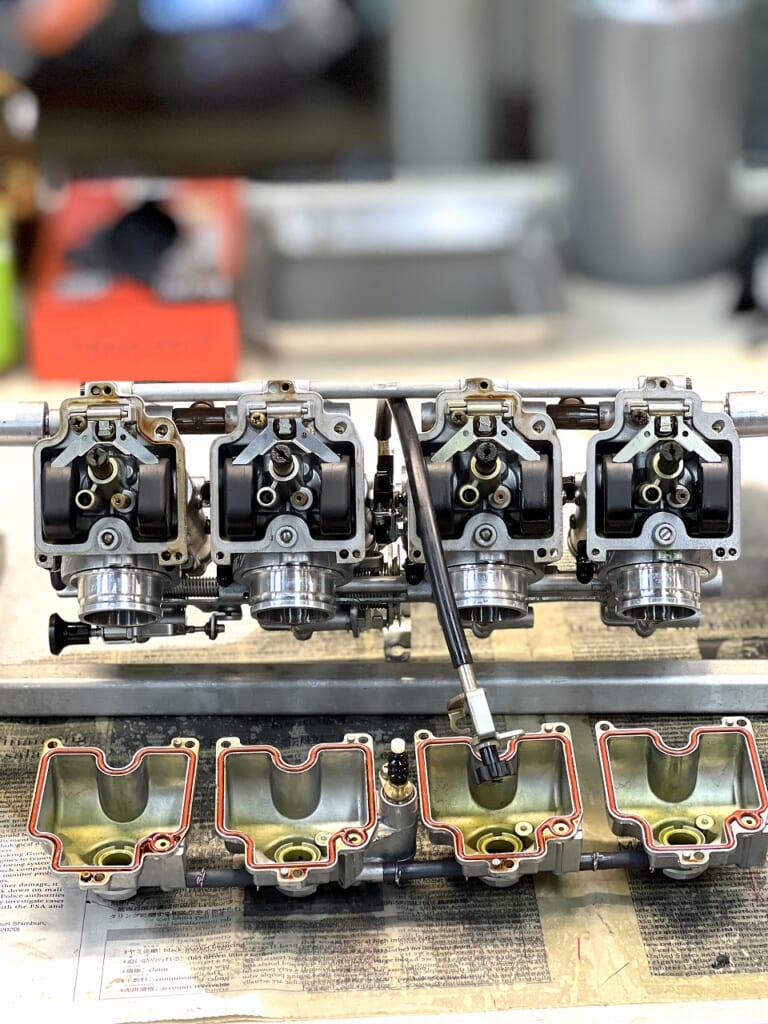
Corrosion gets really bad, turning everything crusty. The internal passages are probably the same way.
Is checking the body passages just about continuity?
When you disassemble and clean a clogged carburetor, the checks you do are basically…
Just confirming that liquid or air is passing through.
Just whooshing and puffing sounds.
There’s no way to check if that flow is close to normal. There’s always a chance something’s still stuck deep inside.
Pull it out once in a while and start it up,
Use up the gas in the carburetor and replace it—that’s the idea.
You could also drain it completely, which is an option too.
But if it’s not soaked in gasoline, the O-rings can shrink, and you might get overflow, so be careful.
Neglect is the worst—the fuel tank can end up dead too.
You might think, “Can’t we just use rust remover and coating?”…
But what if it’s already been coated once? Then what?
I’ve never seen anyone deal with that, so I can’t say for sure, but it’d be a painful expense.
Little things pile up and you lose interest fast.
Once a bike’s carburetor rots, the tank goes bad, the petcock needs replacing—that cascade means the whole machine is in pretty rough shape.
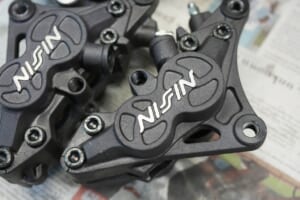
Tires, chain, calipers, master cylinder, battery—before you know it, you’re looking at a restoration project.
Sometimes it’s better not to fix it at all.
Just start it up once in a while, and if you can, ride it—it makes a huge difference in how long it lasts.
In a way, bikes are like living things, so show them some love.