I’m getting really fed up with Suzuki’s steep price hikes on genuine parts, I tell you.
I understand the manufacturer’s position, but it’s still confusing and frustrating.
The problem with older Suzuki bikes is this:
① Many genuine parts are discontinued ② Even when available, prices are high ③ Reproduction parts are extremely scarce
④ Used parts are extremely scarce ⑤ Aftermarket parts are also limited.
Basically, genuine parts aren’t available, reproductions don’t exist, used parts can’t be found,
so all I can do is muddle through somehow.
When unexpected problems arise, it takes an enormous amount of time to think through and implement solutions.
I miss the days when I could just look up part numbers, place an order, and get to work.
For these reasons, I haven’t been doing carburetor overhauls lately.
However, I thought it was worth knowing that conditions are deteriorating, so I decided to write this blog post.
If you had an overhaul done back in the day, you’re lucky!
The Mikuni BST series is a unique carburetor
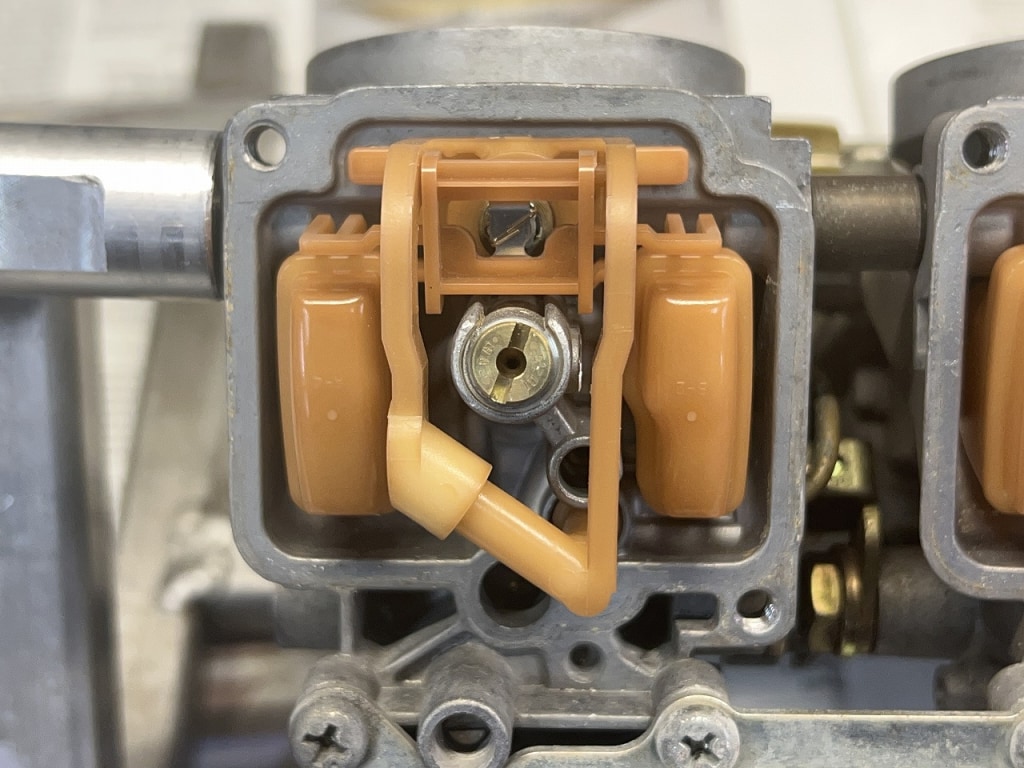
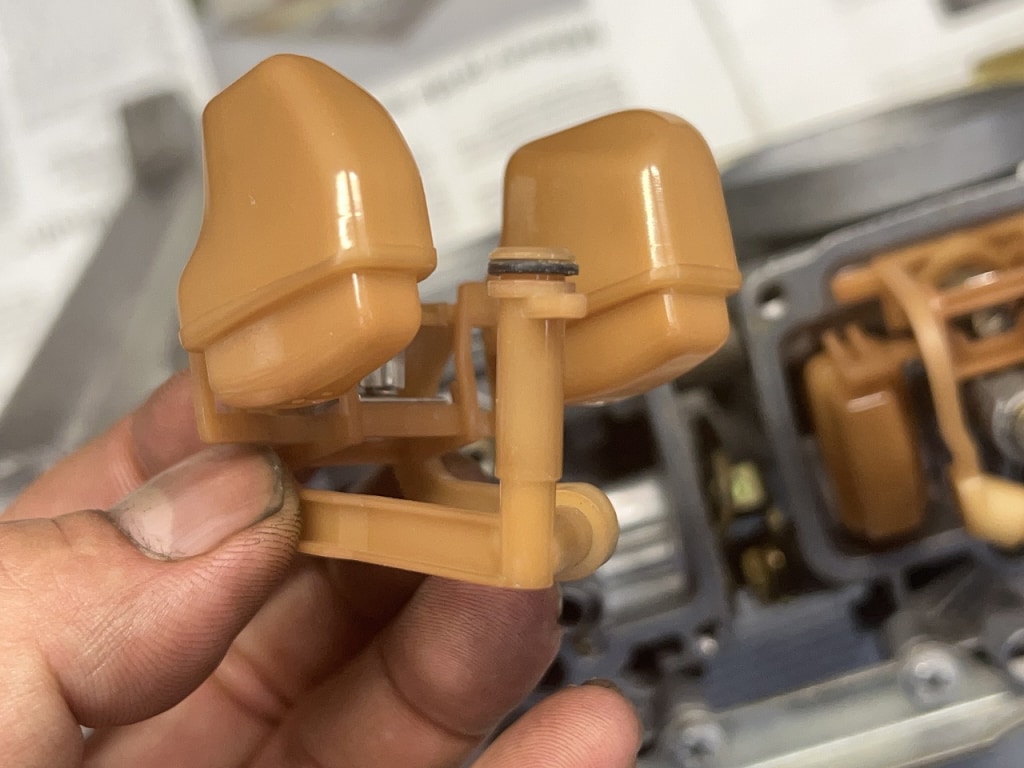
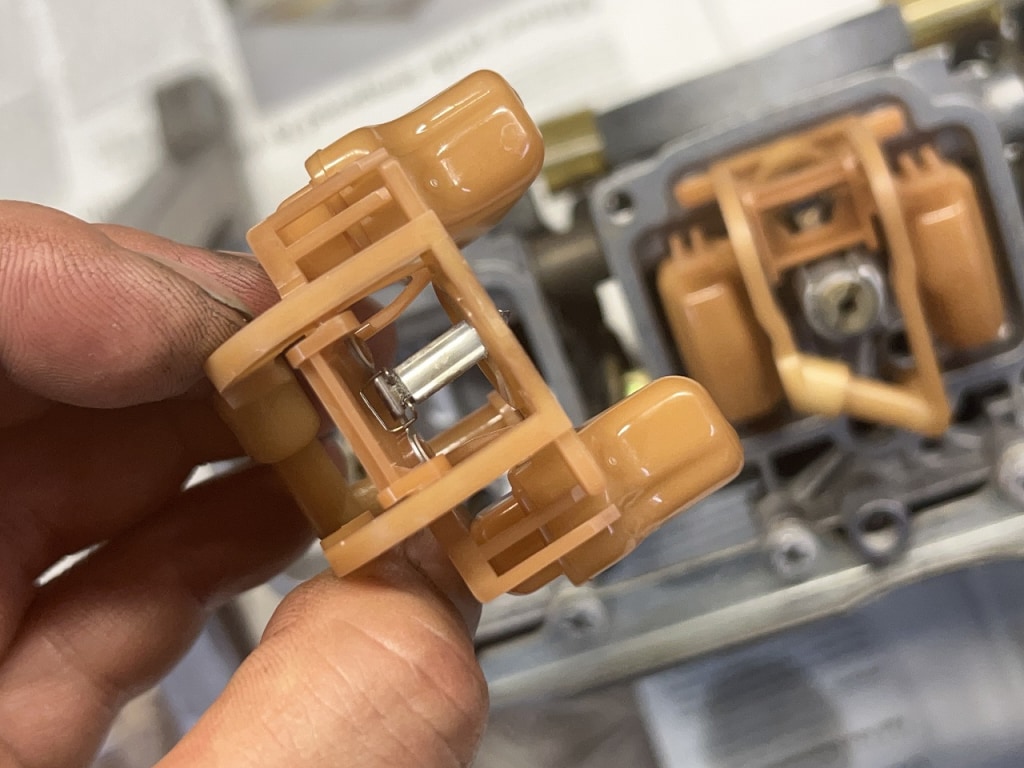
The float arm isn’t integrated into the body but is a separate component.
With older carburetors, the float arm itself can break off, right?
With a separate design like this, you can replace the part individually.
Maybe they thought through various scenarios.
There are downsides though—the float assembly’s overall mounting is extremely vague.
One point is fixed with an O-ring, and the rest is held by tightening the float chamber.
Because of that, the float level itself is quite vague.
With the BST series, if you don’t check the actual fuel level, there can be significant discrepancies.
When the O-ring in the image deteriorates, the support becomes loose and the fuel level rises,
causing overflow. I think it’s about time for this to happen given the age.
Don’t be shocked by the float valve price
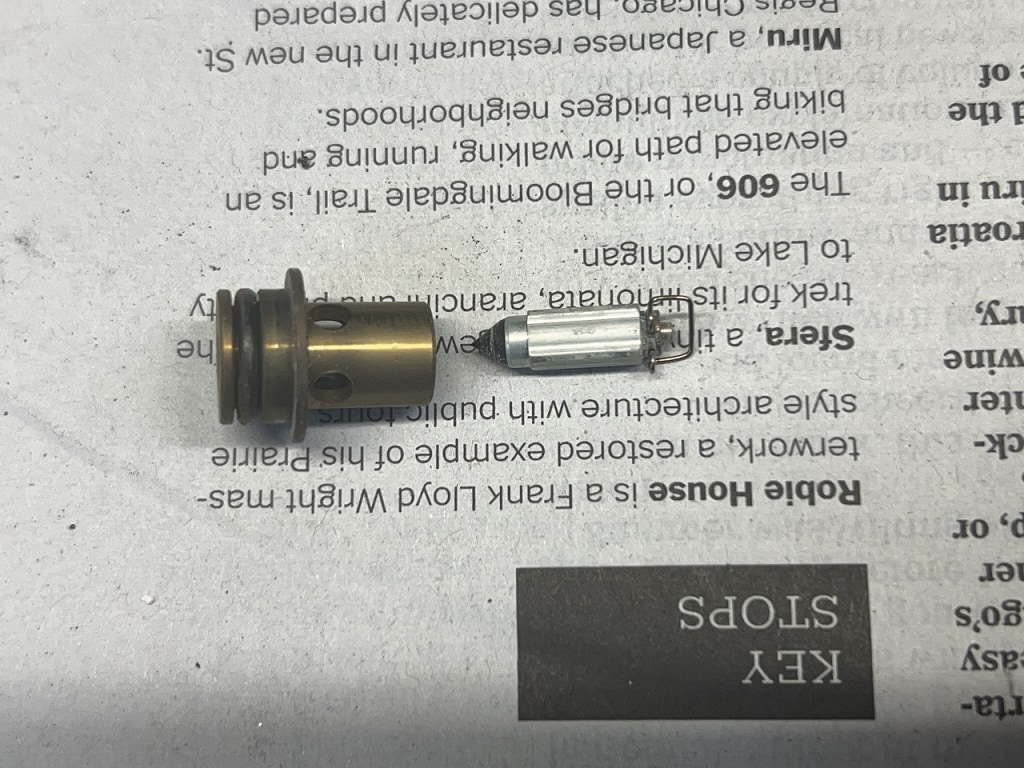
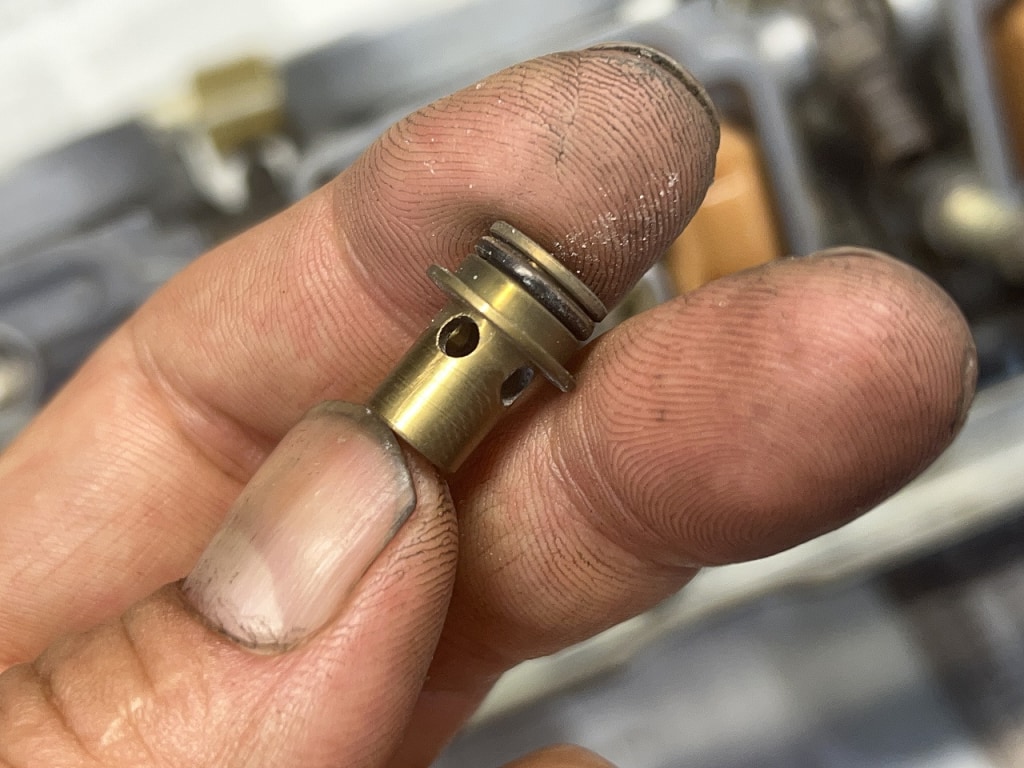
[13370-46E10] Valve Seat, Needle 13370-46E21-000 Valve Seat, Needle (NI)
¥7,650 (excluding tax)
If you need to replace all four, that’s ¥30,600 excluding tax.
It’s not exactly an easy price point for a casual replacement, is it?
But if I cheap out and something goes wrong, I’ll get complaints,
so with all these conflicting feelings, I only work on carbs for people who really insist.
The rubber tip is quite durable.
Often it’s the shaft that wears down, so the tip doesn’t seat properly—that happens a lot.
Generic-type inner parts exist nowadays,
but I’m thinking we might have to resort to those in a pinch.
The fuel passage seal is also saying “my end is near”
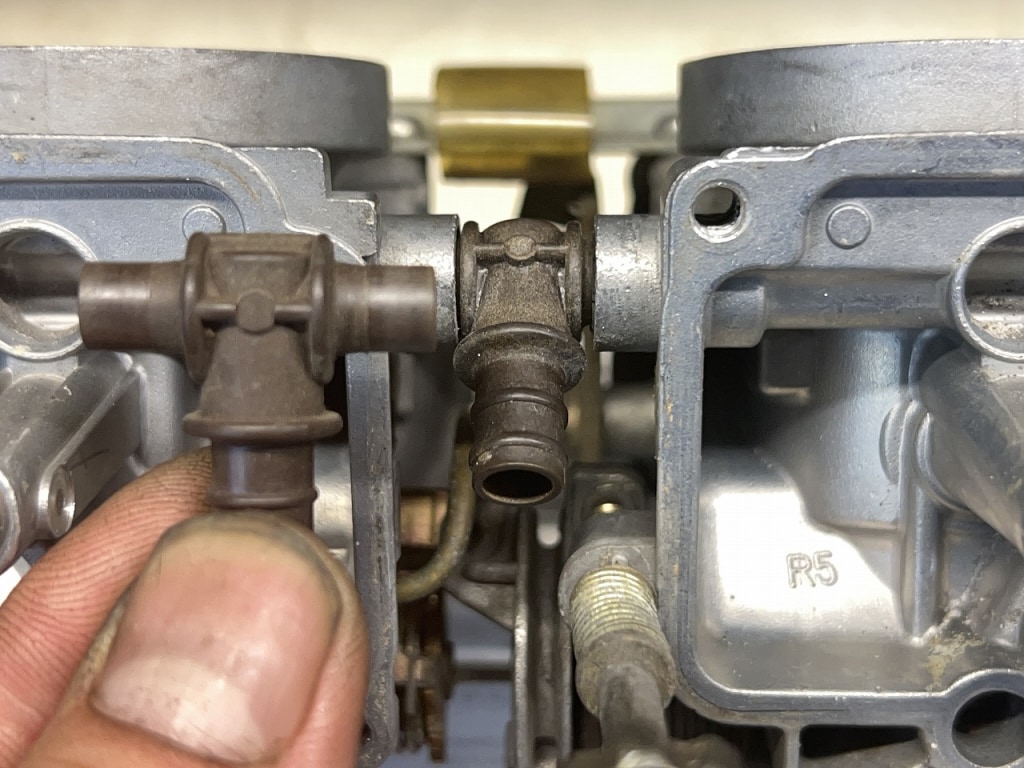
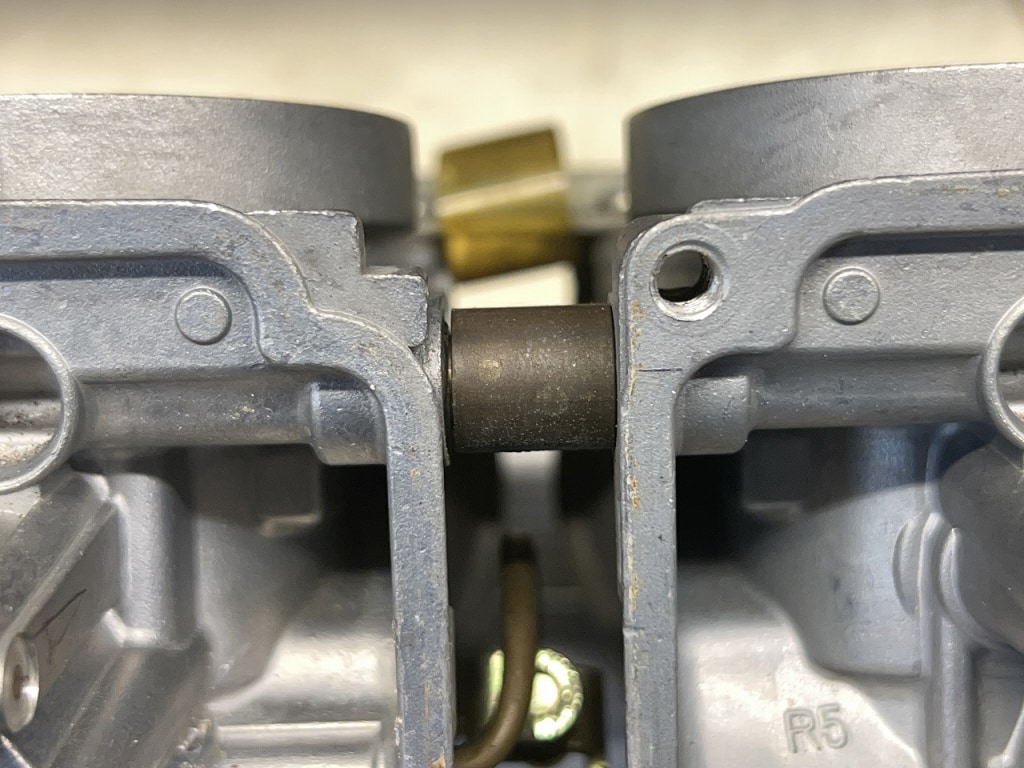
The fuel passage section has a tubular seal inside.
It has two ribs, so it’s quite leak-resistant,
but after several decades, it’s basically rock hard.
If you move it, it’ll break—that’s the situation.
Just replacing the seal would be fine, but
if something like the T-joint in the upper left image is missing, that’s a major problem.
SUZUKI Part No. [13685-44B00] Nipple ¥1,350 (excluding tax)
For a relatively recent Suzuki part, the price increase is pretty mild.
By the way, if you made something like this in metal, you couldn’t do it for ¥1,350.
At least it’s not like the old Mikuni BS with the seal integrated into the T-joint.
The starter plunger is also starting to leak
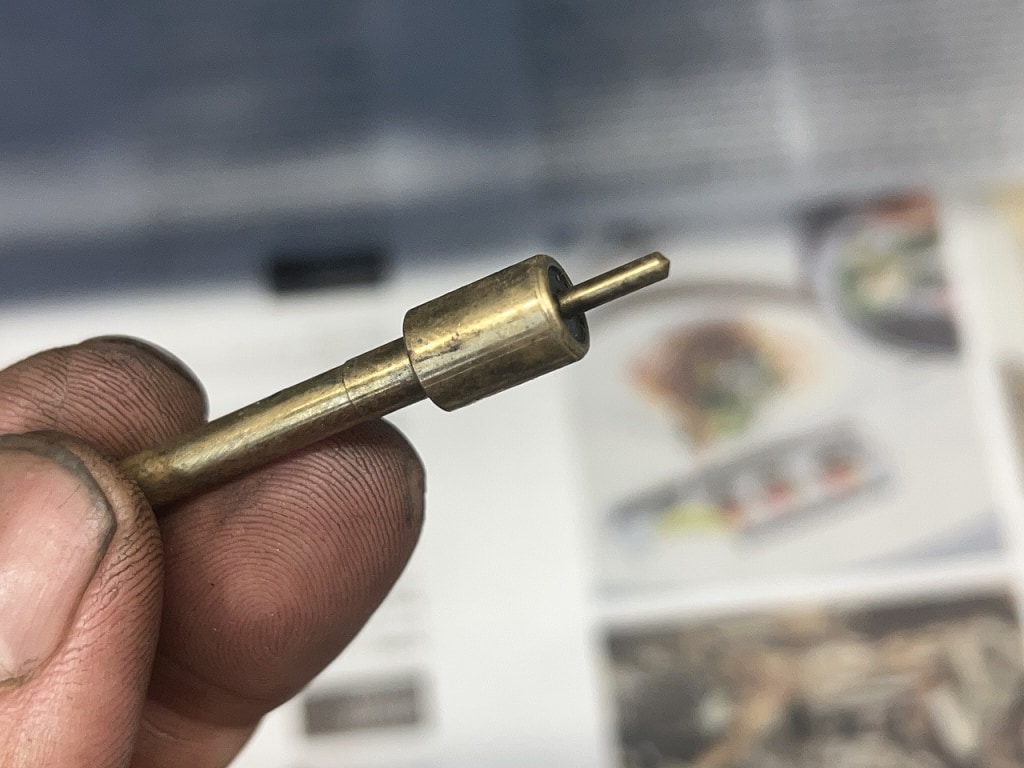
[13411-05320] Plunger Seat ¥490 excluding tax
Yeah, that’s what prices used to be like.
I don’t know why, but it’s incredibly cheap. I’m really grateful for a price point like this.
The rubber seal on the right side does all the work.
It’s always contacting the same spot, and the rubber is hardening.
When things are running a bit rough, the starter plunger is often the culprit.
Since we’re at it anyway, baking soda blasting the carb body brings it back to life!
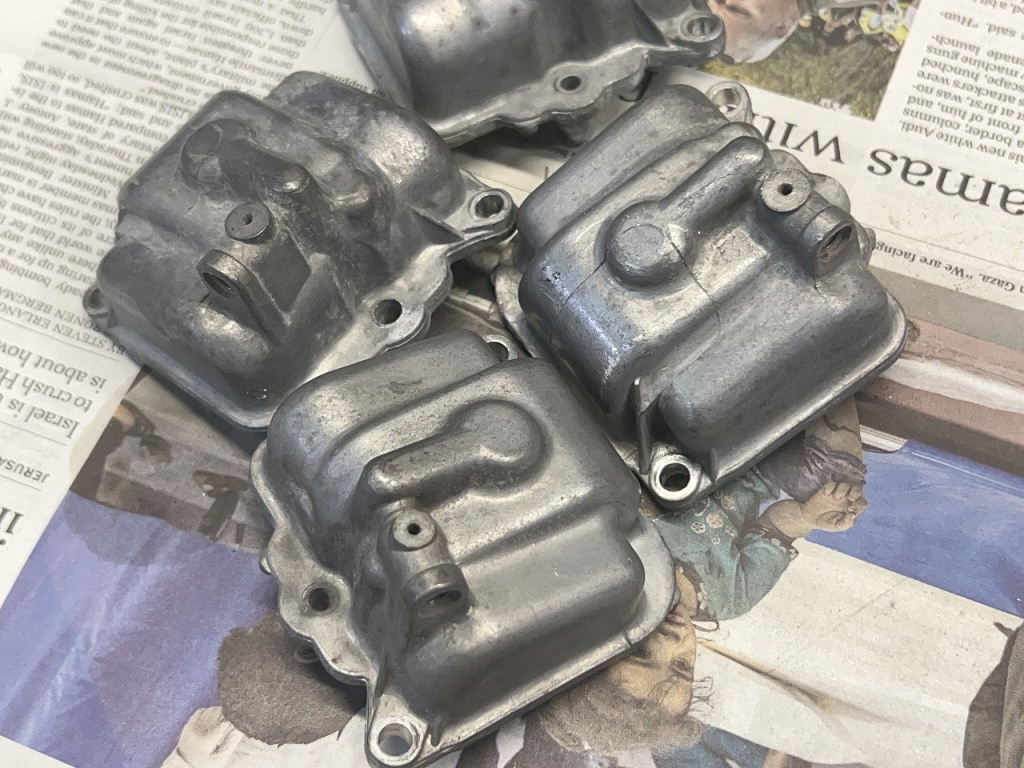
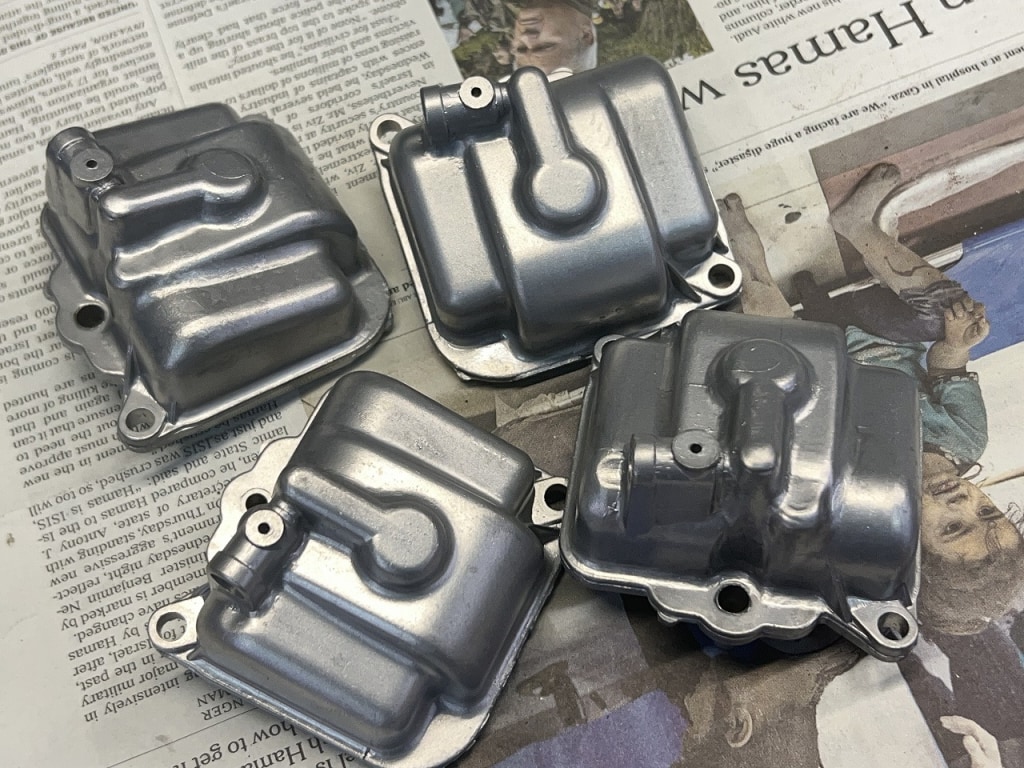
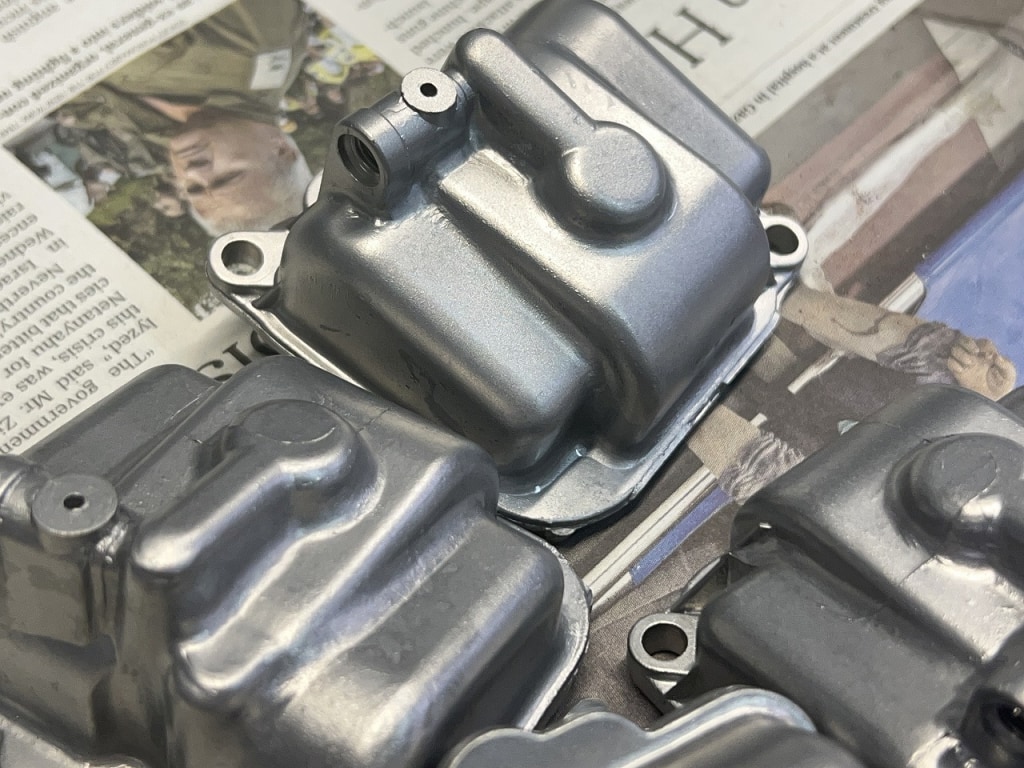
Even with an original vacuum carburetor, when it’s clean, the whole bike looks tighter.
When it gets worn, an aftermarket carb might be okay too.
But considering initial cost and maintenance expenses, genuine parts are very reassuring.
From spring through winter, no special adjustments are needed, and it’ll run even if you casually head to high-altitude areas.
The maintenance intervals are very long, and under normal riding, it’ll easily last tens of thousands of kilometers.
I think it’s good to choose based on what you’re looking for and what you want to do.
I’ve got quite a few spare parts on hand
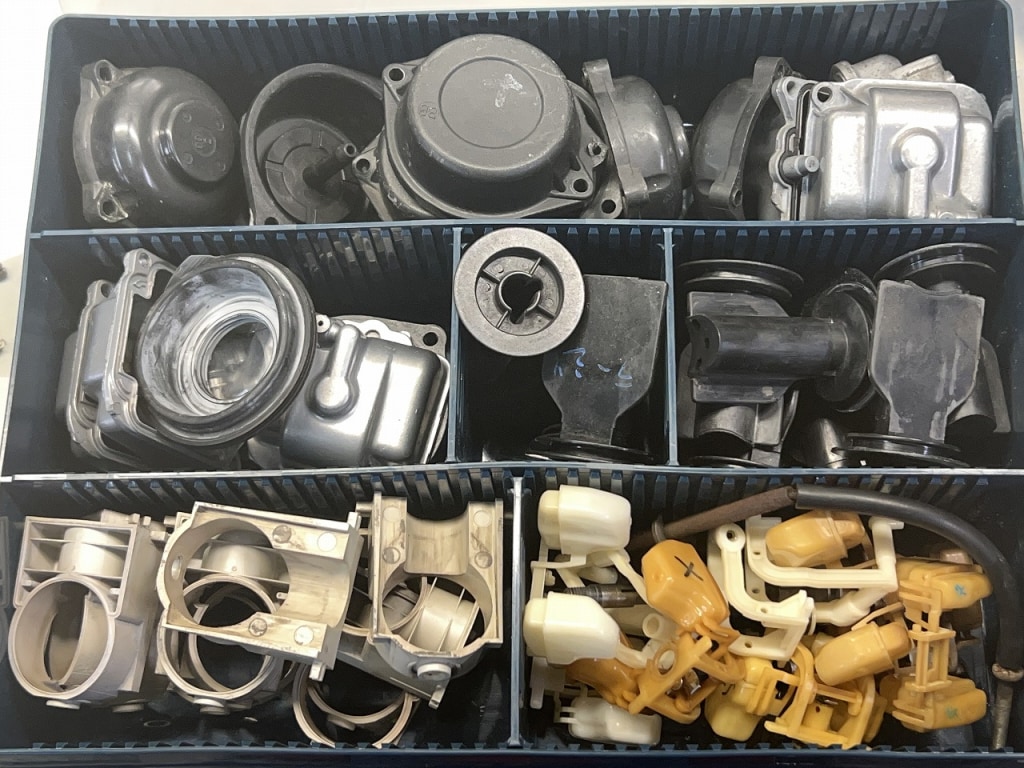
Sometimes when you disassemble a carb, there’s just nothing you can do about it.
Usually it’s cracked or broken off, right?
Sometimes you can’t weld it depending on the location or material,
so whether you have spare parts or not makes a huge difference.
Plus, intake manifolds, throttle cables, and choke cables are increasingly being discontinued.
When I check things after removing the carb, I often run into these kinds of problems, so it’s scary.
I like the Mikuni BST carb precisely because I understand its current weaknesses so well.
Weaknesses? Or rather, it’s mostly a parts supply and pricing issue, I think.
As for carburetor work, I’m in a tough spot, so if you’re stuck, I can at least listen to your concerns.
I really do think carbs are best left to Keihin.


 ポチップ
ポチップ
 ポチップ
ポチップ
 ポチップ
ポチップ