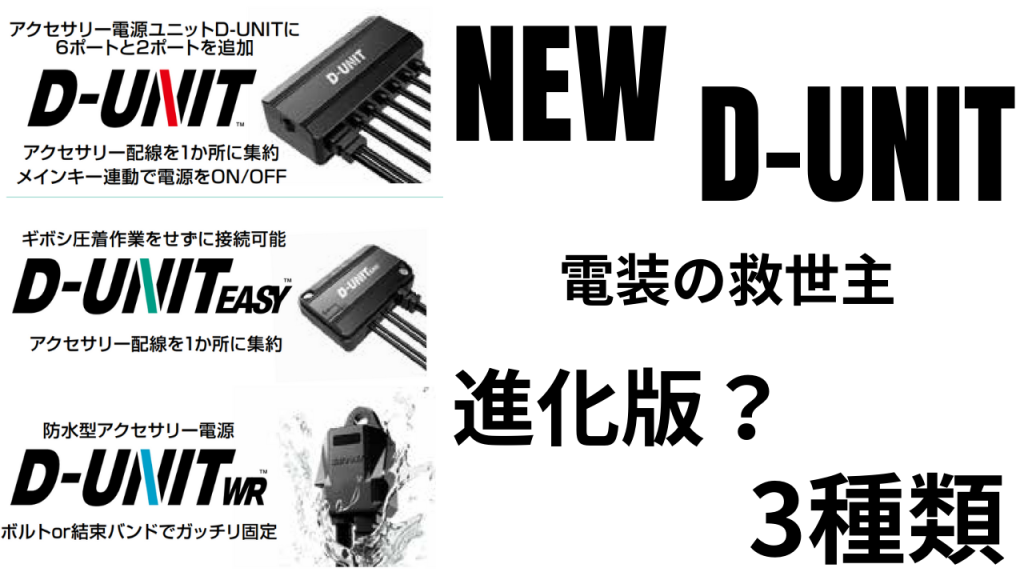
This Daytona D-UNIT item is groundbreaking and I still use it today.
In recent years, the demand for aftermarket electrical parts installation has increased significantly.
ETC, dash cams, USB power outlets, oil temperature gauges, heated grips and so on.
Without the D-UNIT, it’s difficult to tap into 4 or 5 power sources.
In such cases, the D-UNIT product that lets you tap power without modifying the harness is truly a godsend item.
Without this product, electrical installation simply isn’t possible. That’s how convenient it is.
Also, since power is drawn via a direct battery relay, the voltage is stable and it’s an extremely excellent item, I think.
That D-UNIT has finally evolved and is now on sale.
By the way, the old D-UNIT is still being sold, so it’s quite confusing.
Unless you have experience installing it multiple times, choosing between them would be very difficult.
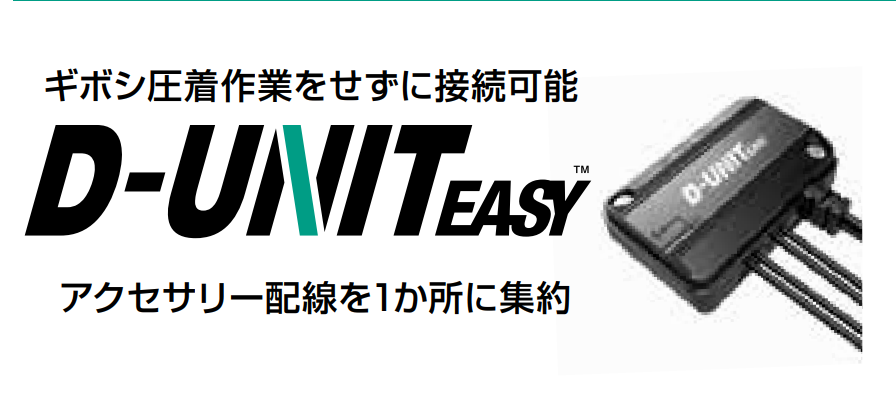
D-UNIT EASY No crimping required, just snap it in place! Maximum of 6 ports
D-UNIT EASY
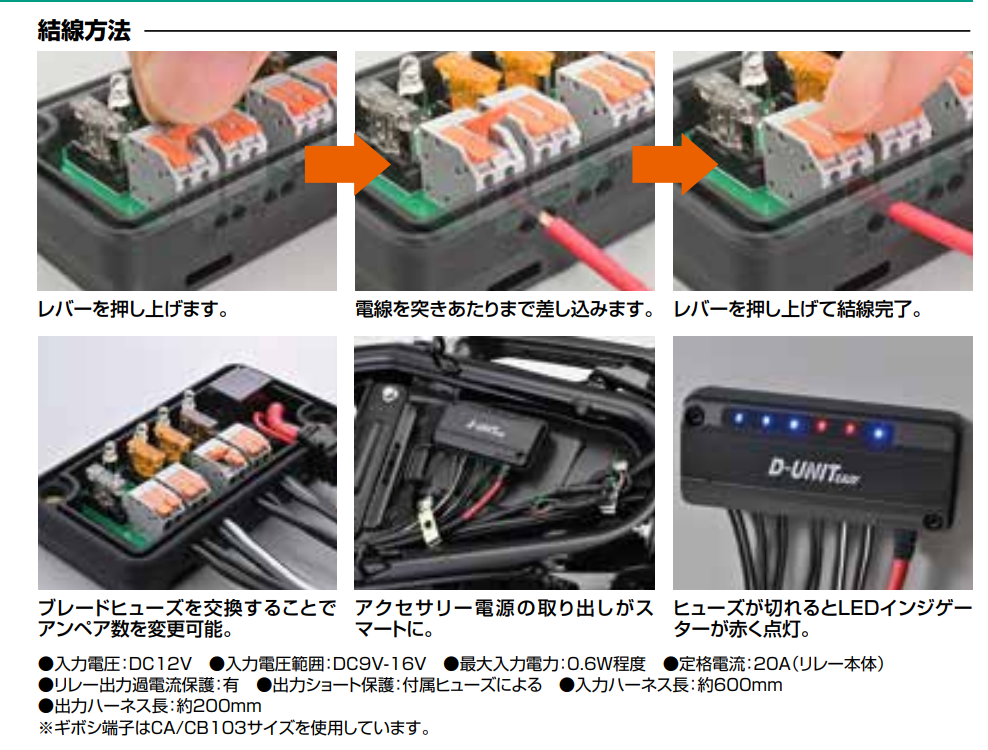
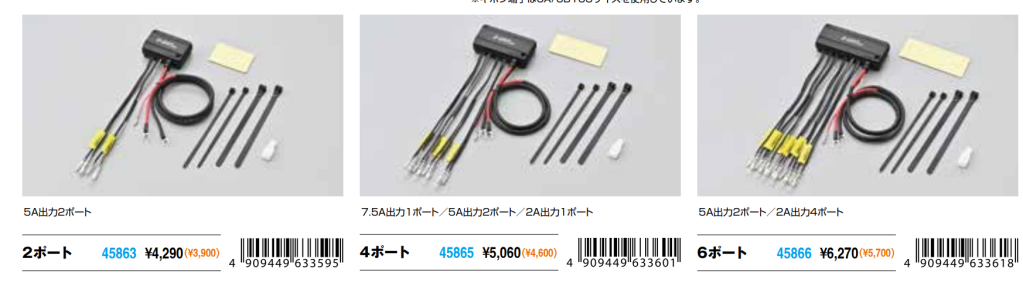
This EASY model doesn’t require crimping work; you can connect it simply by snapping it together.
With wiring included, you can also use it with Giboshi crimping.
The connection holes serve as guides, so it should be harder to cut the wires.
There are 3 port types: 2, 4, and 6 ports. From this version, an LED indicator has been added and turns red when a fuse blows (normally it’s blue).
There were similar products on Amazon, right?
As always, when I see new products, the old ones start to look disappointing.
If this new version has proper cover improvements, it could be a great item.
D-UNIT WR MINI The most user-friendly D-UNIT is the WR, hands down
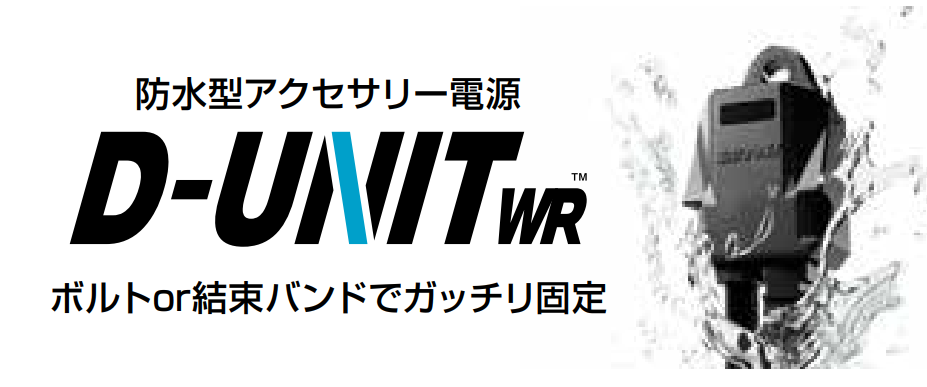
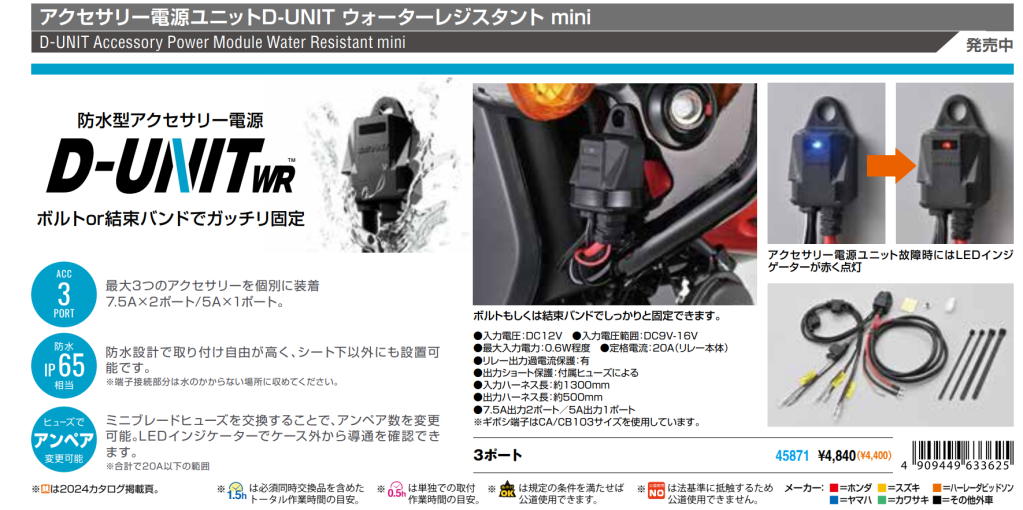
D-UNIT WR MINI
I always say if you’re unsure, just get the WR! This is the standard choice.
The body size isn’t listed in the description, so I’m not sure if it’s actually mini or not.
However, the installation method has been improved, so expectations are very high.
As shown in the image, what appears to be an M6 boss is installed on the top surface.
The previous model had an insulation lock fixed base on the back, which was subtly difficult to secure.
The problem was that even when making electrical panels, you couldn’t mount it flush.
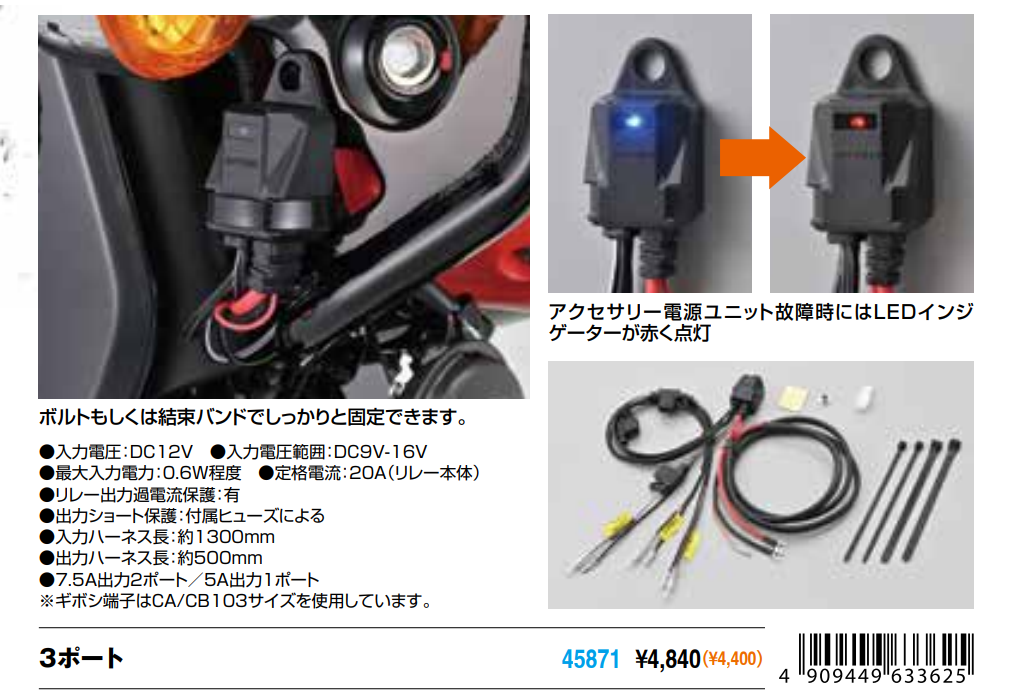
This model also has an LED indicator added, so you can check for unit defects or failures.
Looking at it this way, the previous models seem a bit sad.
Since electrical components advance rapidly, it’s best to choose the newest model next time.
The basic D-UNIT’s reason for existing is becoming unclear
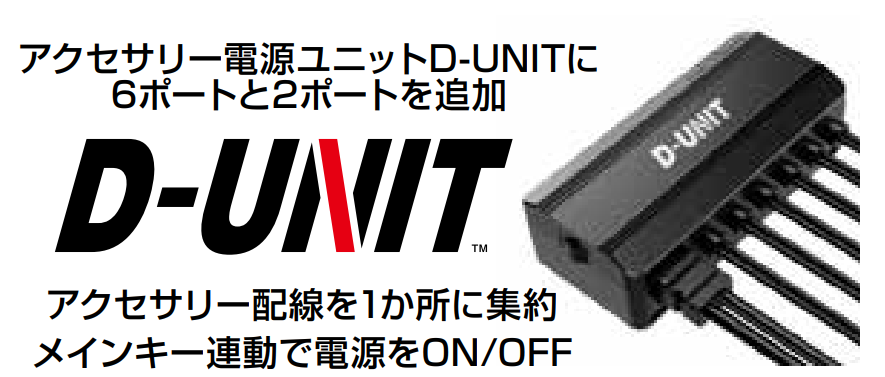
The basic D-UNIT manages fuses and provides waterproof-free accessory power tapping only.
Since the old model is still being sold alongside it, you should purchase based on how many power sources you need. But that’s the really difficult part, isn’t it?
When choosing, it’s faster to think about what you’ll be installing and count the number of sources needed.
For example: ETC/dash cam/heated grips/USB power—that’s 4 sources.
This model alone doesn’t have the LED indicator added.
The flow is very simple and slightly more affordable.
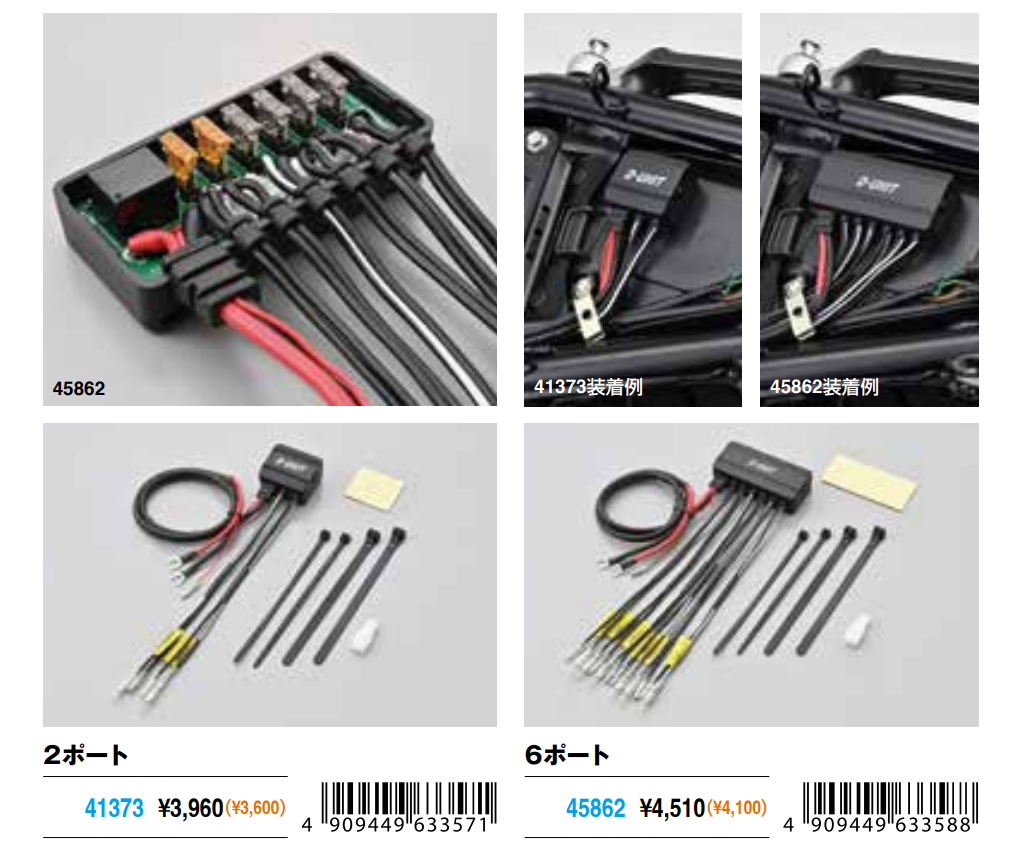
To be honest, if you’re buying 2 ports, I’d say just get the 3-port WR instead.
6 ports seems like overkill. Also, the EASY with the LED indicator seems fine too.
Since I’ve installed these many times, I’m still going “hmm?” and
hesitating, so I don’t think it’s easy to choose quickly.
However, we should be grateful to Daytona for offering such a rich lineup of the same product.
In the end, if you’re unsure, just buy the D-UNIT WR MINI and you should be fine.
Worst case, if the required amperage is sufficient, you can split one port into two and use it without problems.
The only difference is how the terminal ends are managed.
Simply put, think of it as the same as drawing power from the bike’s frame and you’ll understand.


 ポチップ
ポチップ
 ポチップ
ポチップ