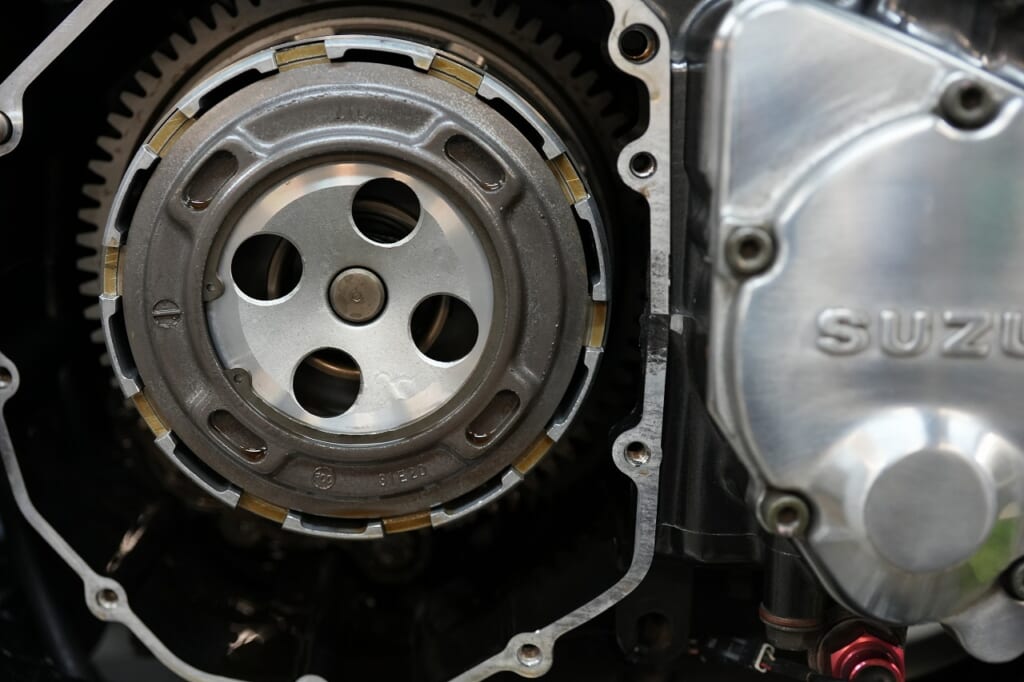
When it comes to clutches, FCC is the way to go! (*´ω`*)
They have a pretty wide and niche lineup of vehicles, so you can feel confident.
They should deliver even better bite than OEM parts, I’d say—or rather, I’m sure of it.
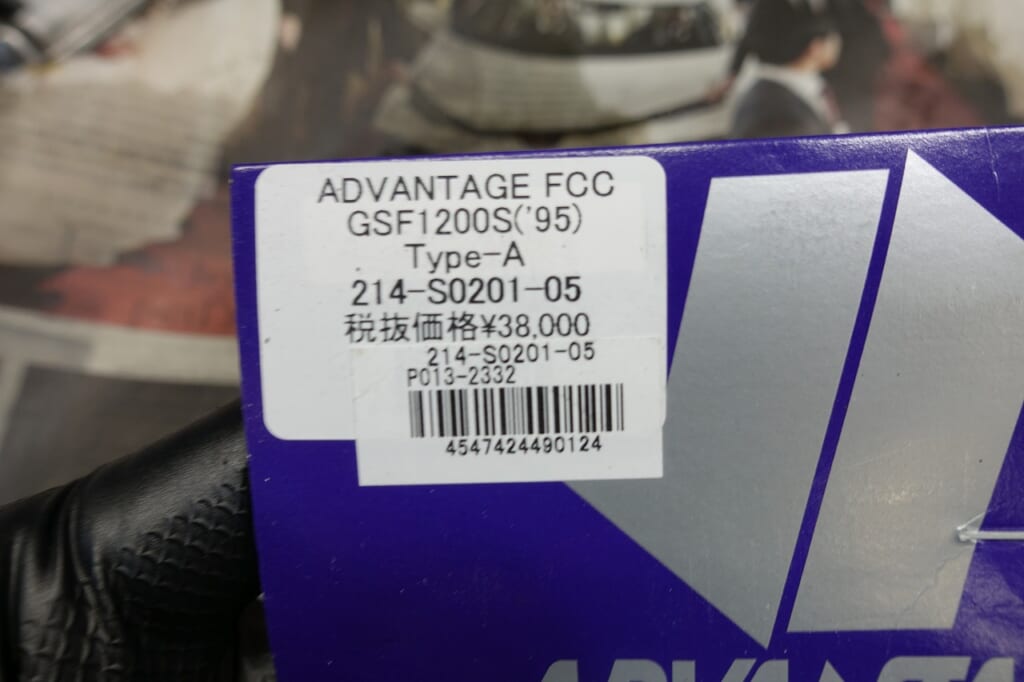
214-S0201-05 TYPE-A
TYPE-D might be running out soon, or maybe it’s already gone.
I’m not totally sure, so please check.
It’s a diaphragm spring type, but the basic structure and shape are the same, so it’s usable.
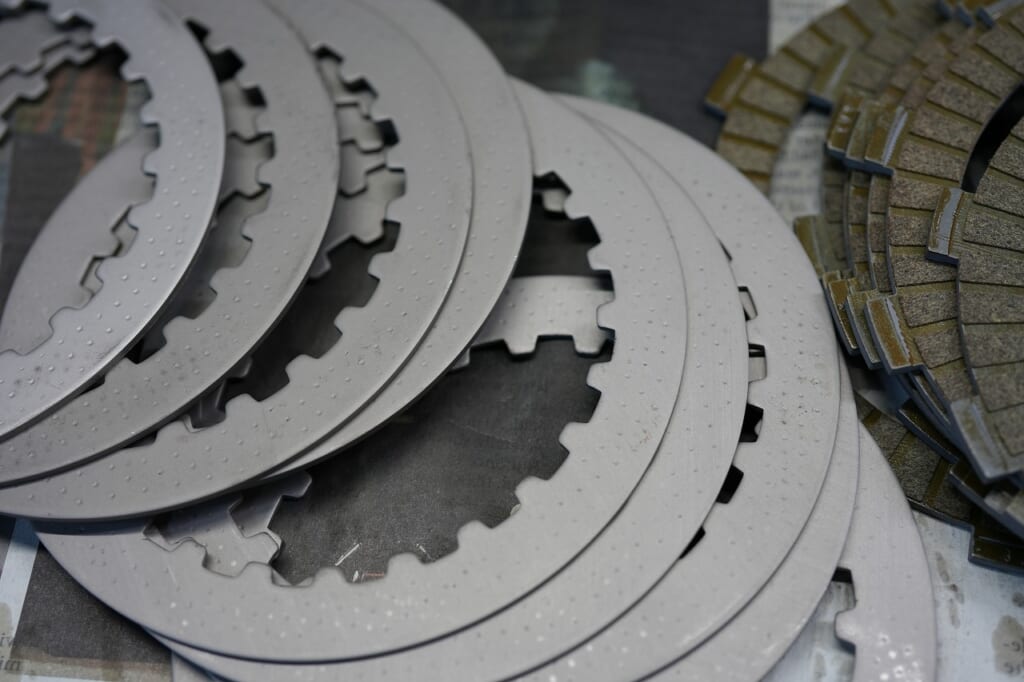
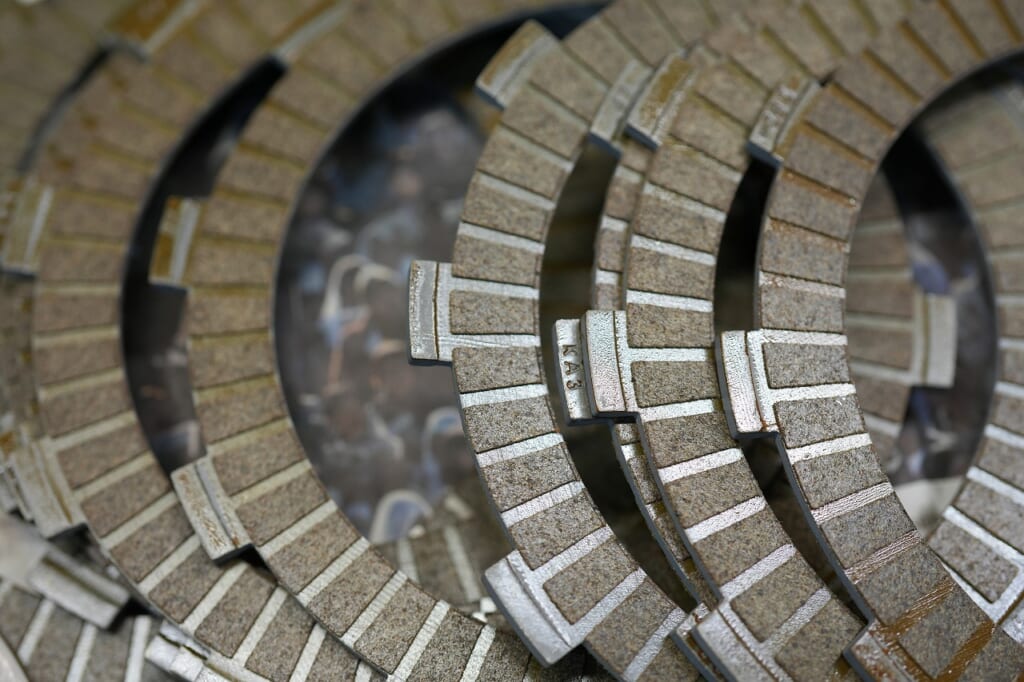
With modern friction material treatment, you can get reliable performance.
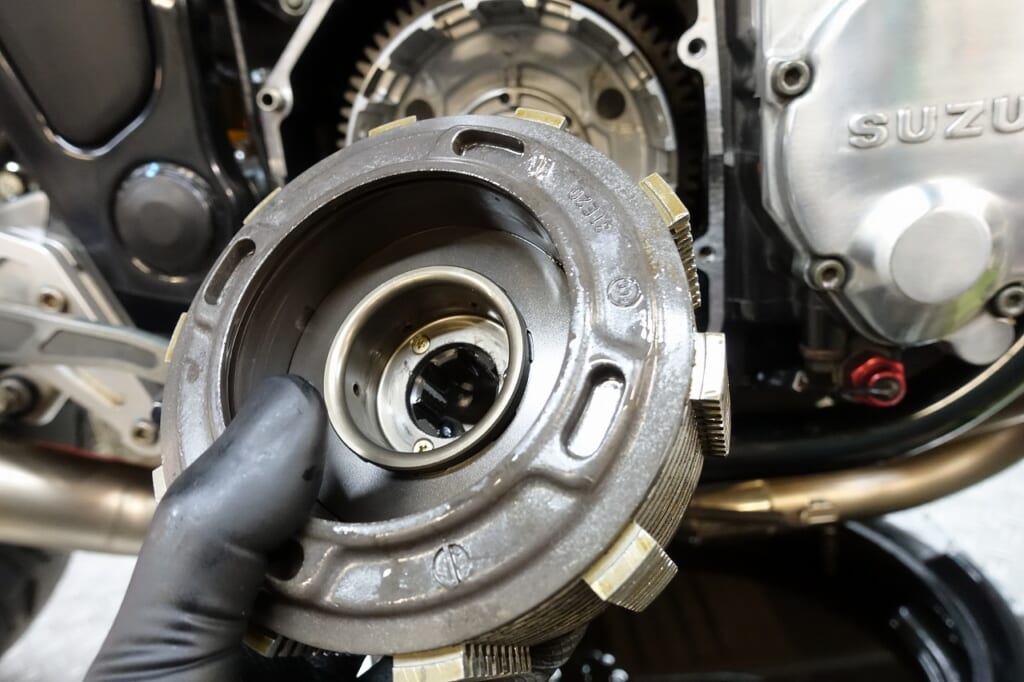
It peels right off—so satisfying! ♪
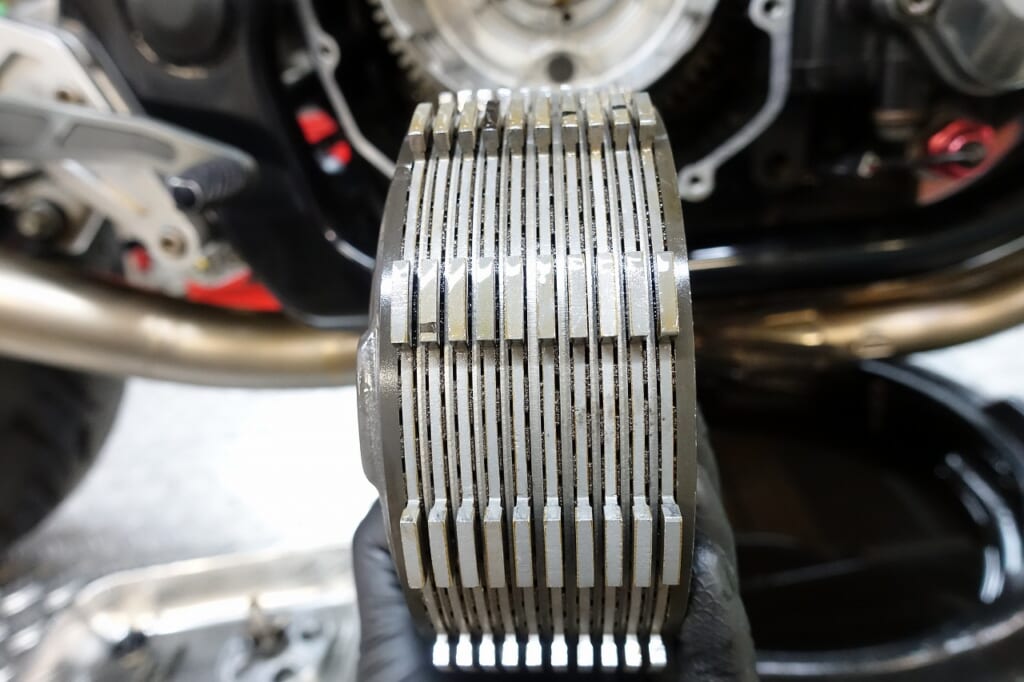
It looks clean, so you can feel confident.
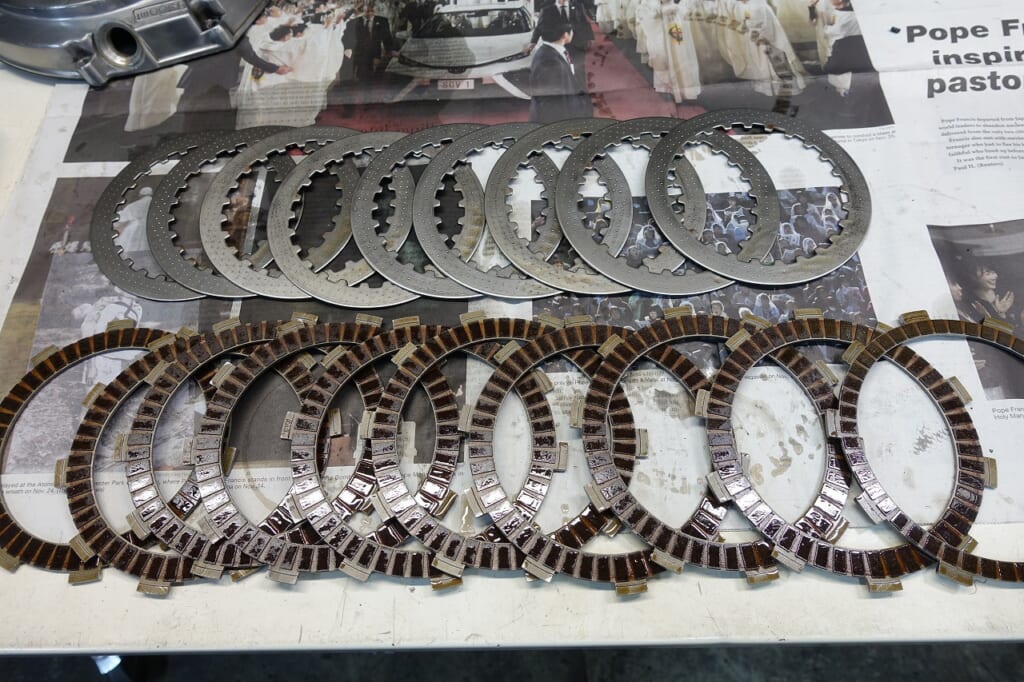
Let’s check the current thickness.
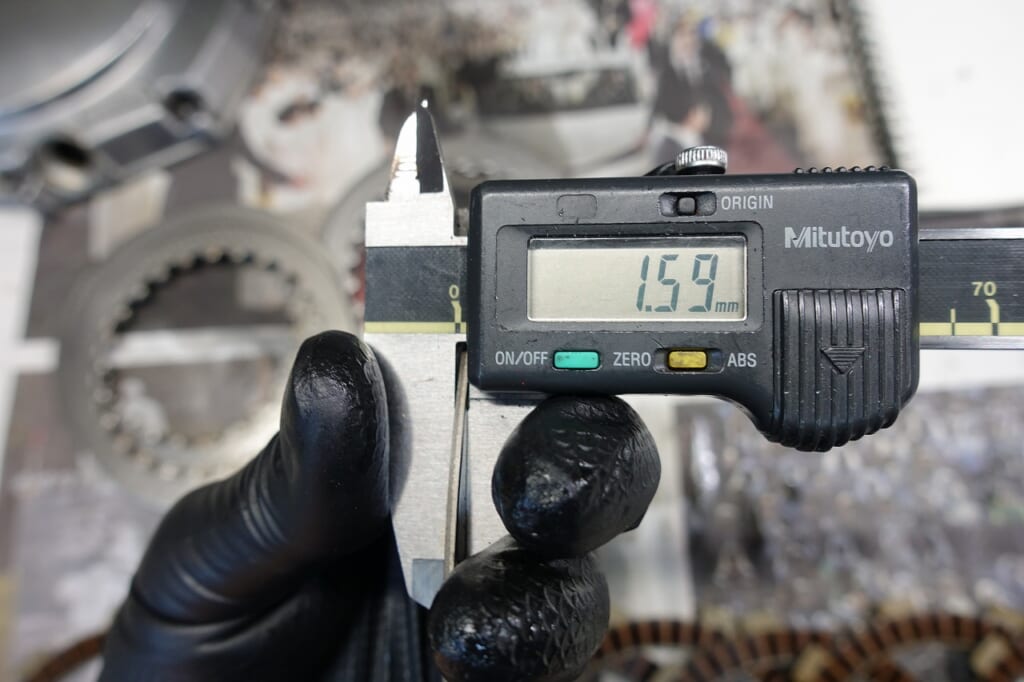
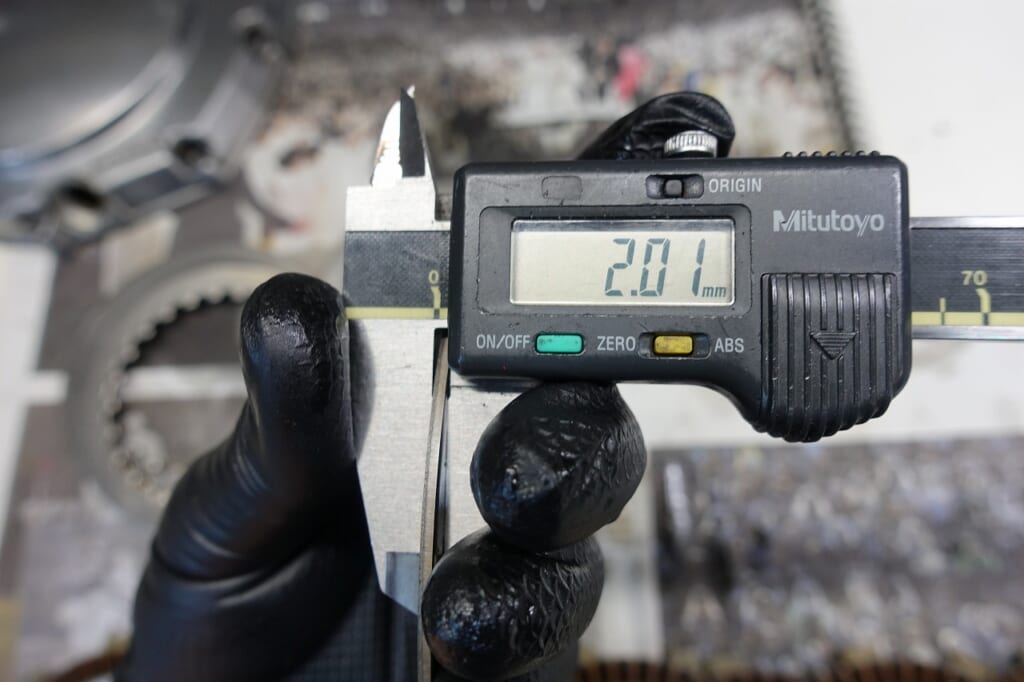
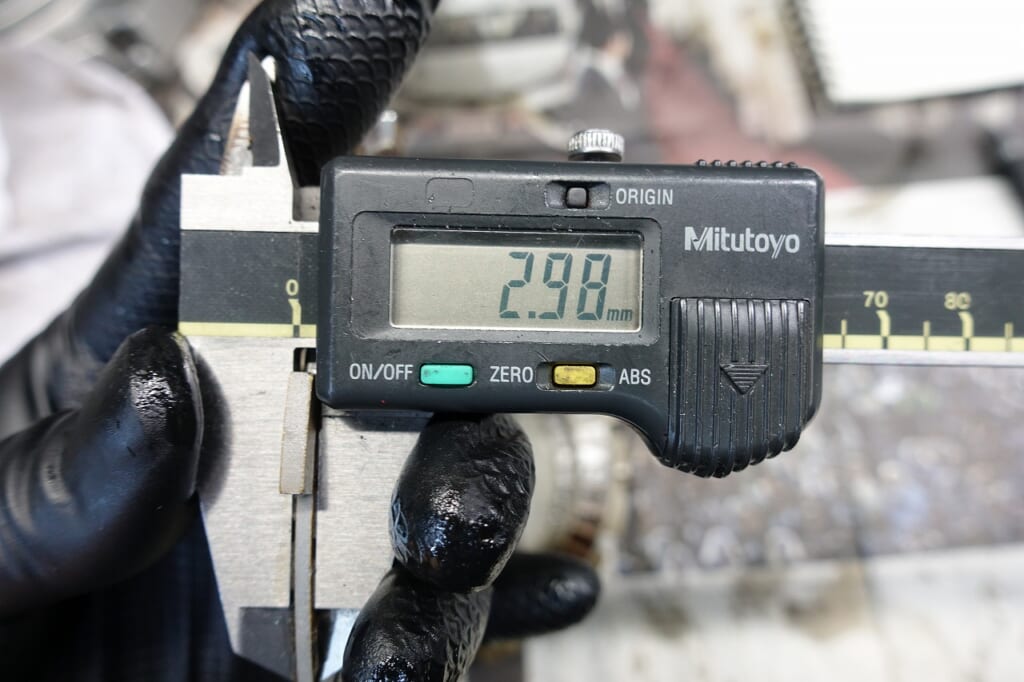
Unless you’re riding the clutch a lot, it actually doesn’t wear that fast.
Before the friction material wears out, it tends to harden and slip, or stick.
When that happens, it’s friction material degradation, so replacing it will improve engagement and feel much better overall.
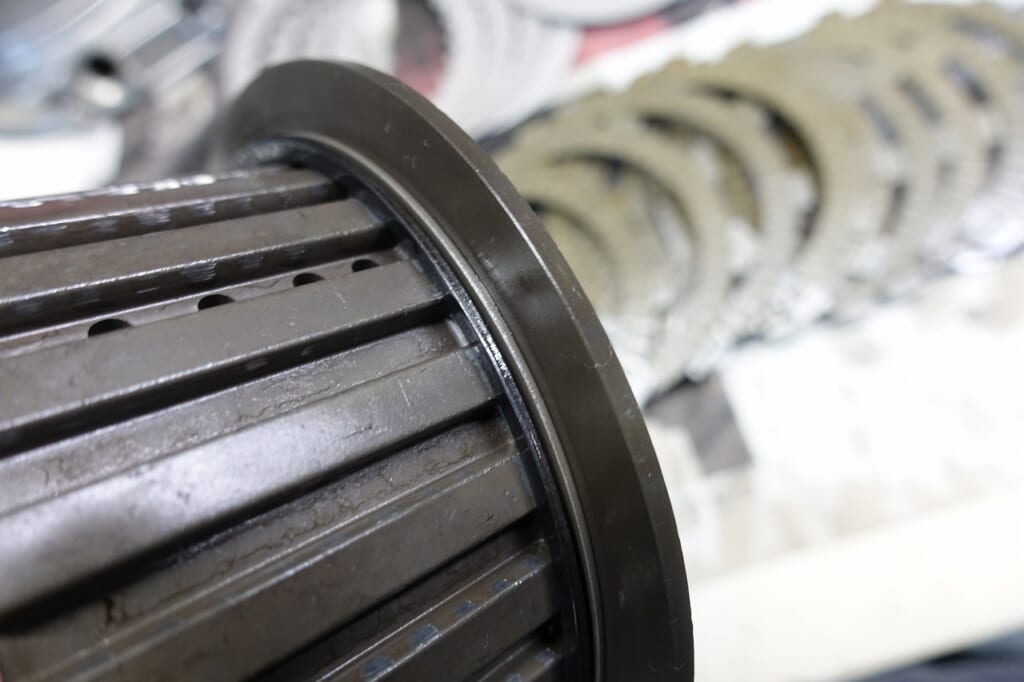
Once a villain, now a standard spring seat
The more you look at it, the more you see the ingenuity and design.
It applies tension from the back too, increasing contact pressure, and it seems to make the plates separate more easily when releasing the clutch.
I think it’s a really nice piece.
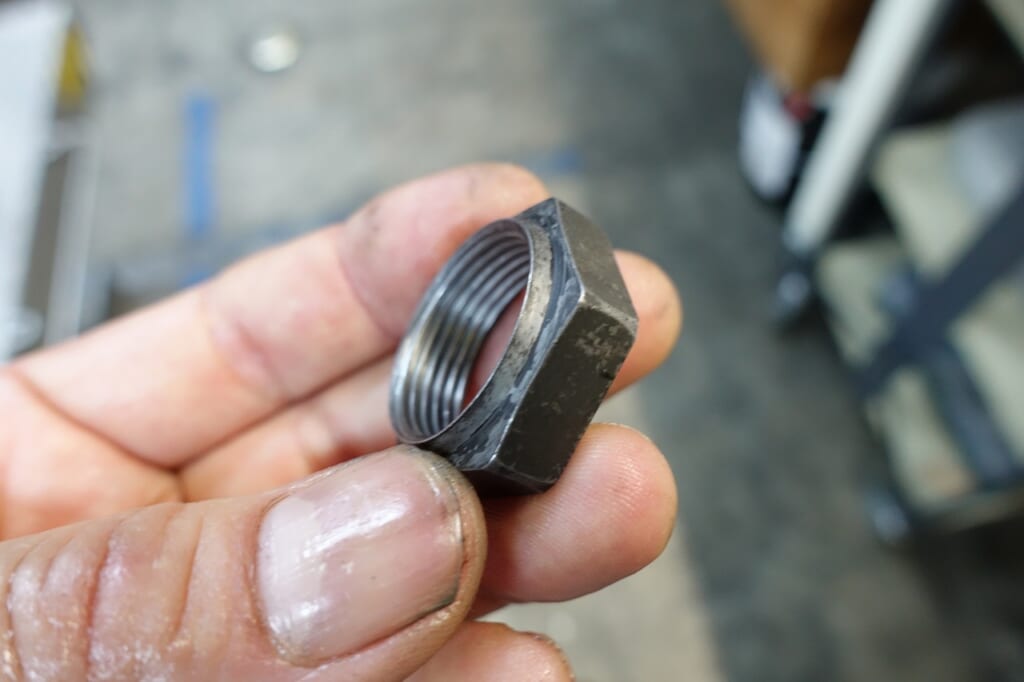
Lock nuts are mechanical lock type
That sounds good, but it’s actually a crush or crimp type.
I replace them every time and apply thread locker just to be safe.
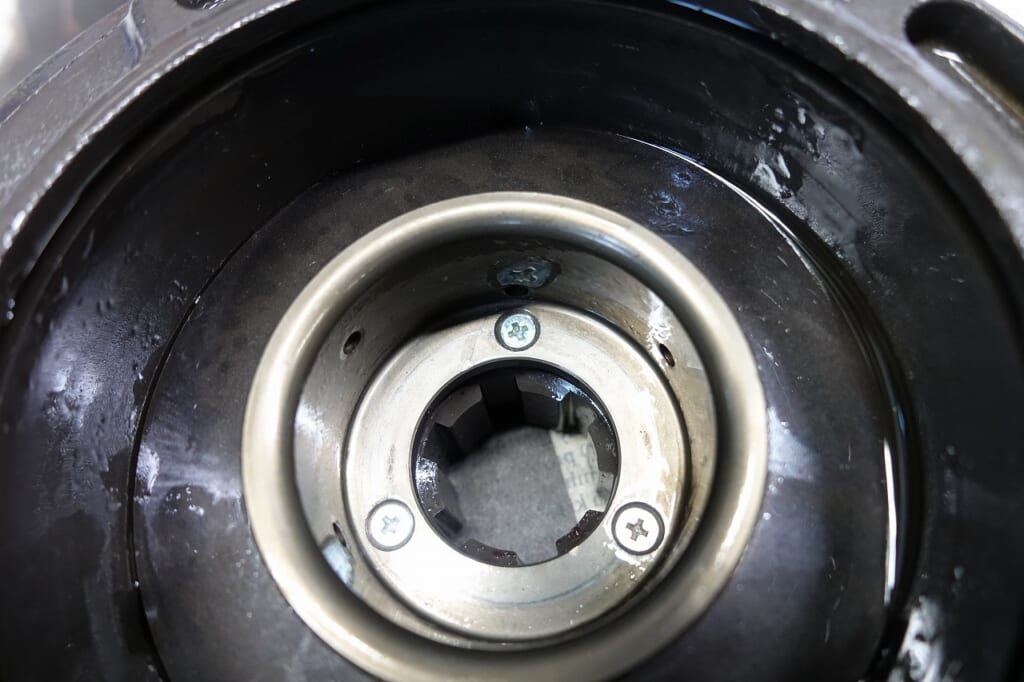
21614-31E20—this bolt is absolutely terrible.
GSF1200 and Inazuma 1200 have three; GS1200SS and Bandit 1200 have two.
Either way…
If you remove it as-is, it’ll strip. If you install it as-is, it won’t tighten.
Following the manual instructions doesn’t seem to work in reality.
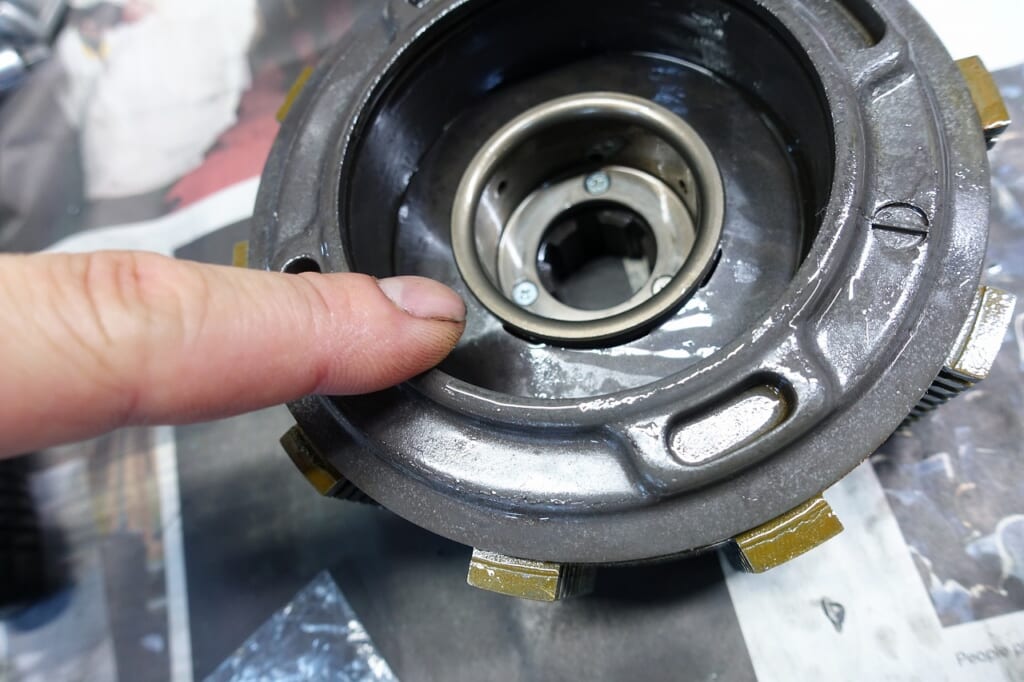
These two diaphragm springs are preloaded
Lightly preloaded, but it’s basically impossible. You should definitely have this bolt or screw on hand.
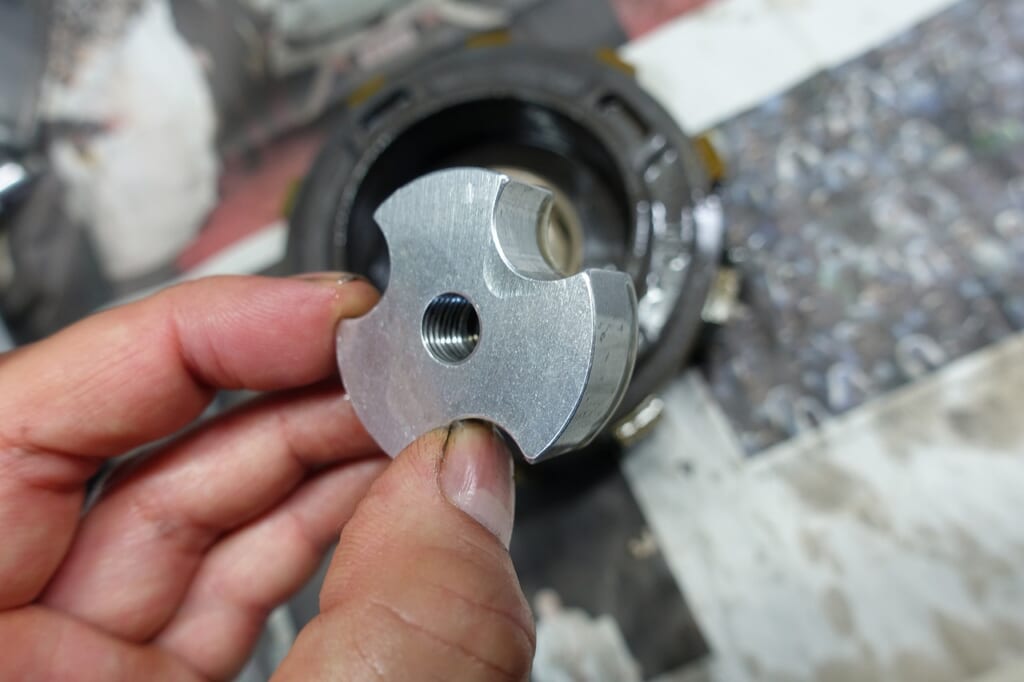
If you make something like this, it’s lightning fast.
Something I made in the past.
It doesn’t get used much—maybe a handful of times a year—but once you have it, you’re set for life.
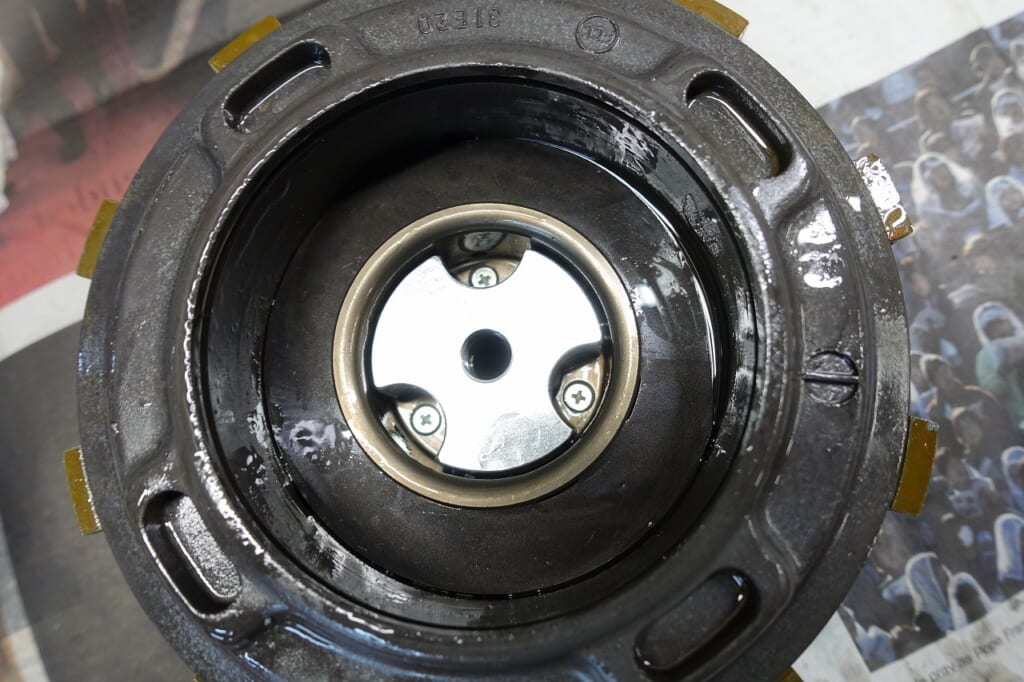
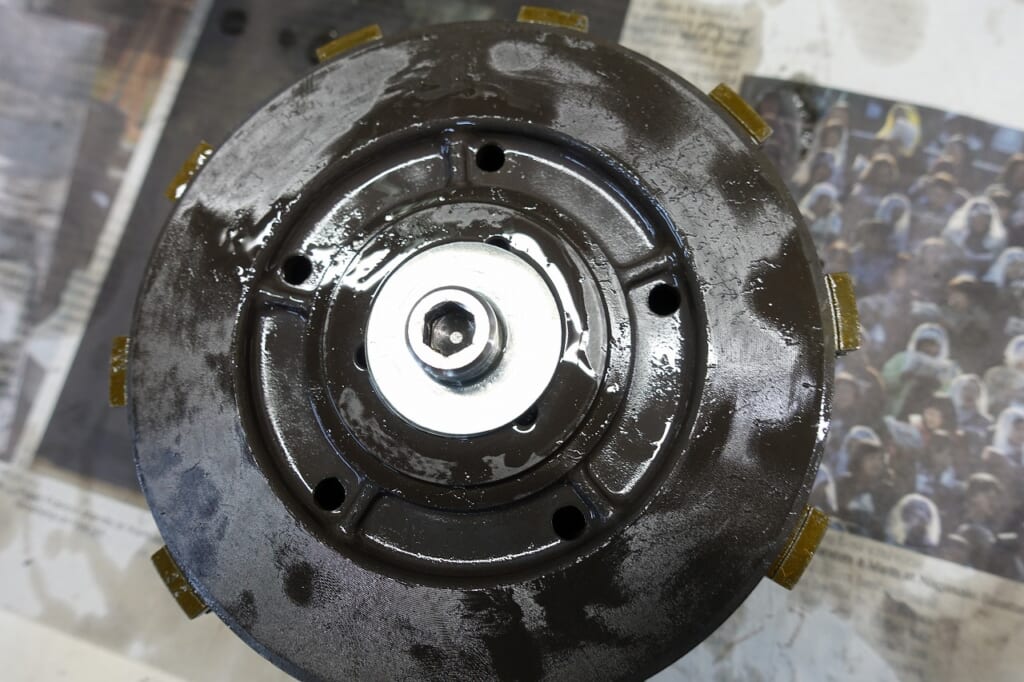
Insert it and tighten from the back to release the preload, then you can remove and assemble without strain.
No way! Absolutely not! Brute force! *Well, sometimes it works.
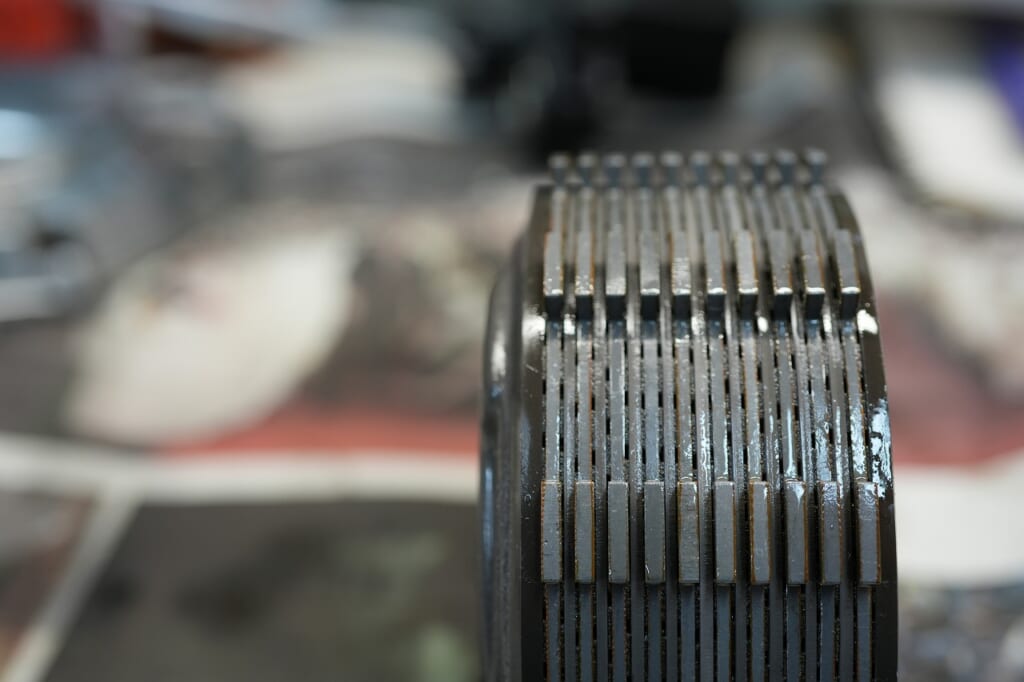
Always inspect the plates.
Packing is done by people. I’ve never met anyone who hasn’t made a mistake.
We stay humble and keep improving every day. (*’▽’)
I’ve had the experience of one different plate mixed in before.
Please inspect first, then do deburring and oil coating.
If you have to return it after processing, that’s embarrassing… I’d feel that way if I were you.
Watch out for this.
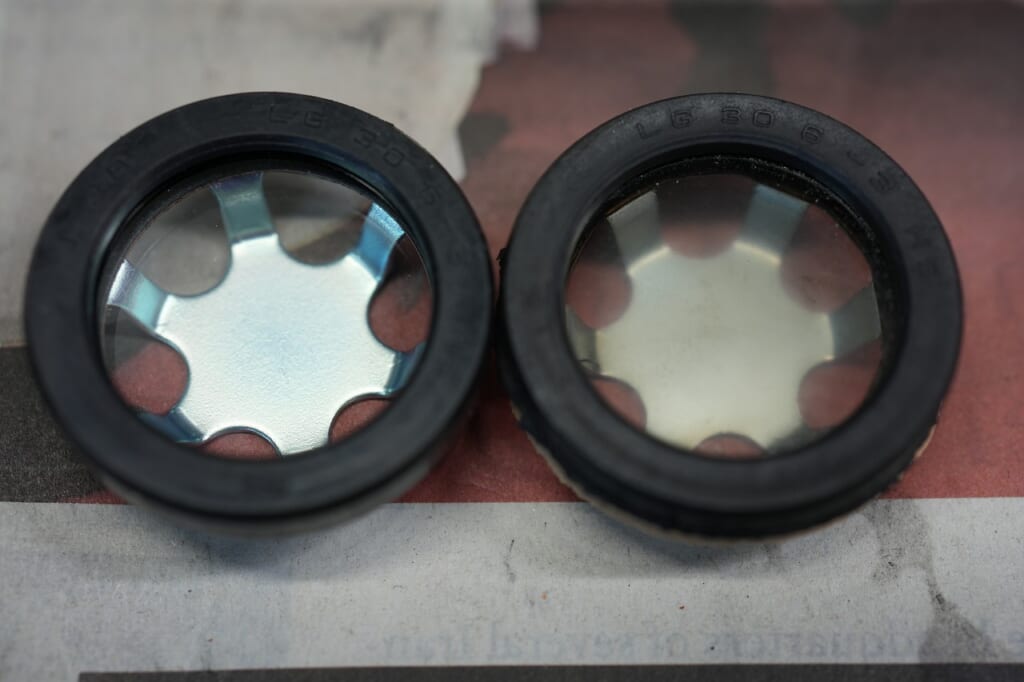
Replacing the inspection window.
If you’re taking off the clutch cover, this is a part you want to replace.
Some people have it really dirty where you can’t see it… are you okay with that?
Well, you don’t see it yourself anyway, so maybe it’s fine.
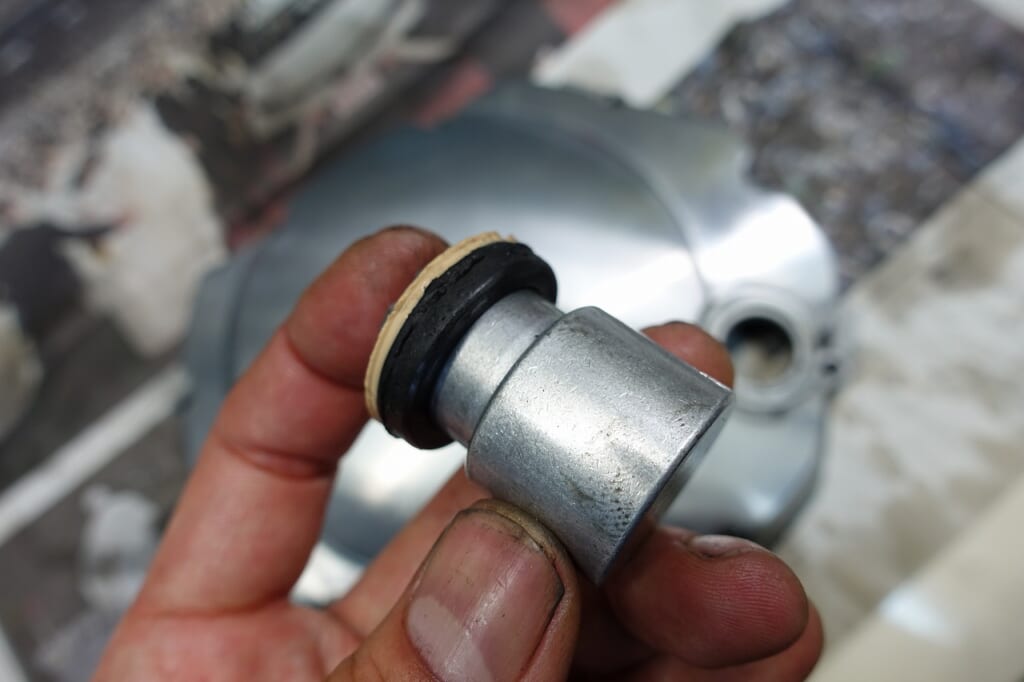
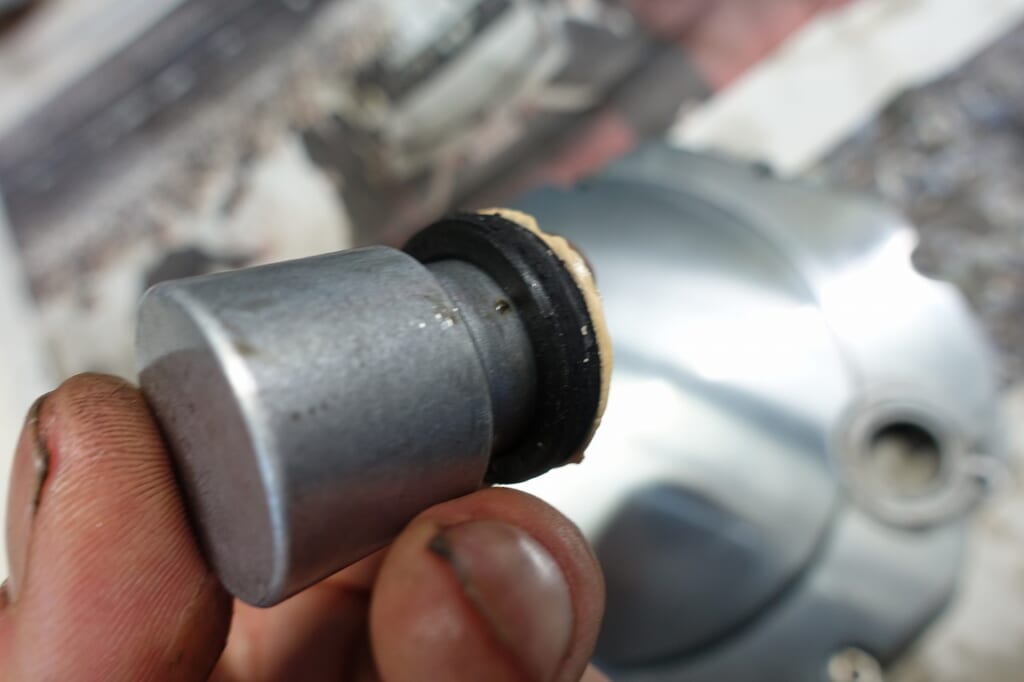
Removal tool
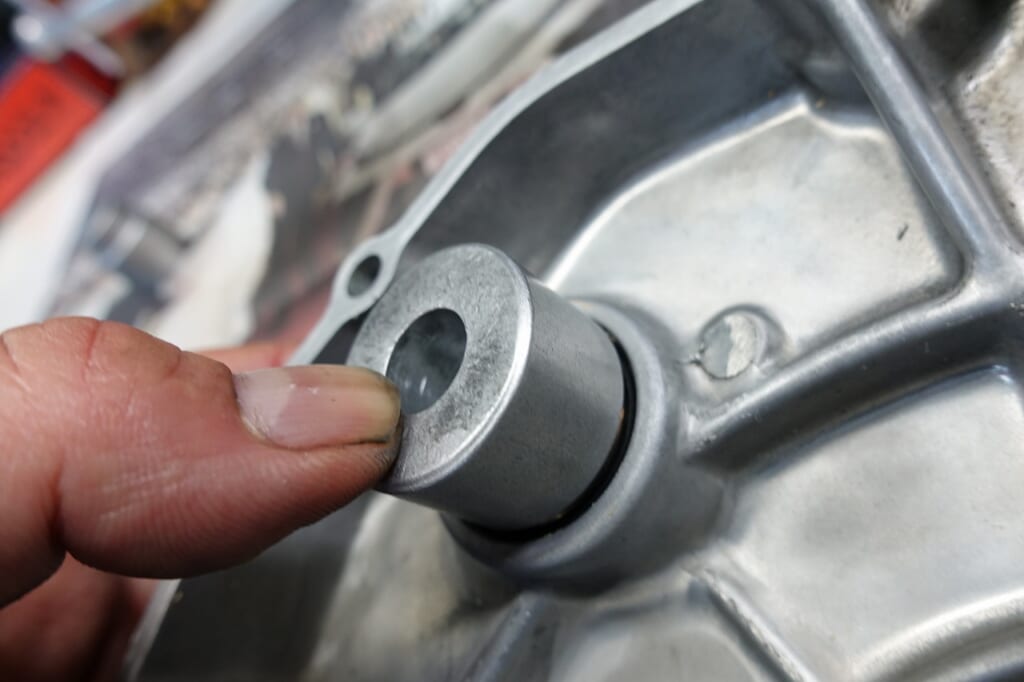
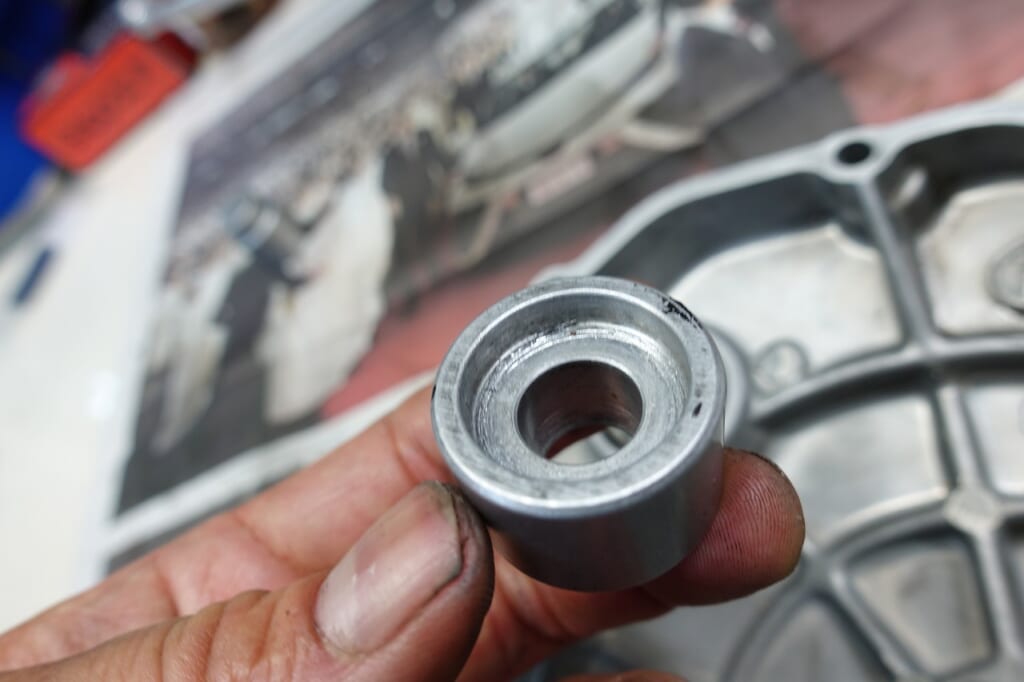
Installation tool
You basically shouldn’t improvise with a box.
It just increases the chance of failure.
If you make something like this once, it’s basically good for life.
Without machine tools, there’s not much you can do… and I’d say that’s risky.
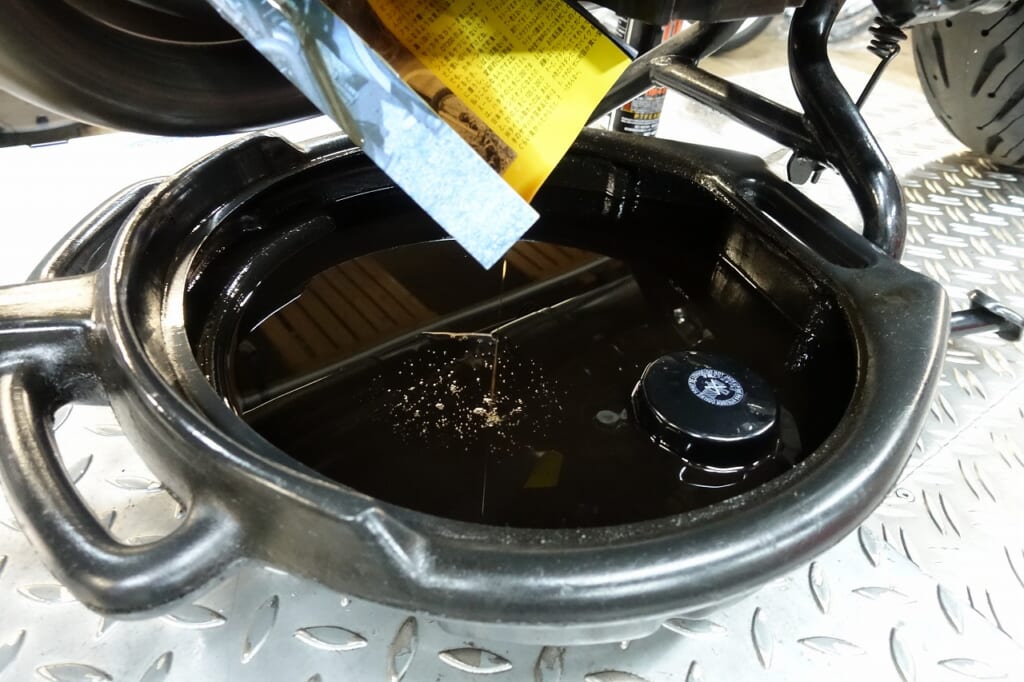
Out of order, but I’ve already drained the oil.
Waiting for the liquid gasket around the window to cure before adding oil tomorrow or later.
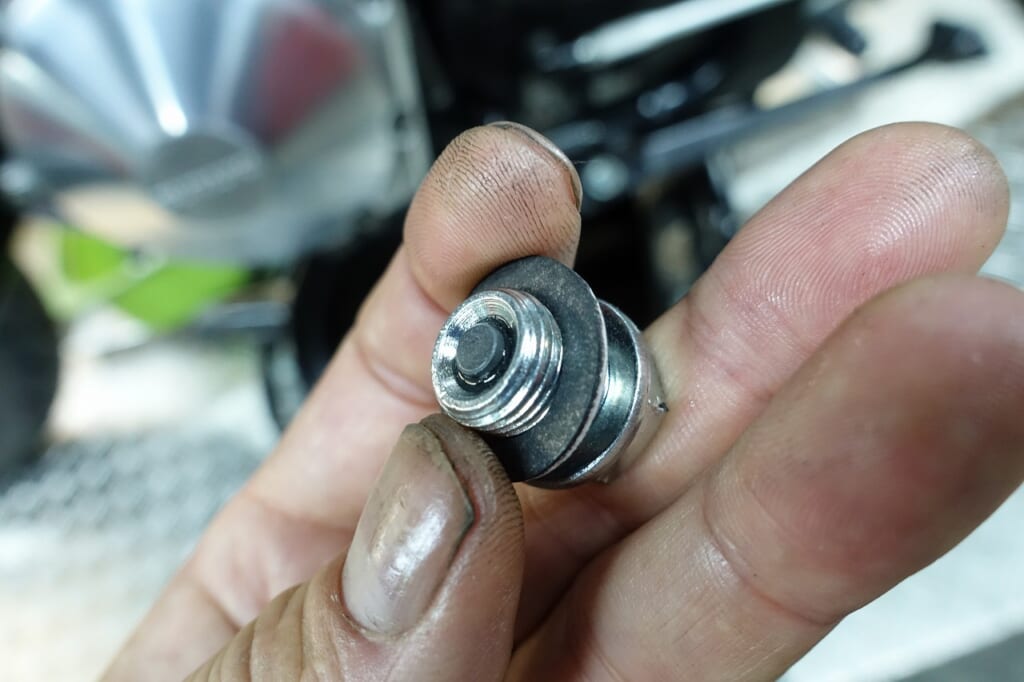
The drain has an OEM magnet. The magnet effect is weak.
A clean drain bolt always feels better.
Try not to use mystery aluminum drains…
As soon as I find one, I swap it for steel.
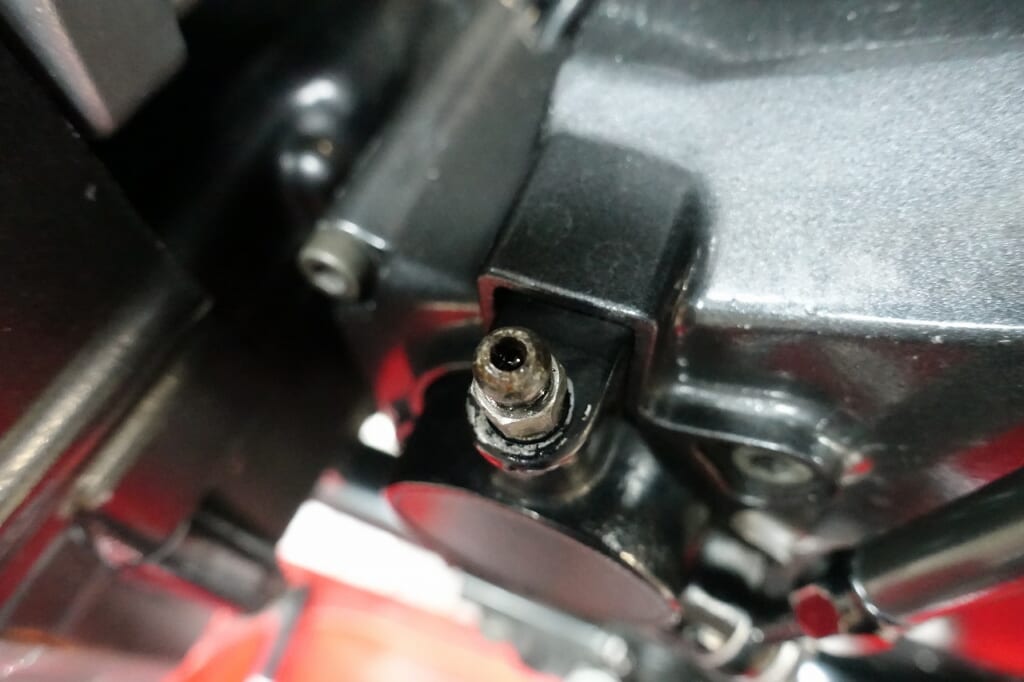
Hmm? Fluid pooling?
Insufficient cleaning or corrosion? I’ll take it apart anyway, so it’s fine.
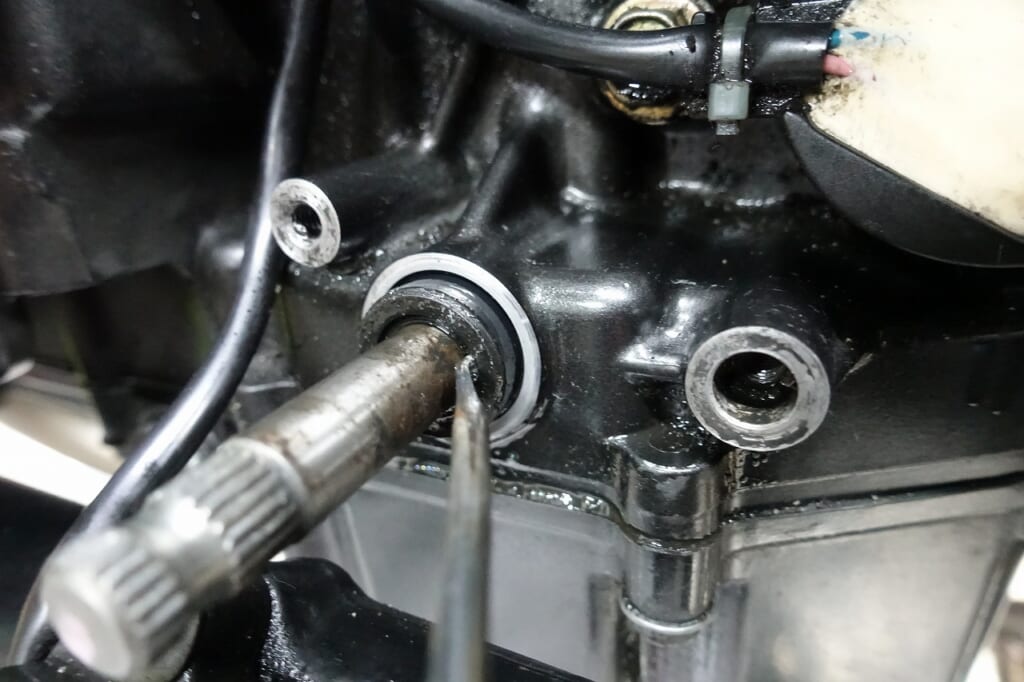
The shift oil seal comes out with a slide hammer
It’s not a spot you can pry out, and using a tap to remove it is risky.
With a smooth hook and a slide hammer, it’s instant.
Without the tool and taking longer, do you still get paid labor? I wonder…
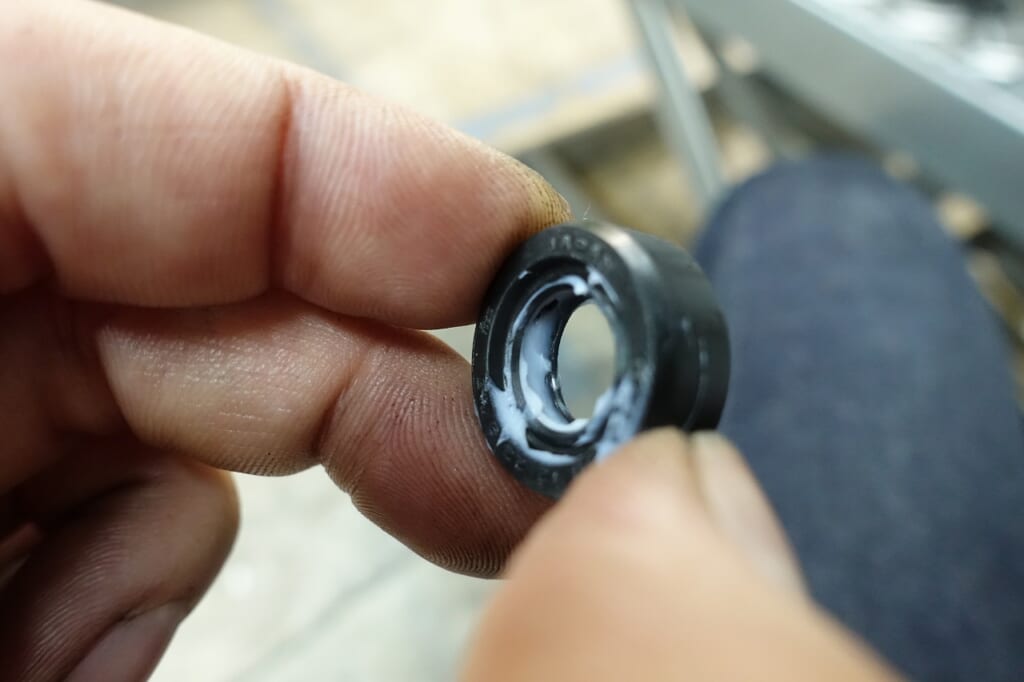
Fluorine enthusiast club.
It doesn’t attack rubber, has low resistance, and is smooth. And basically doesn’t dissolve—meaning it stops oil.
It smooths the oil seal and doesn’t let oil through, so minor leaks should be less likely.
We seal it in spots where we don’t want seepage or leakage and where fluids shouldn’t mix.
It’s pricey grease, but if it reduces leak risk, it’s cheap—dirt cheap.
*Though if it leaks, you get repeat business, so maybe that’s better?
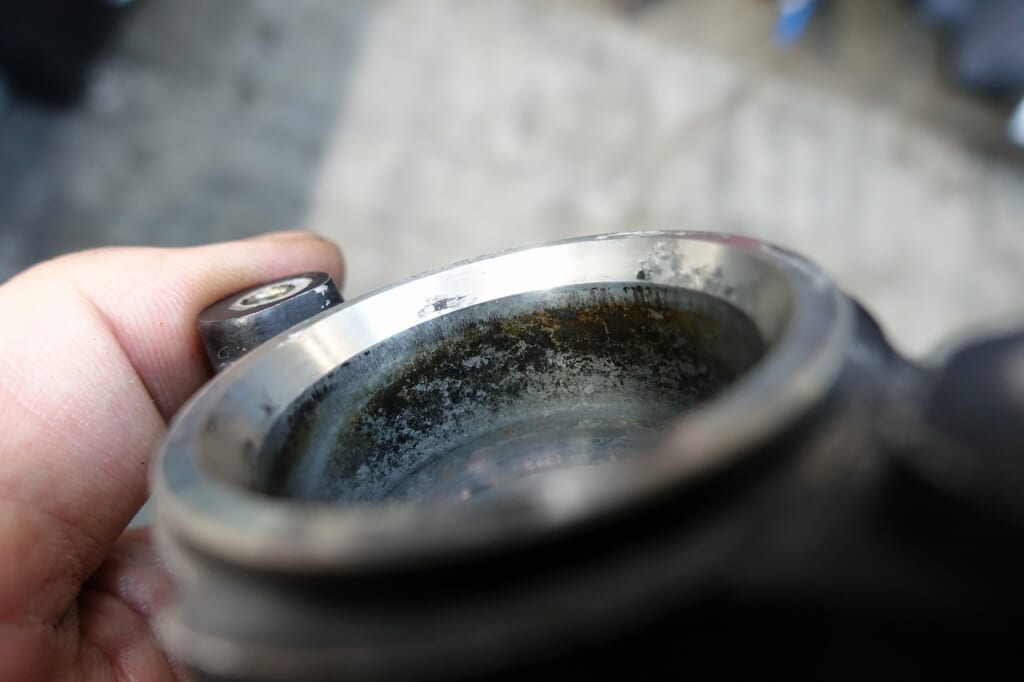
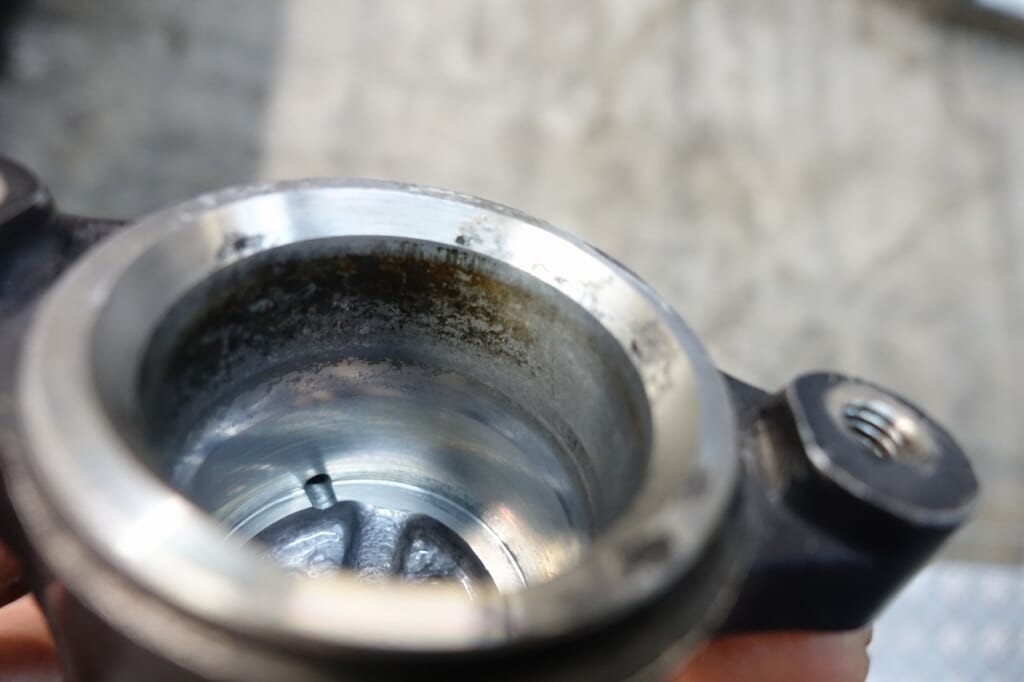
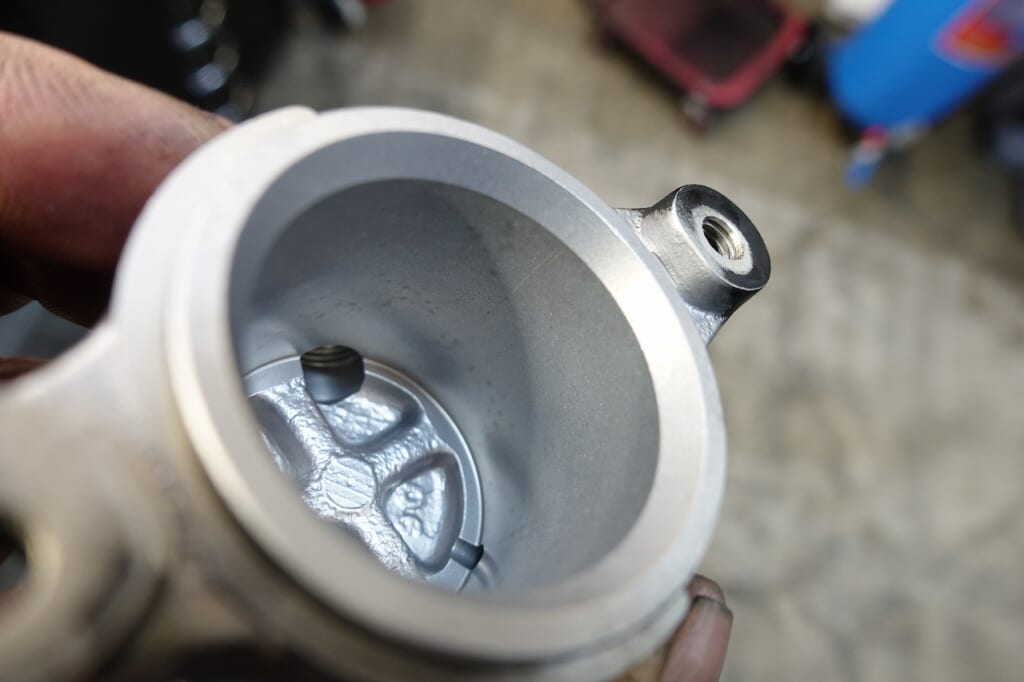
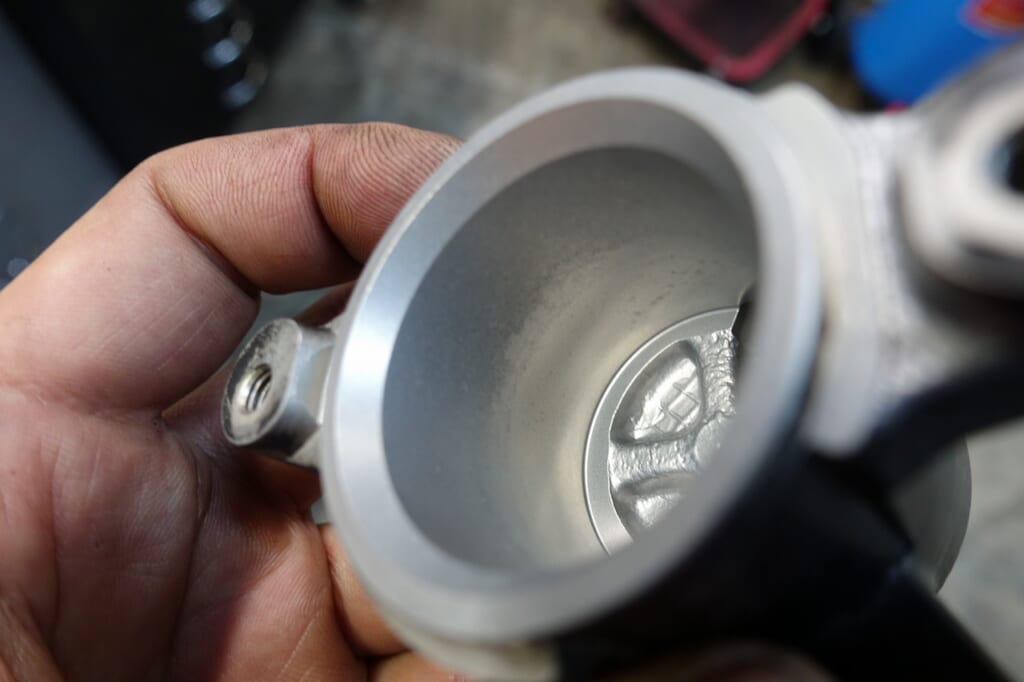
Finishing up the clutch release. (‘ω’)ノ
It’s usually dirty. Suzuki doesn’t leak, so few people check it, but reducing dead stroke should improve feel a bit.
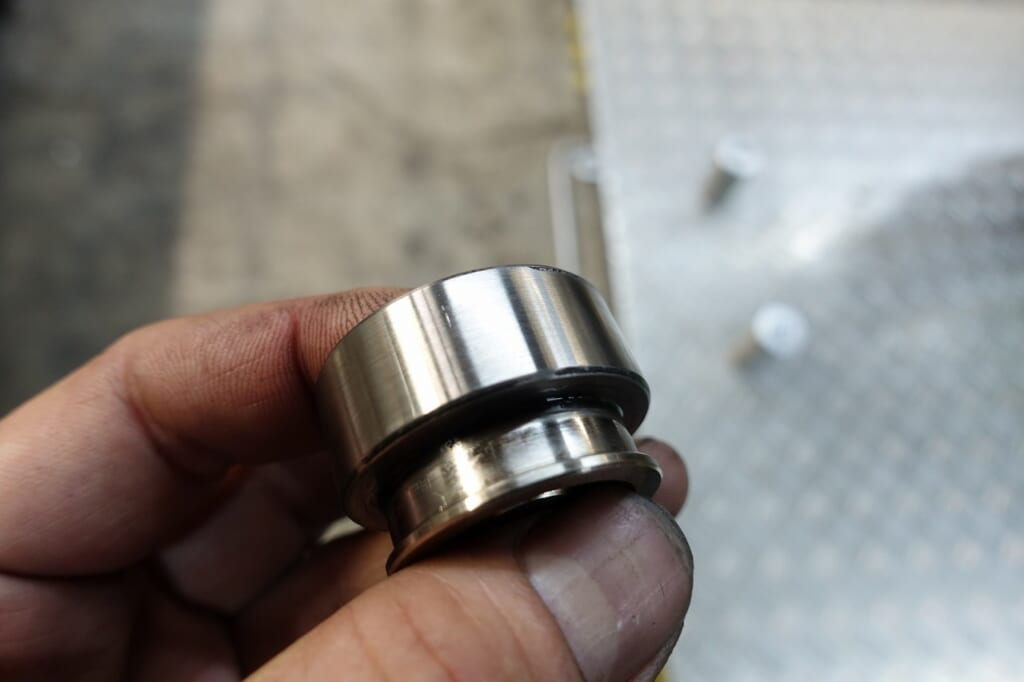
The piston was in good shape and reusable.
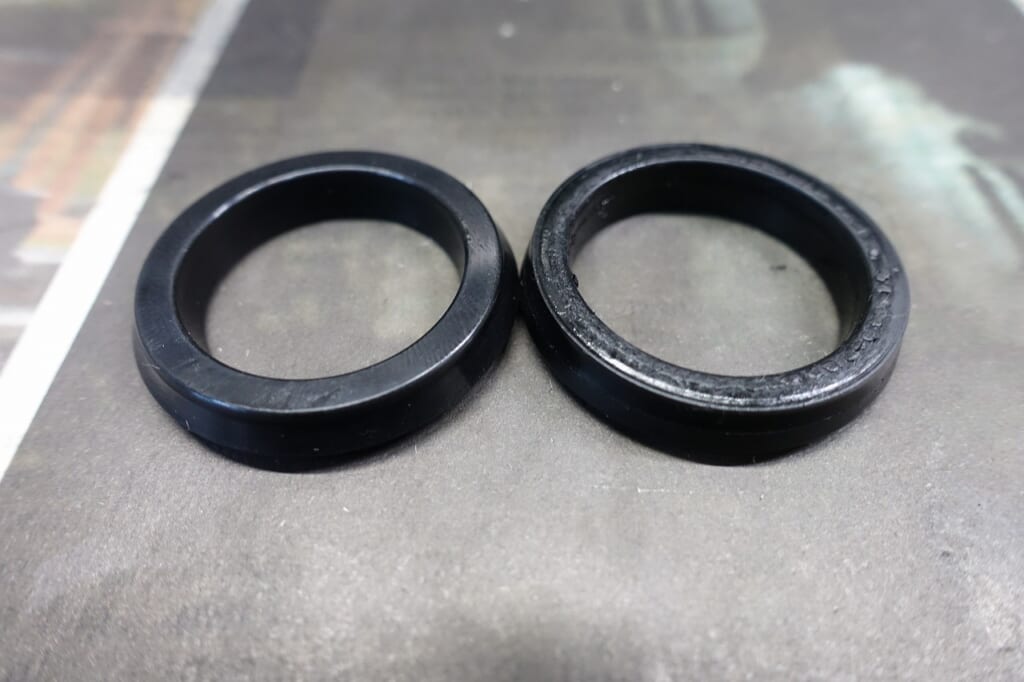
Basically, they swell and deform. ( ゚Д゚)
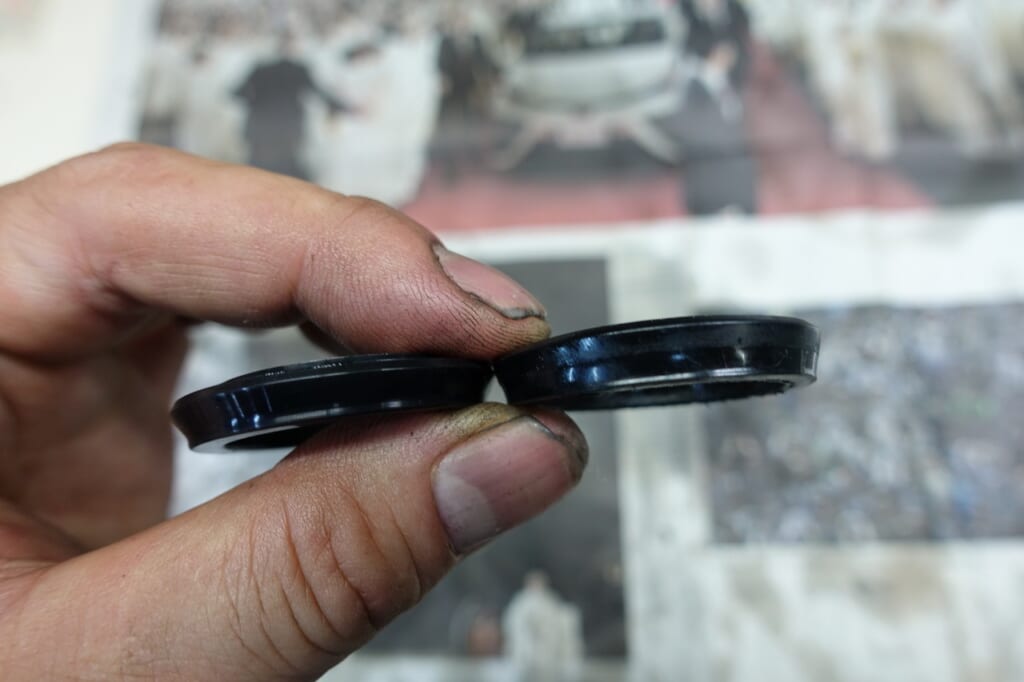
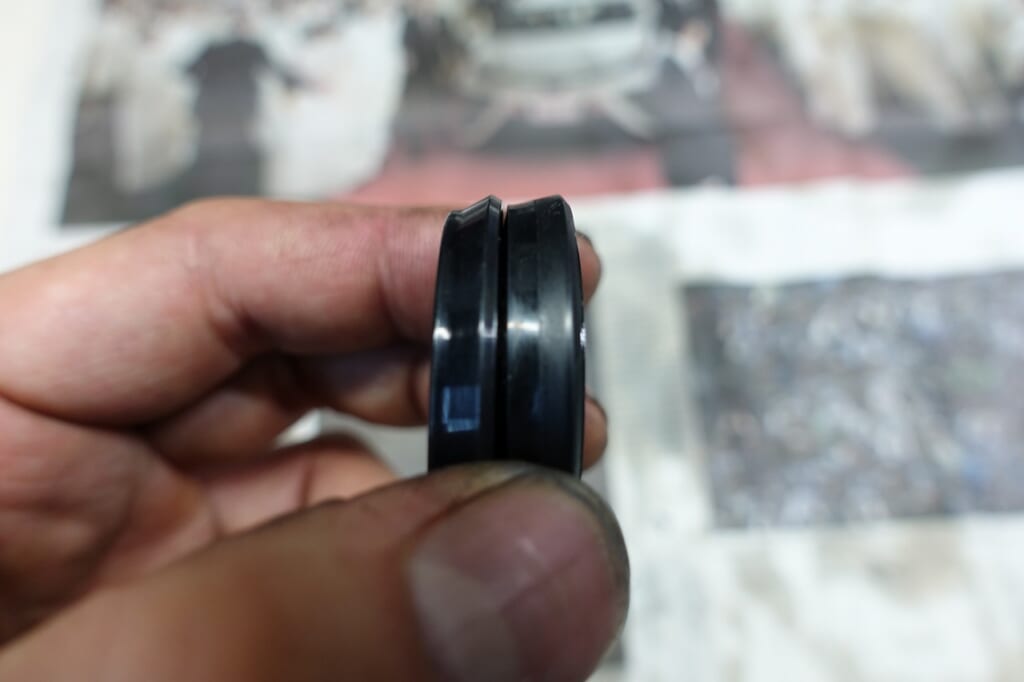
When hydraulic pressure is applied, the umbrella opens and maintains pressure. It’s a well-thought-out design.
But over time, they shrink. Leaks or seepage are rare, but it’s something to check periodically.
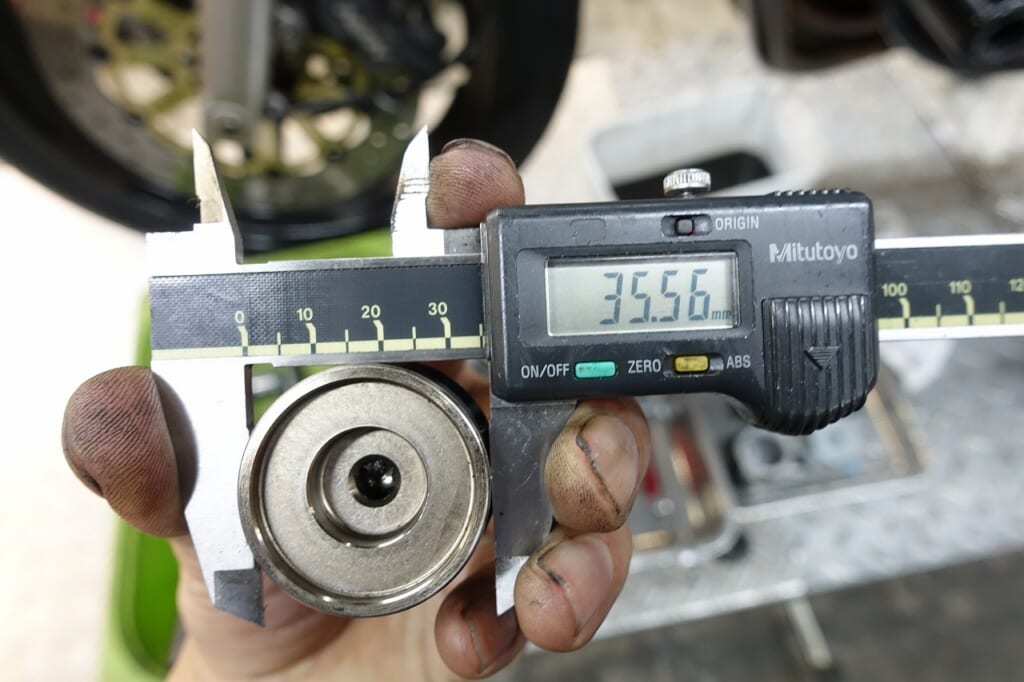
Oil-cooled comes in two types—only GSF1200 has two variants
Release pistons come in two types, so it’s a bit of a pain. They might be cross-used, so definitely check the diameter to be safe.