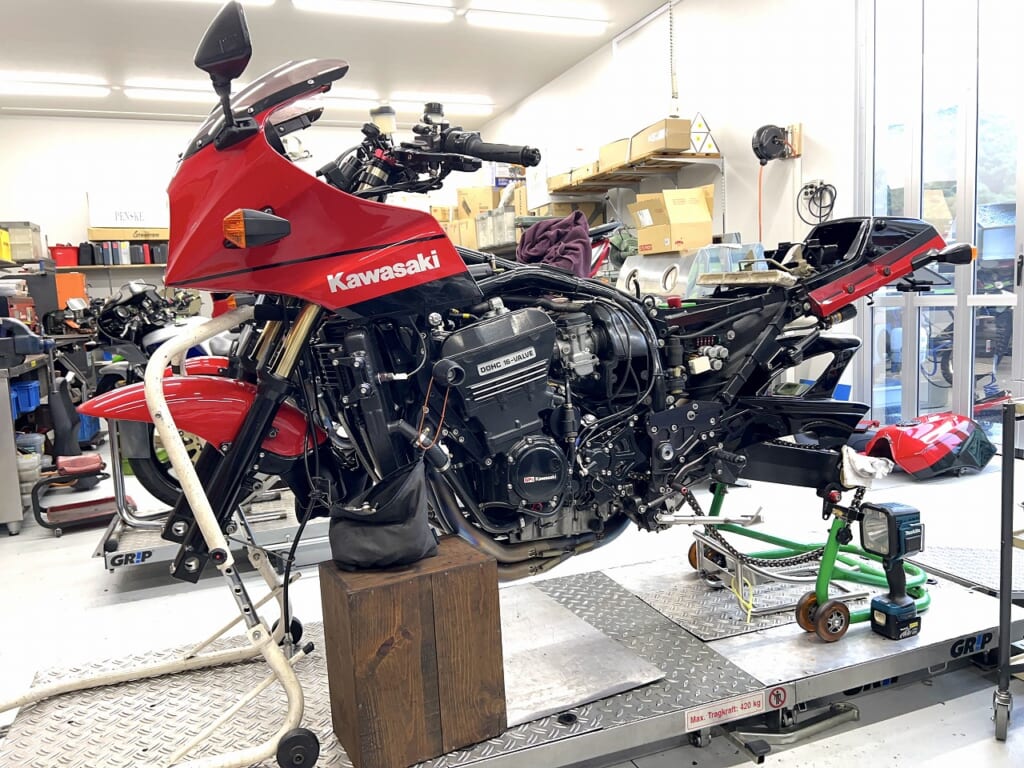
【Maintenance Log】It’s not just about replacing! The secrets to precision pressing that guides wheel bearings to their ultimate rolling performance. GPZ900R wheel bearing replacement
There’s a service called “Machine Condition Report.” It’s maintenance work where we measure the part numbers, names, and remaining amounts of visible components.
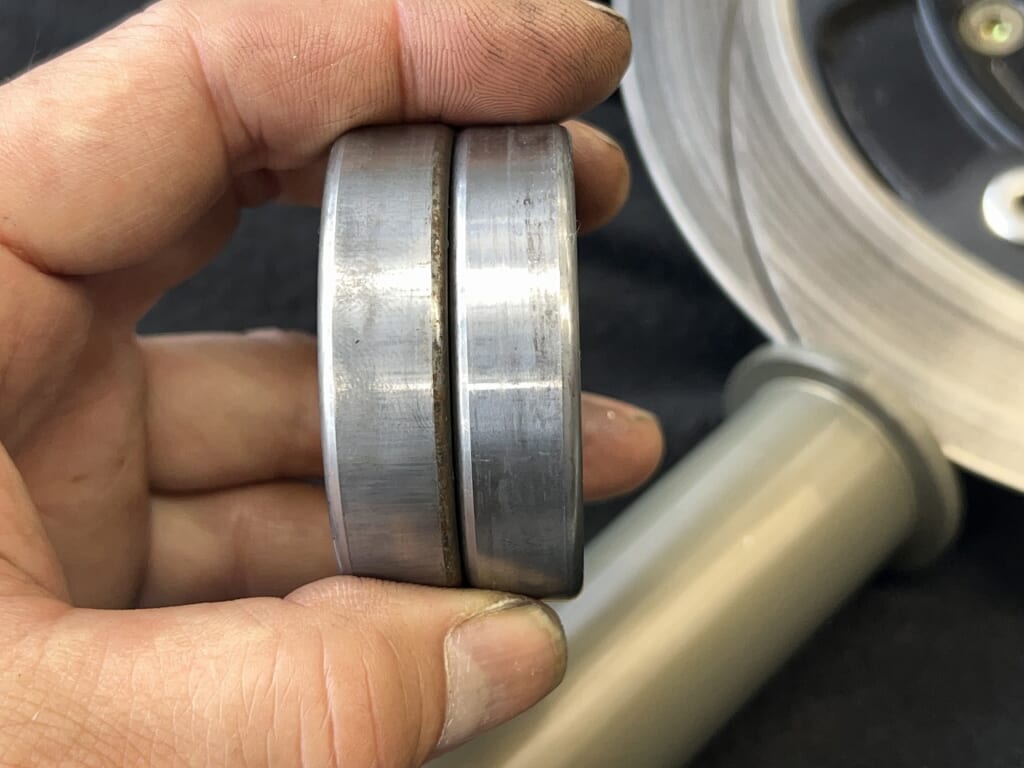
During such work, we discovered the wheel bearings were in poor condition.
Sometimes things that are invisible become visible.
Today’s suspension maintenance log
Theme: Wheel bearing replacement work.
The core point: As the title suggests, simply removing old bearings and installing new ones **cannot be called professional work.**
Professional technique: Thorough cleaning and deburring of the hub inner walls, inspection of the distance collar, and the exquisite “precision press-fit” that doesn’t over-seat the inner race.
Result: The push-rolling becomes remarkably light, and cornering grip becomes dramatically clearer, achieving “zero-friction” rolling performance!
Decobocoʼs other BLOG. “RURAL GARAGE“
A hidden room beyond motorcycles. Convenient everyday items, relocation, delicious food, life philosophyand more. ←click
The wheel bearings were terribly stiff—I was quite surprised…
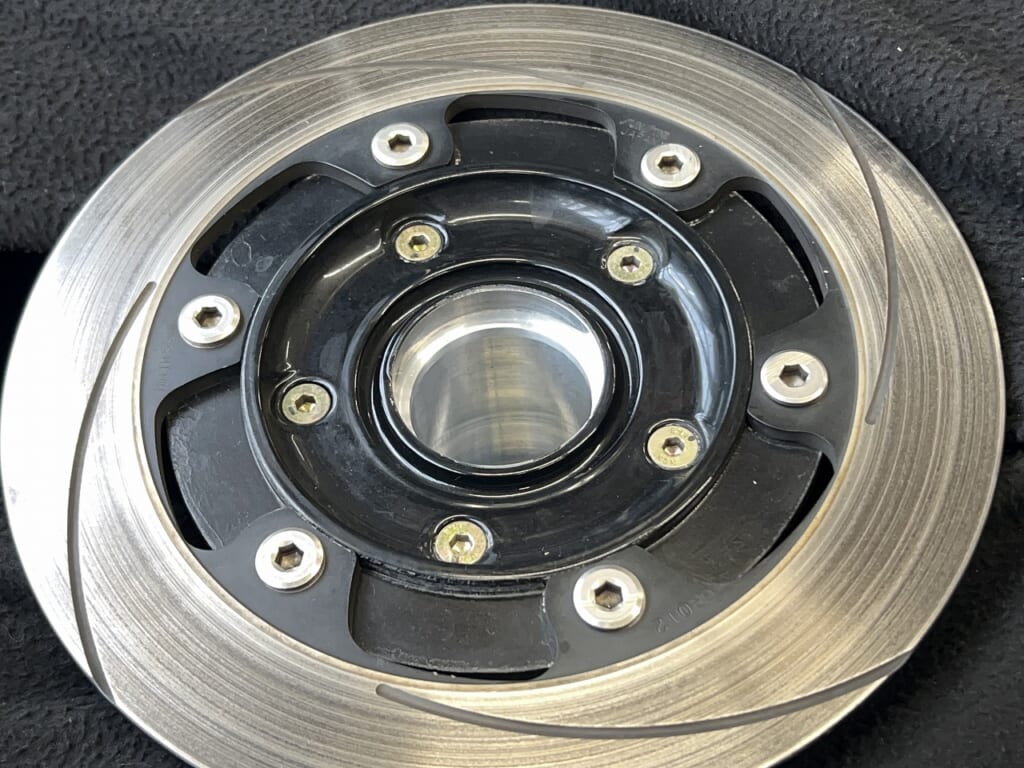
At first, they wouldn’t spin at all—I was a bit shocked. This might be a common issue with aftermarket wheels…
The balance of three things: the bearing used, the wheel tolerance, and the distance collar tolerance. If you don’t check these carefully, you’ll get the same result no matter how many times you try—it’s tricky.
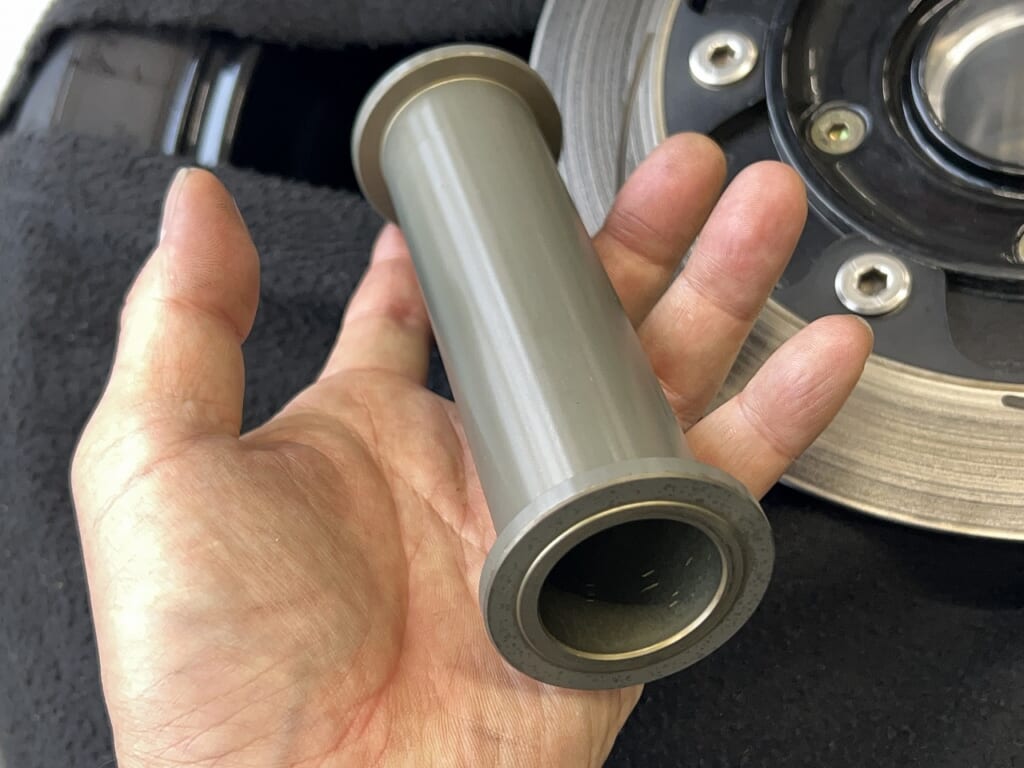
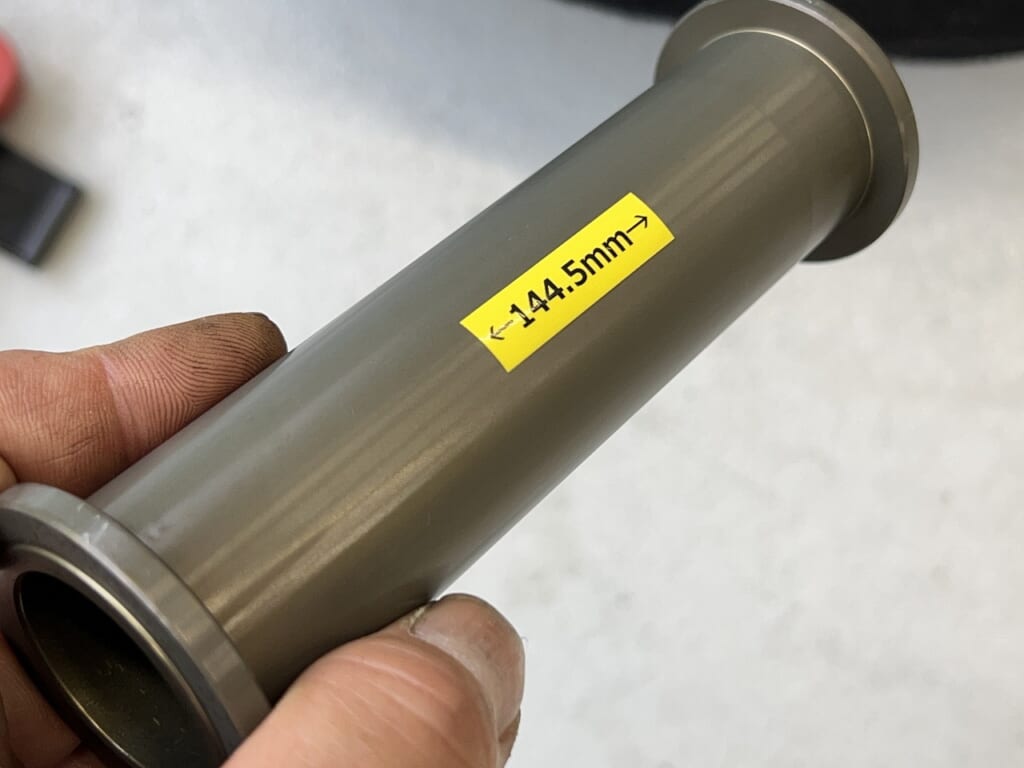
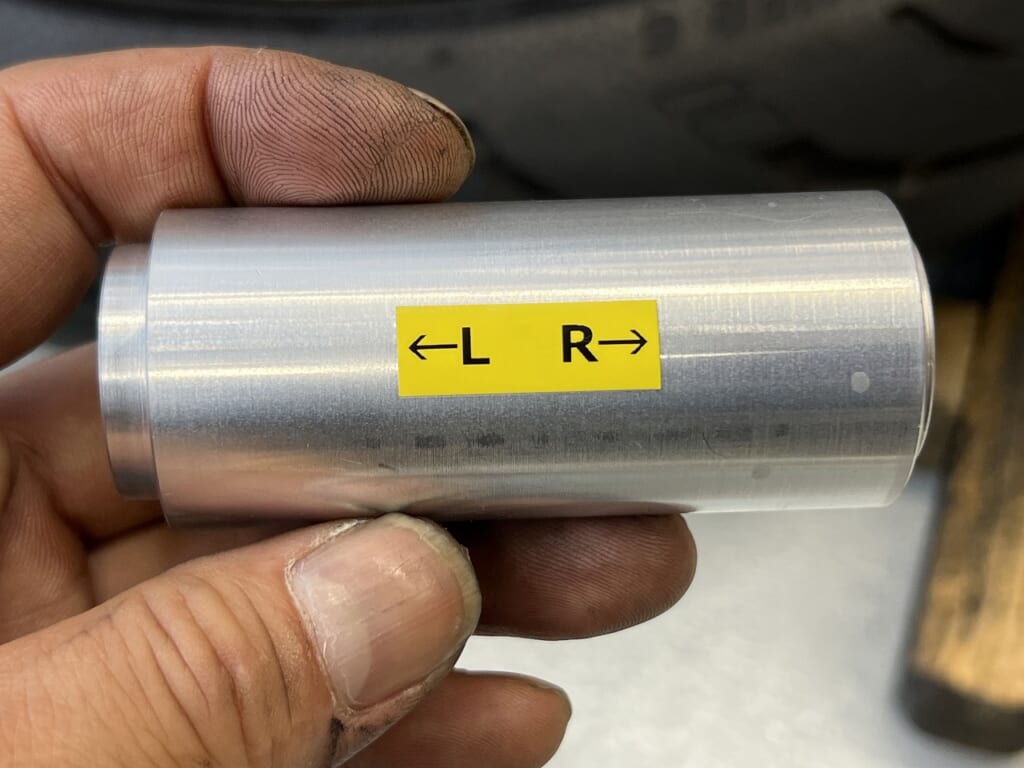
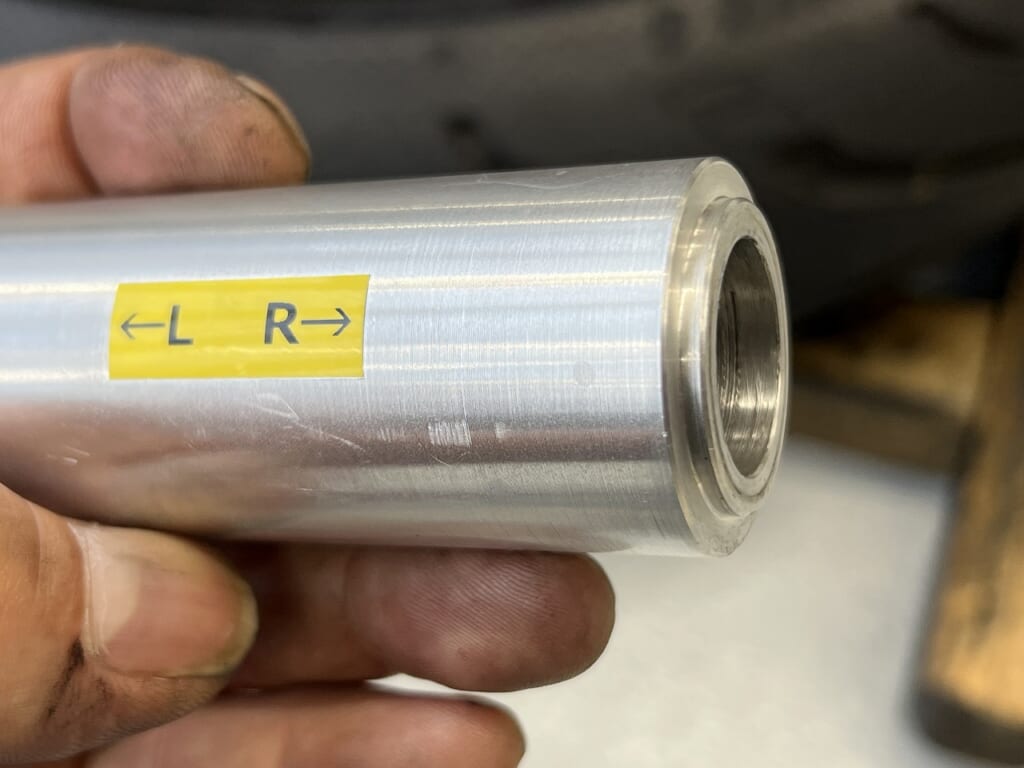
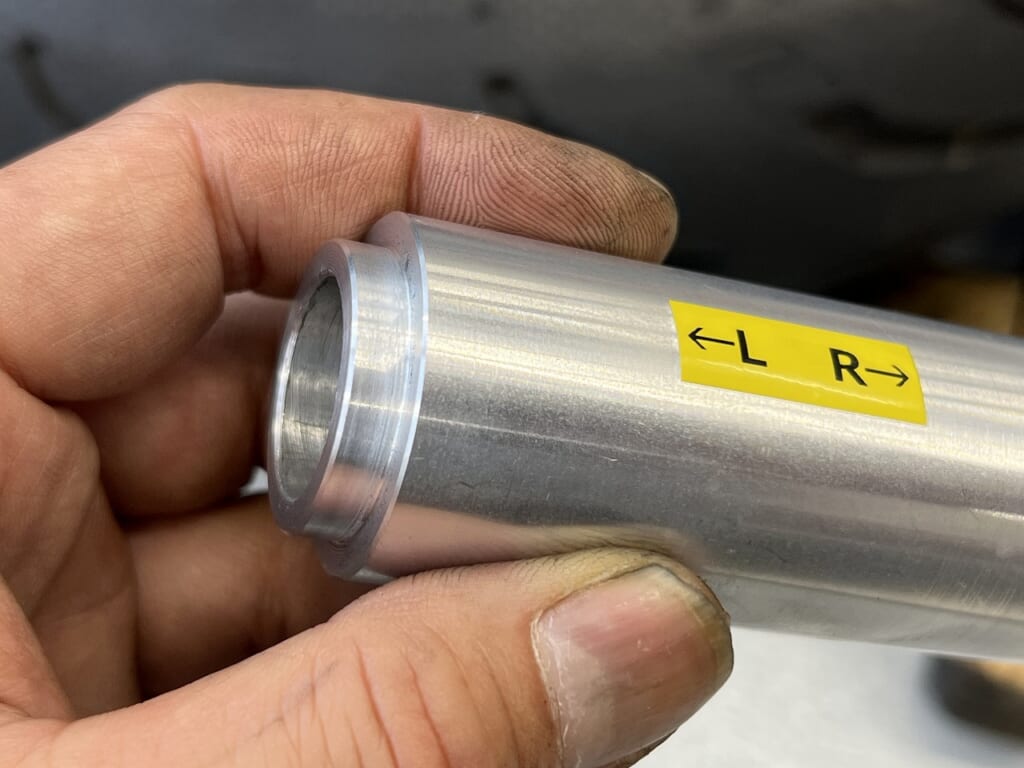
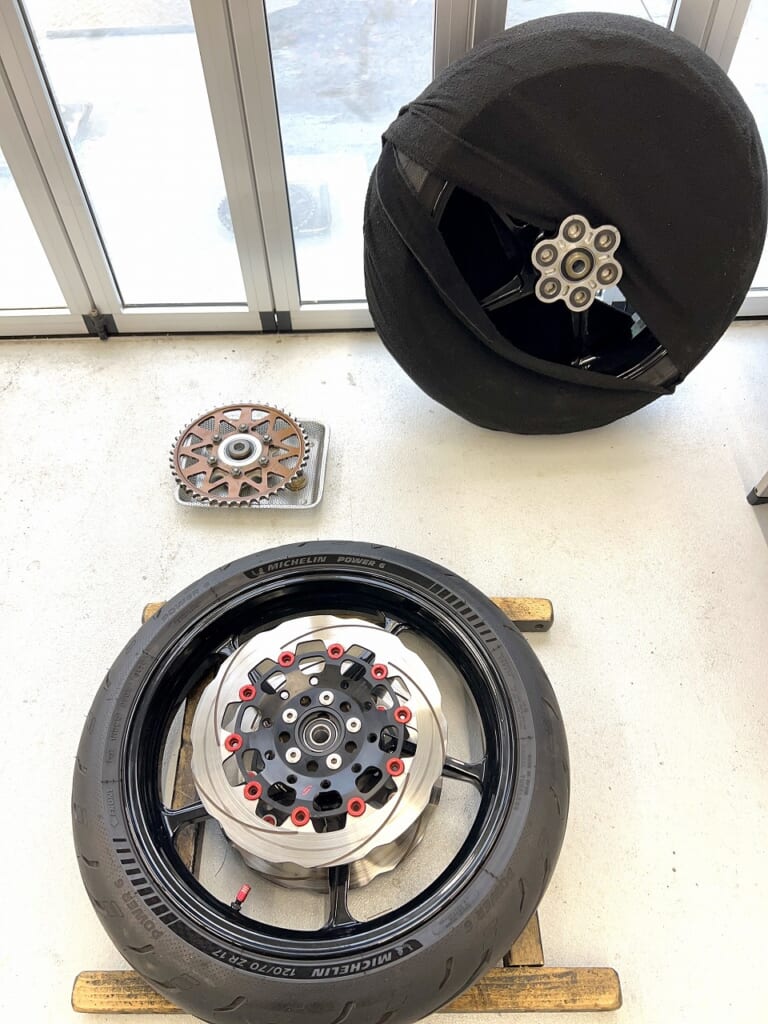
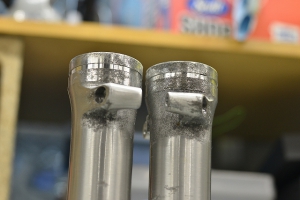
That’s quite a substantial distance collar. The overall design of the Dymag from the other day is really well thought out.
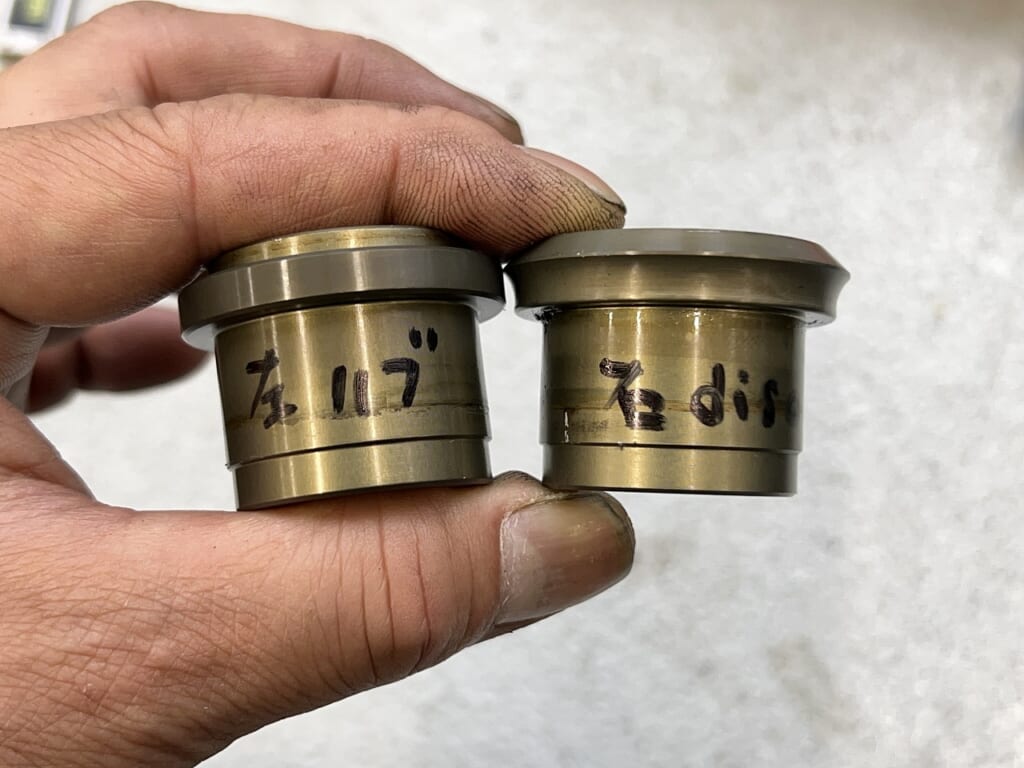
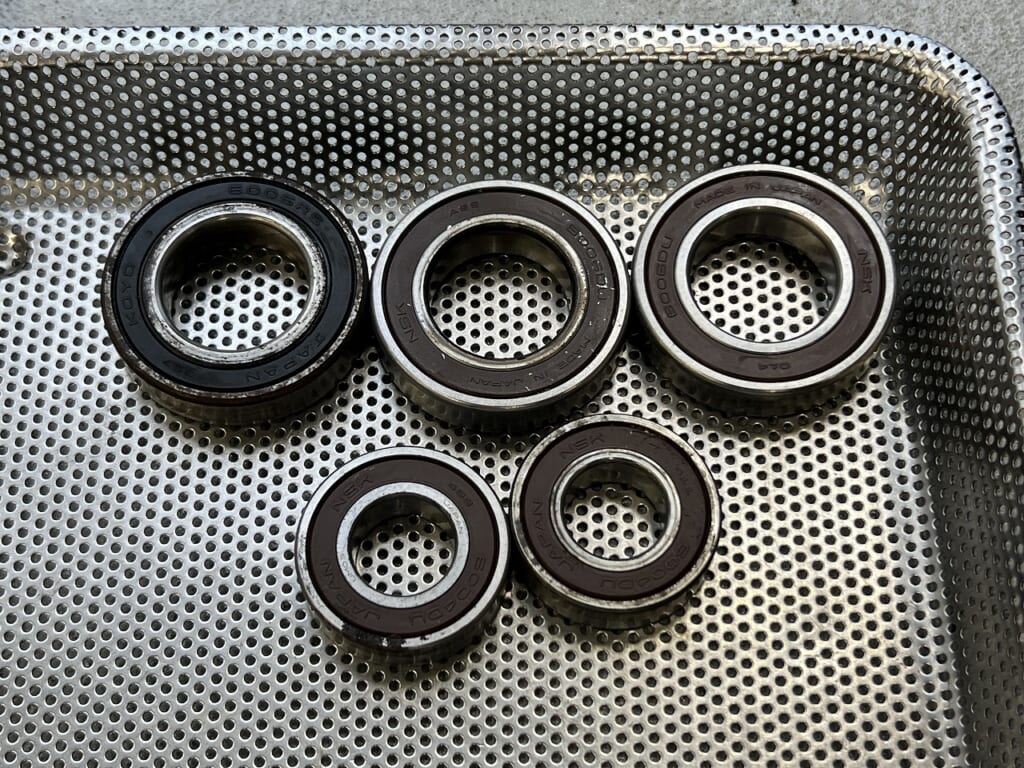
Gale Speed wants to use the same wheel bearings for all positions… The rear has three of the same part number.
We check parts like this and think carefully about whether they truly match.
These little trap-like things—I’ll label them with P-TOUCH next time to avoid painful mistakes. It seemed like it would work either way, but we assembled it the same way.
Wheel bearings are best replaced around 20,000–30,000 km
Basically, bearing quality is so good that durability is exceptional. Bad cases like this one are rare, but “imagine a spinning wheel”
—it’s constantly spinning. Even replacing them by distance or time is a good idea for a component like this.
Still, I can’t help but think how thin the wall is.
Wheel bearing assembly and operation check
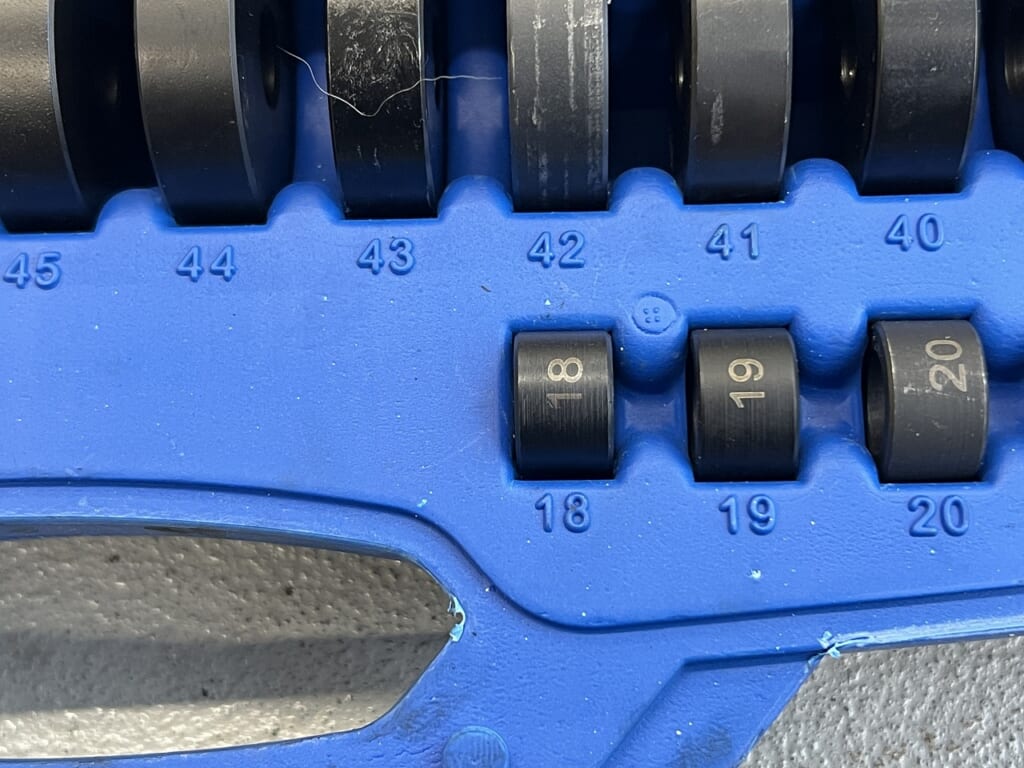
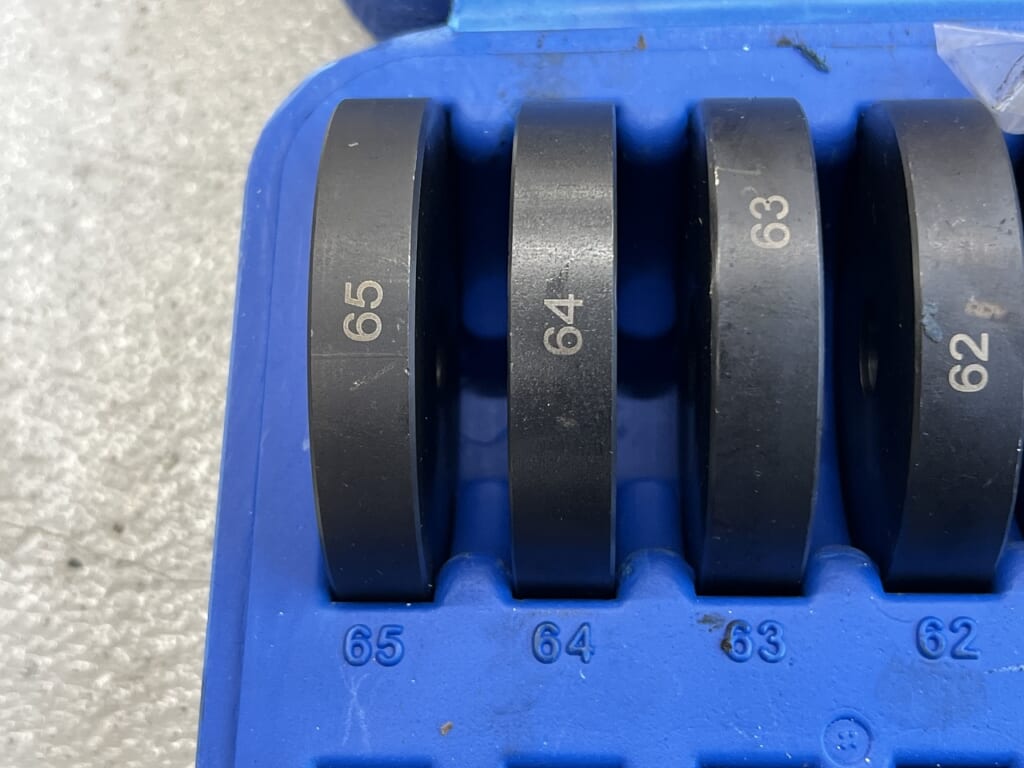
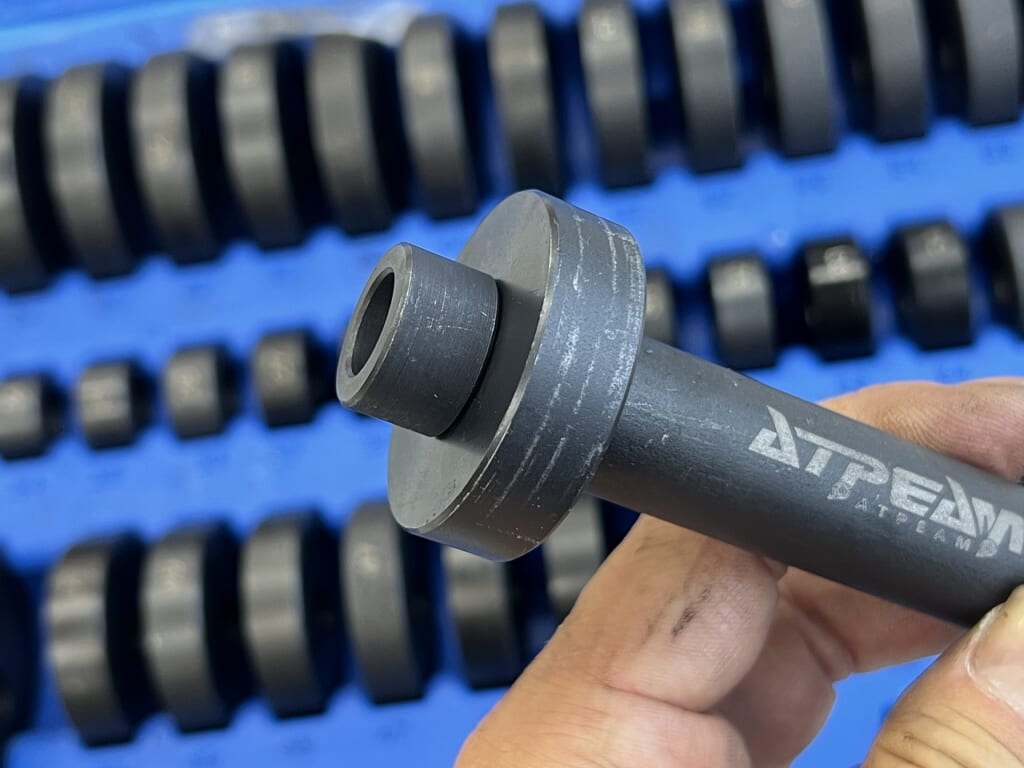
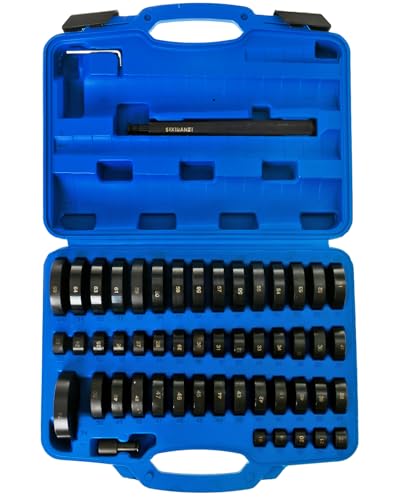
The bushing press kit is unbeatable as a press-in tool
18–65 mm in 1 mm increments. Plus 74 mm
You’re not pressing it in with a box, right…?
By connecting them this way (temporary fixing), you create a stepped collar configuration.
You can support the inner diameter and tap/press the outer diameter. Previously, when there was no stepped collar, I’d make one each time, but now that’s no longer necessary.
Think about it carefully… It works with more than just ball bearings. Needle rollers and tapered rollers can usually be handled too. We’ve really entered a convenient era!
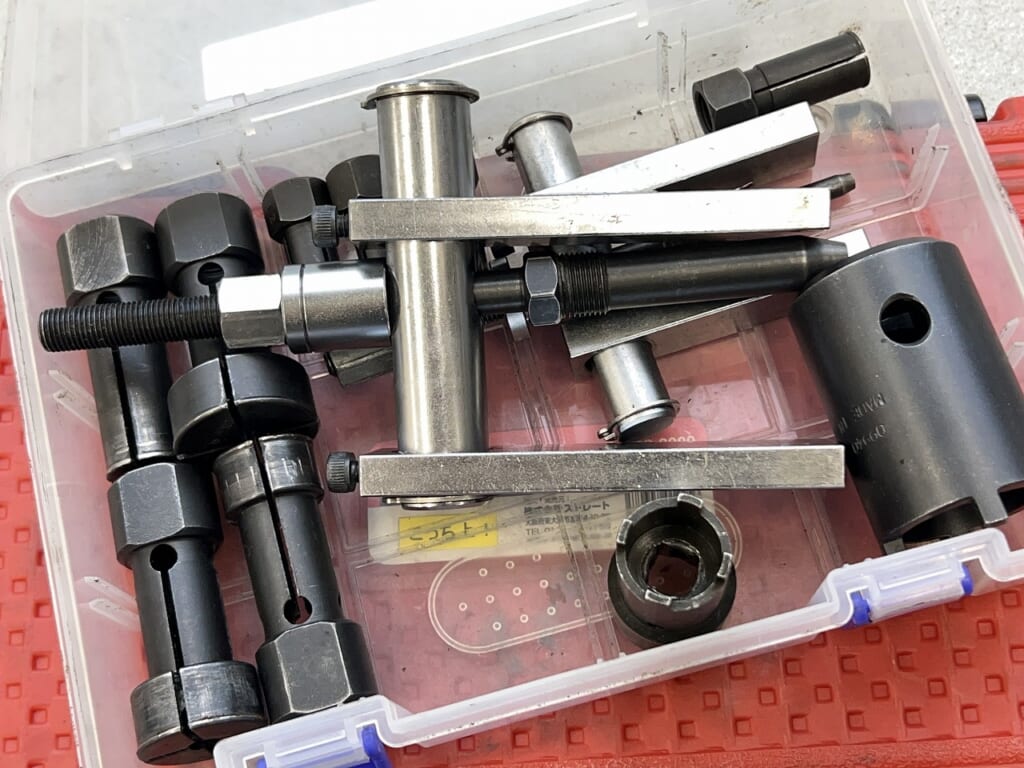
I also have a Hasco puller.
I usually use a cheap straight bearing puller, but the 30 mm one went missing somewhere, so I brought out the Hasco.
After using it again, “the claw flex is excellent.” Inserting and removing from the bearing is incredibly smooth. That’s quality for you. Don’t apply the bearing puller’s frame “directly” to the wheel.
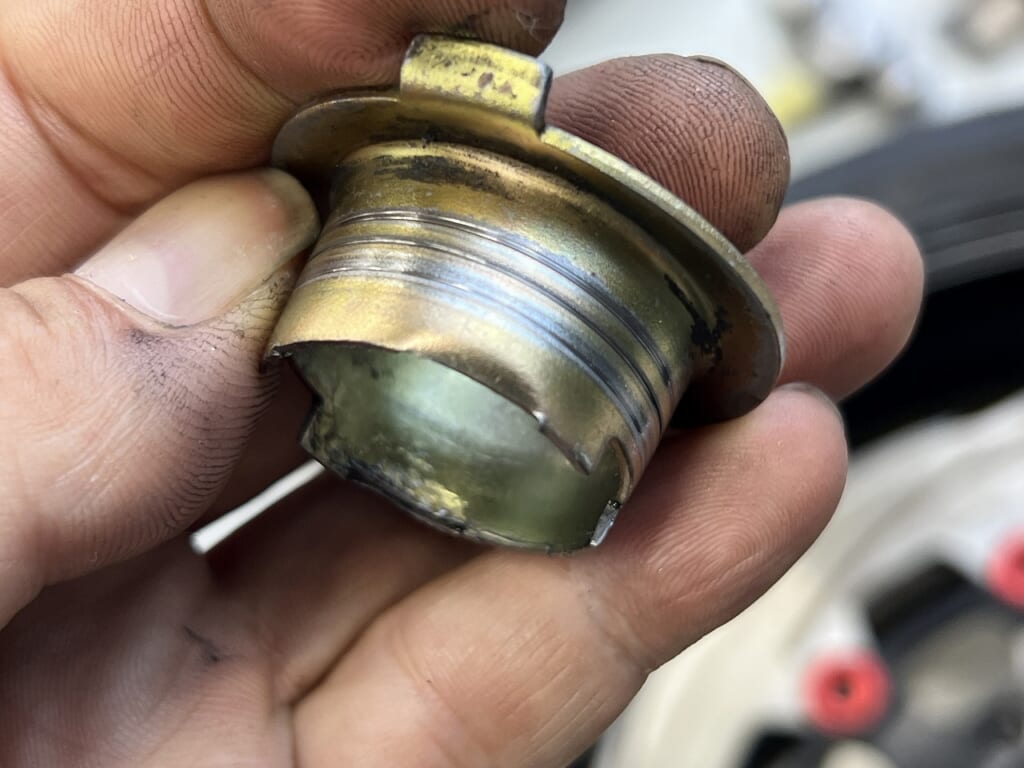
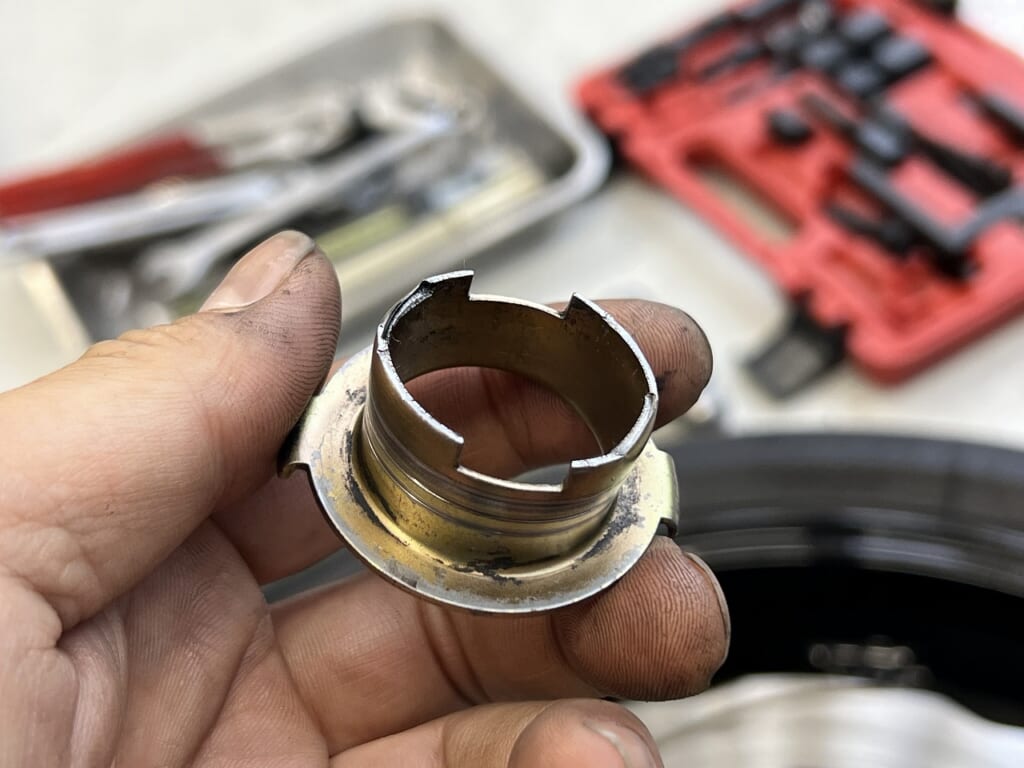
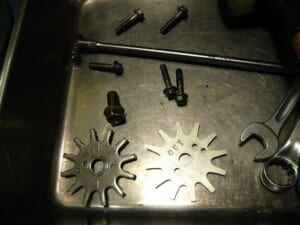
This happens pretty often—I’d definitely like to replace it. This one… the design isn’t great. Basically, the fact that assembly requires tricks is somewhat problematic (*´ω`*) Well, it’s not used anymore, so it’s fine, but I wish all four manufacturers had adopted the same structure.
We’re also replacing the rear sprocket, so we’ll hold off on this for now. We also got a carburetor overhaul added to the list!
To be continued.
General Motorcycle Chassis Maintenance.
Topic: The art of precision wheel bearing installation and reducing frictional drag. Details: Replacing wheel bearings might seem like a straightforward task, but simply hammering a new bearing into the hub will never unlock its true potential. Today’s log highlights why our process goes far beyond a simple swap (“Koukan suru dake dewa nai”). True efficiency lies in the preparation. We meticulously clear the inner hub walls of all aluminum corrosion and burs, inspect the distance collar for uncompromised length, and execute a micro-level “precision press-fit.” Pressing the bearing perfectly square without over-seating it prevents unnecessary thrust loads on the inner race. Verdict: When tightened to strict factory specs, the wheel now spins effortlessly with absolutely zero friction. This precision touch eliminates drag, makes pushing the bike feel incredibly light, and drastically sharpens cornering feedback. Don’t settle for basic part swapping—demand professional calibration!
【Maintenance Log】It’s not just about replacing! The secrets to precision pressing that guides wheel bearings to their ultimate rolling performance. GPZ900R wheel bearing replacement



 ポチップ
ポチップ