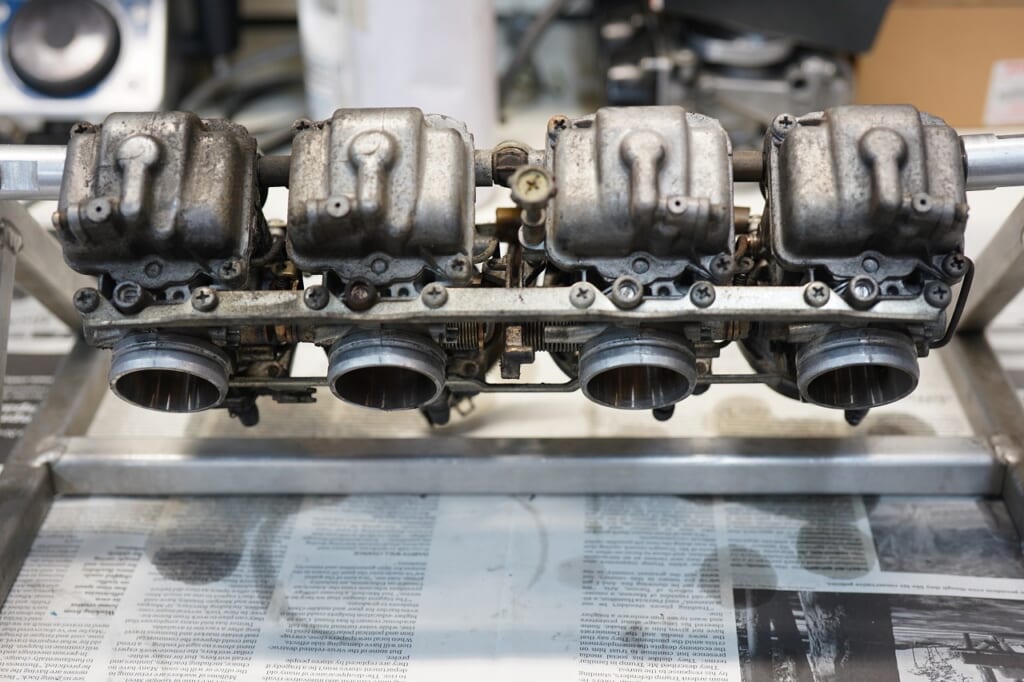
I really love this carb… The first time I put one on a GS1000S was this carb (for GSF1200).
The top cover and float chamber both use just two screws! Two screws, I tell you.
It’s practically racing-spec…
When you get to the BST40 (large body) for the GSX-R750RK,
the top cover has a quick-access needle adjustment modification,
and there’s even a drain for MJ replacement… For a vacuum carb, that’s pretty impressive ( ゚Д゚).
I really want the Mag vacuum BS carb that was fitted to the Kawasaki KR1000… Does anyone want to donate one?
This carb is, well, let me say it has quite a bit of character—a carburettor with considerable quirks. I get the impression it’s not something you can handle as casually as a Keihin, like you could with your hands off the wheel.
I’d like to explain why that is, including from my own experience.
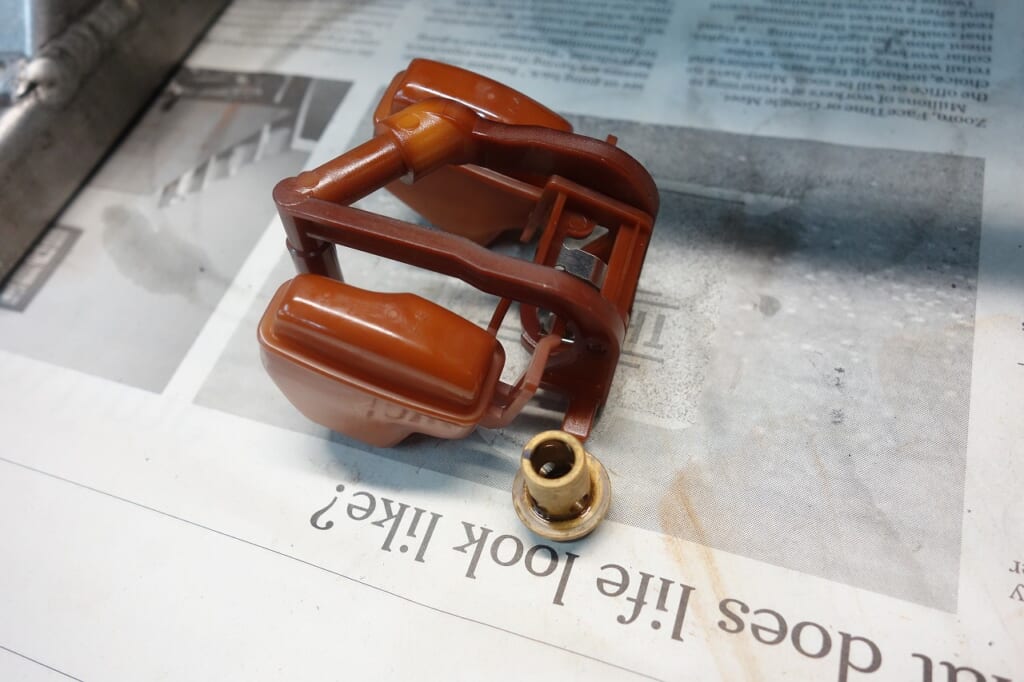
The float arm comes off as a complete assembly… Why?
This is quite a problem.
Since the float arm isn’t on the body side, adjustment at the float level is virtually impossible.
When you want to check the float level, you have to press it in the float chamber and hold it firmly to get an accurate reading.
Also, since this assembly is held in place with an O-ring, if the O-ring shrinks, the carb will start running poorly—a sad design flaw.
Sure, the arm won’t break, but is there any other benefit?
Maybe it was a racing-inspired idea to remove the float assembly quickly.
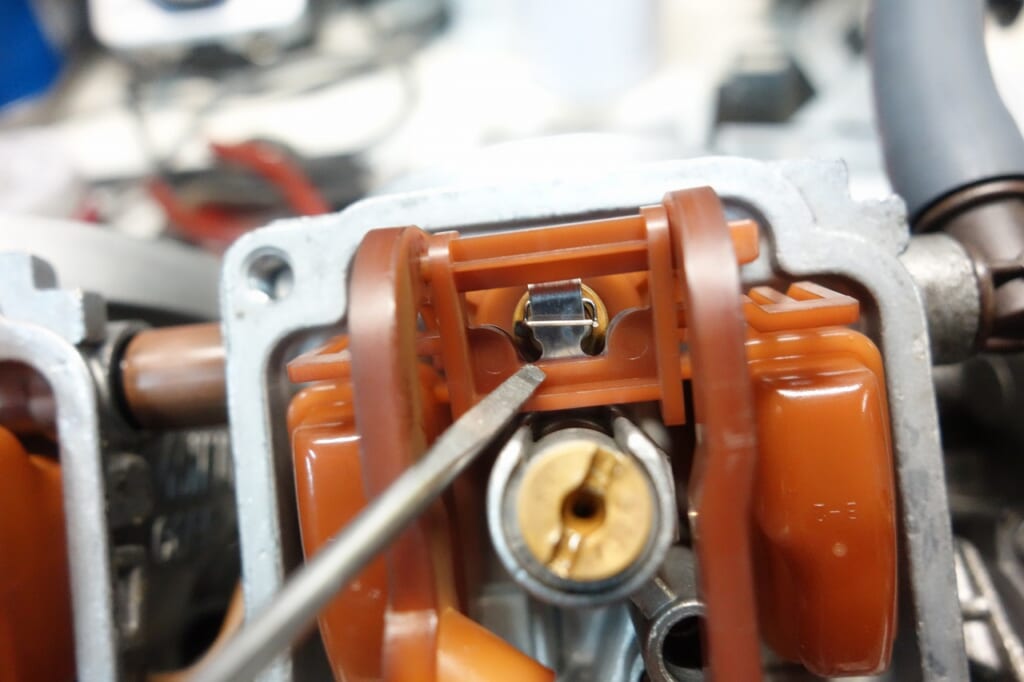
The narrowing on this arm can cause problems too.
It’s only happened once, but the float valve wire sometimes gets caught on this arm… Really.
When fuel rushes in from an empty state and the float rises, it gets snagged, and then you get a serious overflow…
At first I had no idea what was going on… The carb looked fine when I checked the actual fuel level by itself, but when I assembled it, fuel would overflow vigorously.
But in a way, I was lucky… I found out because of that.
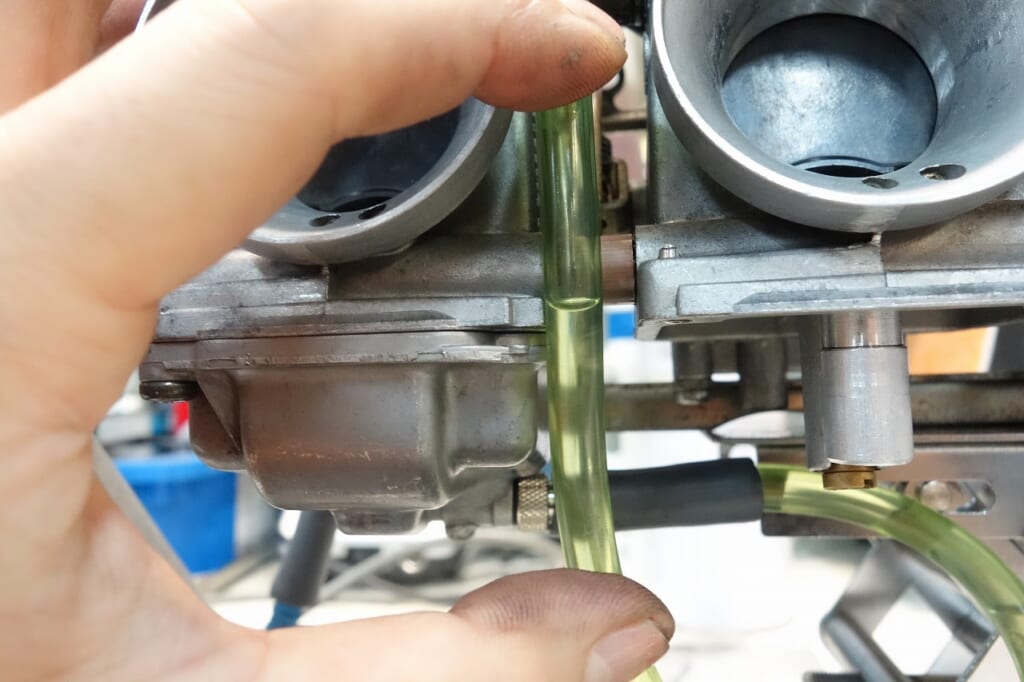
Measuring the actual fuel level is a hassle.
You have to make a carburettor stand… You have to tilt it 10 degrees to measure. I mean, that’s normally impossible, right? It’s an unreasonable service manual requirement (carburettor maintenance setup).
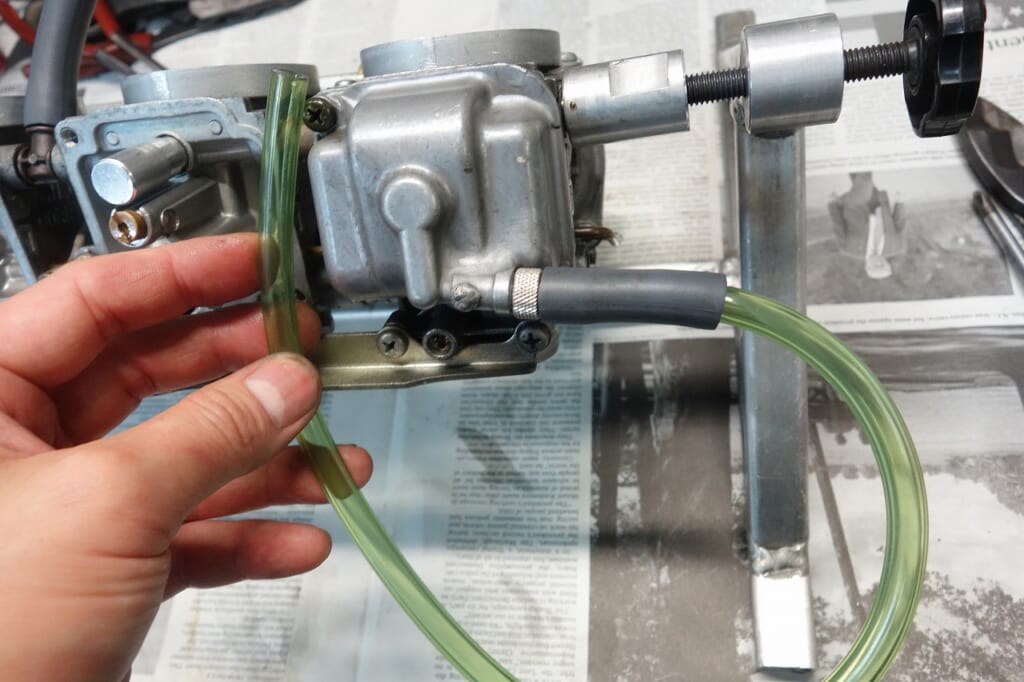
There is an OEM tool to check the actual fuel level.
Suzuki 09913-14541—looks like it’s been discontinued ( ;∀;).
The lesson here is: buy special tools while you can!
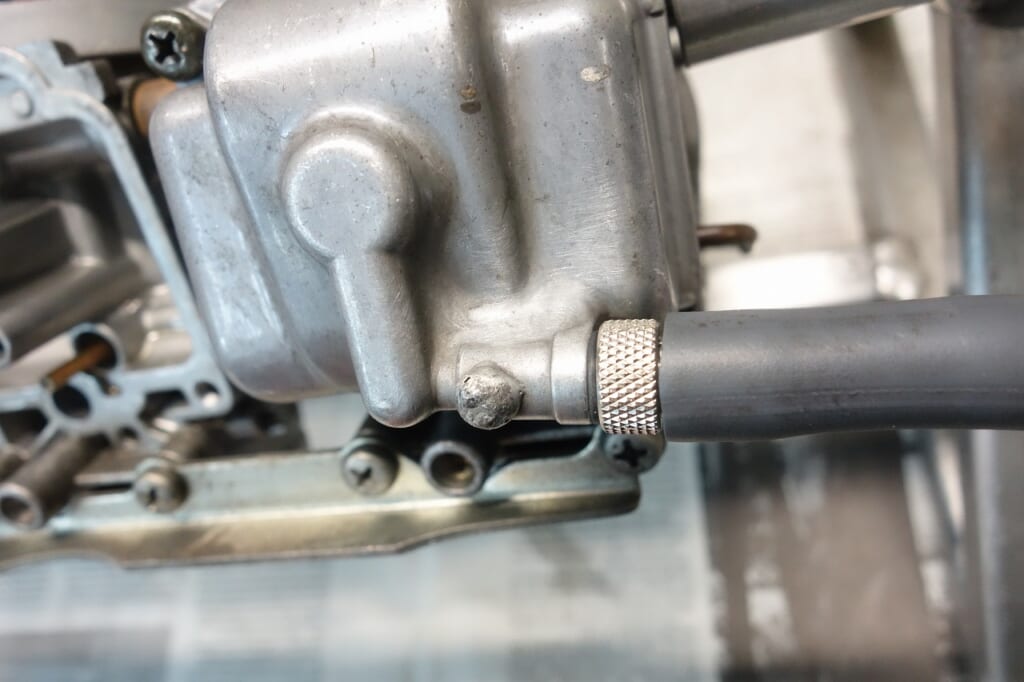
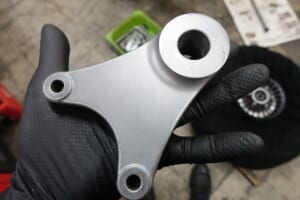
This is our custom fixture, and we’ve sealed it with a hole weld, but… if you just connect the tool without that, fuel will leak out here.
Wow, sharp… That’s a carburettor for you!
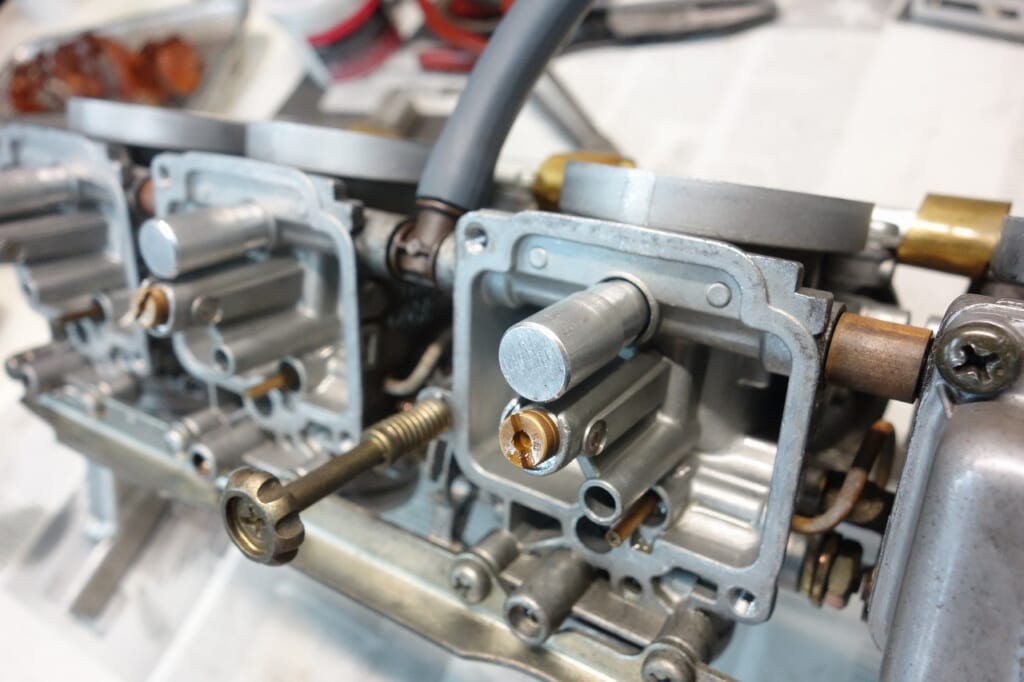
As I mentioned earlier, there’s one fuel inlet that delivers to all four carbs.
So if you don’t cut aluminum, install an O-ring, and blind it off like in the photo, you’d have to drain all four carbs every time you measure the actual fuel level—it would smell and the day would be gone.
Well, generally speaking, you don’t check the actual fuel level—or you can’t, really—with this carb.
The prep work is demanding. Without at least basic machine tools, it’s going to be rough.
And furthermore…
…you can remove the slide block, but there’s no OEM parts listing (though reproductions exist overseas).
Well, since you don’t typically use an OEM carburettor for that many years and miles, maybe that parts list setup is fine, but still, there’s that feeling of wanting to use parts long-term.
When you think about it, parts that are listed in the parts catalog and available as service items—as you see older carburetors that have accumulated years and miles, it really is frustrating.
On the bright side of the BST carb… the diaphragm is available as a separate part (Keihin is basically one piece).
Keihin carbs are better… For vacuum, go CVK or CVR… Well then ( ゚Д゚).