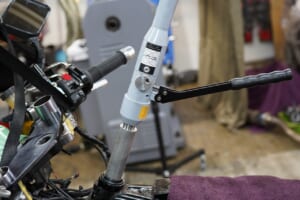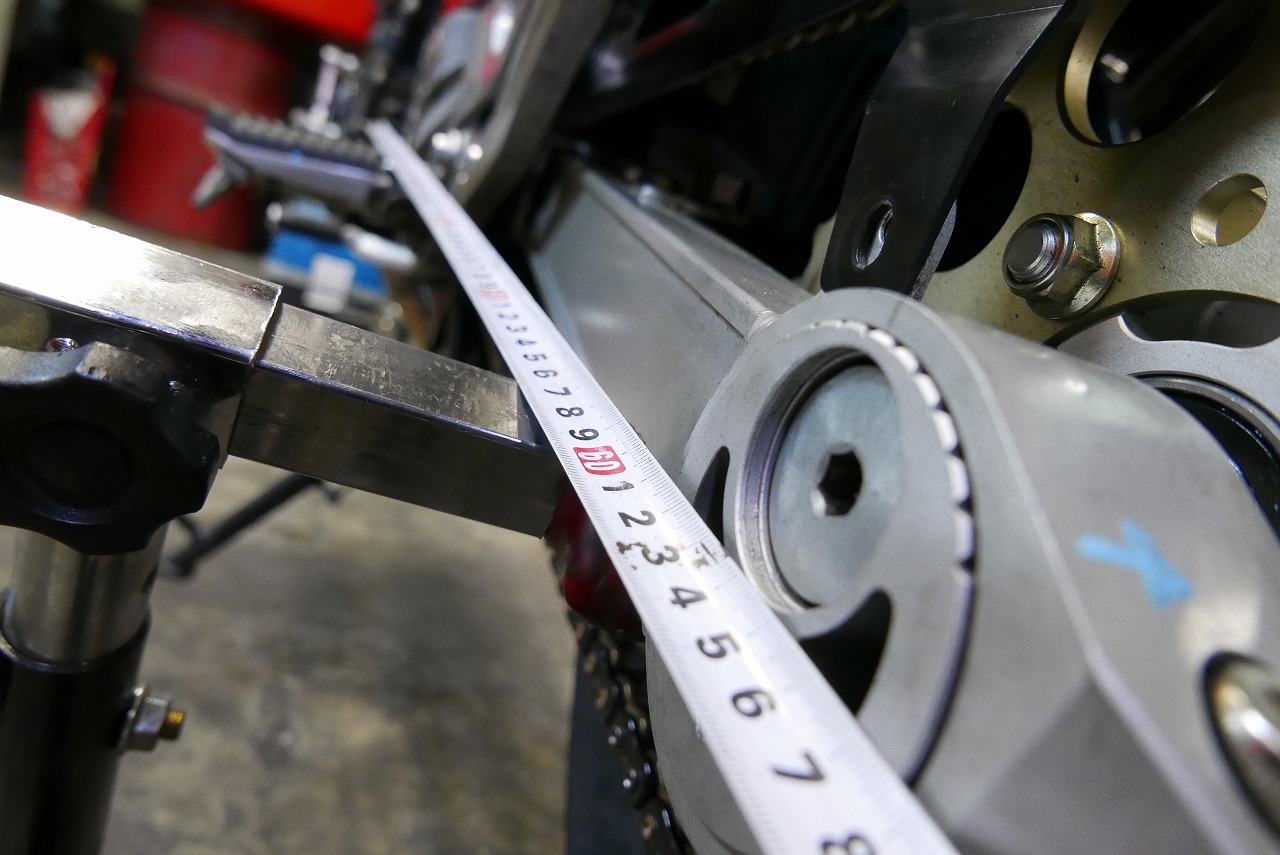
I trust only the tools. You can verify it well enough with a meter between the pivot and axle center. (Since the meter has nice round numbers, I always measure from around 100 mm.)
As a bonus, you get to know the swingarm length too—killing two birds with one stone?
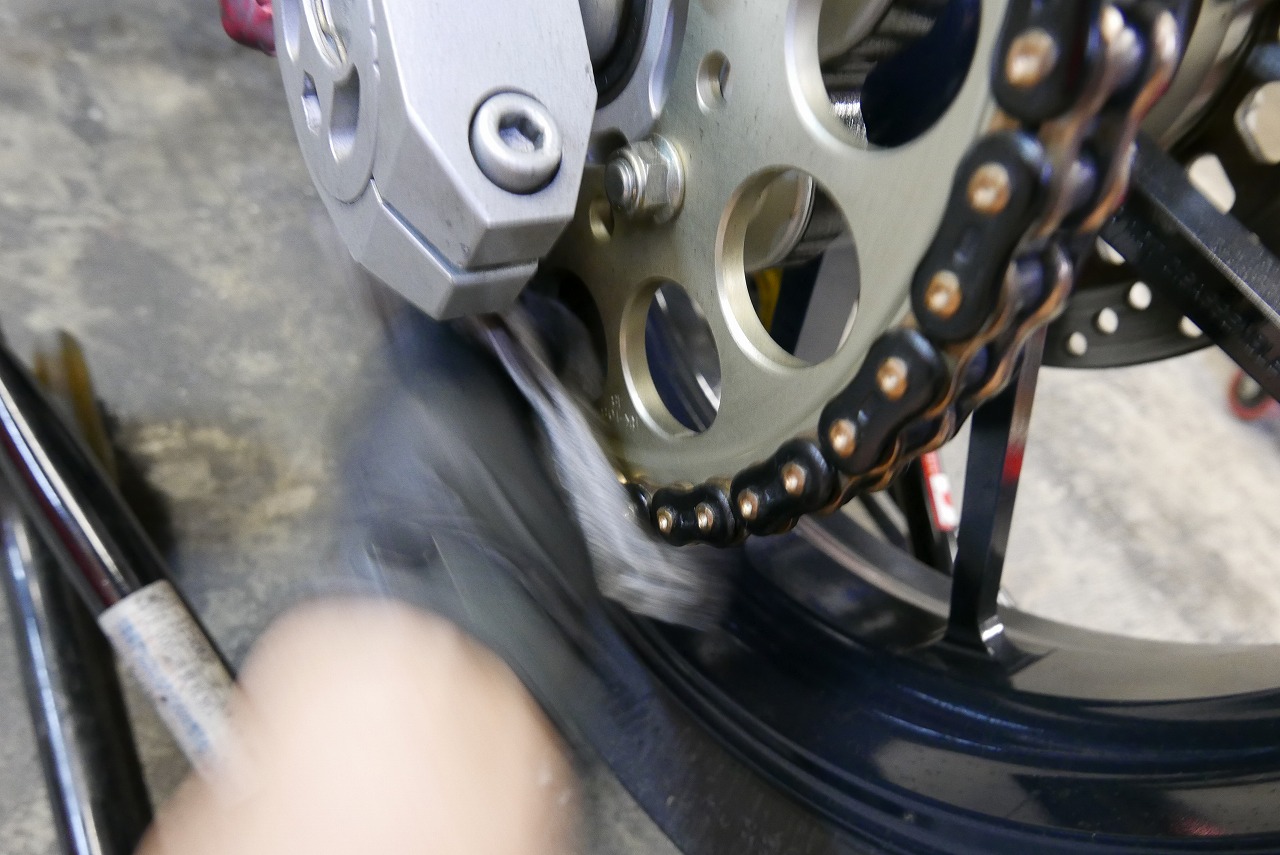
I always work the chain thoroughly and wipe away the dirt.
I work in chain oil as I go, letting it soak in.
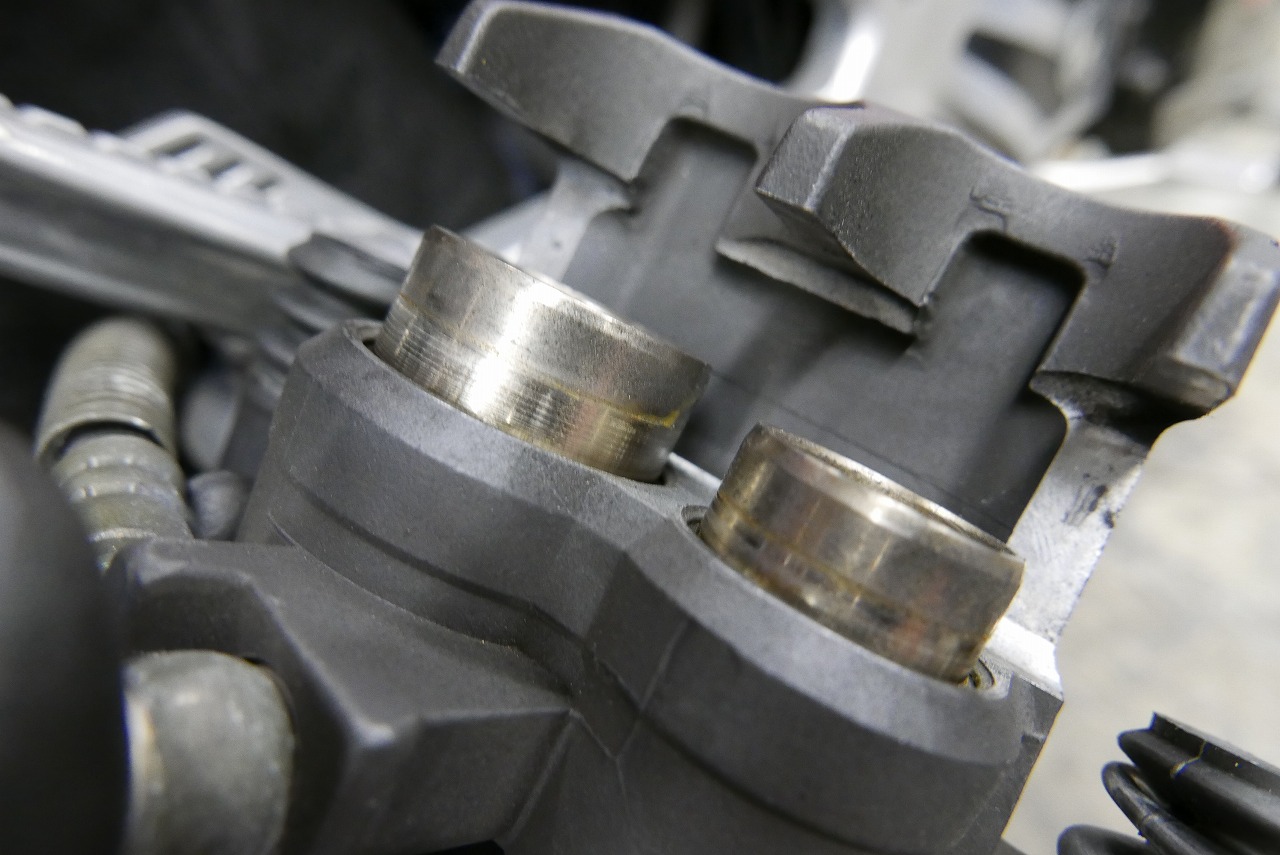
Rear caliper cleaning. Clean and working great.
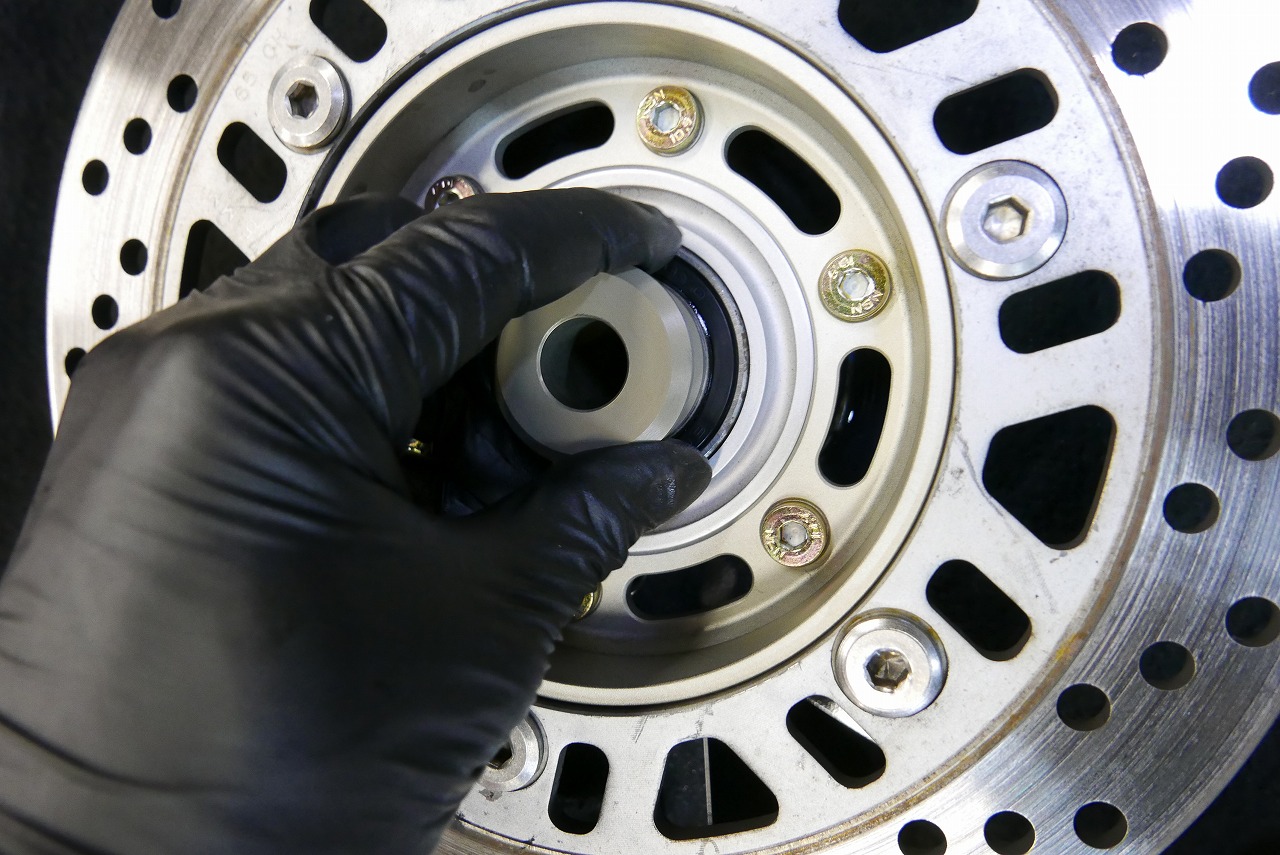
The collar is press-fit, so it’s hard to see, but it should be fine.
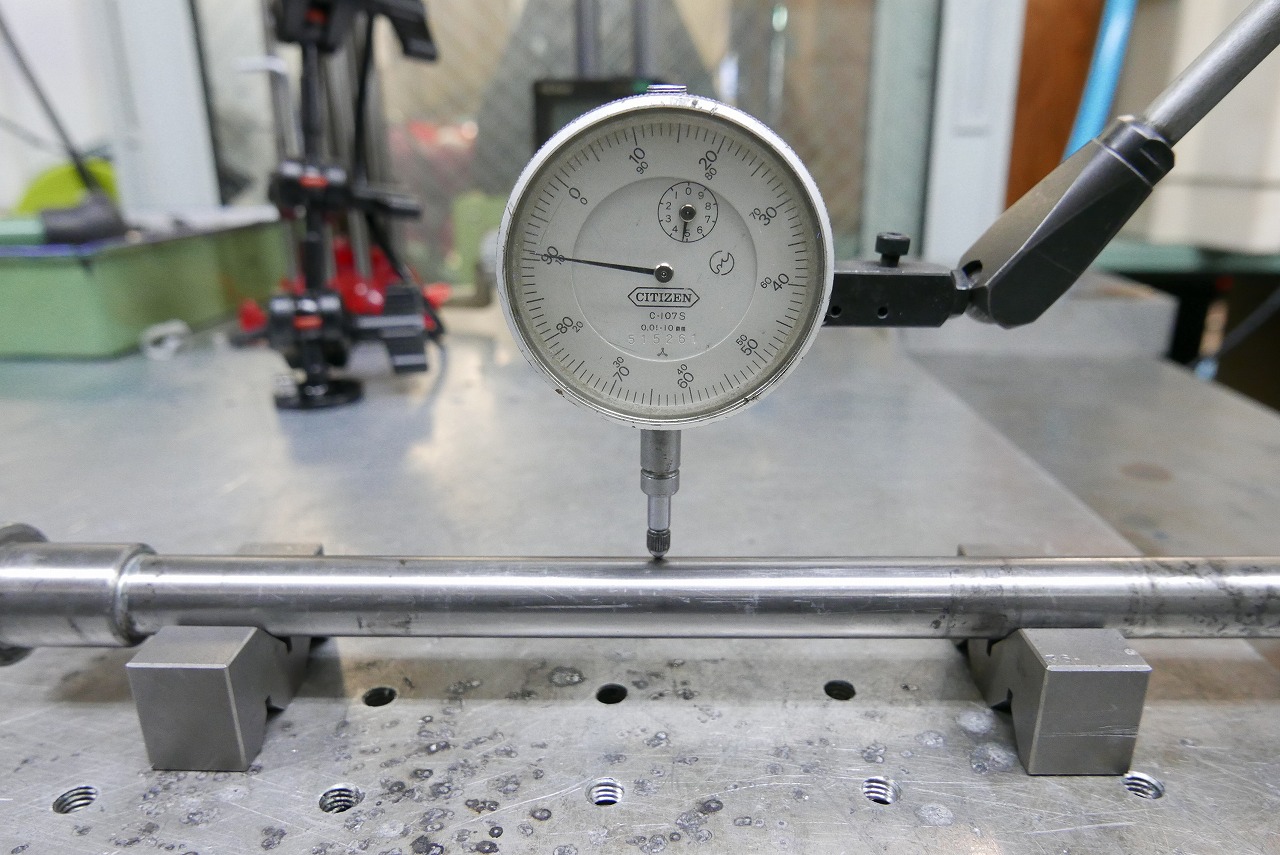
The rear axle is 17 mm diameter… that’s thin…
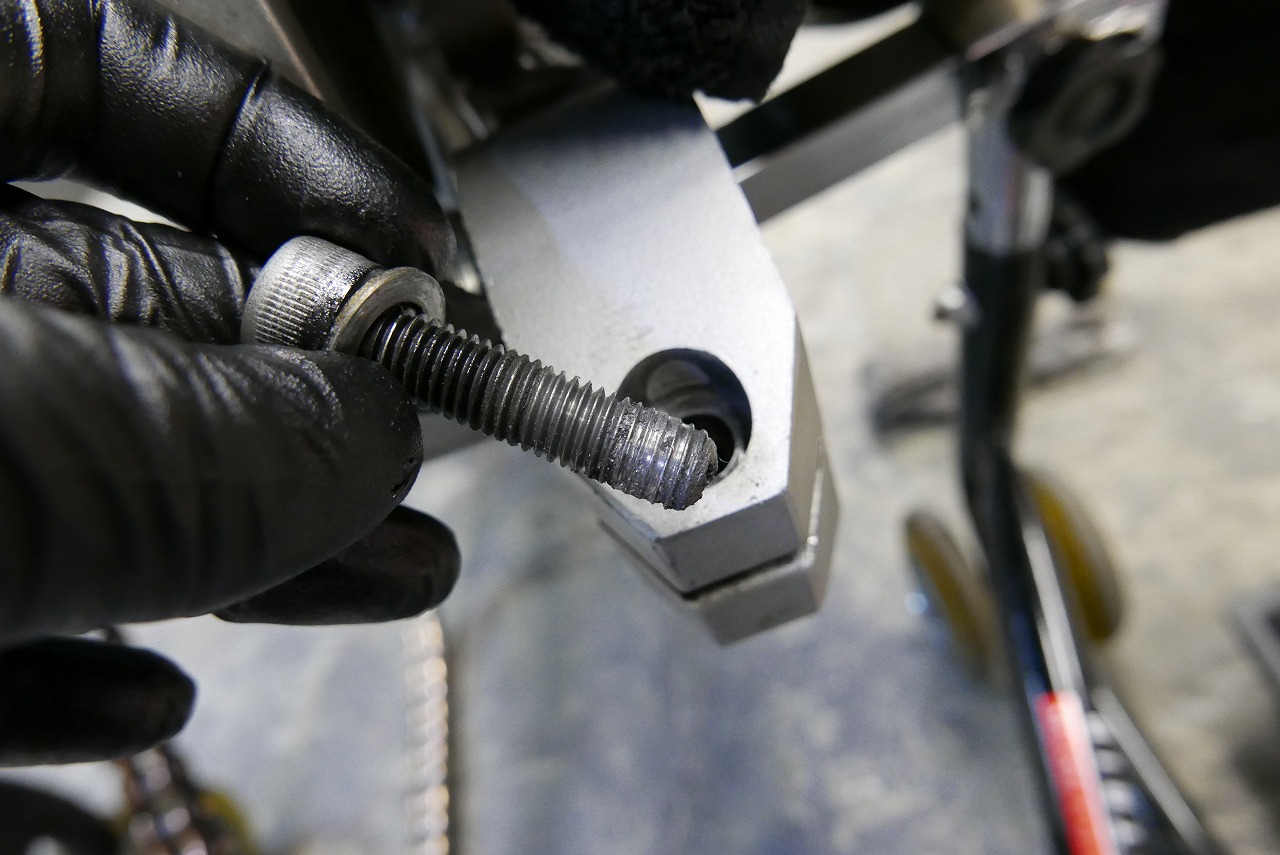
Right-side eccentric clamp bolt. Wouldn’t budge at all—then it loosened—huh? Something’s off… I’m a bit worried it seized. I prayed it wouldn’t need a helicoil… (the shape makes it a pain to work on.)
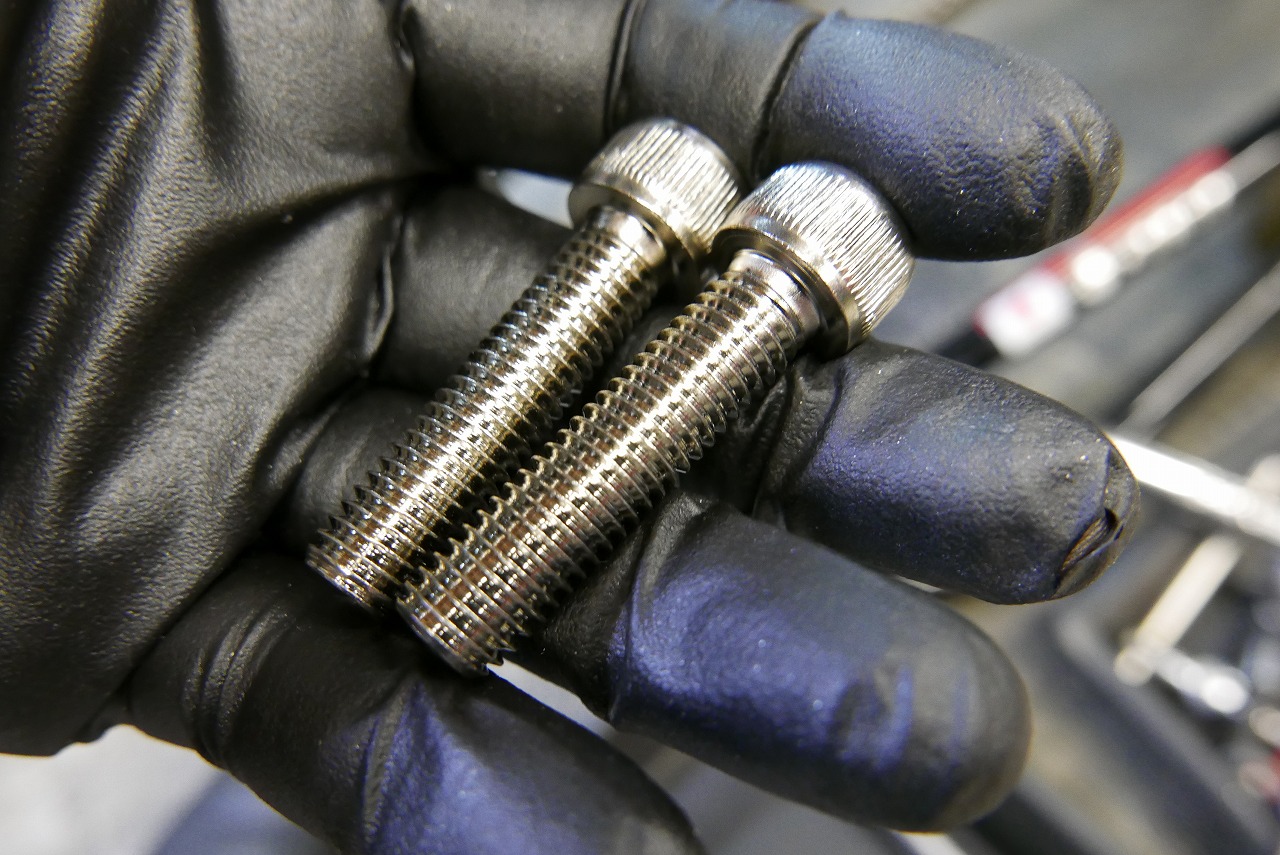
I kept thinking, why M10-1.5? But we had it in stock. Nice and shiny with nickel plating.
It came back to life with a tap correction.
I check the chain dimensions as much as possible. Looks good.
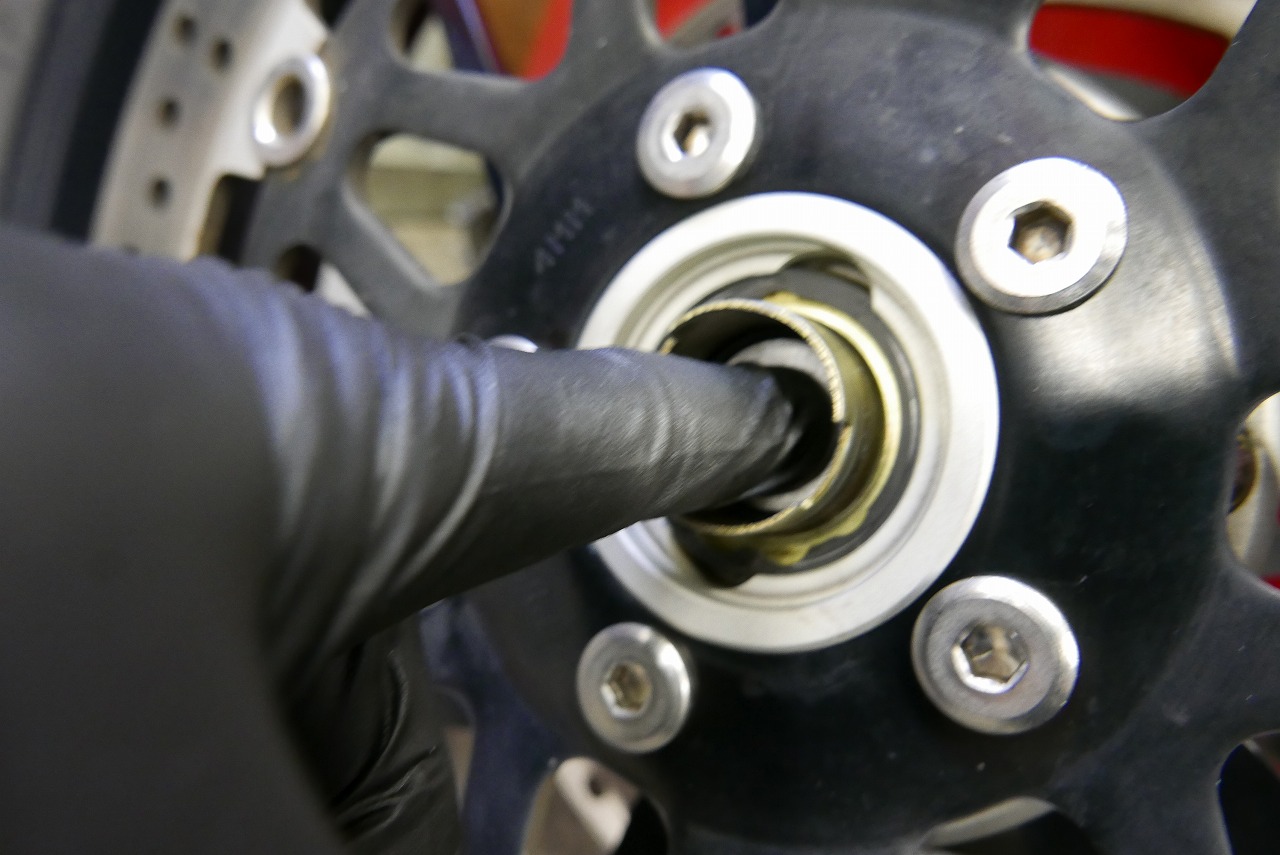
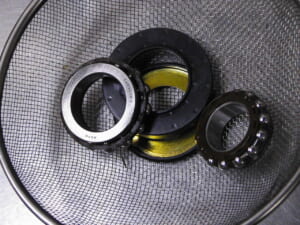
I adjusted the front bearing a bit.
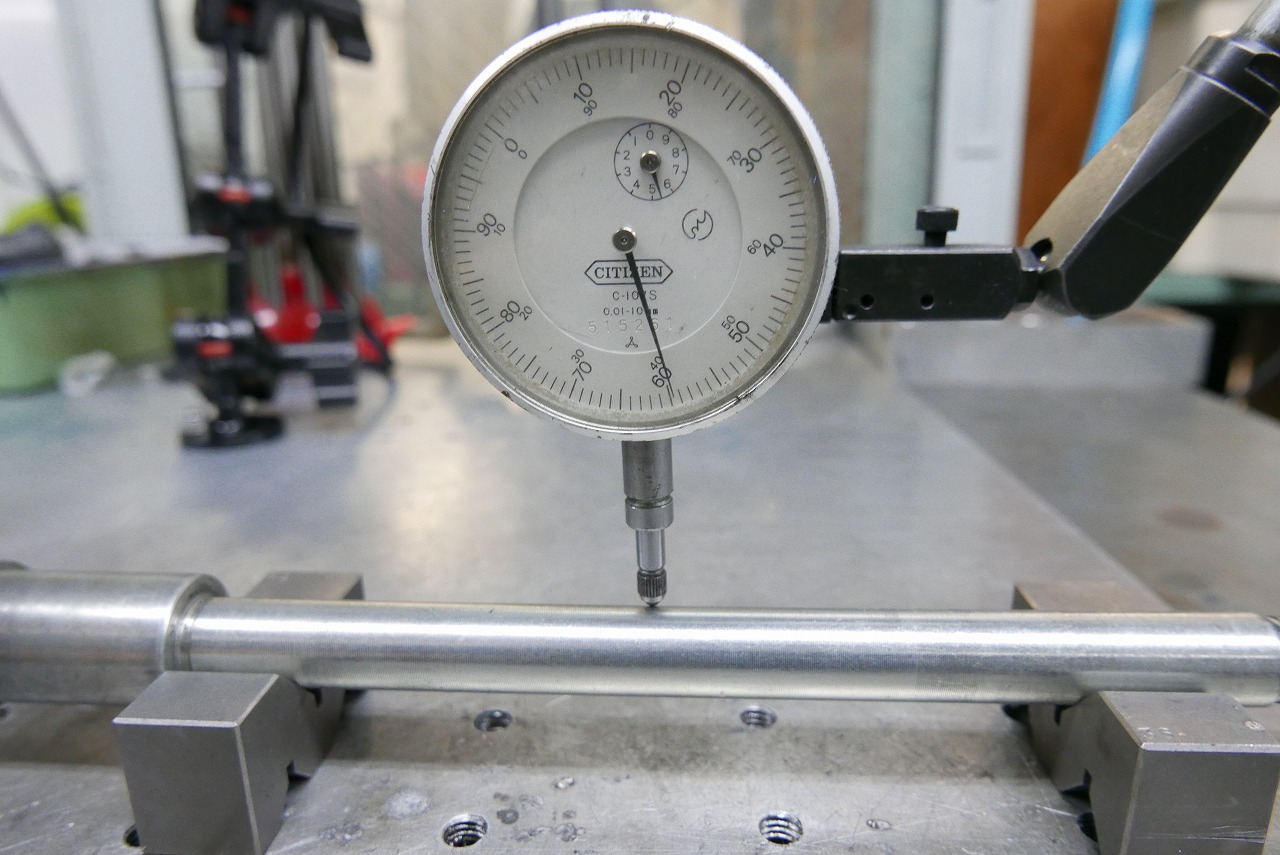
The front is 15 mm diameter… that’s thin too—well, the design is old, after all.
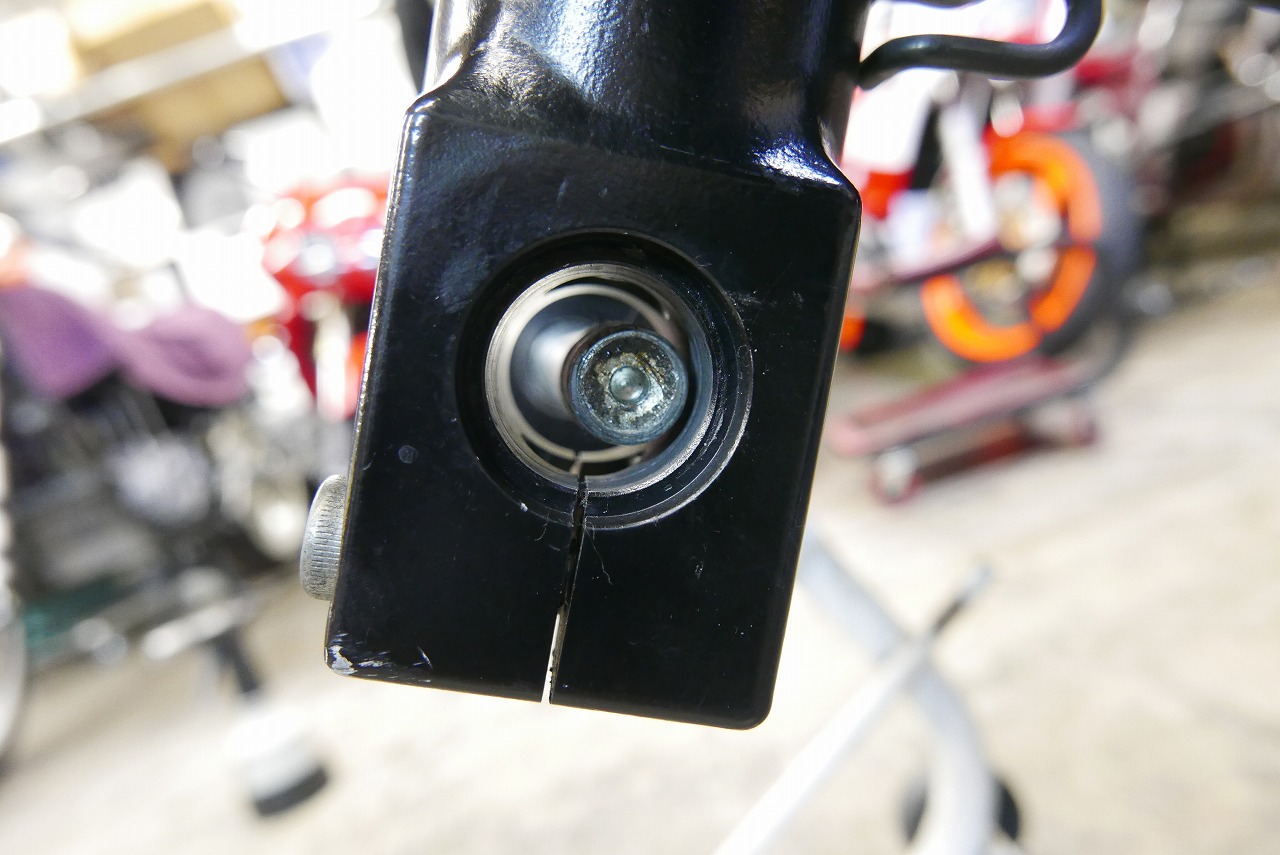
With older bikes like this, the fender stays sometimes bind so tight that the axle won’t go in straight. I free everything up and slide it in smoothly. When you confirm the fork moves smoothly and then tighten it, it should be a bit smoother.
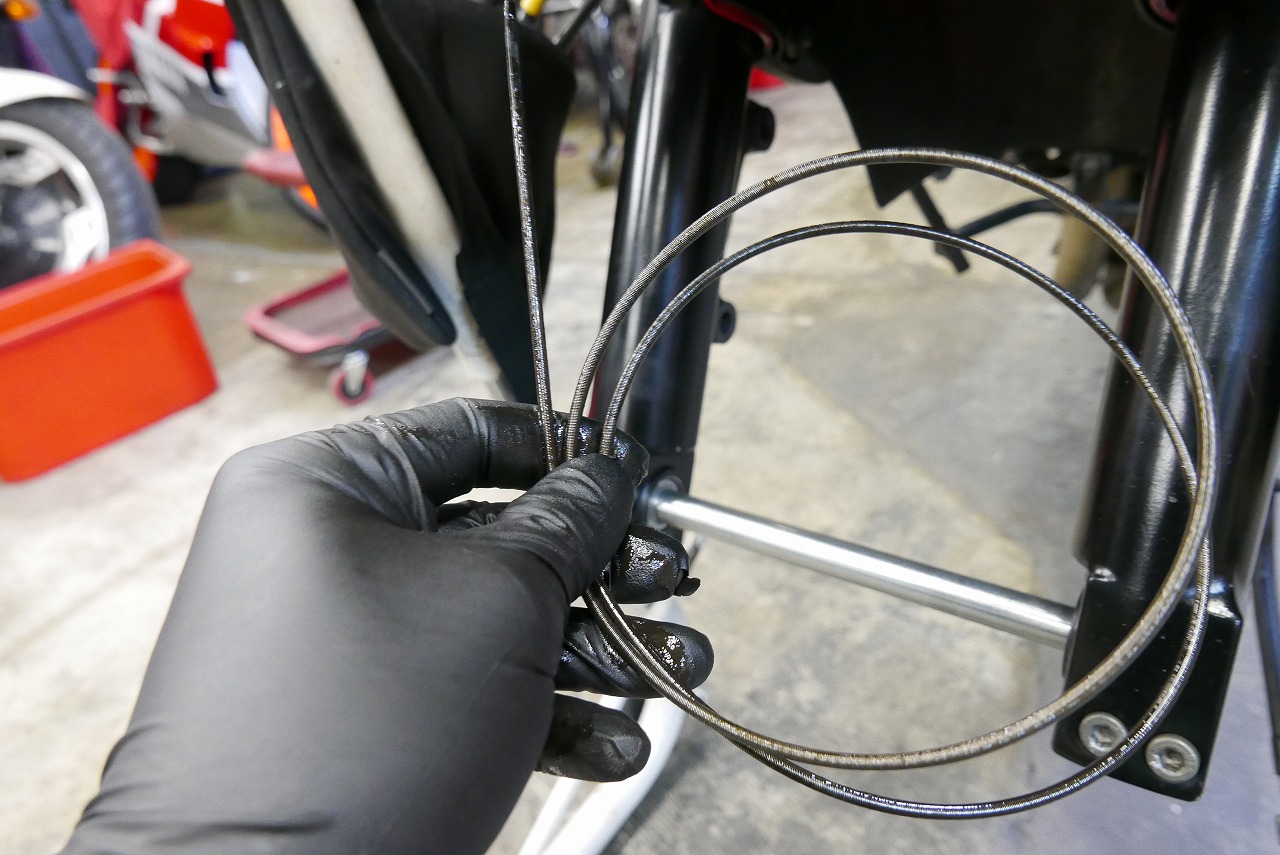
Give the speedometer cable some oil now and then too.
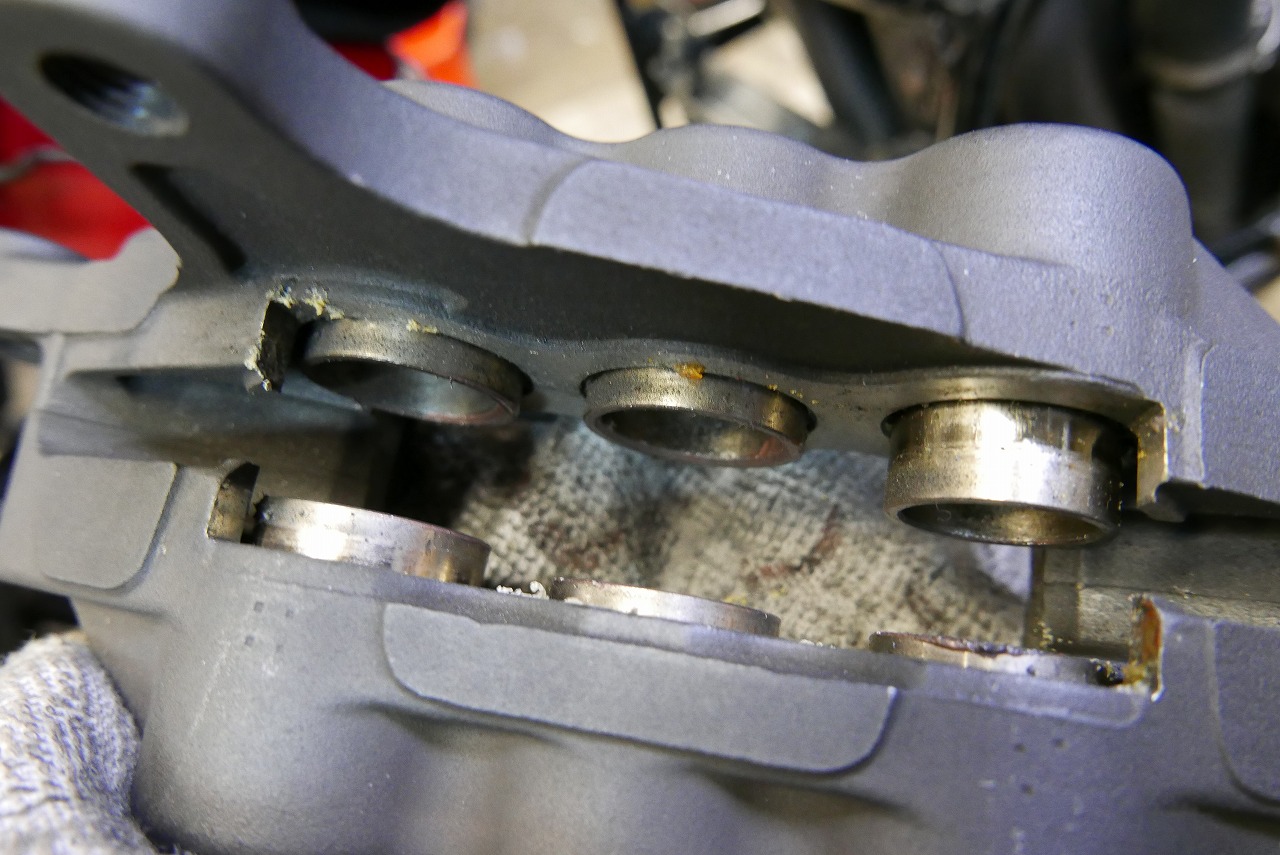
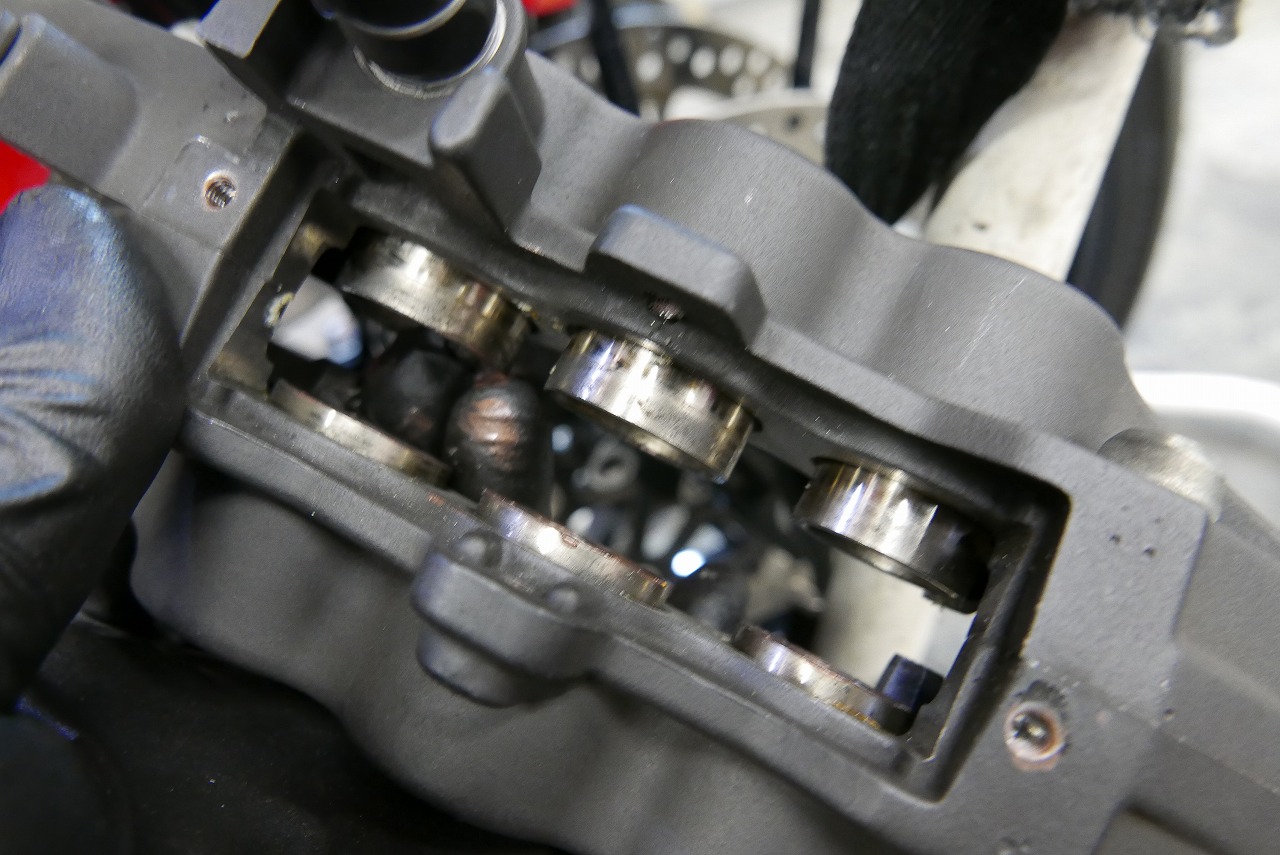
Front caliper is in great shape too. This is a Tokico that moves really well.
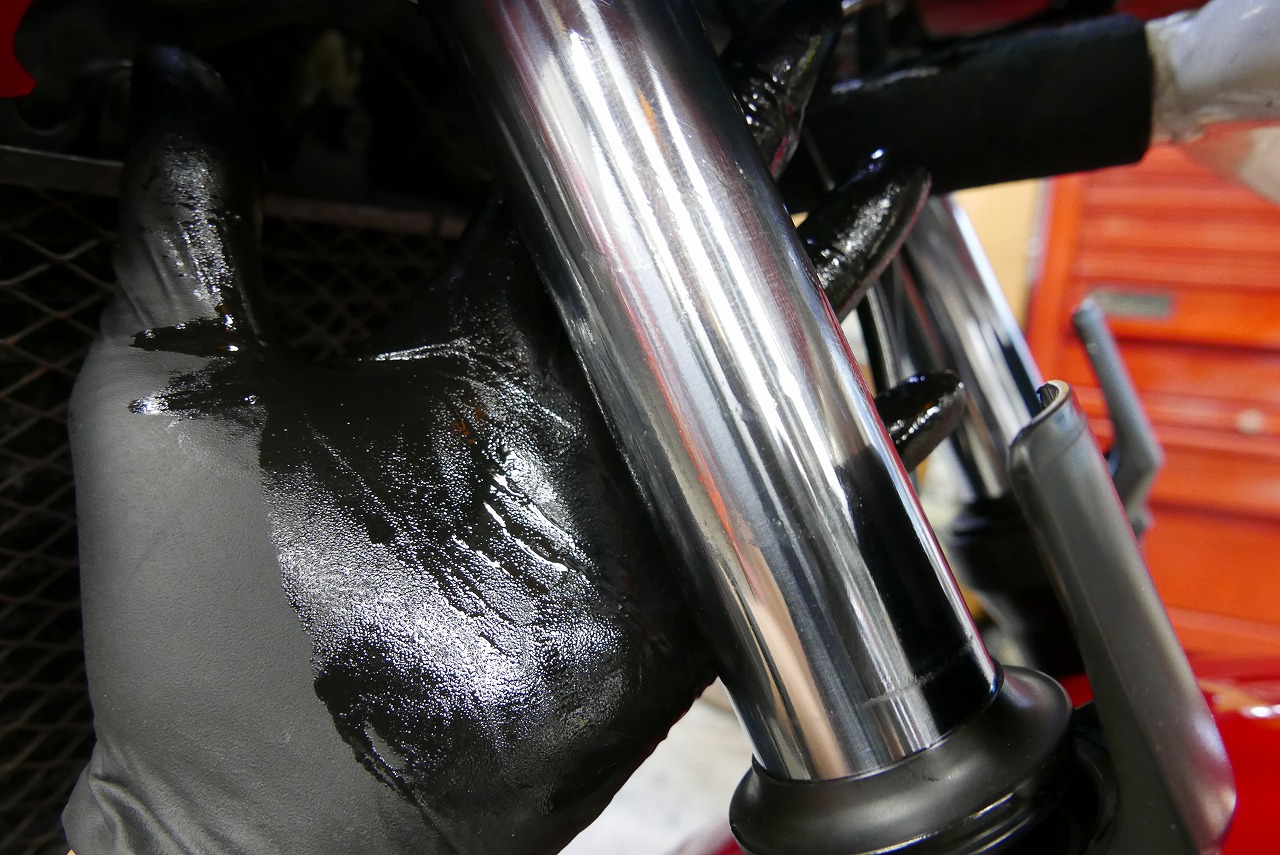
Oiled and rust-proofed the fork.