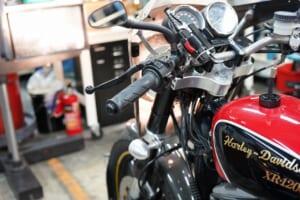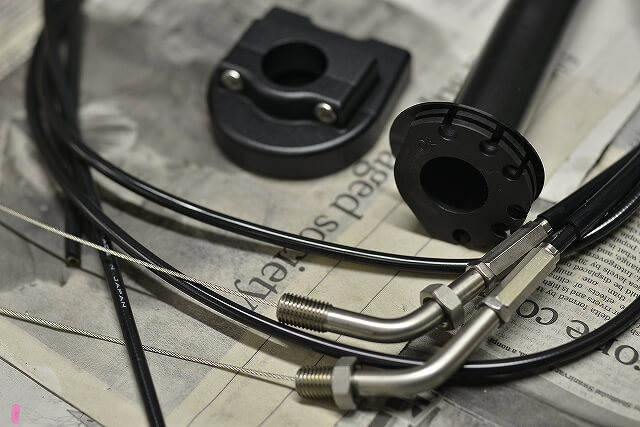
Let’s install an Active DIY accelerator wire kit plus TYPE1 throttle holder.
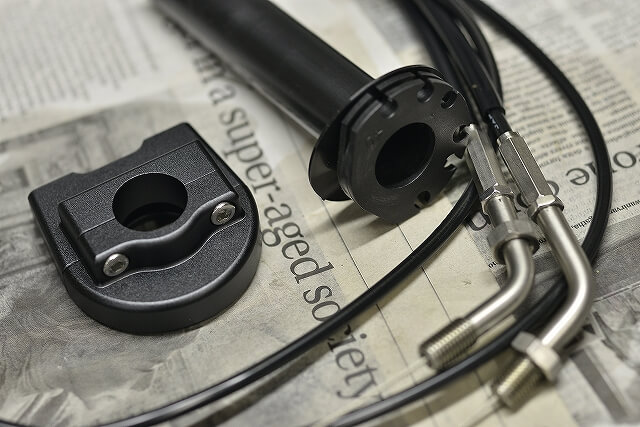
An orthodox holder shape seems like the safest bet. Holders with overly thin bolts for mounting or lots of gimmicks tend to have poor serviceability.
I often see people eagerly go for the flashy new option. Take time to observe carefully.
I suddenly wondered if the vent on the holder side isn’t at 90 degrees. Maybe using a gentle radius reduces the load on the inner wire.
Wire typically breaks near vents or where it rubs, so reducing wire resistance probably starts from there.
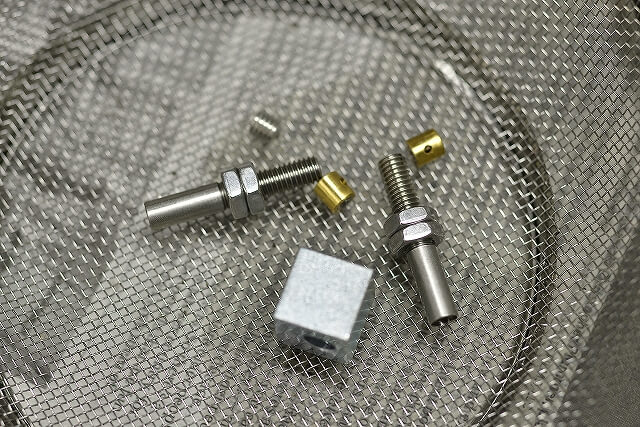
This time the dimensions are unusual, so we won’t use crimp fittings. Actually, we can’t use them.
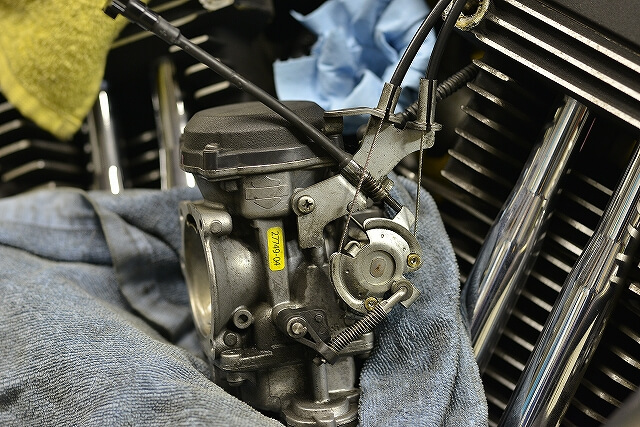
Since this type has no adjustment on the carburetor side, we’ll make it carefully to avoid mistakes. The appeal of this wire is that you can match the outer length precisely. There’s no mid-range adjustment that stretches the overall length. If the length is 50mm too long for the frame, the appearance gets pretty droopy.
It’s important to cut on both sides with plenty of room and get a clean layout.
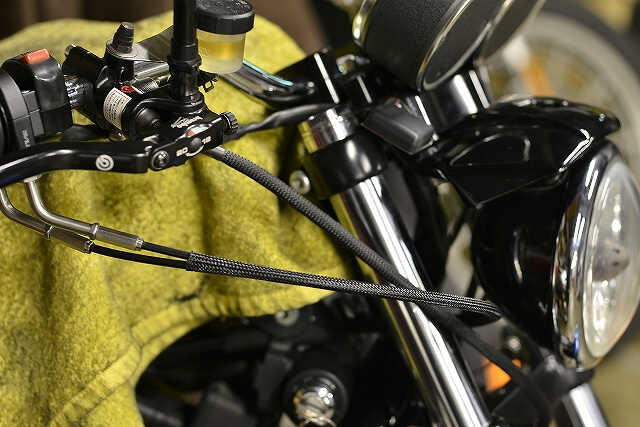
A gentle curve with no throttle operation issues feels great.
Wires and brake hoses are naturally either too short or too long, and vehicles that people install themselves usually end up needing to be redone anyway, so you buy and redo it. What seemed cheap ends up costing more. As long as you do everything yourself to the end, there’s no problem, but…
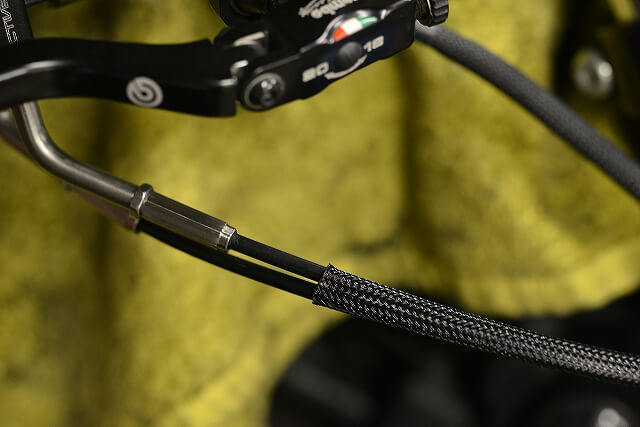
We’d like to bundle the accelerator wires, but tying them with cable ties is bad for operation, so that’s a no-go.
Braided sleeve bundles them while letting the wires slide smoothly inside, and the outer sheath has good slip, so wear on the frame is reduced. The appearance looks like a single line and looks clean.
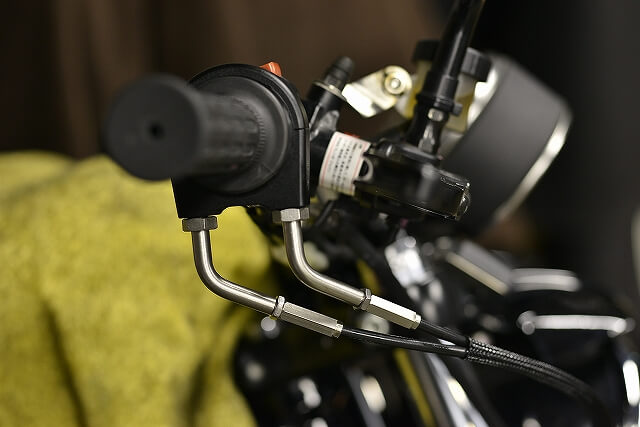
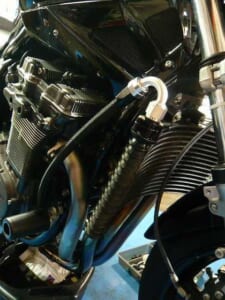
This angle has meaning too. It might be my imagination, but it seems like 90-degree vent wires break less often? What do you think?
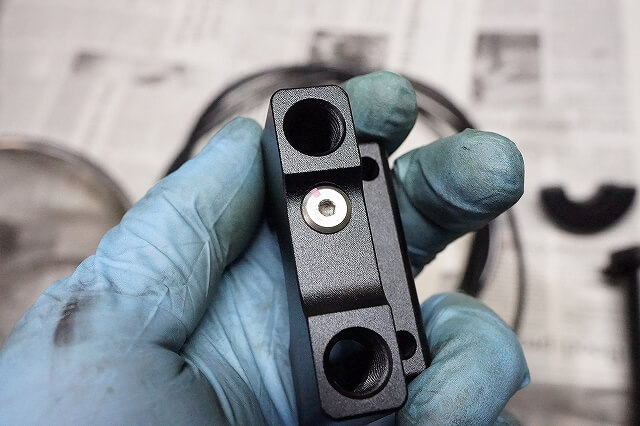
An accelerator stopper is necessary. It gives a solid feel when the throttle is off. We’ll use a slim head and make it flush. Unnecessarily long bolts and nuts aren’t needed.
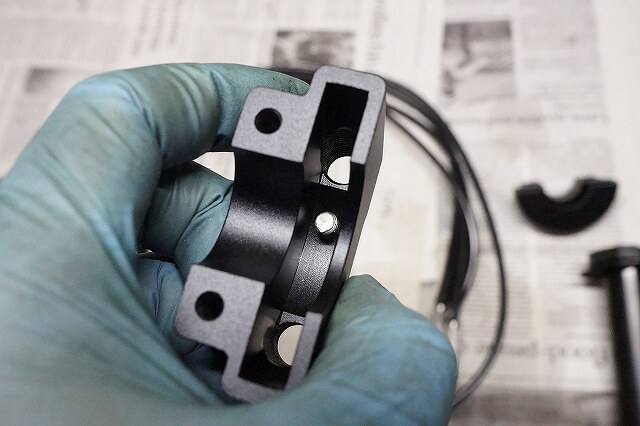
It’s reassuring to check the stopper position in the free state.
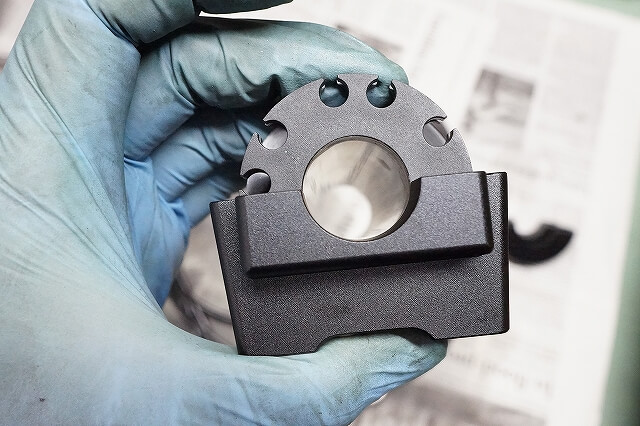
Without a stopper, you can only adjust play by balancing pull and return. Without a stopper, there’s an indescribable mushy feeling that’s uncomfortable. (A while back, holders didn’t have stopper holes.)
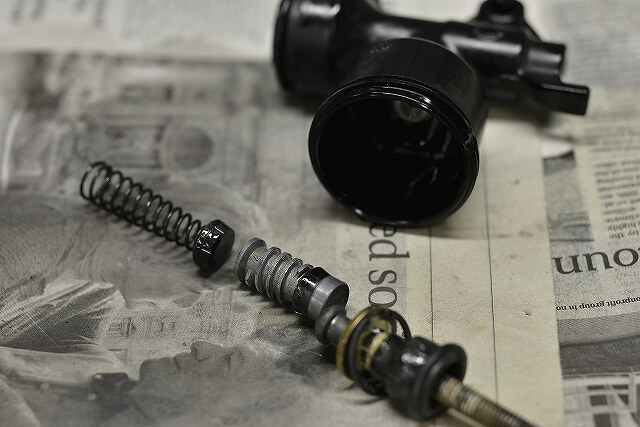
The rear master return is extremely poor. And there’s no feel, so it’s on hold…
Even though they brought DOT5…