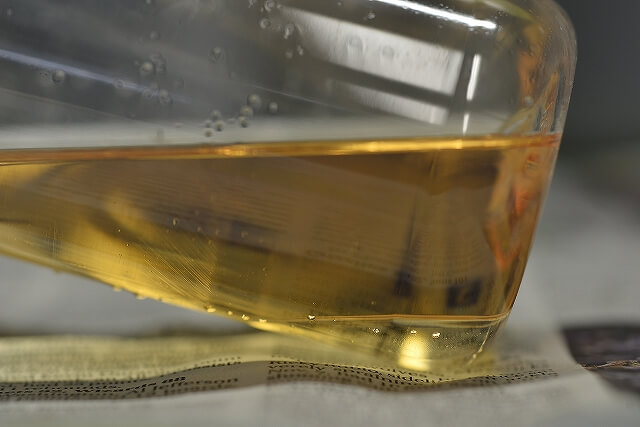
Let’s have your fuel tank rust removed and its interior coated. (Outsourced work)
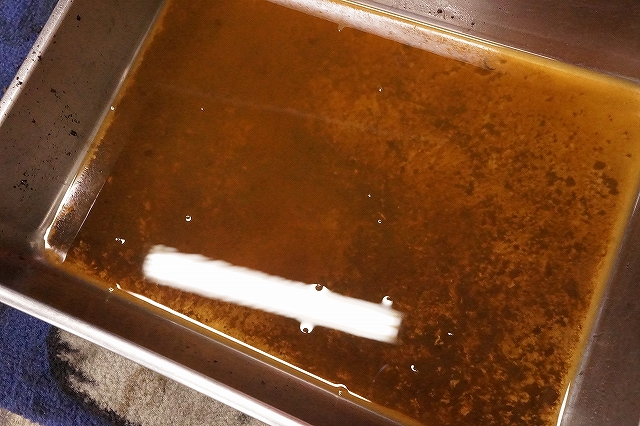
Water that mixes into gasoline basically won’t evaporate, so you should assume it will stay there.
Try pouring gasoline into a glass and adding a few drops of water. You’ll see it separate and settle at the bottom. Shake it, and those water droplets will cling to the surface, triggering rust formation. That rust spreads across the entire interior. After a few years, it makes a hissing sound and becomes a trouble factor that leads to carburetor overflow.
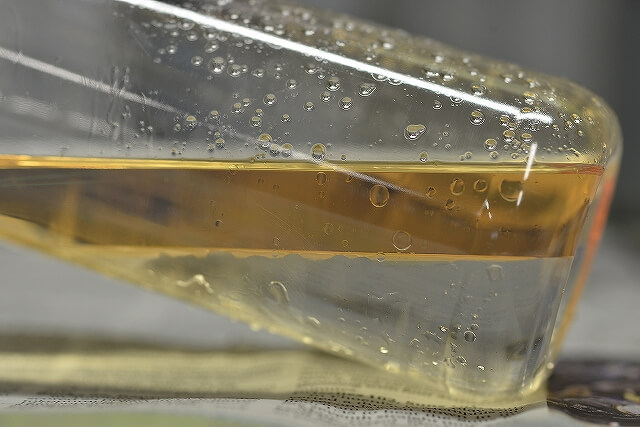
I added a bit more water to show the effect. You can see how it separates and eats away at the bottom.
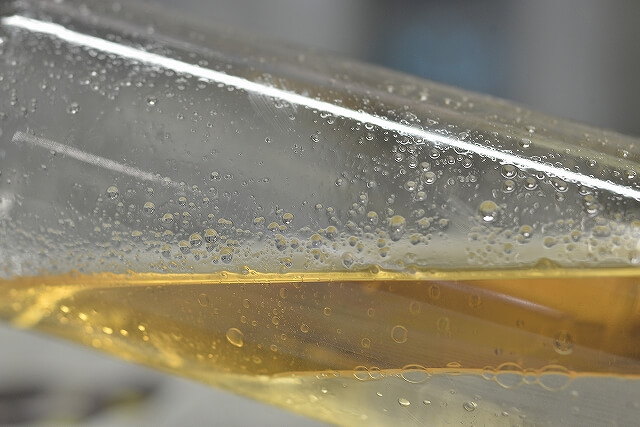
Now let’s shake it gently. See how it clings to the surface like this. In summer, the engine heat turns it to steam, which corrodes the tank cap itself.
I’ve seen cases where an aluminum tank had massive iron rust at the bottom. The tank cap corroded so badly that rust fell into the aluminum tank and ate through it—that’s how powerful this corrosion is.
I don’t do tank rust removal or coating myself; I have everything done by a professional shop.
Even if I were to remove rust from the tank, as an amateur my only option would be to seal it and soak it in hot water. From experience, this leaves rust behind and takes a lot of time for disappointing results.
Professional shops use thin, flexible high-pressure washing to thoroughly clean the top and bottom. Without the right tools, you can’t even inspect it or remove rust from the top surface.
As for coating, you might manage the bottom and sides, but coating the top surface is nearly impossible. If you’re working on a functional tank without scratching it, the difficulty goes up even more.
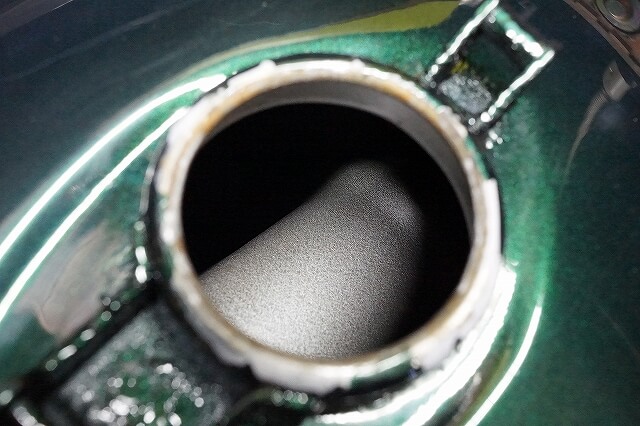
The coated finish looks like this. It comes out as a matte silver.
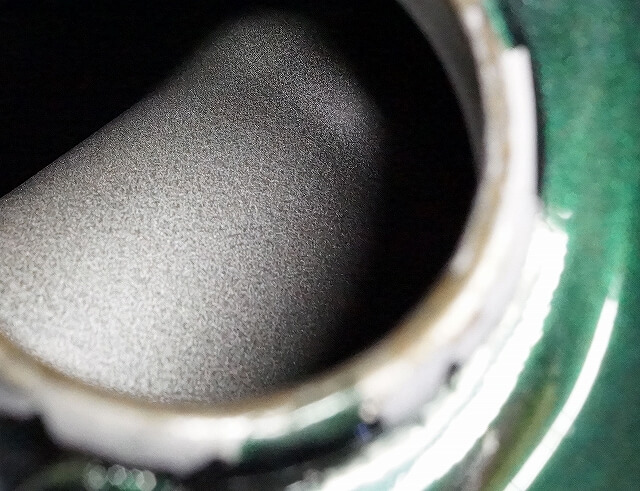
Zoomed in, it looks something like this. It has a slight moiré pattern, but that’s the idea.
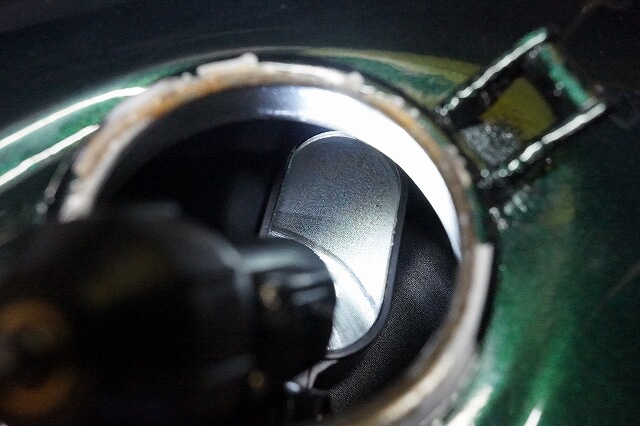
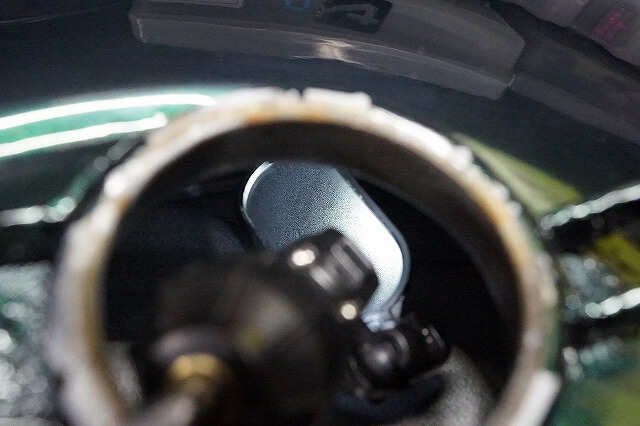
The bottom is important, of course, but the top surface is just as critical. I’d recommend checking your own tank to see what I mean.
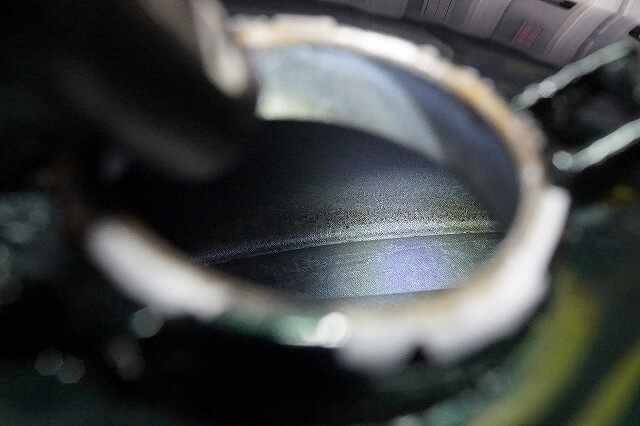
The bottom surface is also in great condition with the coating applied, so you can feel confident.
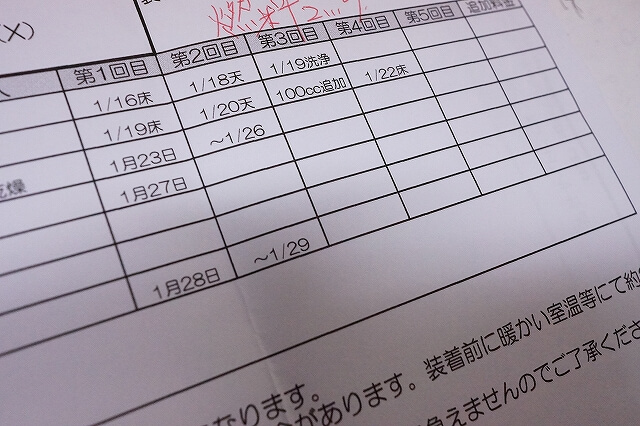
A shop that pays attention to these fine details really earns your trust. Learning about the invisible steps in the process shows you that rust removal and coating are no simple task. Of course, amateurs can do something that looks okay, but once you apply incomplete coating, there’s no going back.
If your tank is precious, you’ll want to rule out easy shortcuts.
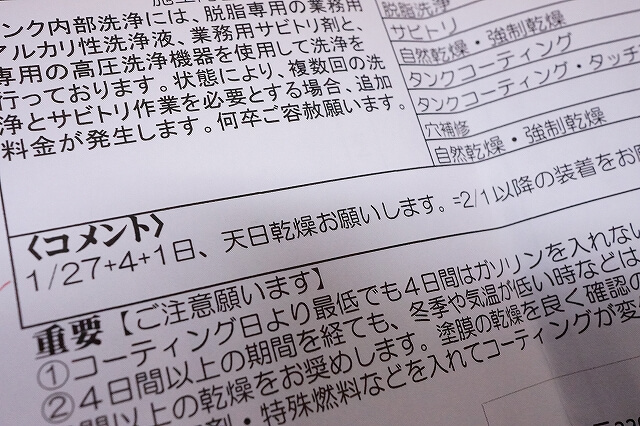
As this process chart shows, it takes quite a bit of time from when we receive your tank.
• Rough estimate: rust removal and coating runs about ¥30,000–¥40,000.
• This is not a preventive treatment for tanks in good condition.
• Turnaround time is about one month.
I haven’t introduced this much before, but this is just to let you know we handle requests like this too.