Let’s replace the wheel bearings. Replacement isn’t the end of it—you need to adjust them after they’ve broken in.
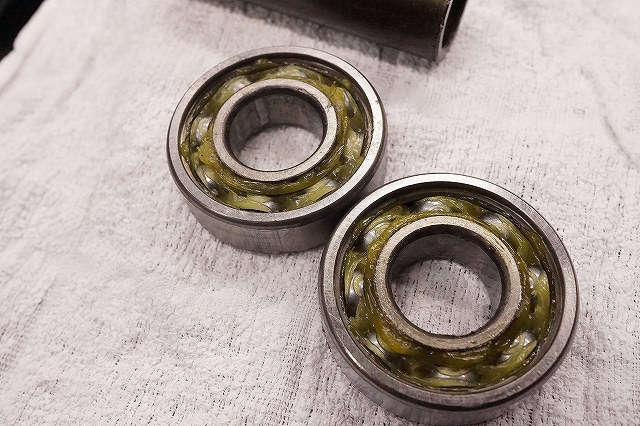
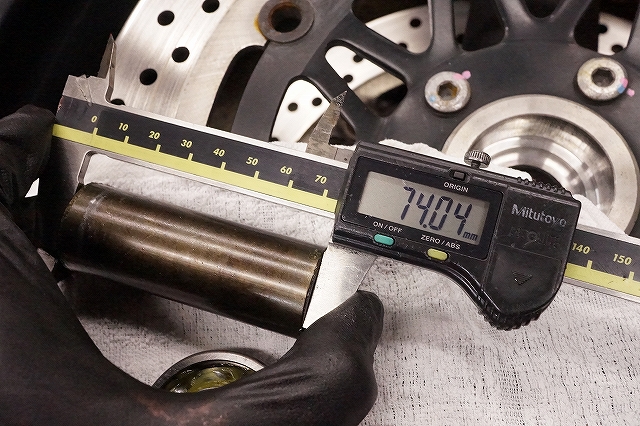
The front oil condition is excellent. Oil degrades rapidly once it runs dry, so we use double-sided seals as much as possible. After assembly, let’s also measure the distance collar so you won’t have any doubts later.
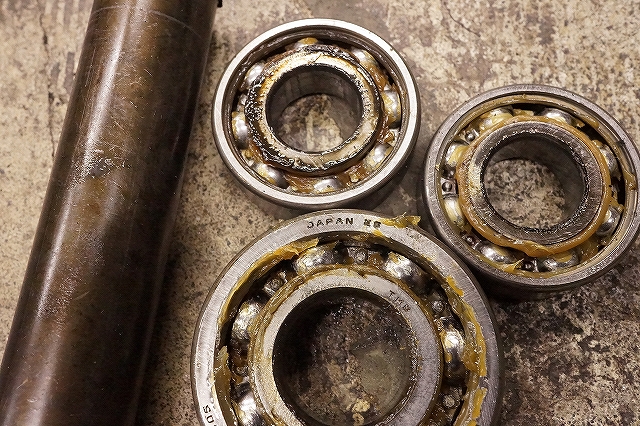
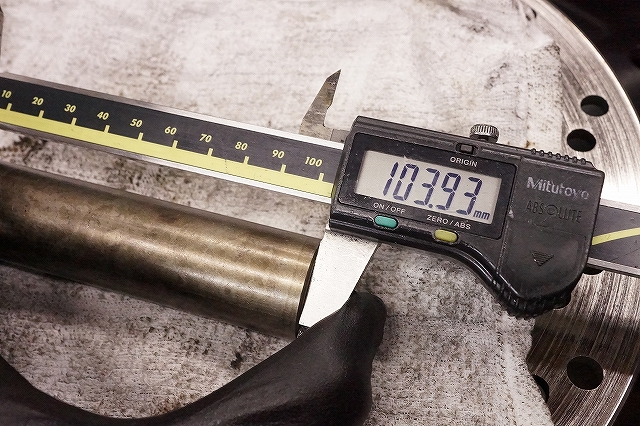
The rear had plenty of oil too. People often ask when to replace wheel bearings, but it takes a considerable distance before they actually fail from use.
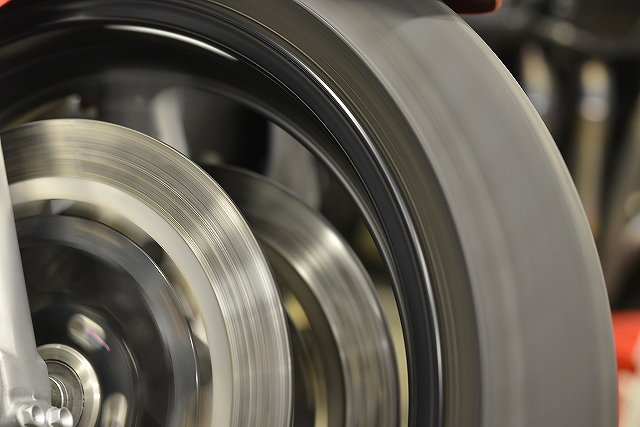
Unlike steering and swingarm components, wheel bearings work at high speed constantly. If you’re going to ride 100,000 kilometers, replacing them every 20,000 to 25,000 kilometers is reasonable. At that rate, you’d replace them four or five times total. Even without operational issues, you’ll notice more play over time. If your budget is tight and there are no problems, you can keep using them. If you want that refreshed feeling, go ahead and replace them.
We recommend it, but we don’t push it.
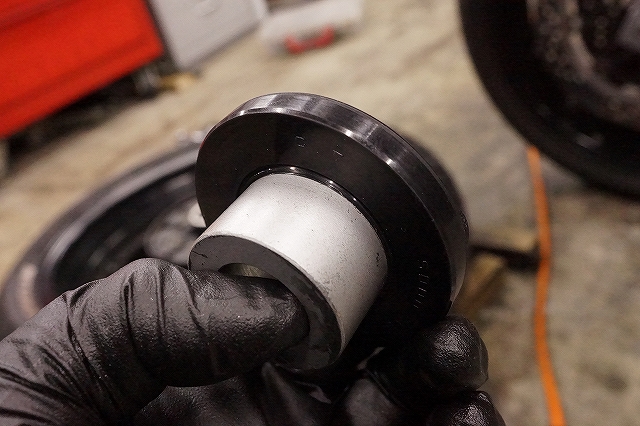
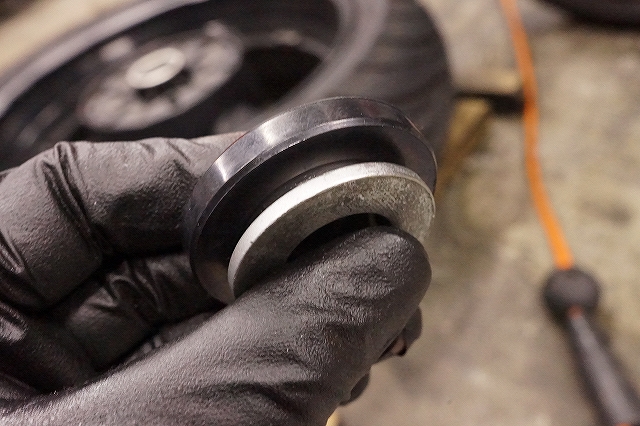
The oil seal is old spec and quite stiff. With the collar pressed into the large seal on the hub side, you can’t turn it by hand. It’s not a spot where oil leaks, and the inside has double-sided seals, so we’ll let it break in. The collar will wear less and rolling should become smoother.
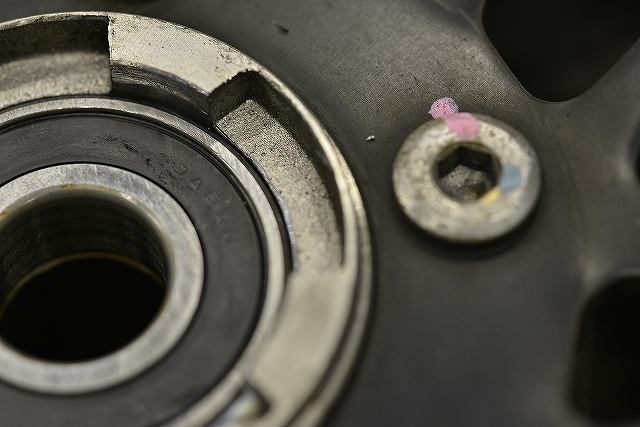
Depending on the maker, there’s a basic reference surface for bearing press-fitting, so please check. The wheel center moves slightly—we’re talking millimeters.
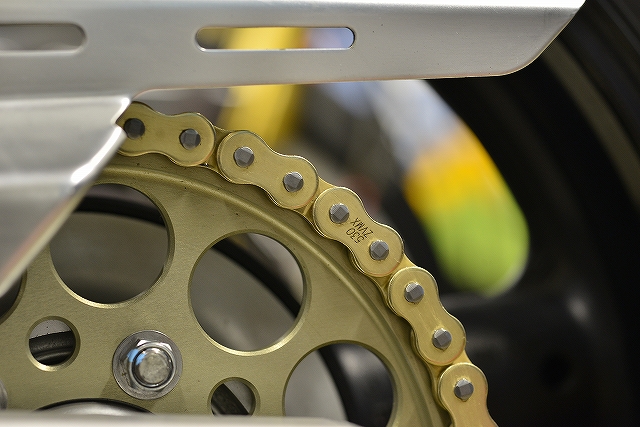
The chain is D.I.D and the sprocket is Sunstar. We recognize this as a very smooth-rolling chain.