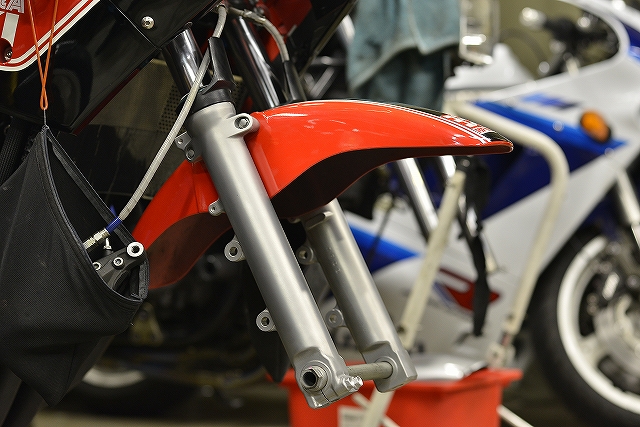
Recently we’ve been offering a polishing service (for a fee) to refresh parts as well.
We’re always researching, so please feel free to consult with us.
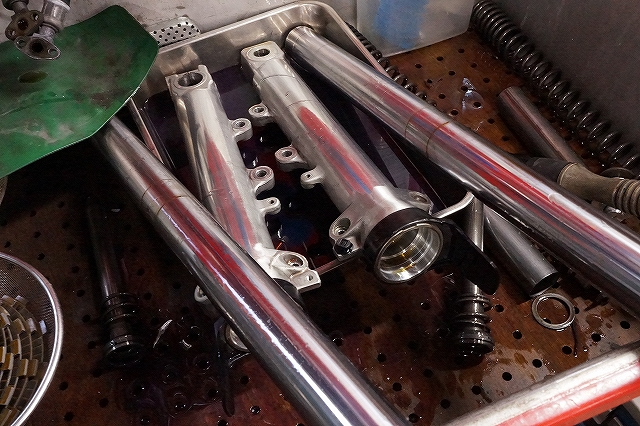
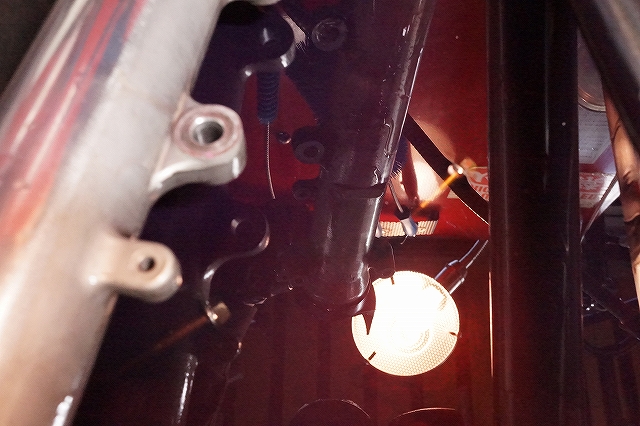
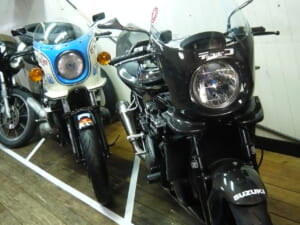
First we disassemble everything. This is a non-cartridge fork, which is rare these days. It’s a part where you can really feel how differently the GS and Inazuma were engineered.
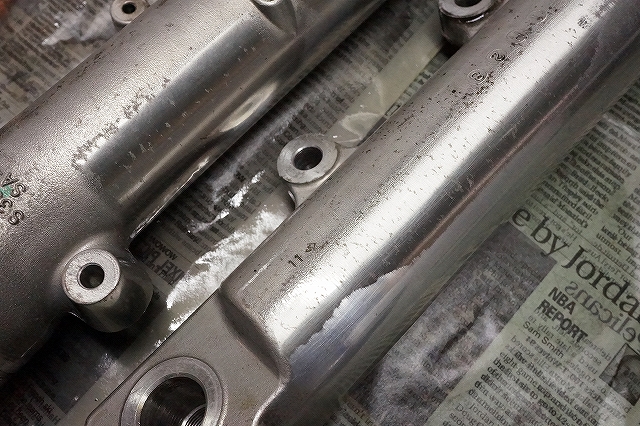
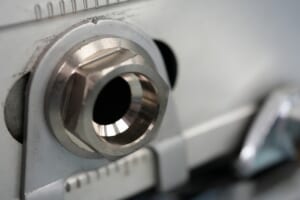
An effort award for buffing it themselves. Since it was installed and worked on, the back side couldn’t be done.
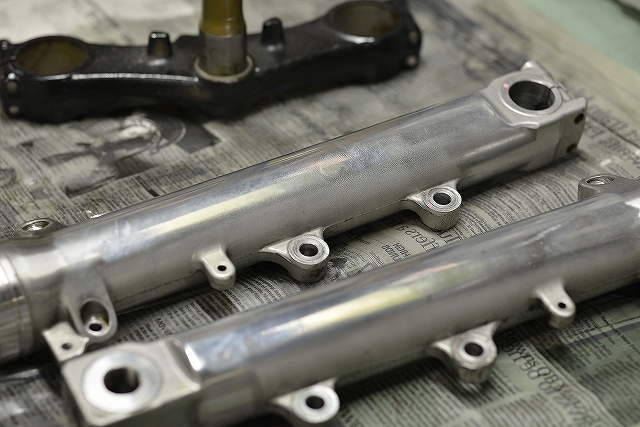
Buffing does tend to dull quickly and takes a lot of work. There are various paint and surface treatments, but none are without their issues. I think it’s good to consider various situations and decide accordingly.
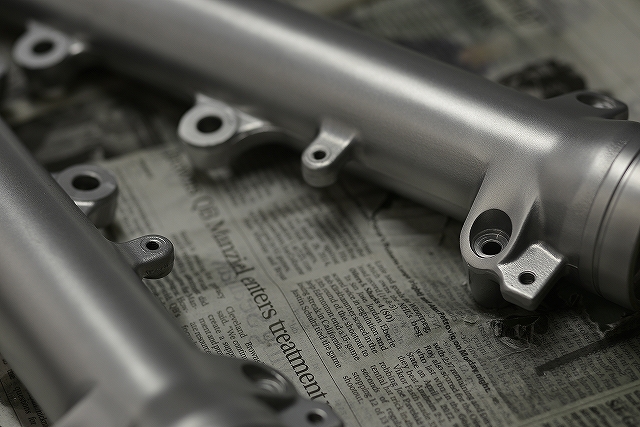
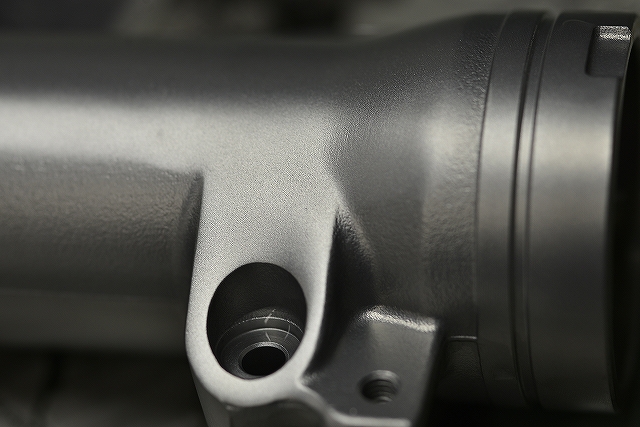
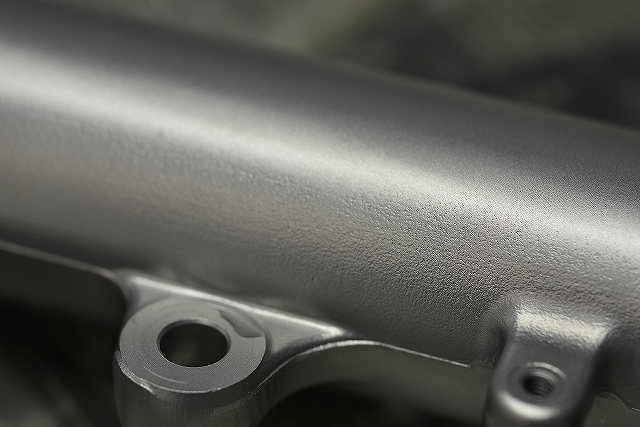
It’s a bit matte silver, though originally it was a bit brighter.
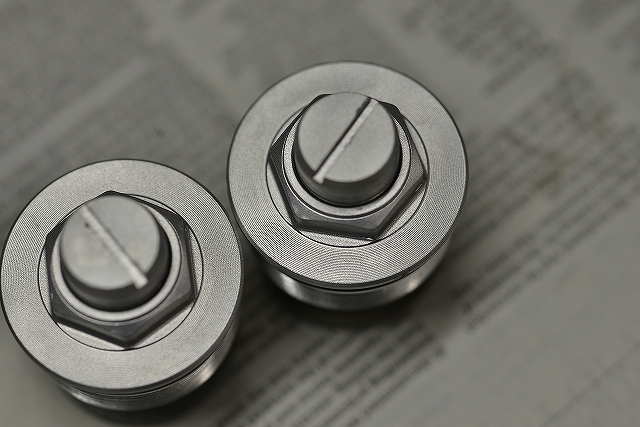
The cap looks nice too.
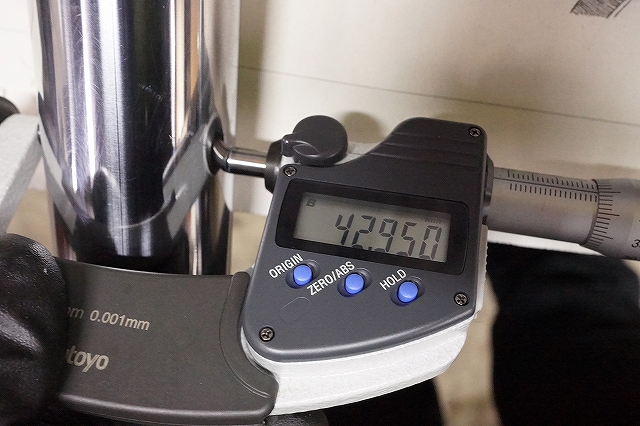
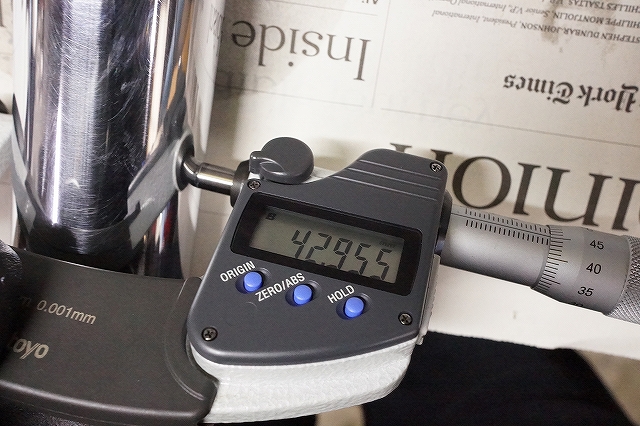
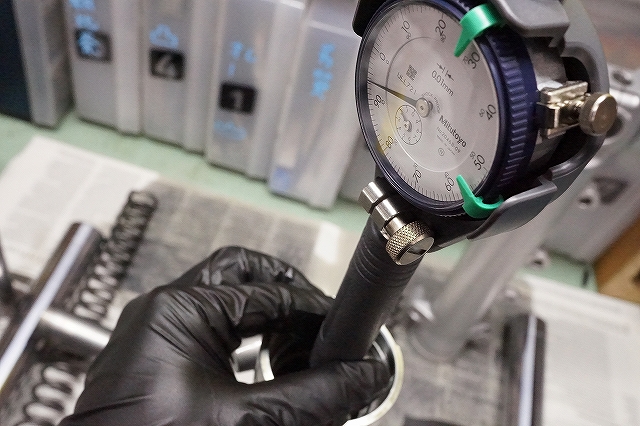
Even when measuring the inner tube, I’ve stopped feeling it makes much sense lately. It’s plated and then polished, but since it’s a long part, there’s naturally a difference of over 100 microns between top and bottom. Even when plating is peeling and seizing, the numbers don’t show a terrifyingly reduced state. That’s natural since it’s supported by metal top and bottom.
The bottom case also varies slightly from top to bottom depending on the XY position and where the caliper bracket is, but that’s just how it is. In the old days, without metal support, barrels would wear into a barrel shape and when you hit the brakes you’d get a “clunk” like stem bearing play, but in recent years we don’t see bottom cases that worn. What we do occasionally find is dents from external impact.
Fork oil getting dirty unusually fast or metal contact being too tight are possibilities we can’t rule out.
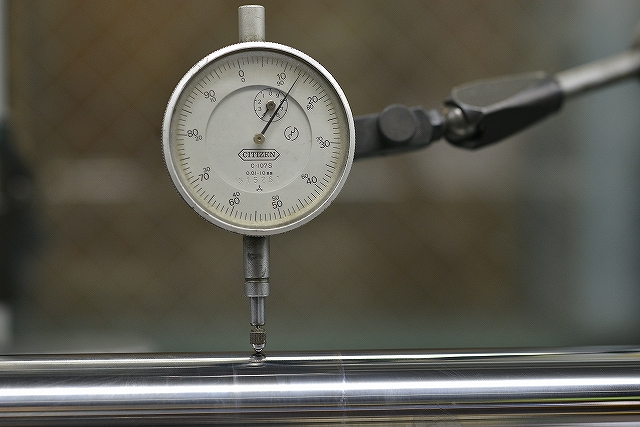
It’s safer to check for runout.
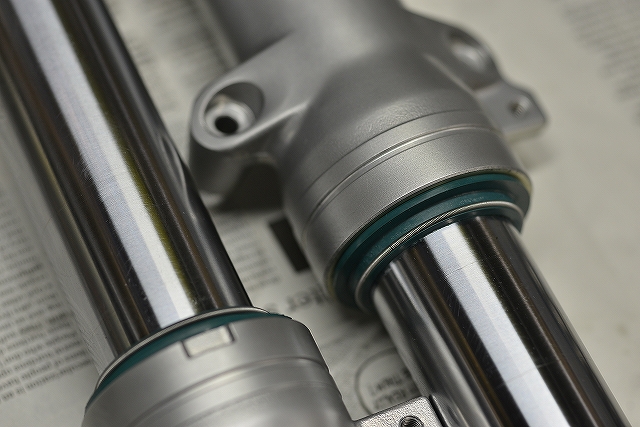
We recommend SKF seals. We’re not recommending them for features like low friction or high performance.
Low friction = inner tube wears less = less damage to the seal = oil doesn’t leak and lasts longer = lower cost. Oil shouldn’t leak, after all.