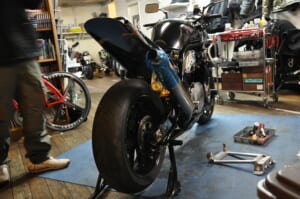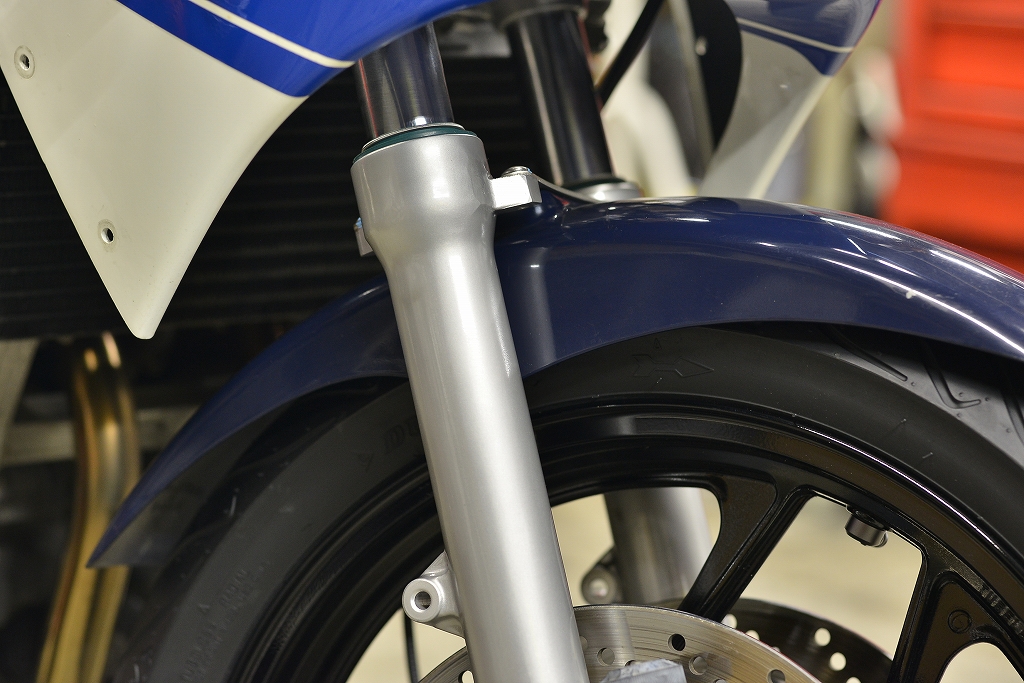
Yesterday we worked on the front end.
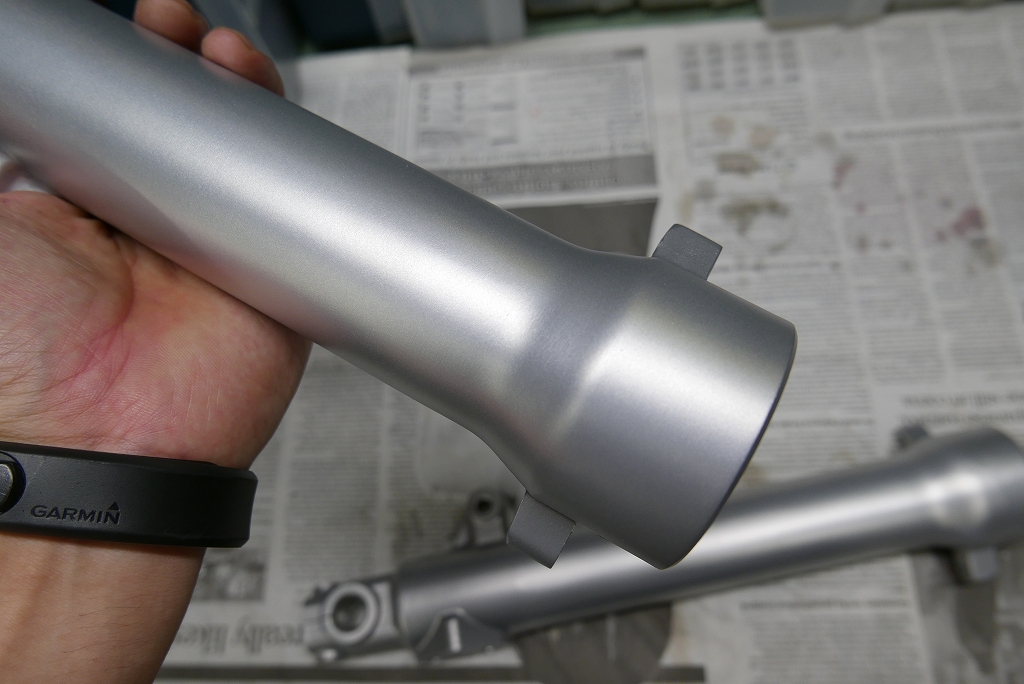
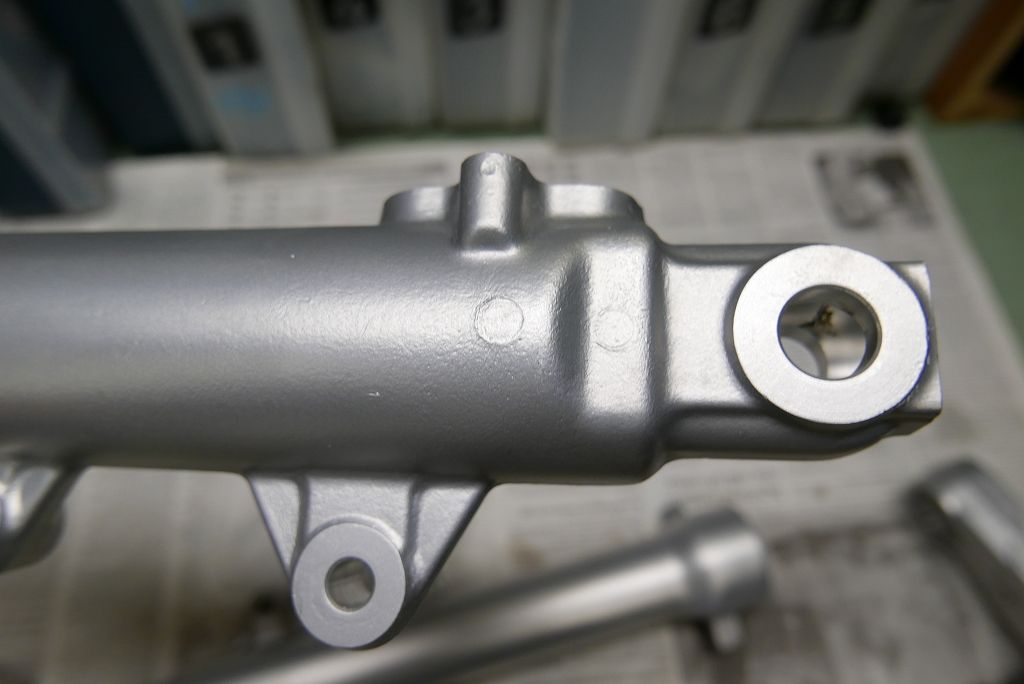
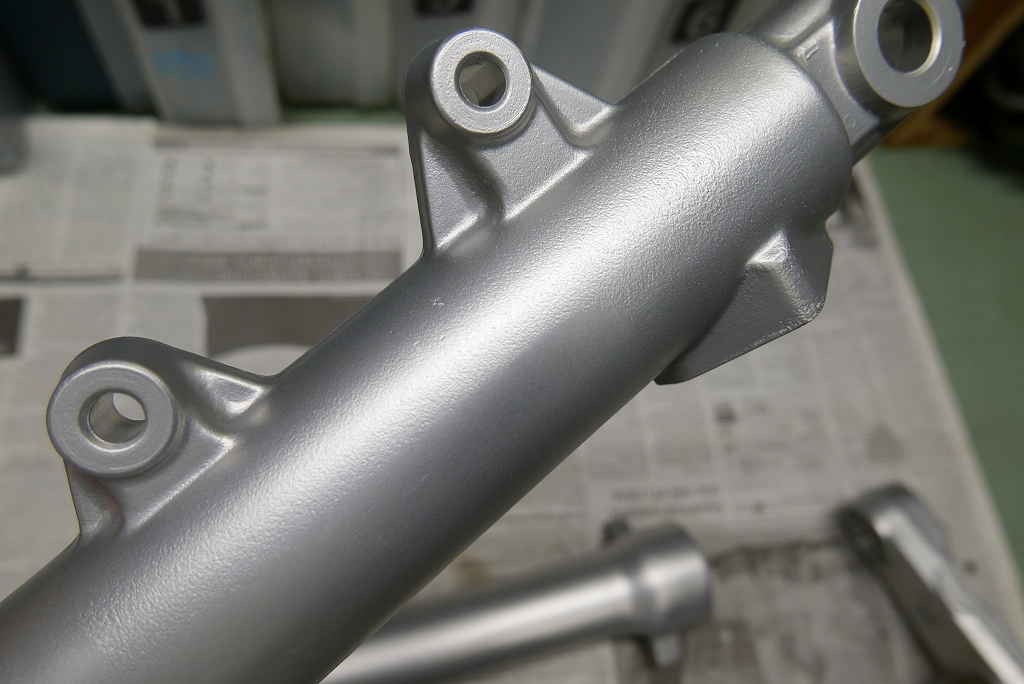
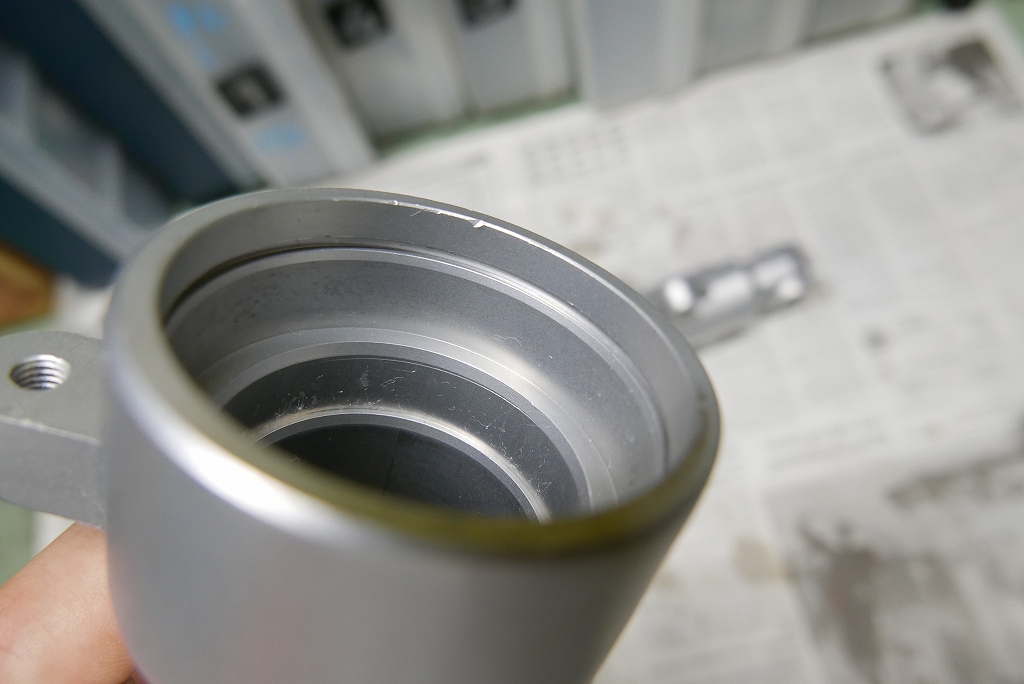
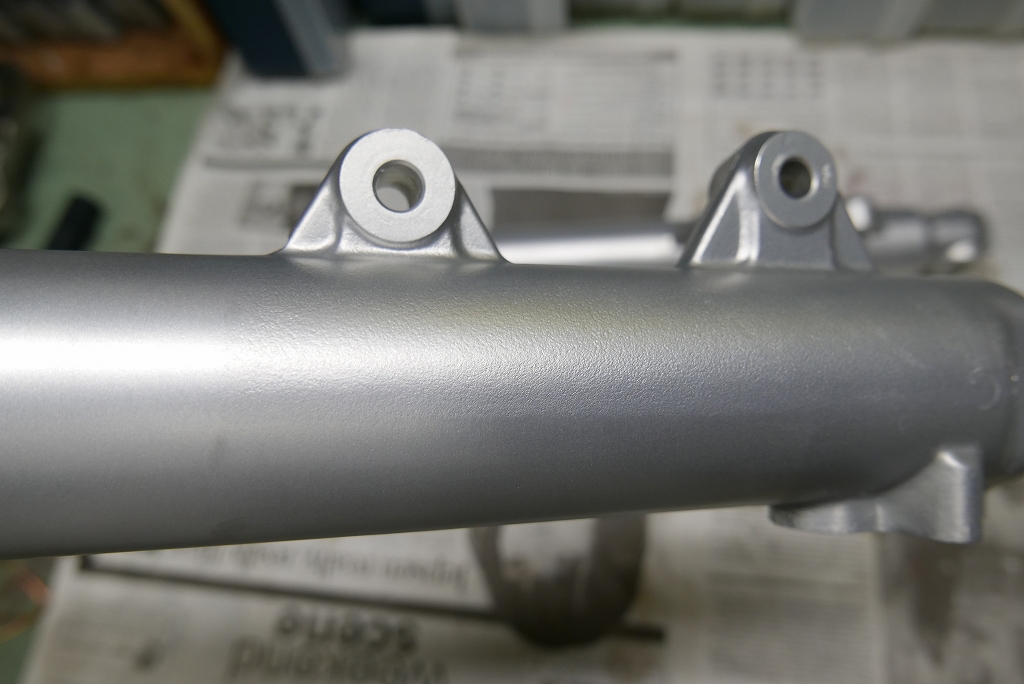
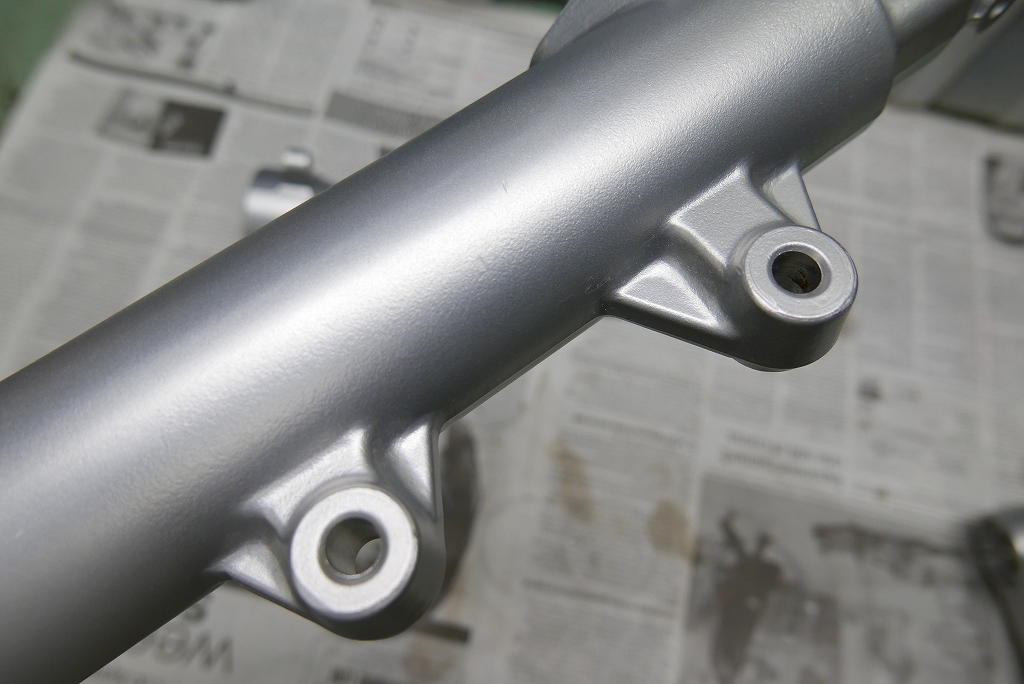
We’ve finished polishing the bottom case. Now we’ll coat it.
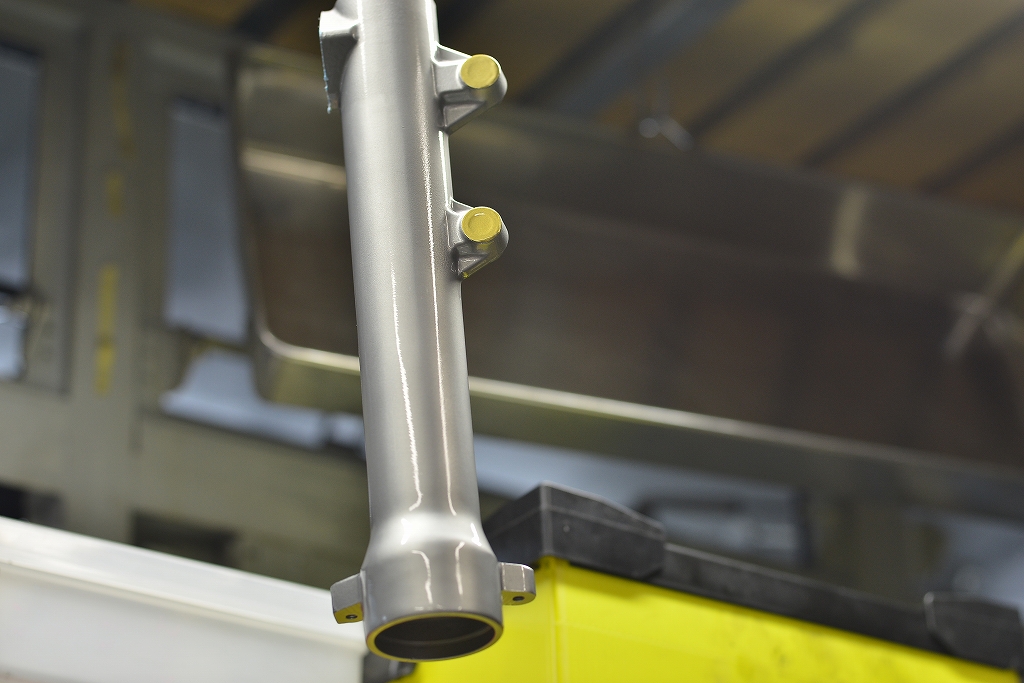
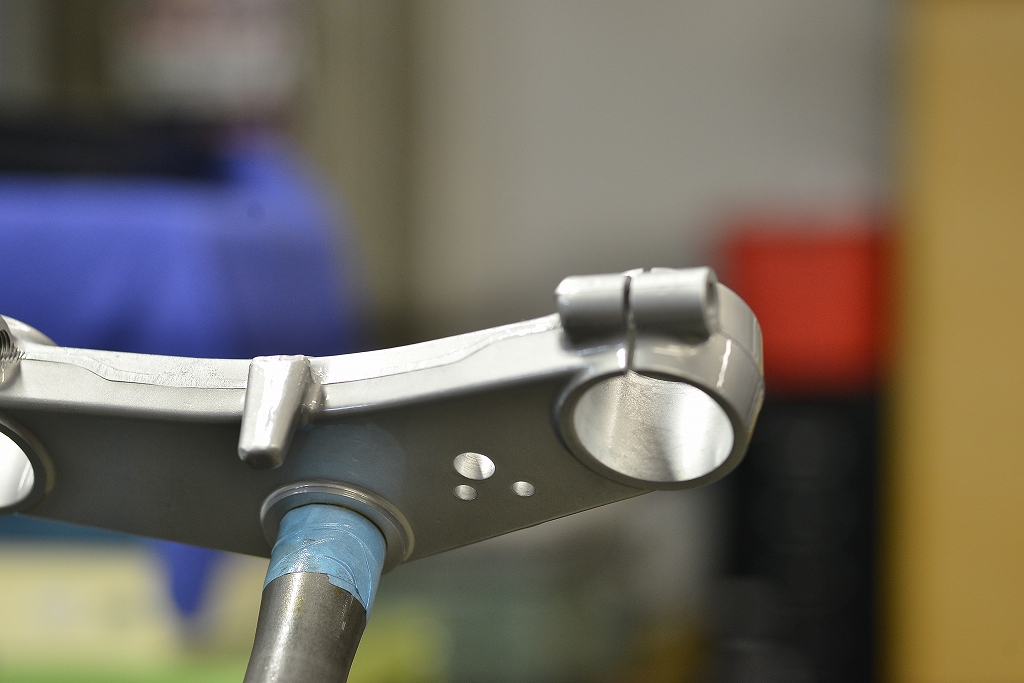
It’s been restored to better-than-new condition.
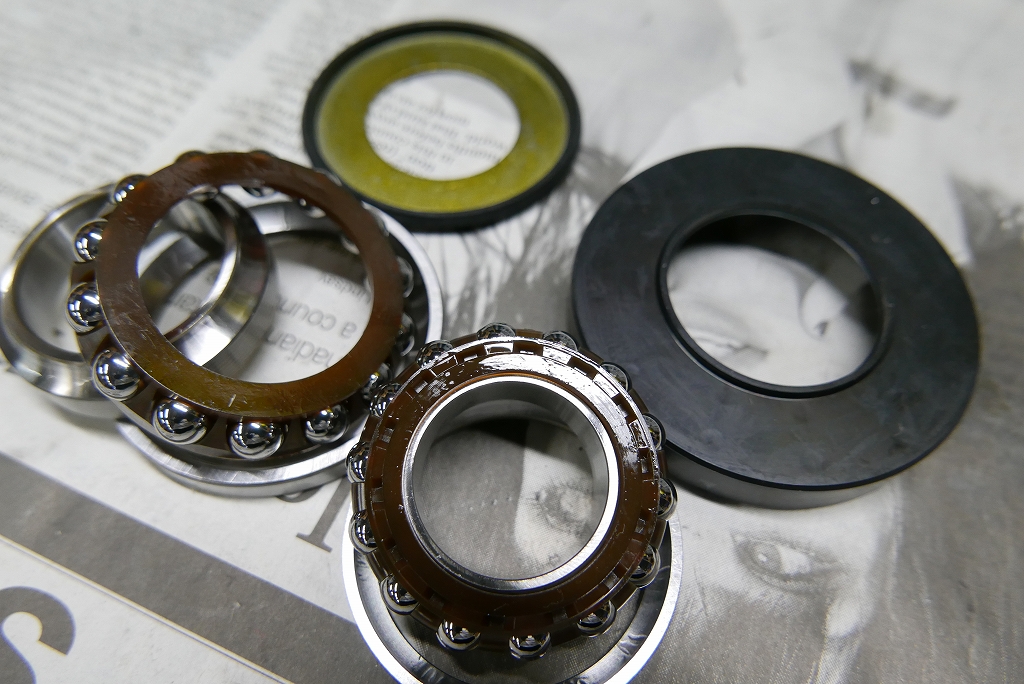
We’ll replace the stem bearings.
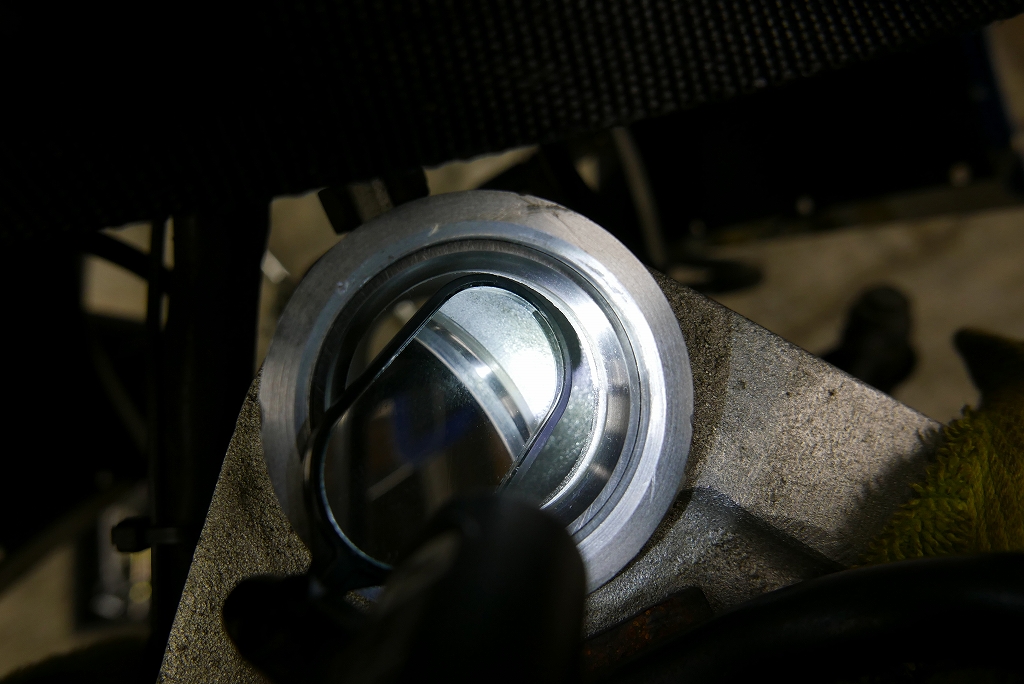
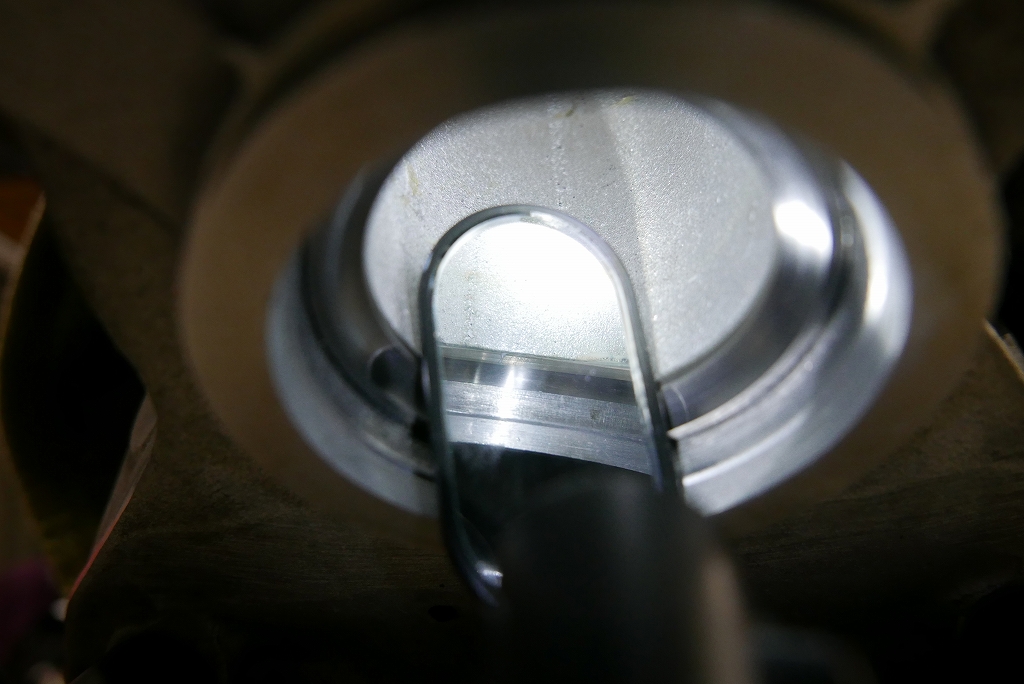
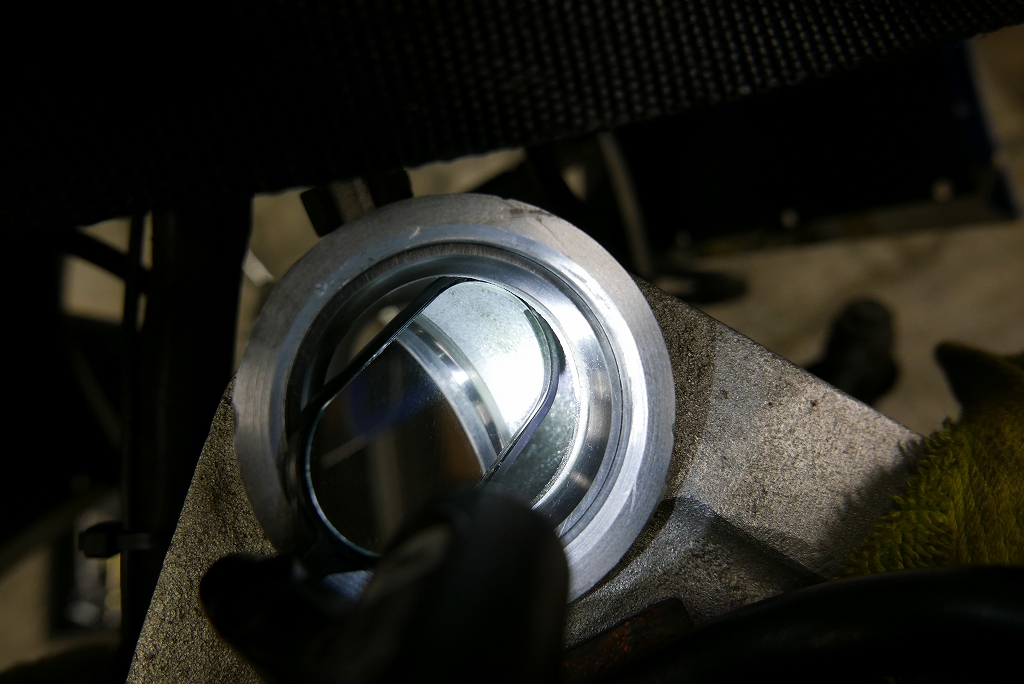
We’ve carefully confirmed everything and completed the race replacement.
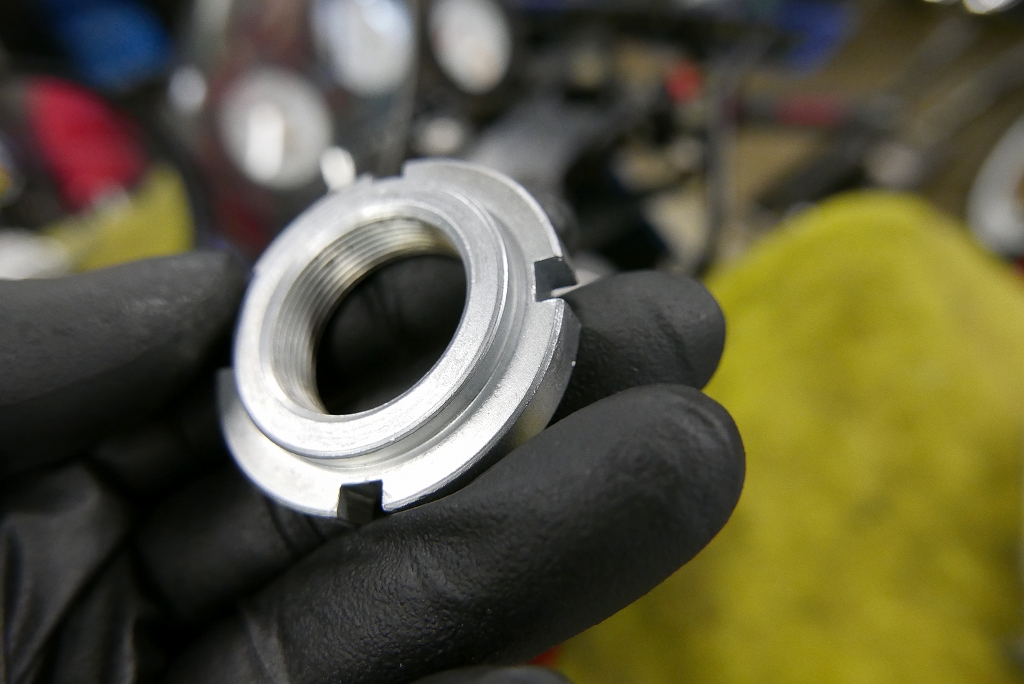
We also cleaned up the stem adjustment nut. We clean anything that’s usable and reuse it.
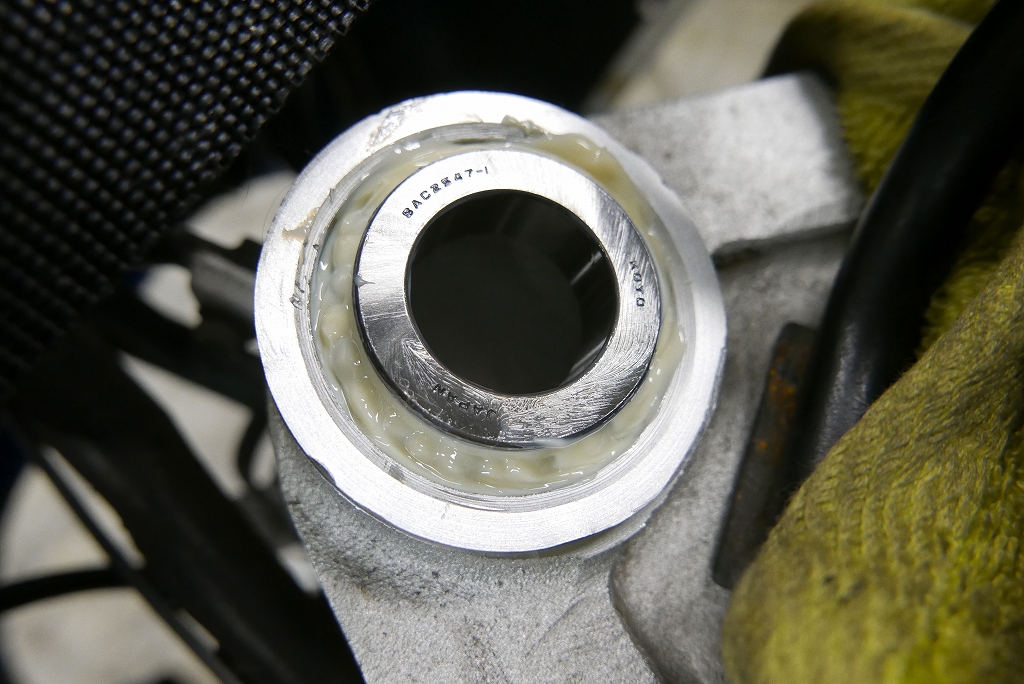
We use reliable NC100 grease.
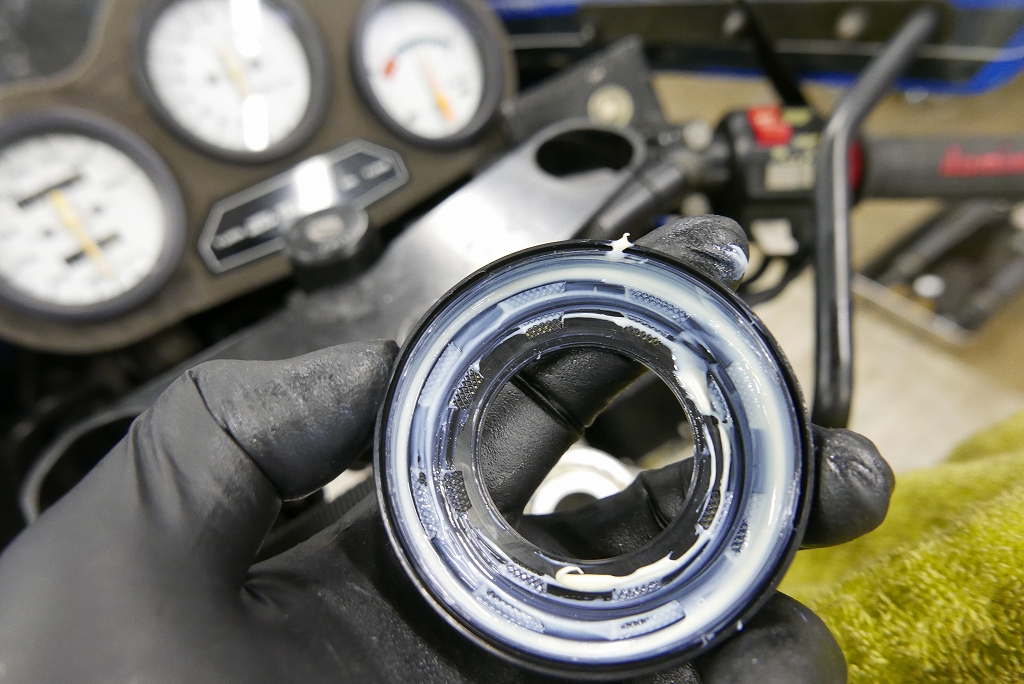
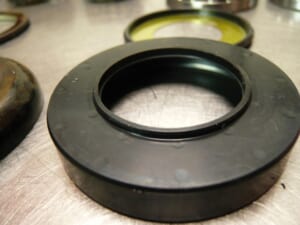
It’s good to make sure the upper seal moves smoothly.
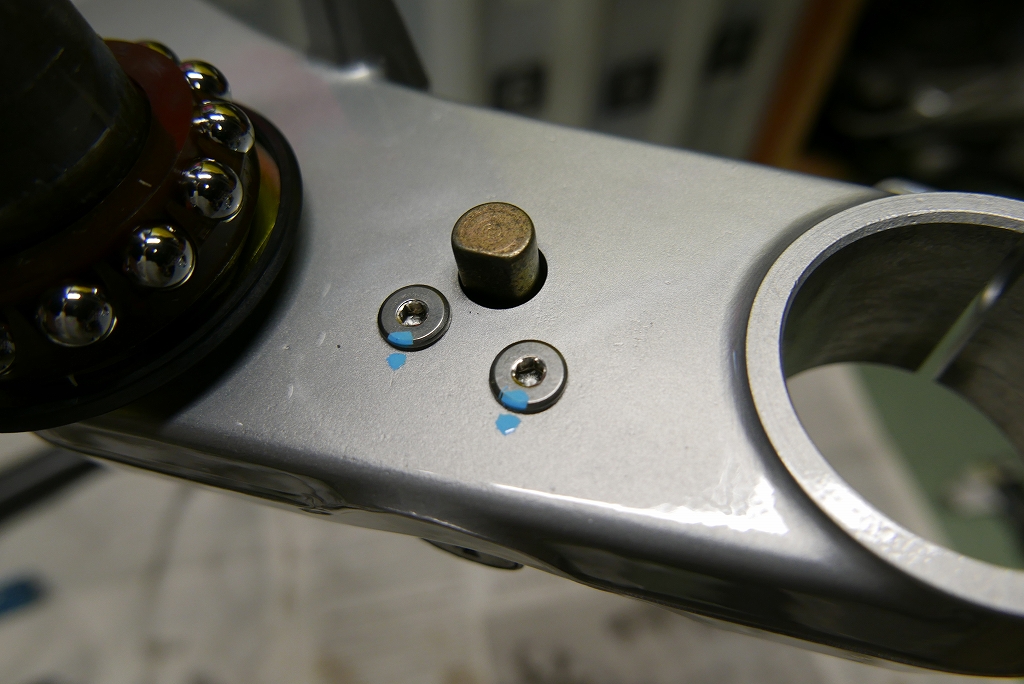
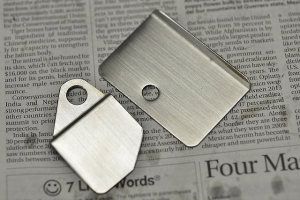
We also made the handlebar lock flush.
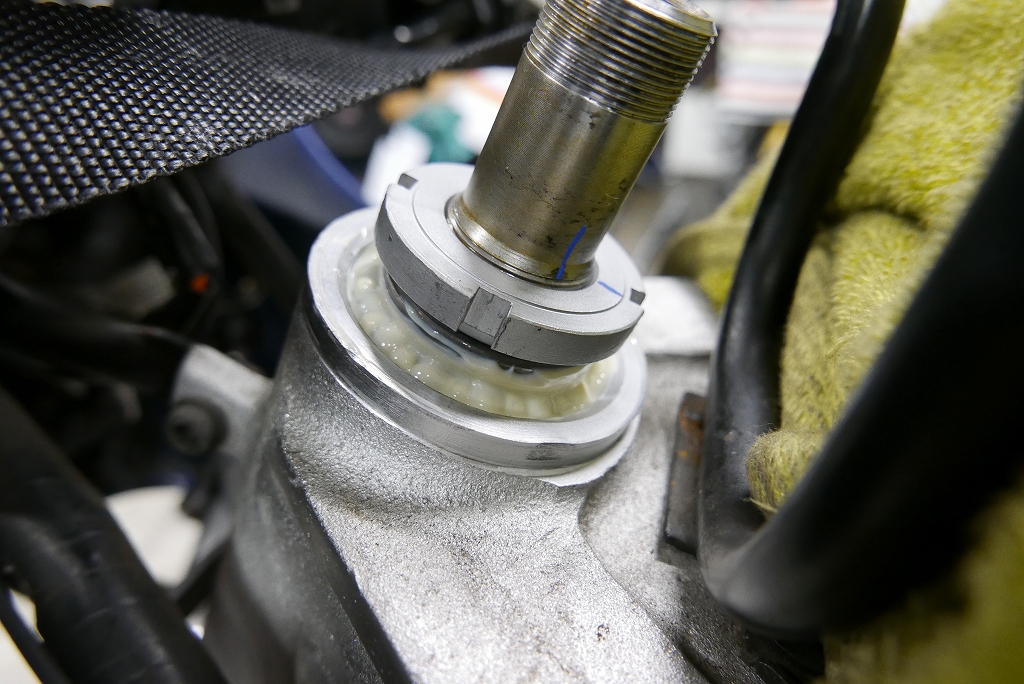
When we assembled something, it felt stiff, so we checked without the seal. Hmm, I see.
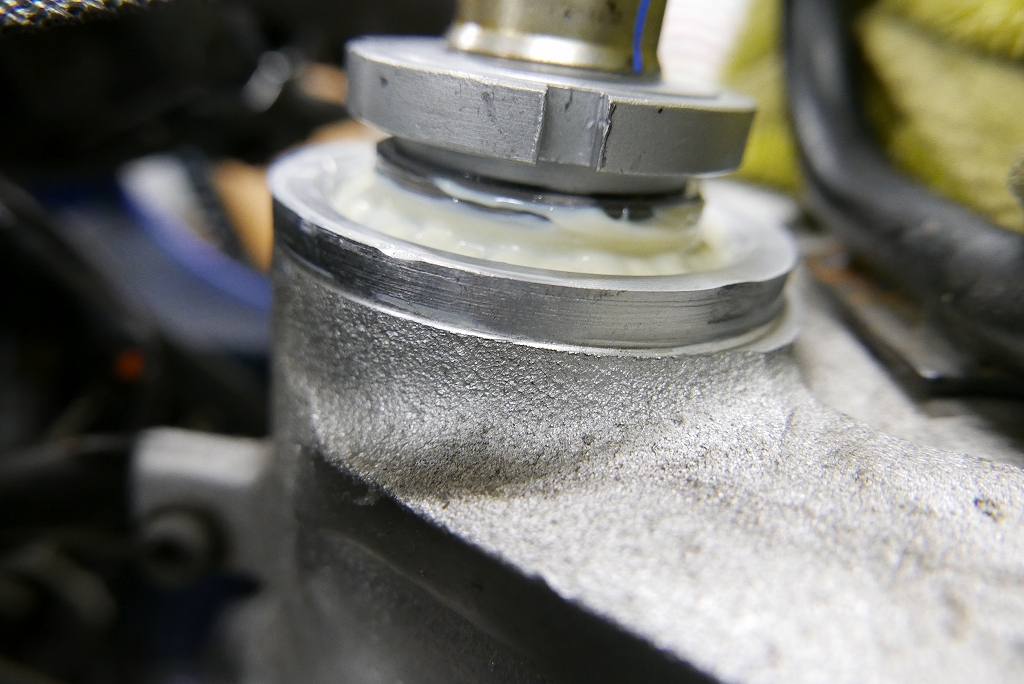
It seems to have poor compatibility with the frame-side seal relief. Even with genuine parts, this kind of interference can occur. Rather than just replacing things, if you observe carefully and proceed with the work, the results will go in a better direction.
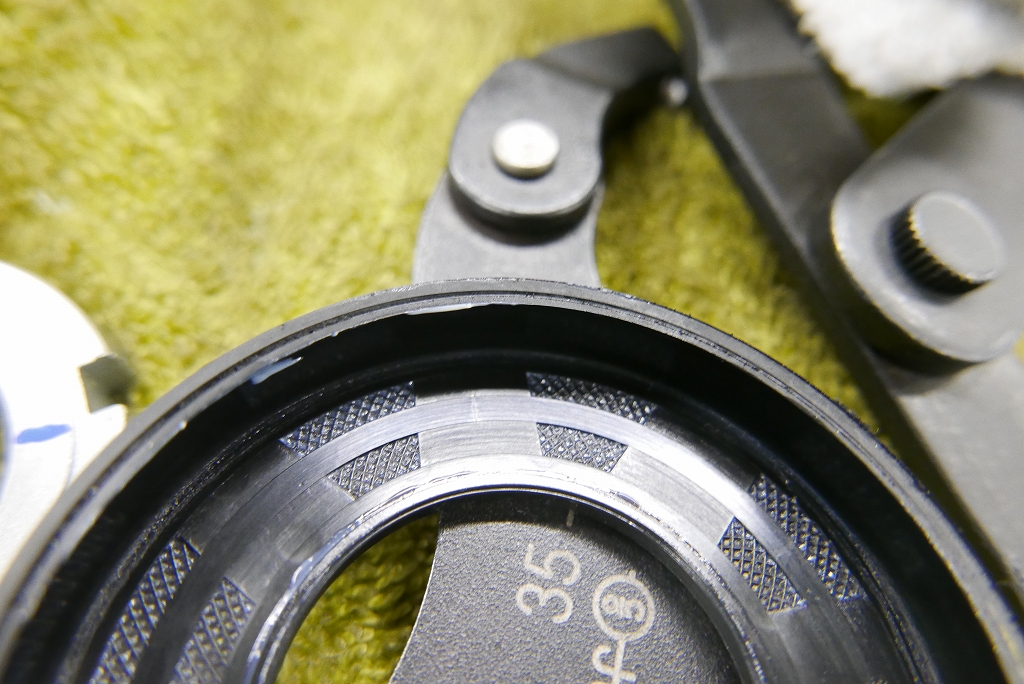
After removing it, it became smooth and mild.
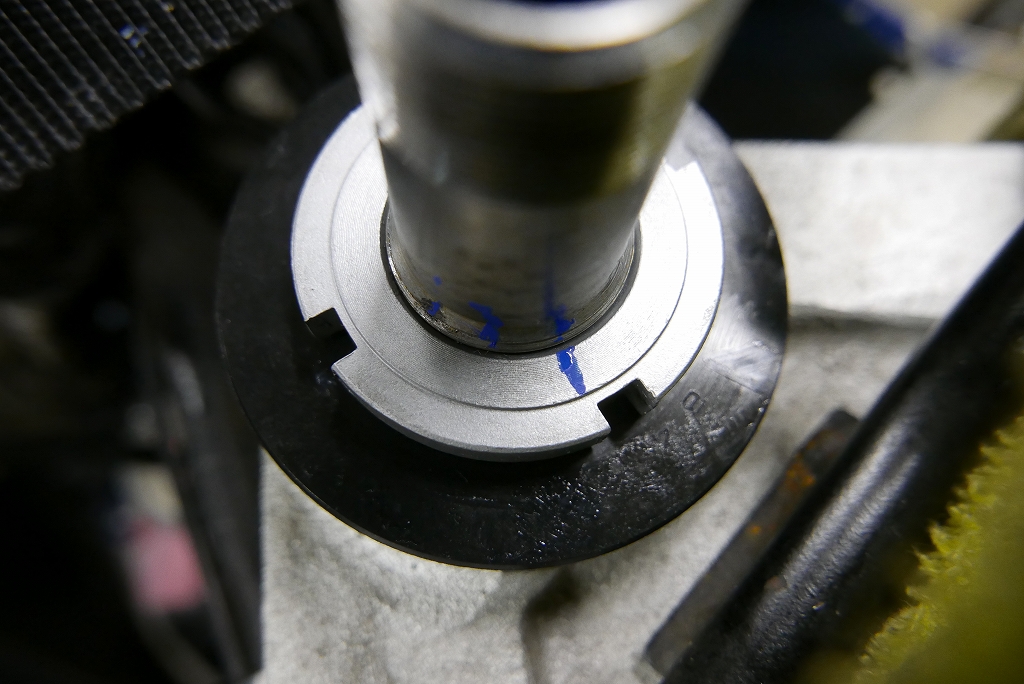
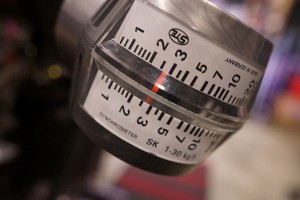
I think there’s a subtle difference in tightening between single nuts and double nuts. When I made and looked at a list of tightening torques from various manufacturers before, I wondered if there were various considerations. The adjustment range is really only about 10 degrees at most.
The line at the very front is where I tightened it by hand, and the second line is where it’s already stiff after applying torque with a wrench.
I think the sweet spot is only in this range.
Of course, if you don’t crush the upper and lower seals properly from the start, play can develop during initial break-in, so care is needed.
Not too light is better—you get more rigidity and it feels more natural.
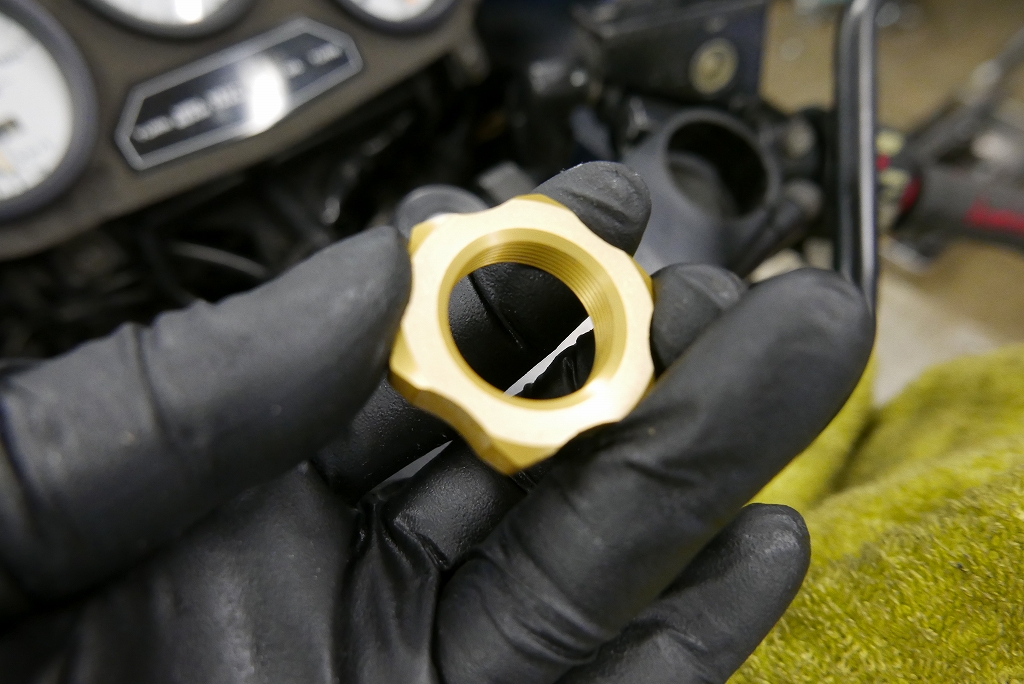
An aluminum stem nut carried over from the original. Use it before it’s discontinued.
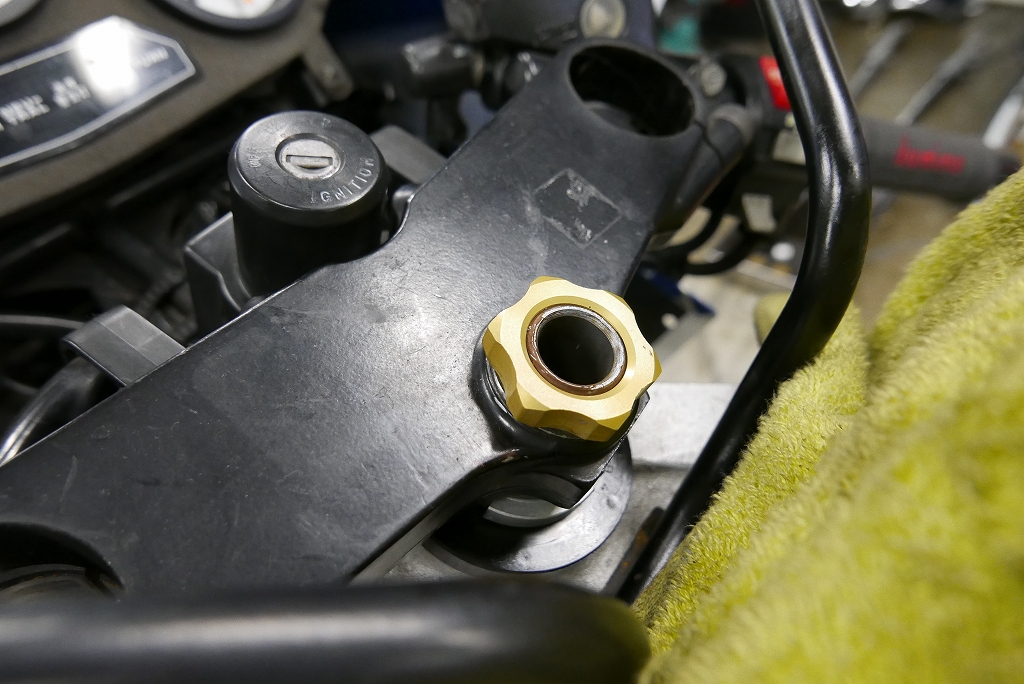
The lightening looks nice.
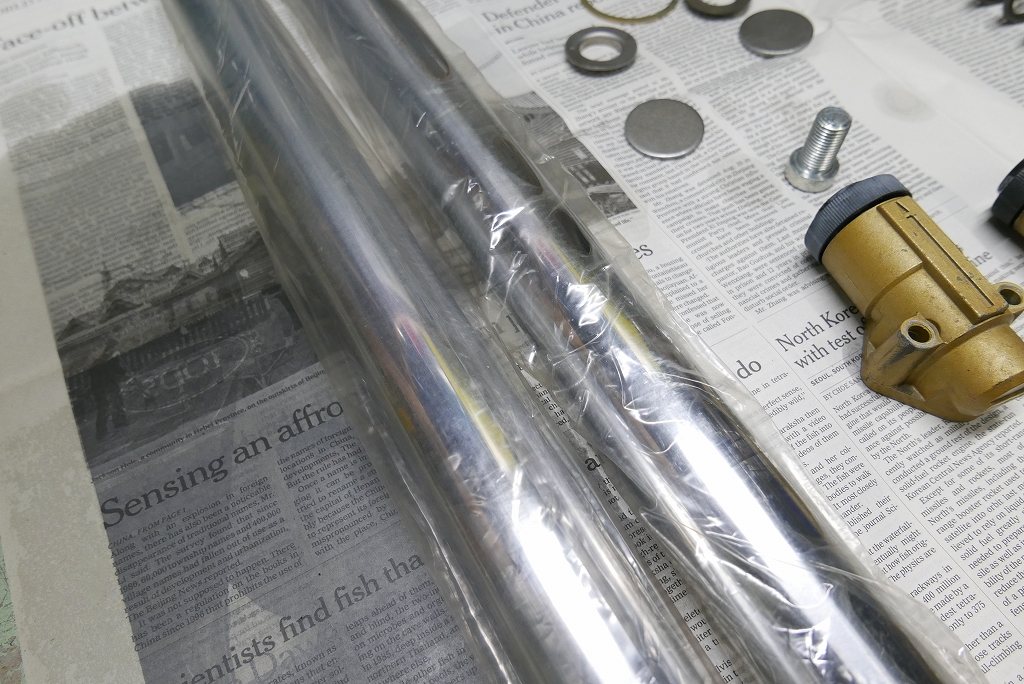
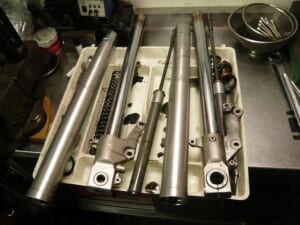
We’ll replace the inner tube this time.
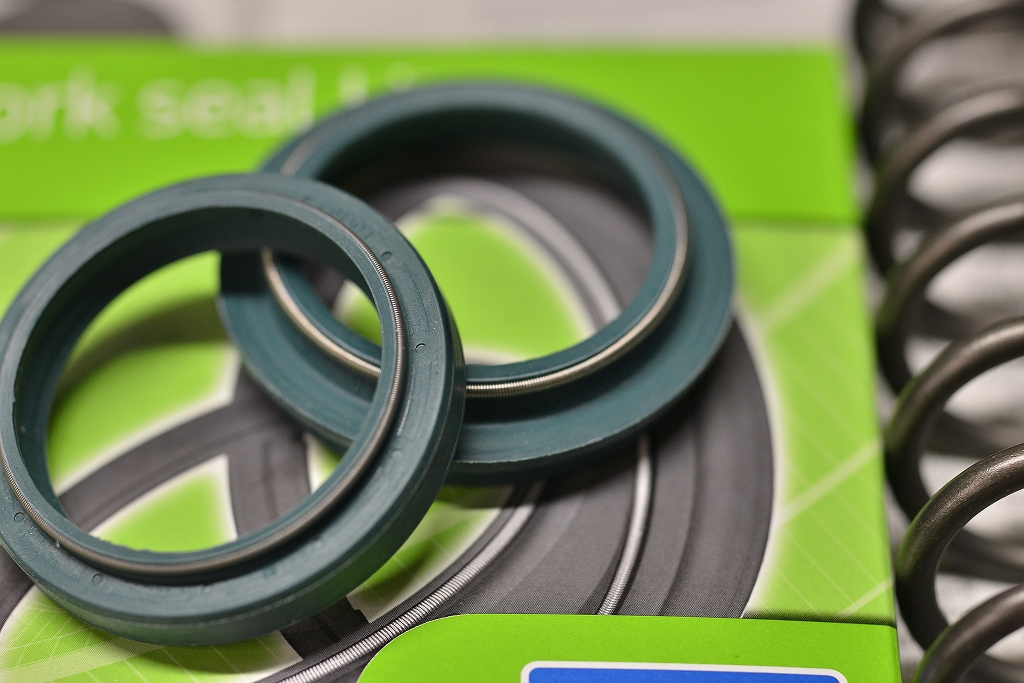
We use reliable SKF seals. This seal also gets stiff as you rack up miles, so if you lubricate the inner tube a bit before riding, it’ll last longer.
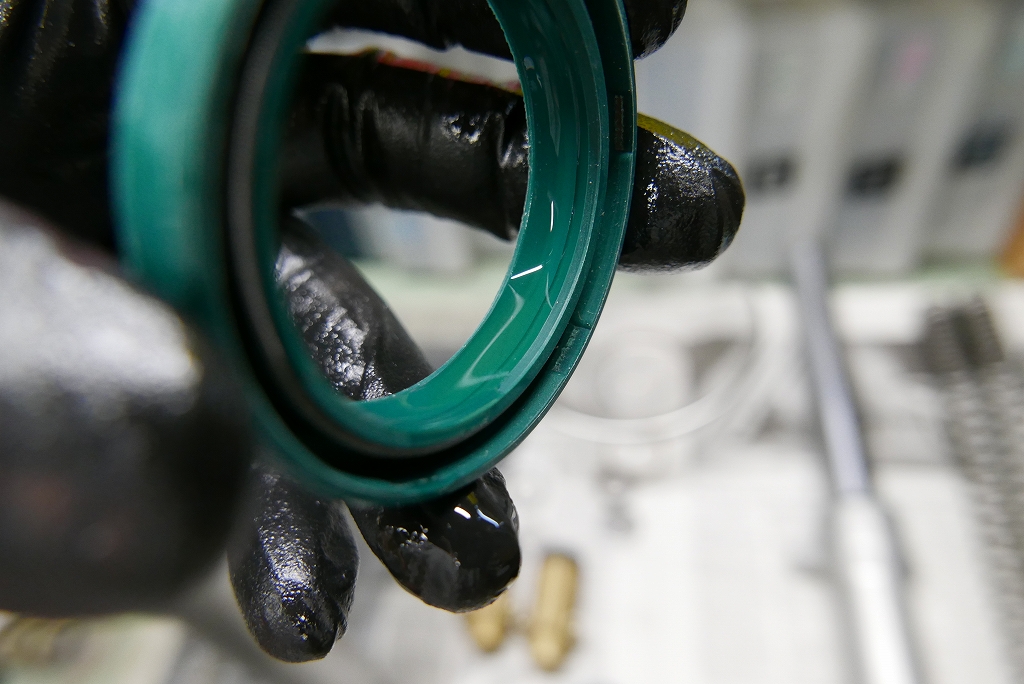
We fill the lip with fork oil before assembly. Grease isn’t recommended if possible. When you look at seals that have had grease in them over time, most are full of degraded grease debris.
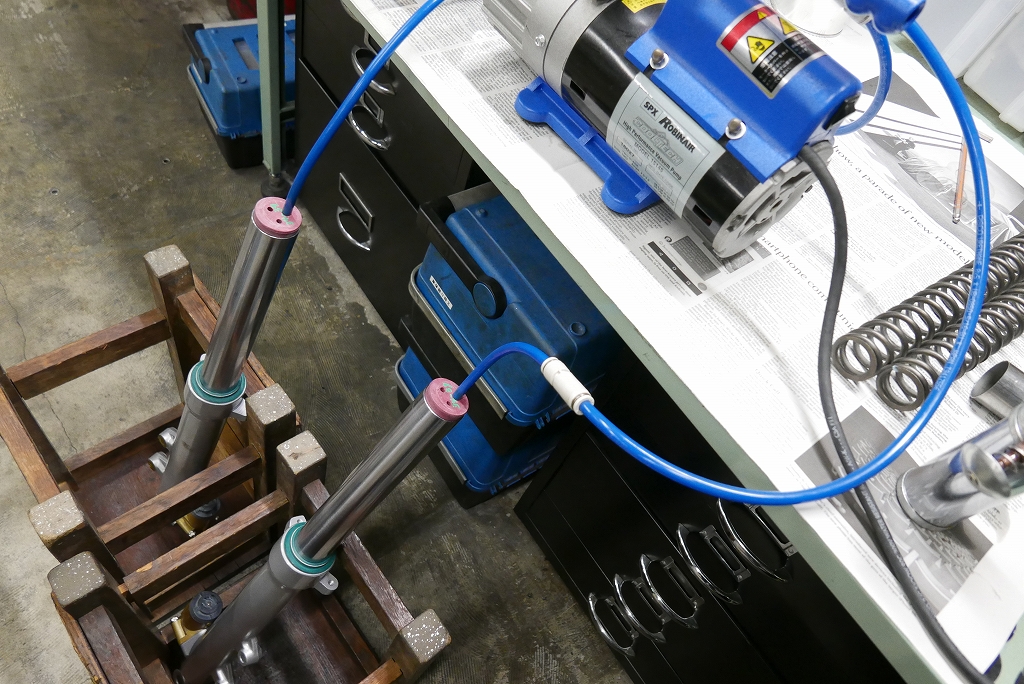
Then use a vacuum pump to bleed out the air. While that’s running, you can clean up the area around it.
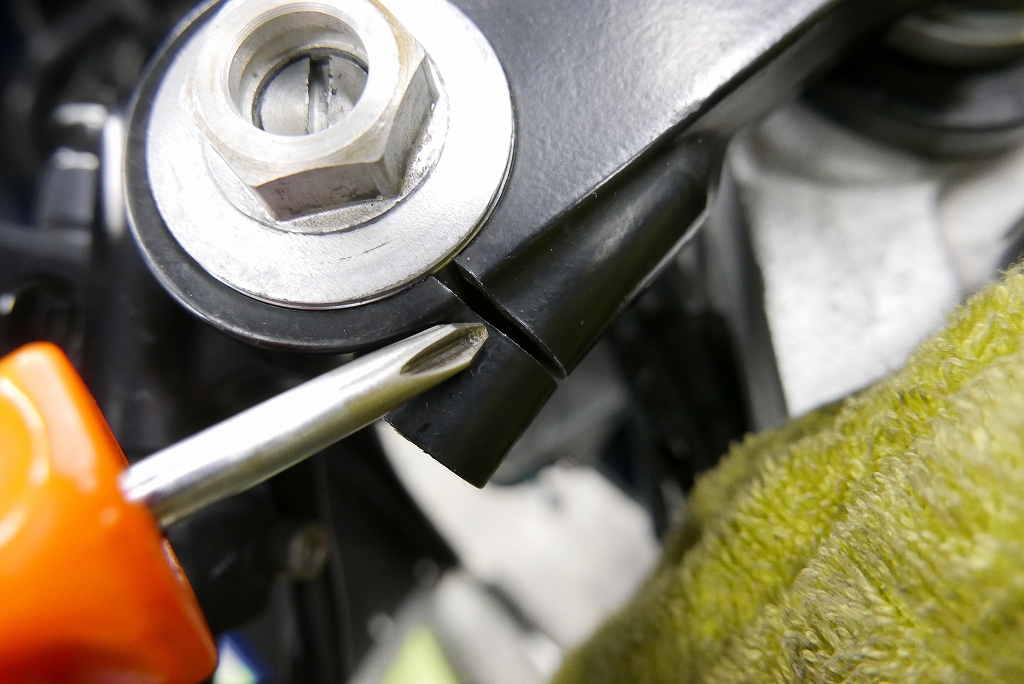
It’s quite deformed—looks like it was overtightened.
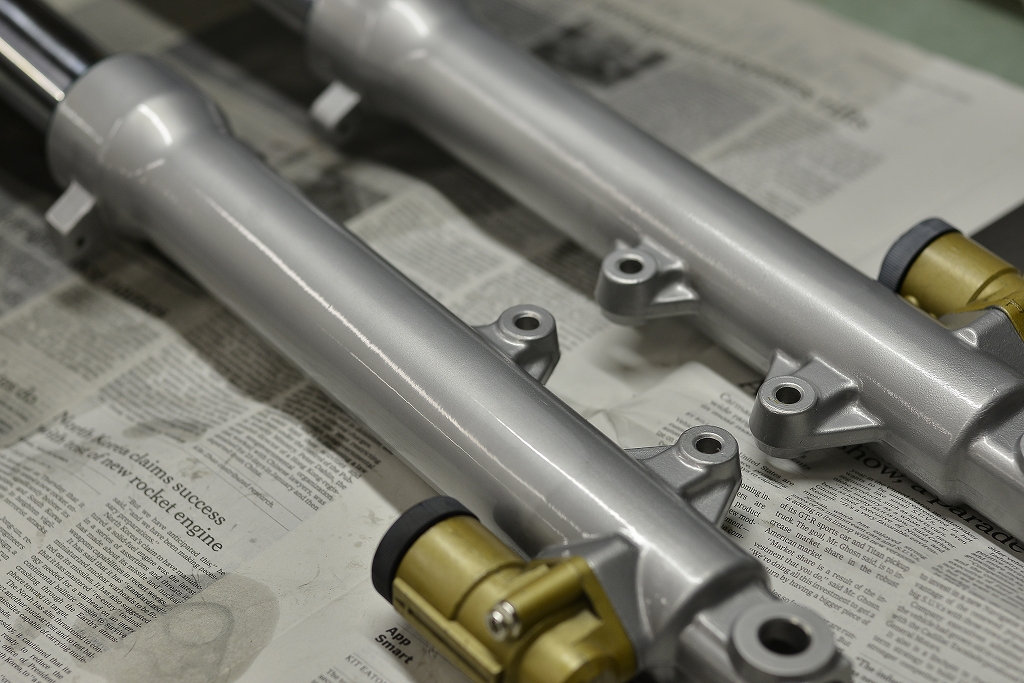
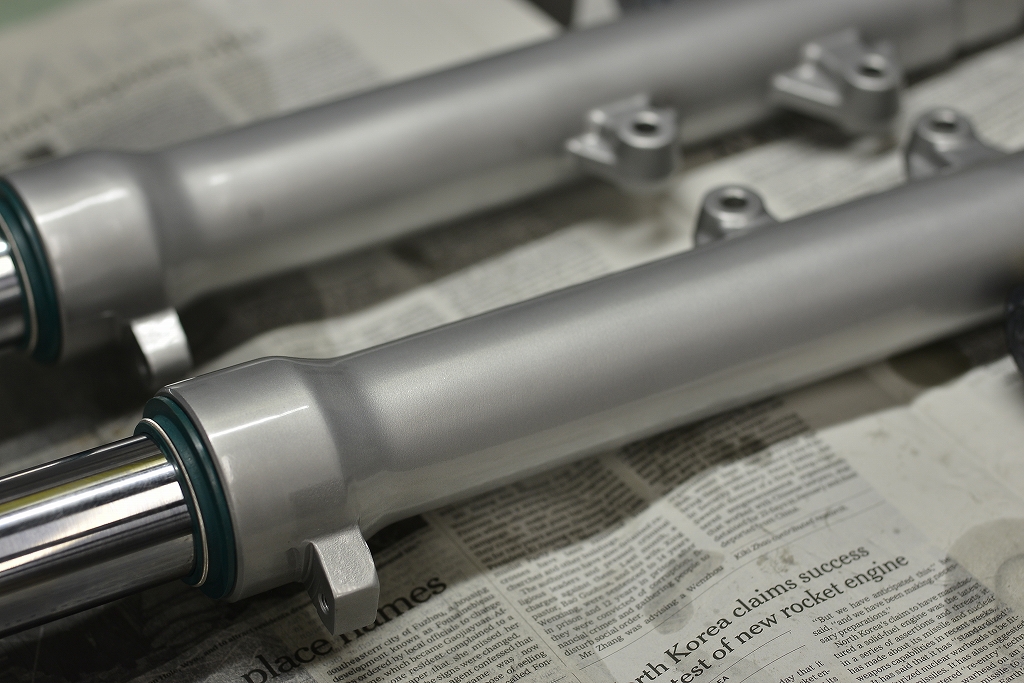
It’s now clean like new.
That completes the front-end maintenance.