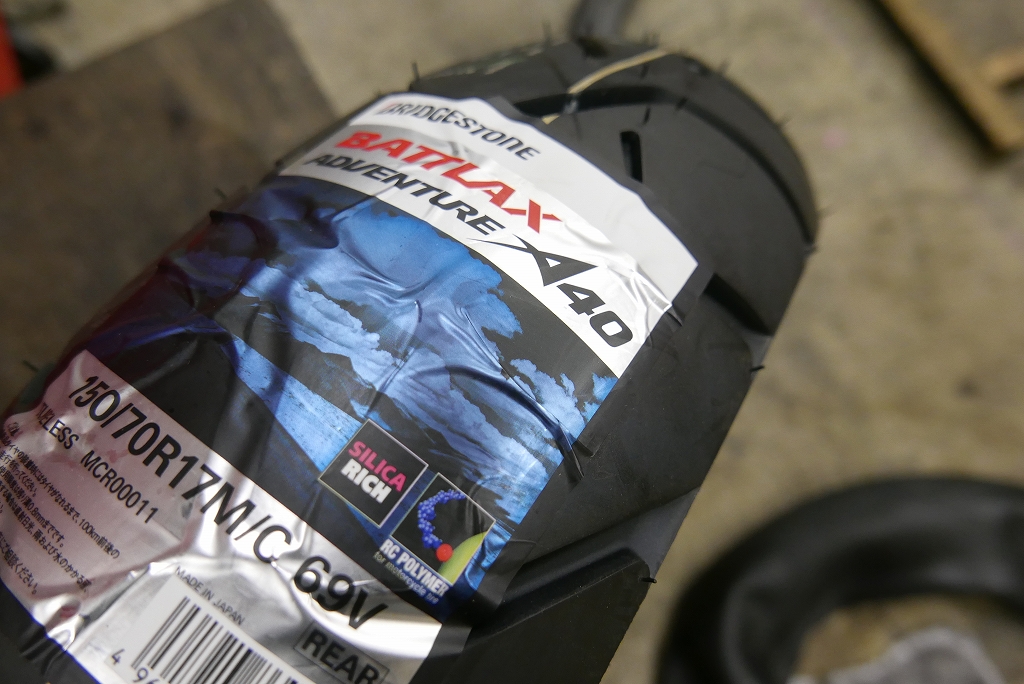
The latest Bridgestone A40 tires—the tread pattern looks pretty cool.
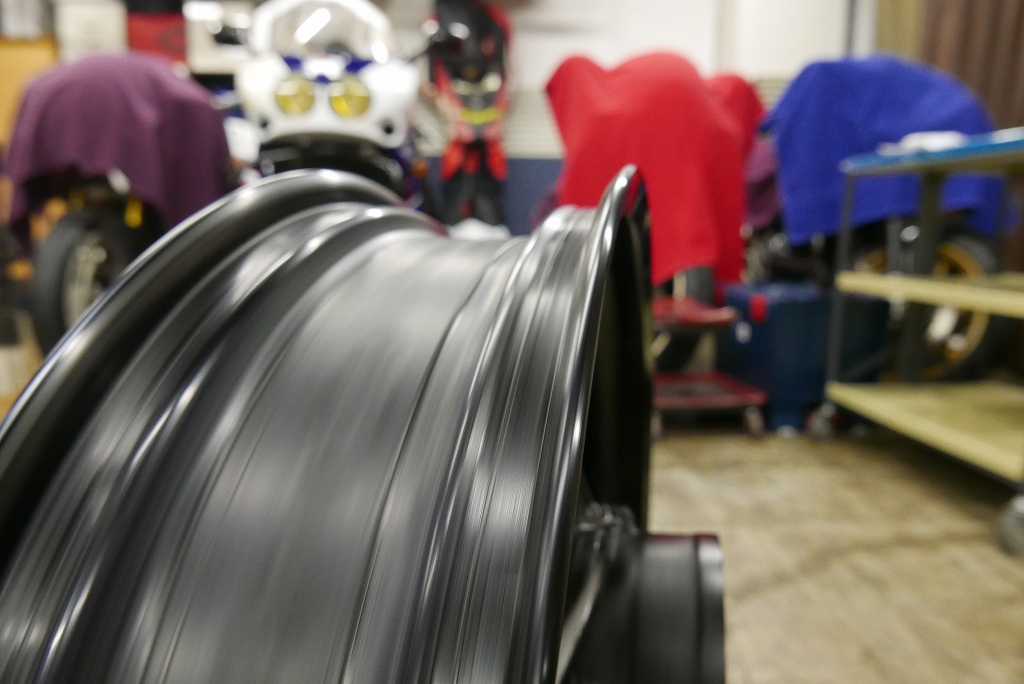
Just checking to make sure there’s no runout.
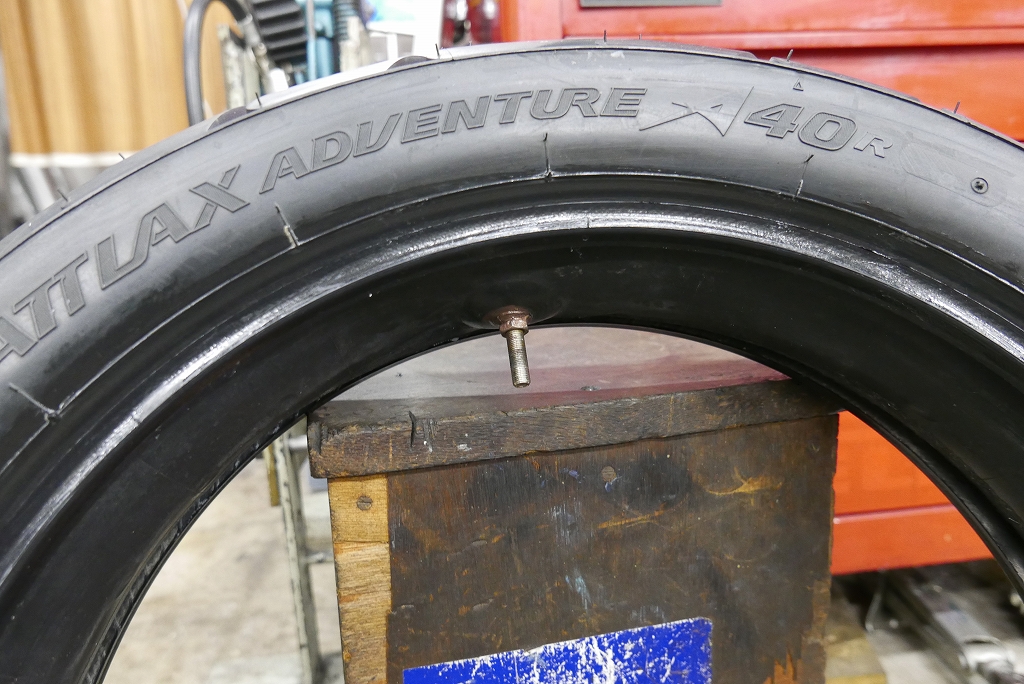
We’re replacing the tube tires. Previously, we’d insert the tube from the back and pull the valve stem, but since learning this method, it’s become much easier.
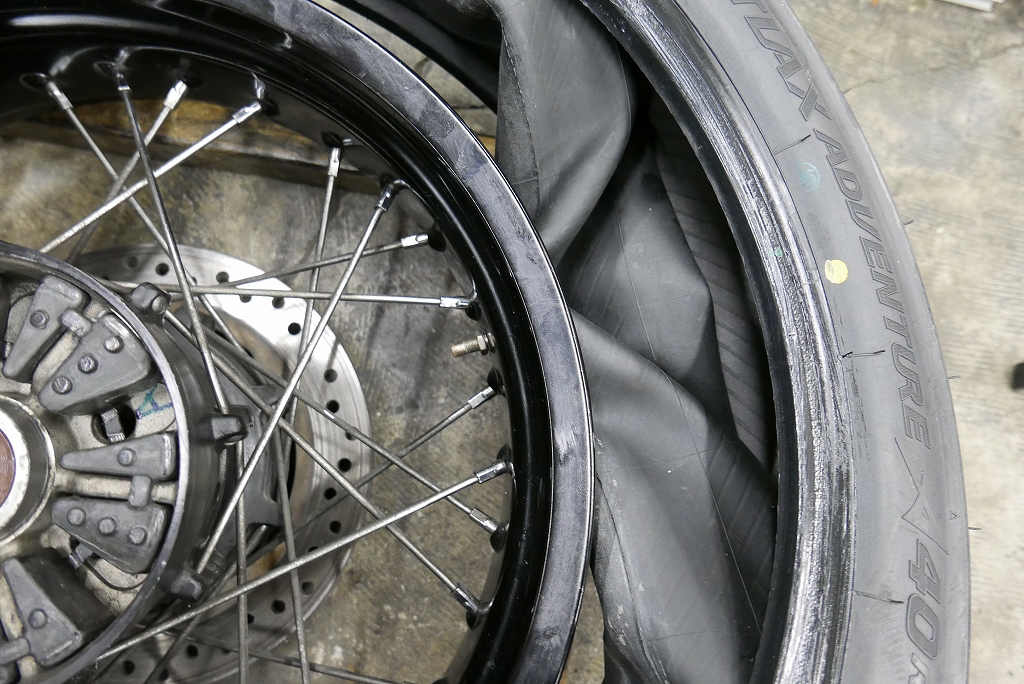
Then we thread the valve stem through.
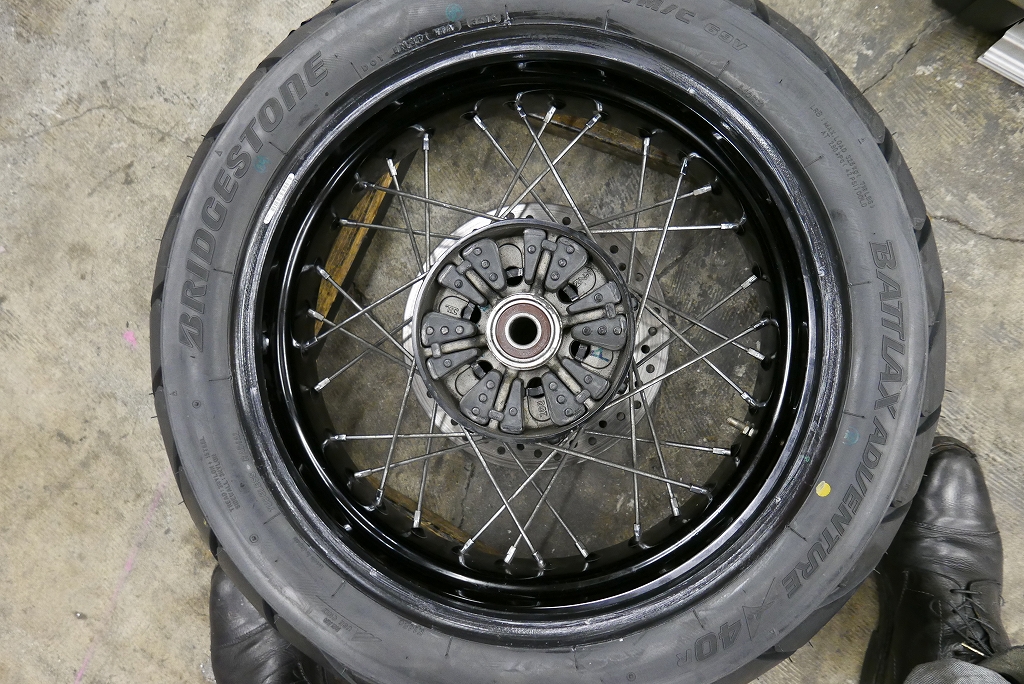
After that, just insert it and you’re done. It’s a matter of preference, but when installing a tube-type tire, I set the lever to about 100 degrees.
People who pinch the tire often might be laying the lever down close to 180 degrees when it happens. (I used to do that too.)
It’s a bit harder to insert, but if you position the curved end of the lever upward, it should pinch less. Naturally, I almost never pinch it anymore.
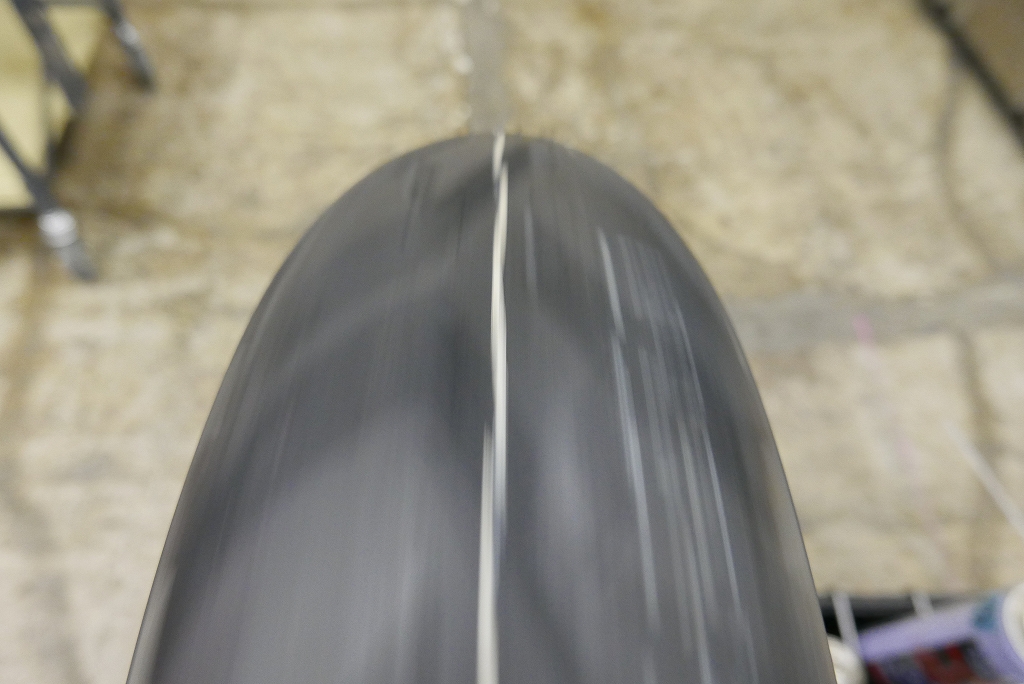
Once assembled, we check the runout. The condition changes quite a bit depending on how the bead seats. If the condition is poor, drop the bead and re-inflate.
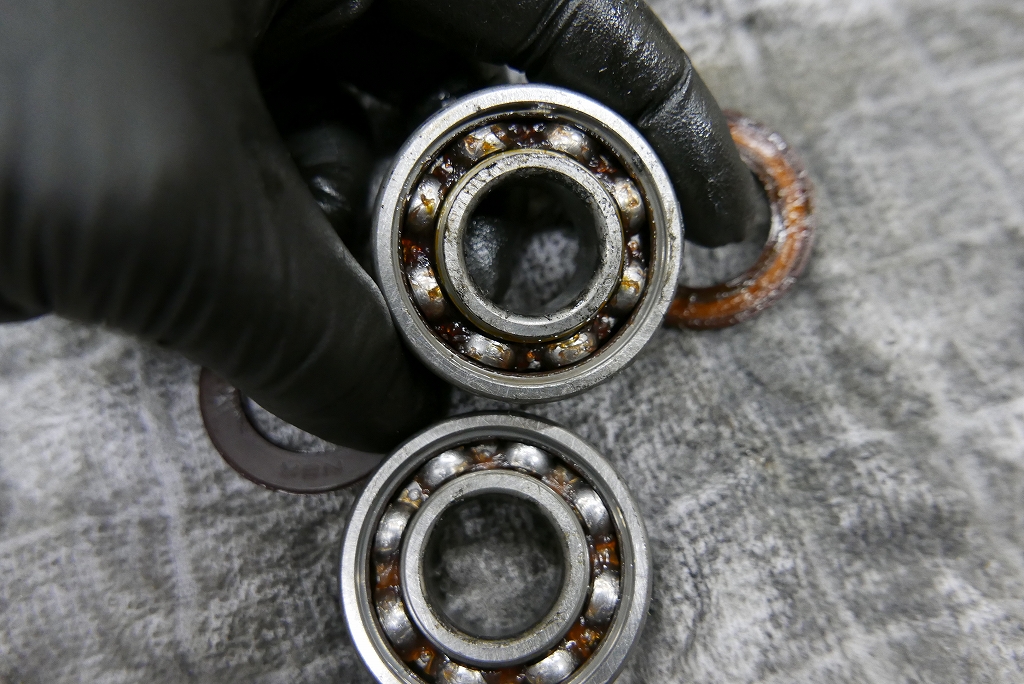
For the sealed bearing, we check inside. Some grease has already started to come out. Once the grease is gone, the bearing’s life drops dramatically. I think wheel bearings that are constantly spinning should be replaced every 20,000 to 30,000 kilometers.
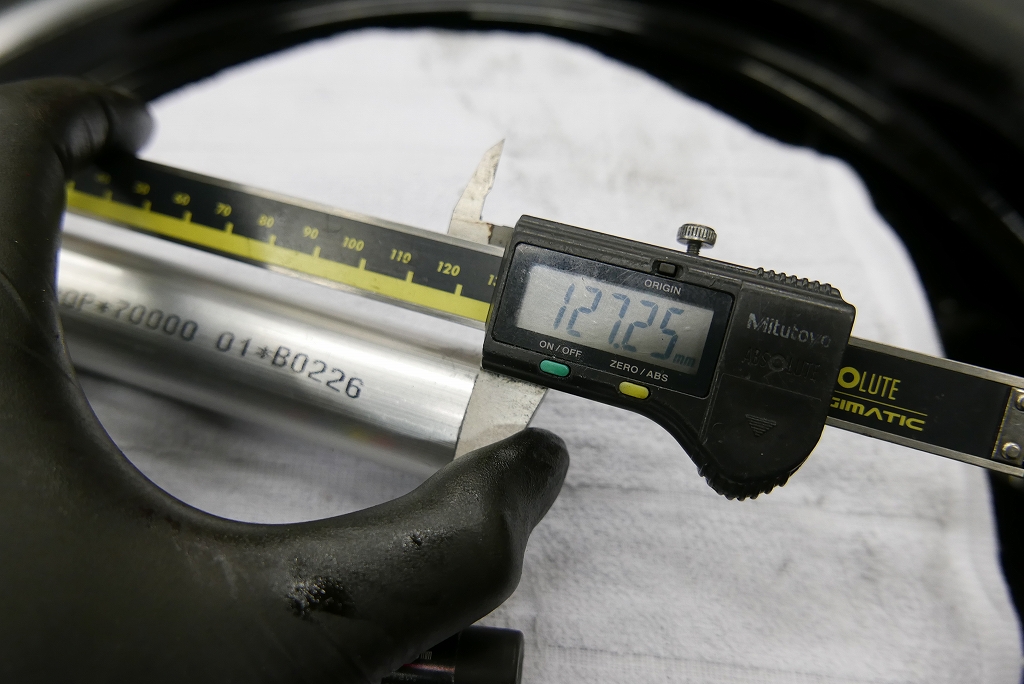
Let’s also check the distance collar dimensions just to be sure.
It’s not common these days, but some bikes have been tampered with.
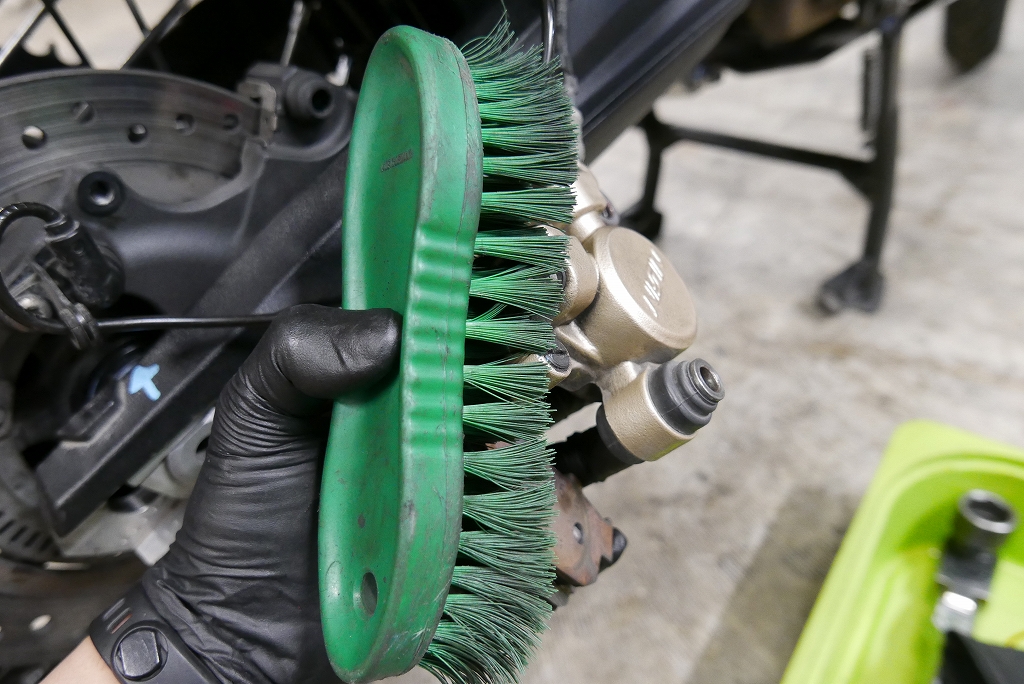
There’s a bit of dust, so let’s brush it off.
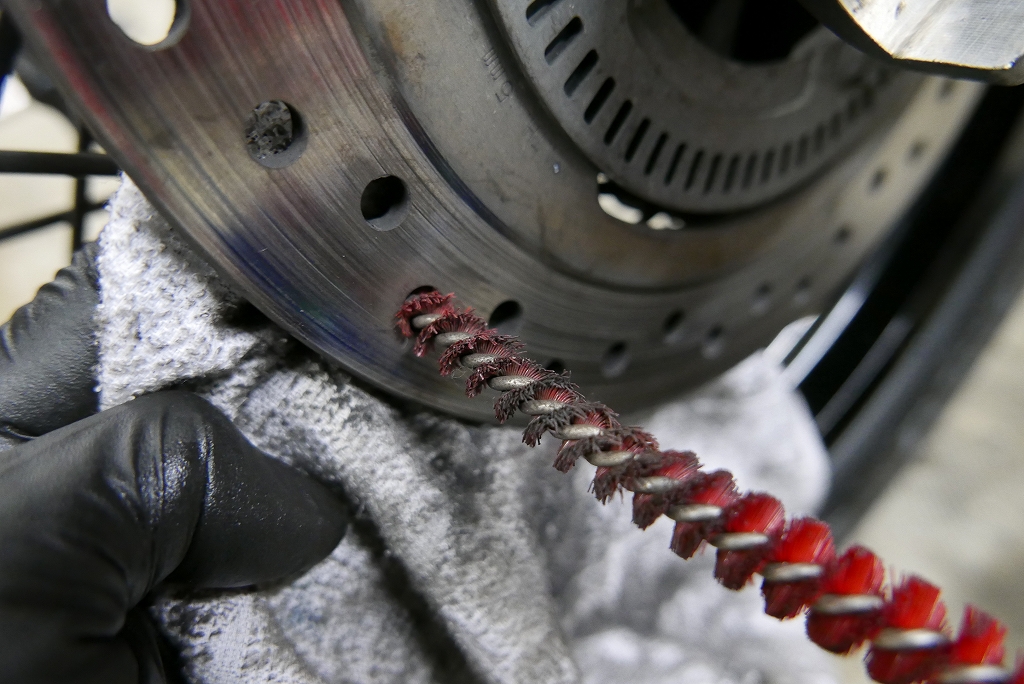
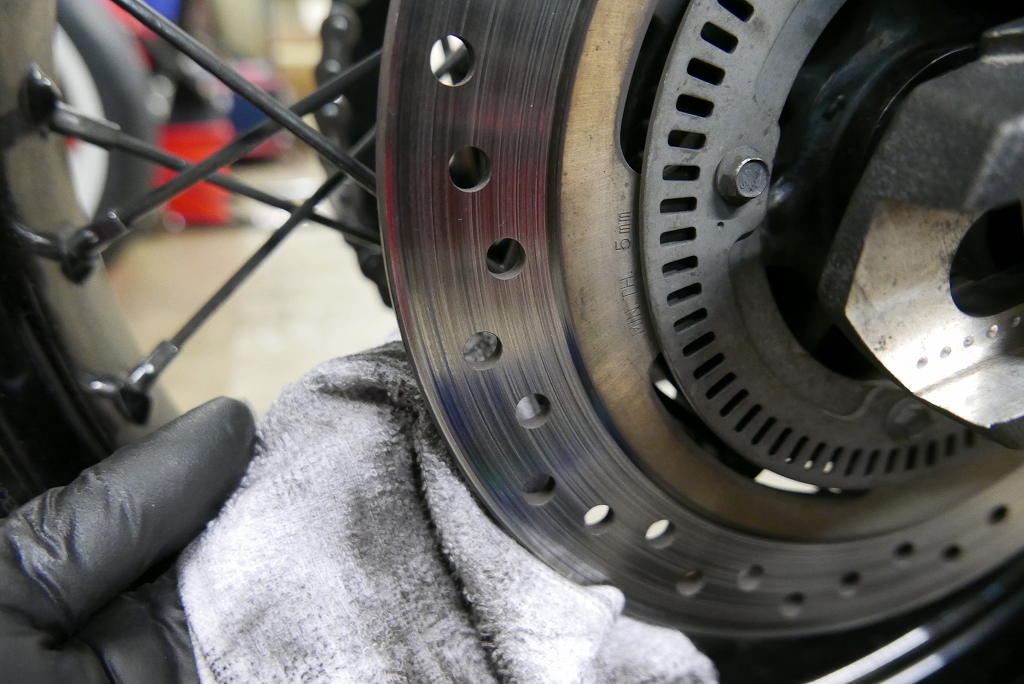
The dust was incredible. This really freshened things up.
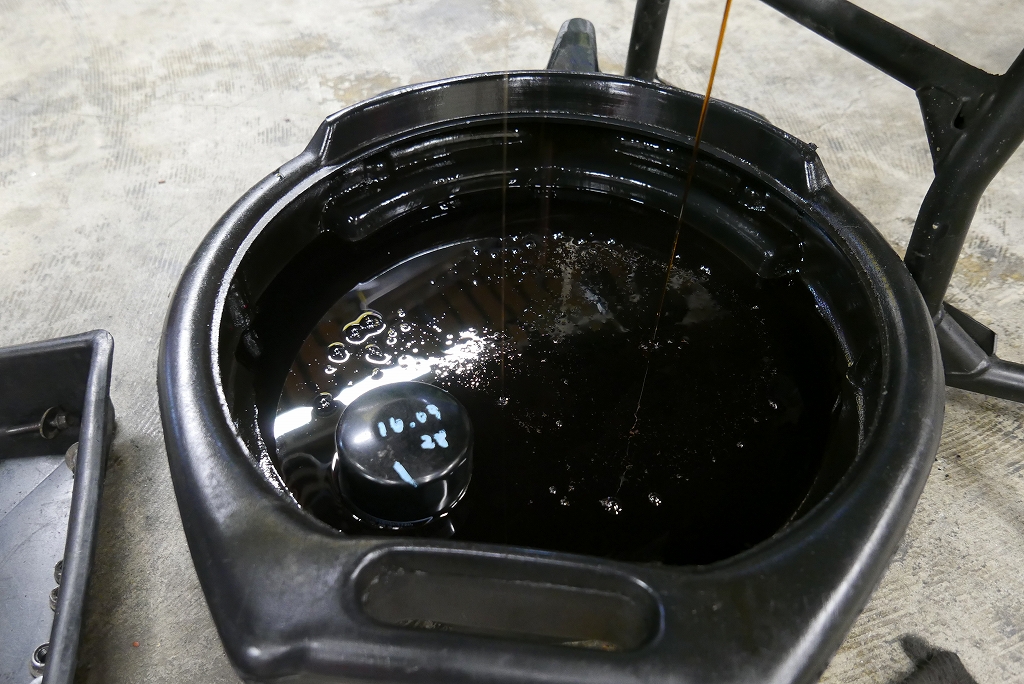
We changed the oil with Newtech.
All done.