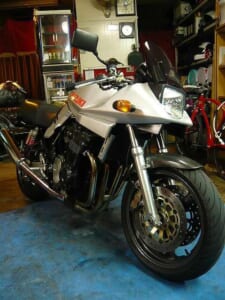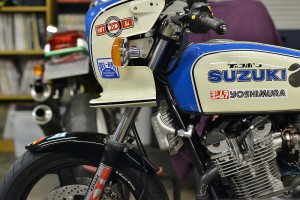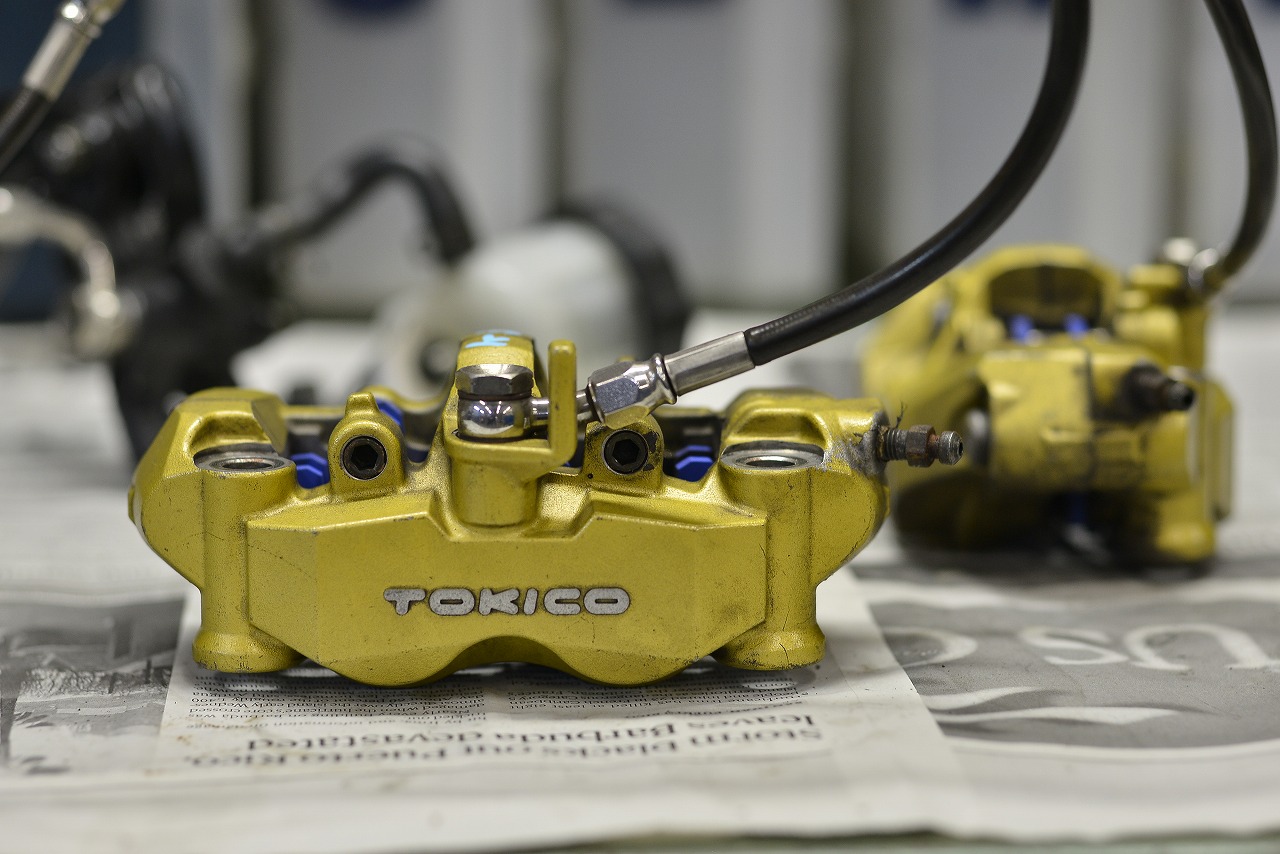
Racing bike. Single caliper and master cylinder OH service.
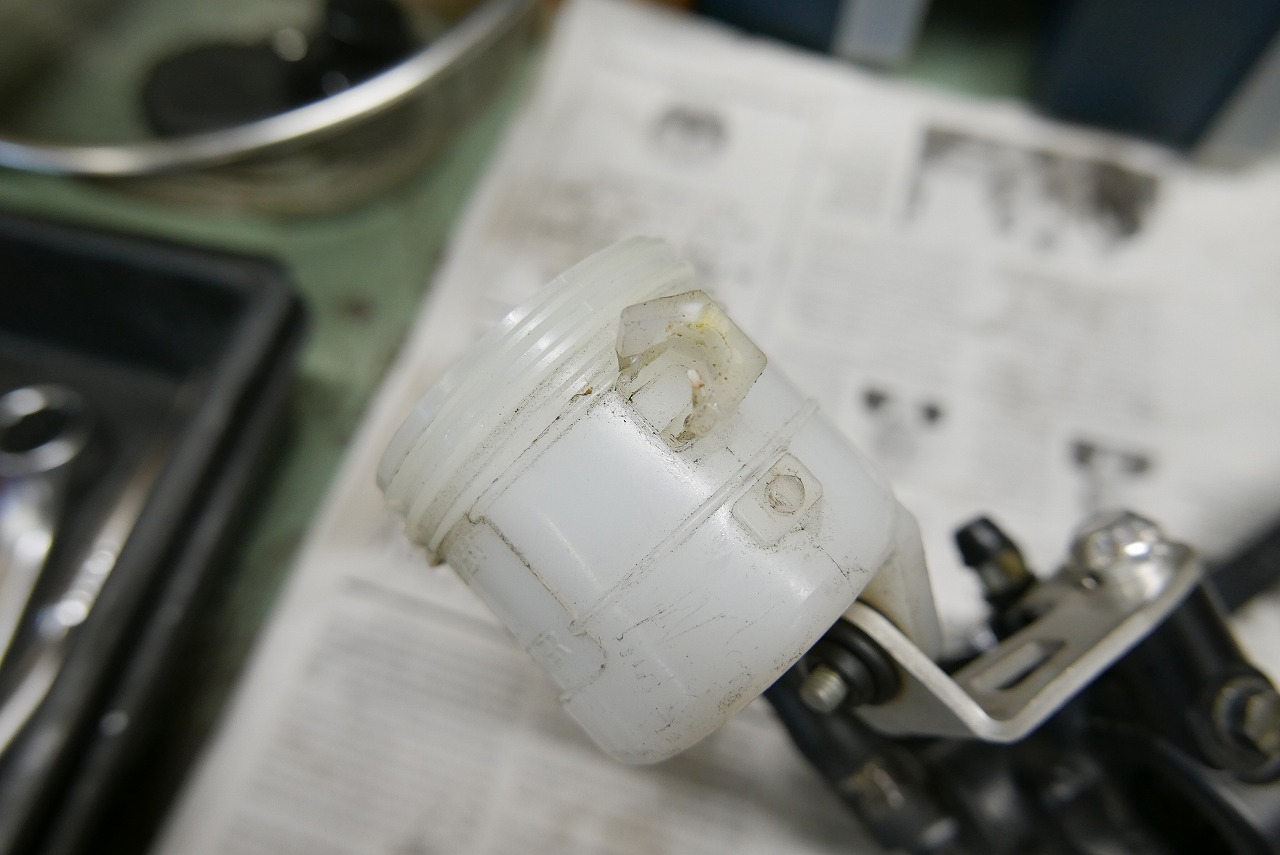
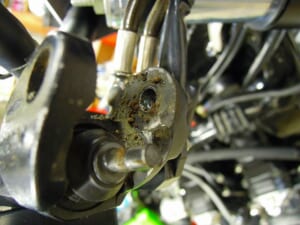
The cup retention is shot. (That’s the original condition, by the way.)
Older GSXR1000 caliper K3 and master cylinder K5, apparently. I was surprised to learn that master repair kits are discontinued—has it really been that long already?
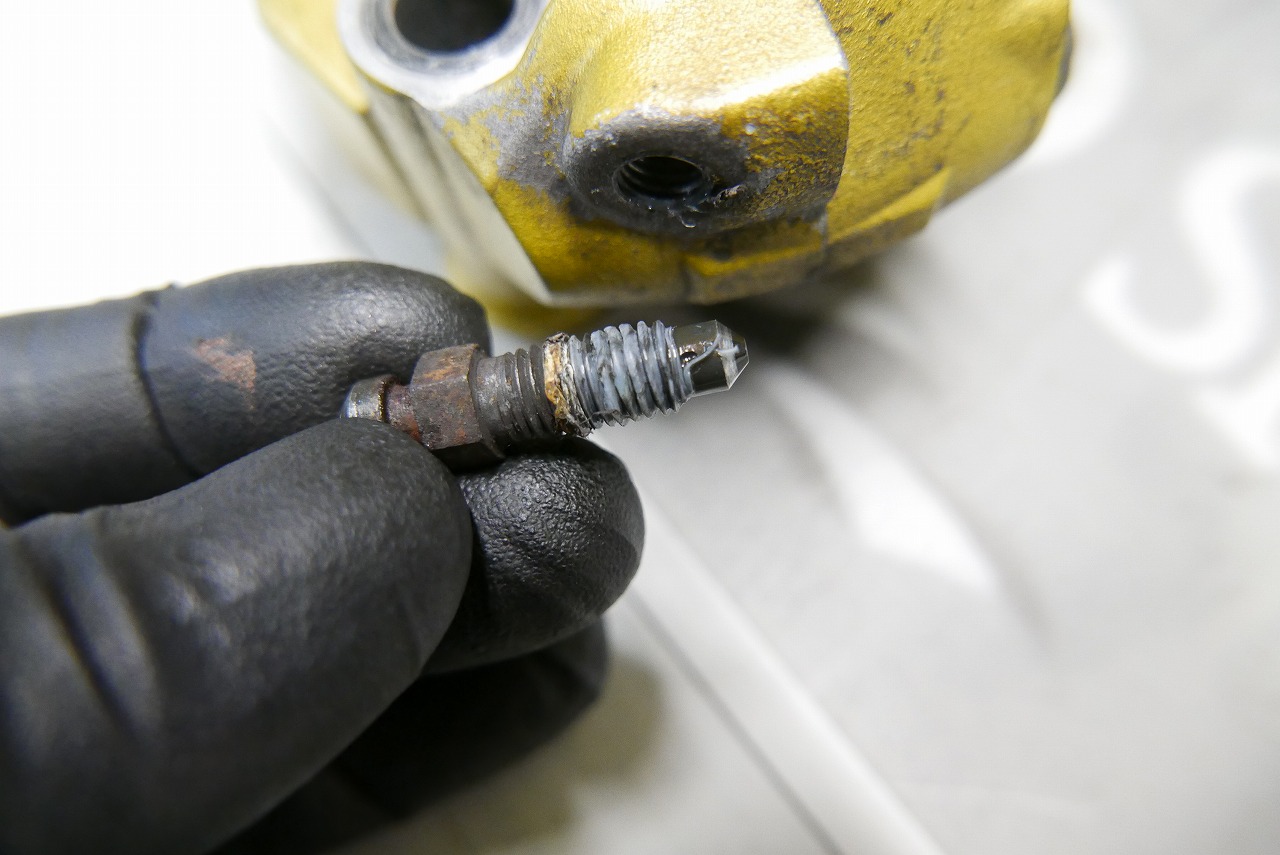
Seal tape that looks like it might work—or might not.
When you install the bleeder cap, fluid seeps out from the side.
Basically, it’s locked with a taper, so the fluid oozing out is just residual fluid in the nipple bore and threads. After locking, run cleaner through the nipple bore, wrap it with a rag, and blow air through the bore—that should stop it. If air still gets in after that, there’s a problem with the taper joint.
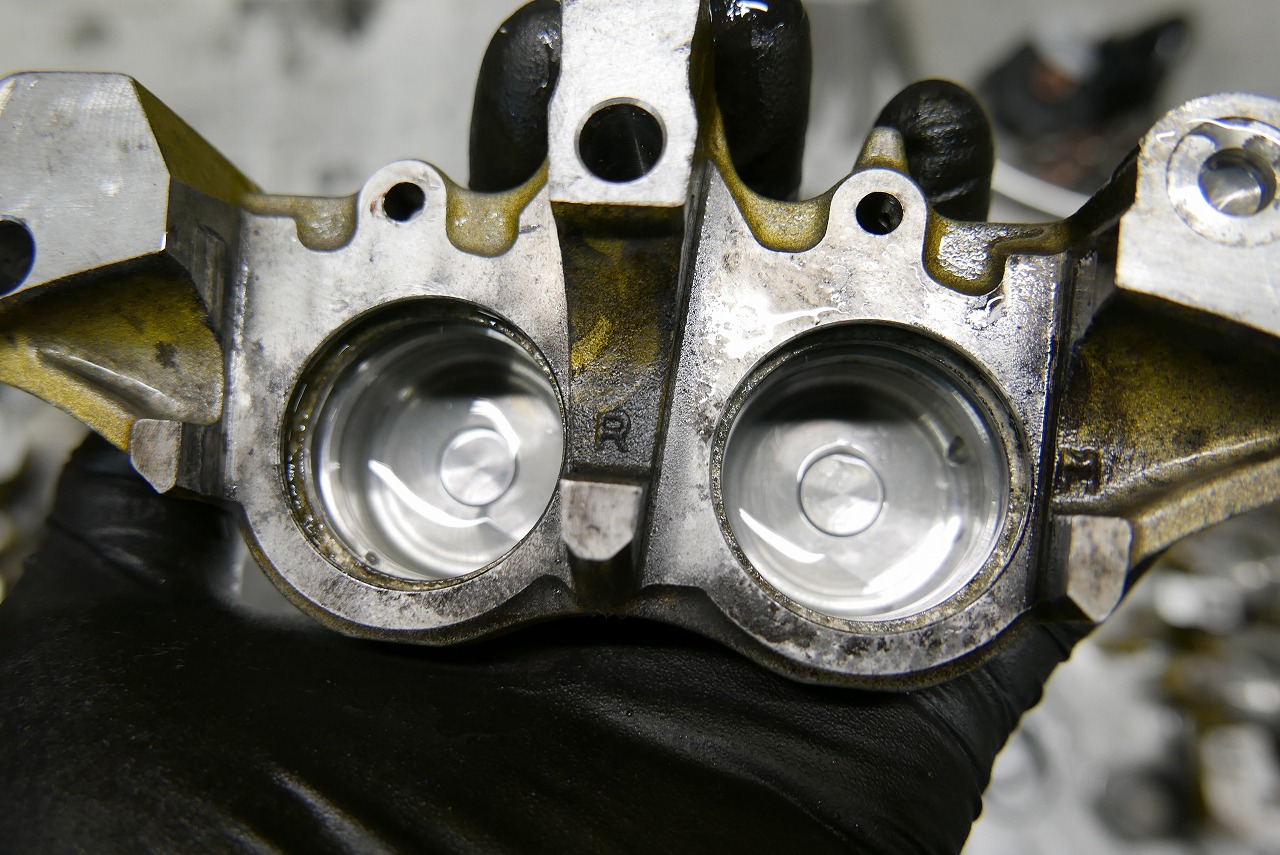
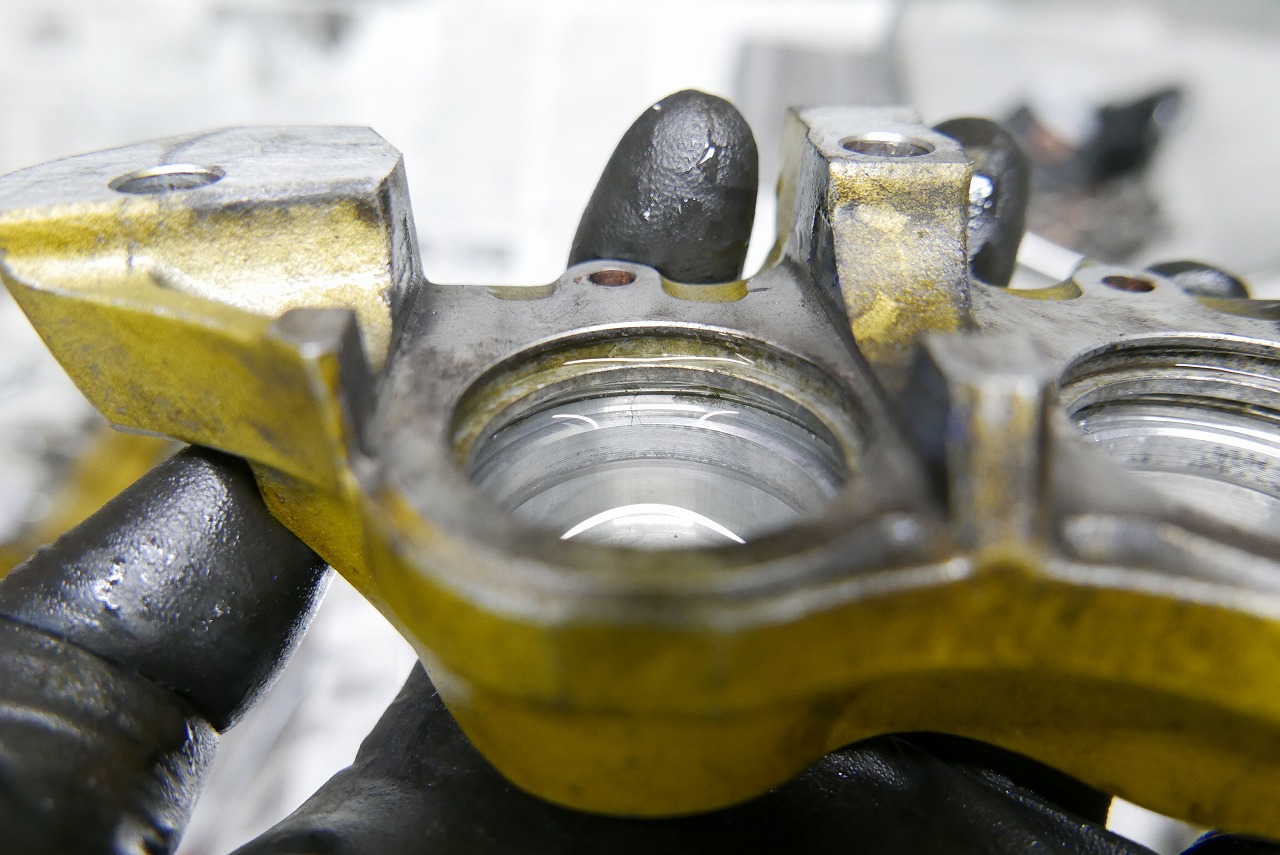
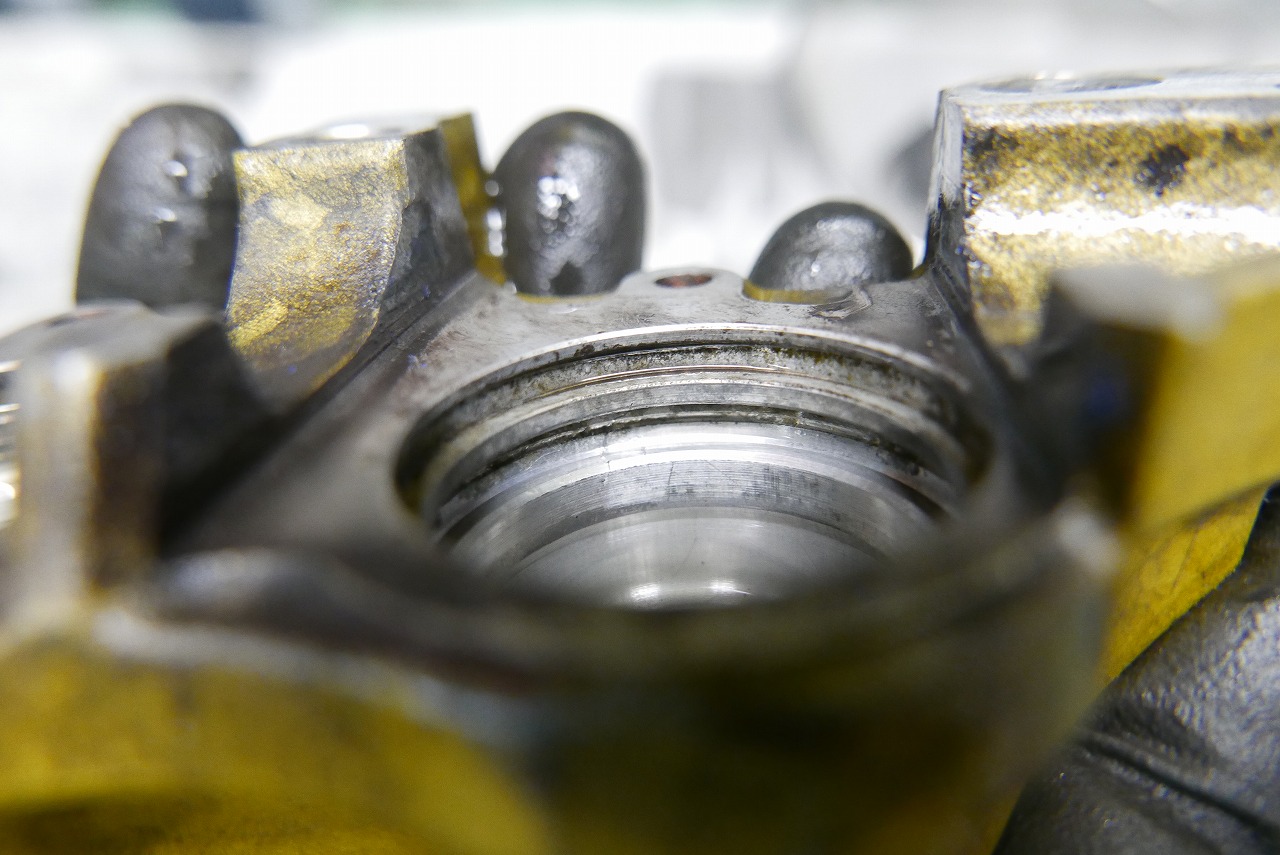
The condition is rougher than I expected. And it’s not an anodized caliper either.
When brake caliper seals get old…
• Dust seals and oil seals harden and deform with age.
• The inside of the seal groove corrodes and pushes the seals inward.
That’s the situation, so no matter how thoroughly you clean and work the seals, it’s just a temporary fix. If you think things aren’t improving much, seal replacement and groove cleaning should restore normal performance.
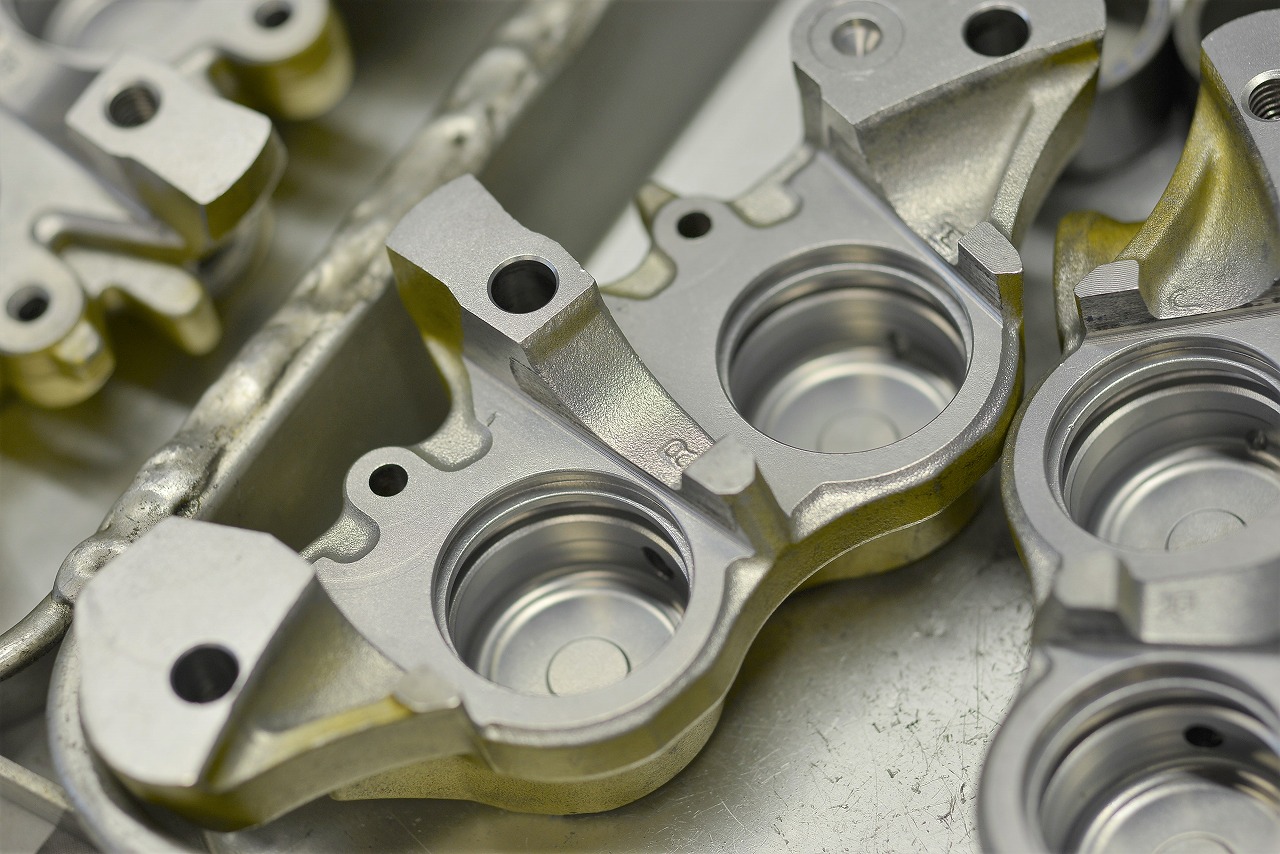
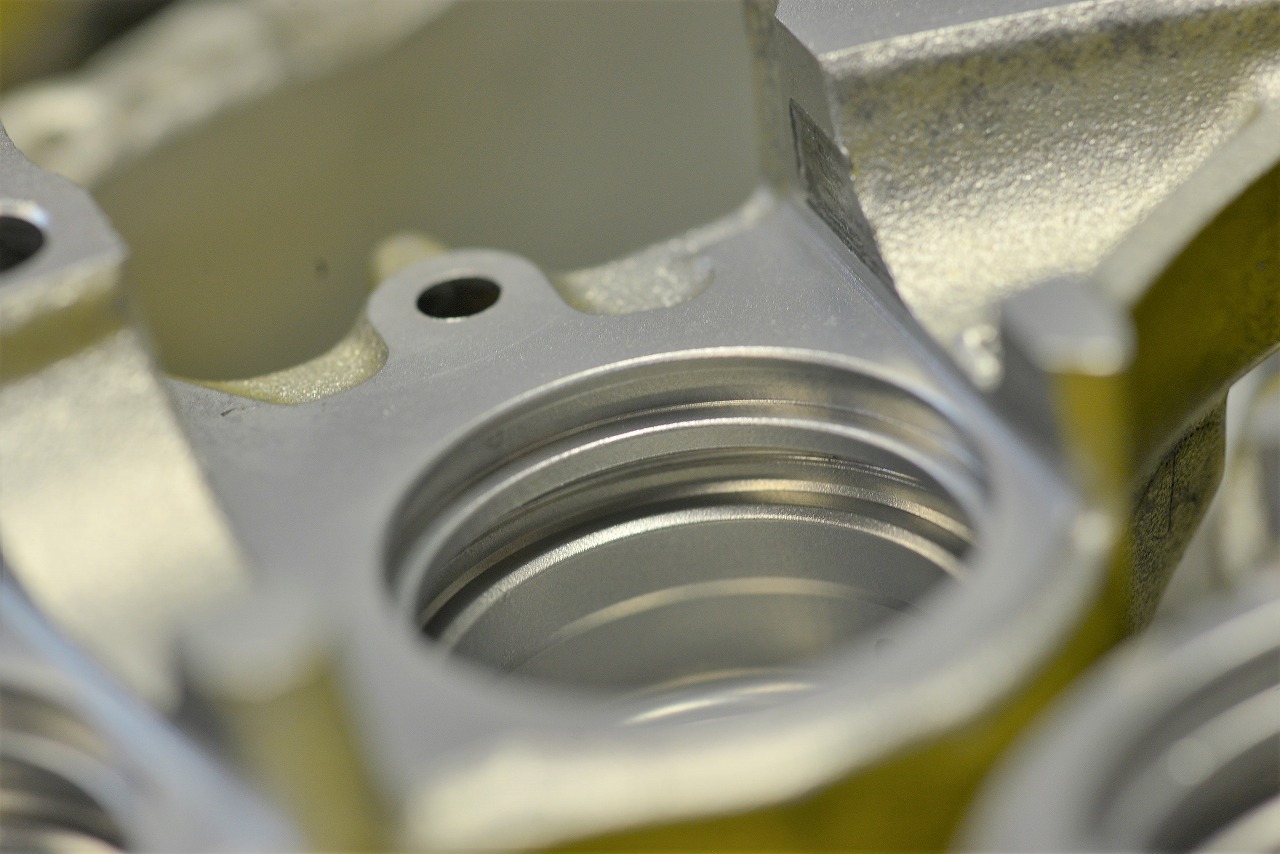
Smooth and slick. The prep work is perfect! Now it’s just assembly from here.
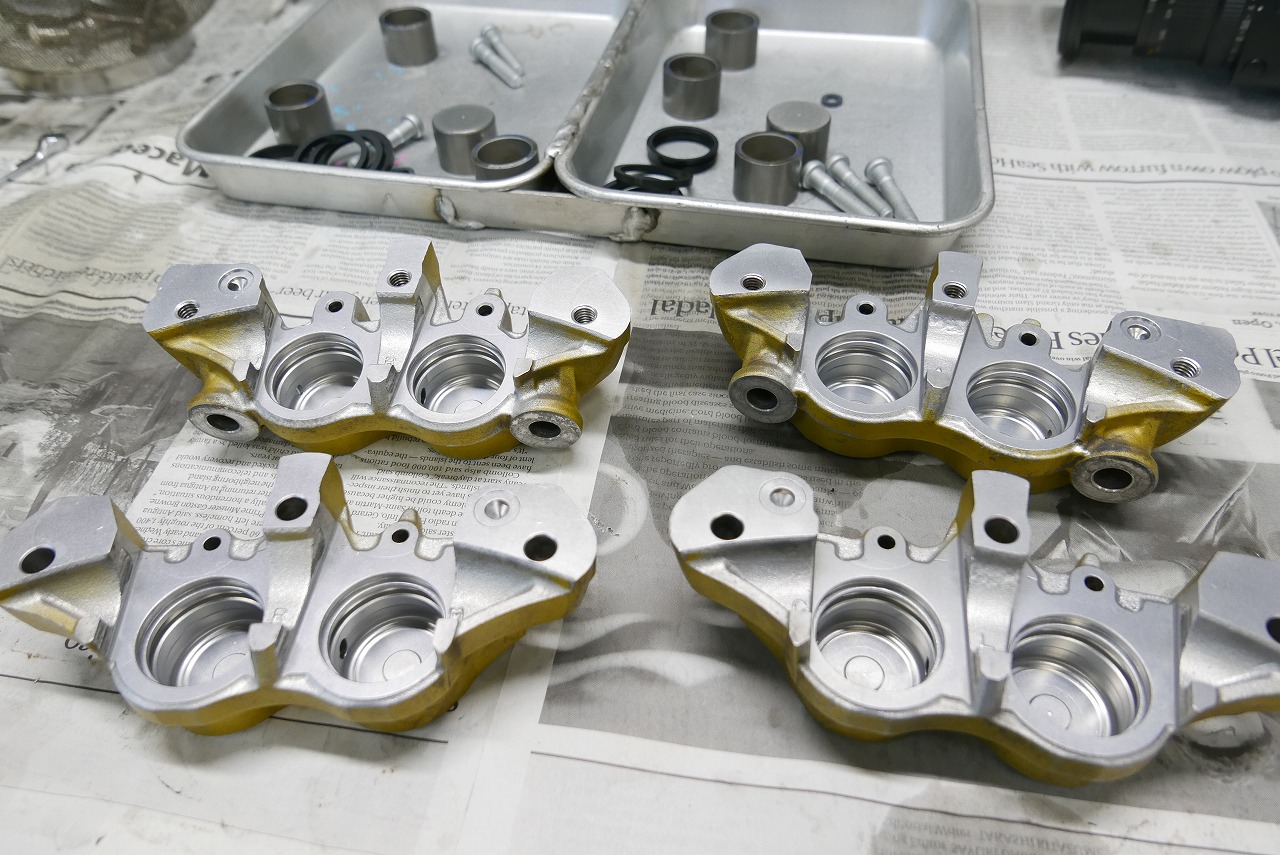
Then I give it a quick trip into the oven. Driving off any moisture and getting it completely dry makes a real difference in peace of mind.
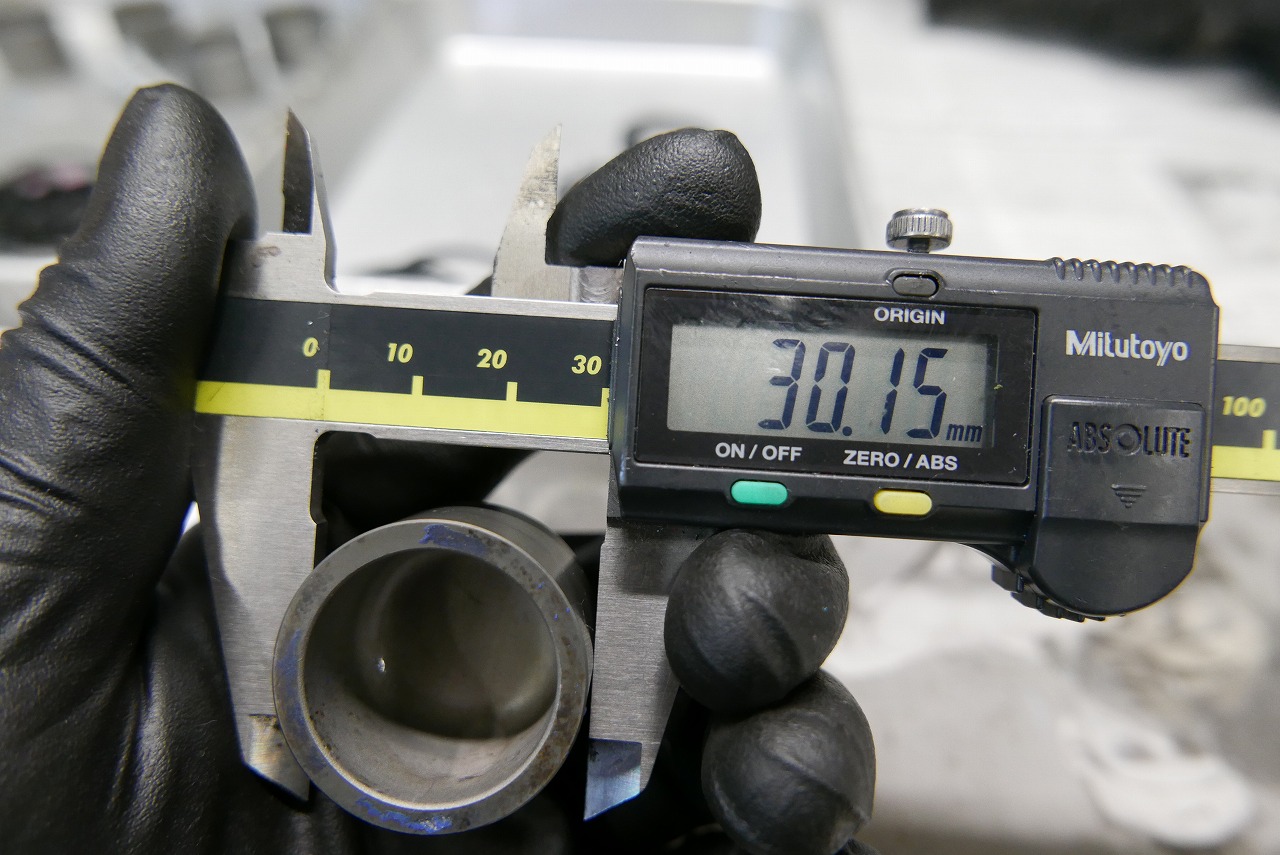
Just to confirm—same diameter, four-piston.
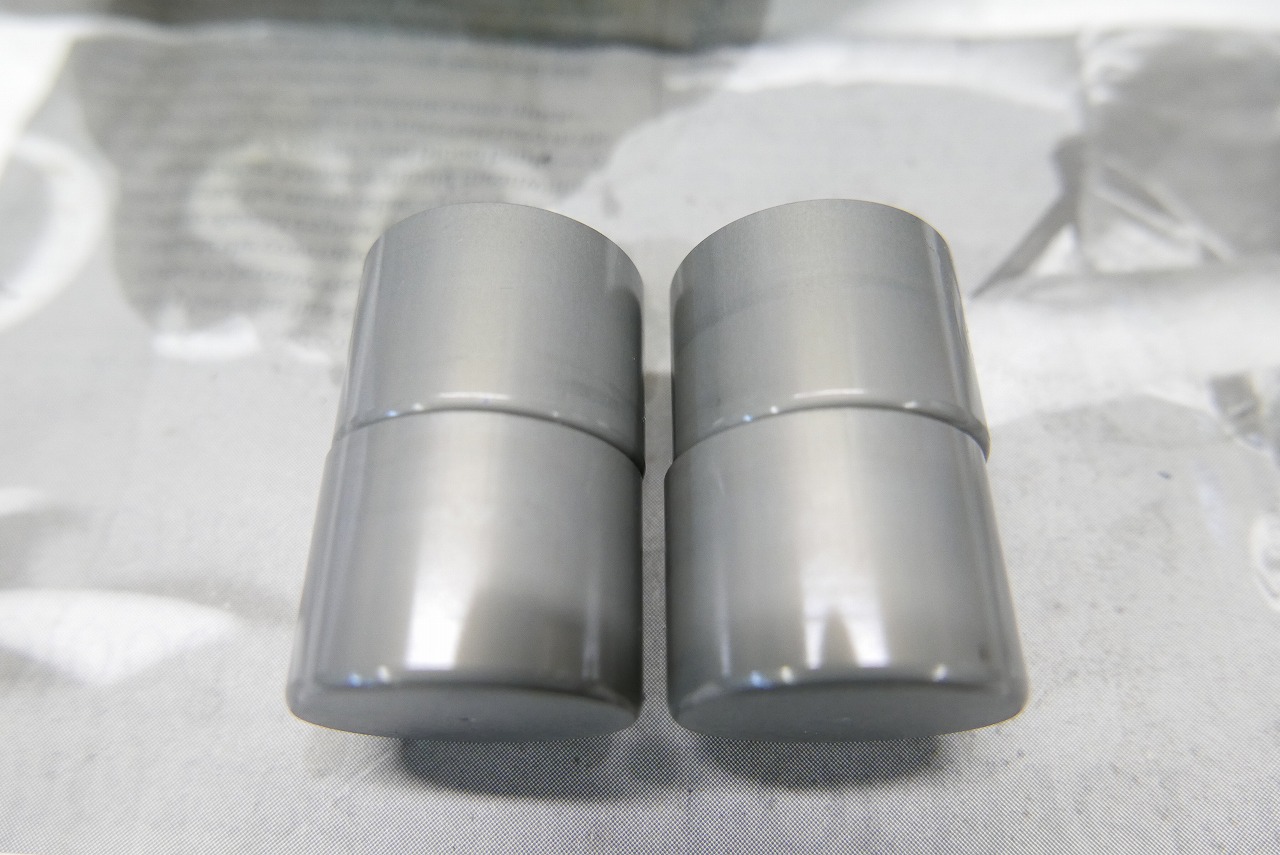
The body is clean, so we’ll reuse it.
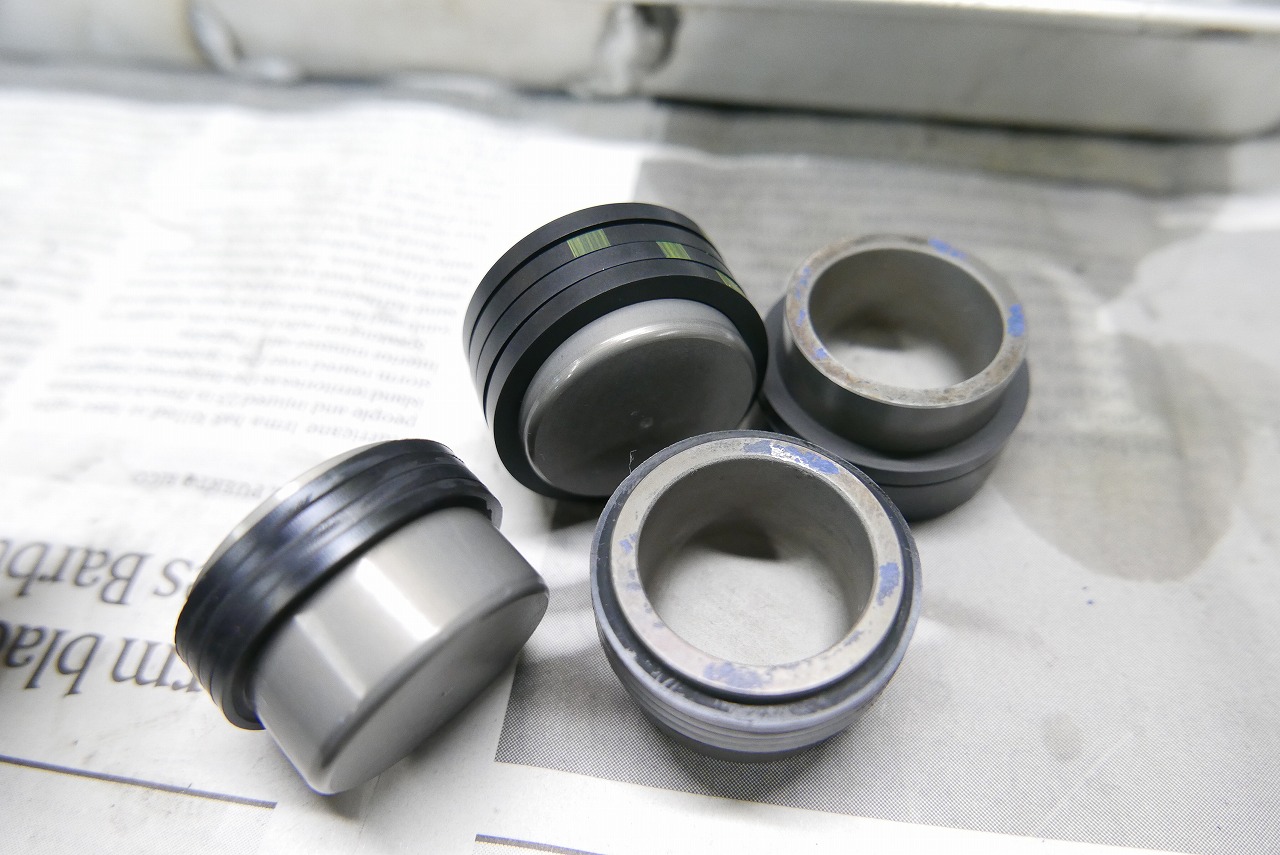
Always inspect the seals. I’ve actually found the wrong seals in a kit before.
There’s no such thing as foolproof. Double and triple checks are what prevent all kinds of problems.
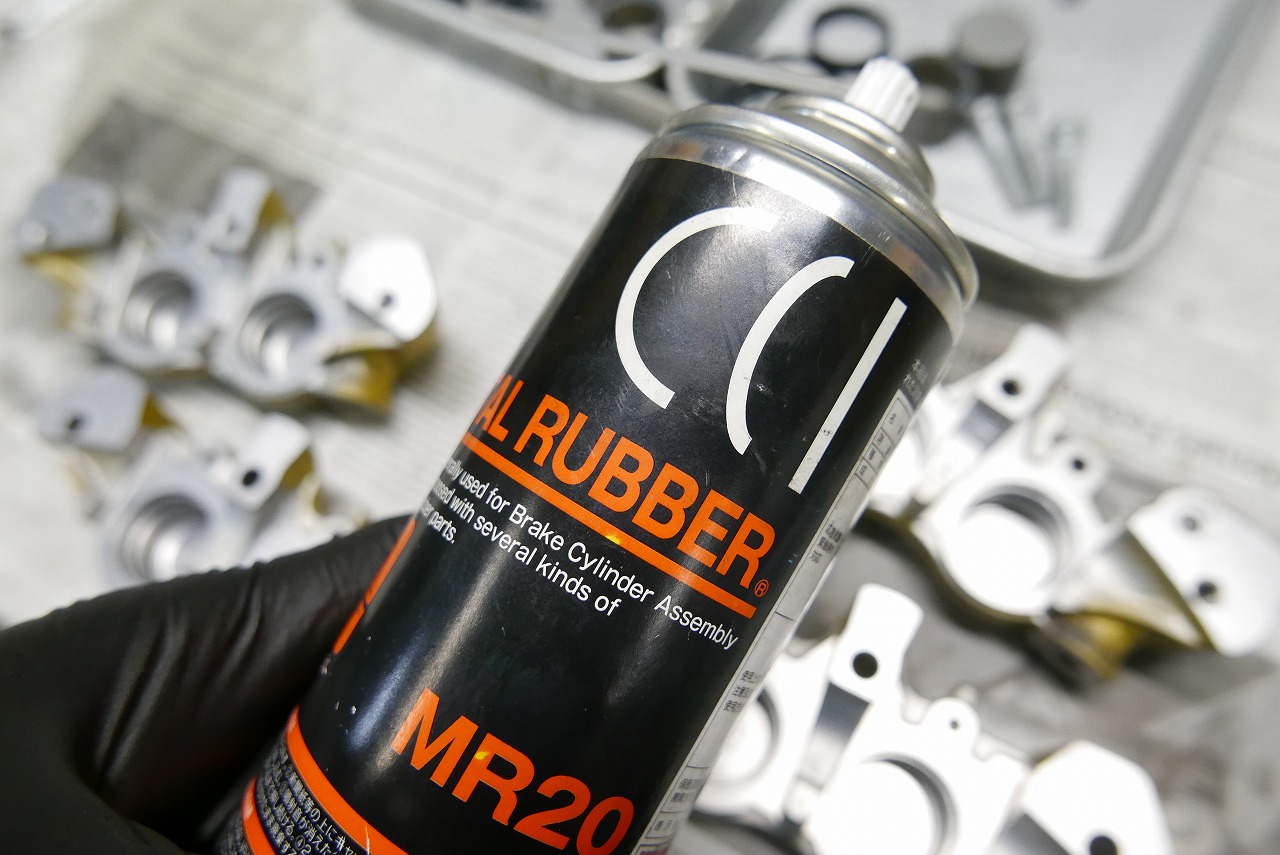
Apply metal-rubber compound—the stuff that makes anyone feel like they’ve gotten better at OH—and then assemble.
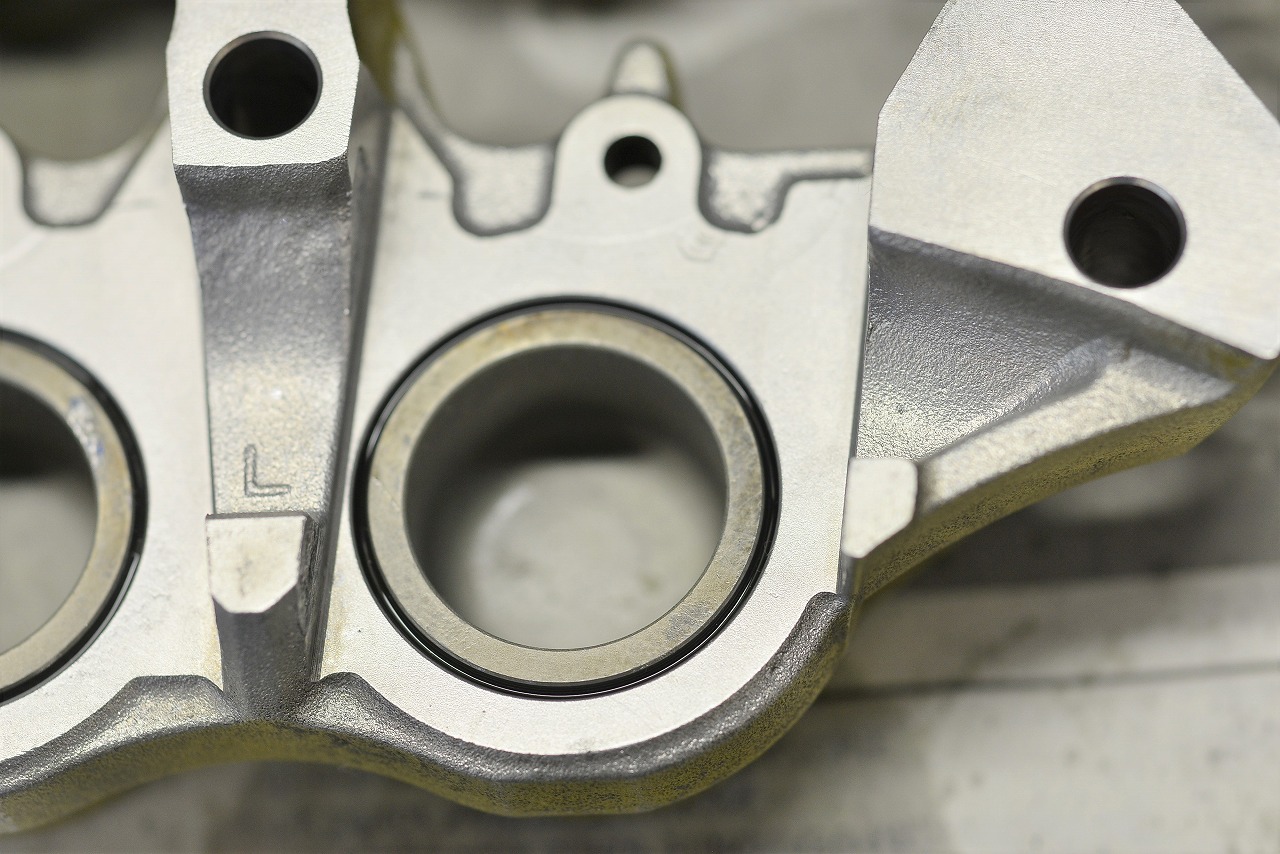
That’s how it goes. After assembly, once the seals and pistons bed in, you’re very good.