April already, but it feels like May weather, doesn’t it? The pollen has settled down too—though it seems like COVID is expanding again? That’s my hunch.
Let’s take precautions seriously and accept that we won’t return to pre-COVID life. Let’s embrace this new way of living.
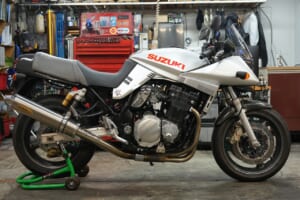
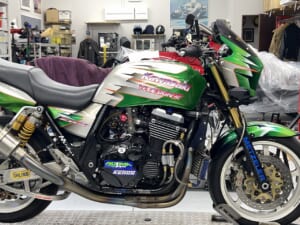
The shop’s been a bit messy and things have stalled, but here we are with the GSX1200S project that everyone loves—well, supposedly!
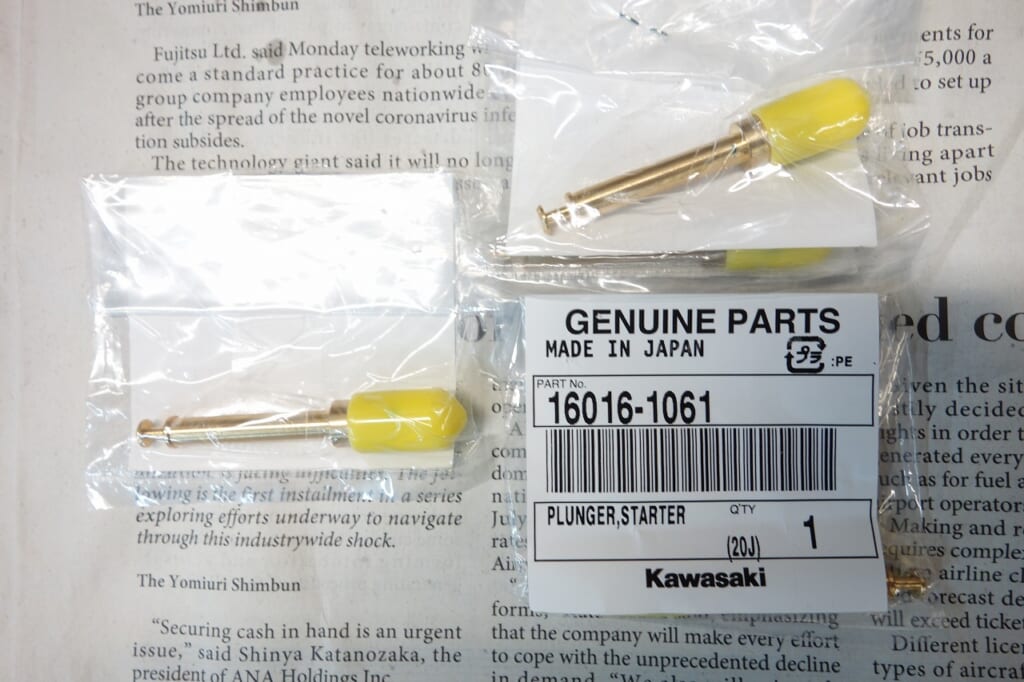
I believe Suzuki has discontinued the starter valve.
If it’s the same family of carburetors, there’s no problem.
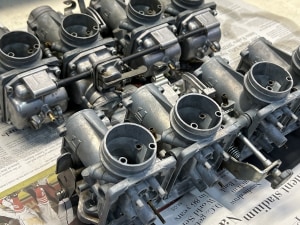
For carburettor parts like these, I always strongly recommend genuine parts.
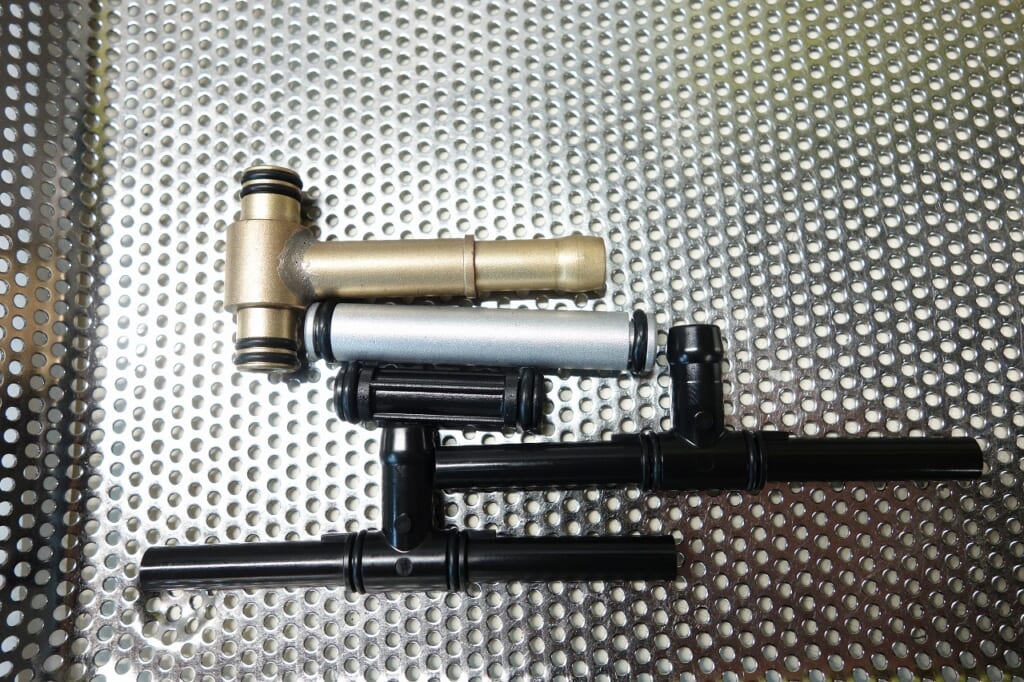
We replace fuel passages and air vents where possible, and we polish and reuse metal parts.
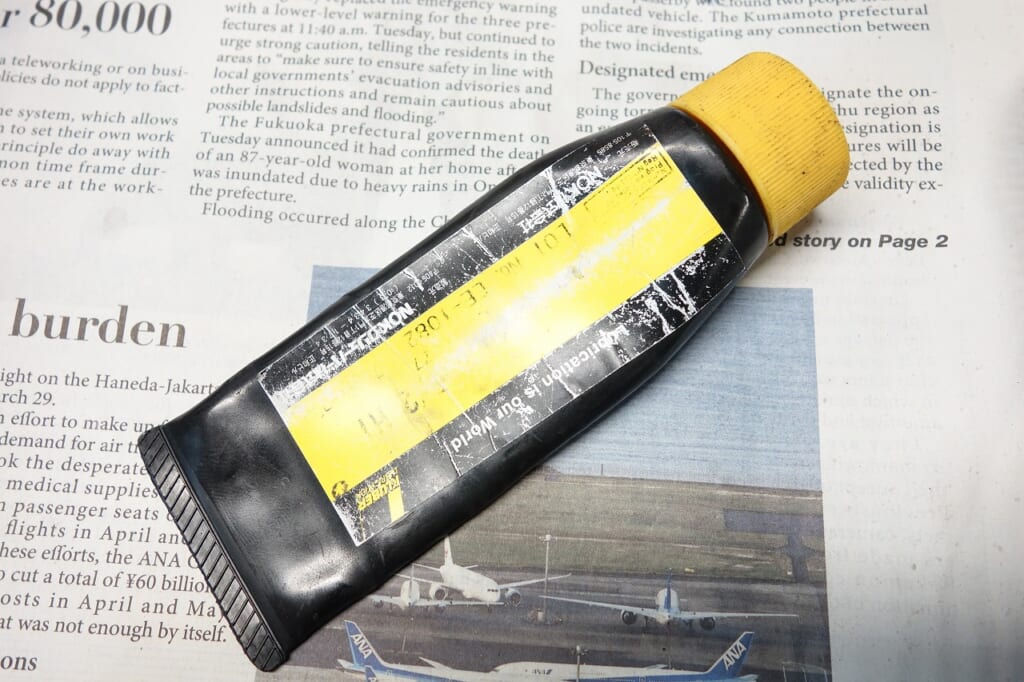
Fluorine grease—Variel Tau. I feel the great power of fluorine every day.
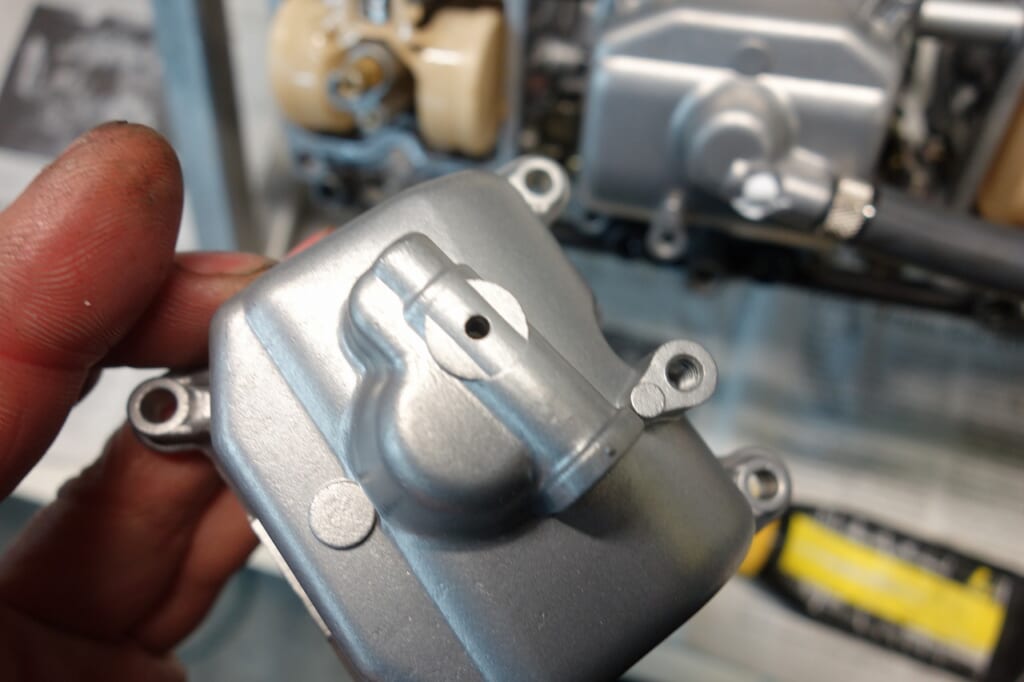
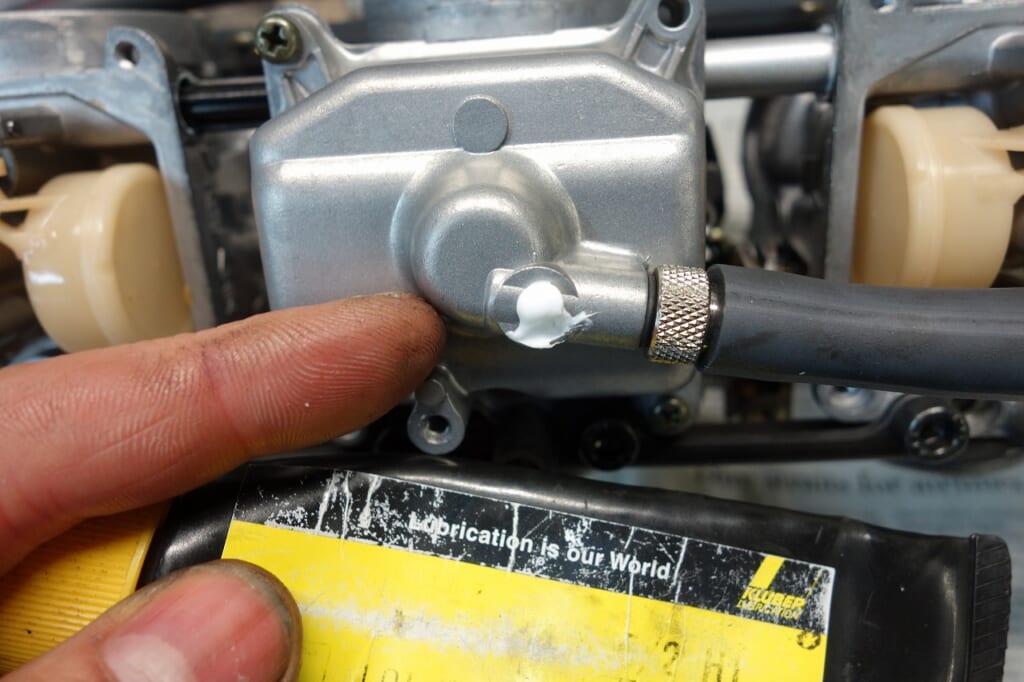
When checking the actual fuel level, if you attach the fuel level tool, gasoline leaks from this hole. That’s another use case for it.
Fluorine doesn’t dissolve in any chemical or solvent—in a way, that’s kind of scary, isn’t it?
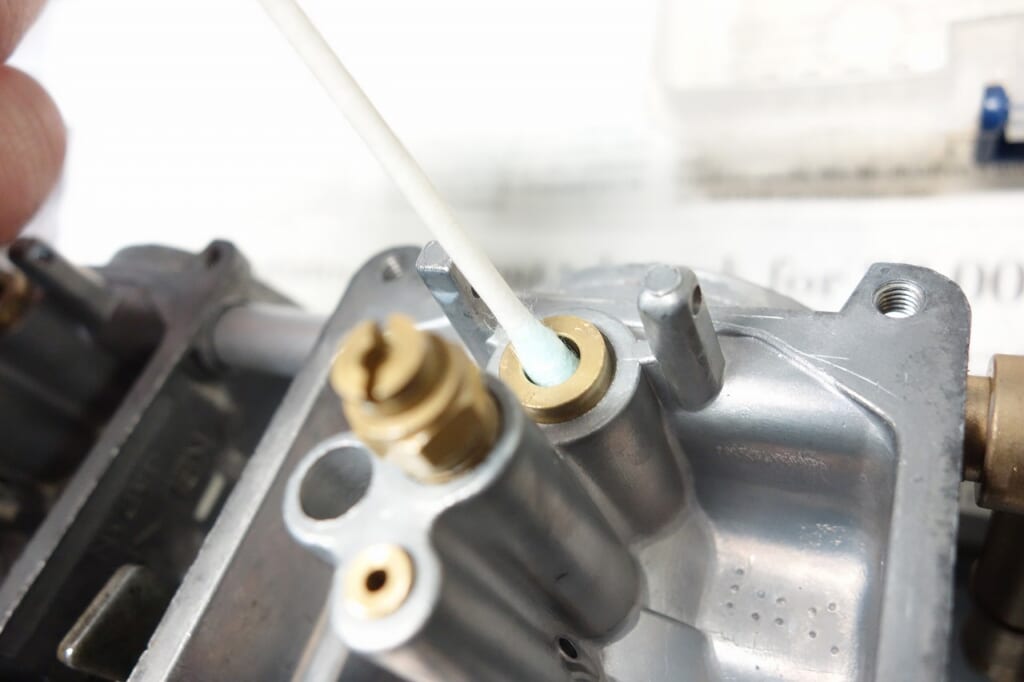
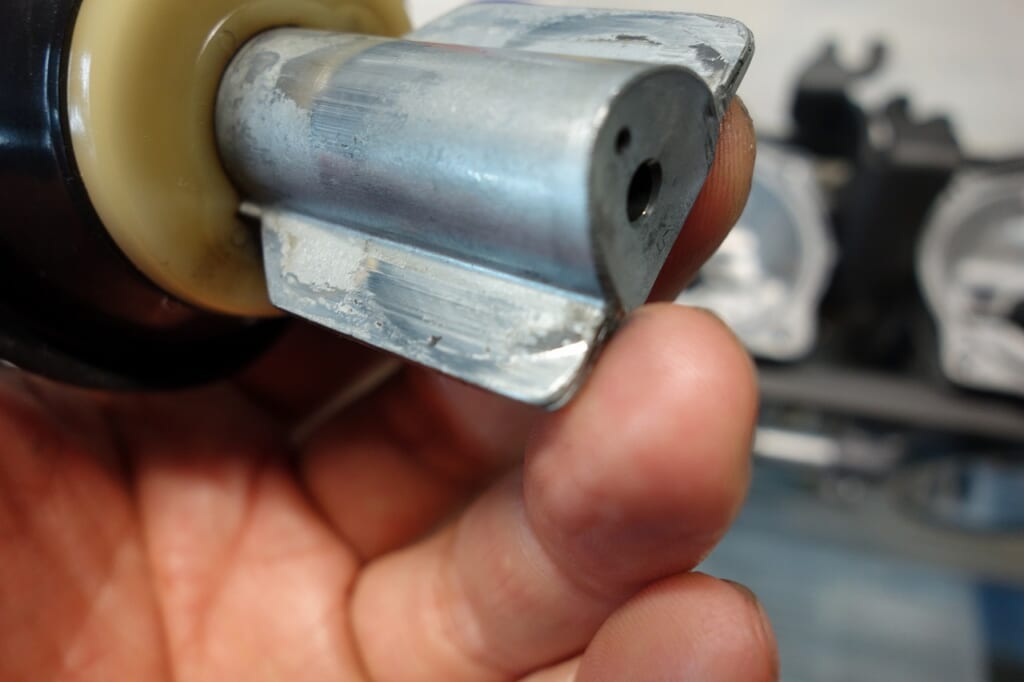
We use cotton swabs to remove dirt. It’s all about preventing trouble from happening. *No rework needed?
We also adjusted the slide valve contact.
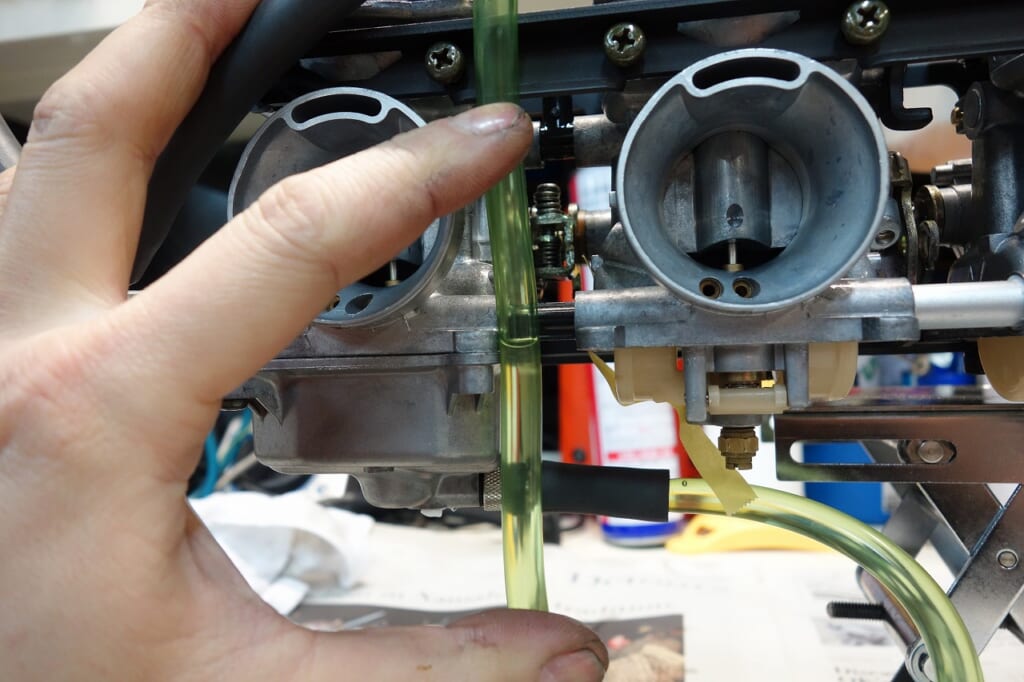
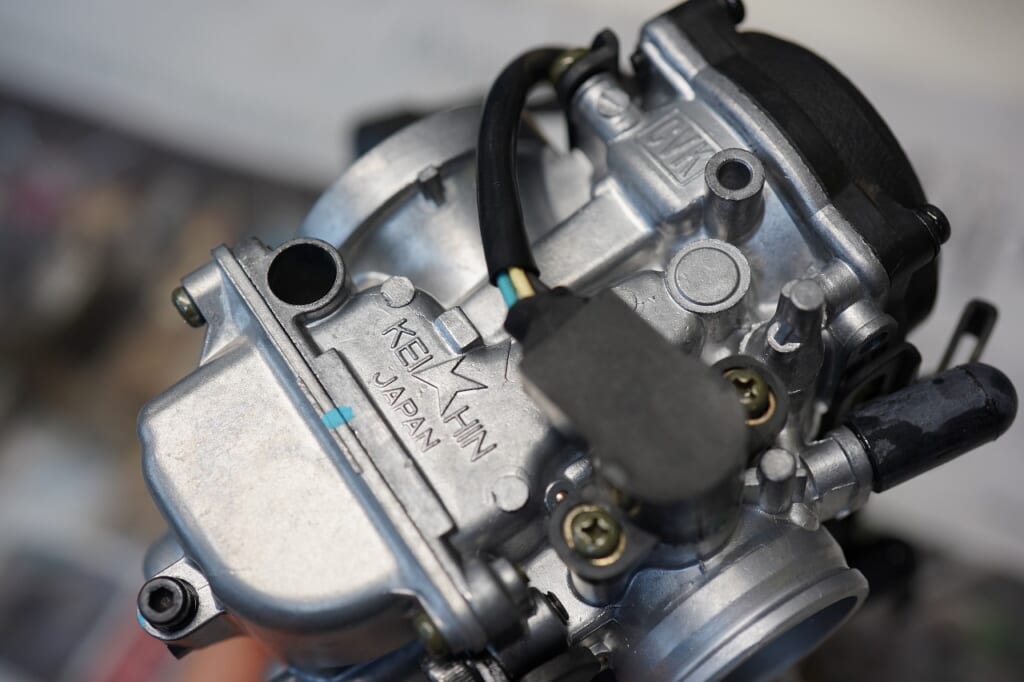
Looking at the fuel level, I always think “Carbs are Keihin!”
The stability of performance is just completely different.
But I do love Mikuni BST-series vacuum carbs.
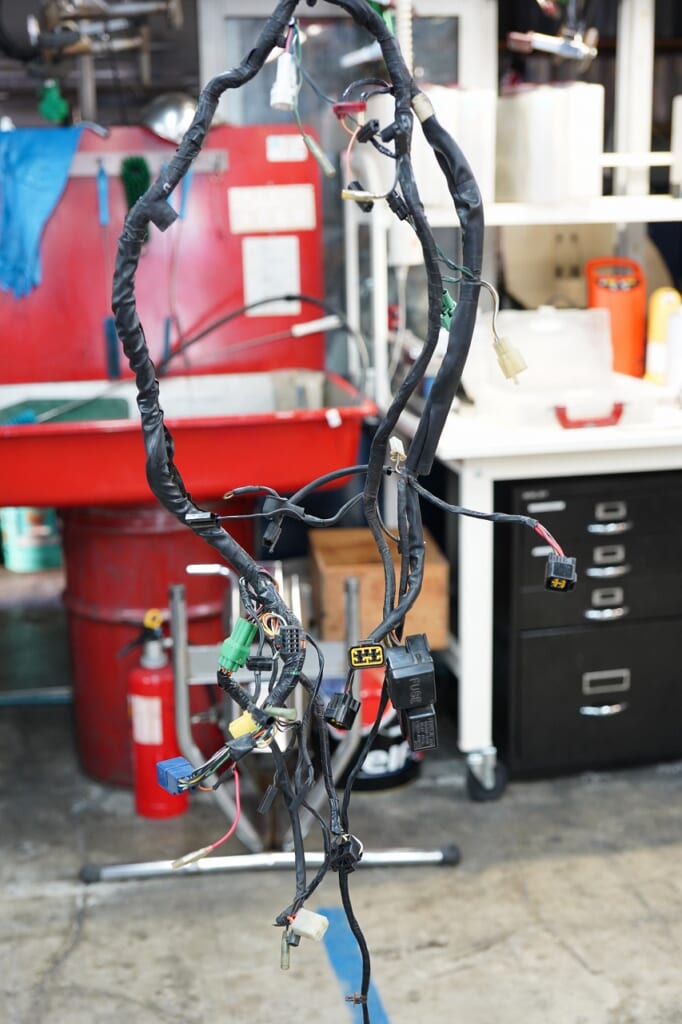
Now let’s remove the main harness.
Following the GSXR, I feel like we’re doing a lot of Inazuma harness replacements.
By the way, among oil-cooled bikes, the GSF1200 is the easiest for harness replacement. (By our standards.)
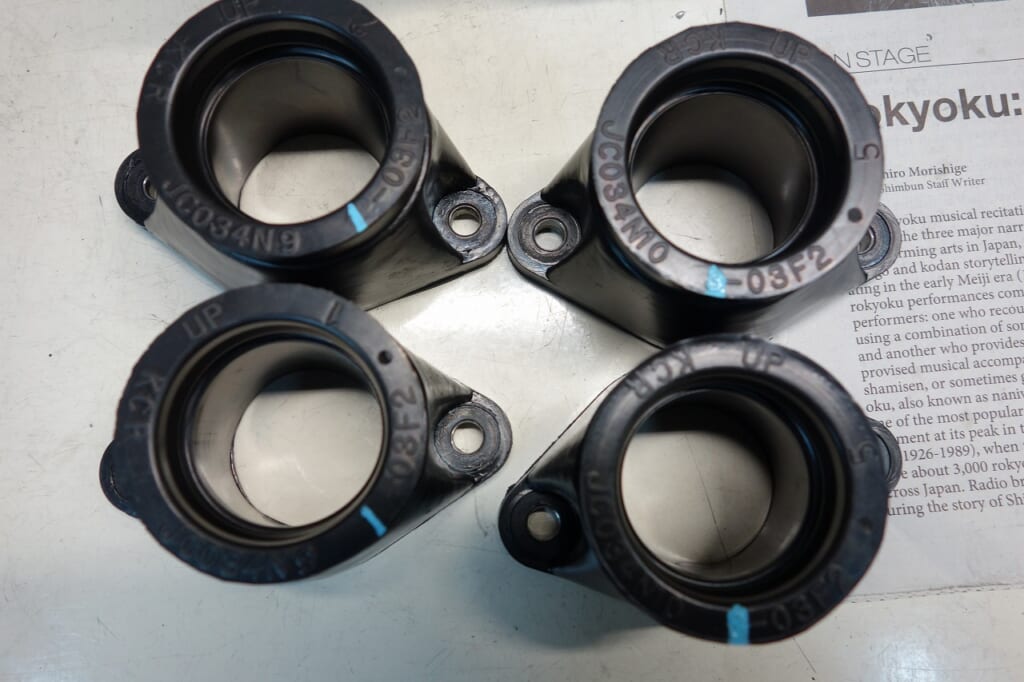
Let’s replace the intake manifold.
Rubber parts are just beyond help once they’re gone, so please do it before they disappear!
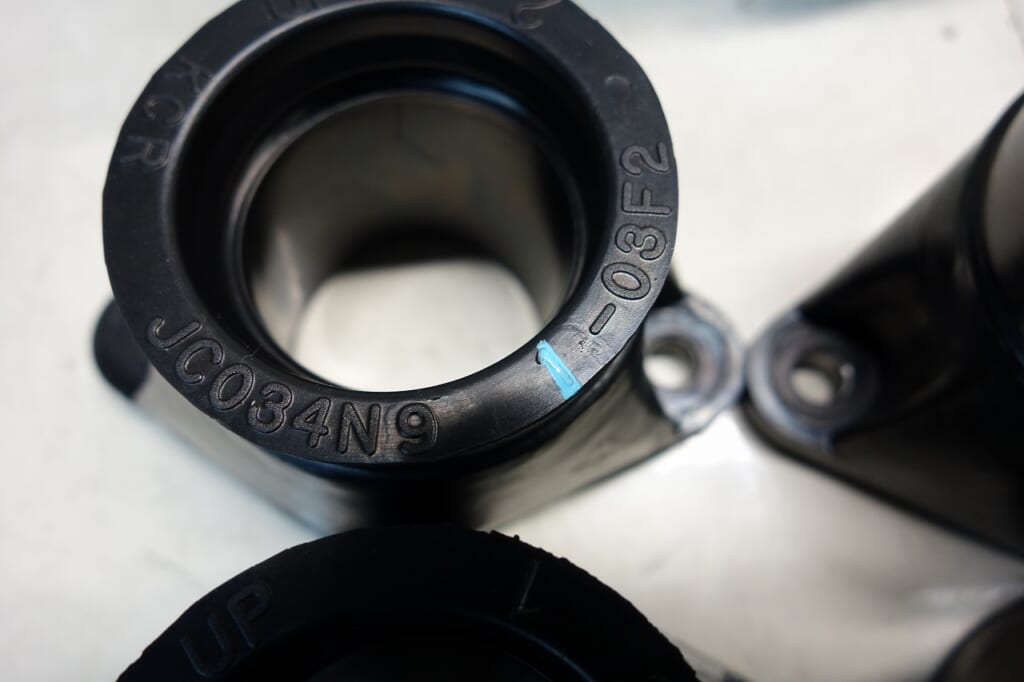
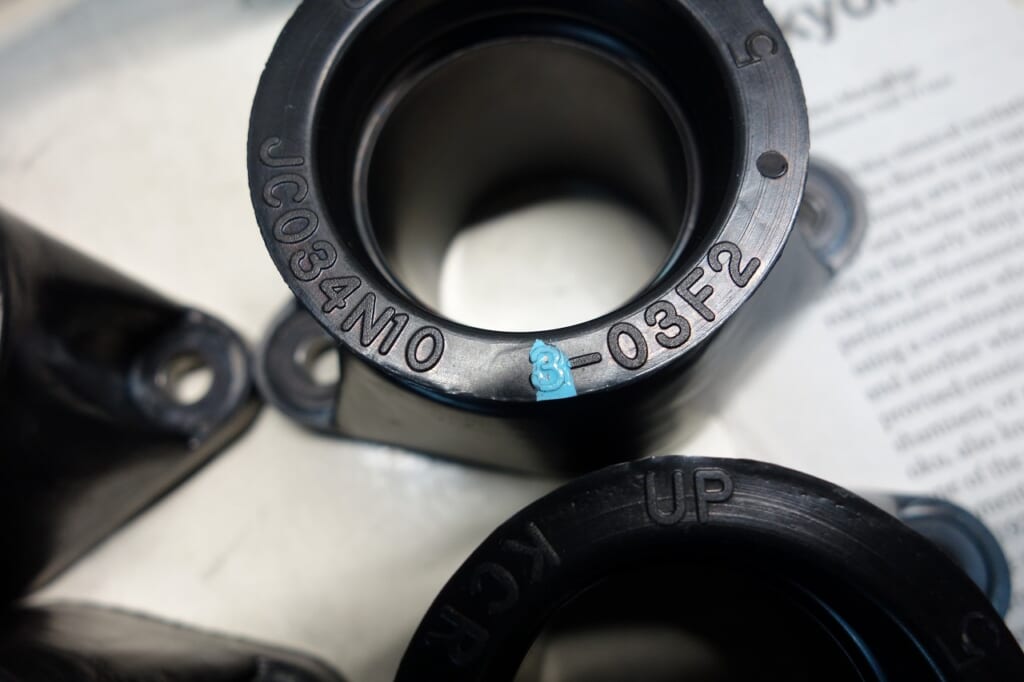
The Inazuma has a shared intake manifold for cylinders 1-2 and 3-4.
The manifold has ① and ③ marked on it, so if you remember ①=1-2 and ③=3-4, you won’t get confused.
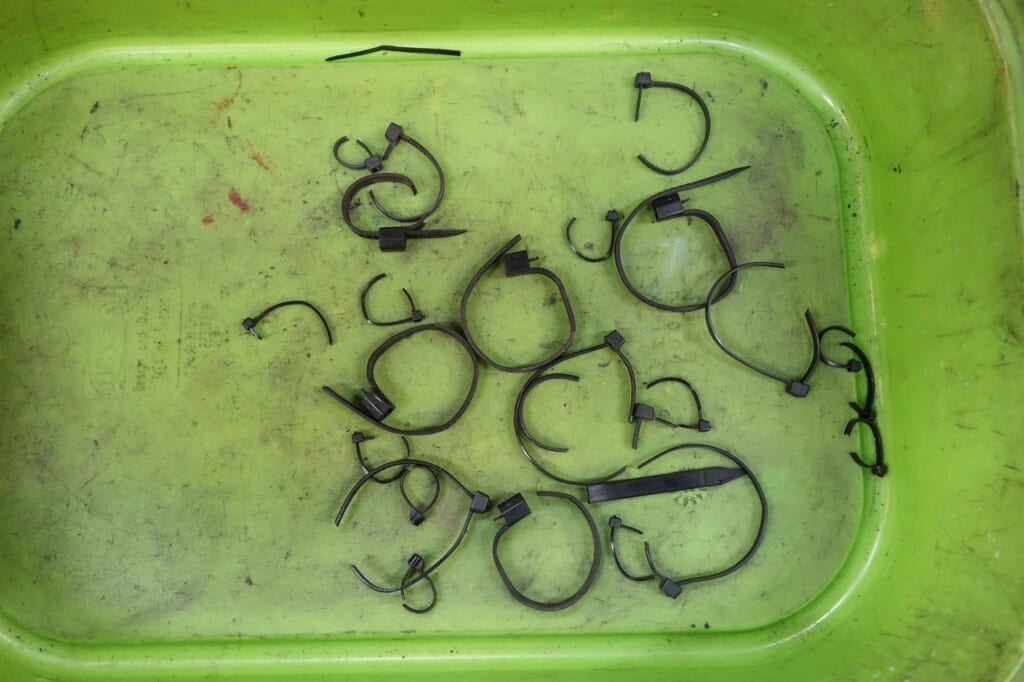
The number of cable ties used in the harness.
Every time I see this, I think “We need to reduce waste”—am I the only one?
Keep the layout natural and minimize bundling points!
Also, using not just cable ties but also acetate tape and rubber bands improves serviceability and is even better.
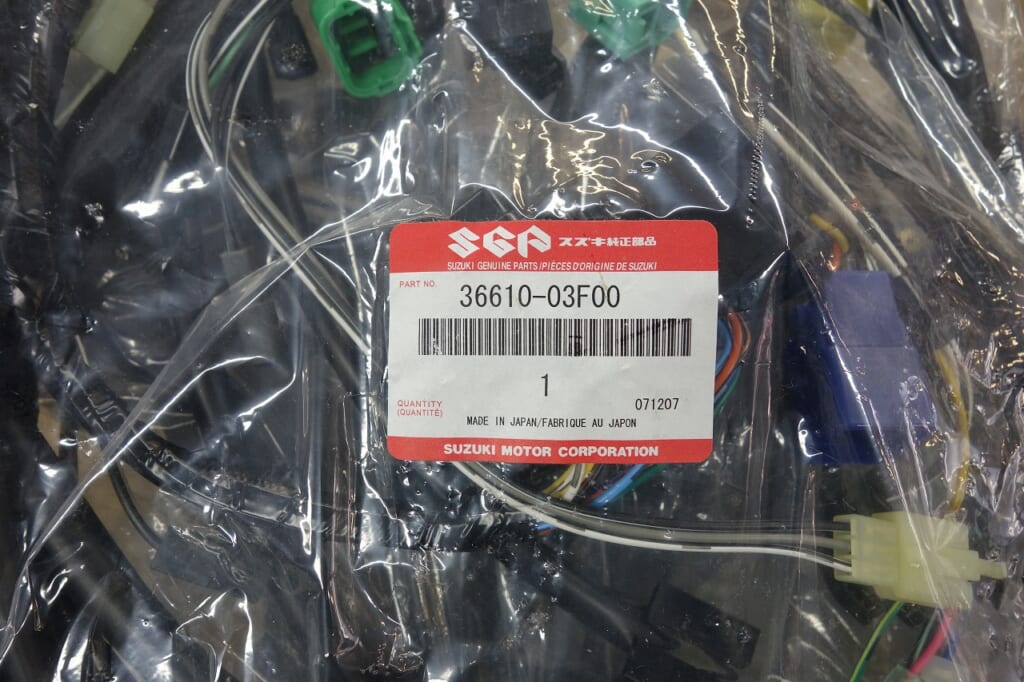
We use the Inazuma 400 harness as usual. (The 1200 is discontinued.)
The 400 will probably be discontinued soon too, so get one while you can.
Don’t harbor any naive hopes about reproductions coming out.
*There’s really nothing that beats genuine parts.
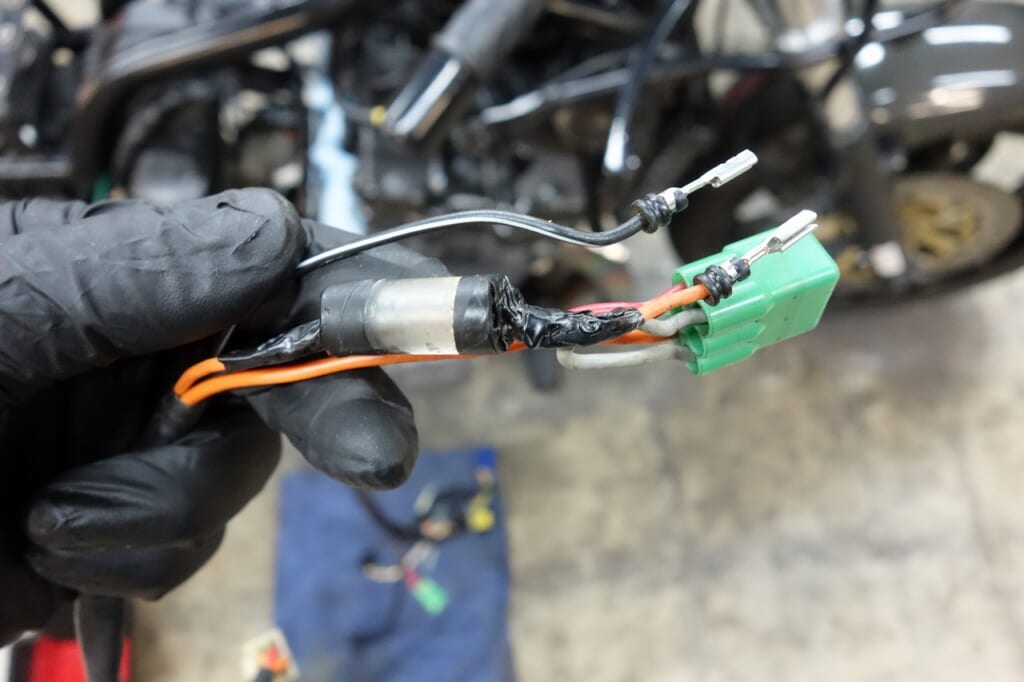
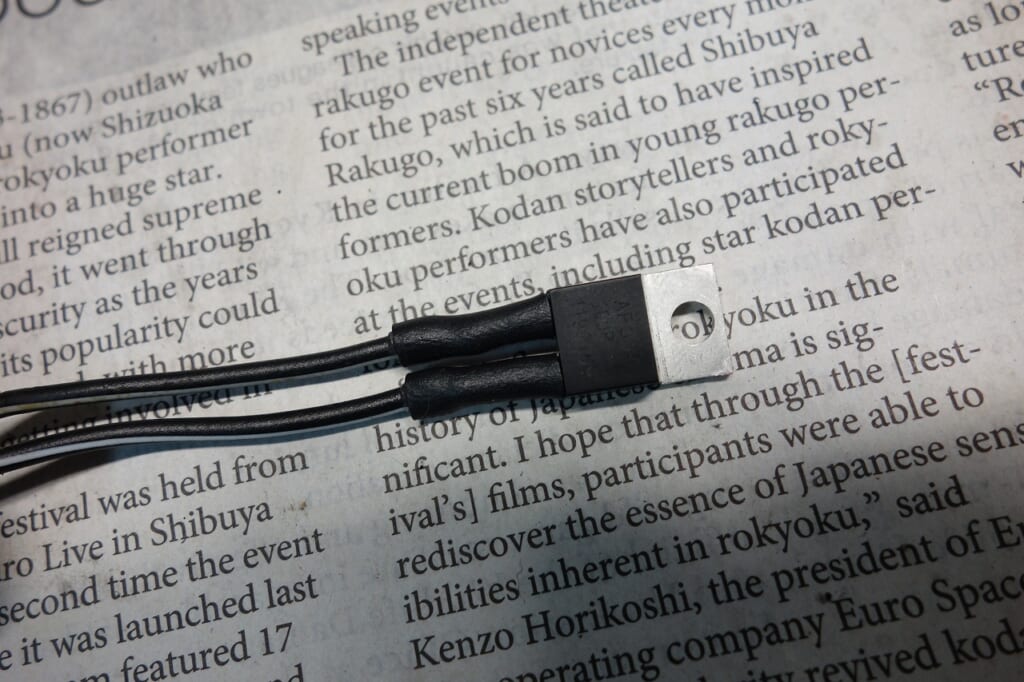
About the 100Ω resistor in Suzuki’s main key.
Recently I found a good 100Ω resistor with a lug terminal in parallel. It’s a bit more upscale than a standard resistor, and the stability of the resistance value is completely different. (Though it doesn’t matter much in practice—just a bonus.)
So I’ll swap it out for one of those.
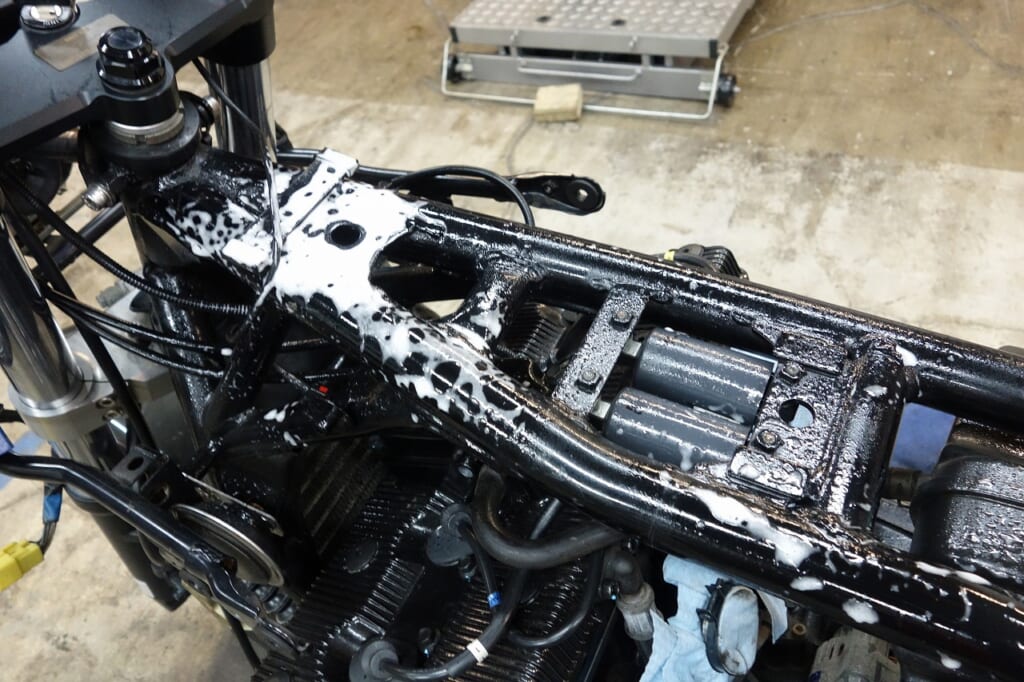
Let’s carefully clean the spots we can only reach when the harness is off.
Hoping the bike won’t let us down.
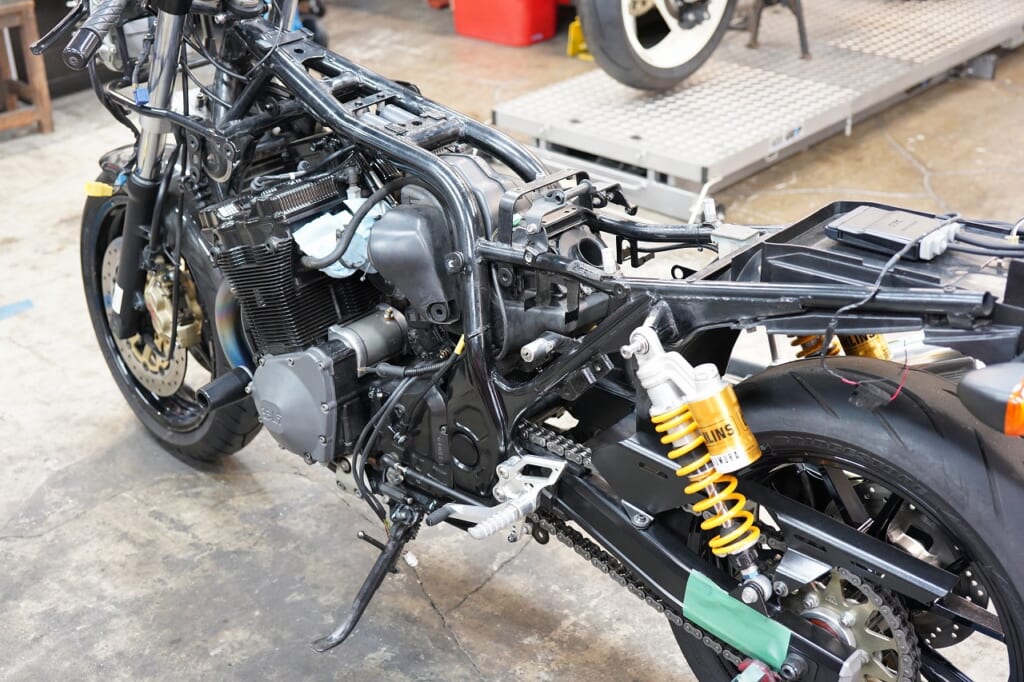
Bikes look surprisingly cool when they’re stripped down.
Maybe racers look cool because they’re stripped?
There’s also that sense of substance and durability.
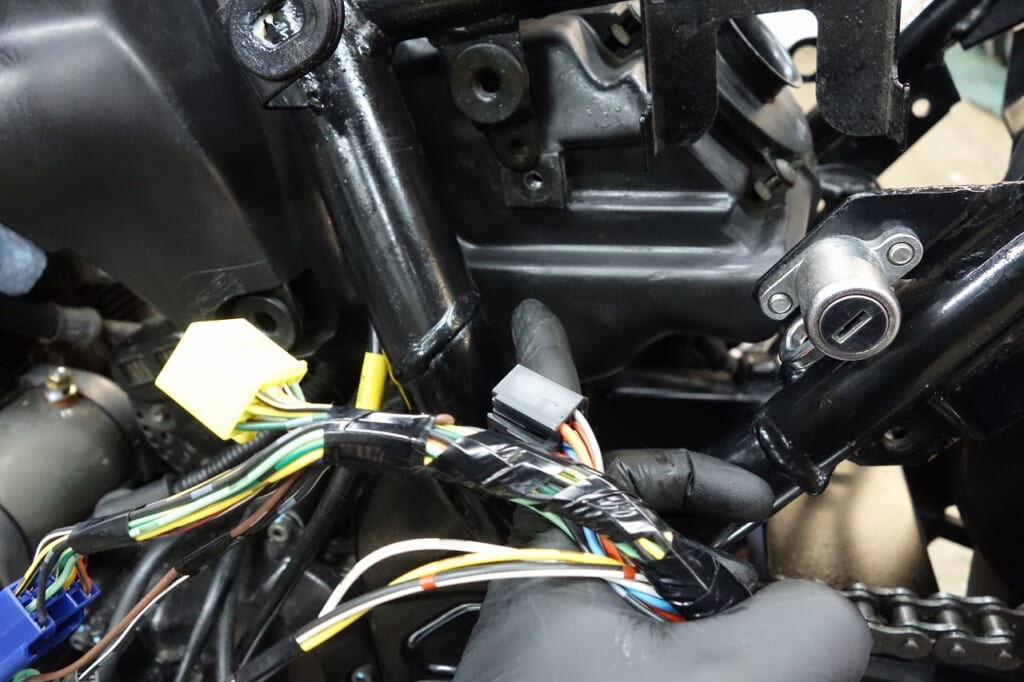
The Inazuma’s signature reverse-routing harness. I think it’s fastest to run everything except the fuse box through this gap.
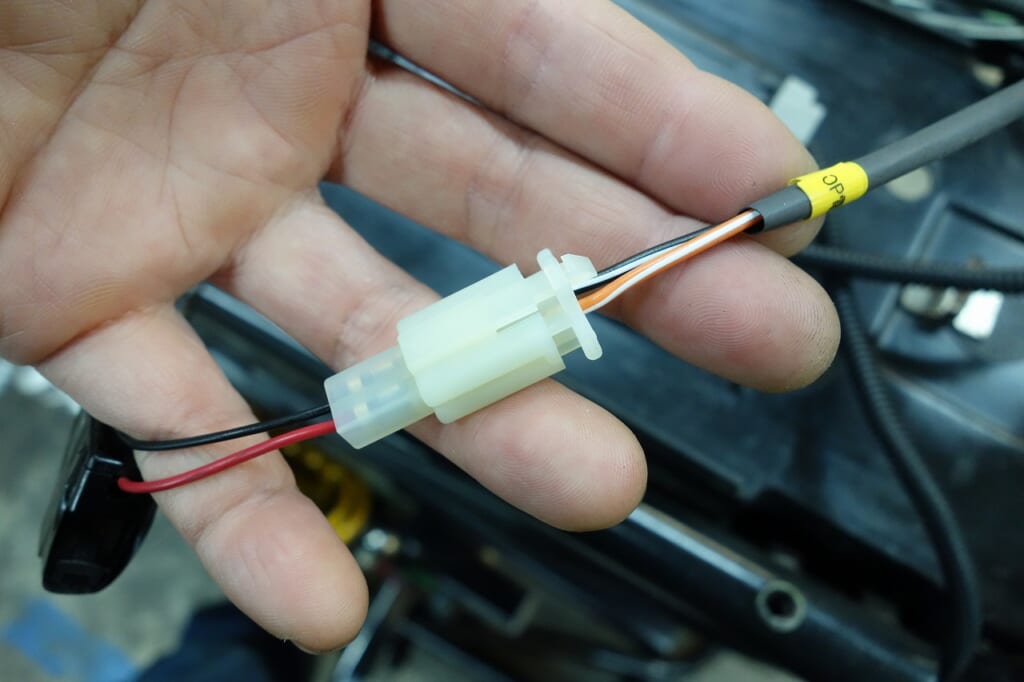
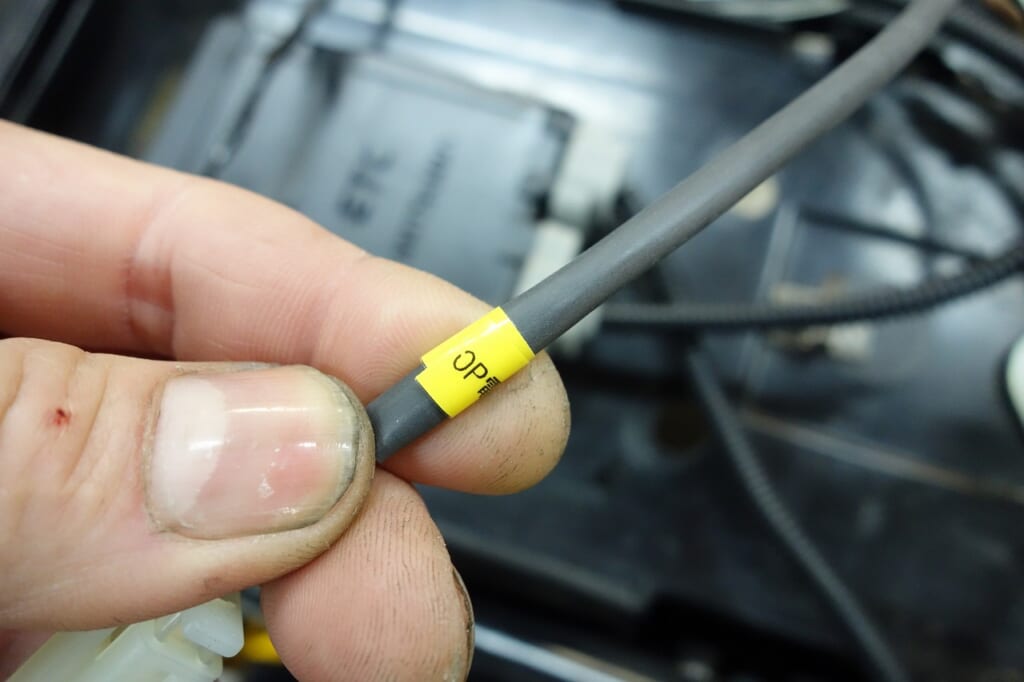
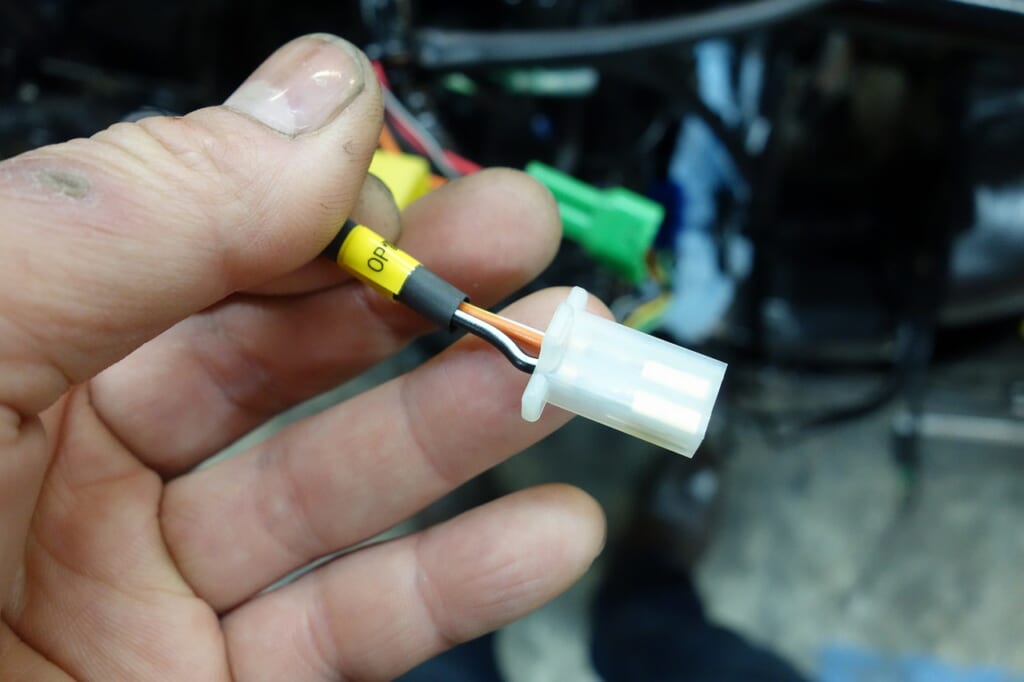
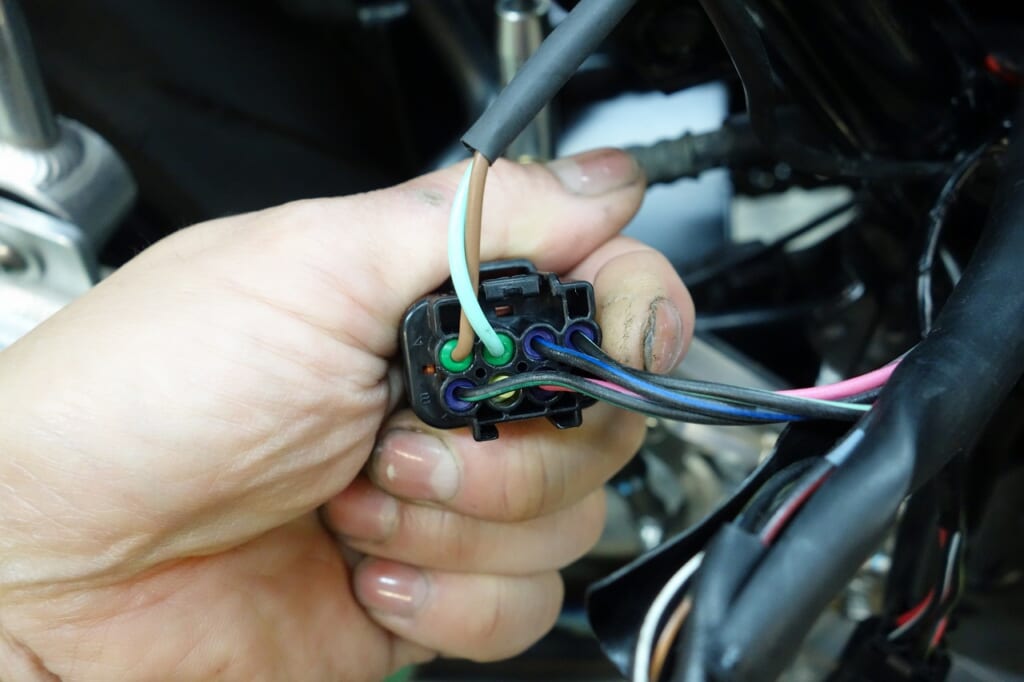
• OP power supply (2 locations)
• TPS acquisition
• Tachometer signal acquisition
• Shift indicator connection
—we’ve done the modifications for these. After that, it’s just a matter of laying out the harness.
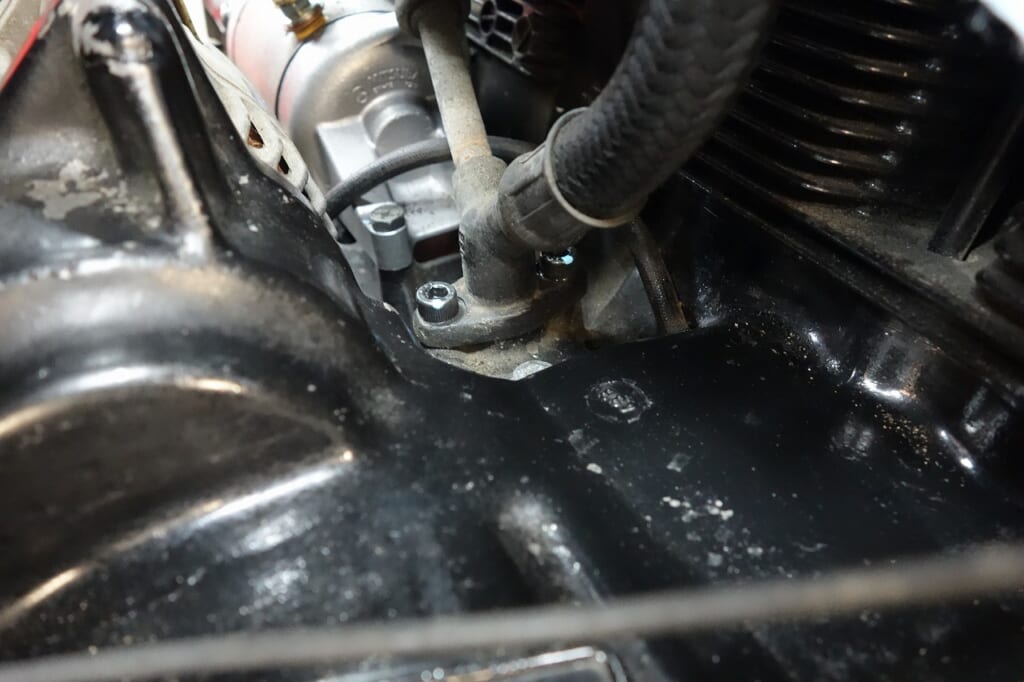
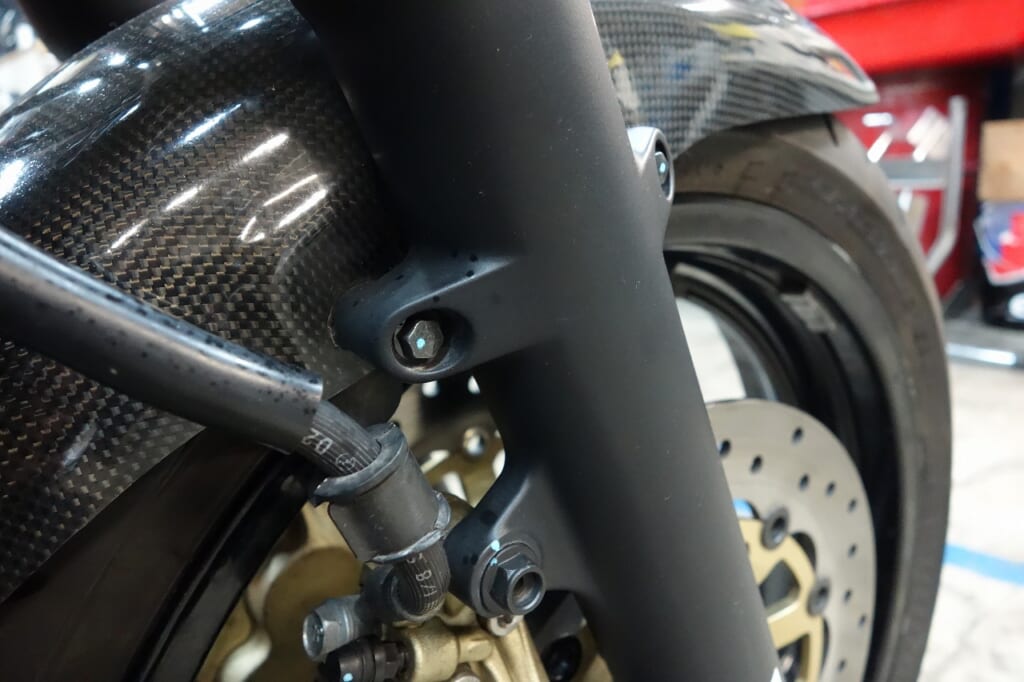
We replaced the rusty bolts with trivalent black.
To be continued (‘ω’)ノ