The lifeblood of a wheel bearing? Food? Blood? You could say that…
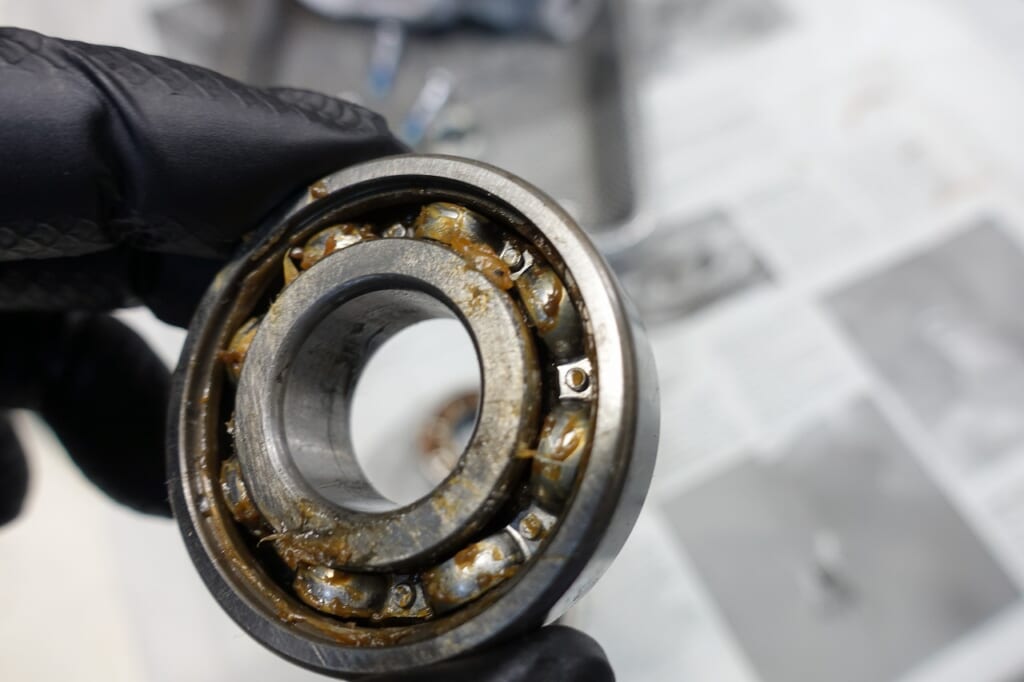
Grease. When it runs out, things get tough fast.
I’ve only seen one or two bikes in my experience where they actually broke down and got all wobbly.
For the price, they have a long service life, and they’re definitely the unsung heroes.
Why not go with double-sided seals and convert the bearing to MF?
(´∀`*)ウフフ The big Amazon Prime Day sale once a year: 7/12 and 13
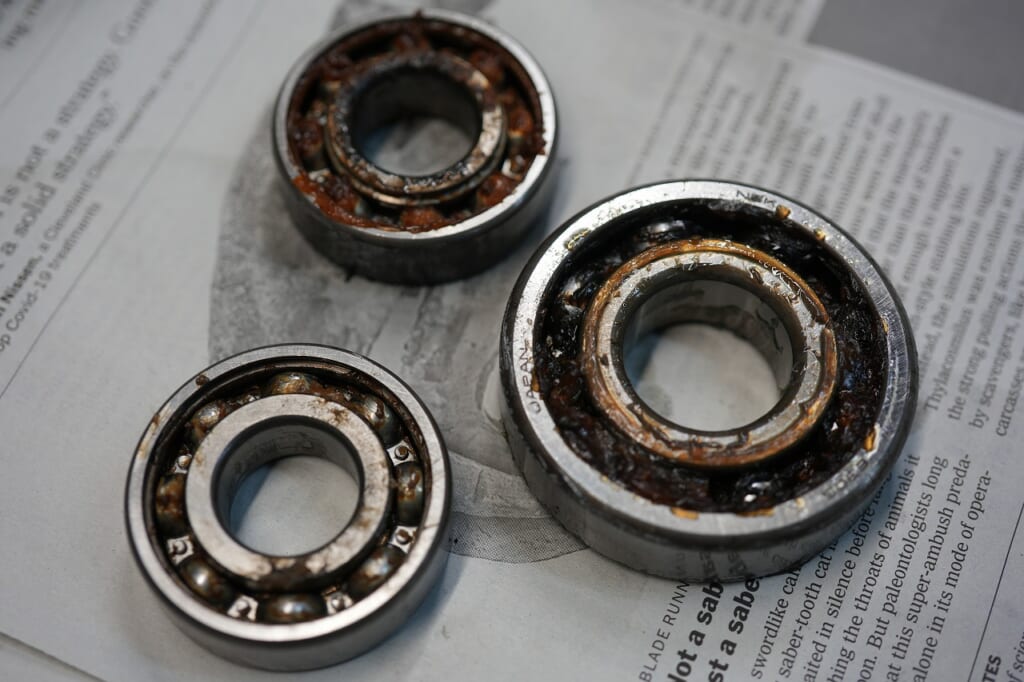
A part you won’t be blamed for replacing at 20,000 to 30,000 kilometers.
I don’t think you’ll feel a dramatic change after replacing it, but your peace of mind will definitely go up.
Since you can’t see it at all, it’s fine to manage its condition by age or mileage.
The stock bearing has a seal on only one side (*´з`)
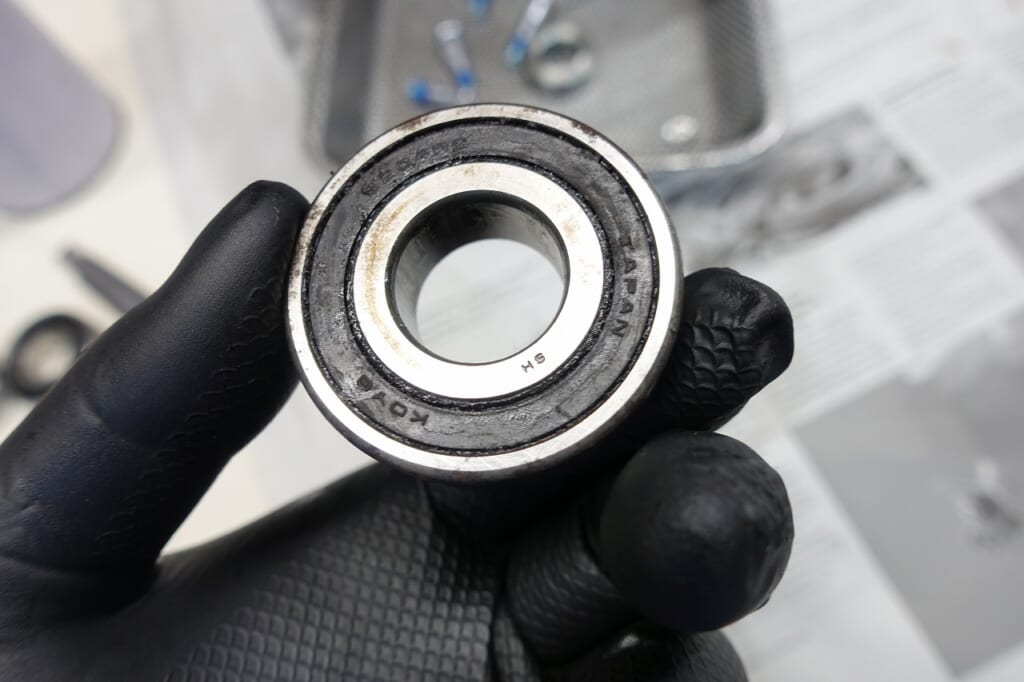
When assembled on the wheel, it’s hard to tell, but the outer side has a seal.
The invisible inner side is definitely exposed to all sorts of dust and dirt in harsh conditions.
Double-sided seals with MF conversion? (*´з`)
Even with a single-sided seal, you can’t lubricate the bearing without removing it… so it’s maintenance-free, but…
By going with double-sided seals, you can minimize grease scatter and loss.
Dust and water intrusion are also reduced, and the grease condition should be more stable.
Which is better, contact or non-contact type? (*’▽’)
Either way, I don’t think you’ll feel a noticeable difference.
Choose based on your needs.
If you wash it, use it in the rain, or ride on gravelly surfaces, the contact type might be better.
If you don’t use it in the rain, keep it indoors, and only ride on-road, the non-contact type is fine.
The safe bet is the contact type, but don’t worry—even the non-contact type won’t have grease pouring out.